



Ancient Eastern Mediterranean Terracotta Jug | Roman–Byzantine Period Pouring Vessel | Circa 2nd – 7th Century CE
Couldn't load pickup availability


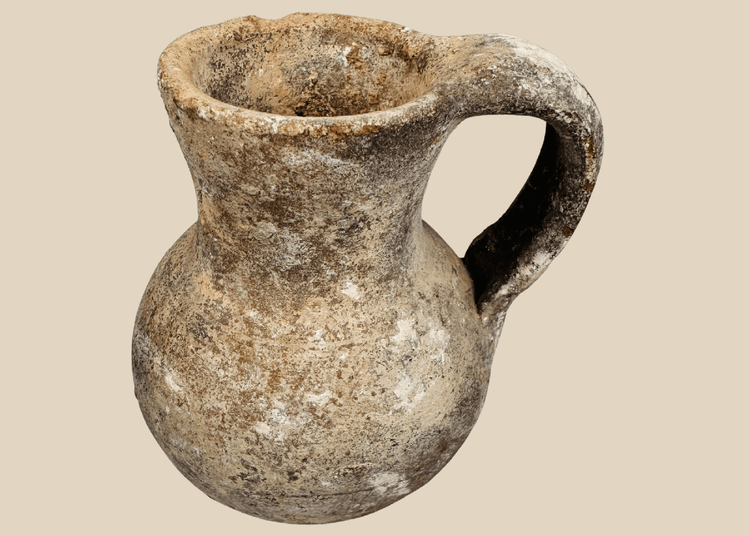
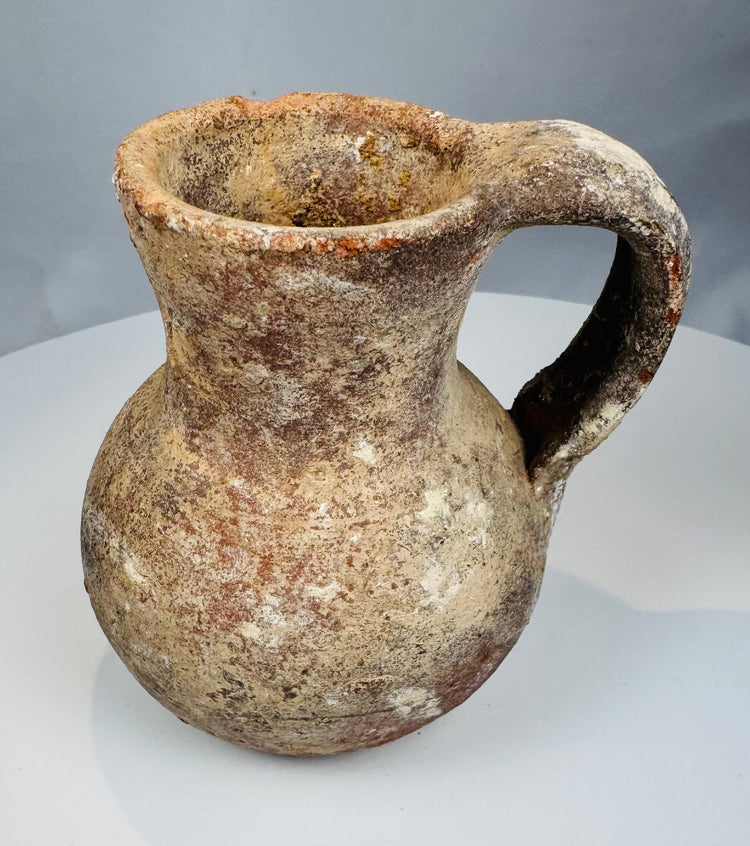
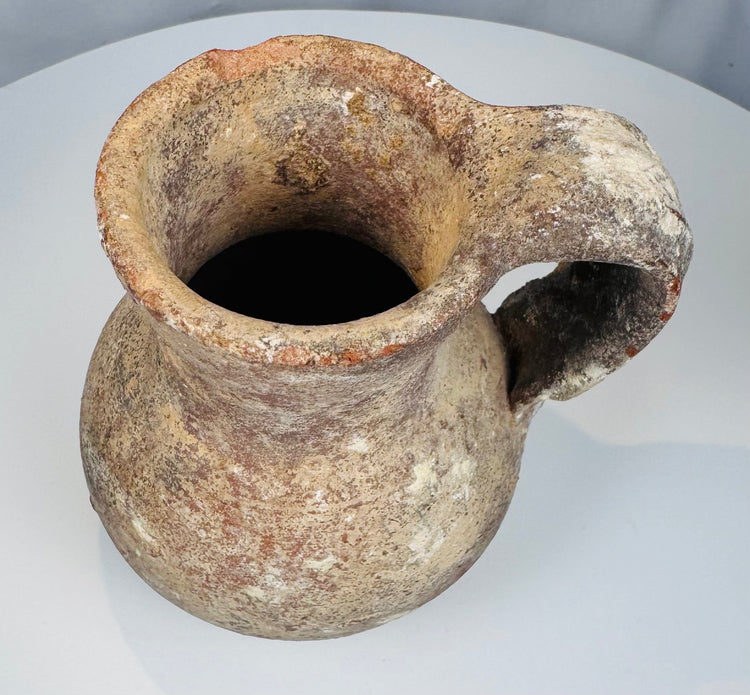
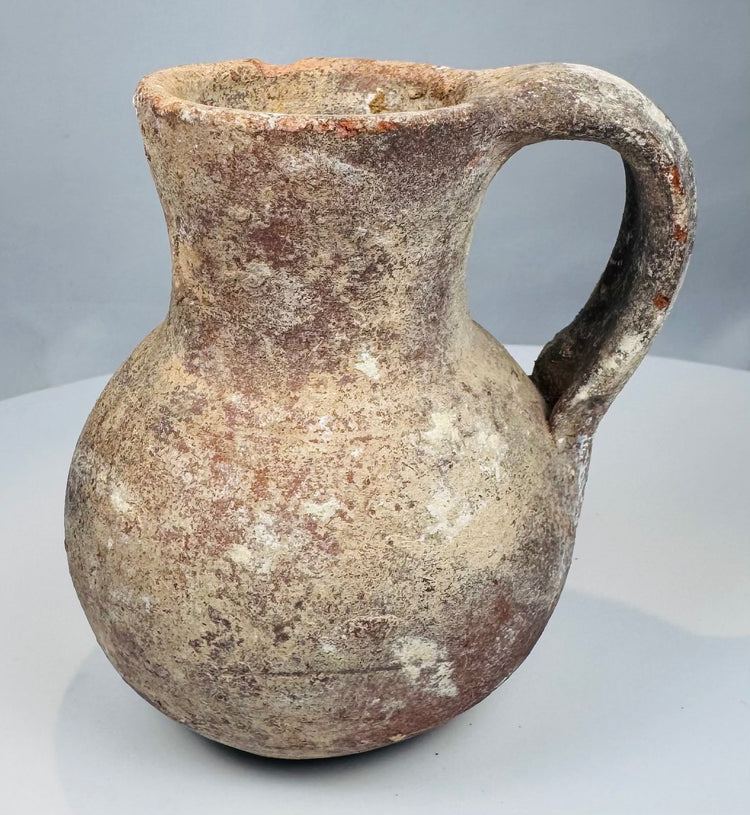
Ancient Eastern Mediterranean Terracotta Jug | Roman–Byzantine Period Pouring Vessel | Circa 2nd – 7th Century CE
Description
More
Less
Historical Context & Origin
Region: Eastern Mediterranean, likely the Levant or surrounding Middle Eastern region
Material: Terracotta with pale surface accretions
Period: Roman to Byzantine Period, circa 2nd–7th Century CE
Description
This compact terracotta pouring vessel is a well-preserved example of utilitarian pottery associated with the Roman and early Byzantine eastern Mediterranean.
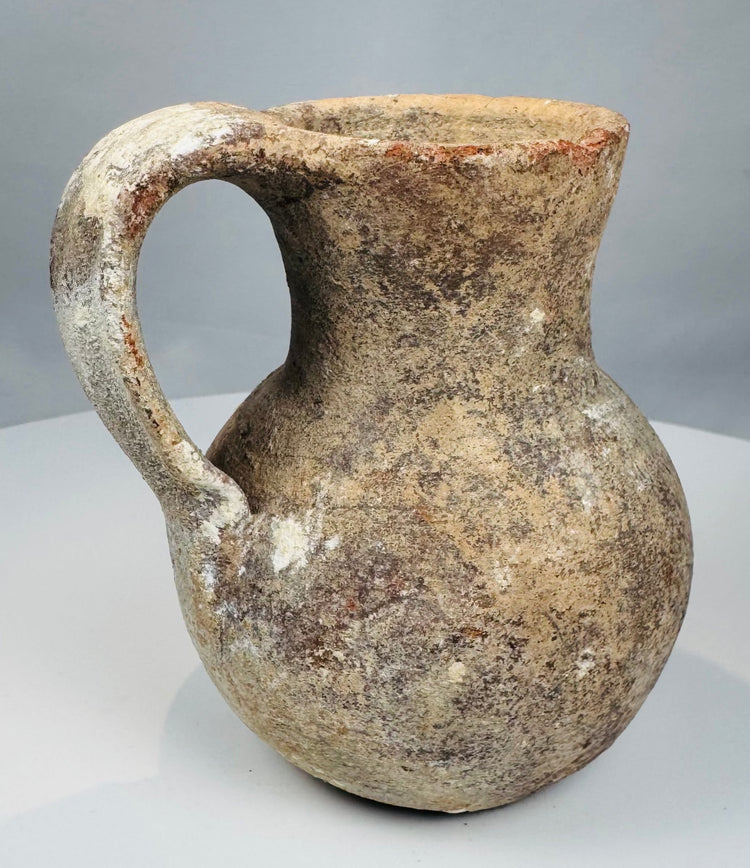
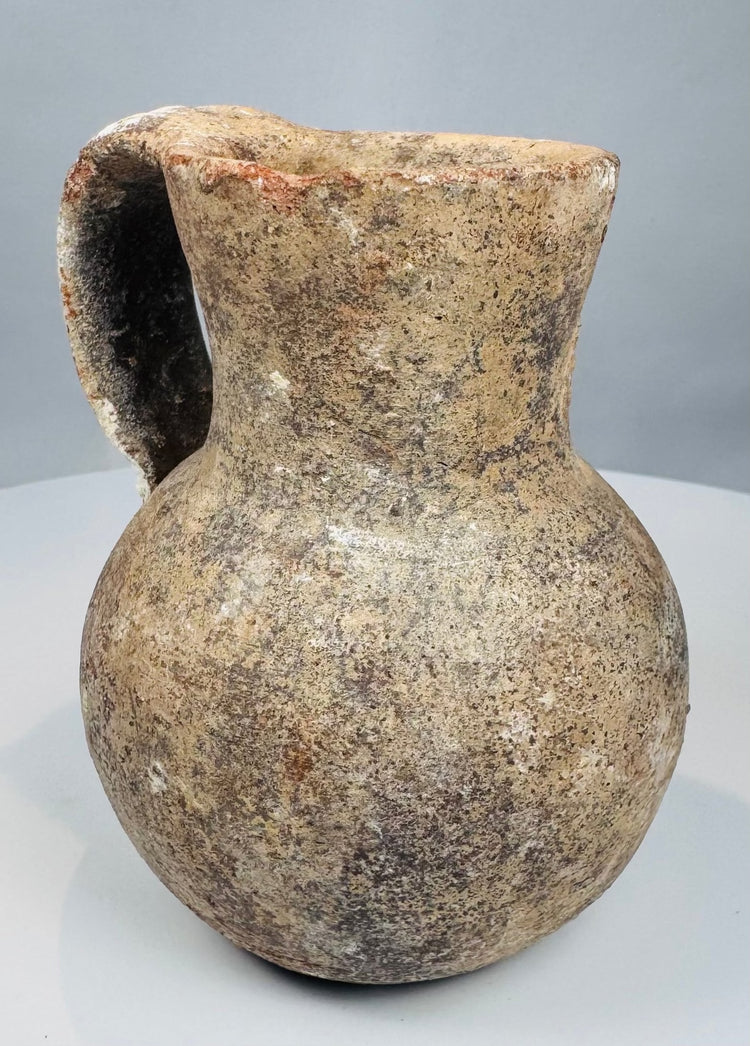
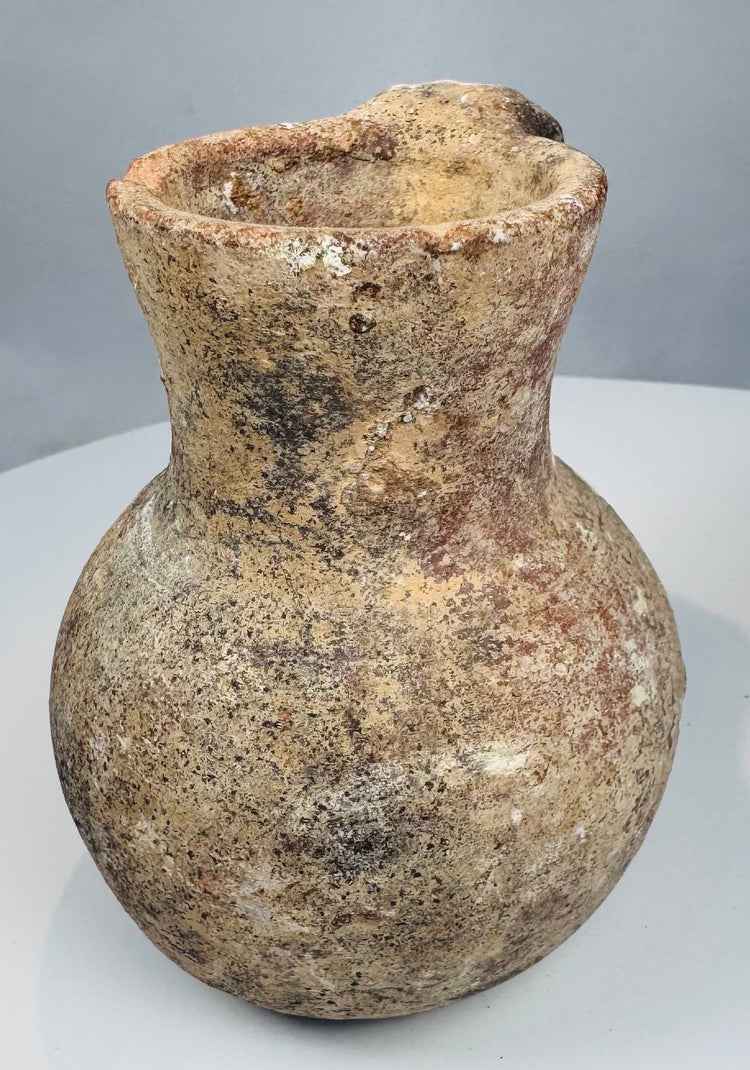
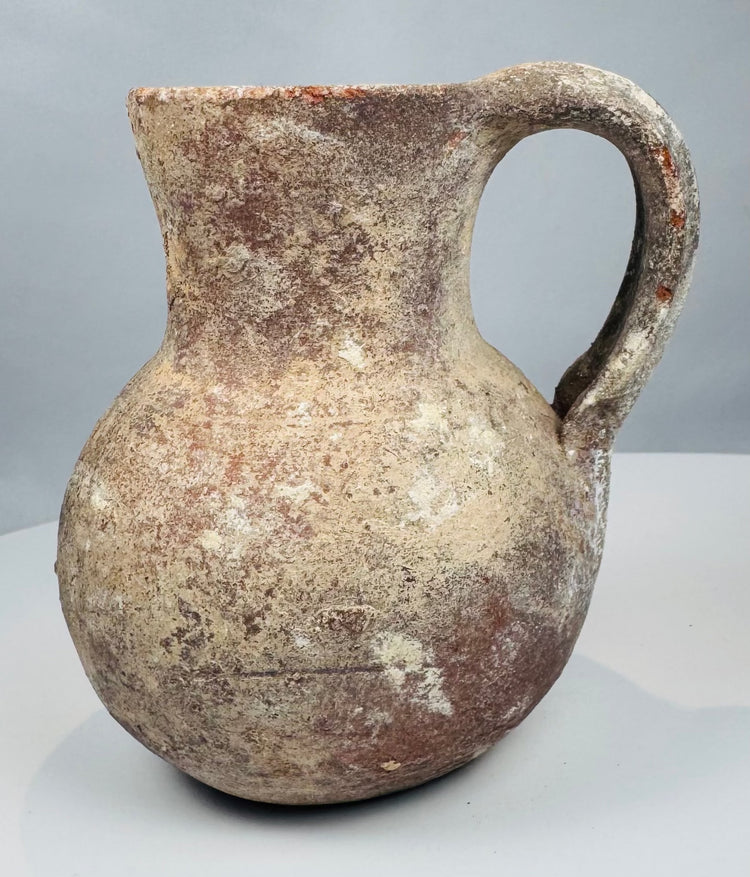
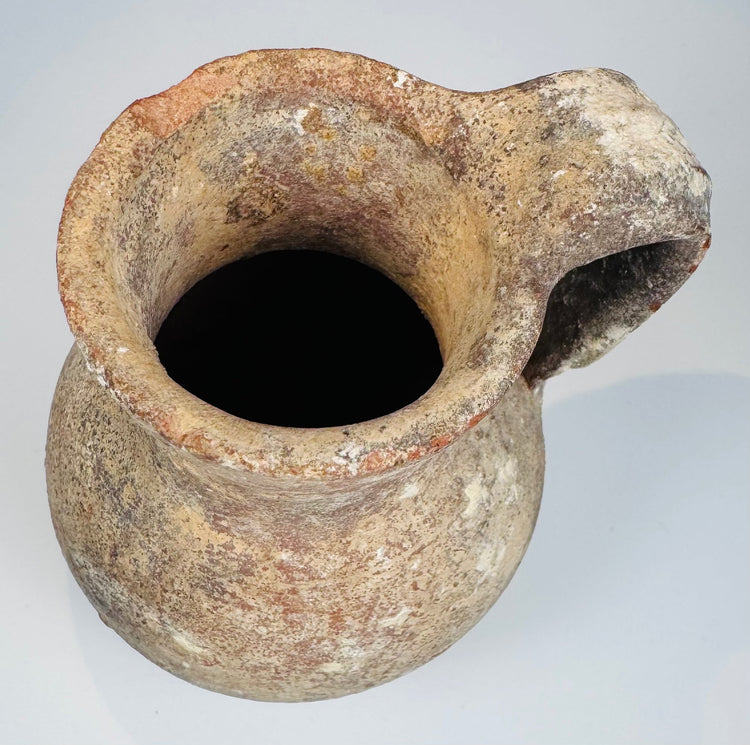
The vessel features a rounded globular body, a tall narrowing neck, an outward-flaring rim shaped into a pouring lip, and a substantial loop handle extending from the rim to the shoulder.
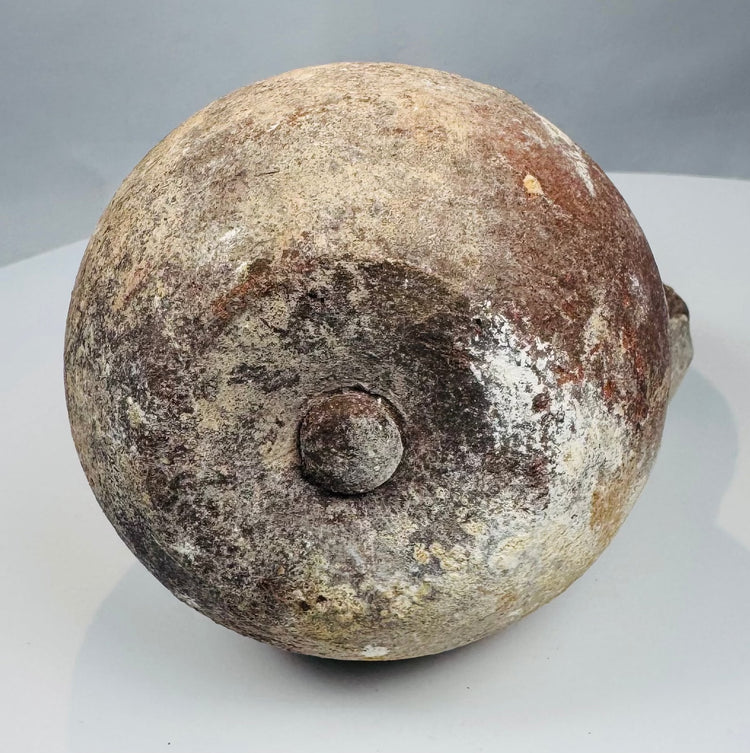
The wheel-made body rises from a small circular foot or central base projection visible on the underside. Its broad belly would have provided useful capacity despite the vessel’s compact dimensions, while the constricted neck and shaped mouth allowed liquids to be poured with greater control.
The heavy strap handle is large enough to accommodate a secure grip and gives the vessel a balanced, practical profile. The mouth appears slightly pinched or shaped toward one side, creating a functional pouring spout.
This form belongs to the broad family of ancient jugs and pitchers commonly used throughout the Mediterranean and Near East for serving water, wine, oils, or other liquids. Its precise original contents cannot be determined.
The terracotta retains patches of its underlying reddish-brown fabric beneath extensive pale mineral deposits and burial encrustation.
Features
- Wheel-made globular body
- Tall, slightly flaring neck
- Pinched or shaped pouring mouth
- Large applied loop handle
- Small circular base projection
- Extensive mineral and burial accretions
- Compact utilitarian form
Cultural Significance
Small pottery jugs were essential household objects throughout the Roman and Byzantine eastern Mediterranean. They were used in domestic dining, food preparation, trade, religious activity, and funerary contexts, with regional workshops producing numerous variations suited to local needs.
The form of this vessel reflects the continuity of practical ceramic traditions across the Mediterranean and Near East. Its rounded body, narrow neck, pouring lip, and single handle represent an efficient design that remained in use for centuries.
Unlike elaborately decorated ceremonial pottery, vessels of this kind provide a direct connection to ordinary daily life in the ancient world.
Condition
The vessel remains substantially intact and structurally stable. Extensive mineral deposits, burial accretions, surface abrasions, discoloration, and weathering are present throughout.
The rim is irregular and exhibits scattered edge losses and minor chipping. Additional small chips, firing imperfections, and surface losses are visible around the handle, body, and base.
Dimensions (Approximate)
Height: 4 in
Diameter: 3.5 in
Age (Approximate)
1,300–1,900 years old
Provenance
Formerly held in a private collection in Rhode Island, USA, assembled by a collector with a longstanding interest in ancient Mediterranean artifacts and early ceramics.
Learn More
View a related ancient terracotta jug in the collection of The Metropolitan Museum of Art
Explore our curated Collection of Roman & Greek Artifacts and Ancient Relics
Description
Historical Context & Origin
Region: Eastern Mediterranean, likely the Levant or surrounding Middle Eastern region
Material: Terracotta with pale surface accretions
Period: Roman to Byzantine Period, circa 2nd–7th Century CE
Description
This compact terracotta pouring vessel is a well-preserved example of utilitarian pottery associated with the Roman and early Byzantine eastern Mediterranean.
The vessel features a rounded globular body, a tall narrowing neck, an outward-flaring rim shaped into a pouring lip, and a substantial loop handle extending from the rim to the shoulder.
The wheel-made body rises from a small circular foot or central base projection visible on the underside. Its broad belly would have provided useful capacity despite the vessel’s compact dimensions, while the constricted neck and shaped mouth allowed liquids to be poured with greater control.
The heavy strap handle is large enough to accommodate a secure grip and gives the vessel a balanced, practical profile. The mouth appears slightly pinched or shaped toward one side, creating a functional pouring spout.
This form belongs to the broad family of ancient jugs and pitchers commonly used throughout the Mediterranean and Near East for serving water, wine, oils, or other liquids. Its precise original contents cannot be determined.
The terracotta retains patches of its underlying reddish-brown fabric beneath extensive pale mineral deposits and burial encrustation.
Features
- Wheel-made globular body
- Tall, slightly flaring neck
- Pinched or shaped pouring mouth
- Large applied loop handle
- Small circular base projection
- Extensive mineral and burial accretions
- Compact utilitarian form
Cultural Significance
Small pottery jugs were essential household objects throughout the Roman and Byzantine eastern Mediterranean. They were used in domestic dining, food preparation, trade, religious activity, and funerary contexts, with regional workshops producing numerous variations suited to local needs.
The form of this vessel reflects the continuity of practical ceramic traditions across the Mediterranean and Near East. Its rounded body, narrow neck, pouring lip, and single handle represent an efficient design that remained in use for centuries.
Unlike elaborately decorated ceremonial pottery, vessels of this kind provide a direct connection to ordinary daily life in the ancient world.
Condition
The vessel remains substantially intact and structurally stable. Extensive mineral deposits, burial accretions, surface abrasions, discoloration, and weathering are present throughout.
The rim is irregular and exhibits scattered edge losses and minor chipping. Additional small chips, firing imperfections, and surface losses are visible around the handle, body, and base.
Dimensions (Approximate)
Height: 4 in
Diameter: 3.5 in
Age (Approximate)
1,300–1,900 years old
Provenance
Formerly held in a private collection in Rhode Island, USA, assembled by a collector with a longstanding interest in ancient Mediterranean artifacts and early ceramics.
Learn More
View a related ancient terracotta jug in the collection of The Metropolitan Museum of Art
Explore our curated Collection of Roman & Greek Artifacts and Ancient Relics
You May Also Like
