

Ancient Egyptian Blue-Green Faience Funerary Ushabti | Late Period | Circa 600 – 30 BCE
Couldn't load pickup availability



Ancient Egyptian Blue-Green Faience Funerary Ushabti | Late Period | Circa 600 – 30 BCE
Description
More
Less
Historical Context & Origin
Region: Egypt
Material: Blue-green glazed faience
Period: Late Period to Ptolemaic Period, circa 600–30 BCE
Description
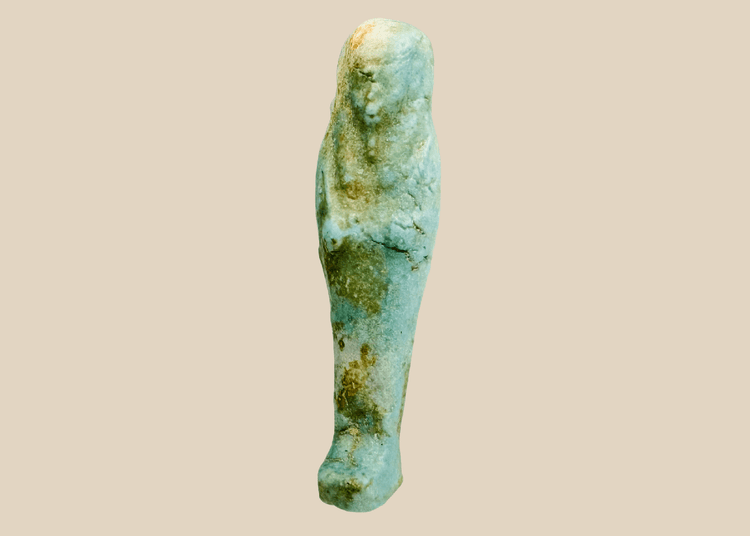
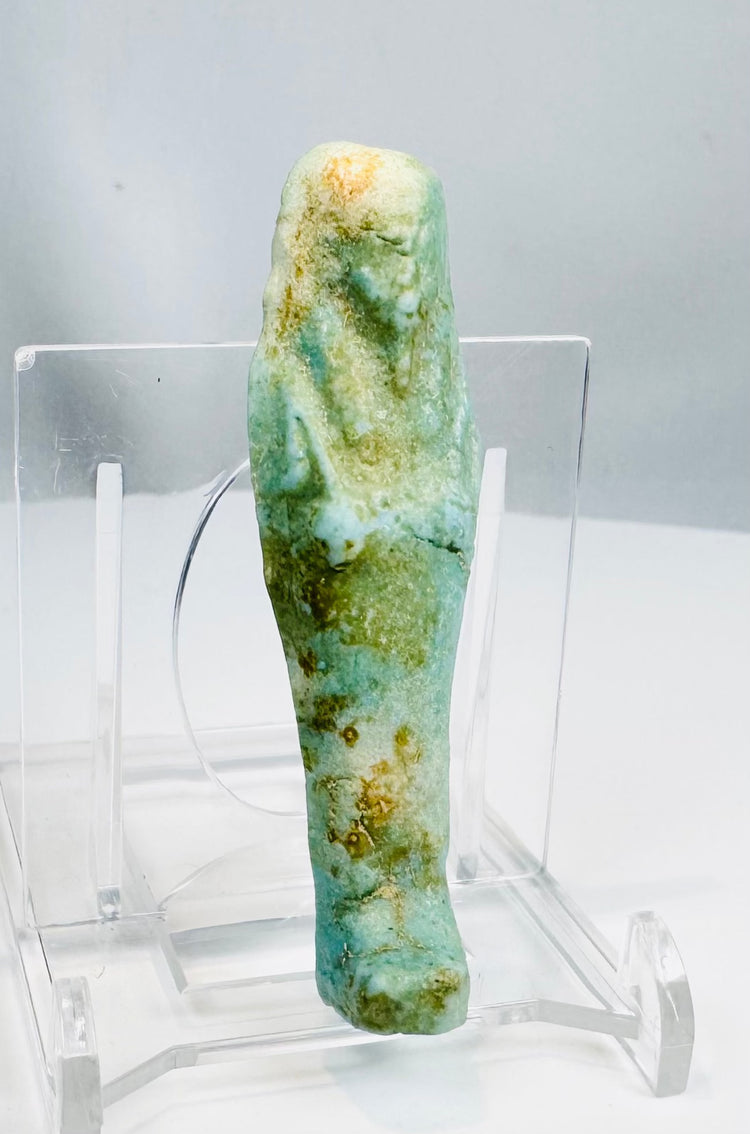
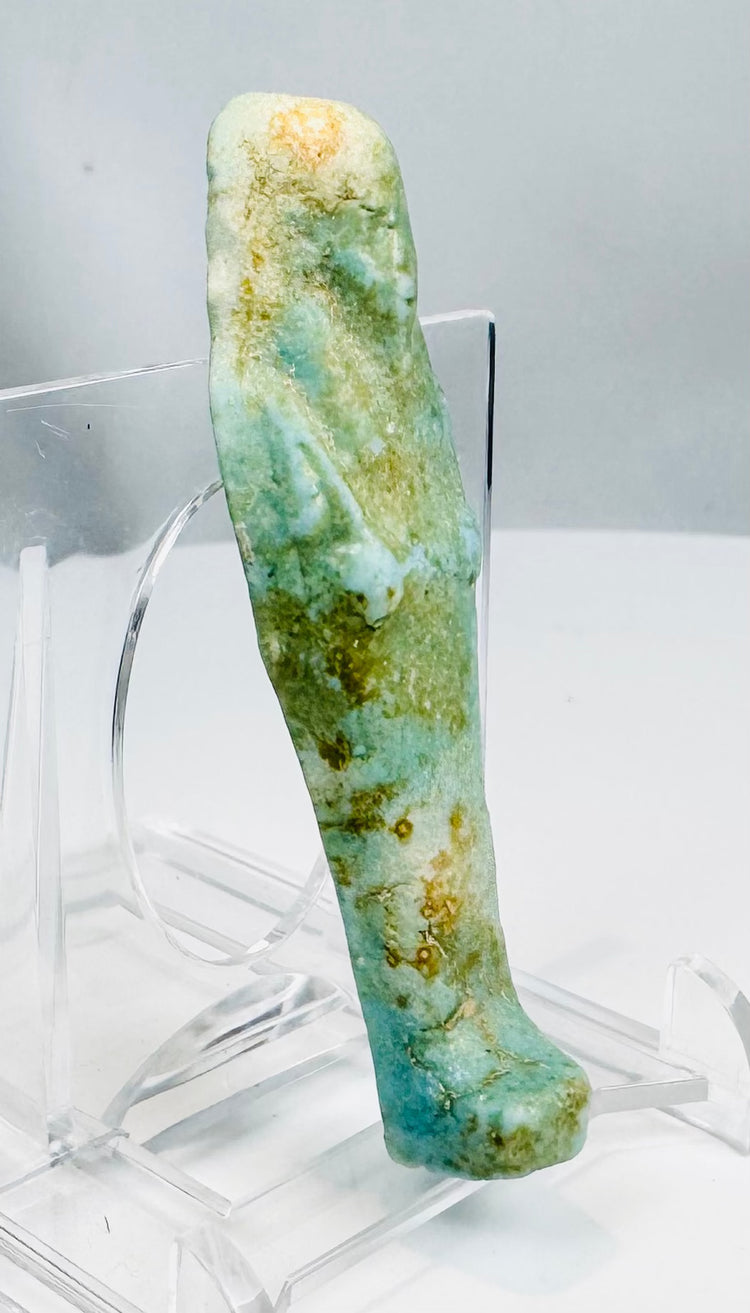
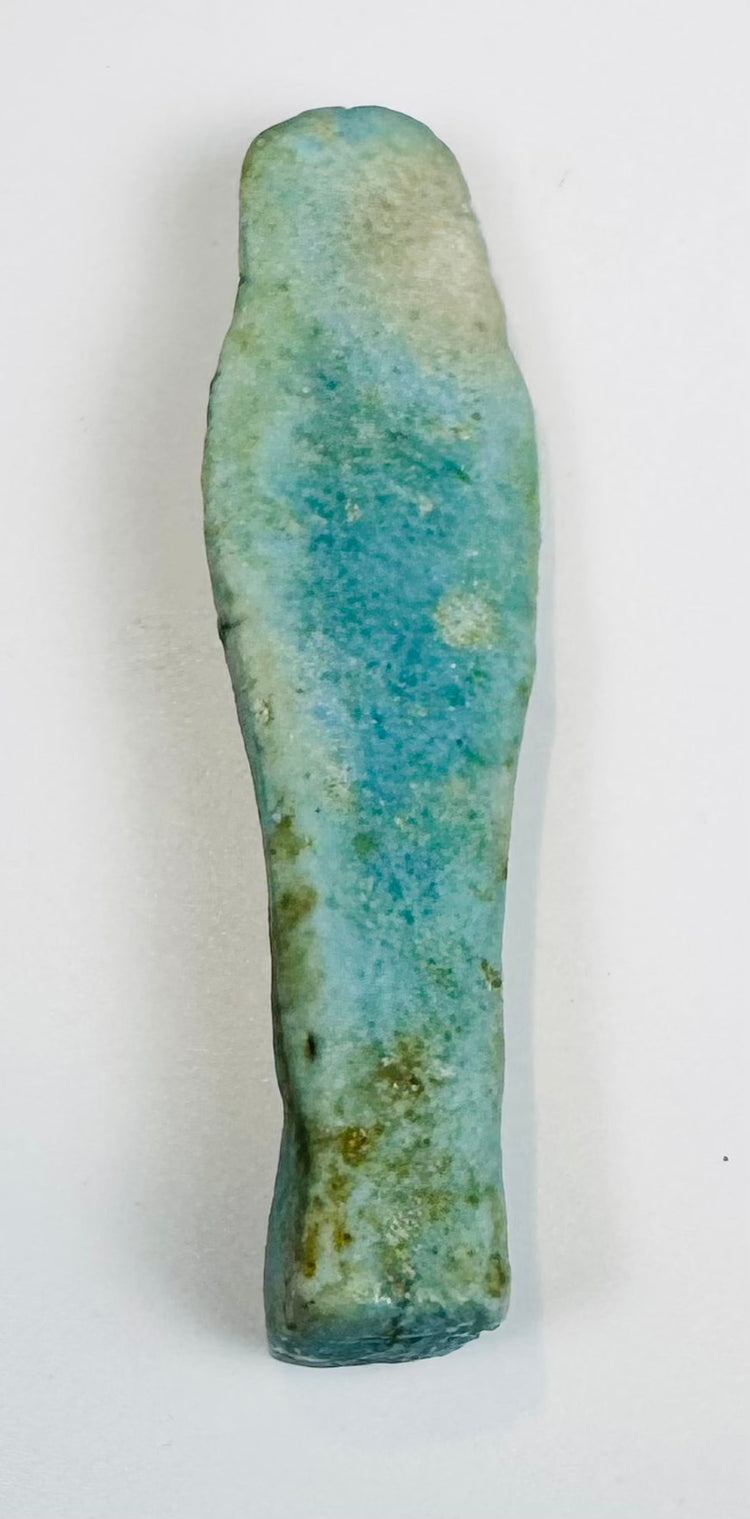
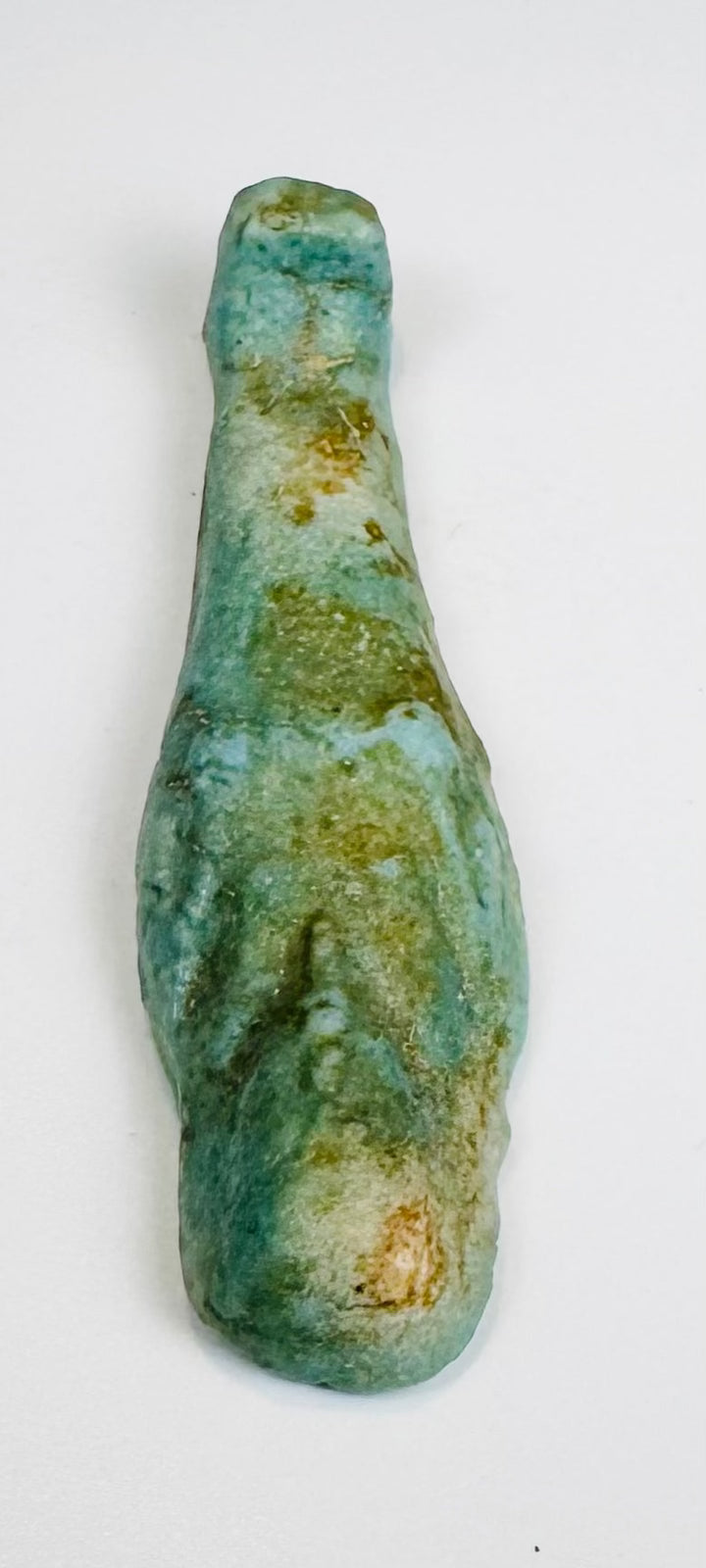
This ancient Egyptian faience ushabti is modeled in the traditional mummiform style associated with funerary figures placed within Egyptian tombs. The figure presents an elongated wrapped body with gently modeled shoulders, a rounded head and simplified facial features. The arms are indicated across the upper torso, while the lower body terminates in a subtly projecting foot section.
The surface retains an attractive range of turquoise, pale blue and green faience coloration, with areas of earthy brown burial deposits and mineral staining distributed throughout. The softly weathered glaze and muted modelling give the figure a distinctly archaeological appearance while preserving its recognizable ancient Egyptian funerary form.
Ushabtis were intended to serve the deceased in the afterlife, answering when called upon to perform agricultural or other compulsory labor. Their presence in Egyptian burials reflects the enduring belief that daily obligations continued beyond death and that magical substitutes could carry out these tasks on behalf of the tomb owner.
Features
- Authentic ancient Egyptian funerary ushabti figure
- Traditional elongated mummiform construction
- Blue-green glazed faience surface
- Simplified facial features and rounded headdress form
- Arms modeled across the upper torso
- Projecting lower foot section
- Attractive turquoise and pale green coloration
- Natural burial deposits, mineral staining and surface weathering
Cultural Significance
Ushabtis were among the most characteristic objects placed within ancient Egyptian tombs. Created as magical substitutes for the deceased, they were expected to respond when their owner was summoned to undertake work in the afterlife.
During the Late Period, faience became one of the most widely used materials for ushabti production. Its blue-green coloration was especially meaningful within Egyptian belief, evoking water, vegetation, fertility, regeneration and rebirth. Even modest examples such as this one provide a direct connection to the funerary beliefs that shaped Egyptian burial practices for thousands of years.
Condition
Ancient condition with extensive surface wear, glaze loss, discoloration, mineral deposits, burial encrustation and minor abrasions throughout. The figure retains substantial blue-green faience coloration together with recognizable facial, upper-body and mummiform details. Areas of brown and green staining are naturally distributed across the surface. Please refer closely to the photographs for the complete condition.
Dimensions (Approximate)
Height: 2.75 in
Age (Approximate)
2,000–2,600 years old
Provenance
Ex Secret Eye Gallery, New York City, acquired in the 1980s. Secret Eye Gallery was a New York City antiquities gallery active during the 1970s and 1980s under proprietor Hamdi El-Gabry, dealing in ancient Egyptian, Classical, Near Eastern, and related archaeological material.
Subsequently with Palmyra Heritage Gallery, New York, 2026. Palmyra Heritage Gallery is a New York antiquities dealer specializing in ancient Egyptian, Greek, Roman, Byzantine, Pre-Columbian, Islamic, and related archaeological material.
Learn More
Explore a museum example and the funerary role of the Faience Ushabti at The Metropolitan Museum of Art.
Browse our Collection of Ancient Egyptian Mummies and Artifacts connected with Egyptian burial and afterlife beliefs.
Description
Historical Context & Origin
Region: Egypt
Material: Blue-green glazed faience
Period: Late Period to Ptolemaic Period, circa 600–30 BCE
Description
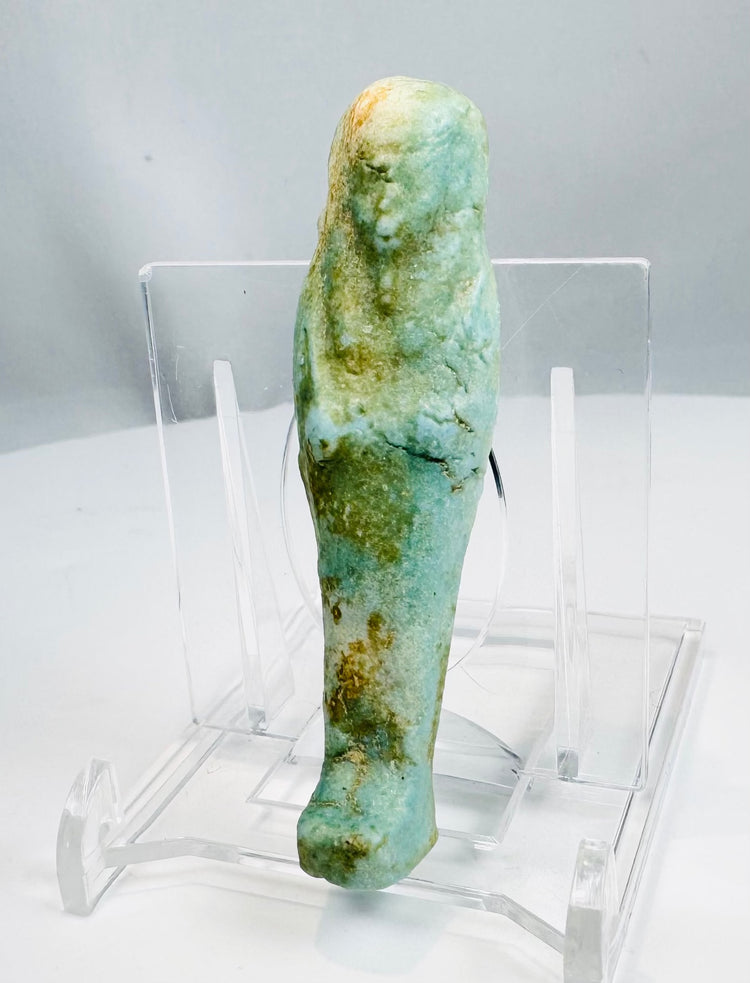
This ancient Egyptian faience ushabti is modeled in the traditional mummiform style associated with funerary figures placed within Egyptian tombs. The figure presents an elongated wrapped body with gently modeled shoulders, a rounded head and simplified facial features. The arms are indicated across the upper torso, while the lower body terminates in a subtly projecting foot section.
The surface retains an attractive range of turquoise, pale blue and green faience coloration, with areas of earthy brown burial deposits and mineral staining distributed throughout. The softly weathered glaze and muted modelling give the figure a distinctly archaeological appearance while preserving its recognizable ancient Egyptian funerary form.
Ushabtis were intended to serve the deceased in the afterlife, answering when called upon to perform agricultural or other compulsory labor. Their presence in Egyptian burials reflects the enduring belief that daily obligations continued beyond death and that magical substitutes could carry out these tasks on behalf of the tomb owner.
Features
- Authentic ancient Egyptian funerary ushabti figure
- Traditional elongated mummiform construction
- Blue-green glazed faience surface
- Simplified facial features and rounded headdress form
- Arms modeled across the upper torso
- Projecting lower foot section
- Attractive turquoise and pale green coloration
- Natural burial deposits, mineral staining and surface weathering
Cultural Significance
Ushabtis were among the most characteristic objects placed within ancient Egyptian tombs. Created as magical substitutes for the deceased, they were expected to respond when their owner was summoned to undertake work in the afterlife.
During the Late Period, faience became one of the most widely used materials for ushabti production. Its blue-green coloration was especially meaningful within Egyptian belief, evoking water, vegetation, fertility, regeneration and rebirth. Even modest examples such as this one provide a direct connection to the funerary beliefs that shaped Egyptian burial practices for thousands of years.
Condition
Ancient condition with extensive surface wear, glaze loss, discoloration, mineral deposits, burial encrustation and minor abrasions throughout. The figure retains substantial blue-green faience coloration together with recognizable facial, upper-body and mummiform details. Areas of brown and green staining are naturally distributed across the surface. Please refer closely to the photographs for the complete condition.
Dimensions (Approximate)
Height: 2.75 in
Age (Approximate)
2,000–2,600 years old
Provenance
Ex Secret Eye Gallery, New York City, acquired in the 1980s. Secret Eye Gallery was a New York City antiquities gallery active during the 1970s and 1980s under proprietor Hamdi El-Gabry, dealing in ancient Egyptian, Classical, Near Eastern, and related archaeological material.
Subsequently with Palmyra Heritage Gallery, New York, 2026. Palmyra Heritage Gallery is a New York antiquities dealer specializing in ancient Egyptian, Greek, Roman, Byzantine, Pre-Columbian, Islamic, and related archaeological material.
Learn More
Explore a museum example and the funerary role of the Faience Ushabti at The Metropolitan Museum of Art.
Browse our Collection of Ancient Egyptian Mummies and Artifacts connected with Egyptian burial and afterlife beliefs.
You May Also Like
