



Ancient Egyptian Painted Wood Funerary Panel with Duamutef Iconography | Ptolemaic Period, c. 332–30 BCE
Couldn't load pickup availability


Ancient Egyptian Painted Wood Funerary Panel with Duamutef Iconography | Ptolemaic Period, c. 332–30 BCE
Description
More
Less
Historical Context & Origin
Region: Ancient Egypt
Material: Painted wood with surviving polychrome pigments and traces of prepared surface
Period: Ptolemaic Period, circa 332–30 BCE
Description
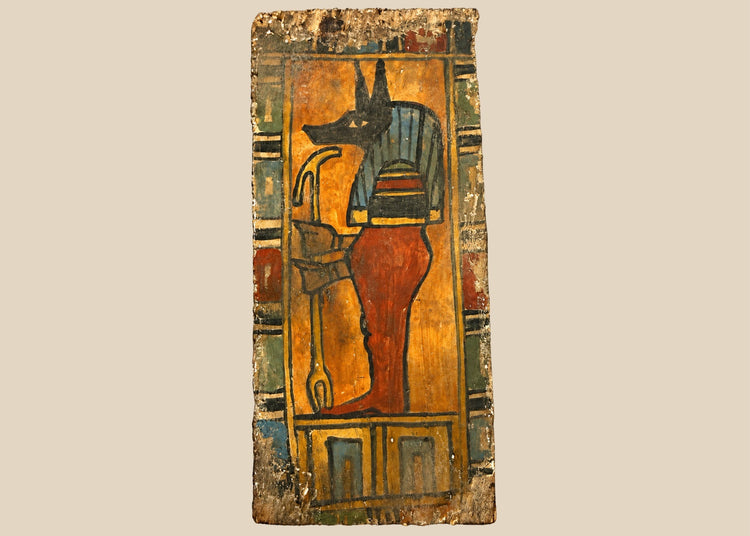
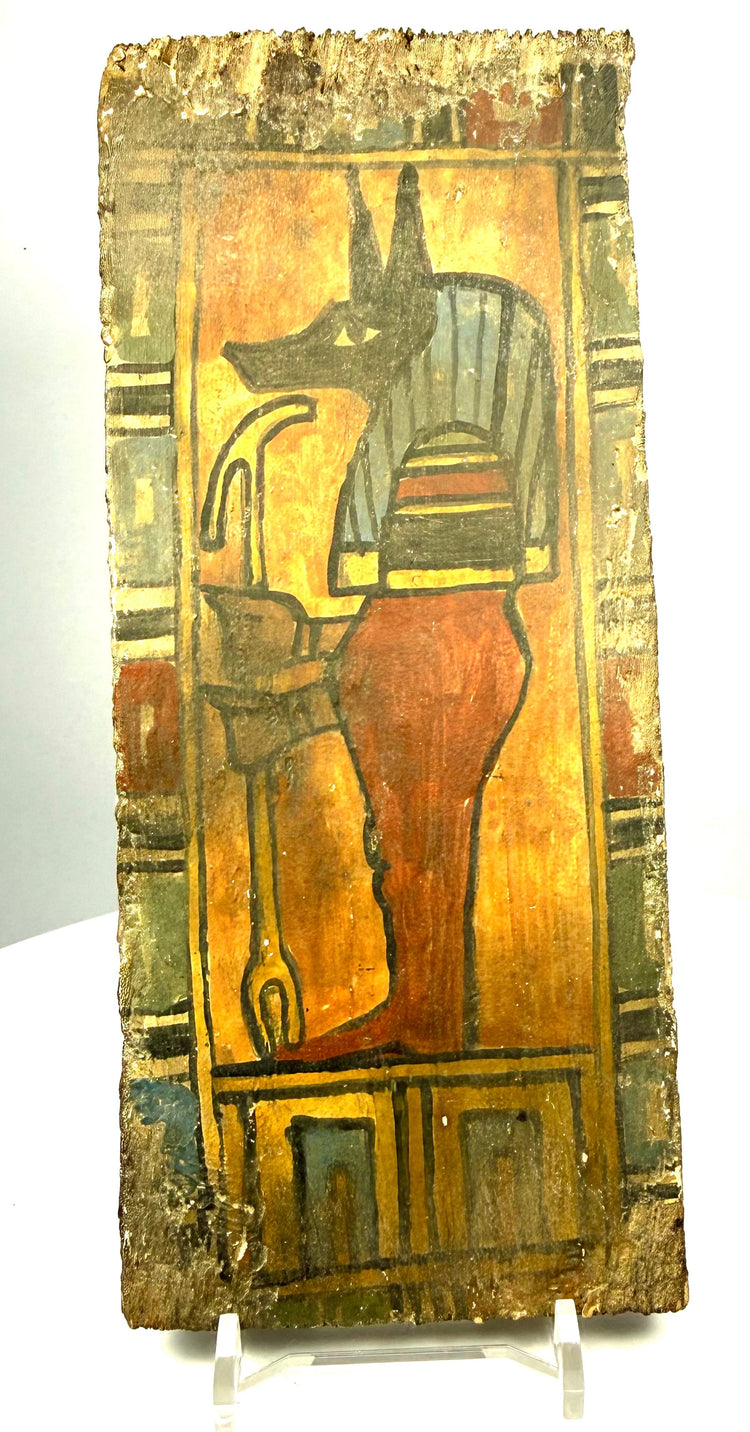
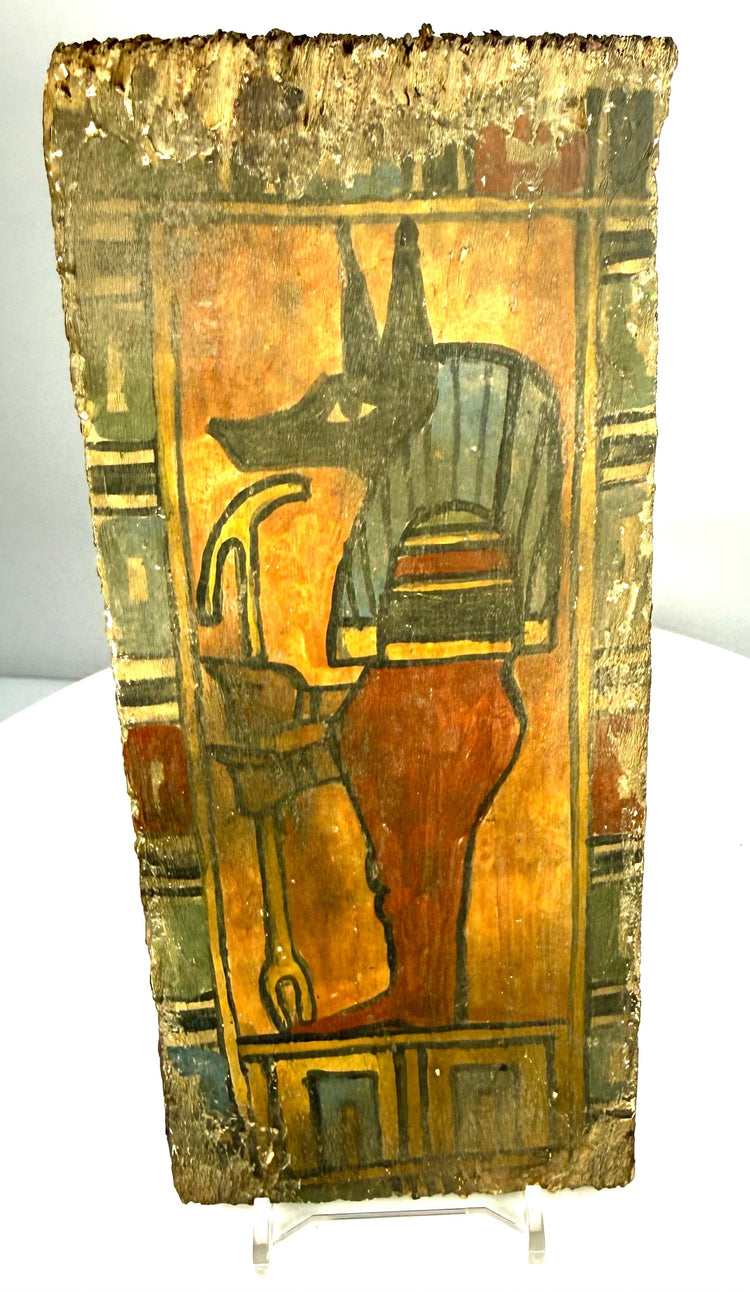
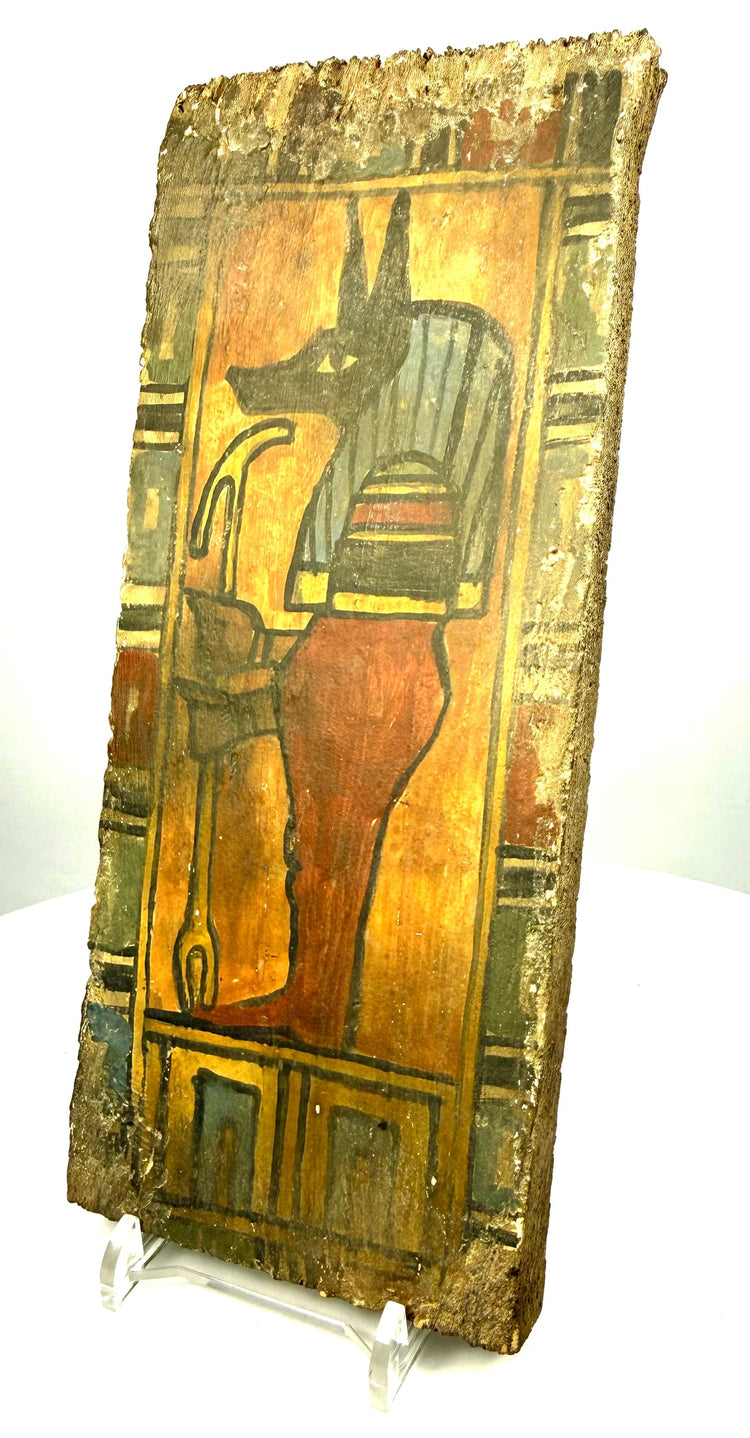
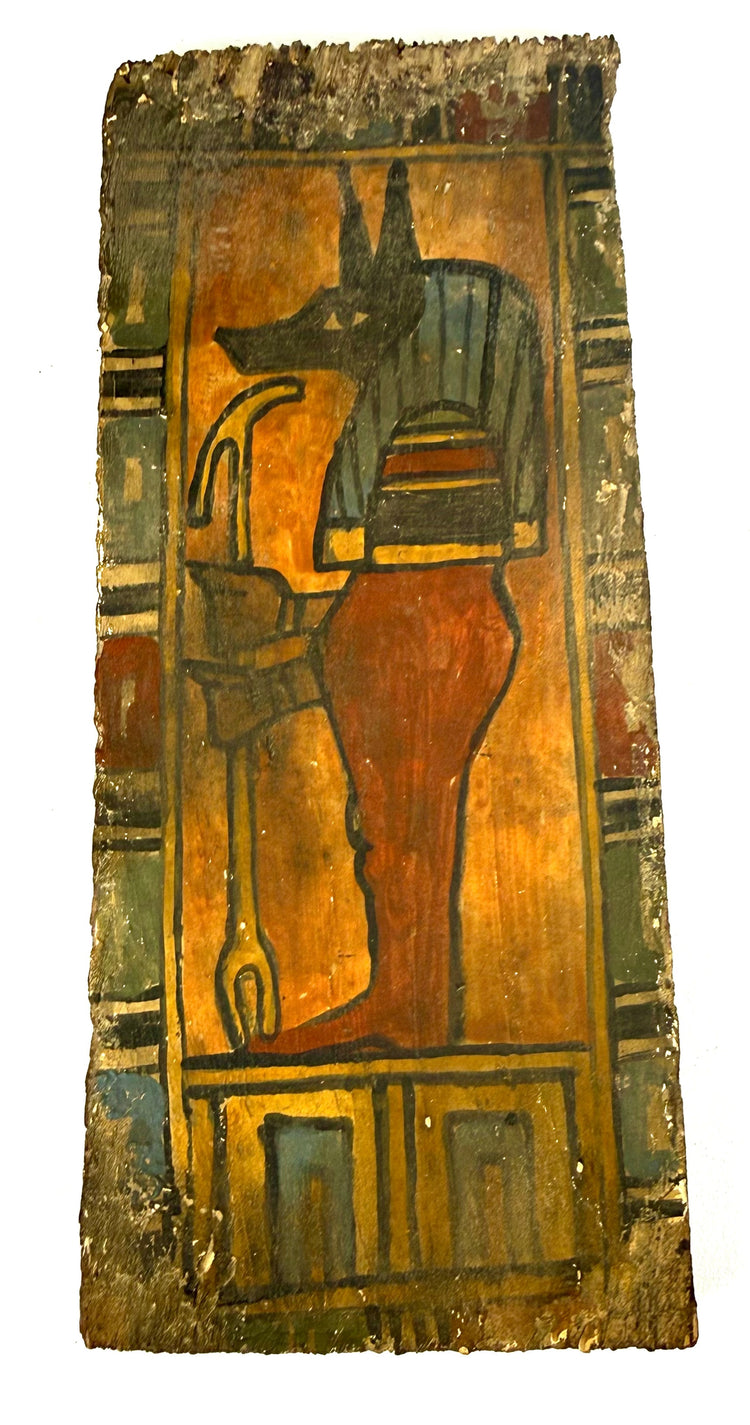
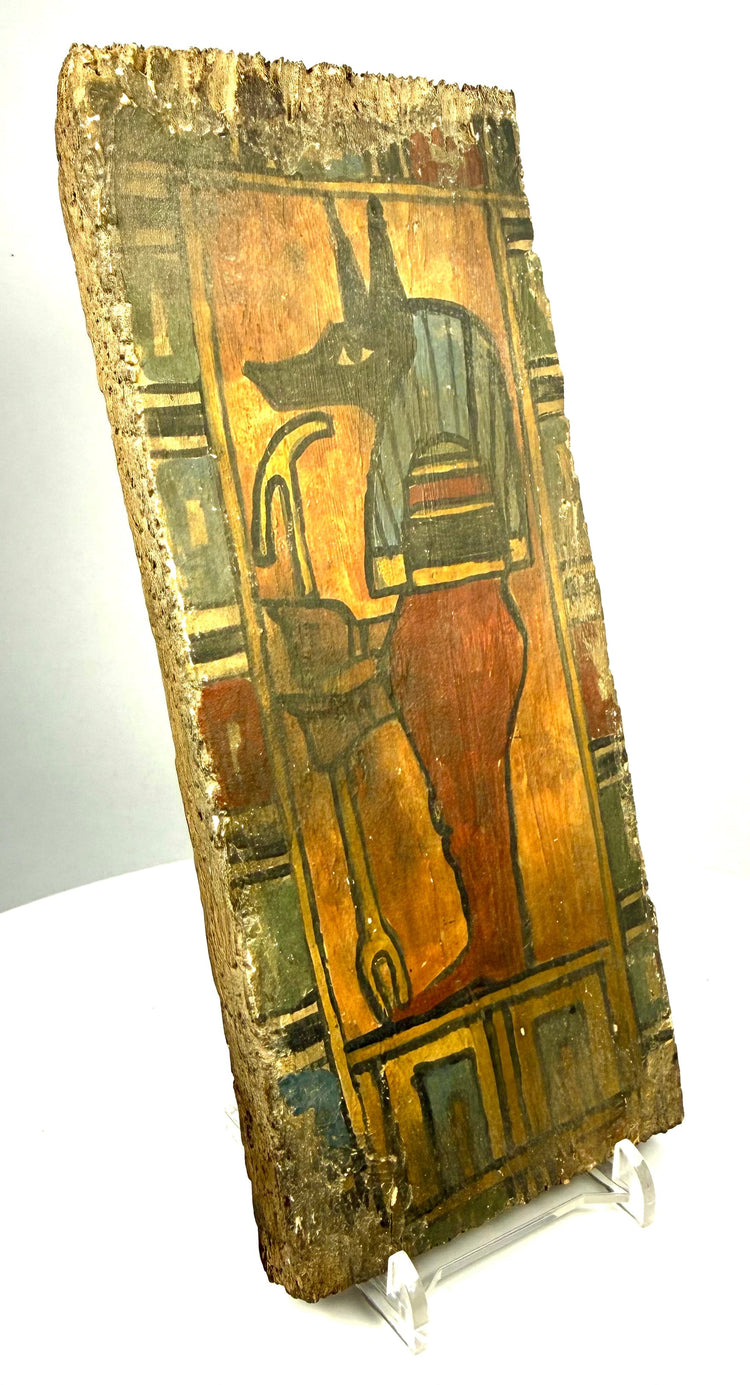
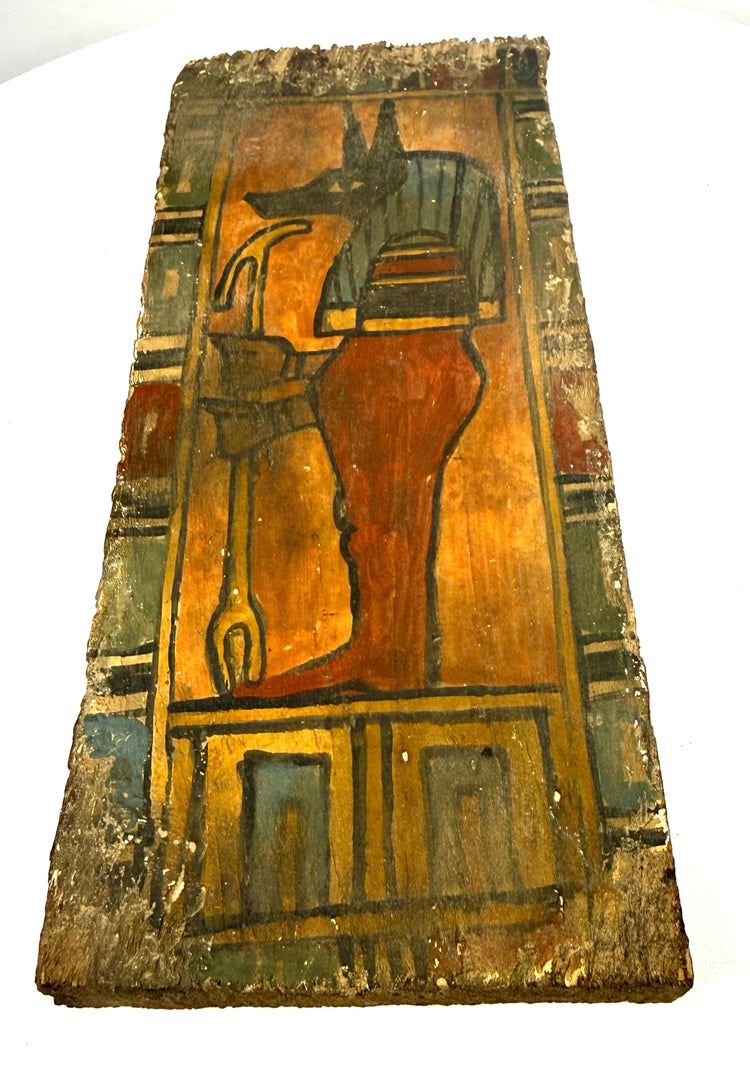
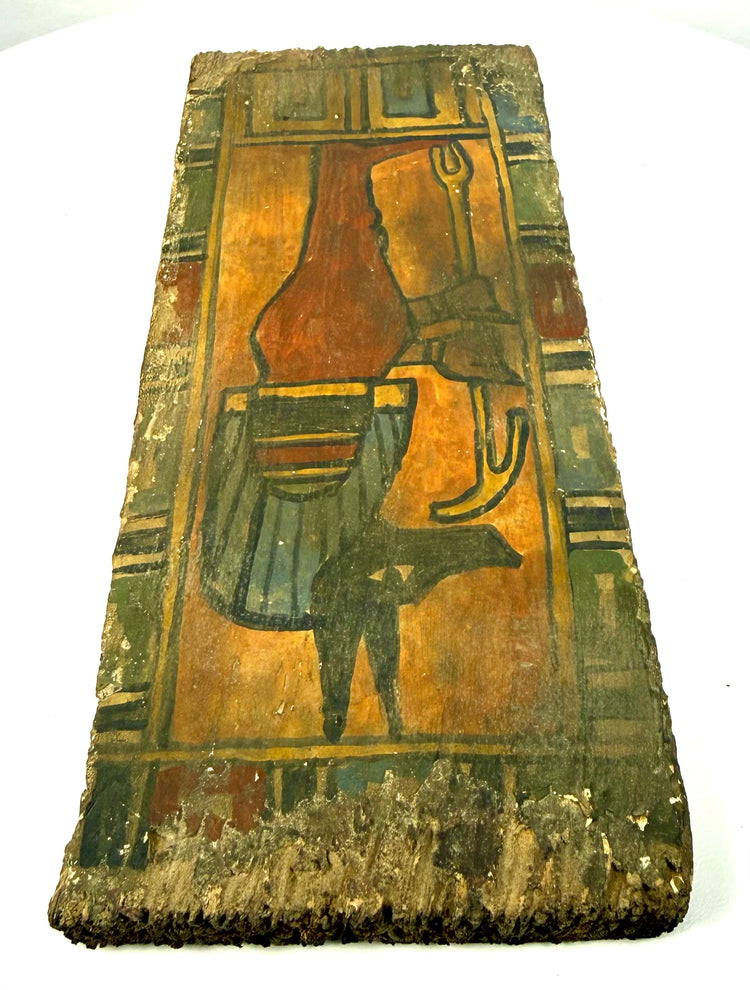
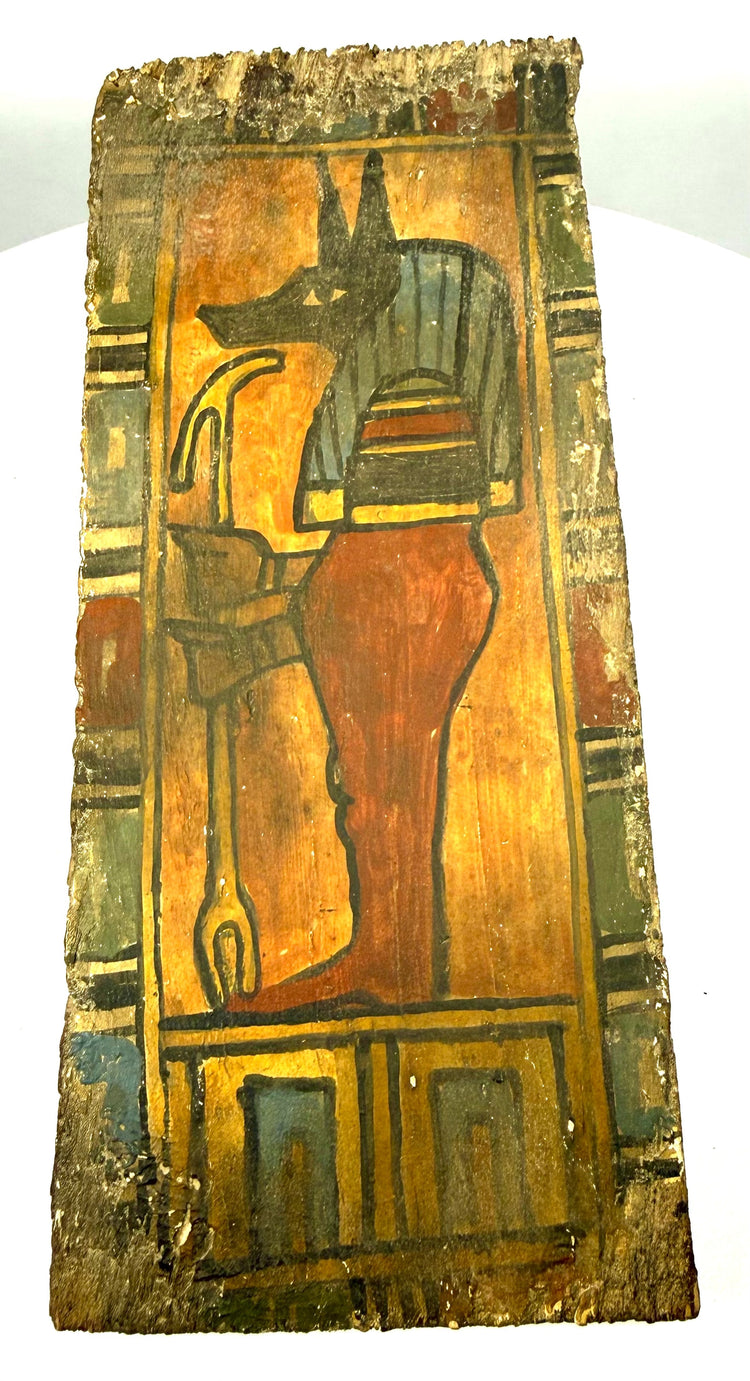
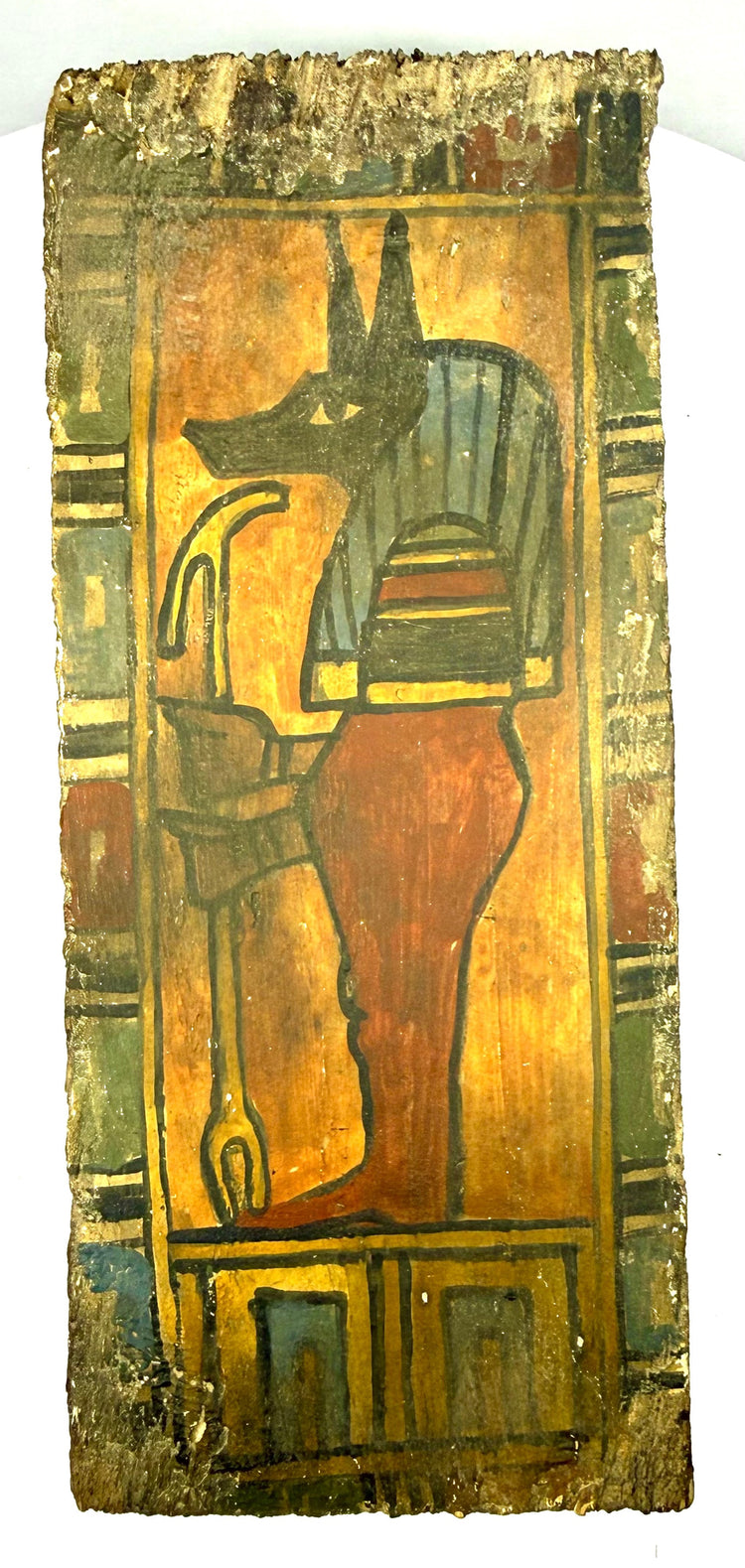
A narrow rectangular ancient Egyptian painted wooden funerary panel featuring the distinctive iconography of Duamutef, the jackal-headed protective deity and one of the Four Sons of Horus. The figure is rendered in profile, facing left, with a black canid head, elongated snout, tall pointed ears, a striped headdress, and an elongated reddish-brown mummiform body.
The deity holds a curved ritual element before the body, while the opposite arm extends downward. The figure stands upon a horizontal architectural or shrine-like register, framed by geometric borders in muted green, black, yellow, blue, and red. These decorative elements reflect the elaborate painted compositions associated with Egyptian funerary traditions.
The background is painted in a warm ochre-orange tone, creating a striking contrast with the dark jackal head and carefully outlined body of the deity. The surviving polychrome decoration preserves the distinctive artistic characteristics of Egyptian funerary painting, emphasizing symbolic imagery, protective figures, and carefully arranged decorative registers.
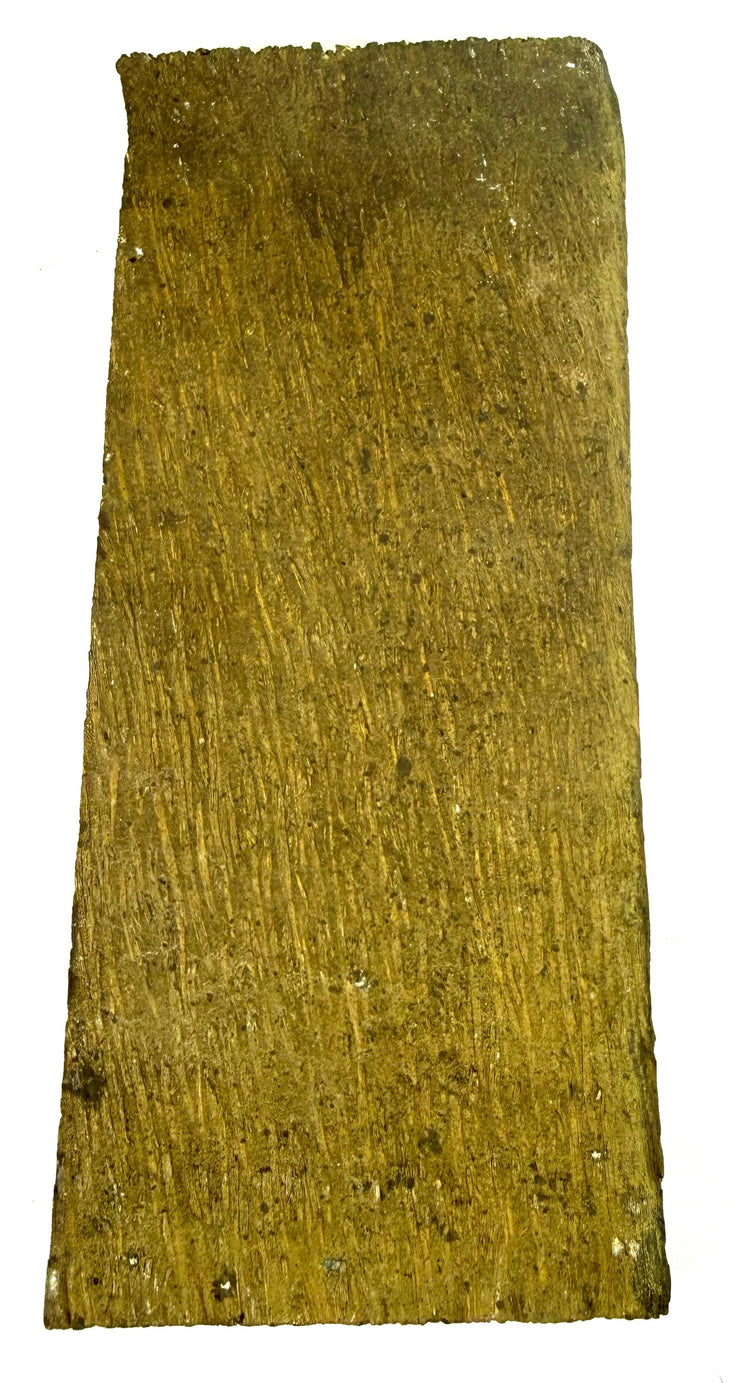
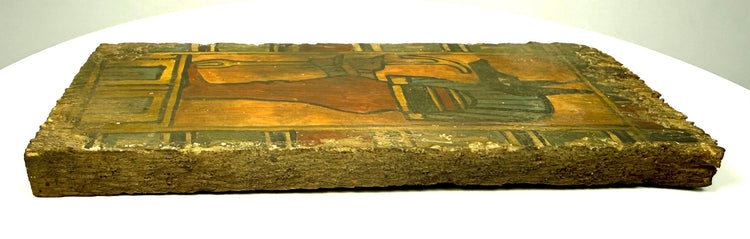
The reverse is undecorated and reveals pronounced longitudinal wood grain, while the substantial thickness and irregular edges demonstrate the fragmentary nature of the object. Areas of surviving pigment, surface preparation, and exposed wooden substrate provide insight into its construction and painted decoration.
The panel reflects the Egyptian tradition of incorporating protective deities into the decoration of wooden coffins and other mortuary furnishings. Closely related representations of Duamutef appear on Ptolemaic funerary objects, including a painted mummy covering preserved by National Museums Liverpool, which displays comparable jackal-headed iconography, a striped headdress, and folded ritual cloth.
Features
- Jackal-headed funerary deity displaying Duamutef iconography
- Distinctive black canid head with elongated ears and muzzle
- Elongated reddish-brown mummiform body
- Multicoloured striped headdress and decorative collar
- Curved ritual element held before the figure
- Warm ochre-orange painted background
- Geometric borders in green, black, yellow, blue, and red pigments
- Architectural or shrine-like decorative register beneath the deity
- Surviving polychrome decoration and finely outlined details
- Undecorated wooden reverse displaying pronounced longitudinal grain
- Irregular edges with visible surface losses and pigment wear
- Substantial approximately 0.6-inch-thick wooden construction
Cultural Significance
During the Ptolemaic Period, Egyptian funerary traditions continued many artistic and religious practices established centuries earlier. Wooden coffins and other mortuary furnishings were frequently decorated with protective deities, symbolic borders, hieroglyphic texts, and religious imagery intended to safeguard the deceased during the journey into the afterlife.
Duamutef was one of the Four Sons of Horus, alongside Imsety, Hapy, and Qebehsenuef, who served as protective deities in ancient Egyptian funerary religion. Traditionally associated with the stomach, Duamutef was represented with a jackal head and frequently depicted in mummiform dress. His image appeared on canopic equipment, funerary amulets, mummy coverings, and other objects associated with the protection and preservation of the deceased.
Representations of Duamutef often incorporated a striped headdress, wrapped body, and ritual attributes associated with the preparation and protection of the dead. These distinctive characteristics are reflected in the painted figure on this panel, demonstrating the enduring importance of protective funerary imagery throughout the Ptolemaic Period.
Closely related examples survive in major museum collections, including a Ptolemaic mummy covering at National Museums Liverpool and a plastered and painted wooden figure of Duamutef at The Metropolitan Museum of Art. These objects illustrate the variety of materials and artistic techniques employed in Egyptian funerary decoration.
The survival of painted funerary fragments provides valuable evidence of ancient Egyptian religious iconography, craftsmanship, and mortuary practices. With its preserved polychrome decoration and distinctive jackal-headed figure, the present panel offers an engaging example of the artistic and spiritual traditions associated with the protection of the deceased.
Condition
Fragmentary condition with surface characteristics consistent with considerable age and use.
The panel exhibits significant surface wear, losses along the upper and lower margins, abrasions, localized flaking, small losses to the painted surface, fading, and accumulated discoloration. Pigmentation remains clearly visible throughout much of the composition, and the principal jackal-headed figure remains readily identifiable.
The perimeter is irregular with losses and erosion to the wooden edges. The reverse is unpainted and displays pronounced longitudinal wood grain, surface variation, small pits, and darkened areas.
The substantial wooden substrate remains visible along the exposed edges, with areas of rough texture and localized surface deterioration.
Dimensions (Approximate)
Height: 7.5 in
Width: 3.2 in
Depth: 0.6 in
Age (Approximate)
2,050–2,350 years old
Provenance
Formerly part of a private collection in Indiana, USA, having been acquired from a gallery in New York in 1996.
Subsequently handled by Ripley Auctions & Appraisals, Indianapolis, Indiana. Ripley Auctions is an established Indianapolis auction house with more than three decades of experience handling fine art, antiques, antiquities, collectibles, and estate collections, serving collectors and buyers nationally and internationally.
Learn More
Discover a closely related Egyptian mummy covering depicting the jackal-headed deity Duamutef in the collection of National Museums Liverpool
Browse our collection of Ancient Egyptian Mummies & Artifacts
Description
Historical Context & Origin
Region: Ancient Egypt
Material: Painted wood with surviving polychrome pigments and traces of prepared surface
Period: Ptolemaic Period, circa 332–30 BCE
Description
A narrow rectangular ancient Egyptian painted wooden funerary panel featuring the distinctive iconography of Duamutef, the jackal-headed protective deity and one of the Four Sons of Horus. The figure is rendered in profile, facing left, with a black canid head, elongated snout, tall pointed ears, a striped headdress, and an elongated reddish-brown mummiform body.
The deity holds a curved ritual element before the body, while the opposite arm extends downward. The figure stands upon a horizontal architectural or shrine-like register, framed by geometric borders in muted green, black, yellow, blue, and red. These decorative elements reflect the elaborate painted compositions associated with Egyptian funerary traditions.
The background is painted in a warm ochre-orange tone, creating a striking contrast with the dark jackal head and carefully outlined body of the deity. The surviving polychrome decoration preserves the distinctive artistic characteristics of Egyptian funerary painting, emphasizing symbolic imagery, protective figures, and carefully arranged decorative registers.
The reverse is undecorated and reveals pronounced longitudinal wood grain, while the substantial thickness and irregular edges demonstrate the fragmentary nature of the object. Areas of surviving pigment, surface preparation, and exposed wooden substrate provide insight into its construction and painted decoration.
The panel reflects the Egyptian tradition of incorporating protective deities into the decoration of wooden coffins and other mortuary furnishings. Closely related representations of Duamutef appear on Ptolemaic funerary objects, including a painted mummy covering preserved by National Museums Liverpool, which displays comparable jackal-headed iconography, a striped headdress, and folded ritual cloth.
Features
- Jackal-headed funerary deity displaying Duamutef iconography
- Distinctive black canid head with elongated ears and muzzle
- Elongated reddish-brown mummiform body
- Multicoloured striped headdress and decorative collar
- Curved ritual element held before the figure
- Warm ochre-orange painted background
- Geometric borders in green, black, yellow, blue, and red pigments
- Architectural or shrine-like decorative register beneath the deity
- Surviving polychrome decoration and finely outlined details
- Undecorated wooden reverse displaying pronounced longitudinal grain
- Irregular edges with visible surface losses and pigment wear
- Substantial approximately 0.6-inch-thick wooden construction
Cultural Significance
During the Ptolemaic Period, Egyptian funerary traditions continued many artistic and religious practices established centuries earlier. Wooden coffins and other mortuary furnishings were frequently decorated with protective deities, symbolic borders, hieroglyphic texts, and religious imagery intended to safeguard the deceased during the journey into the afterlife.
Duamutef was one of the Four Sons of Horus, alongside Imsety, Hapy, and Qebehsenuef, who served as protective deities in ancient Egyptian funerary religion. Traditionally associated with the stomach, Duamutef was represented with a jackal head and frequently depicted in mummiform dress. His image appeared on canopic equipment, funerary amulets, mummy coverings, and other objects associated with the protection and preservation of the deceased.
Representations of Duamutef often incorporated a striped headdress, wrapped body, and ritual attributes associated with the preparation and protection of the dead. These distinctive characteristics are reflected in the painted figure on this panel, demonstrating the enduring importance of protective funerary imagery throughout the Ptolemaic Period.
Closely related examples survive in major museum collections, including a Ptolemaic mummy covering at National Museums Liverpool and a plastered and painted wooden figure of Duamutef at The Metropolitan Museum of Art. These objects illustrate the variety of materials and artistic techniques employed in Egyptian funerary decoration.
The survival of painted funerary fragments provides valuable evidence of ancient Egyptian religious iconography, craftsmanship, and mortuary practices. With its preserved polychrome decoration and distinctive jackal-headed figure, the present panel offers an engaging example of the artistic and spiritual traditions associated with the protection of the deceased.
Condition
Fragmentary condition with surface characteristics consistent with considerable age and use.
The panel exhibits significant surface wear, losses along the upper and lower margins, abrasions, localized flaking, small losses to the painted surface, fading, and accumulated discoloration. Pigmentation remains clearly visible throughout much of the composition, and the principal jackal-headed figure remains readily identifiable.
The perimeter is irregular with losses and erosion to the wooden edges. The reverse is unpainted and displays pronounced longitudinal wood grain, surface variation, small pits, and darkened areas.
The substantial wooden substrate remains visible along the exposed edges, with areas of rough texture and localized surface deterioration.
Dimensions (Approximate)
Height: 7.5 in
Width: 3.2 in
Depth: 0.6 in
Age (Approximate)
2,050–2,350 years old
Provenance
Formerly part of a private collection in Indiana, USA, having been acquired from a gallery in New York in 1996.
Subsequently handled by Ripley Auctions & Appraisals, Indianapolis, Indiana. Ripley Auctions is an established Indianapolis auction house with more than three decades of experience handling fine art, antiques, antiquities, collectibles, and estate collections, serving collectors and buyers nationally and internationally.
Learn More
Discover a closely related Egyptian mummy covering depicting the jackal-headed deity Duamutef in the collection of National Museums Liverpool
Browse our collection of Ancient Egyptian Mummies & Artifacts
You May Also Like
