
Ancient Egyptian | Faience Amulet Piece | with Suspension Piercing | Circa 664–332 BC
Couldn't load pickup availability


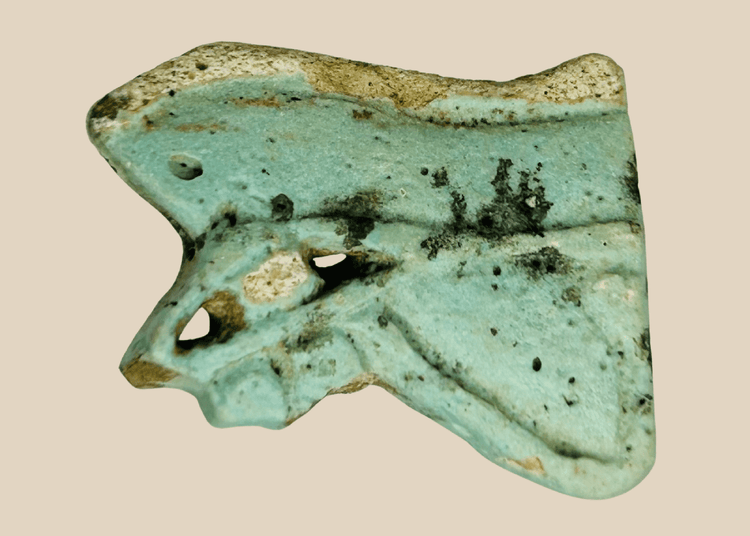
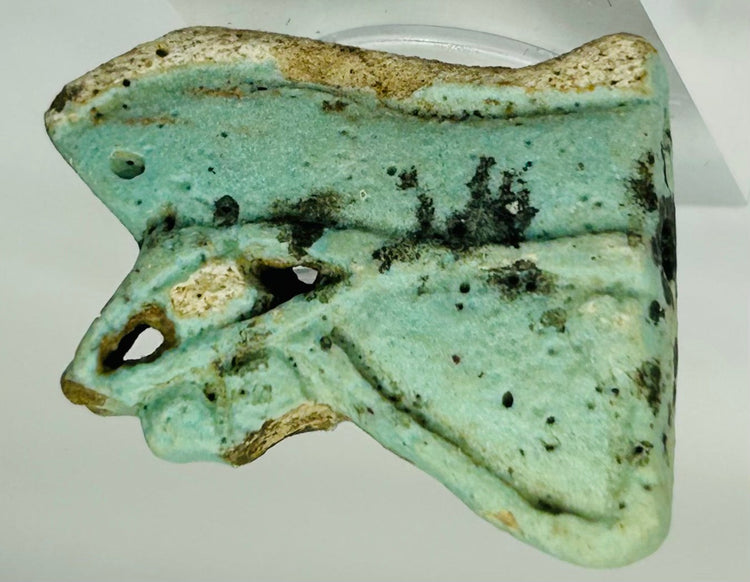
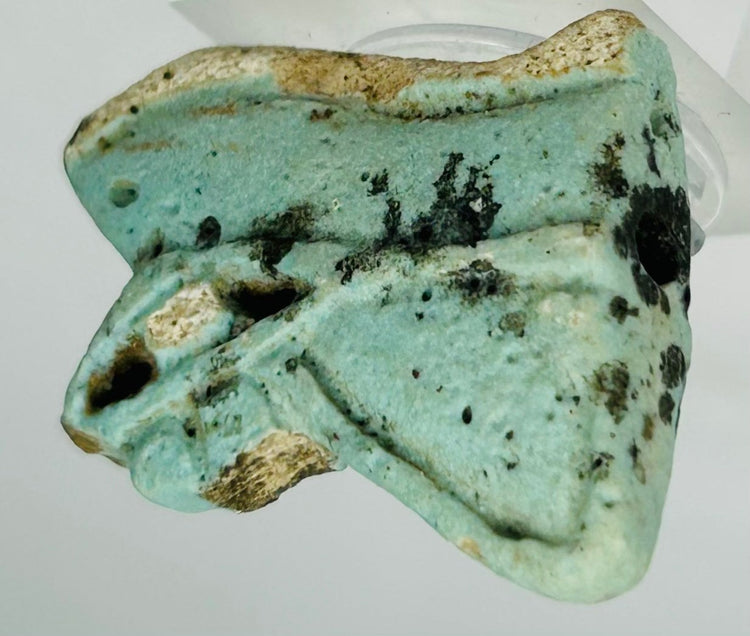
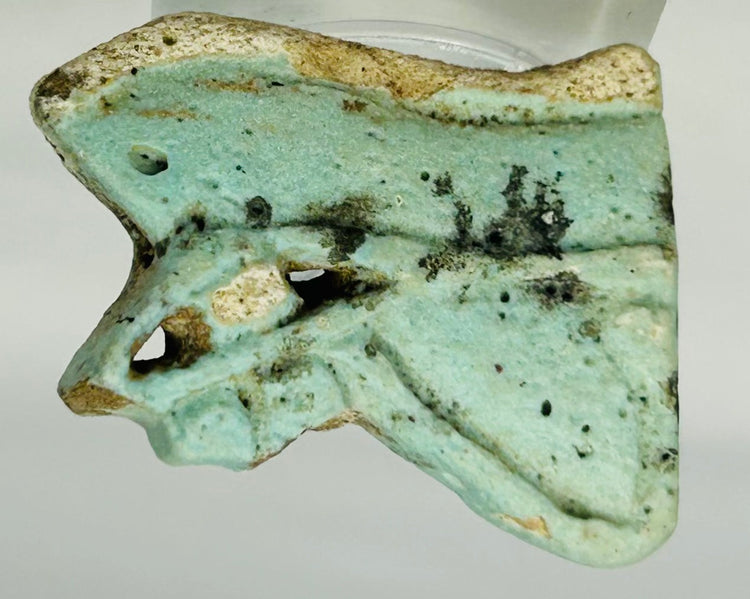
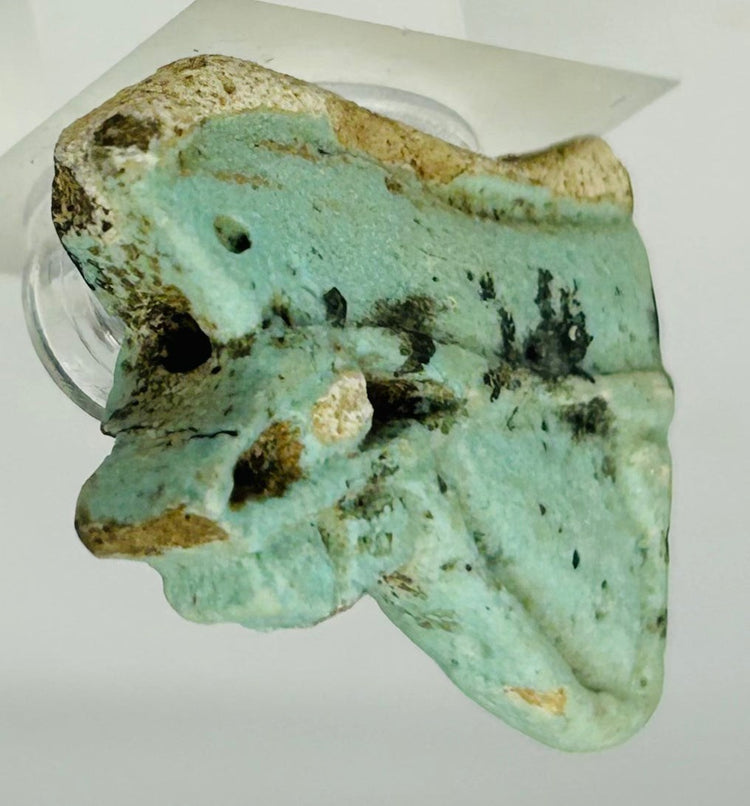
Ancient Egyptian | Faience Amulet Piece | with Suspension Piercing | Circa 664–332 BC
Description
More
Less
Historical Context & Origin
Region: Ancient Egypt
Material: Blue-green faience with earthen burial deposits
Period: Late Period to Ptolemaic, Circa 664–332 BC
Description
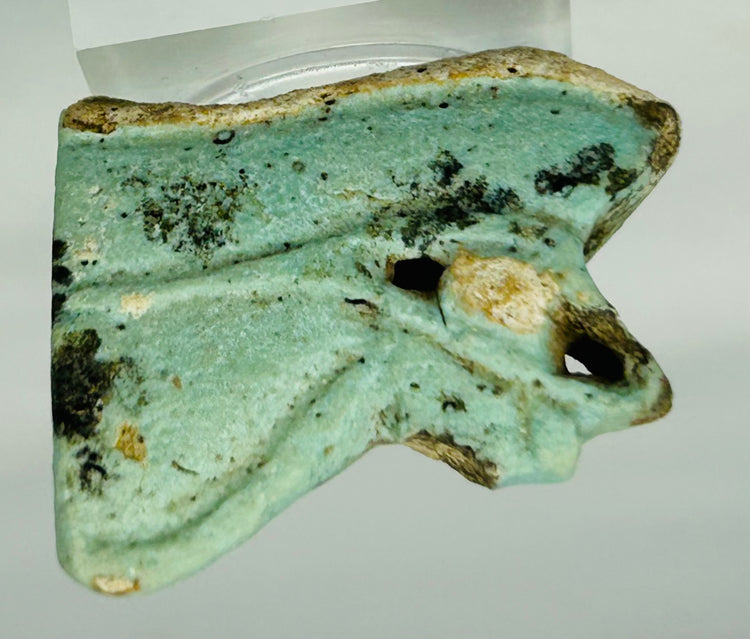
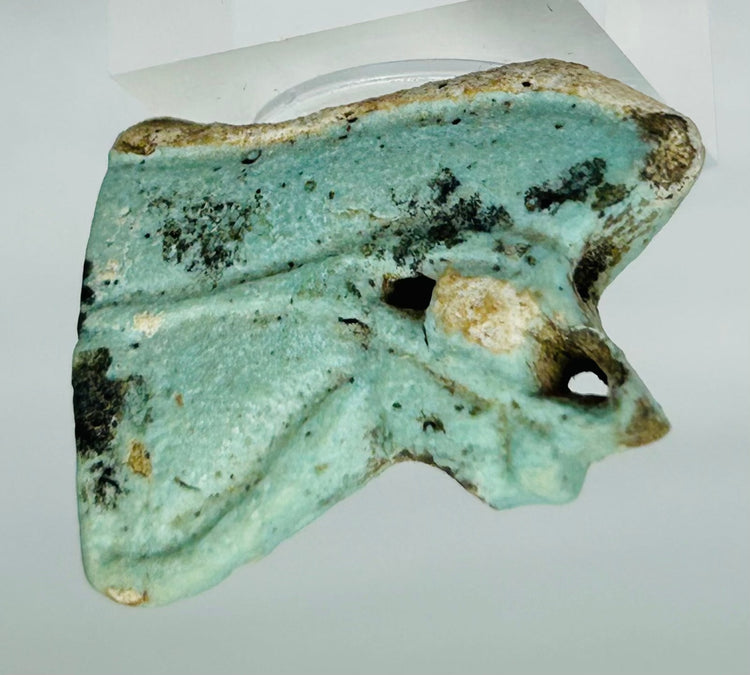
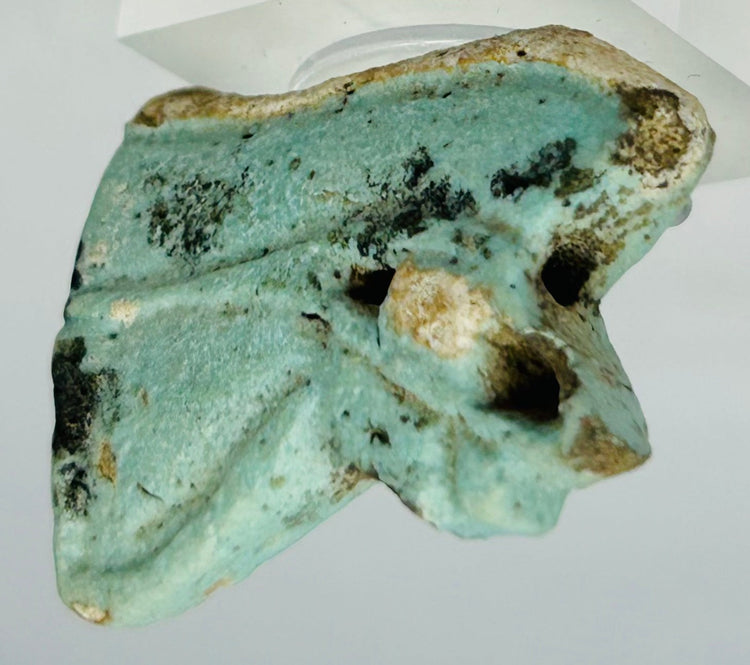
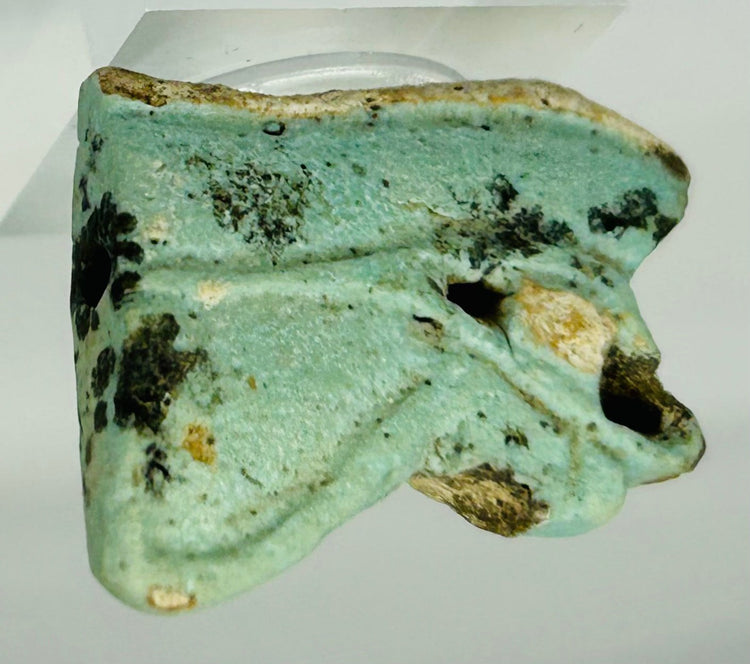
A beautifully preserved fragment of an ancient Egyptian faience Wedjat (Eye of Horus) amulet, originally part of a larger protective talisman worn for spiritual safeguarding. The piece retains much of its original blue-green glaze with attractive surface encrustation and earthen patination developed over millennia of burial. A pierced suspension channel remains present, indicating it once hung as a personal protective charm.
The Eye of Horus was among the most important symbols in Egyptian culture, believed to provide healing, strength, divine protection, and rebirth through association with the god Horus.
Features
- Authentic Ancient Egyptian faience Eye of Horus amulet fragment
- Retains distinct sculpted detailing and recognizable Wedjat form elements
- Classic turquoise faience glaze with ancient burial deposits
- Suspension piercing still visible
Cultural Significance
The Wedjat Eye symbolized protection, health, and restoration. Egyptians wore these amulets in life and placed them within burials to safeguard the deceased on their journey to the afterlife. They are among the most iconic and spiritually significant artifacts of ancient Egypt.
Condition
Fragmentary as excavated, with expected age wear, glaze losses, and surface deposits consistent with authentic ancient faience. Displays beautifully.
Dimensions (Approximate)
Length: 1 in
Height: 0.8 in
Age (Approximate)
2,350–2,700 years old
Learn More
Learn about the symbolism of the Eye of Horus through Encyclopedia Britannica
Discover our curated Ancient Egyptian Mummies & Artifacts Collection
Description
Historical Context & Origin
Region: Ancient Egypt
Material: Blue-green faience with earthen burial deposits
Period: Late Period to Ptolemaic, Circa 664–332 BC
Description
A beautifully preserved fragment of an ancient Egyptian faience Wedjat (Eye of Horus) amulet, originally part of a larger protective talisman worn for spiritual safeguarding. The piece retains much of its original blue-green glaze with attractive surface encrustation and earthen patination developed over millennia of burial. A pierced suspension channel remains present, indicating it once hung as a personal protective charm.
The Eye of Horus was among the most important symbols in Egyptian culture, believed to provide healing, strength, divine protection, and rebirth through association with the god Horus.
Features
- Authentic Ancient Egyptian faience Eye of Horus amulet fragment
- Retains distinct sculpted detailing and recognizable Wedjat form elements
- Classic turquoise faience glaze with ancient burial deposits
- Suspension piercing still visible
Cultural Significance
The Wedjat Eye symbolized protection, health, and restoration. Egyptians wore these amulets in life and placed them within burials to safeguard the deceased on their journey to the afterlife. They are among the most iconic and spiritually significant artifacts of ancient Egypt.
Condition
Fragmentary as excavated, with expected age wear, glaze losses, and surface deposits consistent with authentic ancient faience. Displays beautifully.
Dimensions (Approximate)
Length: 1 in
Height: 0.8 in
Age (Approximate)
2,350–2,700 years old
Learn More
Learn about the symbolism of the Eye of Horus through Encyclopedia Britannica
Discover our curated Ancient Egyptian Mummies & Artifacts Collection
You May Also Like
