



Ancient Egyptian Faience Divine Figure Amulet Pendant | Late Period–Ptolemaic Period | Circa 664–30 BCE
Couldn't load pickup availability


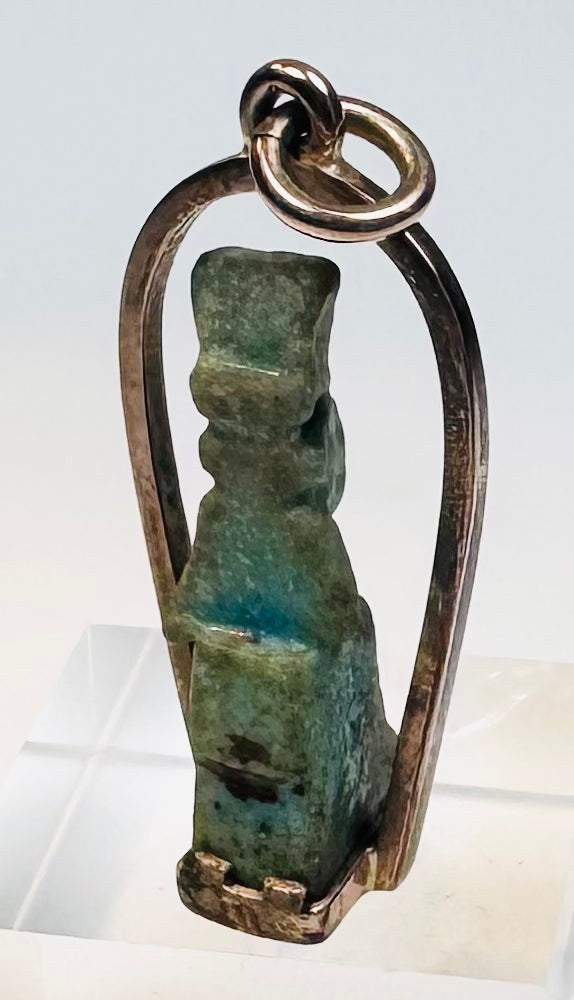
Ancient Egyptian Faience Divine Figure Amulet Pendant | Late Period–Ptolemaic Period | Circa 664–30 BCE
Description
More
Less
Historical Context & Origin
Region: Ancient Egypt
Material: Blue-green faience mounted in a later gold pendant setting
Period: Late Period–Ptolemaic Period, circa 664–30 BCE
Description
This ancient Egyptian amulet is carved in the form of a stylized standing divine figure rendered in blue-green faience, a material highly prized throughout ancient Egypt for its symbolic association with fertility, rebirth, and the life-giving waters of the Nile. Although the precise identity of the figure remains uncertain due to centuries of wear and weathering, the surviving profile suggests a representation of a deity or protective funerary figure, possibly associated with the broad corpus of divine and mummiform amulets produced during the Late and Ptolemaic periods.
The figure displays a simplified, columnar body surmounted by a distinctive headdress or crown, with projecting arms rendered in low relief along the sides. Traces of the original turquoise-blue glaze remain visible across the surface, while areas of mineral accretion and age-related wear attest to the object's considerable antiquity. A perforation running laterally through the head likely served as the original suspension point, indicating that the amulet was intended to be worn or incorporated into funerary adornment.
At some point in the modern era, the ancient amulet was carefully mounted within a custom gold pendant frame, transforming the archaeological object into a wearable piece of jewelry while preserving the integrity of the original faience figure. Amulets of this type were widely employed in both daily life and funerary contexts, serving as talismans intended to invoke divine protection and ensure safe passage into the afterlife.
Features
- Depicts a stylized standing divine or funerary figure
- Carved from blue-green glazed faience
- Likely dating to the Late Period–Ptolemaic Period, circa 664–30 BCE
- Retains traces of original turquoise glazing
- Original suspension perforation visible through the upper portion of the figure
- Mounted in a later gold pendant setting
- Displays extensive age-related patination and mineral accretions
Cultural Significance
Faience amulets occupied a central role in ancient Egyptian religious and funerary traditions for over three millennia. Produced in the forms of gods, sacred animals, and protective symbols, they were believed to harness divine power and provide spiritual protection to their owners. The vibrant blue-green coloration of Egyptian faience symbolized regeneration, fertility, and eternal life, making such objects especially appropriate for burial assemblages.
While the precise identity of this figure cannot be definitively established, amulets depicting deities such as Horus, Osiris, Ptah, Ra-Horakhty, and other protective divinities were widely produced during the Late and Ptolemaic periods.
Condition
The amulet remains intact and displays expected wear consistent with considerable age. The surface exhibits scattered glaze loss, mineral deposits, and areas of weathering throughout. The original details have softened over time, making a precise identification of the figure difficult. The object has been mounted in a later gold pendant frame, which remains secure.
Dimensions (Approximate)
Height: 0.875 in
Age (Approximate)
2,000–2,700 years old
Provenance
Formerly part of a private Portland, Maine, USA collection specializing in Egyptian artifacts. The collection was assembled over many years with a particular emphasis on ancient Egyptian amulets, funerary objects, faience works, and small antiquities.
Learn More
Explore the religious symbolism and protective role of Ancient Egyptian amulets at The Metropolitan Museum of Art.
Browse our Collection of Ancient Egyptian Mummies and Artifacts.
Description
Historical Context & Origin
Region: Ancient Egypt
Material: Blue-green faience mounted in a later gold pendant setting
Period: Late Period–Ptolemaic Period, circa 664–30 BCE
Description
This ancient Egyptian amulet is carved in the form of a stylized standing divine figure rendered in blue-green faience, a material highly prized throughout ancient Egypt for its symbolic association with fertility, rebirth, and the life-giving waters of the Nile. Although the precise identity of the figure remains uncertain due to centuries of wear and weathering, the surviving profile suggests a representation of a deity or protective funerary figure, possibly associated with the broad corpus of divine and mummiform amulets produced during the Late and Ptolemaic periods.
The figure displays a simplified, columnar body surmounted by a distinctive headdress or crown, with projecting arms rendered in low relief along the sides. Traces of the original turquoise-blue glaze remain visible across the surface, while areas of mineral accretion and age-related wear attest to the object's considerable antiquity. A perforation running laterally through the head likely served as the original suspension point, indicating that the amulet was intended to be worn or incorporated into funerary adornment.
At some point in the modern era, the ancient amulet was carefully mounted within a custom gold pendant frame, transforming the archaeological object into a wearable piece of jewelry while preserving the integrity of the original faience figure. Amulets of this type were widely employed in both daily life and funerary contexts, serving as talismans intended to invoke divine protection and ensure safe passage into the afterlife.
Features
- Depicts a stylized standing divine or funerary figure
- Carved from blue-green glazed faience
- Likely dating to the Late Period–Ptolemaic Period, circa 664–30 BCE
- Retains traces of original turquoise glazing
- Original suspension perforation visible through the upper portion of the figure
- Mounted in a later gold pendant setting
- Displays extensive age-related patination and mineral accretions
Cultural Significance
Faience amulets occupied a central role in ancient Egyptian religious and funerary traditions for over three millennia. Produced in the forms of gods, sacred animals, and protective symbols, they were believed to harness divine power and provide spiritual protection to their owners. The vibrant blue-green coloration of Egyptian faience symbolized regeneration, fertility, and eternal life, making such objects especially appropriate for burial assemblages.
While the precise identity of this figure cannot be definitively established, amulets depicting deities such as Horus, Osiris, Ptah, Ra-Horakhty, and other protective divinities were widely produced during the Late and Ptolemaic periods.
Condition
The amulet remains intact and displays expected wear consistent with considerable age. The surface exhibits scattered glaze loss, mineral deposits, and areas of weathering throughout. The original details have softened over time, making a precise identification of the figure difficult. The object has been mounted in a later gold pendant frame, which remains secure.
Dimensions (Approximate)
Height: 0.875 in
Age (Approximate)
2,000–2,700 years old
Provenance
Formerly part of a private Portland, Maine, USA collection specializing in Egyptian artifacts. The collection was assembled over many years with a particular emphasis on ancient Egyptian amulets, funerary objects, faience works, and small antiquities.
Learn More
Explore the religious symbolism and protective role of Ancient Egyptian amulets at The Metropolitan Museum of Art.
Browse our Collection of Ancient Egyptian Mummies and Artifacts.
You May Also Like
