



Ancient Egyptian Recumbent Ram Faience Amulet with Suspension Loop | Late Period | Circa 664–332 BCE
Couldn't load pickup availability





Ancient Egyptian Recumbent Ram Faience Amulet with Suspension Loop | Late Period | Circa 664–332 BCE
Description
More
Less
Historical Context & Origin
Region: Ancient Egypt
Material: Faience (glazed siliceous composition)
Period: Late Period, 26th–30th Dynasties, circa 664–332 BCE
Description
This finely detailed miniature Egyptian faience amulet depicts a recumbent ram, an important sacred animal associated with divine protection, fertility, creative power, and regeneration in ancient Egyptian religious beliefs. Attributed to the Late Period, circa 664–332 BCE, the amulet reflects the artistic craftsmanship and protective symbolism associated with sacred animal representations, particularly those connected with the gods Khnum and Amun.
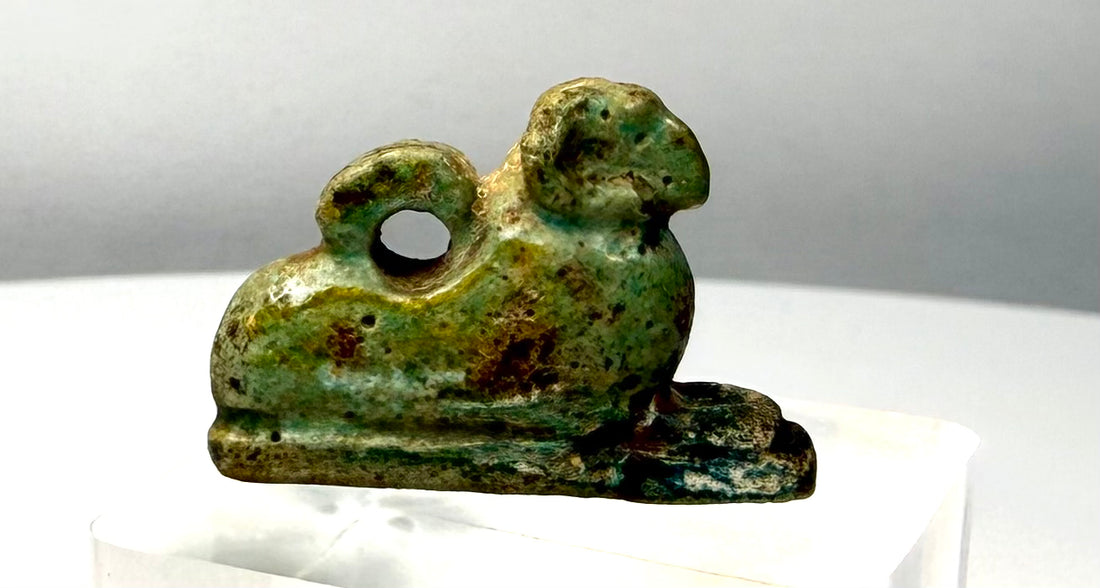
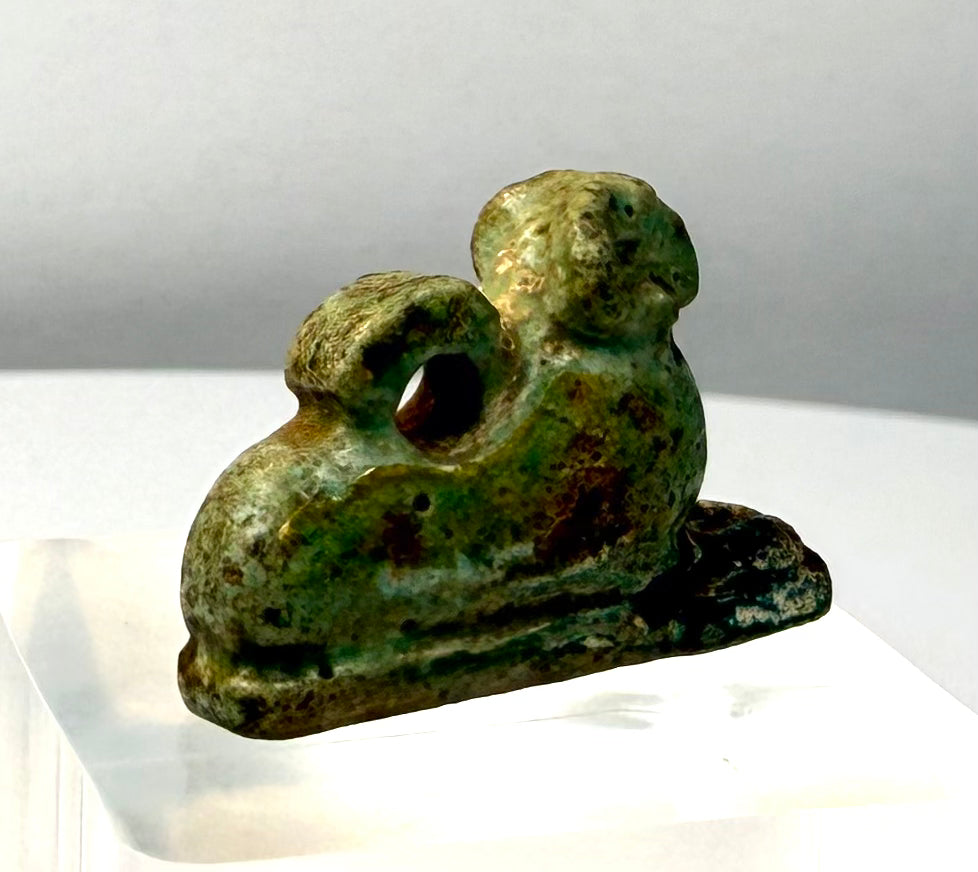
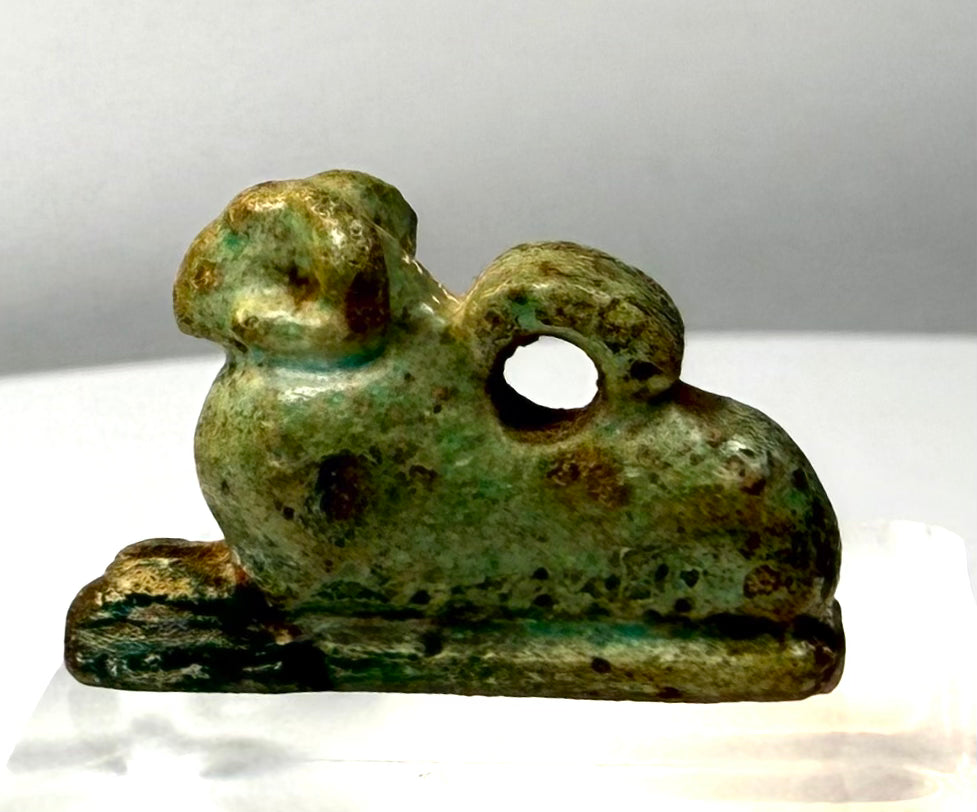
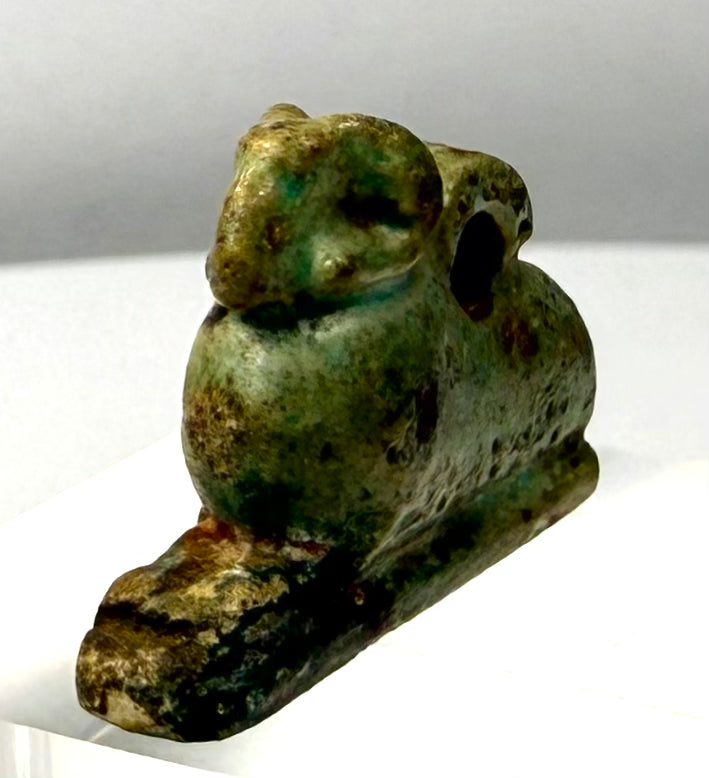
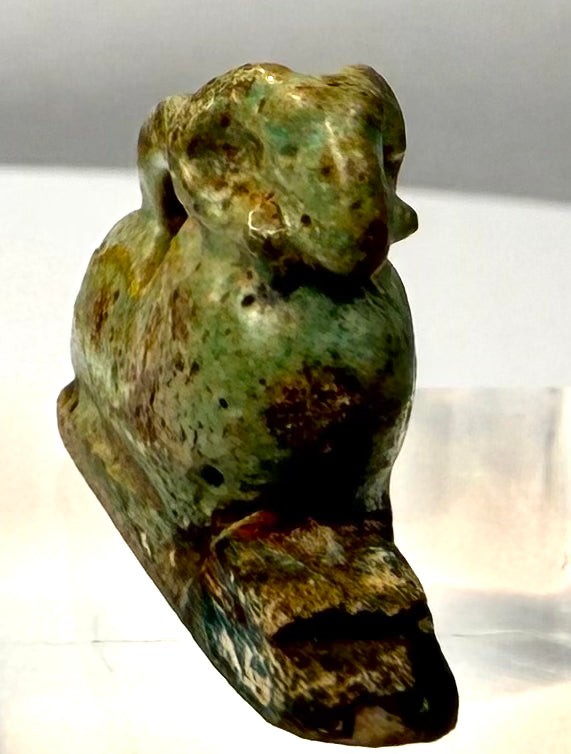
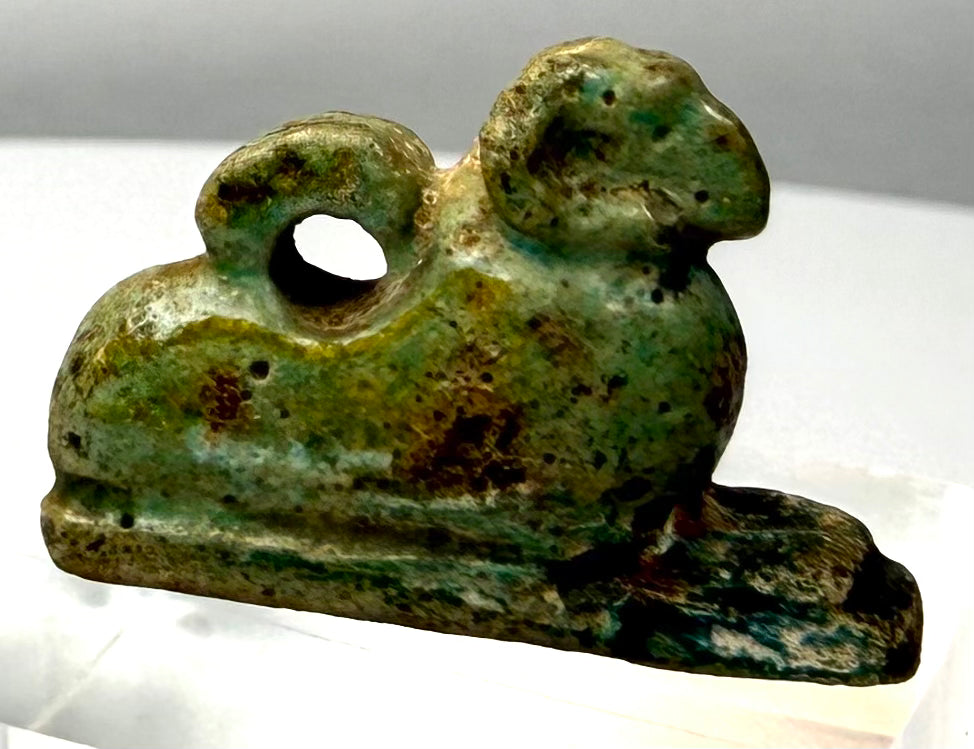
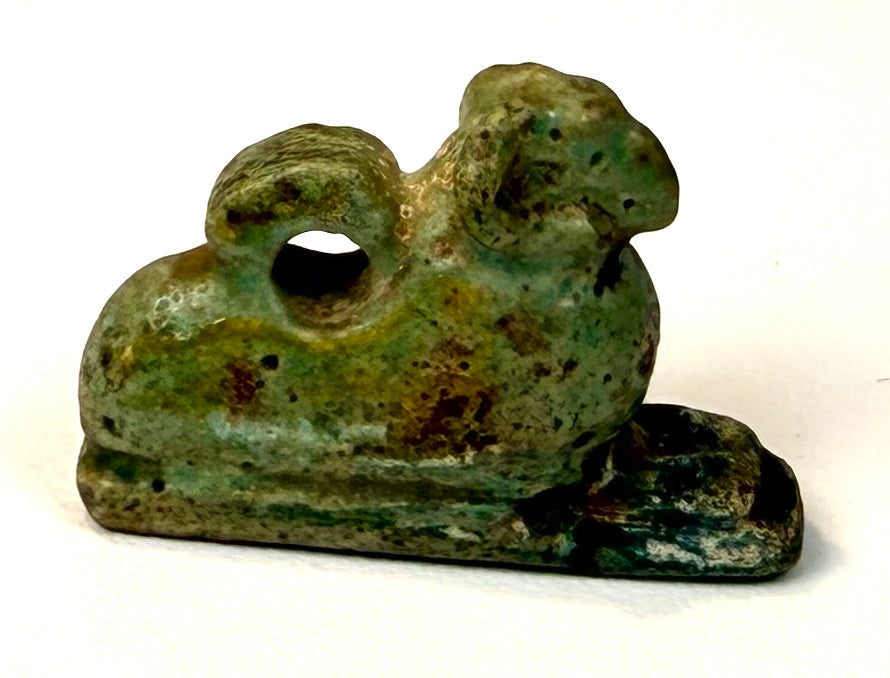
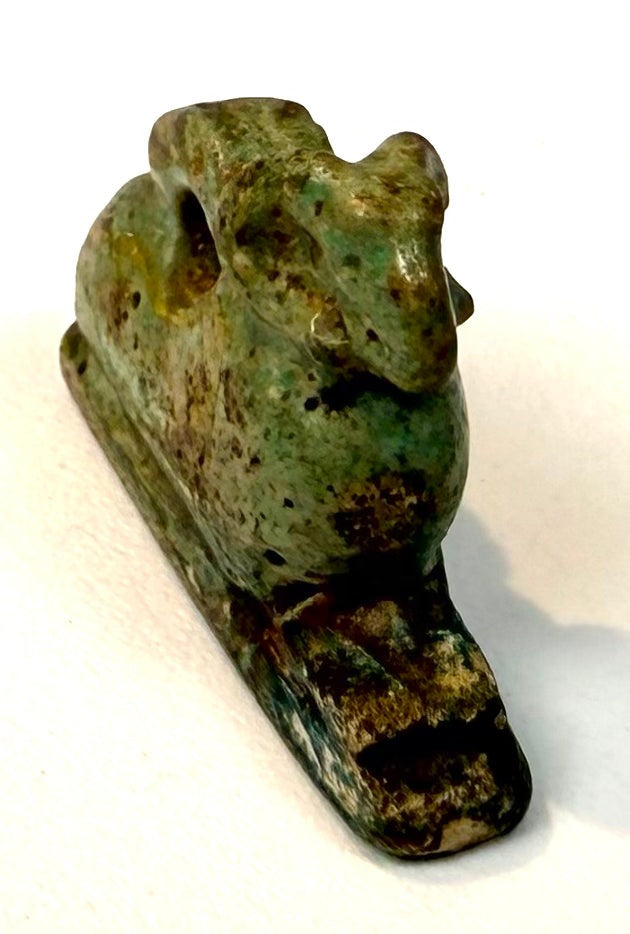
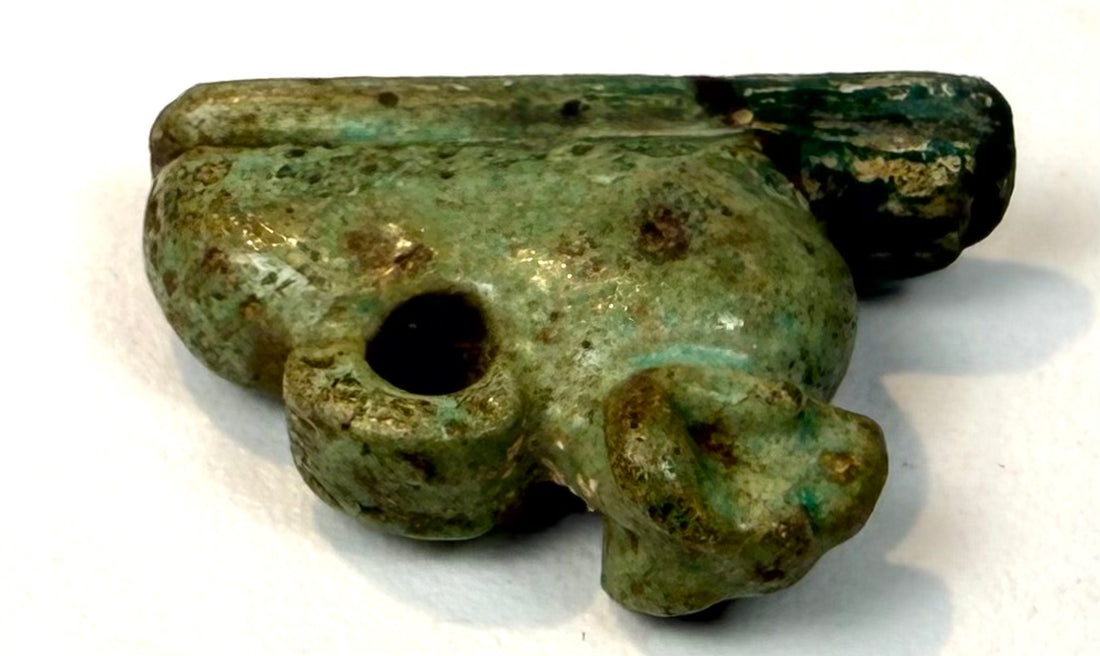
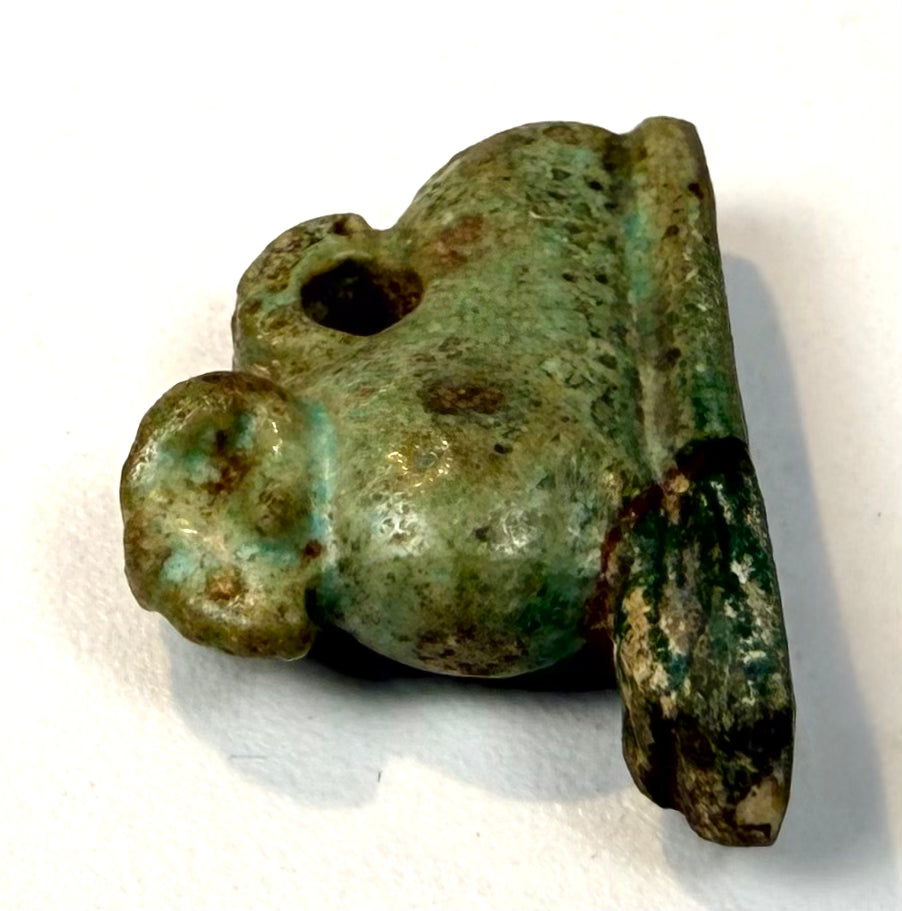
The ram is depicted in a recumbent position upon an integral rectangular base, with its forelegs extended forward and its head raised in an alert, watchful posture. The sculpted figure features a rounded body, elongated muzzle, defined facial contours, and curved horn-like details surrounding the head. A distinctive circular suspension loop rises from the upper back, immediately behind the neck, with a clearly defined transverse perforation designed to accommodate a cord or attachment. The animal's compact proportions, sculpted anatomy, and carefully integrated base create a recognizable representation of traditional Egyptian ram imagery.
The surface retains an attractive combination of pale turquoise-green and olive-green glaze, contrasting with extensive earthy brown discolouration, darker mineral-like deposits, and localized surface encrustation. Scattered areas of glossy glaze remain visible, while other sections exhibit apparent original glaze loss, exposing a rougher, granular texture. Despite considerable surface wear, the amulet preserves its distinctive reclining posture, raised head, rectangular base, and pierced suspension loop. Comparable Egyptian faience ram amulets featuring similar construction and decorative characteristics are preserved in major museum collections.
Features
- Sculpted ram with raised head and elongated muzzle
- Rounded body with stylized facial and curved horn-like details
- Integral rectangular base supporting the reclining figure
- Distinctive circular suspension loop positioned behind the head
- Transverse perforation designed for suspension or attachment
- Extended forelegs resting upon the rectangular plinth
- Surviving turquoise-green and olive-green glaze with areas of glossy finish
- Extensive earthy brown discolouration, mineral-like deposits, and apparent original glaze loss
Cultural Significance
The ram occupied a prominent position in ancient Egyptian religious beliefs, symbolizing fertility, virility, strength, creative power, and divine protection. One of the most significant deities associated with ram imagery was Khnum, an ancient creator god particularly revered in southern Egypt. Khnum was traditionally depicted as a ram-headed man and was believed to shape living beings upon a divine potter's wheel. He was also closely connected with the Nile River and its annual inundation, which sustained agricultural life throughout ancient Egypt.
The ram was additionally associated with Amun, one of the most powerful gods of the Egyptian pantheon, whose worship became especially prominent during the New Kingdom and continued throughout subsequent periods. Ram imagery was incorporated into religious sculpture, temple decoration, protective amulets, and funerary objects. Small ram-shaped amulets were associated with the beneficial qualities of these deities, particularly protection, regeneration, fertility, and creative power.
During the Late Period (664–332 BCE), Egyptian artisans continued producing a wide variety of faience amulets depicting sacred animals, protective deities, and religious symbols. These miniature objects were worn as personal talismans, incorporated into jewellery, or placed among funerary possessions. Faience was particularly valued for its distinctive blue-green glazed appearance, which carried symbolic associations with water, fertility, renewal, and eternal life. The present ram amulet reflects the close relationship between religious devotion, animal symbolism, and decorative craftsmanship in ancient Egyptian material culture.
Condition
The amulet retains its overall form, including the reclining ram, raised head, extended forelegs, integral rectangular base, and pierced suspension loop. Extensive surface wear is visible throughout, including scattered abrasions, localized pitting, small chips, mineral-like deposits, and areas of discolouration. The turquoise-green and olive-green glaze survives in varying degrees, with scattered glossy areas contrasting against rougher sections exhibiting apparent original glaze loss. Darker green and earthy brown deposits are particularly evident across the body, sculpted recesses, and rectangular base. The facial features and curved horn-like details display considerable wear, although the animal's distinctive form remains recognizable. Minor irregularities and localized material losses are present along the extended base, particularly toward the front and lower edges. The circular suspension loop remains intact, retaining its clearly visible transverse perforation.
Dimensions (Approximate)
Height: 0.7 in
Length: 1 in
Depth: 0.25 in
Age (Approximate)
2,350–2,690 years old
Provenance
Previously held in a private collection in Hollywood, Florida, United States.
Learn More
Explore a comparable ancient Egyptian faience ram amulet dating to the Late Period–Ptolemaic Period, featuring a recumbent posture, rectangular base, curled horns, and pierced suspension loop, through The Metropolitan Museum of Art
Discover additional ancient Egyptian amulets, sacred animal figures, and historical artifacts in our Ancient Egyptian Mummies & Artifacts Collection
Description
Historical Context & Origin
Region: Ancient Egypt
Material: Faience (glazed siliceous composition)
Period: Late Period, 26th–30th Dynasties, circa 664–332 BCE
Description
This finely detailed miniature Egyptian faience amulet depicts a recumbent ram, an important sacred animal associated with divine protection, fertility, creative power, and regeneration in ancient Egyptian religious beliefs. Attributed to the Late Period, circa 664–332 BCE, the amulet reflects the artistic craftsmanship and protective symbolism associated with sacred animal representations, particularly those connected with the gods Khnum and Amun.
The ram is depicted in a recumbent position upon an integral rectangular base, with its forelegs extended forward and its head raised in an alert, watchful posture. The sculpted figure features a rounded body, elongated muzzle, defined facial contours, and curved horn-like details surrounding the head. A distinctive circular suspension loop rises from the upper back, immediately behind the neck, with a clearly defined transverse perforation designed to accommodate a cord or attachment. The animal's compact proportions, sculpted anatomy, and carefully integrated base create a recognizable representation of traditional Egyptian ram imagery.
The surface retains an attractive combination of pale turquoise-green and olive-green glaze, contrasting with extensive earthy brown discolouration, darker mineral-like deposits, and localized surface encrustation. Scattered areas of glossy glaze remain visible, while other sections exhibit apparent original glaze loss, exposing a rougher, granular texture. Despite considerable surface wear, the amulet preserves its distinctive reclining posture, raised head, rectangular base, and pierced suspension loop. Comparable Egyptian faience ram amulets featuring similar construction and decorative characteristics are preserved in major museum collections.
Features
- Sculpted ram with raised head and elongated muzzle
- Rounded body with stylized facial and curved horn-like details
- Integral rectangular base supporting the reclining figure
- Distinctive circular suspension loop positioned behind the head
- Transverse perforation designed for suspension or attachment
- Extended forelegs resting upon the rectangular plinth
- Surviving turquoise-green and olive-green glaze with areas of glossy finish
- Extensive earthy brown discolouration, mineral-like deposits, and apparent original glaze loss
Cultural Significance
The ram occupied a prominent position in ancient Egyptian religious beliefs, symbolizing fertility, virility, strength, creative power, and divine protection. One of the most significant deities associated with ram imagery was Khnum, an ancient creator god particularly revered in southern Egypt. Khnum was traditionally depicted as a ram-headed man and was believed to shape living beings upon a divine potter's wheel. He was also closely connected with the Nile River and its annual inundation, which sustained agricultural life throughout ancient Egypt.
The ram was additionally associated with Amun, one of the most powerful gods of the Egyptian pantheon, whose worship became especially prominent during the New Kingdom and continued throughout subsequent periods. Ram imagery was incorporated into religious sculpture, temple decoration, protective amulets, and funerary objects. Small ram-shaped amulets were associated with the beneficial qualities of these deities, particularly protection, regeneration, fertility, and creative power.
During the Late Period (664–332 BCE), Egyptian artisans continued producing a wide variety of faience amulets depicting sacred animals, protective deities, and religious symbols. These miniature objects were worn as personal talismans, incorporated into jewellery, or placed among funerary possessions. Faience was particularly valued for its distinctive blue-green glazed appearance, which carried symbolic associations with water, fertility, renewal, and eternal life. The present ram amulet reflects the close relationship between religious devotion, animal symbolism, and decorative craftsmanship in ancient Egyptian material culture.
Condition
The amulet retains its overall form, including the reclining ram, raised head, extended forelegs, integral rectangular base, and pierced suspension loop. Extensive surface wear is visible throughout, including scattered abrasions, localized pitting, small chips, mineral-like deposits, and areas of discolouration. The turquoise-green and olive-green glaze survives in varying degrees, with scattered glossy areas contrasting against rougher sections exhibiting apparent original glaze loss. Darker green and earthy brown deposits are particularly evident across the body, sculpted recesses, and rectangular base. The facial features and curved horn-like details display considerable wear, although the animal's distinctive form remains recognizable. Minor irregularities and localized material losses are present along the extended base, particularly toward the front and lower edges. The circular suspension loop remains intact, retaining its clearly visible transverse perforation.
Dimensions (Approximate)
Height: 0.7 in
Length: 1 in
Depth: 0.25 in
Age (Approximate)
2,350–2,690 years old
Provenance
Previously held in a private collection in Hollywood, Florida, United States.
Learn More
Explore a comparable ancient Egyptian faience ram amulet dating to the Late Period–Ptolemaic Period, featuring a recumbent posture, rectangular base, curled horns, and pierced suspension loop, through The Metropolitan Museum of Art
Discover additional ancient Egyptian amulets, sacred animal figures, and historical artifacts in our Ancient Egyptian Mummies & Artifacts Collection
You May Also Like
