



Ancient Egyptian Faience Scarab Amulets | Late New Kingdom Period | Circa 1200–1000 BC
Couldn't load pickup availability


Ancient Egyptian Faience Scarab Amulets | Late New Kingdom Period | Circa 1200–1000 BC
Description
More
Less
Historical Context & Origin
Region: Egypt
Material: Glazed composition (Egyptian faience)
Period: Late New Kingdom Period, circa 1200–1000 BC
Description
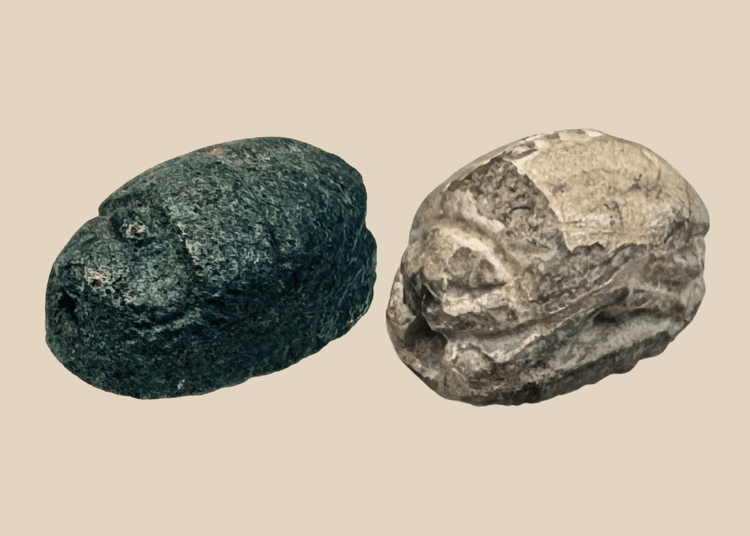
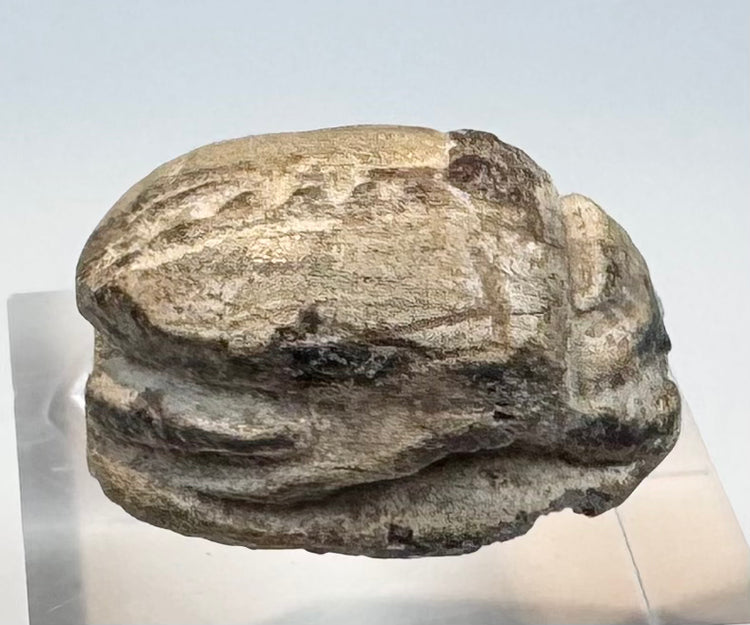
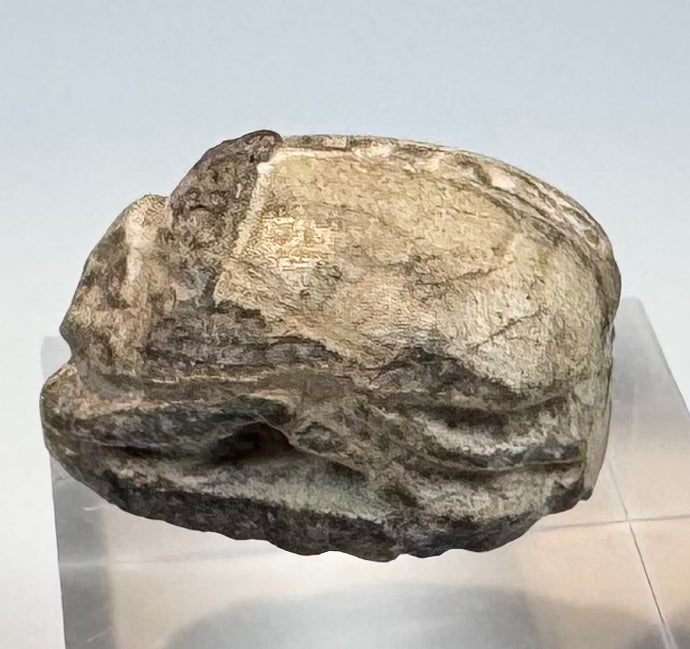
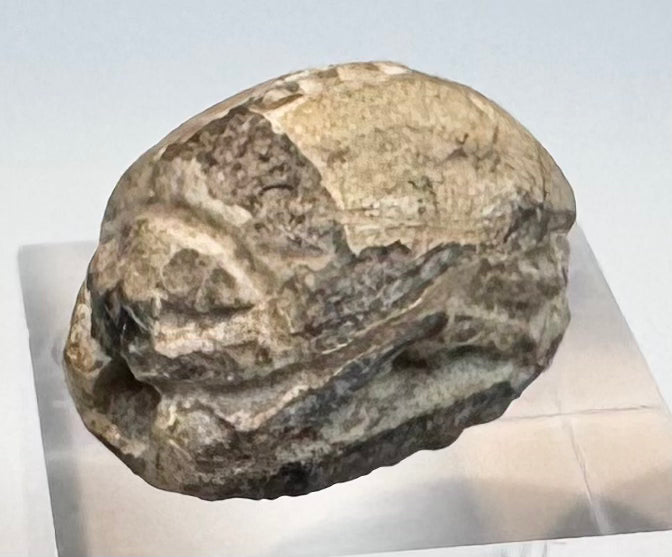
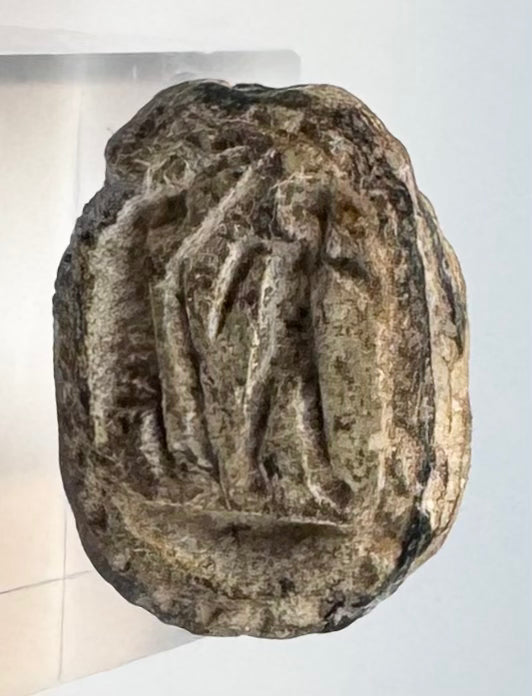
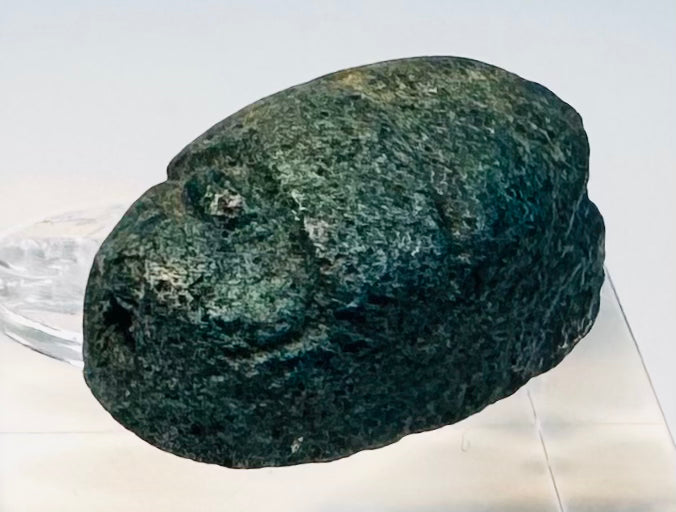
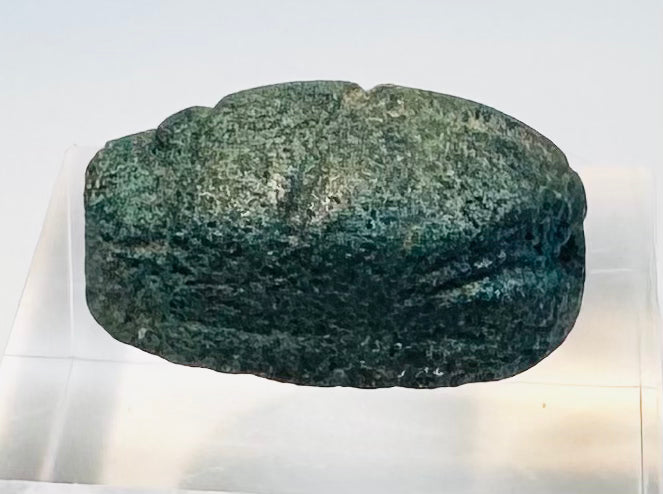
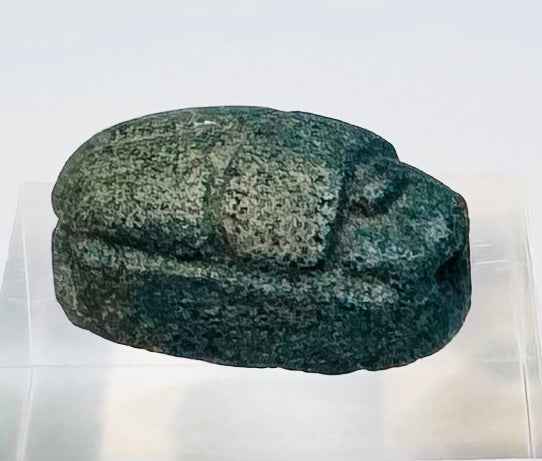
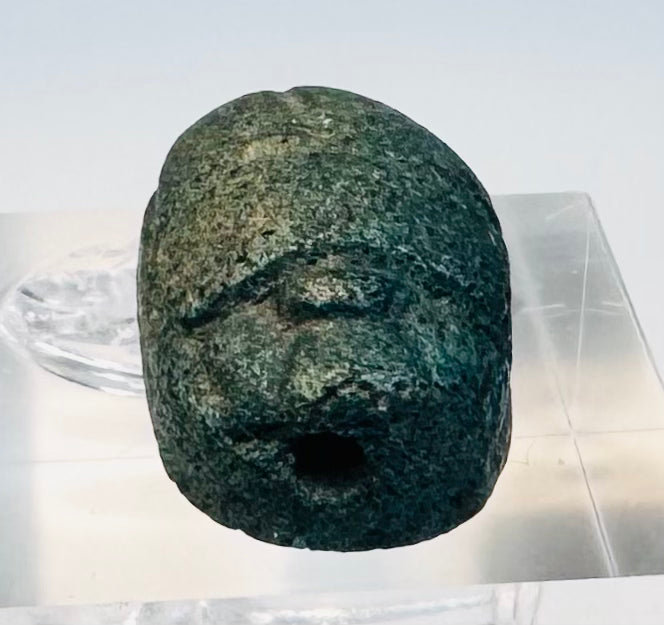
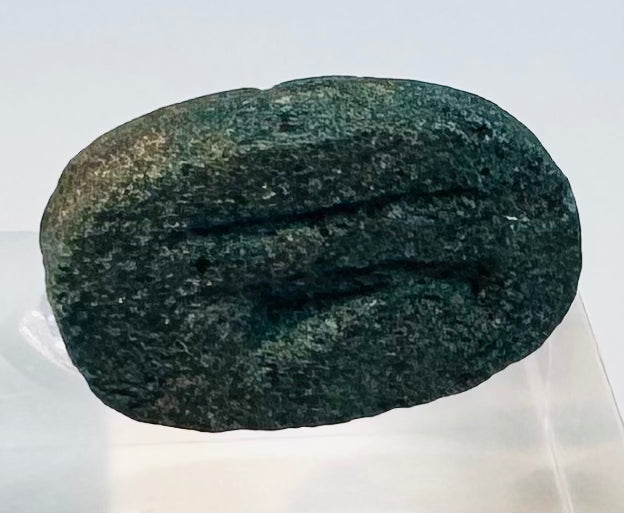
This exceptional pair of Ancient Egyptian scarab amulets dates to the Late New Kingdom period and represents one of the most enduring symbols of Egyptian religion, kingship, and rebirth. Crafted from blue glazed composition, commonly known as Egyptian faience, these miniature objects would have served as personal amulets intended to confer divine protection and symbolize regeneration in both life and the afterlife.
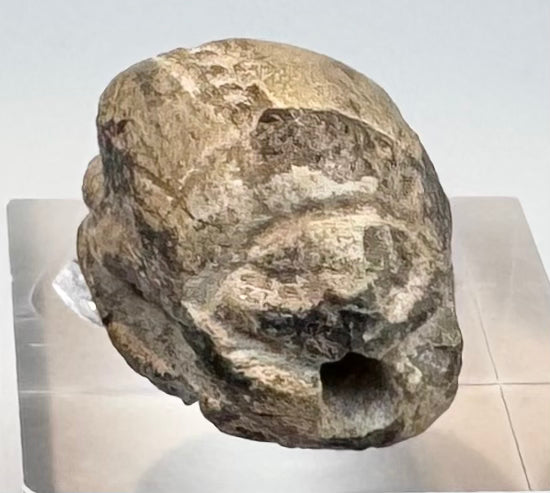
Fashioned in the characteristic form of the sacred dung beetle (Scarabaeus sacer), each scarab displays the stylized anatomical features associated with Egyptian craftsmanship, including the delineation of the head, thorax, folded wings, and legs beneath the body. Both examples retain the traditional longitudinal perforation that allowed them to be worn as pendants, mounted in rings, or incorporated into jewelry and ceremonial adornments.
The darker example preserves traces of its original blue-green glaze, while the lighter specimen exhibits extensive mineral accretions and weathering acquired over centuries of burial. Blue and green glazes held profound symbolic significance in ancient Egypt, evoking concepts of fertility, rebirth, the annual inundation of the Nile, and the life-giving powers of the gods.
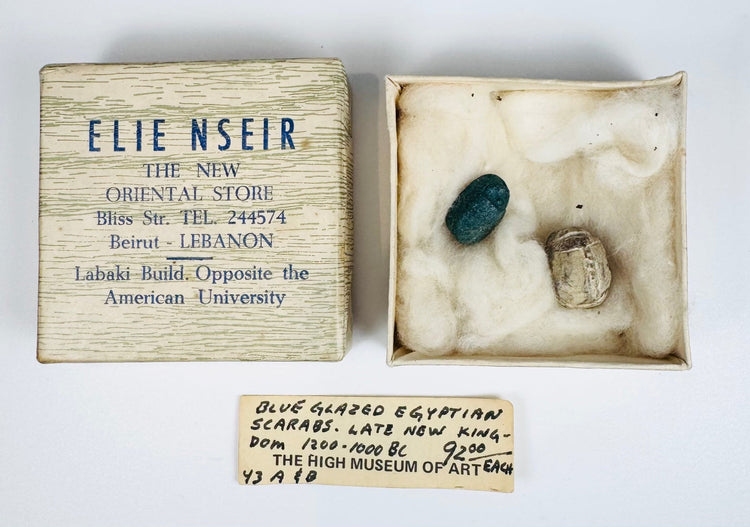
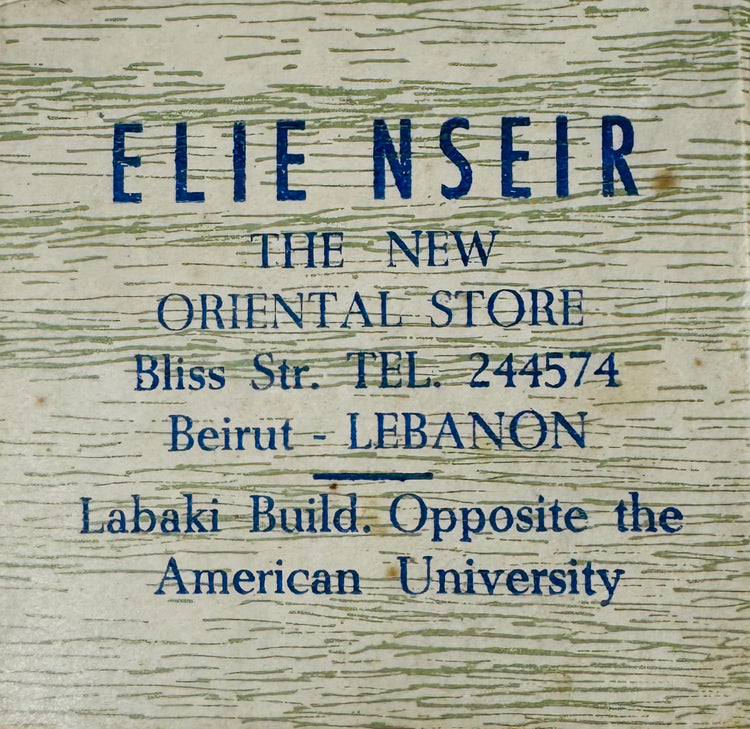
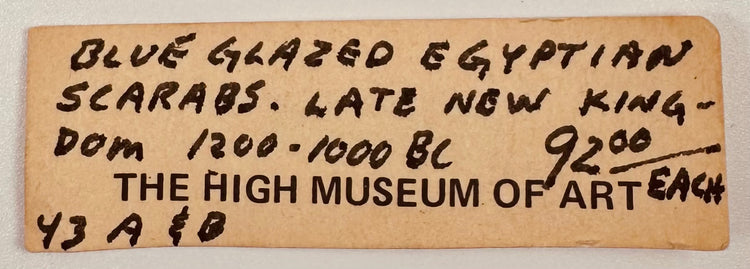
Accompanying the scarabs is their original mid-twentieth-century presentation box from Elie Nseir's New Oriental Store in Beirut, Lebanon, formerly located opposite the American University of Beirut. The group also retains its original handwritten inventory label identifying the pieces as “Blue Glazed Egyptian Scarabs, Late New Kingdom, 1200–1000 BC,” and noting their sale through the High Museum of Art gift shop for ninety-two dollars each.
Features
- Late New Kingdom period examples dating to approximately 1200–1000 BC
- Crafted from blue glazed Egyptian faience
- Traditional scarab beetle form with carved anatomical details
- Longitudinal perforations for suspension or mounting
- One example retains substantial traces of its original blue-green glaze
- Accompanied by the original Elie Nseir New Oriental Store presentation box from Beirut, Lebanon
- Includes original handwritten inventory label from the High Museum of Art gift shop
Cultural Significance
Scarabs were among the most important amuletic forms in ancient Egypt, symbolizing the god Khepri, the divine manifestation of the rising sun. Observing the dung beetle's habit of rolling balls of earth across the landscape, the Egyptians associated the insect with the daily journey of the sun across the heavens and with the concepts of renewal, transformation, and eternal life.
During the New Kingdom, scarabs were worn by individuals of all social classes and frequently served as protective charms, administrative seals, diplomatic gifts, and funerary objects placed within tombs. Their enduring popularity over thousands of years reflects the profound role they played within Egyptian religious belief and material culture.
Condition
Both scarabs remain structurally intact and display expected age-related wear throughout. The surfaces exhibit varying degrees of weathering, mineral accretions, abrasions, and losses to the original glaze consistent with prolonged burial and considerable antiquity. The perforations remain intact, and traces of the original blue glaze survive on one example. The accompanying box and label display expected wear and discoloration associated with age and storage.
Dimensions (Approximate)
Blue Scarab: 0.4375 in
Cream-Colored Scarab: 0.4375 in
Age (Approximate)
3,025–3,225 years old
Provenance
Originally retailed by Elie Nseir's New Oriental Store in Beirut, Lebanon, during the 1960s - 1970s, these scarabs were acquired from a shop located in the Labaki Building opposite the American University of Beirut. The original presentation box bearing the retailer's stamp accompanies the scarabs.
The scarabs were subsequently sold through the gift shop of the High Museum of Art and retain their original handwritten inventory label identifying them as "Blue Glazed Egyptian Scarabs, Late New Kingdom, 1200–1000 BC." Founded in 1905 and located in Atlanta, Georgia, the High Museum of Art is one of the leading art museums in the southeastern United States, housing significant collections spanning antiquity, decorative arts, modern works, and international cultural material.
Most recently, the scarabs formed part of a private collection in Portland, Maine, USA.
Learn More
Explore the religious symbolism and protective role of Ancient Egyptian amulets at The Metropolitan Museum of Art
Browse our Collection of Ancient Egyptian Mummies and Artifacts
Description
Historical Context & Origin
Region: Egypt
Material: Glazed composition (Egyptian faience)
Period: Late New Kingdom Period, circa 1200–1000 BC
Description
This exceptional pair of Ancient Egyptian scarab amulets dates to the Late New Kingdom period and represents one of the most enduring symbols of Egyptian religion, kingship, and rebirth. Crafted from blue glazed composition, commonly known as Egyptian faience, these miniature objects would have served as personal amulets intended to confer divine protection and symbolize regeneration in both life and the afterlife.
Fashioned in the characteristic form of the sacred dung beetle (Scarabaeus sacer), each scarab displays the stylized anatomical features associated with Egyptian craftsmanship, including the delineation of the head, thorax, folded wings, and legs beneath the body. Both examples retain the traditional longitudinal perforation that allowed them to be worn as pendants, mounted in rings, or incorporated into jewelry and ceremonial adornments.
The darker example preserves traces of its original blue-green glaze, while the lighter specimen exhibits extensive mineral accretions and weathering acquired over centuries of burial. Blue and green glazes held profound symbolic significance in ancient Egypt, evoking concepts of fertility, rebirth, the annual inundation of the Nile, and the life-giving powers of the gods.
Accompanying the scarabs is their original mid-twentieth-century presentation box from Elie Nseir's New Oriental Store in Beirut, Lebanon, formerly located opposite the American University of Beirut. The group also retains its original handwritten inventory label identifying the pieces as “Blue Glazed Egyptian Scarabs, Late New Kingdom, 1200–1000 BC,” and noting their sale through the High Museum of Art gift shop for ninety-two dollars each.
Features
- Late New Kingdom period examples dating to approximately 1200–1000 BC
- Crafted from blue glazed Egyptian faience
- Traditional scarab beetle form with carved anatomical details
- Longitudinal perforations for suspension or mounting
- One example retains substantial traces of its original blue-green glaze
- Accompanied by the original Elie Nseir New Oriental Store presentation box from Beirut, Lebanon
- Includes original handwritten inventory label from the High Museum of Art gift shop
Cultural Significance
Scarabs were among the most important amuletic forms in ancient Egypt, symbolizing the god Khepri, the divine manifestation of the rising sun. Observing the dung beetle's habit of rolling balls of earth across the landscape, the Egyptians associated the insect with the daily journey of the sun across the heavens and with the concepts of renewal, transformation, and eternal life.
During the New Kingdom, scarabs were worn by individuals of all social classes and frequently served as protective charms, administrative seals, diplomatic gifts, and funerary objects placed within tombs. Their enduring popularity over thousands of years reflects the profound role they played within Egyptian religious belief and material culture.
Condition
Both scarabs remain structurally intact and display expected age-related wear throughout. The surfaces exhibit varying degrees of weathering, mineral accretions, abrasions, and losses to the original glaze consistent with prolonged burial and considerable antiquity. The perforations remain intact, and traces of the original blue glaze survive on one example. The accompanying box and label display expected wear and discoloration associated with age and storage.
Dimensions (Approximate)
Blue Scarab: 0.4375 in
Cream-Colored Scarab: 0.4375 in
Age (Approximate)
3,025–3,225 years old
Provenance
Originally retailed by Elie Nseir's New Oriental Store in Beirut, Lebanon, during the 1960s - 1970s, these scarabs were acquired from a shop located in the Labaki Building opposite the American University of Beirut. The original presentation box bearing the retailer's stamp accompanies the scarabs.
The scarabs were subsequently sold through the gift shop of the High Museum of Art and retain their original handwritten inventory label identifying them as "Blue Glazed Egyptian Scarabs, Late New Kingdom, 1200–1000 BC." Founded in 1905 and located in Atlanta, Georgia, the High Museum of Art is one of the leading art museums in the southeastern United States, housing significant collections spanning antiquity, decorative arts, modern works, and international cultural material.
Most recently, the scarabs formed part of a private collection in Portland, Maine, USA.
Learn More
Explore the religious symbolism and protective role of Ancient Egyptian amulets at The Metropolitan Museum of Art
Browse our Collection of Ancient Egyptian Mummies and Artifacts
You May Also Like
