



Ancient Egyptian Glazed Scarab Amulet | Framed Khepri Display | Circa 2345–30 BCE
Couldn't load pickup availability



Ancient Egyptian Glazed Scarab Amulet | Framed Khepri Display | Circa 2345–30 BCE
Description
More
Less
Historical Context & Origin
Region: Ancient Egypt (attributed)
Material: Blue-green glazed material, identified as Egyptian faience or glazed steatite, presented within a gilt-finished wooden frame with decorative Egyptian-inspired artwork, gold-toned matting, and protective glass
Period: Sixth Dynasty through Ptolemaic Period, circa 2345–30 BCE
Description
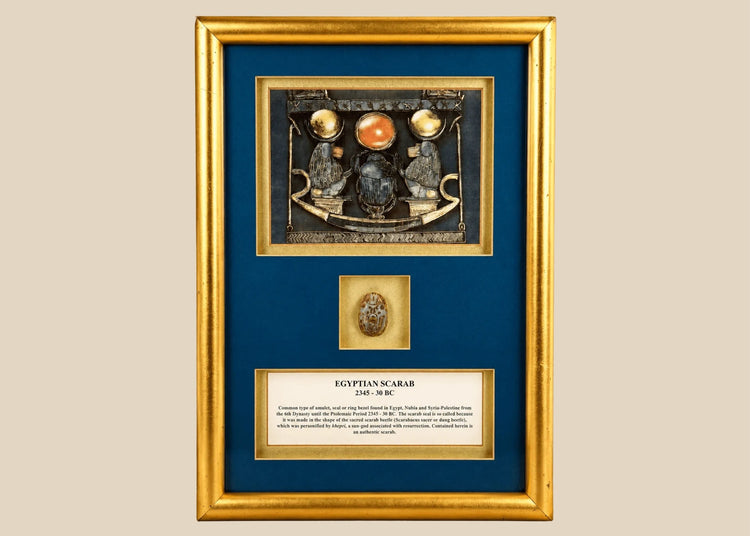
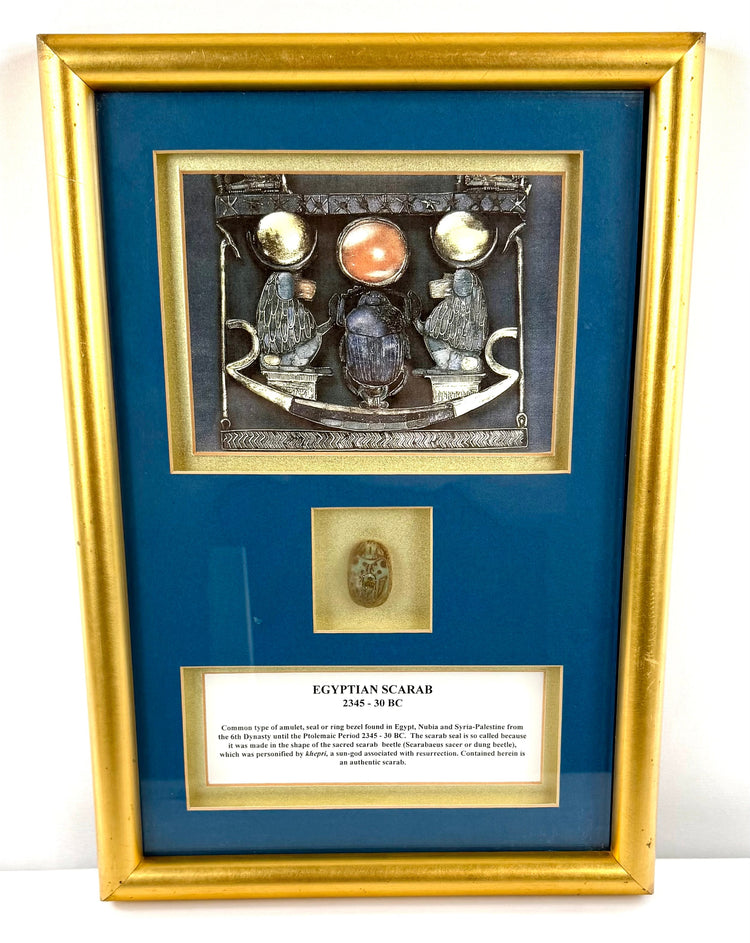
An attractive framed Egyptian scarab display featuring a small, blue-green glazed scarab amulet presented alongside elaborate Egyptian-inspired artwork celebrating the ancient symbolism of the sacred beetle, solar regeneration, and eternal life.
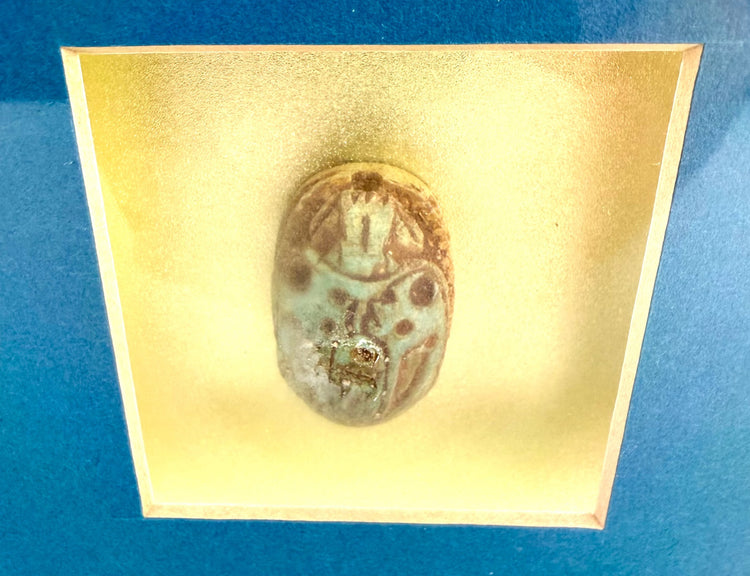
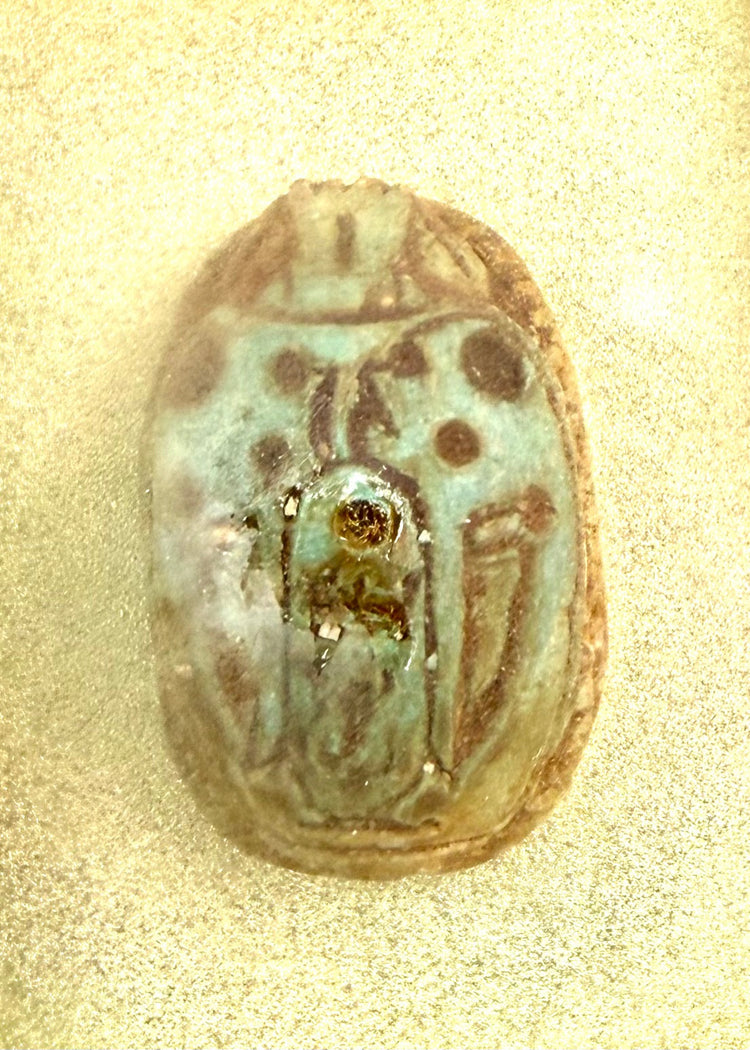
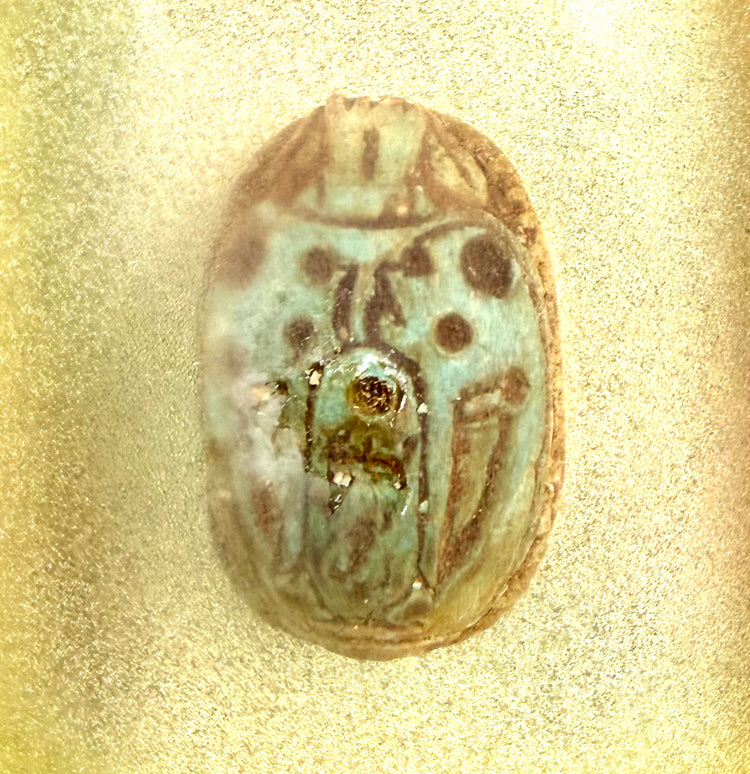
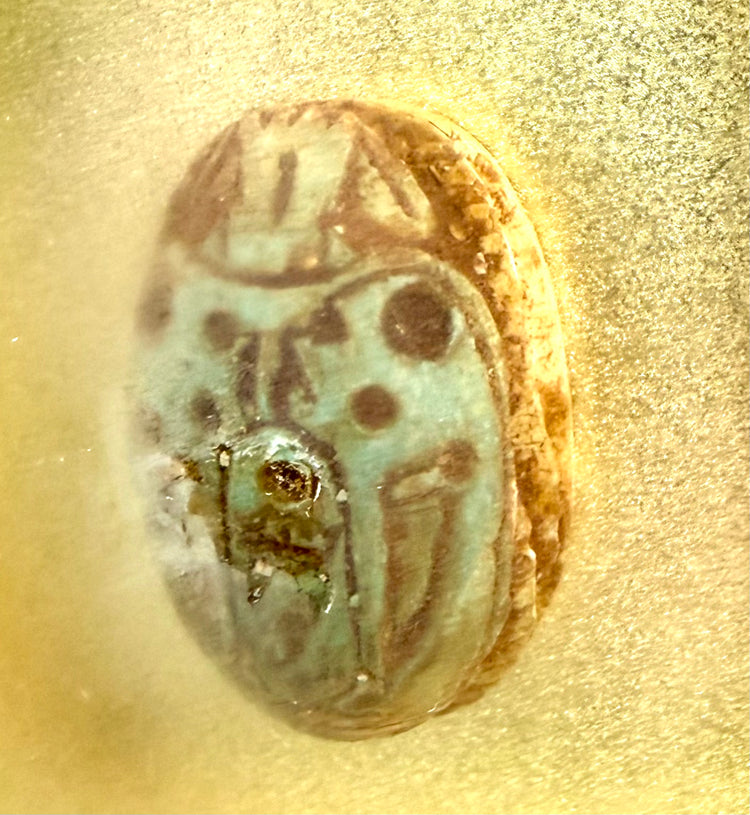
The central artifact is an oval-shaped scarab with a softly rounded profile, displaying a distinctive turquoise-green surface with surviving darker brown decorative markings. The visible design incorporates carefully defined linear elements, circular details, and stylized features associated with traditional Egyptian scarab imagery. Areas of brown discolouration, surface variation, and visible wear lend the small object an aged appearance.
The scarab is individually mounted within a recessed, gold-toned presentation window, allowing it to remain the focal point of the arrangement.
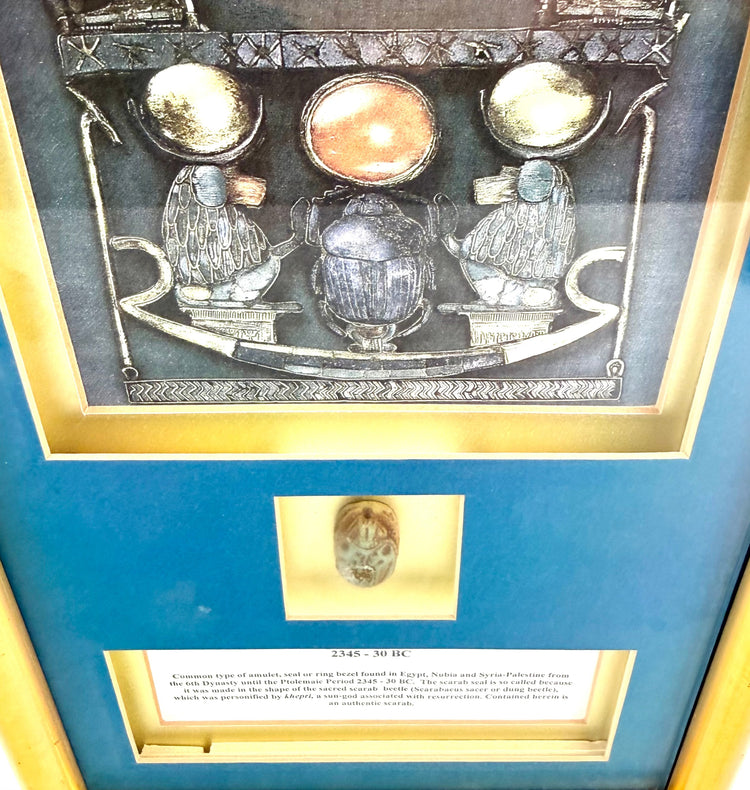
Above the artifact is a richly detailed decorative composition depicting a large central scarab beneath a radiant solar disk, flanked by two symmetrical, winged Egyptian-inspired figures supporting circular solar emblems. The imagery draws upon the protective and regenerative symbolism found throughout ancient Egyptian religious art.
The composition is enhanced by a deep blue background, metallic gold borders, and a substantial gilt-finished outer frame. These contrasting colours create a striking historical presentation suitable for an antiquities collection, study, library, or decorative display.
Beneath the scarab, an accompanying identification plaque reads "EGYPTIAN SCARAB 2345–30 BC" and explains the historical use of scarabs as amulets, seals, and decorative objects in ancient Egypt, Nubia, and the eastern Mediterranean. The existing plaque identifies the enclosed scarab as authentic, although this identification has not been independently verified through physical examination.
Features
- Oval-shaped Egyptian scarab amulet with surviving blue-green glazed surface
- Turquoise-green coloration with contrasting brown decorative markings and natural surface wear
- Traditional scarab symbolism associated with creation, protection, regeneration, and eternal life
- Scarab individually presented within a recessed, gold-toned display window
- Elaborate Egyptian-inspired artwork featuring a central scarab, solar disk, and paired winged figures
- Decorative deep blue background with metallic gold borders and matting
- Substantial gilt-finished wooden frame with protective glass
- Historical presentation plaque identifying the enclosed scarab and explaining its religious symbolism
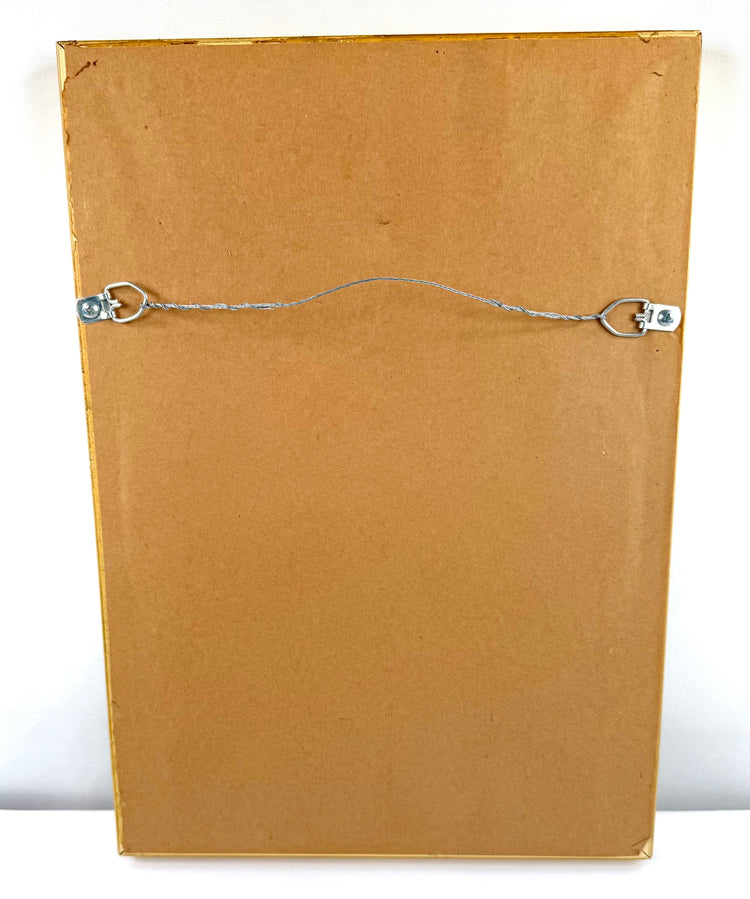
- Mounting hardware and hanging wire fitted to the reverse for wall display
Cultural Significance
The scarab beetle was among the most important and enduring religious symbols of ancient Egypt. Associated with the sacred dung beetle (Scarabaeus sacer), the scarab represented creation, transformation, protection, and the continuous renewal of life.
Ancient Egyptians observed the beetle rolling spherical balls of dung across the ground and drew a symbolic connection between this behaviour and the daily movement of the sun across the sky. This association gave rise to the solar deity Khepri, who represented the rising sun and the perpetual process of rebirth.
The Egyptian verb kheper, meaning "to come into being" or "to become," reinforced the scarab's spiritual significance. Scarab-shaped amulets were consequently associated with powerful protective and regenerative properties.
Throughout Egyptian history, scarabs were produced in materials including glazed steatite, faience, stone, and precious materials. Some functioned as personal amulets, while others were carved with hieroglyphs, royal names, or symbolic designs and used as seals. Scarabs were also placed within funerary arrangements to assist the deceased in achieving renewal and continued existence in the afterlife.
Heart scarabs, frequently placed upon the chest of the deceased, held particular importance in Egyptian funerary beliefs and were associated with the judgment of the heart before Osiris. Their inscriptions and protective symbolism reflected the ancient Egyptian concern for spiritual survival and regeneration.
The decorative imagery accompanying this example reinforces these historical associations. The prominent solar disk, winged protective figures, and central scarab reflect themes of divine protection, solar power, and resurrection. Together with the accompanying historical plaque, the framed arrangement provides a visual connection to the religious traditions and artistic symbolism of ancient Egypt.
Condition
The scarab displays visible surface wear, areas of brown discolouration, and variations in its surviving blue-green glazed finish. A small central surface or mounting irregularity is visible, together with localized deposits or residue. The artifact remains mounted within its existing presentation.
The decorative display and accompanying identification plaque remain visually well preserved. The gilt-finished frame exhibits minor scattered scratches, small marks, and general handling wear consistent with an older framed presentation. The protective glass remains present, with some reflections visible in the photographs. The reverse retains its backing board and fitted hanging wire.
Dimensions (Approximate)
Overall framed display:
Height: 14 in
Width: 10 in
Depth: 1.25 in
Age (Approximate)
2,050–4,370 years old
Provenance
Formerly part of a private collection in Indianapolis, Indiana, United States, assembled by a collector with a diverse interest in historical artifacts, antiquities, and objects representing various ancient civilizations and cultural traditions.
Learn More
Discover a comparable Late Period green-glazed steatite scarab in the collection of The Metropolitan Museum of Art
Explore our Collection of Ancient Egyptian Mummies & Artifacts
Description
Historical Context & Origin
Region: Ancient Egypt (attributed)
Material: Blue-green glazed material, identified as Egyptian faience or glazed steatite, presented within a gilt-finished wooden frame with decorative Egyptian-inspired artwork, gold-toned matting, and protective glass
Period: Sixth Dynasty through Ptolemaic Period, circa 2345–30 BCE
Description
An attractive framed Egyptian scarab display featuring a small, blue-green glazed scarab amulet presented alongside elaborate Egyptian-inspired artwork celebrating the ancient symbolism of the sacred beetle, solar regeneration, and eternal life.
The central artifact is an oval-shaped scarab with a softly rounded profile, displaying a distinctive turquoise-green surface with surviving darker brown decorative markings. The visible design incorporates carefully defined linear elements, circular details, and stylized features associated with traditional Egyptian scarab imagery. Areas of brown discolouration, surface variation, and visible wear lend the small object an aged appearance.
The scarab is individually mounted within a recessed, gold-toned presentation window, allowing it to remain the focal point of the arrangement.
Above the artifact is a richly detailed decorative composition depicting a large central scarab beneath a radiant solar disk, flanked by two symmetrical, winged Egyptian-inspired figures supporting circular solar emblems. The imagery draws upon the protective and regenerative symbolism found throughout ancient Egyptian religious art.
The composition is enhanced by a deep blue background, metallic gold borders, and a substantial gilt-finished outer frame. These contrasting colours create a striking historical presentation suitable for an antiquities collection, study, library, or decorative display.
Beneath the scarab, an accompanying identification plaque reads "EGYPTIAN SCARAB 2345–30 BC" and explains the historical use of scarabs as amulets, seals, and decorative objects in ancient Egypt, Nubia, and the eastern Mediterranean. The existing plaque identifies the enclosed scarab as authentic, although this identification has not been independently verified through physical examination.
Features
- Oval-shaped Egyptian scarab amulet with surviving blue-green glazed surface
- Turquoise-green coloration with contrasting brown decorative markings and natural surface wear
- Traditional scarab symbolism associated with creation, protection, regeneration, and eternal life
- Scarab individually presented within a recessed, gold-toned display window
- Elaborate Egyptian-inspired artwork featuring a central scarab, solar disk, and paired winged figures
- Decorative deep blue background with metallic gold borders and matting
- Substantial gilt-finished wooden frame with protective glass
- Historical presentation plaque identifying the enclosed scarab and explaining its religious symbolism
- Mounting hardware and hanging wire fitted to the reverse for wall display
Cultural Significance
The scarab beetle was among the most important and enduring religious symbols of ancient Egypt. Associated with the sacred dung beetle (Scarabaeus sacer), the scarab represented creation, transformation, protection, and the continuous renewal of life.
Ancient Egyptians observed the beetle rolling spherical balls of dung across the ground and drew a symbolic connection between this behaviour and the daily movement of the sun across the sky. This association gave rise to the solar deity Khepri, who represented the rising sun and the perpetual process of rebirth.
The Egyptian verb kheper, meaning "to come into being" or "to become," reinforced the scarab's spiritual significance. Scarab-shaped amulets were consequently associated with powerful protective and regenerative properties.
Throughout Egyptian history, scarabs were produced in materials including glazed steatite, faience, stone, and precious materials. Some functioned as personal amulets, while others were carved with hieroglyphs, royal names, or symbolic designs and used as seals. Scarabs were also placed within funerary arrangements to assist the deceased in achieving renewal and continued existence in the afterlife.
Heart scarabs, frequently placed upon the chest of the deceased, held particular importance in Egyptian funerary beliefs and were associated with the judgment of the heart before Osiris. Their inscriptions and protective symbolism reflected the ancient Egyptian concern for spiritual survival and regeneration.
The decorative imagery accompanying this example reinforces these historical associations. The prominent solar disk, winged protective figures, and central scarab reflect themes of divine protection, solar power, and resurrection. Together with the accompanying historical plaque, the framed arrangement provides a visual connection to the religious traditions and artistic symbolism of ancient Egypt.
Condition
The scarab displays visible surface wear, areas of brown discolouration, and variations in its surviving blue-green glazed finish. A small central surface or mounting irregularity is visible, together with localized deposits or residue. The artifact remains mounted within its existing presentation.
The decorative display and accompanying identification plaque remain visually well preserved. The gilt-finished frame exhibits minor scattered scratches, small marks, and general handling wear consistent with an older framed presentation. The protective glass remains present, with some reflections visible in the photographs. The reverse retains its backing board and fitted hanging wire.
Dimensions (Approximate)
Overall framed display:
Height: 14 in
Width: 10 in
Depth: 1.25 in
Age (Approximate)
2,050–4,370 years old
Provenance
Formerly part of a private collection in Indianapolis, Indiana, United States, assembled by a collector with a diverse interest in historical artifacts, antiquities, and objects representing various ancient civilizations and cultural traditions.
Learn More
Discover a comparable Late Period green-glazed steatite scarab in the collection of The Metropolitan Museum of Art
Explore our Collection of Ancient Egyptian Mummies & Artifacts
You May Also Like
