


Ancient Egyptian Turquoise Faience Ushabti with Hieroglyphic Inscription | Circa 600 – 30 BCE
Couldn't load pickup availability


Ancient Egyptian Turquoise Faience Ushabti with Hieroglyphic Inscription | Circa 600 – 30 BCE
Description
More
Less
Historical Context & Origin
Region: Egypt
Material: Blue-green glazed faience
Period: Late Period to Ptolemaic Period, circa 600–30 BCE
Description
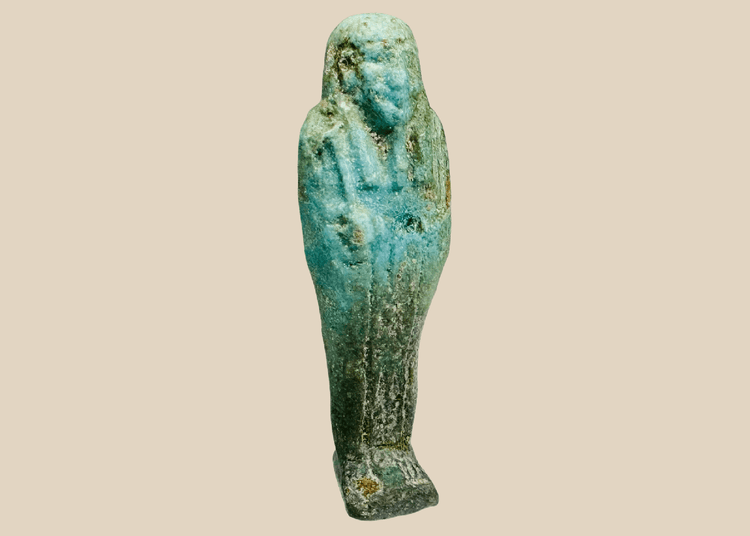
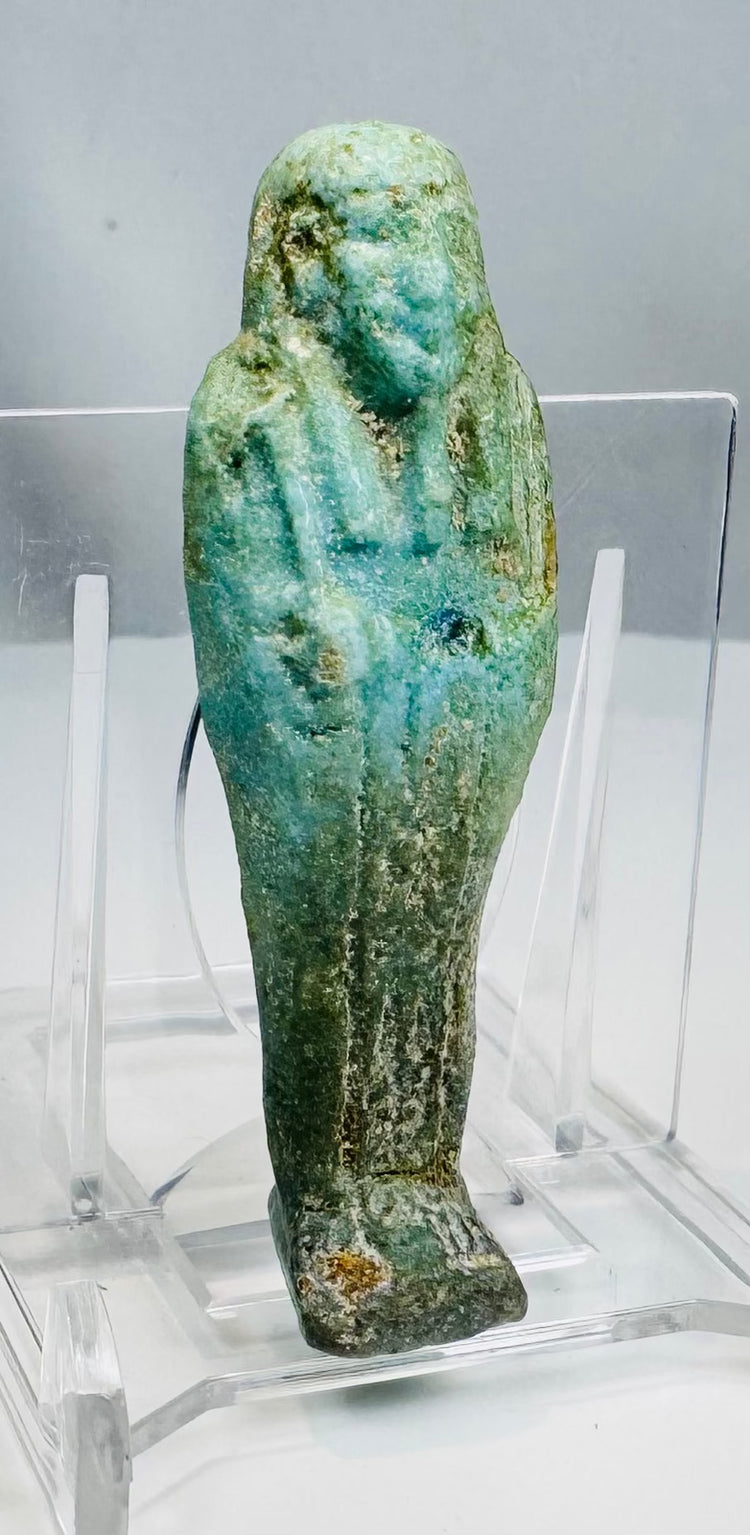
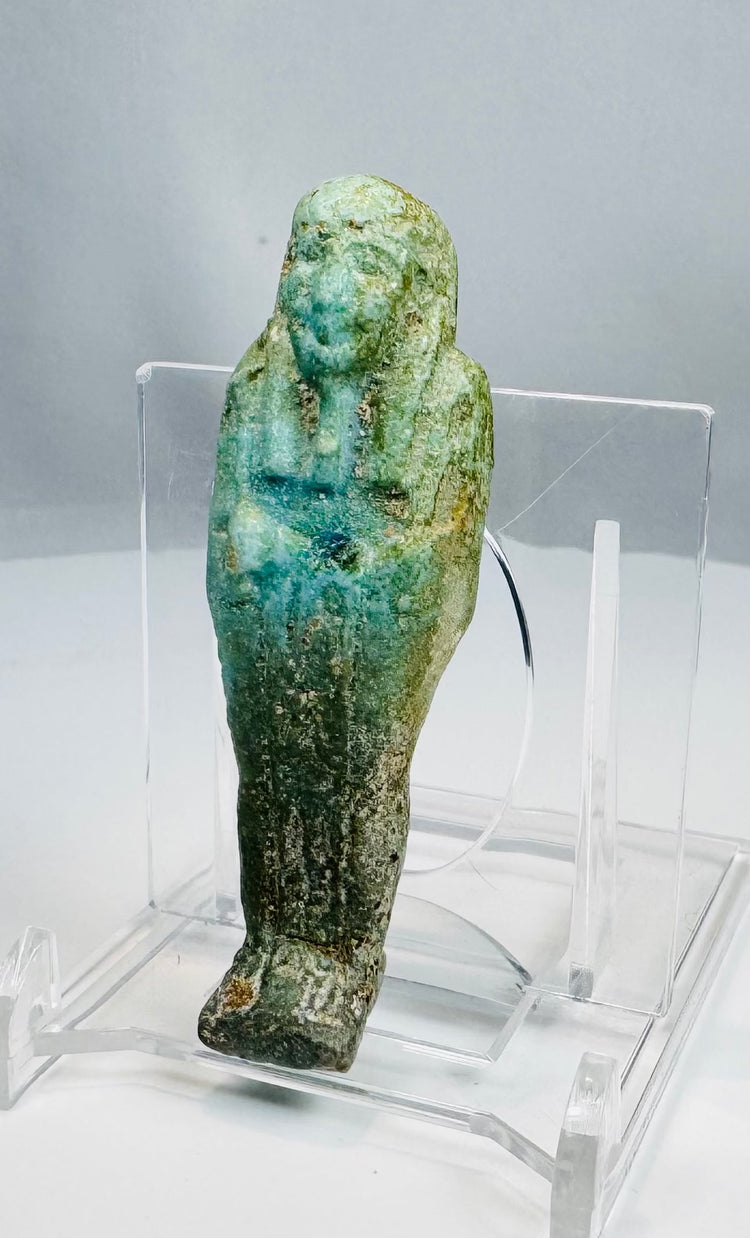
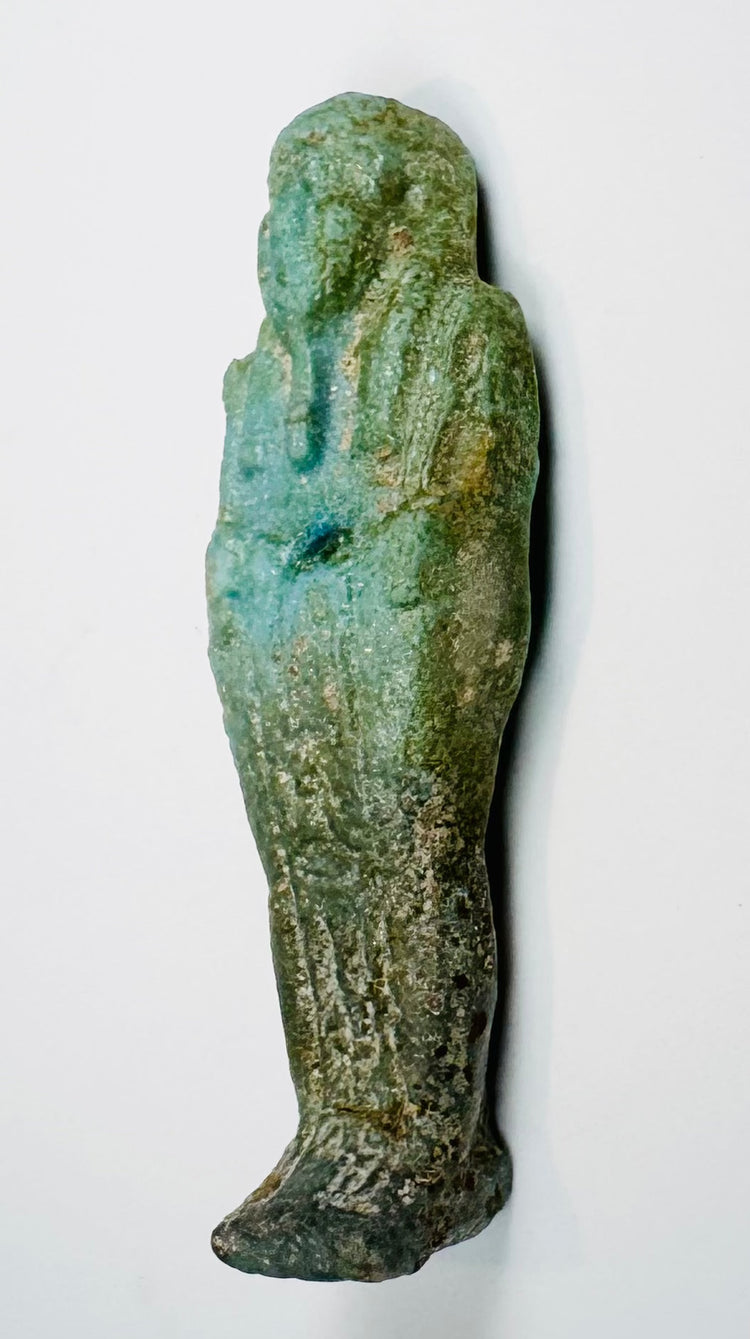
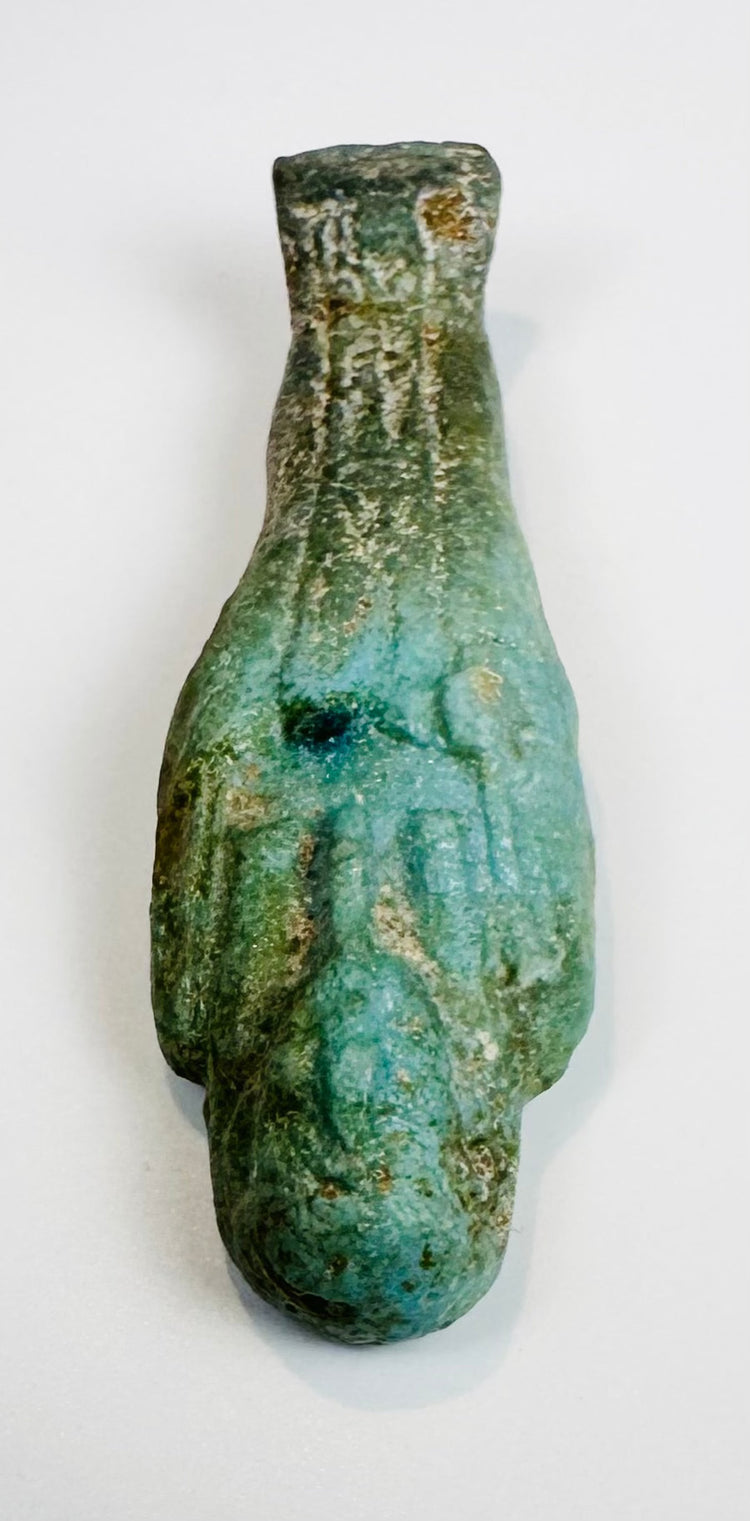
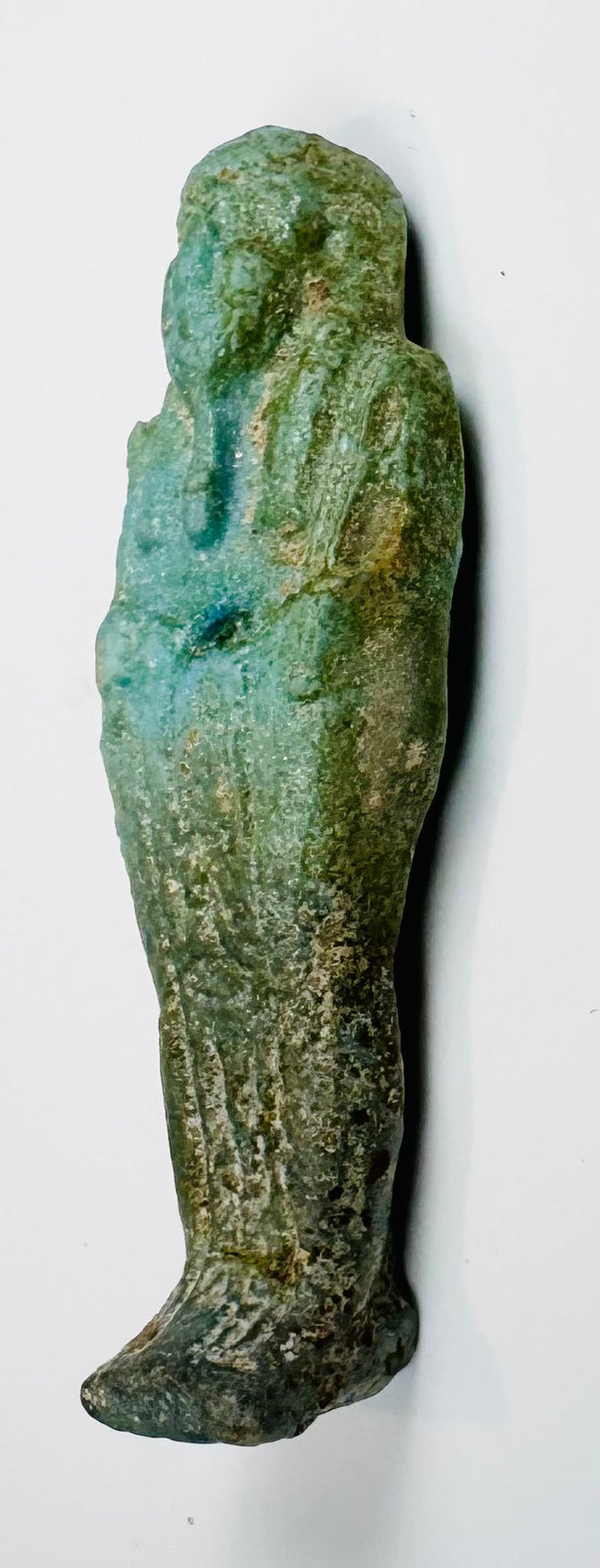
This ancient Egyptian faience ushabti is formed in the traditional mummiform shape associated with funerary figures placed in Egyptian tombs. The figure displays a rounded head framed by a tripartite-style wig, a softly modeled face, crossed arms positioned over the chest, and a long tapering body terminating in a projecting foot.
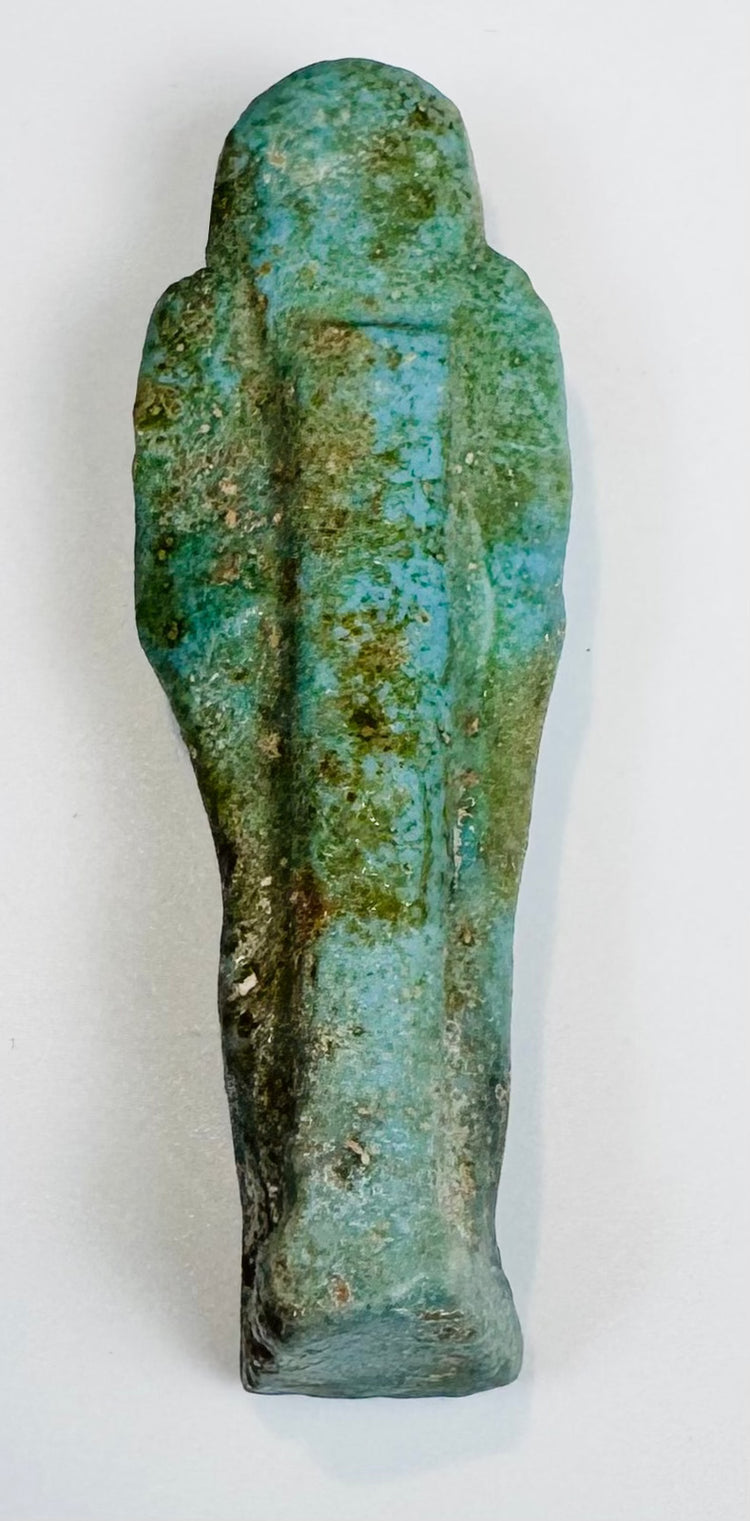
Particularly notable is the surviving vertical band of hieroglyphic inscription extending down the front of the lower body. Although softened by age and surface wear, traces of individual signs remain visible, distinguishing this example from simpler uninscribed funerary figures. The reverse retains additional modeled detail, including the outline of the wig and a vertical dorsal element.
The surface preserves an attractive blue-green to turquoise faience glaze with areas of deeper green, pale mineral accretion and earthy burial deposits. Centuries of burial have produced a naturally weathered surface while leaving the principal features of the figure clearly recognizable.
Features
- Ancient Egyptian mummiform ushabti
- Blue-green to turquoise glazed faience
- Surviving vertical hieroglyphic inscription
- Rounded head with tripartite-style wig
- Arms modeled across the chest
- Long tapered body with projecting foot
- Modeled details continuing onto the reverse
- Natural mineral deposits, burial encrustation and ancient surface wear
Cultural Significance
Ushabtis were funerary figures placed in Egyptian tombs to magically serve the deceased in the afterlife. According to Egyptian religious belief, when the deceased was summoned to undertake agricultural or other compulsory labor, the ushabti could answer in the owner's place.
Inscribed examples are particularly evocative because hieroglyphic texts could identify the deceased or incorporate elements of the magical formula intended to activate the figure. The blue-green color of faience also carried symbolic importance in ancient Egypt, where shades associated with water and vegetation evoked regeneration, fertility and rebirth.
Condition
Ancient condition with substantial surface weathering, glaze loss, mineral deposits, burial encrustation, discoloration and abrasions consistent with age and archaeological deposition. The mummiform figure remains substantially intact, with recognizable facial features, crossed arms, wig, foot and traces of a vertical hieroglyphic inscription. Areas of turquoise and blue-green glaze remain particularly visible across the upper body and reverse. Please refer closely to the photographs for the complete condition.
Dimensions (Approximate)
Height: 2.75 in
Age (Approximate)
2,000–2,600 years old
Provenance
Ex Secret Eye Gallery, New York City, acquired in the 1980s. Secret Eye Gallery was a New York City antiquities gallery active during the 1970s and 1980s under proprietor Hamdi El-Gabry, dealing in ancient Egyptian, Classical, Near Eastern, and related archaeological material.
Subsequently with Palmyra Heritage Gallery, New York, 2026. Palmyra Heritage Gallery is a New York antiquities dealer specializing in ancient Egyptian, Greek, Roman, Byzantine, Pre-Columbian, Islamic, and related archaeological material.
Learn More
Explore the funerary purpose and hieroglyphic inscriptions of the Egyptian ushabti in the McClung Museum
Browse our Collection of Ancient Egyptian Mummies and Artifacts
Description
Historical Context & Origin
Region: Egypt
Material: Blue-green glazed faience
Period: Late Period to Ptolemaic Period, circa 600–30 BCE
Description
This ancient Egyptian faience ushabti is formed in the traditional mummiform shape associated with funerary figures placed in Egyptian tombs. The figure displays a rounded head framed by a tripartite-style wig, a softly modeled face, crossed arms positioned over the chest, and a long tapering body terminating in a projecting foot.
Particularly notable is the surviving vertical band of hieroglyphic inscription extending down the front of the lower body. Although softened by age and surface wear, traces of individual signs remain visible, distinguishing this example from simpler uninscribed funerary figures. The reverse retains additional modeled detail, including the outline of the wig and a vertical dorsal element.
The surface preserves an attractive blue-green to turquoise faience glaze with areas of deeper green, pale mineral accretion and earthy burial deposits. Centuries of burial have produced a naturally weathered surface while leaving the principal features of the figure clearly recognizable.
Features
- Ancient Egyptian mummiform ushabti
- Blue-green to turquoise glazed faience
- Surviving vertical hieroglyphic inscription
- Rounded head with tripartite-style wig
- Arms modeled across the chest
- Long tapered body with projecting foot
- Modeled details continuing onto the reverse
- Natural mineral deposits, burial encrustation and ancient surface wear
Cultural Significance
Ushabtis were funerary figures placed in Egyptian tombs to magically serve the deceased in the afterlife. According to Egyptian religious belief, when the deceased was summoned to undertake agricultural or other compulsory labor, the ushabti could answer in the owner's place.
Inscribed examples are particularly evocative because hieroglyphic texts could identify the deceased or incorporate elements of the magical formula intended to activate the figure. The blue-green color of faience also carried symbolic importance in ancient Egypt, where shades associated with water and vegetation evoked regeneration, fertility and rebirth.
Condition
Ancient condition with substantial surface weathering, glaze loss, mineral deposits, burial encrustation, discoloration and abrasions consistent with age and archaeological deposition. The mummiform figure remains substantially intact, with recognizable facial features, crossed arms, wig, foot and traces of a vertical hieroglyphic inscription. Areas of turquoise and blue-green glaze remain particularly visible across the upper body and reverse. Please refer closely to the photographs for the complete condition.
Dimensions (Approximate)
Height: 2.75 in
Age (Approximate)
2,000–2,600 years old
Provenance
Ex Secret Eye Gallery, New York City, acquired in the 1980s. Secret Eye Gallery was a New York City antiquities gallery active during the 1970s and 1980s under proprietor Hamdi El-Gabry, dealing in ancient Egyptian, Classical, Near Eastern, and related archaeological material.
Subsequently with Palmyra Heritage Gallery, New York, 2026. Palmyra Heritage Gallery is a New York antiquities dealer specializing in ancient Egyptian, Greek, Roman, Byzantine, Pre-Columbian, Islamic, and related archaeological material.
Learn More
Explore the funerary purpose and hieroglyphic inscriptions of the Egyptian ushabti in the McClung Museum
Browse our Collection of Ancient Egyptian Mummies and Artifacts
You May Also Like
