

Ancient Egyptian Terracotta Crowned Cobra Relief Fragment | 1st Millennium BCE
Couldn't load pickup availability


Ancient Egyptian Terracotta Crowned Cobra Relief Fragment | 1st Millennium BCE
Description
More
Less
Historical Context & Origin
Region: Egypt or Eastern Mediterranean
Material: Molded terracotta with traces of red pigment
Period: Circa 1st Millennium BCE
Description
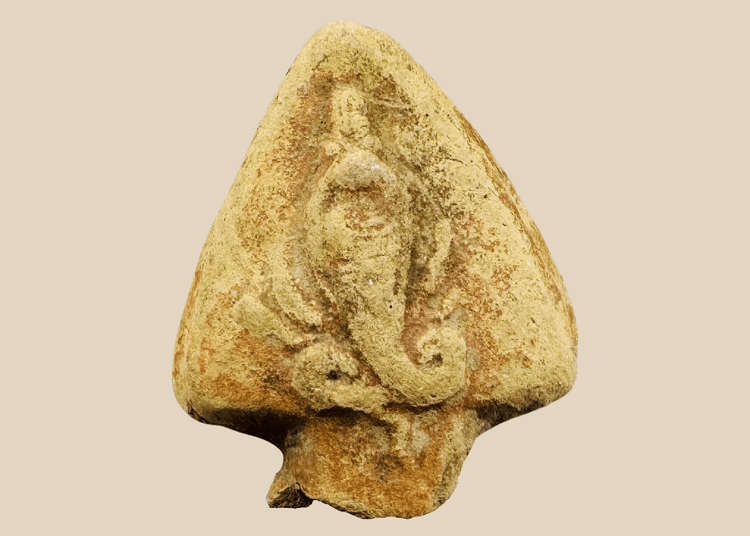
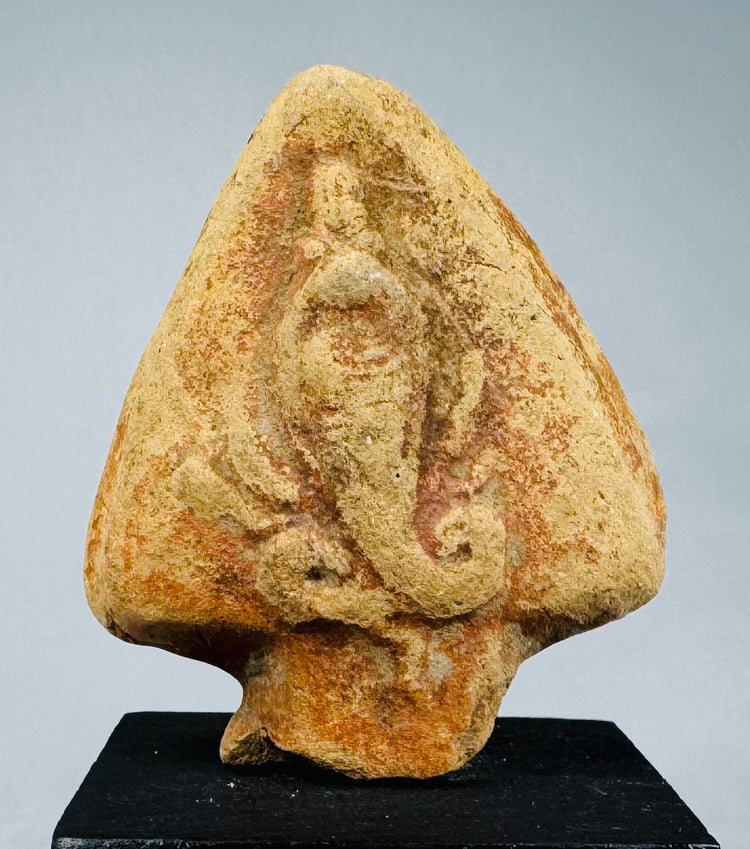
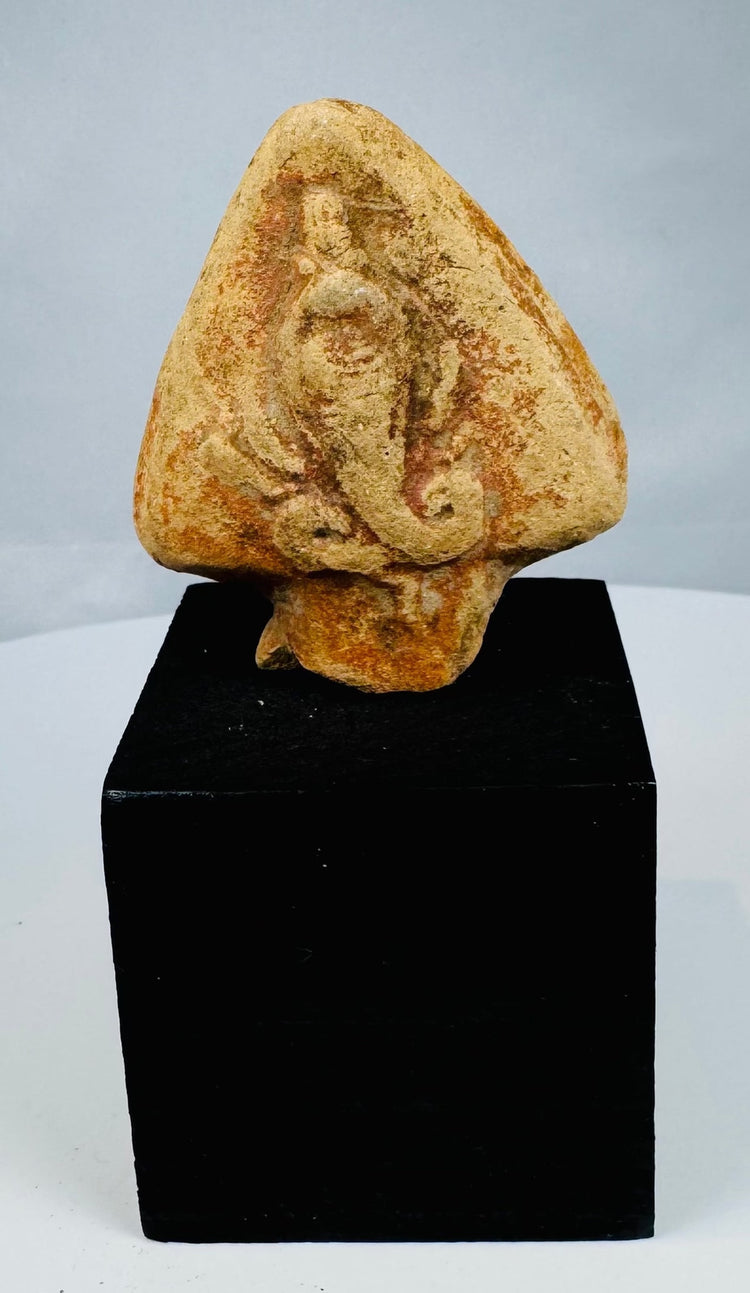
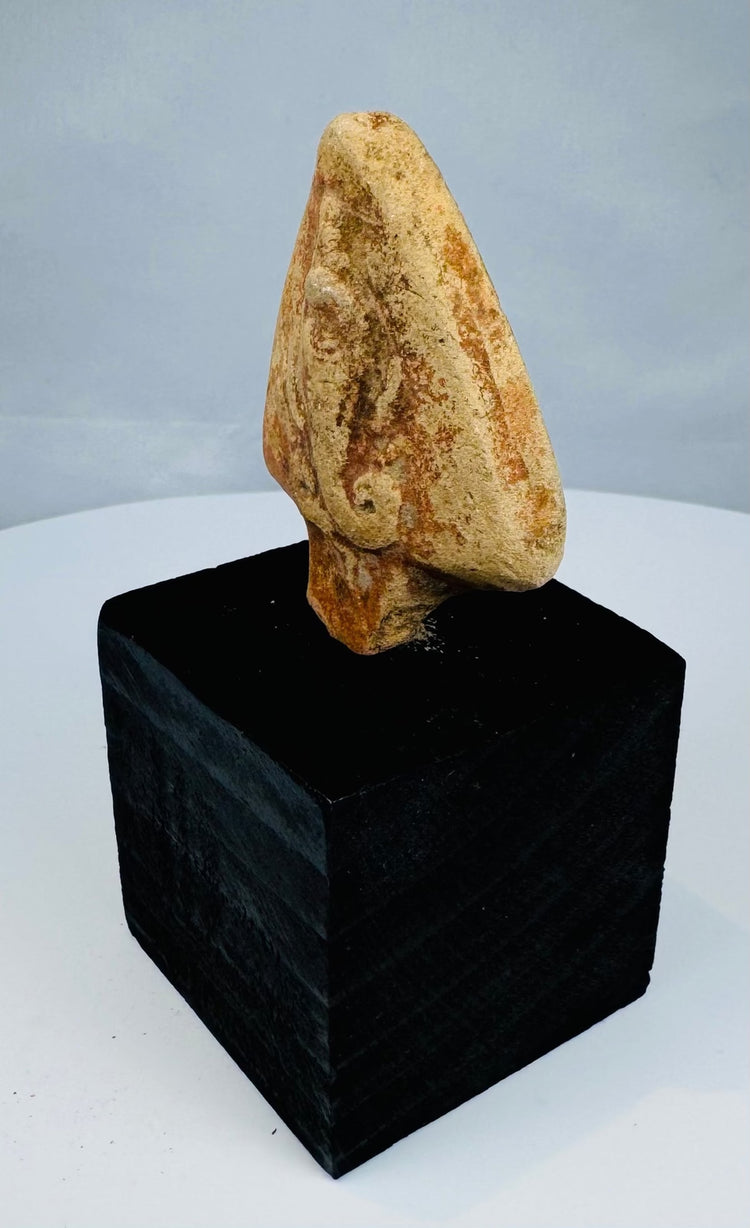
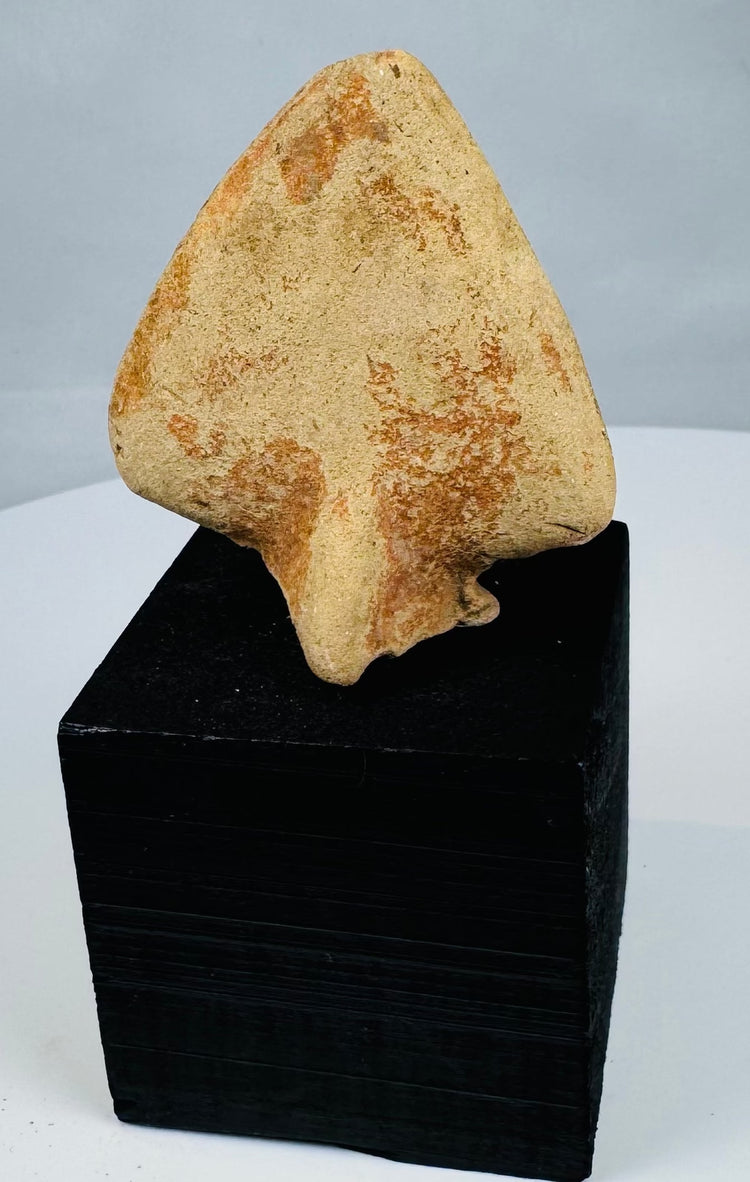
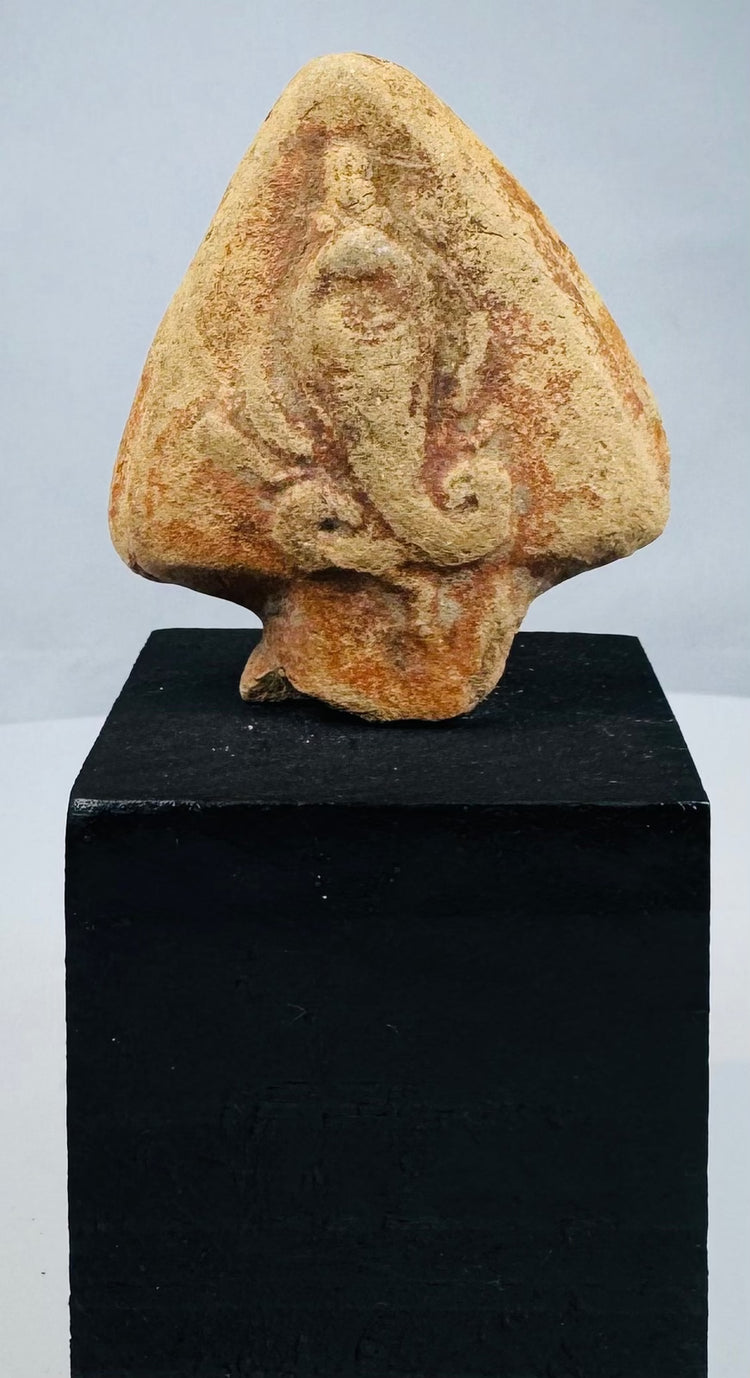
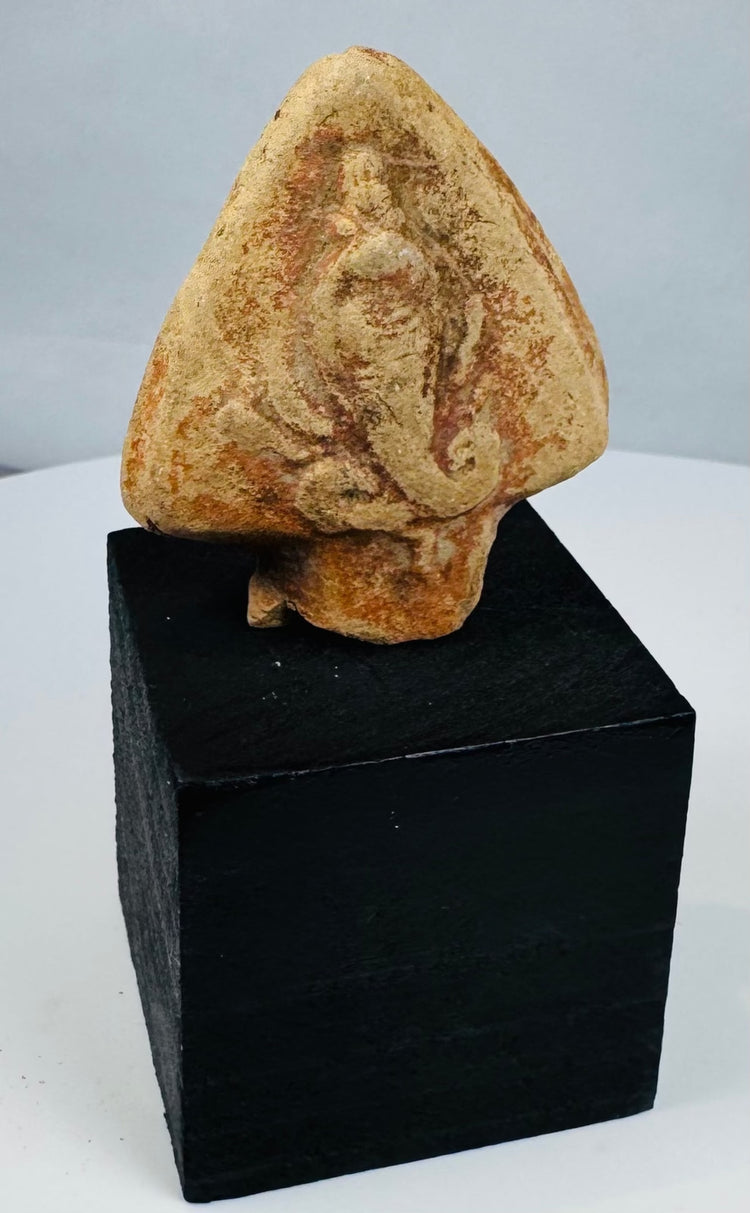
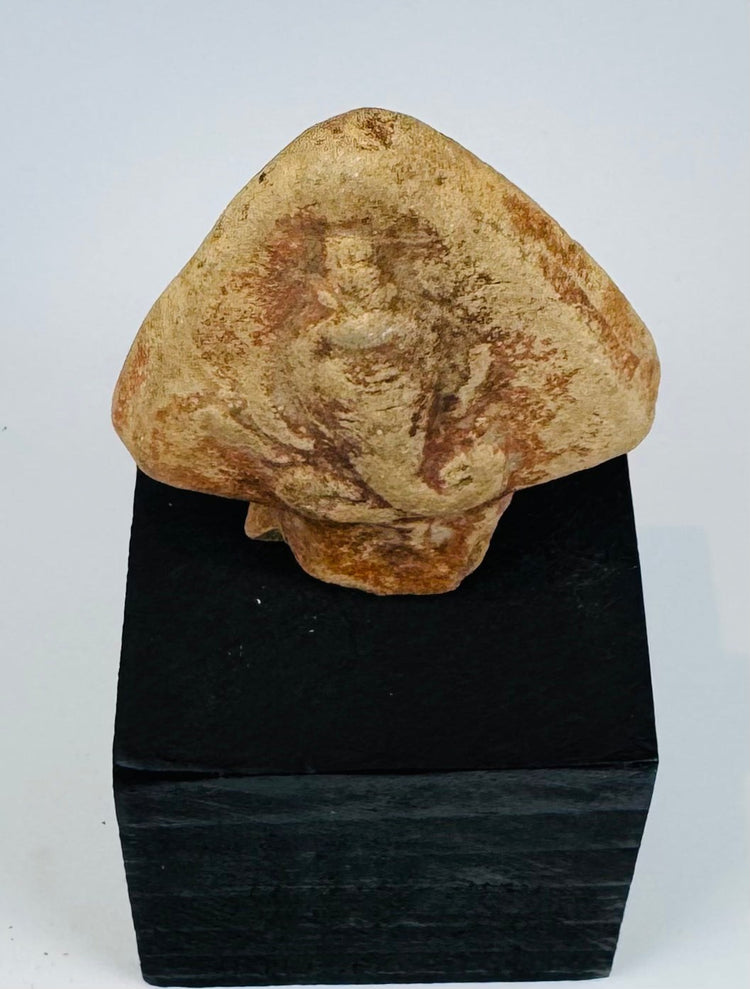
This unusual ancient terracotta fragment depicts a rearing cobra wearing a ceremonial headpiece, modeled in raised relief against a broad triangular or leaf-shaped background. The serpent is presented frontally, with its head elevated beneath a rounded crown-like element and its elongated body descending into a pronounced curving loop near the base.
The cobra’s widened upper body and surrounding triangular field may represent an expanded hood, while the raised element above its head appears to form a ceremonial headdress or crown. Traces of reddish pigment remain across the surface, suggesting that the fragment was originally more extensively painted.
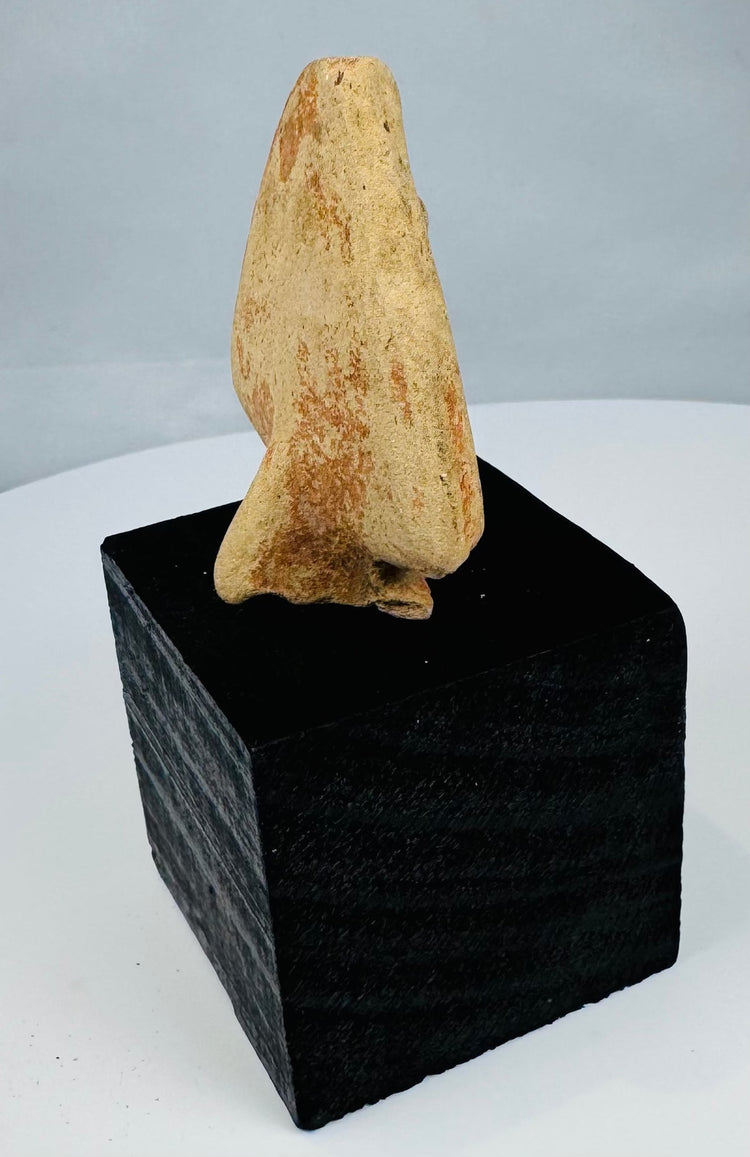
The projecting section beneath the relief appears to have functioned as an attachment point, indicating that the piece was likely once incorporated into a larger object. It may have formed part of a votive plaque, architectural ornament, shrine furnishing, lamp attachment, or another object carrying protective religious imagery. Due to its fragmentary nature and the absence of its original context, its precise original function cannot be conclusively determined.
The fragment is now mounted on a modern black wooden display base, allowing the relief and surviving pigment to be viewed upright.
Features
- Depicts a rearing cobra or sacred serpent
- Raised ceremonial headpiece or crown
- Pronounced curving body modeled in relief
- Broad triangular or hood-like surrounding form
- Surviving traces of red pigment
- Mounted on a modern black display base
Cultural Significance
The cobra was one of the most enduring symbols of protection, divine authority, kingship, and sacred power throughout ancient Egypt. In the form of the uraeus, the rearing cobra appeared on royal crowns, temple furnishings, funerary equipment, votive objects, and architectural decoration. It was believed to possess the power to defend rulers, deities, temples, and sacred spaces from hostile forces.
Crowned cobra imagery continued to be used through the later periods of Egyptian history and remained recognizable throughout the Ptolemaic and Roman eras. Egyptian religious symbols also circulated more broadly across the Eastern Mediterranean, where they were adapted into local devotional and decorative traditions.
Although the precise identity and original use of this fragment remain uncertain, its frontal serpent imagery, ceremonial headpiece, and surviving pigment strongly suggest a protective or religious purpose.
Condition
The fragment remains structurally stable and displays substantial age-related surface wear consistent with archaeological terracotta. The molded details are softened from erosion, with scattered abrasions, small chips, surface deposits, and areas of pigment loss throughout. Traces of red coloration remain visible across the front.
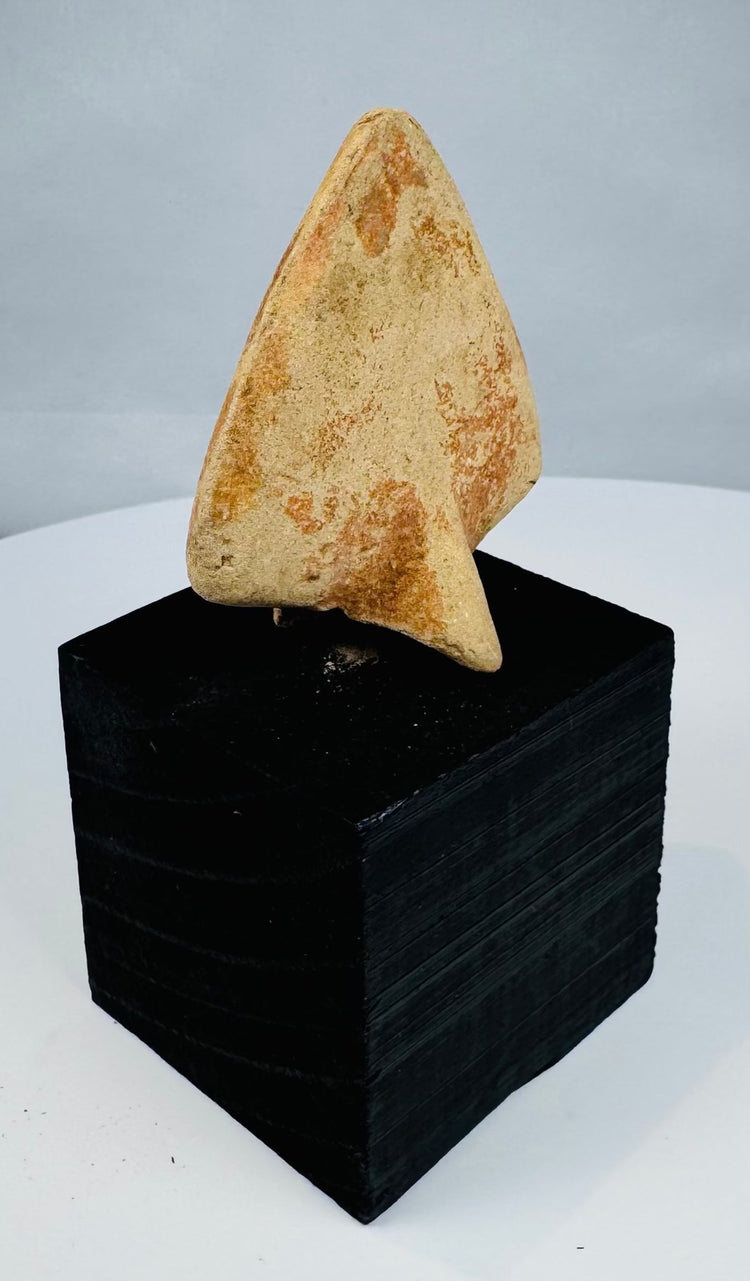
The lower projecting attachment section is incomplete, indicating that the piece was formerly connected to a larger object. The reverse is plain and weathered. The fragment has been mounted on a modern black wooden display base for presentation.
Dimensions (Approximate)
Height: 4.25 in
Width: 2 in
Depth: 2 in
Age (Approximate)
2,025–3,025 years old
Provenance
Formerly in the collection of Jack Guevrekian, Manhasset, New York, a noted New York numismatist and collector with a particular interest in Armenian coinage, antiquities, and ancient material. Guevrekian assembled an extensive collection over several decades, a significant portion of which was publicly offered as The Jack Guevrekian Collection by the Numismatic & Antiquarian Service Corporation of America in New York in 1977.
Subsequently held in a private New York City collection.
Later handled by the Howard S. Rose Gallery / Arte Primitivo in New York, a longstanding specialist gallery and auction house dealing in Pre-Columbian, Classical, Egyptian, Asian, and ethnographic antiquities and works of art. The gallery has conducted specialist auctions, exhibitions, and private sales from its New York premises.
Subsequently handled by Artemis Fine Arts / Artemis Gallery, a Colorado-based specialist in antiquities, ancient art, ethnographic material, and fine art that has been active in the field since 1993.
Then entered a private collection in Toronto, Ontario, Canada.
Learn More
Explore a related ancient Egyptian cobra object in the collection of The Metropolitan Museum of Art
Browse our curated Collection of Ancient Egyptian Mummies & Artifacts
Description
Historical Context & Origin
Region: Egypt or Eastern Mediterranean
Material: Molded terracotta with traces of red pigment
Period: Circa 1st Millennium BCE
Description
This unusual ancient terracotta fragment depicts a rearing cobra wearing a ceremonial headpiece, modeled in raised relief against a broad triangular or leaf-shaped background. The serpent is presented frontally, with its head elevated beneath a rounded crown-like element and its elongated body descending into a pronounced curving loop near the base.
The cobra’s widened upper body and surrounding triangular field may represent an expanded hood, while the raised element above its head appears to form a ceremonial headdress or crown. Traces of reddish pigment remain across the surface, suggesting that the fragment was originally more extensively painted.
The projecting section beneath the relief appears to have functioned as an attachment point, indicating that the piece was likely once incorporated into a larger object. It may have formed part of a votive plaque, architectural ornament, shrine furnishing, lamp attachment, or another object carrying protective religious imagery. Due to its fragmentary nature and the absence of its original context, its precise original function cannot be conclusively determined.
The fragment is now mounted on a modern black wooden display base, allowing the relief and surviving pigment to be viewed upright.
Features
- Depicts a rearing cobra or sacred serpent
- Raised ceremonial headpiece or crown
- Pronounced curving body modeled in relief
- Broad triangular or hood-like surrounding form
- Surviving traces of red pigment
- Mounted on a modern black display base
Cultural Significance
The cobra was one of the most enduring symbols of protection, divine authority, kingship, and sacred power throughout ancient Egypt. In the form of the uraeus, the rearing cobra appeared on royal crowns, temple furnishings, funerary equipment, votive objects, and architectural decoration. It was believed to possess the power to defend rulers, deities, temples, and sacred spaces from hostile forces.
Crowned cobra imagery continued to be used through the later periods of Egyptian history and remained recognizable throughout the Ptolemaic and Roman eras. Egyptian religious symbols also circulated more broadly across the Eastern Mediterranean, where they were adapted into local devotional and decorative traditions.
Although the precise identity and original use of this fragment remain uncertain, its frontal serpent imagery, ceremonial headpiece, and surviving pigment strongly suggest a protective or religious purpose.
Condition
The fragment remains structurally stable and displays substantial age-related surface wear consistent with archaeological terracotta. The molded details are softened from erosion, with scattered abrasions, small chips, surface deposits, and areas of pigment loss throughout. Traces of red coloration remain visible across the front.
The lower projecting attachment section is incomplete, indicating that the piece was formerly connected to a larger object. The reverse is plain and weathered. The fragment has been mounted on a modern black wooden display base for presentation.
Dimensions (Approximate)
Height: 4.25 in
Width: 2 in
Depth: 2 in
Age (Approximate)
2,025–3,025 years old
Provenance
Formerly in the collection of Jack Guevrekian, Manhasset, New York, a noted New York numismatist and collector with a particular interest in Armenian coinage, antiquities, and ancient material. Guevrekian assembled an extensive collection over several decades, a significant portion of which was publicly offered as The Jack Guevrekian Collection by the Numismatic & Antiquarian Service Corporation of America in New York in 1977.
Subsequently held in a private New York City collection.
Later handled by the Howard S. Rose Gallery / Arte Primitivo in New York, a longstanding specialist gallery and auction house dealing in Pre-Columbian, Classical, Egyptian, Asian, and ethnographic antiquities and works of art. The gallery has conducted specialist auctions, exhibitions, and private sales from its New York premises.
Subsequently handled by Artemis Fine Arts / Artemis Gallery, a Colorado-based specialist in antiquities, ancient art, ethnographic material, and fine art that has been active in the field since 1993.
Then entered a private collection in Toronto, Ontario, Canada.
Learn More
Explore a related ancient Egyptian cobra object in the collection of The Metropolitan Museum of Art
Browse our curated Collection of Ancient Egyptian Mummies & Artifacts
You May Also Like
