



Ancient Gandharan Limestone Head Fragment | Kushan Period | Circa 2nd–5th Century CE
Couldn't load pickup availability


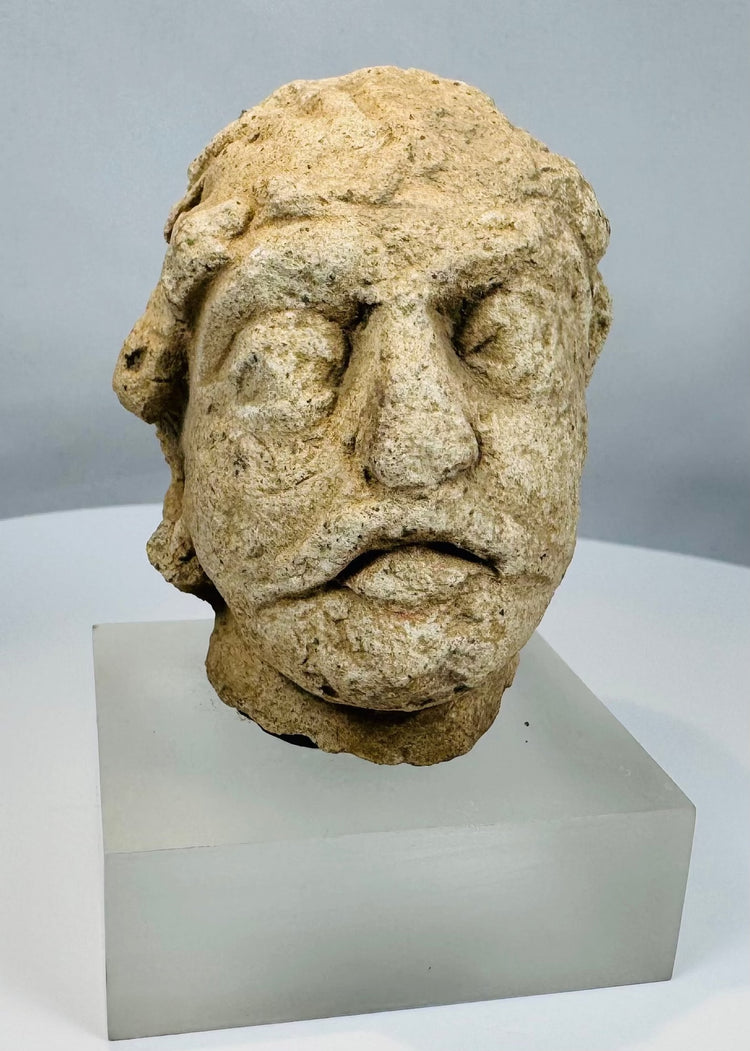
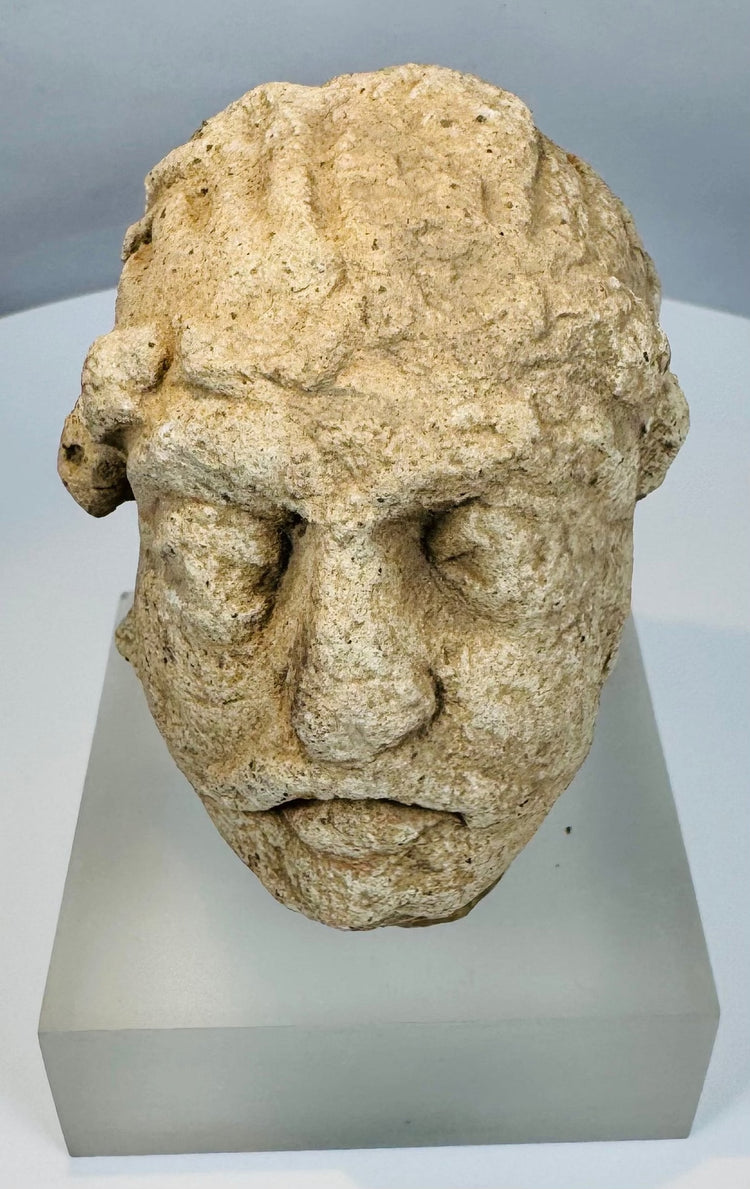
Ancient Gandharan Limestone Head Fragment | Kushan Period | Circa 2nd–5th Century CE
Description
More
Less
Historical Context & Origin
Region: Ancient Gandhara (Present-Day Pakistan and Afghanistan)
Material: Carved Limestone
Period: Kushan to Post-Kushan Period, circa 2nd–5th Century CE
Description
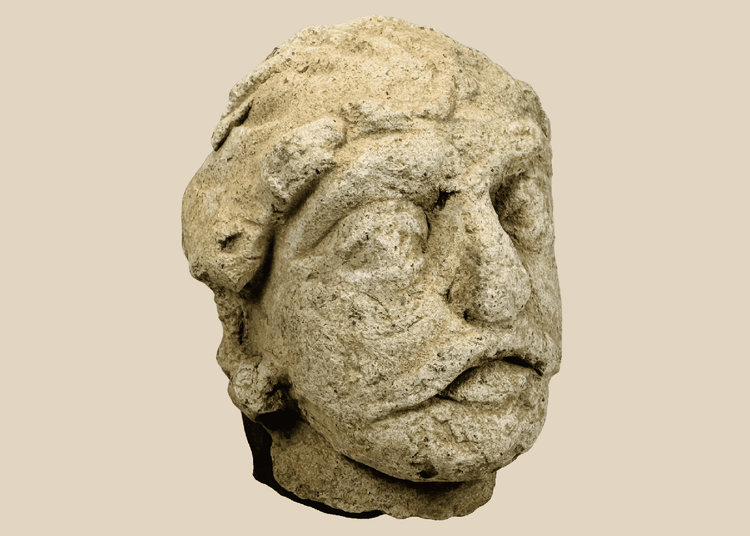
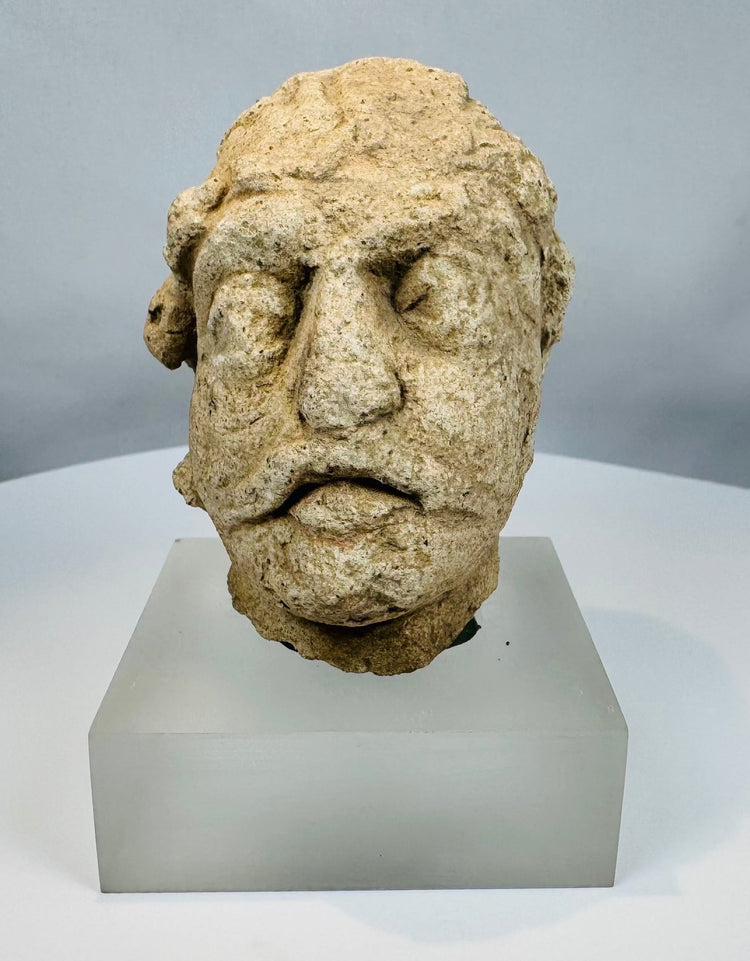
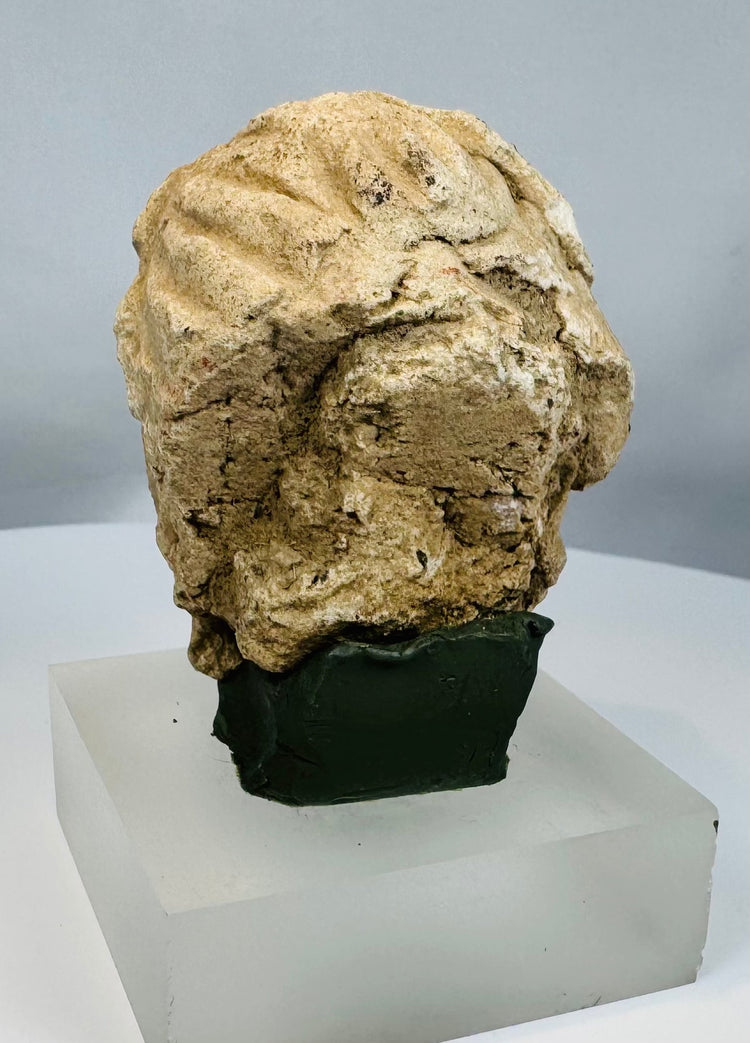
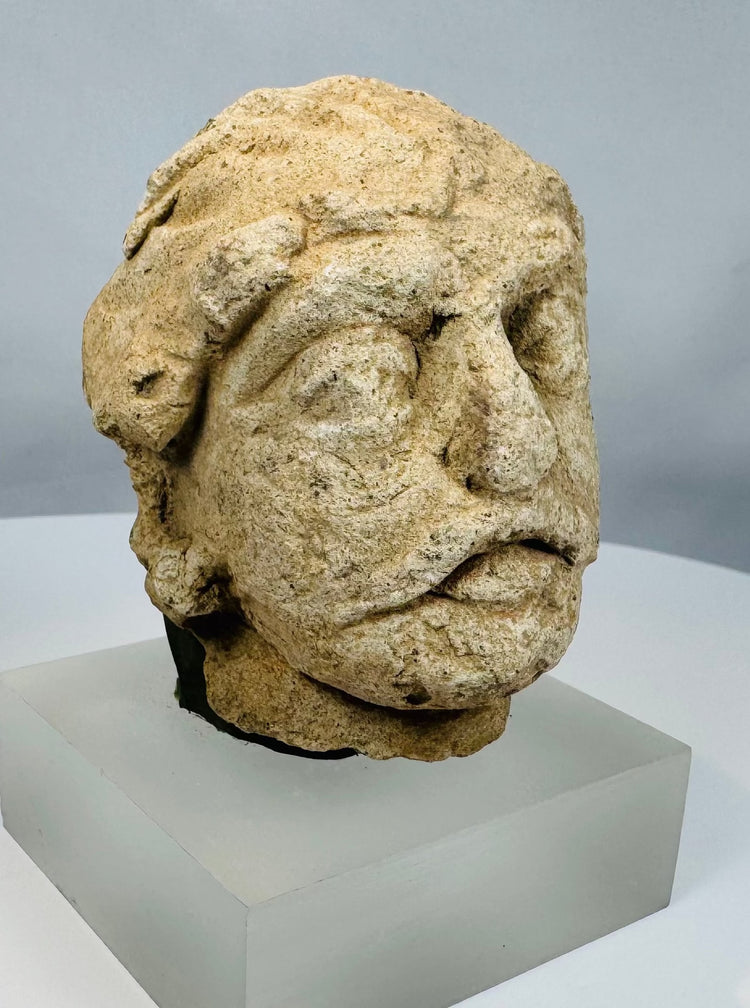
This finely carved limestone head fragment originates from the ancient region of Gandhara, one of the most important artistic centers of the Buddhist world. Depicting a serene Bodhisattva, traditionally identified as Maitreya, the sculpture reflects the distinctive fusion of Hellenistic, Roman, and Indian artistic traditions that flourished along the Silk Road during the Kushan era.
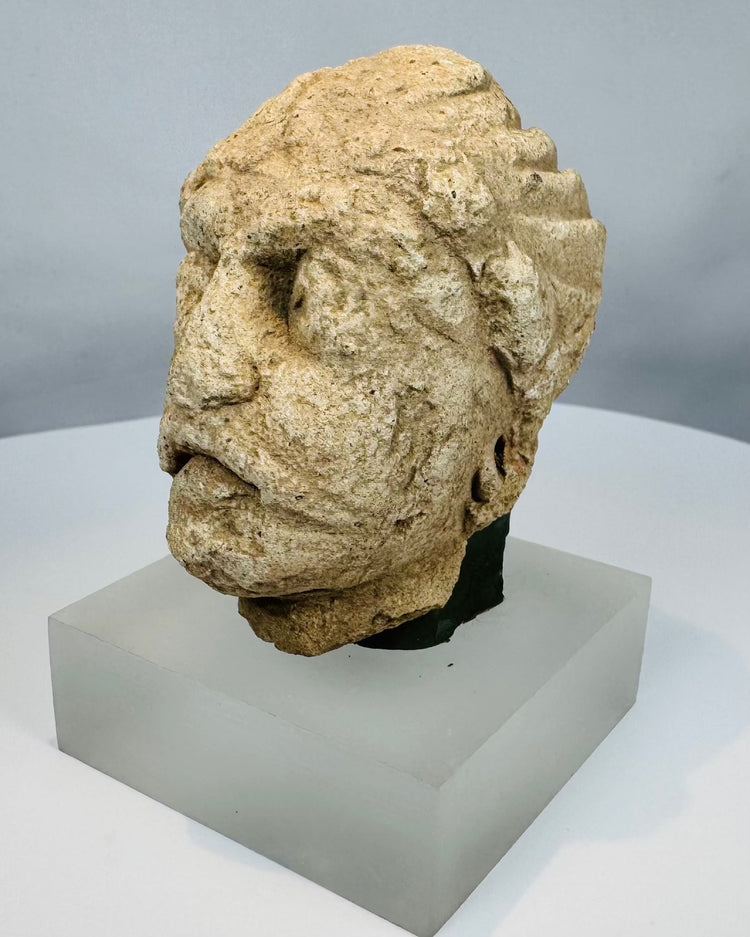
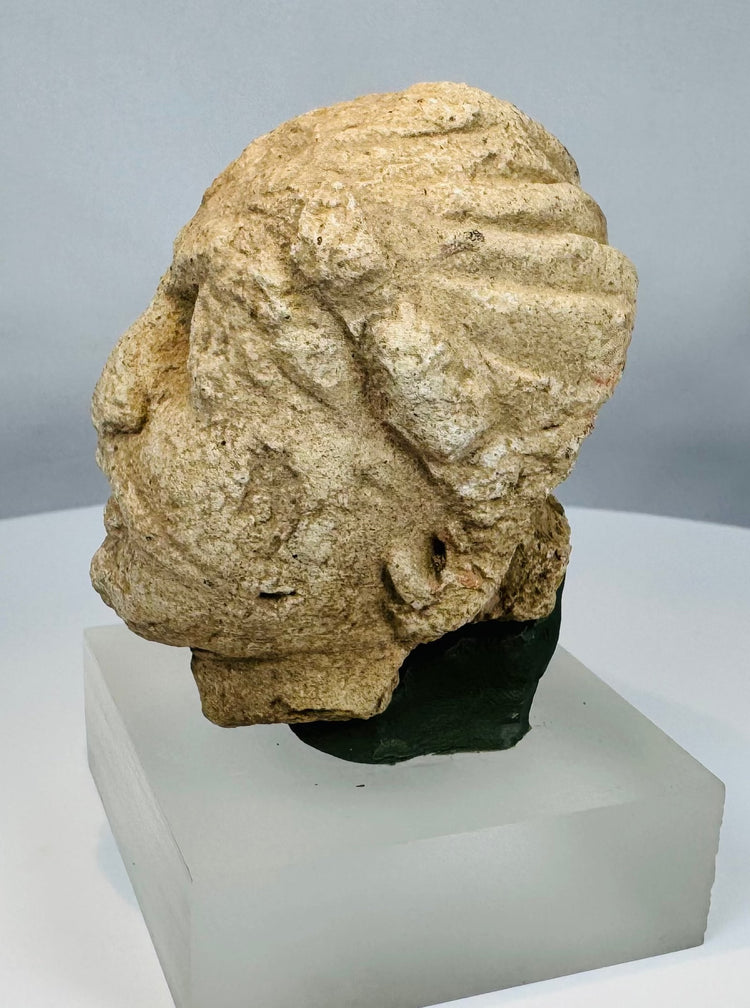
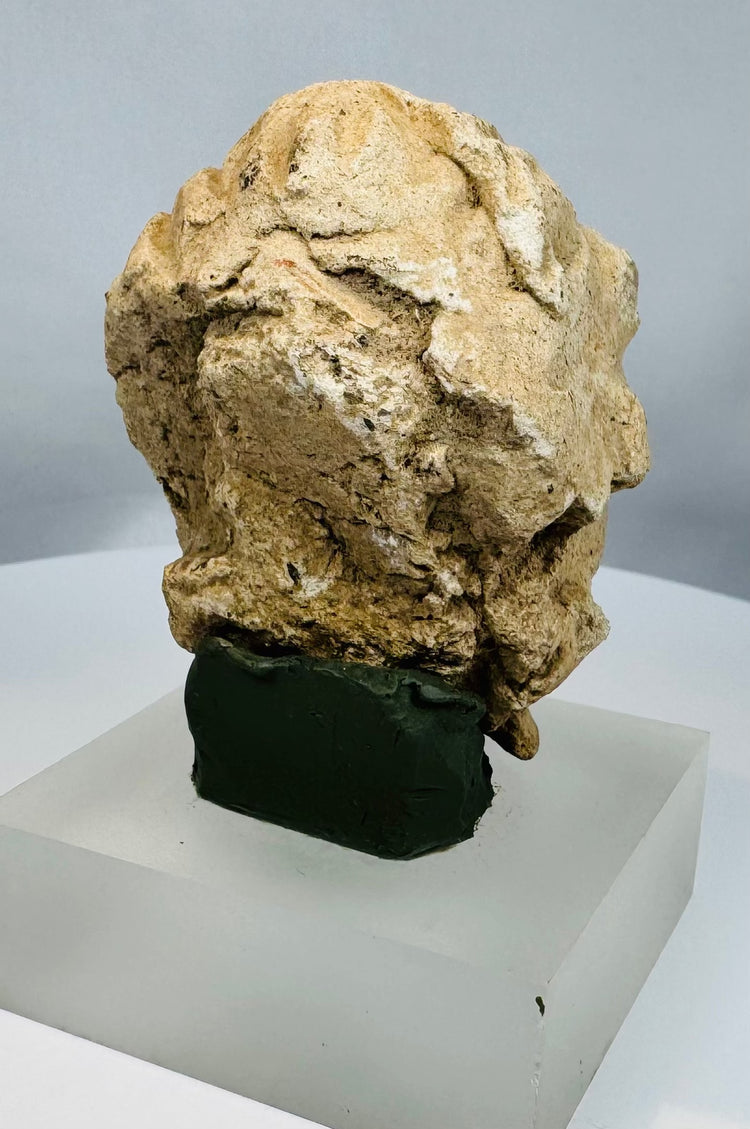
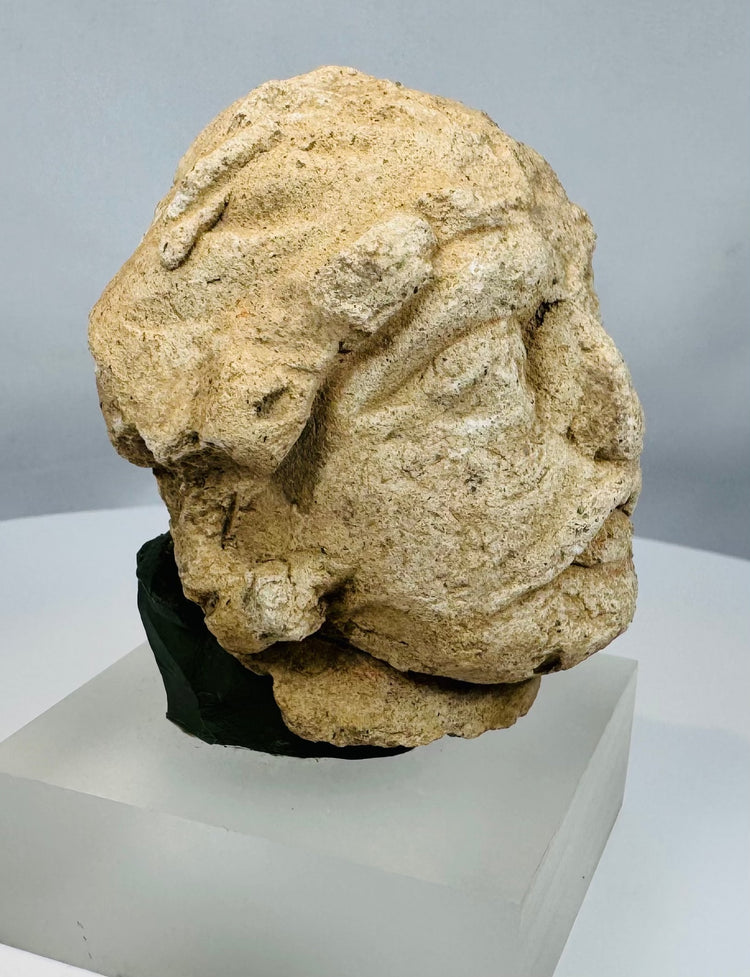
The fragment preserves a contemplative face with closed or heavily lidded eyes, a straight nose, full lips, and remnants of the characteristic wavy coiffure associated with Gandharan depictions of enlightened beings. Despite centuries of weathering, the sculpture retains a powerful sense of spiritual calm and introspection.
Gandharan workshops were among the first to create large-scale anthropomorphic representations of the Buddha and Bodhisattvas. Sculptures such as this would originally have formed part of a monastery, shrine, stupa complex, or devotional architectural program intended to inspire meditation and religious reflection.
The heavily weathered surface and fragmentary state bear witness to the great antiquity of the piece while enhancing its archaeological character and authenticity.
Cultural Significance
The Gandharan civilization occupied a unique position at the crossroads of East and West. Influenced by Greek artistic traditions introduced following the campaigns of Alexander the Great, Gandharan sculptors developed one of the most recognizable and influential styles in Buddhist art.
Representations of Bodhisattvas such as Maitreya played a central role in Buddhist devotional practice and helped spread Buddhist iconography throughout Central Asia, China, and eventually East Asia. Surviving sculptural fragments provide important evidence of the artistic and religious exchanges that occurred along the Silk Road.
Features
- Ancient Gandharan limestone sculpture fragment
- Depicts a Bodhisattva, traditionally identified as Maitreya
- Characteristic Gandharan facial modeling and coiffure
- Fine archaeological surface with centuries of weathering
- Carved from limestone typical of Gandharan workshops
- Mounted on a custom display stand
- Strong Silk Road and Buddhist art historical significance
Condition
Fragmentary ancient condition with extensive weathering, losses, surface erosion, and age-related wear throughout. Mounted securely on a custom display stand. Overall stable and highly displayable.
Dimensions (Approximate)
Head
Height: 3 in
Width: 2.5 in
Depth: 2.25 in
Overall Height with Stand: 4 in
Age (Approximate)
1,500–1,800 years old
Provenance
From a private collection in Kinzers, Pennsylvania, USA. The piece formed part of a long-held collection of antiquities and archaeological artifacts assembled over several decades by a dedicated collector with a particular interest in ancient civilizations and early religious art. Acquired through the established antiquities market and preserved in the collection for many years prior to entering the secondary market.
Learn More
Explore a Gandharan Bodhisattva sculpture from the collection of The Metropolitan Museum of Art
Browse Our Collection of Buddhist and Hindu Relics & Sacred Statues
Description
Historical Context & Origin
Region: Ancient Gandhara (Present-Day Pakistan and Afghanistan)
Material: Carved Limestone
Period: Kushan to Post-Kushan Period, circa 2nd–5th Century CE
Description
This finely carved limestone head fragment originates from the ancient region of Gandhara, one of the most important artistic centers of the Buddhist world. Depicting a serene Bodhisattva, traditionally identified as Maitreya, the sculpture reflects the distinctive fusion of Hellenistic, Roman, and Indian artistic traditions that flourished along the Silk Road during the Kushan era.
The fragment preserves a contemplative face with closed or heavily lidded eyes, a straight nose, full lips, and remnants of the characteristic wavy coiffure associated with Gandharan depictions of enlightened beings. Despite centuries of weathering, the sculpture retains a powerful sense of spiritual calm and introspection.
Gandharan workshops were among the first to create large-scale anthropomorphic representations of the Buddha and Bodhisattvas. Sculptures such as this would originally have formed part of a monastery, shrine, stupa complex, or devotional architectural program intended to inspire meditation and religious reflection.
The heavily weathered surface and fragmentary state bear witness to the great antiquity of the piece while enhancing its archaeological character and authenticity.
Cultural Significance
The Gandharan civilization occupied a unique position at the crossroads of East and West. Influenced by Greek artistic traditions introduced following the campaigns of Alexander the Great, Gandharan sculptors developed one of the most recognizable and influential styles in Buddhist art.
Representations of Bodhisattvas such as Maitreya played a central role in Buddhist devotional practice and helped spread Buddhist iconography throughout Central Asia, China, and eventually East Asia. Surviving sculptural fragments provide important evidence of the artistic and religious exchanges that occurred along the Silk Road.
Features
- Ancient Gandharan limestone sculpture fragment
- Depicts a Bodhisattva, traditionally identified as Maitreya
- Characteristic Gandharan facial modeling and coiffure
- Fine archaeological surface with centuries of weathering
- Carved from limestone typical of Gandharan workshops
- Mounted on a custom display stand
- Strong Silk Road and Buddhist art historical significance
Condition
Fragmentary ancient condition with extensive weathering, losses, surface erosion, and age-related wear throughout. Mounted securely on a custom display stand. Overall stable and highly displayable.
Dimensions (Approximate)
Head
Height: 3 in
Width: 2.5 in
Depth: 2.25 in
Overall Height with Stand: 4 in
Age (Approximate)
1,500–1,800 years old
Provenance
From a private collection in Kinzers, Pennsylvania, USA. The piece formed part of a long-held collection of antiquities and archaeological artifacts assembled over several decades by a dedicated collector with a particular interest in ancient civilizations and early religious art. Acquired through the established antiquities market and preserved in the collection for many years prior to entering the secondary market.
Learn More
Explore a Gandharan Bodhisattva sculpture from the collection of The Metropolitan Museum of Art
Browse Our Collection of Buddhist and Hindu Relics & Sacred Statues
You May Also Like
