



Ancient Greek Bronze Bangle Bracelet | Circa 400–323 BCE
Couldn't load pickup availability





Ancient Greek Bronze Bangle Bracelet | Circa 400–323 BCE
Description
More
Less
Historical Context & Origin
Region: Ancient Greece, Mediterranean region
Material: Bronze (copper alloy)
Period: Late Classical Greek Period, circa 400–323 BCE (traditional attribution)
Description
An intriguing bronze bangle bracelet traditionally attributed to ancient Greece during the Late Classical period, approximately 400–323 BCE, encompassing the historical era associated with Alexander the Great.
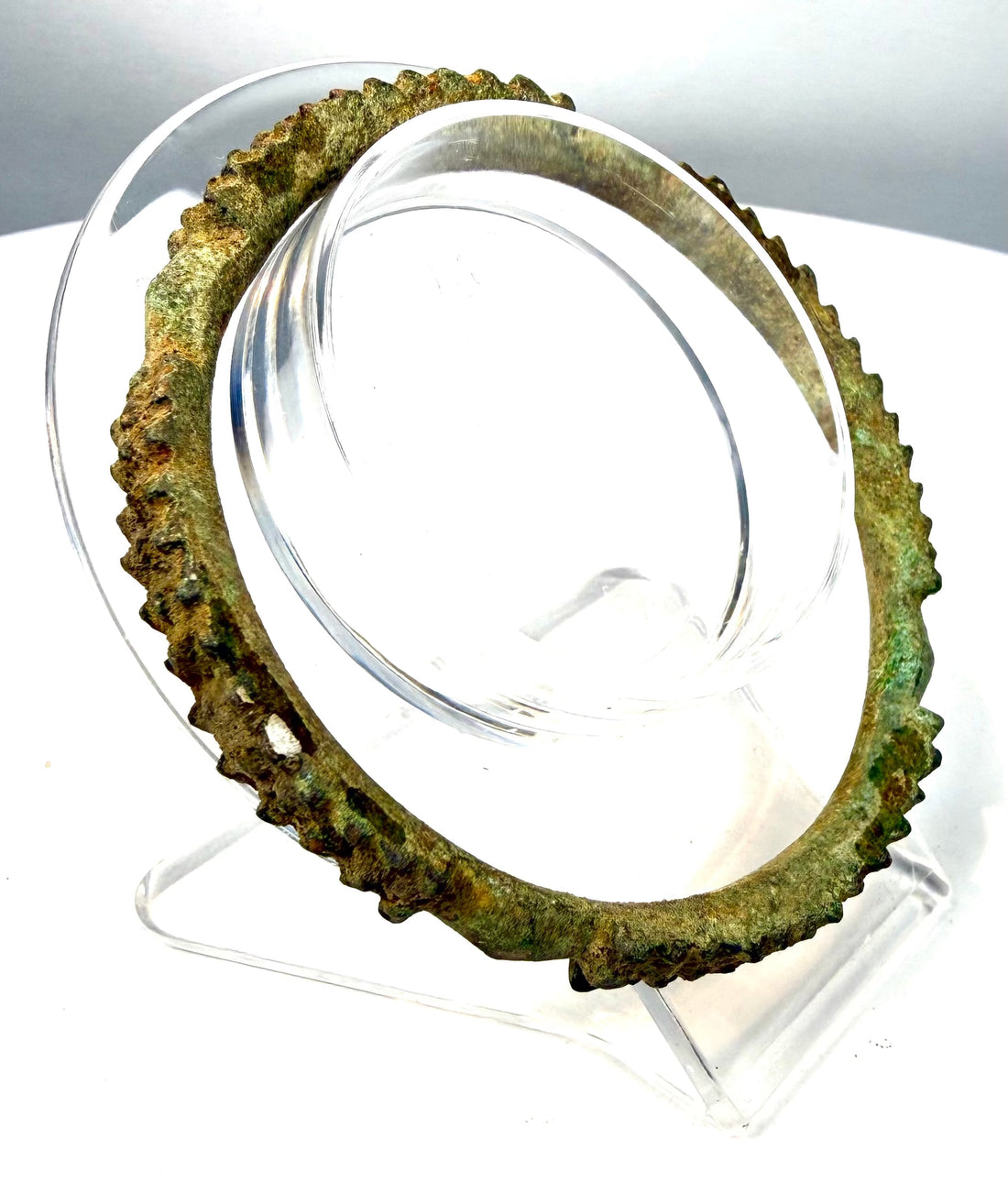
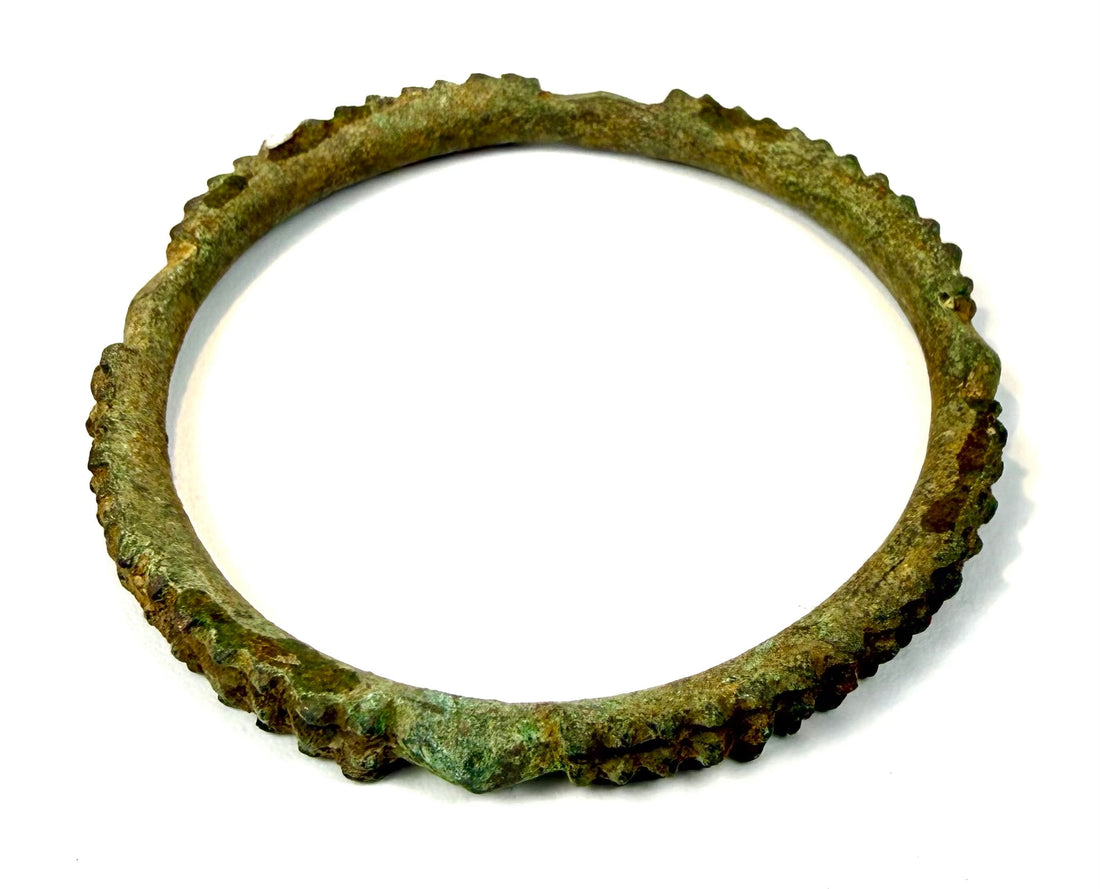
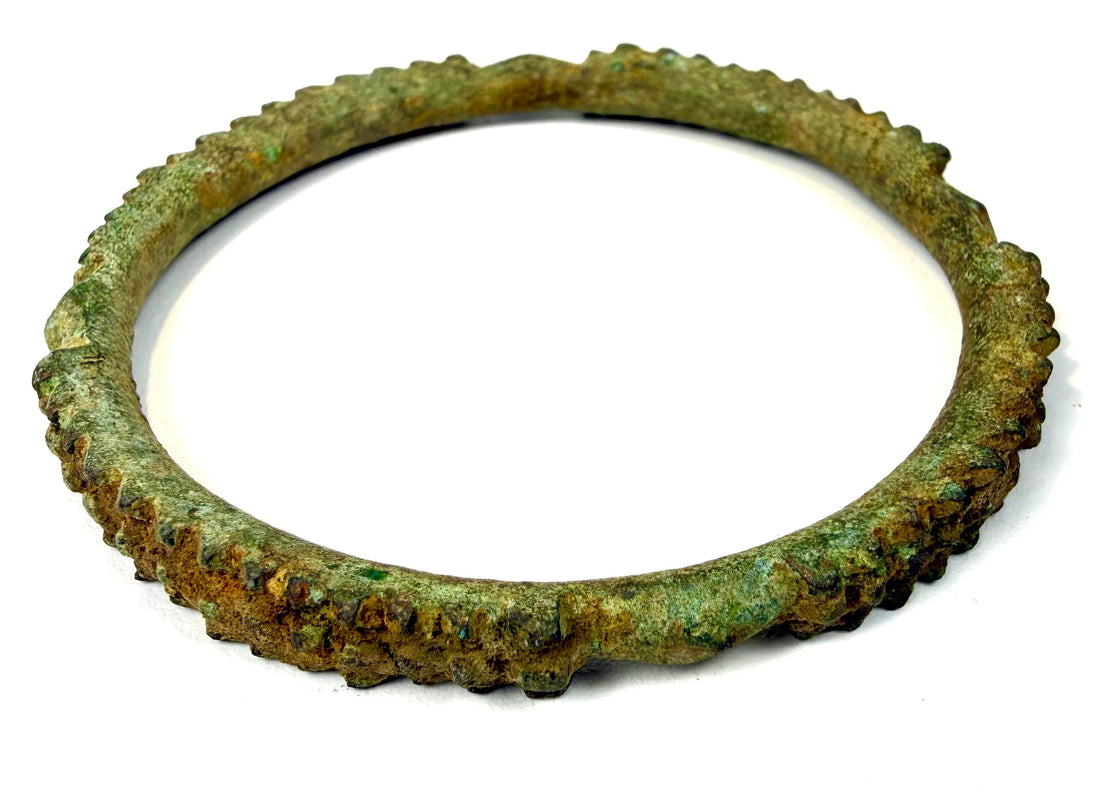
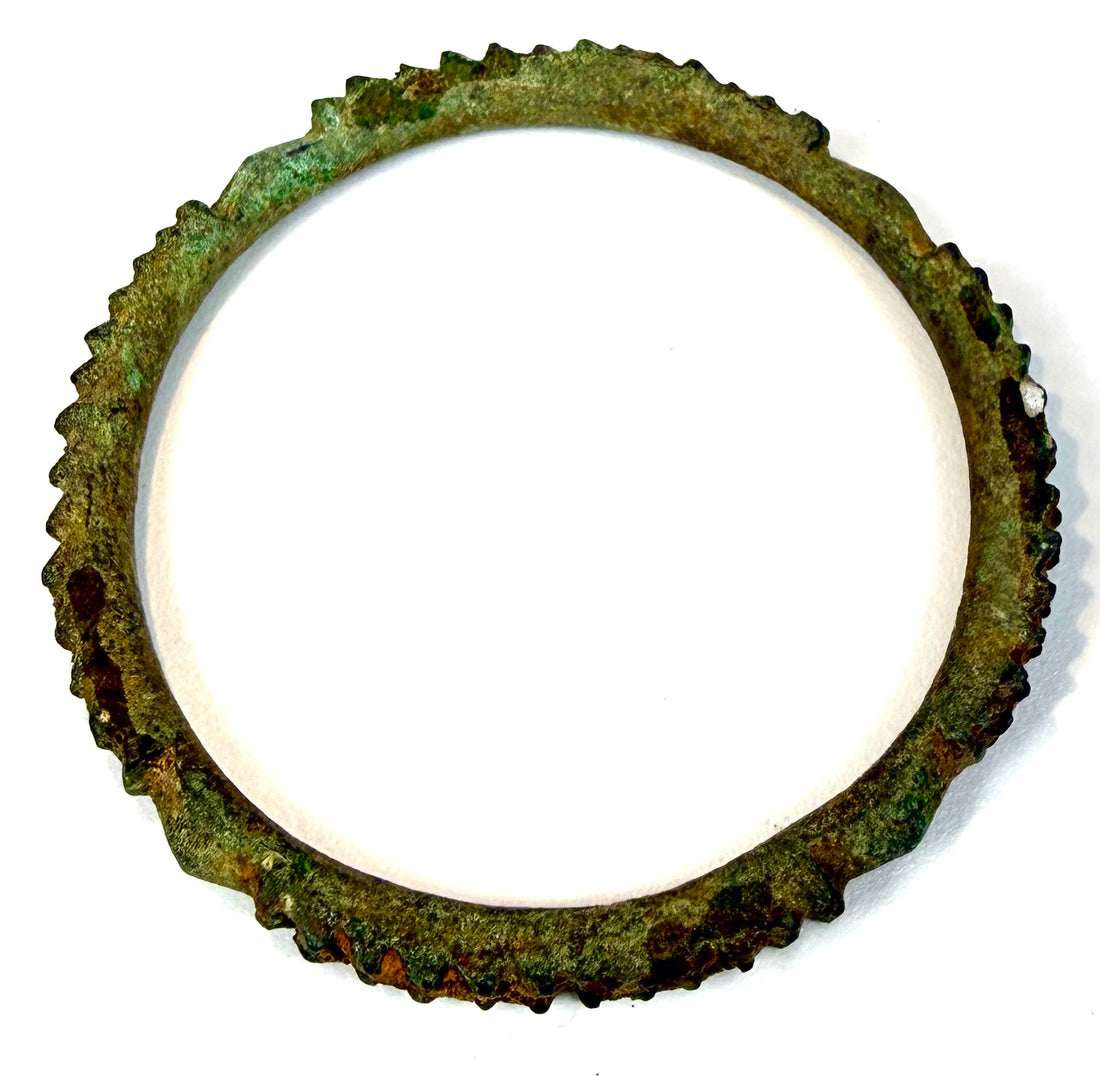
The bracelet features a continuous circular form with a distinctive irregular, notched exterior, creating a textured, almost serrated appearance around its circumference. Its relatively smooth interior contrasts with the raised and uneven outer profile, giving the piece a rustic yet visually striking character.
The bronze surface exhibits a rich combination of green, olive, and earthy brown patination, with areas of oxidation, mineral-like deposits, and surface encrustation. These characteristics contribute to its weathered appearance while highlighting the bracelet's distinctive decorative texture.
Features
- Distinctive irregular, notched exterior decoration
- Raised and uneven outer profile with pronounced surface texture
- Relatively smooth interior circumference
- Continuous hoop without a visible clasp or fastening mechanism
- Rich green, olive, and earthy brown surface patination
- Areas of surface pitting, oxidation, and mineral-like encrustation
Cultural Significance
Jewellery played an important role in ancient Greek society, functioning as personal adornment, an expression of identity, and occasionally an indicator of wealth and social standing.
During the Late Classical period, Greek metalworkers demonstrated considerable skill in producing decorative objects from bronze, silver, and gold. Bracelets and armlets were worn in various forms, ranging from relatively simple circular bands to elaborate ornaments featuring animal-headed terminals and intricate surface decoration.
The reign of Alexander the Great, from 336 to 323 BCE, marked a period of significant political and cultural transformation. His conquests facilitated contact between Greek traditions and the artistic influences of Persia, Egypt, and the broader Mediterranean world, helping establish the foundations of Hellenistic art.
Condition
The bracelet remains complete in its circular form, displaying extensive surface oxidation, green and brown patination, mineral-like deposits, and scattered areas of encrustation. Irregularities and surface wear are visible along the outer decorative edge, with areas of pitting and discolouration throughout. The original metal surface is partially obscured by corrosion products. No obvious major breaks are visible in the photographs.
Dimensions (Approximate)
Diameter: 3 in
Age (Approximate)
2,350–2,425 years old
Provenance
Previously held in a private collection in Indianapolis, Indiana, United States.
Learn More
Explore a comparable historical copper-alloy bracelet featuring a continuous circular form, pronounced notched exterior, and aged green patination, illustrating similar decorative metalworking techniques across different cultures, through The Metropolitan Museum of Art
Discover additional ancient bracelets, historic jewellery, and decorative metalwork in our Ancient Rings & Jewelry Collection
Description
Historical Context & Origin
Region: Ancient Greece, Mediterranean region
Material: Bronze (copper alloy)
Period: Late Classical Greek Period, circa 400–323 BCE (traditional attribution)
Description
An intriguing bronze bangle bracelet traditionally attributed to ancient Greece during the Late Classical period, approximately 400–323 BCE, encompassing the historical era associated with Alexander the Great.
The bracelet features a continuous circular form with a distinctive irregular, notched exterior, creating a textured, almost serrated appearance around its circumference. Its relatively smooth interior contrasts with the raised and uneven outer profile, giving the piece a rustic yet visually striking character.
The bronze surface exhibits a rich combination of green, olive, and earthy brown patination, with areas of oxidation, mineral-like deposits, and surface encrustation. These characteristics contribute to its weathered appearance while highlighting the bracelet's distinctive decorative texture.
Features
- Distinctive irregular, notched exterior decoration
- Raised and uneven outer profile with pronounced surface texture
- Relatively smooth interior circumference
- Continuous hoop without a visible clasp or fastening mechanism
- Rich green, olive, and earthy brown surface patination
- Areas of surface pitting, oxidation, and mineral-like encrustation
Cultural Significance
Jewellery played an important role in ancient Greek society, functioning as personal adornment, an expression of identity, and occasionally an indicator of wealth and social standing.
During the Late Classical period, Greek metalworkers demonstrated considerable skill in producing decorative objects from bronze, silver, and gold. Bracelets and armlets were worn in various forms, ranging from relatively simple circular bands to elaborate ornaments featuring animal-headed terminals and intricate surface decoration.
The reign of Alexander the Great, from 336 to 323 BCE, marked a period of significant political and cultural transformation. His conquests facilitated contact between Greek traditions and the artistic influences of Persia, Egypt, and the broader Mediterranean world, helping establish the foundations of Hellenistic art.
Condition
The bracelet remains complete in its circular form, displaying extensive surface oxidation, green and brown patination, mineral-like deposits, and scattered areas of encrustation. Irregularities and surface wear are visible along the outer decorative edge, with areas of pitting and discolouration throughout. The original metal surface is partially obscured by corrosion products. No obvious major breaks are visible in the photographs.
Dimensions (Approximate)
Diameter: 3 in
Age (Approximate)
2,350–2,425 years old
Provenance
Previously held in a private collection in Indianapolis, Indiana, United States.
Learn More
Explore a comparable historical copper-alloy bracelet featuring a continuous circular form, pronounced notched exterior, and aged green patination, illustrating similar decorative metalworking techniques across different cultures, through The Metropolitan Museum of Art
Discover additional ancient bracelets, historic jewellery, and decorative metalwork in our Ancient Rings & Jewelry Collection
You May Also Like
