



Ancient Greek Mould-Made Terracotta Bust | Hellenistic Period | 3rd Century BCE
Couldn't load pickup availability




Ancient Greek Mould-Made Terracotta Bust | Hellenistic Period | 3rd Century BCE
Description
More
Less
Historical Context & Origin
Region: Ancient Greece
Material: Mould-made terracotta with pale grey-beige surface, possibly slip or mineral accretion
Period: Hellenistic Period, 3rd Century BCE
Description
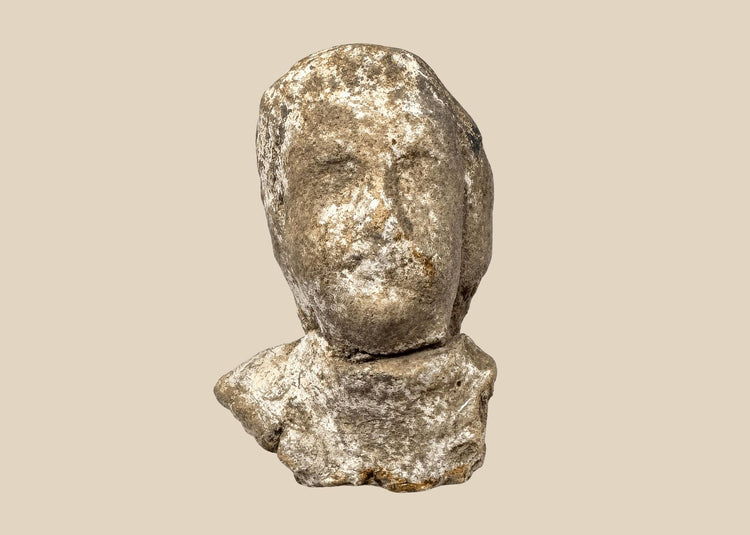
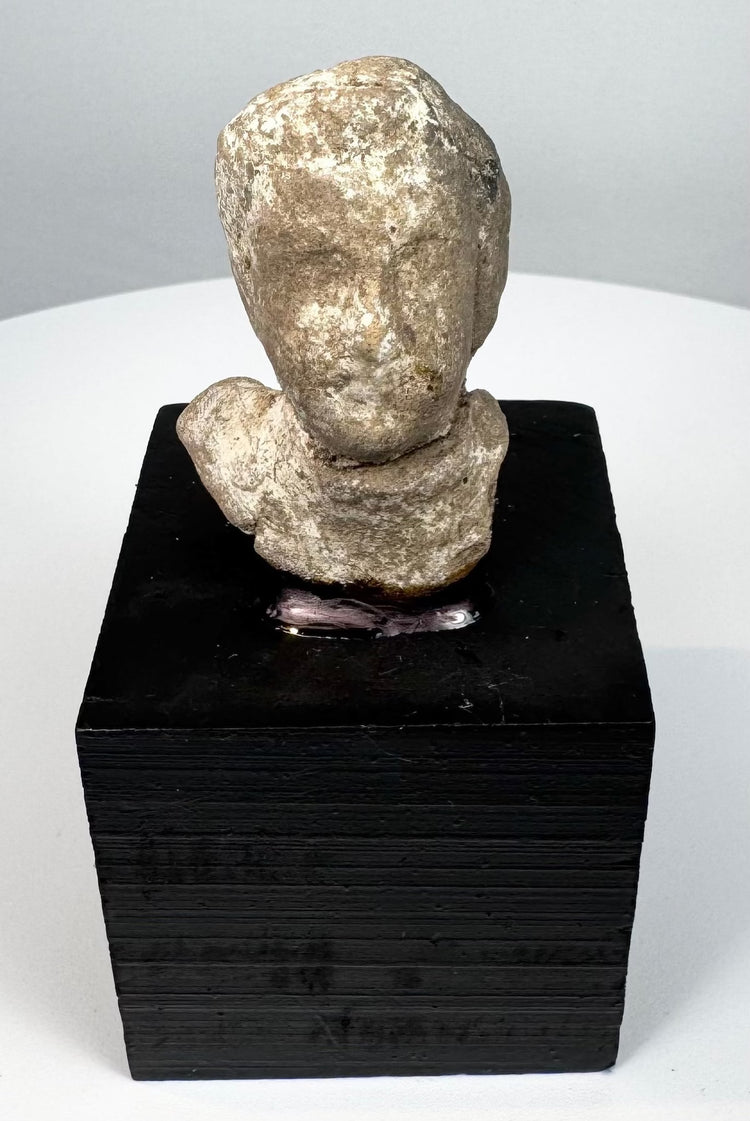
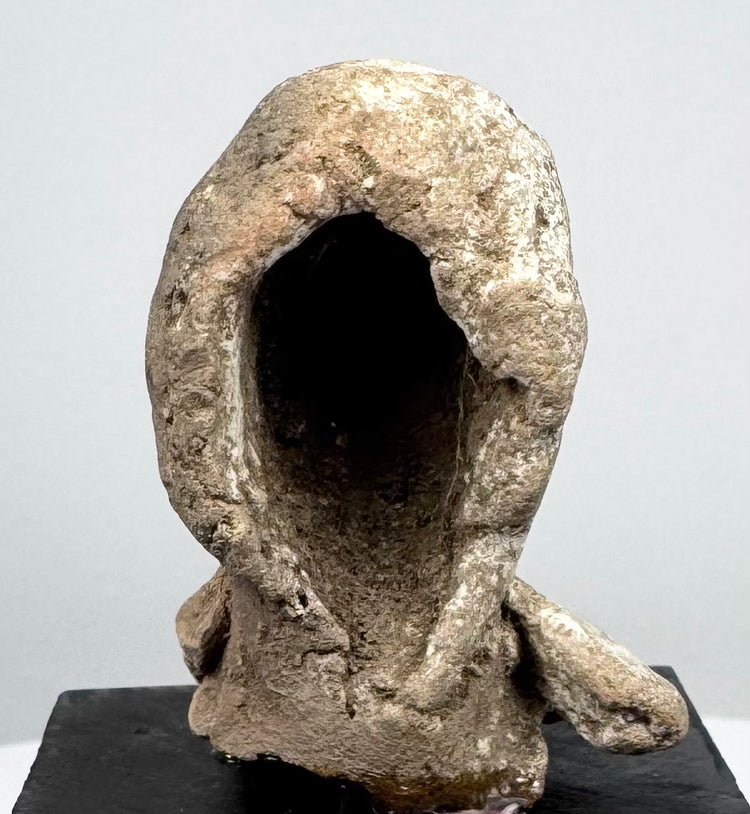
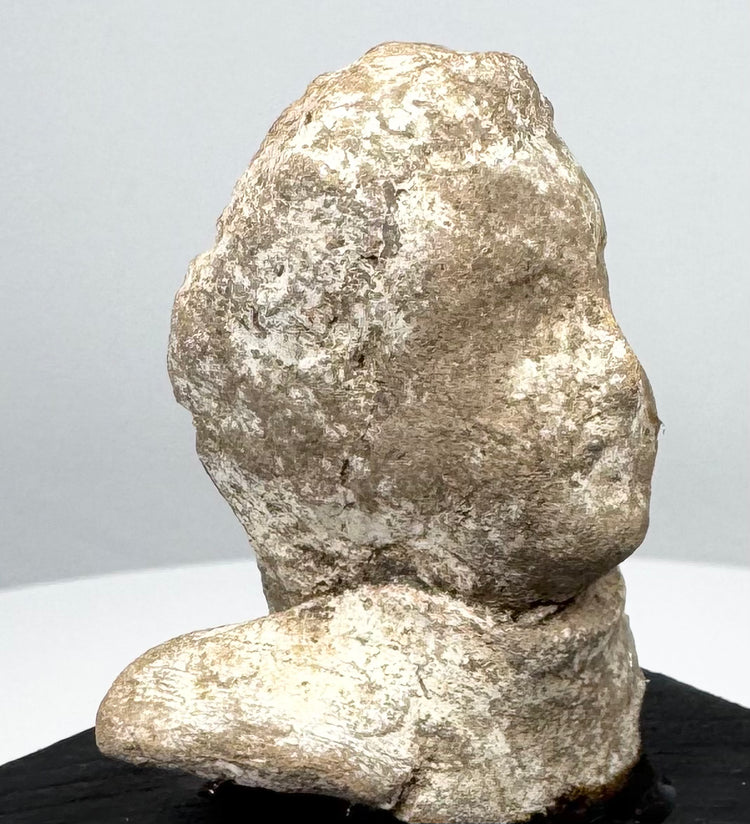
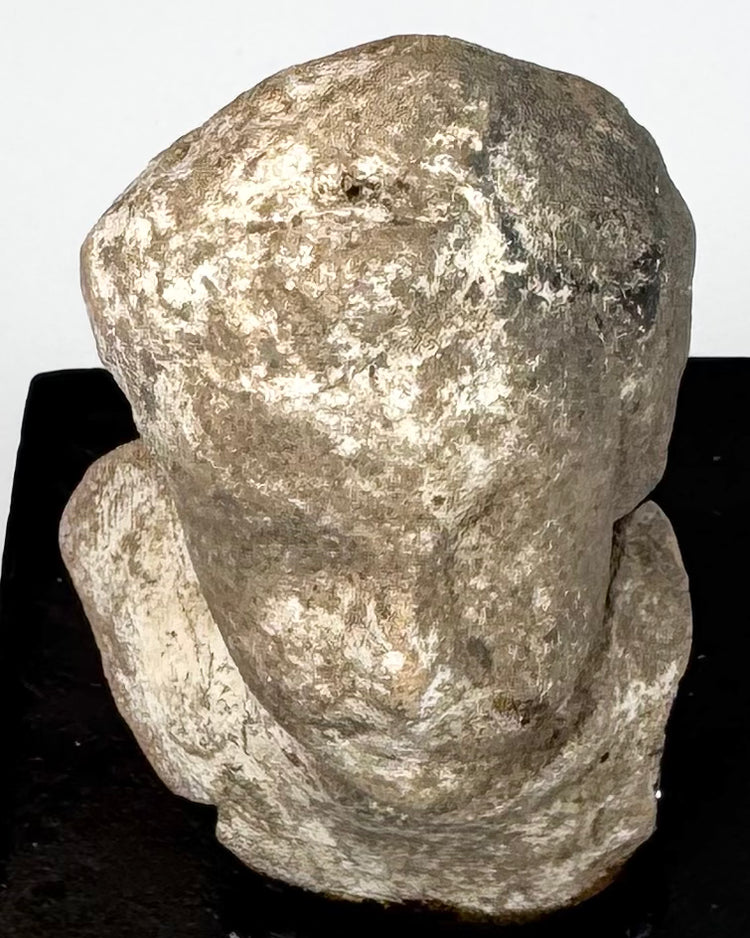
This ancient Greek mould-made terracotta bust dates to the Hellenistic period, 3rd century BCE and preserves the head, upper chest, and shoulders of a human figure.
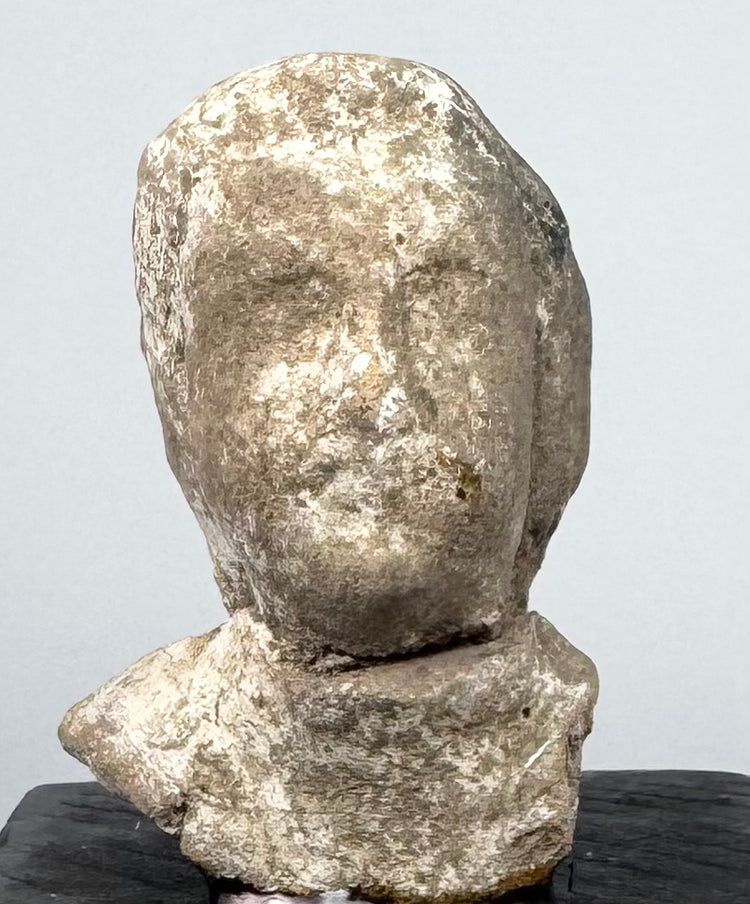
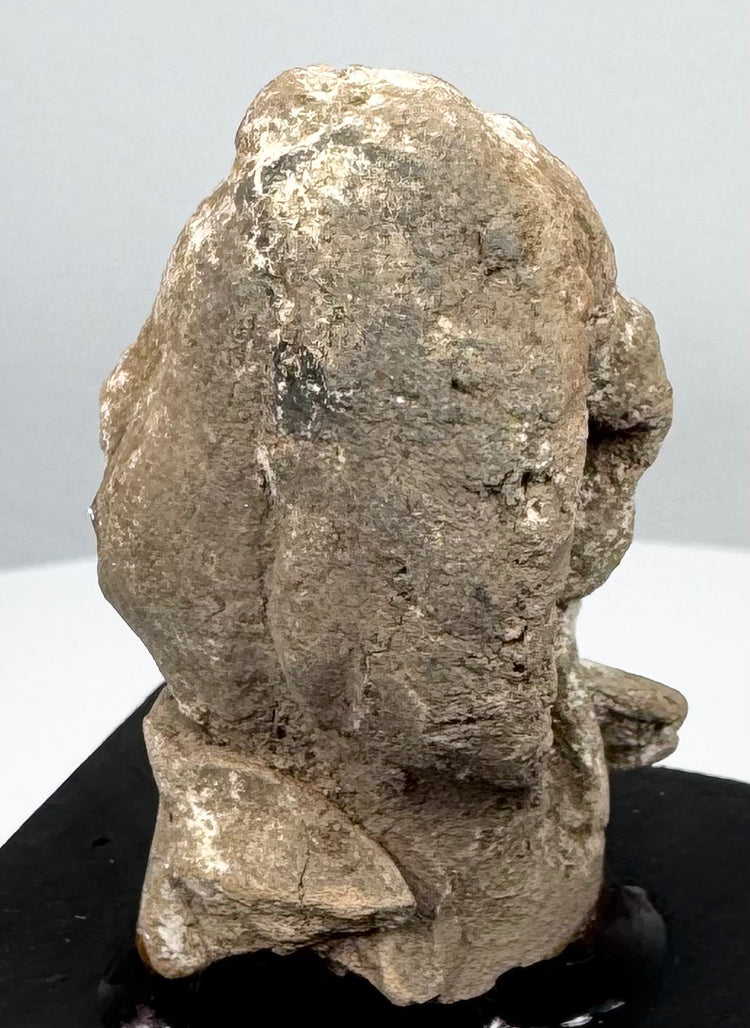
The head is characterized by an oval face, straight nose, closed mouth, and softly modelled brows. A veil or mantle covers the head and falls along the sides, framing the face and contributing to the restrained, formal appearance of the figure.
A visible join is present at the neck, indicating the construction of the bust from separately formed components. The surface has a pale grey-beige appearance that may represent surviving ancient slip, mineral accretion, or a combination of both.
Although the modelling has been softened through age and archaeological wear, the principal facial features remain clearly legible.
Features
- Preserves head, upper chest, and shoulders
- Oval facial form
- Straight nose and closed mouth
- Softly modelled brows
- Veil or mantle falling along the sides of the head
- Visible construction join at the neck
- Pale grey-beige surface, possibly ancient slip or mineral accretion
- Worn but recognizable facial modelling
- Mounted on a modern display base
Cultural Significance
Mould-made terracotta figures were widely produced throughout the Greek world during the Hellenistic period. The use of moulds allowed workshops to create repeated figural types while still permitting variation in finishing, surface treatment, and detail.
Busts and partial figures could depict mortals, idealized individuals, or divine subjects, although the surviving features of this example do not allow a more specific identification with certainty. Its veiled or mantled head and restrained facial treatment are consistent with the visual language of Hellenistic terracotta sculpture.
Condition
Ancient archaeological condition with substantial age-related wear, abrasion, mineral deposits, surface discoloration, and softening of the original moulded detail. The face remains recognizable despite the worn surface. A join is visible at the neck, and minor losses and irregularities are present throughout.
Areas of pale grey-beige surface material may represent surviving slip, mineral accretion, or both. Mounted on a modern black display base.
Dimensions (Approximate)
Height: 4 in
Width: 2 in
Depth: 2 in
Age (Approximate)
Approximately 2,200–2,300 years old
Provenance
Formerly held in a private collection in Boston, Massachusetts, USA.
The piece was later examined by Luca Salvaggio, an Italian archaeologist and specialist in ancient Mediterranean material. He holds a Postgraduate Diploma from the Italian Archaeological School at Athens (IASA) and is accredited for preventive archaeology by the Italian Ministry of Culture (MiC). Salvaggio identified the object as a Greek mould-made terracotta bust dating to the Hellenistic period, 3rd century BCE, based on its oval facial form, straight nose, closed mouth, softly modelled brows, veiled or mantled head, and visible construction join at the neck.
Learn More
Discover a documented Greek mold-made, hollow and backless terracotta protome at The Metropolitan Museum of Art
Explore our Collection of Roman & Greek Artifacts & Ancient Relics
Description
Historical Context & Origin
Region: Ancient Greece
Material: Mould-made terracotta with pale grey-beige surface, possibly slip or mineral accretion
Period: Hellenistic Period, 3rd Century BCE
Description
This ancient Greek mould-made terracotta bust dates to the Hellenistic period, 3rd century BCE and preserves the head, upper chest, and shoulders of a human figure.
The head is characterized by an oval face, straight nose, closed mouth, and softly modelled brows. A veil or mantle covers the head and falls along the sides, framing the face and contributing to the restrained, formal appearance of the figure.
A visible join is present at the neck, indicating the construction of the bust from separately formed components. The surface has a pale grey-beige appearance that may represent surviving ancient slip, mineral accretion, or a combination of both.
Although the modelling has been softened through age and archaeological wear, the principal facial features remain clearly legible.
Features
- Preserves head, upper chest, and shoulders
- Oval facial form
- Straight nose and closed mouth
- Softly modelled brows
- Veil or mantle falling along the sides of the head
- Visible construction join at the neck
- Pale grey-beige surface, possibly ancient slip or mineral accretion
- Worn but recognizable facial modelling
- Mounted on a modern display base
Cultural Significance
Mould-made terracotta figures were widely produced throughout the Greek world during the Hellenistic period. The use of moulds allowed workshops to create repeated figural types while still permitting variation in finishing, surface treatment, and detail.
Busts and partial figures could depict mortals, idealized individuals, or divine subjects, although the surviving features of this example do not allow a more specific identification with certainty. Its veiled or mantled head and restrained facial treatment are consistent with the visual language of Hellenistic terracotta sculpture.
Condition
Ancient archaeological condition with substantial age-related wear, abrasion, mineral deposits, surface discoloration, and softening of the original moulded detail. The face remains recognizable despite the worn surface. A join is visible at the neck, and minor losses and irregularities are present throughout.
Areas of pale grey-beige surface material may represent surviving slip, mineral accretion, or both. Mounted on a modern black display base.
Dimensions (Approximate)
Height: 4 in
Width: 2 in
Depth: 2 in
Age (Approximate)
Approximately 2,200–2,300 years old
Provenance
Formerly held in a private collection in Boston, Massachusetts, USA.
The piece was later examined by Luca Salvaggio, an Italian archaeologist and specialist in ancient Mediterranean material. He holds a Postgraduate Diploma from the Italian Archaeological School at Athens (IASA) and is accredited for preventive archaeology by the Italian Ministry of Culture (MiC). Salvaggio identified the object as a Greek mould-made terracotta bust dating to the Hellenistic period, 3rd century BCE, based on its oval facial form, straight nose, closed mouth, softly modelled brows, veiled or mantled head, and visible construction join at the neck.
Learn More
Discover a documented Greek mold-made, hollow and backless terracotta protome at The Metropolitan Museum of Art
Explore our Collection of Roman & Greek Artifacts & Ancient Relics
You May Also Like
