



Ancient Iranian Plateau | Bronze Projectile Point Group on Display Stand | Late Bronze–Early Iron Age | Circa 1400–1000 BCE
Couldn't load pickup availability


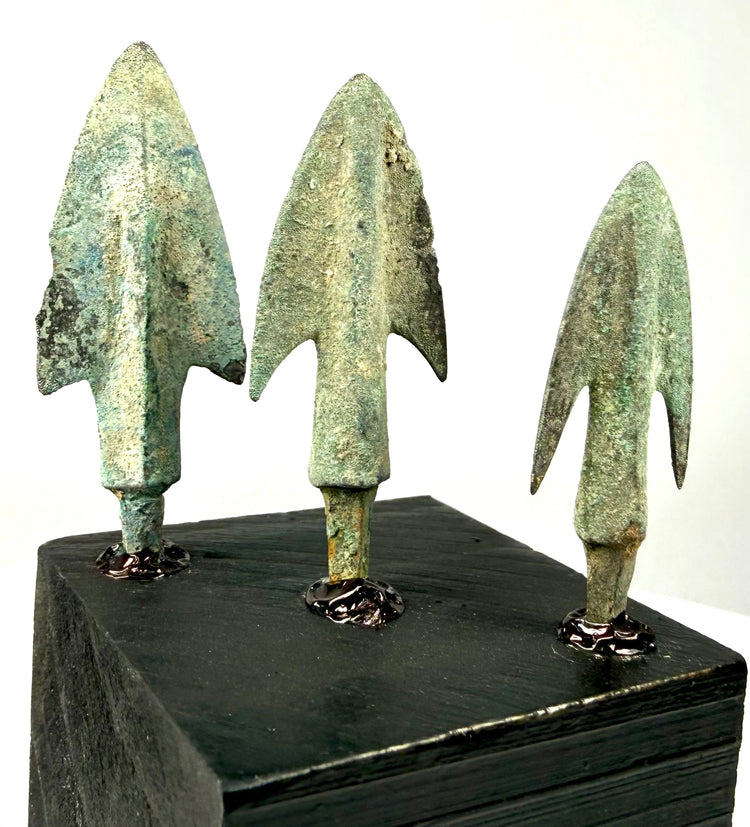
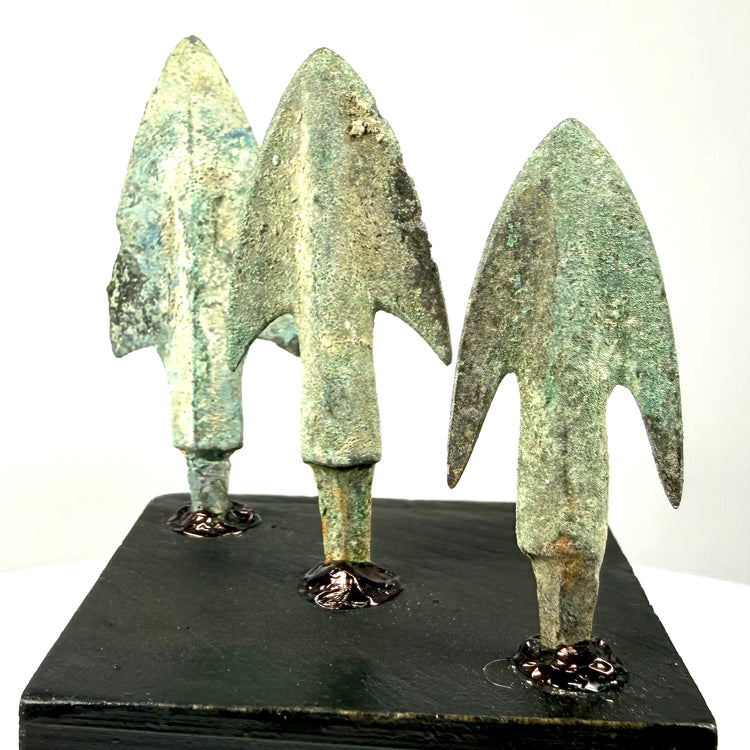
Ancient Iranian Plateau | Bronze Projectile Point Group on Display Stand | Late Bronze–Early Iron Age | Circa 1400–1000 BCE
Description
More
Less
Historical Context & Origin
Region: Iranian Plateau
Material: Cast bronze
Period: Late Bronze–Early Iron Age, circa 1400–1000 BCE
Description
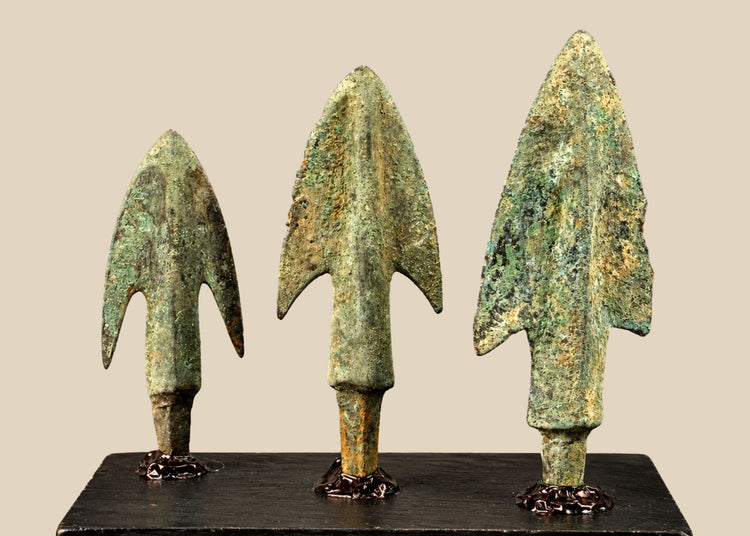
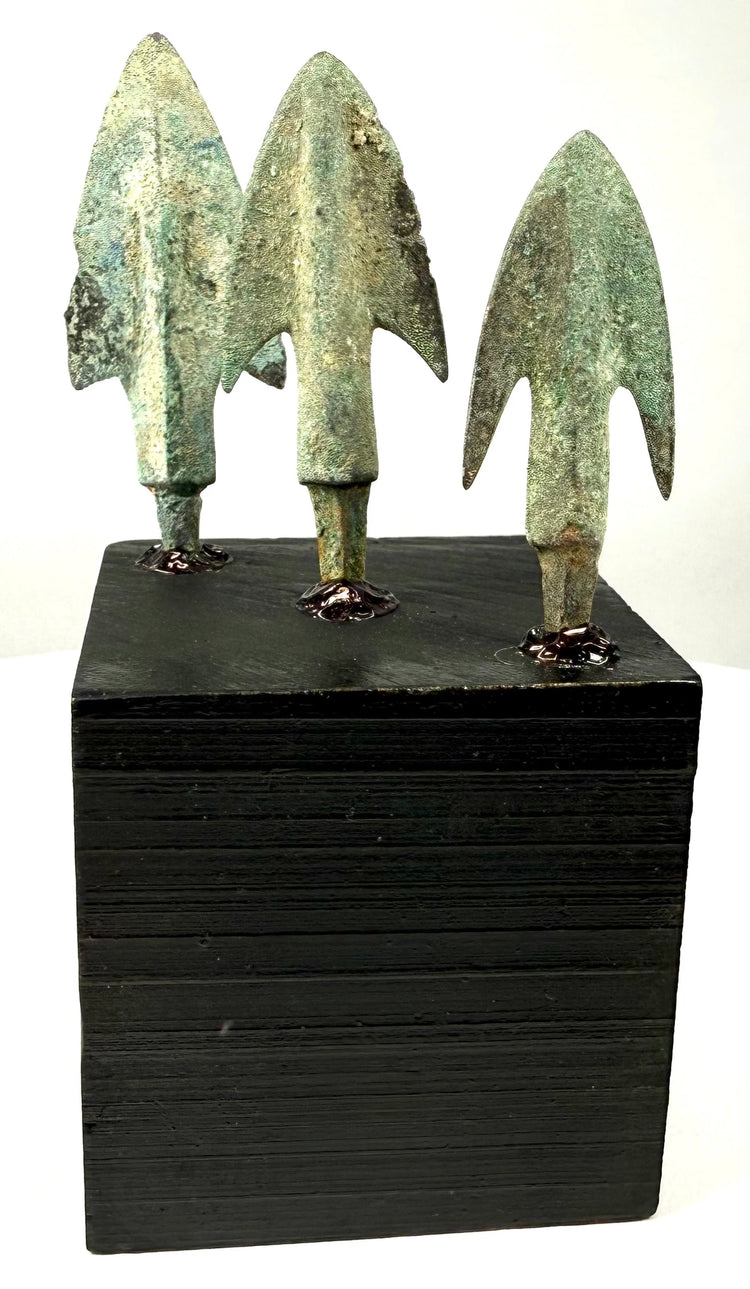
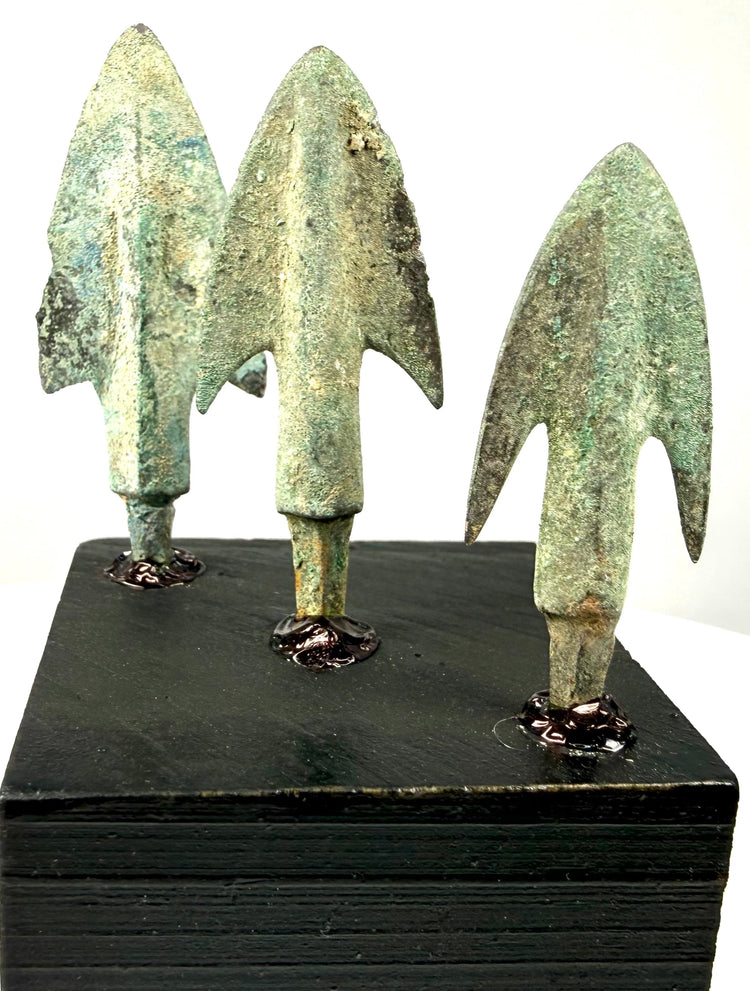
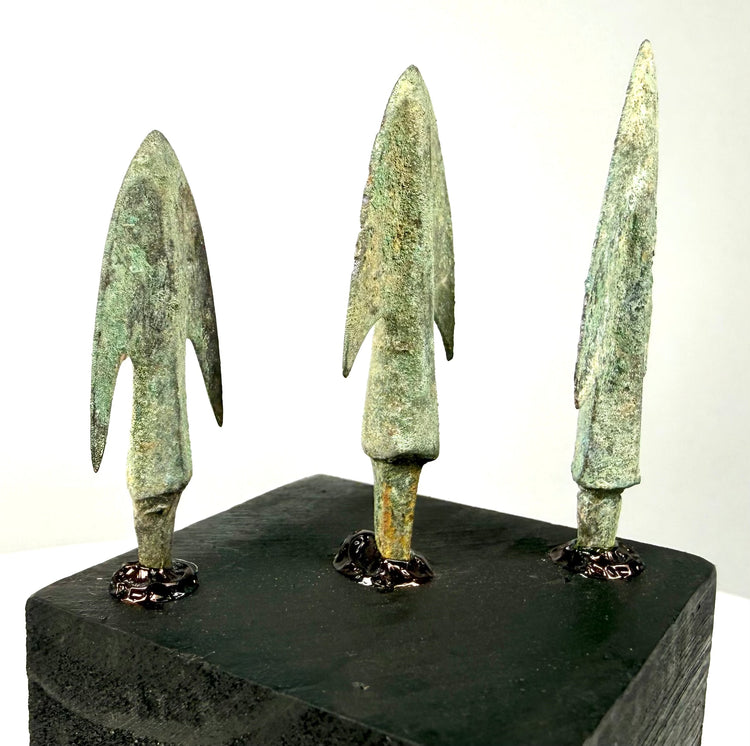
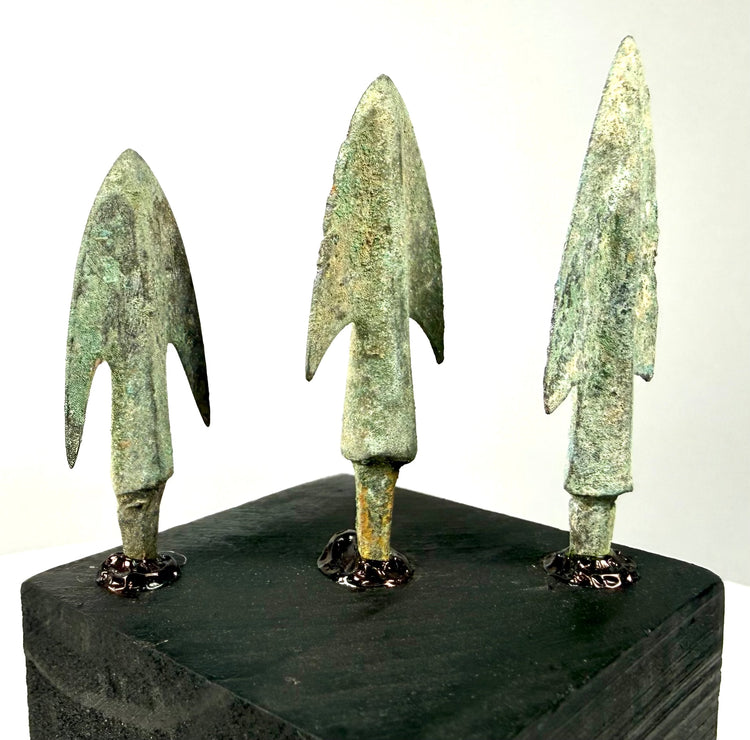
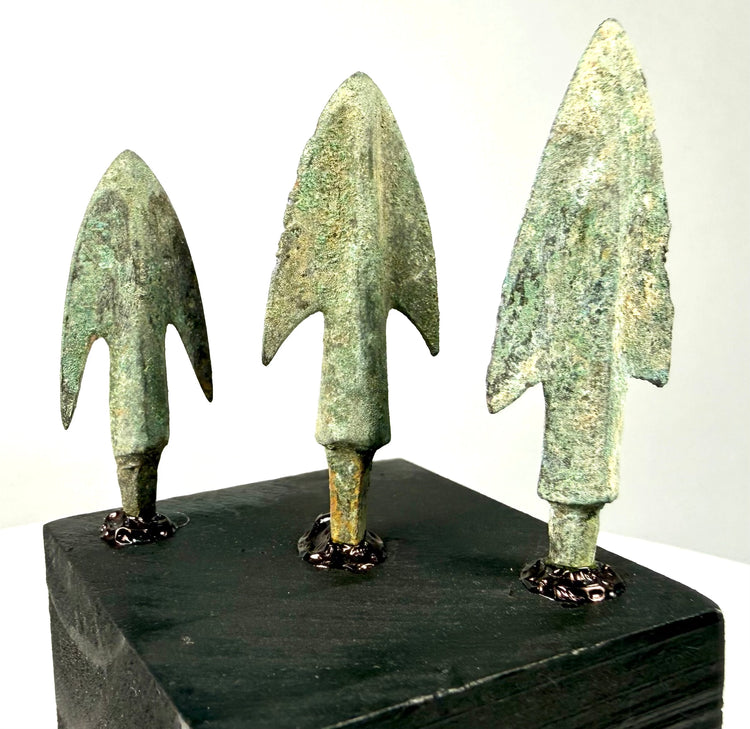
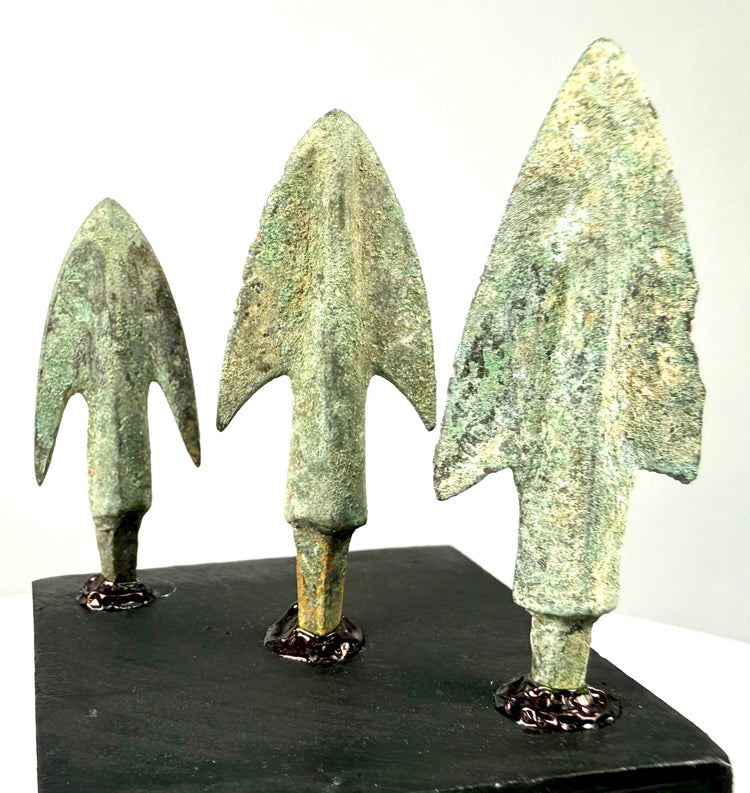
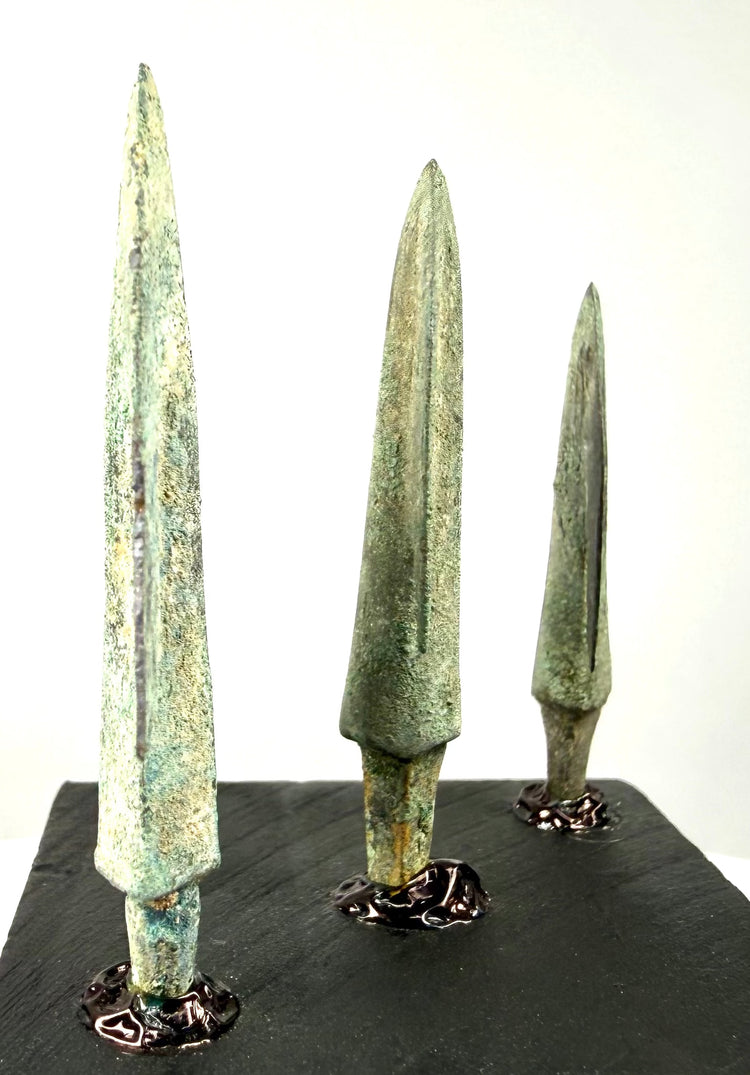
This mounted group of three ancient bronze projectile points represents a striking assemblage of early weapon heads from the Iranian Plateau, dating broadly from the Late Bronze to Early Iron Age. Presented together on a modern black display base, the group showcases three related but distinct forms, each with an elongated blade, pronounced shoulders, and a tapering lower section intended for attachment to a shaft.
The largest example displays a broad lanceolate blade with a prominent central ridge and slightly expanded lower section above the attachment area. Its robust proportions suggest it may have served as a spearhead, javelin point, or substantial projectile intended for effective penetration. The surface shows strong archaeological character, with mottled green patina, mineral accretions, and age-softened edges.
The central point is somewhat more compact but retains a similarly strong and functional profile. It has a sharply tapering blade with flaring shoulders and a raised midrib running along the body of the point. This form reflects the practical balance between structural strength and penetrative efficiency seen in many ancient Near Eastern projectile types.
The third and more slender example has a narrower, more streamlined shape with elongated shoulders and a fine taper toward the tip. Its lighter proportions suggest use as a smaller projectile point, possibly for a lighter spear, dart, or arrow. Together, the three pieces illustrate the variation in bronze point design used across the region for warfare, hunting, and personal defence.
Features
- Ancient bronze projectile point group from the Iranian Plateau
- Includes varied forms with broad and slender blade profiles
- Prominent midribs and flaring shoulders visible across the group
- Likely used as projectile points, light spearheads, or javelin heads
- Attractive green patina with archaeological surface encrustation
- Strong display presence and visual variation within the set
Cultural Significance
Bronze projectile points were essential components of warfare and hunting equipment across the ancient Near East. During the Late Bronze and Early Iron Ages, communities of the Iranian Plateau and surrounding regions relied on cast bronze weapon heads for use in conflict, protection, and subsistence. Metal points offered significant advantages over earlier organic or stone-tipped forms, providing improved durability, sharper penetration, and the ability to produce standardized shapes suited to different functions.
Differences in size, blade width, and shoulder form often reflected practical considerations. Broader examples may have created wider wounds, while narrower forms could provide enhanced penetration. Groups such as this help illustrate the diversity of ancient martial equipment and offer insight into the technical skill of early bronze workers.
Condition
The three projectile points remain stable in archaeological condition with clear evidence of age and burial. All examples display surface wear, oxidation, mineral encrustation, pitting, patina variation, edge softening, and minor irregularities consistent with ancient bronze objects.
The largest point shows heavier surface accretion and some edge loss, though the overall form remains clearly legible. The central point retains a strong silhouette and visible midrib, with scattered corrosion and localized roughness. The slender point remains stable and recognizable, with softened edges, surface wear, and age-related irregularities.
Dimensions (Approximate)
Overall Display Height: 4.5 in
Age (Approximate)
3,000–3,400 years old
Provenance
Formerly part of a private London, United Kingdom collection assembled during the 1990s.
Learn More
Discover a related ancient Iranian bronze arrowhead dating to the Iron Age in the collection of The Metropolitan Museum of Art
Browse our collection of Arms, Armour & Historical Weaponry
Description
Historical Context & Origin
Region: Iranian Plateau
Material: Cast bronze
Period: Late Bronze–Early Iron Age, circa 1400–1000 BCE
Description
This mounted group of three ancient bronze projectile points represents a striking assemblage of early weapon heads from the Iranian Plateau, dating broadly from the Late Bronze to Early Iron Age. Presented together on a modern black display base, the group showcases three related but distinct forms, each with an elongated blade, pronounced shoulders, and a tapering lower section intended for attachment to a shaft.
The largest example displays a broad lanceolate blade with a prominent central ridge and slightly expanded lower section above the attachment area. Its robust proportions suggest it may have served as a spearhead, javelin point, or substantial projectile intended for effective penetration. The surface shows strong archaeological character, with mottled green patina, mineral accretions, and age-softened edges.
The central point is somewhat more compact but retains a similarly strong and functional profile. It has a sharply tapering blade with flaring shoulders and a raised midrib running along the body of the point. This form reflects the practical balance between structural strength and penetrative efficiency seen in many ancient Near Eastern projectile types.
The third and more slender example has a narrower, more streamlined shape with elongated shoulders and a fine taper toward the tip. Its lighter proportions suggest use as a smaller projectile point, possibly for a lighter spear, dart, or arrow. Together, the three pieces illustrate the variation in bronze point design used across the region for warfare, hunting, and personal defence.
Features
- Ancient bronze projectile point group from the Iranian Plateau
- Includes varied forms with broad and slender blade profiles
- Prominent midribs and flaring shoulders visible across the group
- Likely used as projectile points, light spearheads, or javelin heads
- Attractive green patina with archaeological surface encrustation
- Strong display presence and visual variation within the set
Cultural Significance
Bronze projectile points were essential components of warfare and hunting equipment across the ancient Near East. During the Late Bronze and Early Iron Ages, communities of the Iranian Plateau and surrounding regions relied on cast bronze weapon heads for use in conflict, protection, and subsistence. Metal points offered significant advantages over earlier organic or stone-tipped forms, providing improved durability, sharper penetration, and the ability to produce standardized shapes suited to different functions.
Differences in size, blade width, and shoulder form often reflected practical considerations. Broader examples may have created wider wounds, while narrower forms could provide enhanced penetration. Groups such as this help illustrate the diversity of ancient martial equipment and offer insight into the technical skill of early bronze workers.
Condition
The three projectile points remain stable in archaeological condition with clear evidence of age and burial. All examples display surface wear, oxidation, mineral encrustation, pitting, patina variation, edge softening, and minor irregularities consistent with ancient bronze objects.
The largest point shows heavier surface accretion and some edge loss, though the overall form remains clearly legible. The central point retains a strong silhouette and visible midrib, with scattered corrosion and localized roughness. The slender point remains stable and recognizable, with softened edges, surface wear, and age-related irregularities.
Dimensions (Approximate)
Overall Display Height: 4.5 in
Age (Approximate)
3,000–3,400 years old
Provenance
Formerly part of a private London, United Kingdom collection assembled during the 1990s.
Learn More
Discover a related ancient Iranian bronze arrowhead dating to the Iron Age in the collection of The Metropolitan Museum of Art
Browse our collection of Arms, Armour & Historical Weaponry
You May Also Like
