



Ancient Judaean Herodian Terracotta Oil Lamp in Presentation Display Case | 2nd–3rd Century CE
Couldn't load pickup availability


Ancient Judaean Herodian Terracotta Oil Lamp in Presentation Display Case | 2nd–3rd Century CE
Description
More
Less
Historical Context & Origin
Region: Judaea
Material: Terracotta
Period: 2nd–3rd Century CE
Type: Herodian-type oil lamp
Description
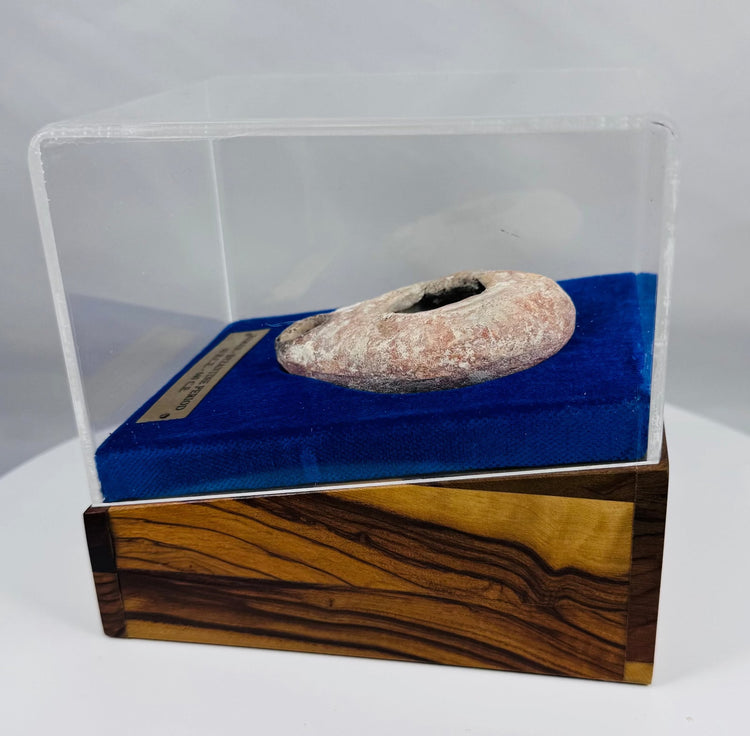
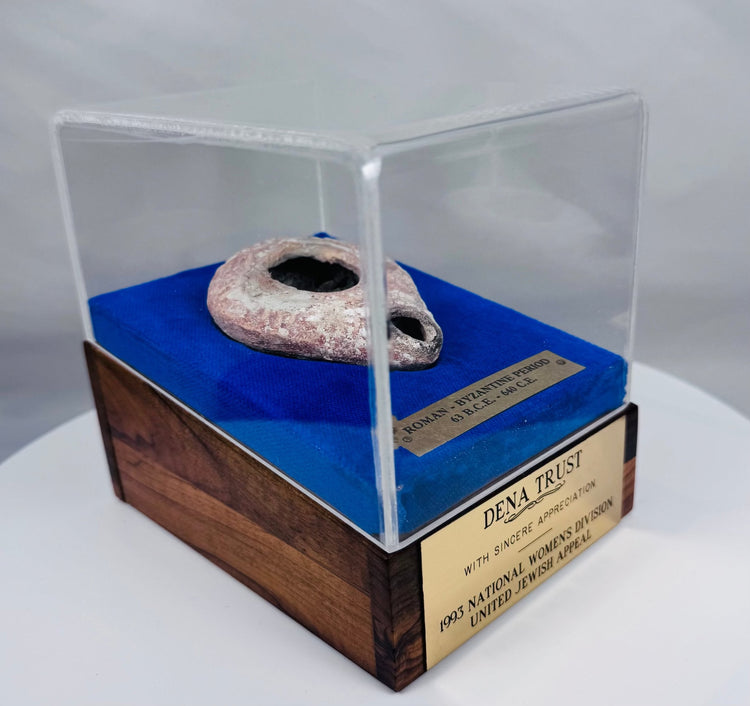
This ancient terracotta oil lamp from Judaea is identified as a Herodian type and dates to approximately the 2nd–3rd century CE.
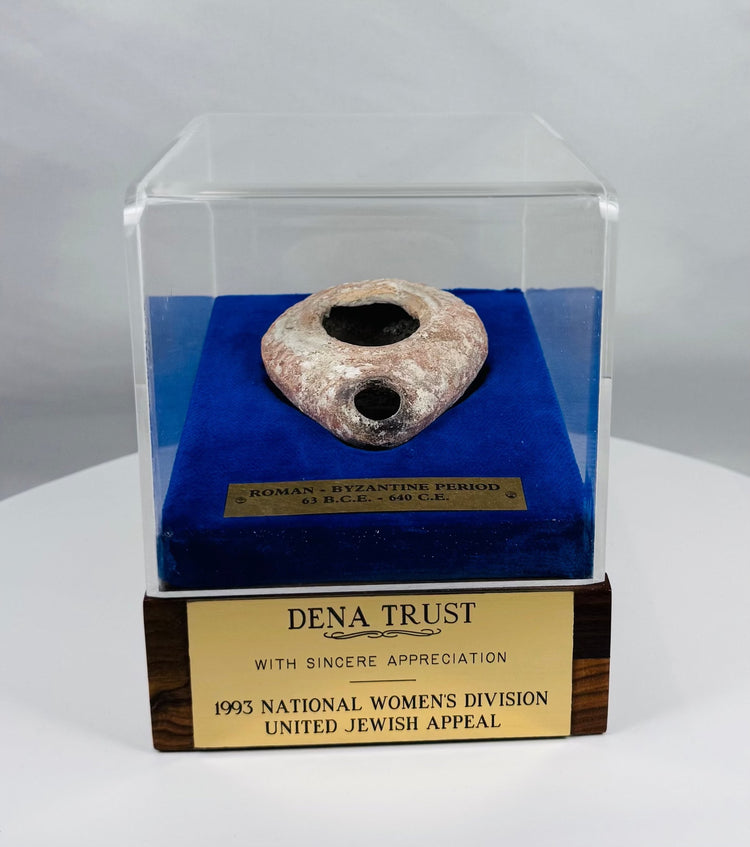
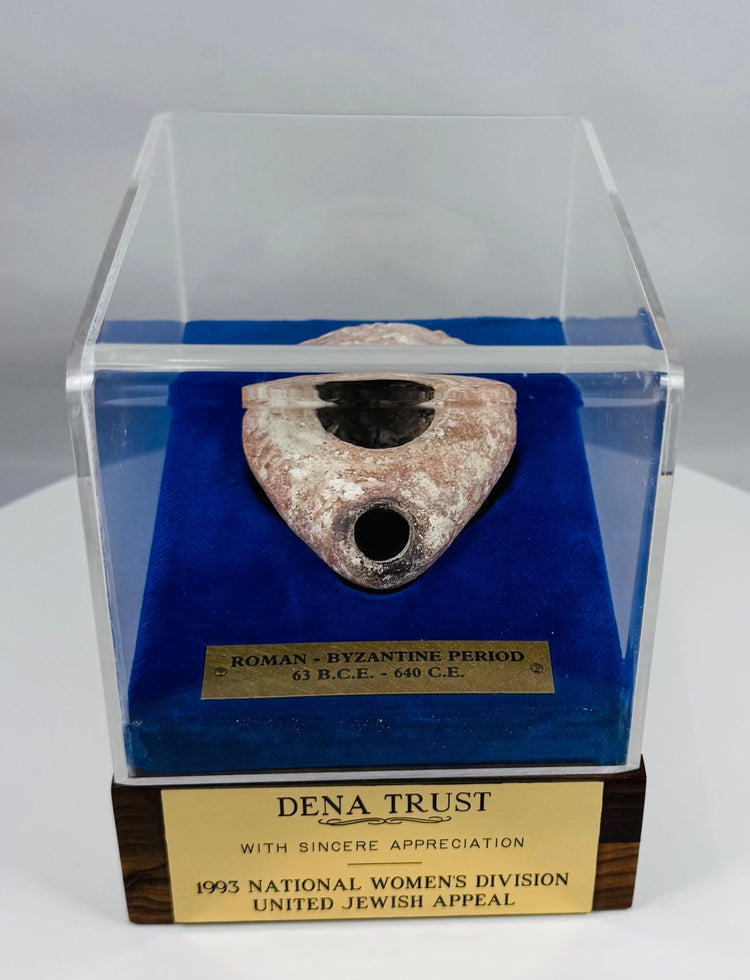
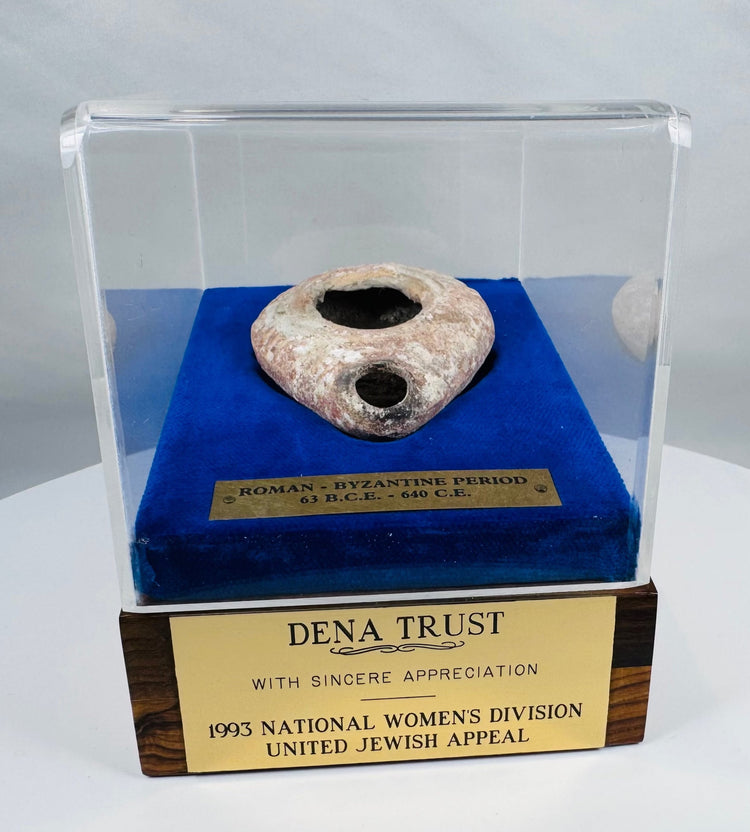
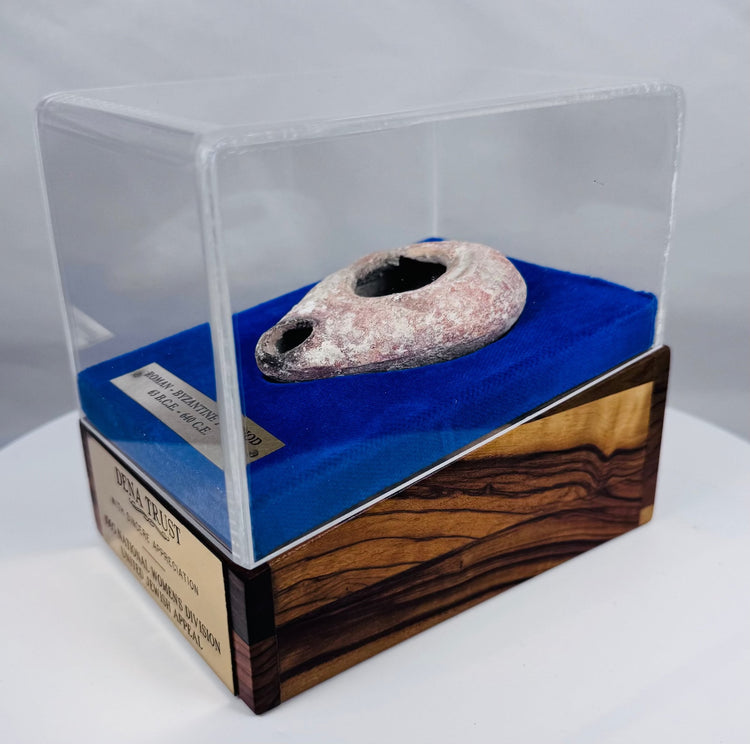
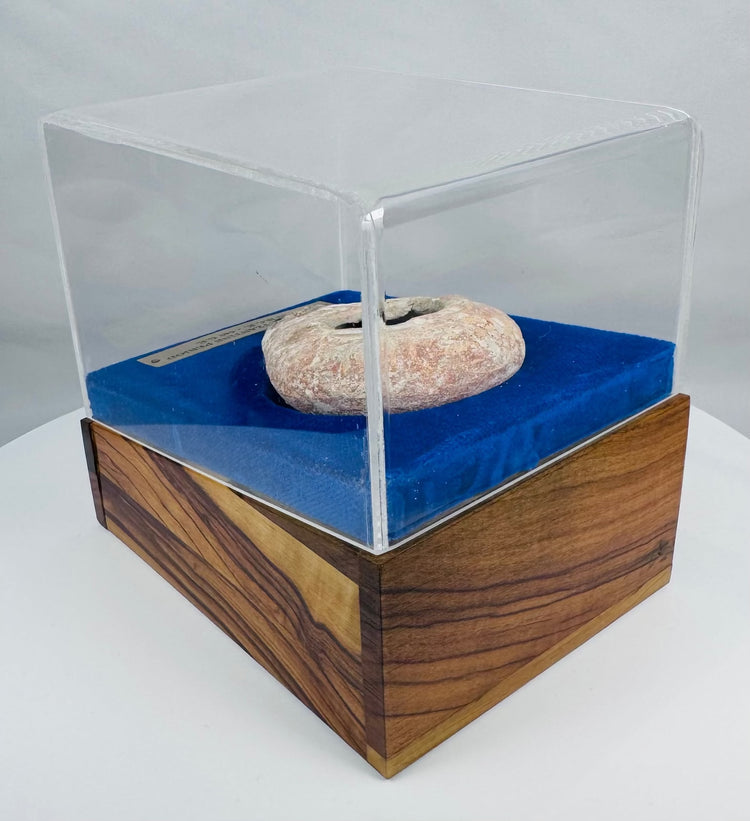
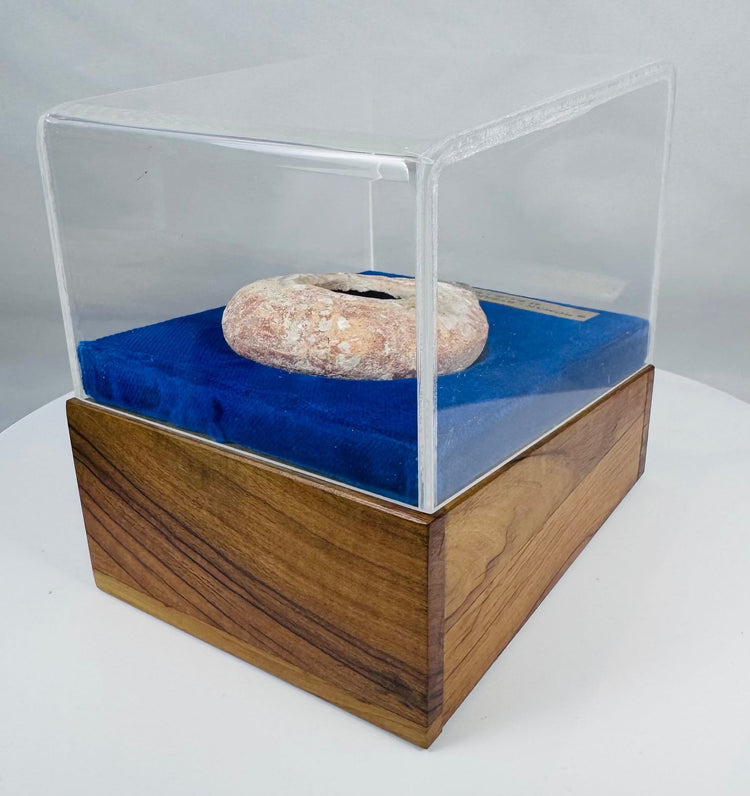
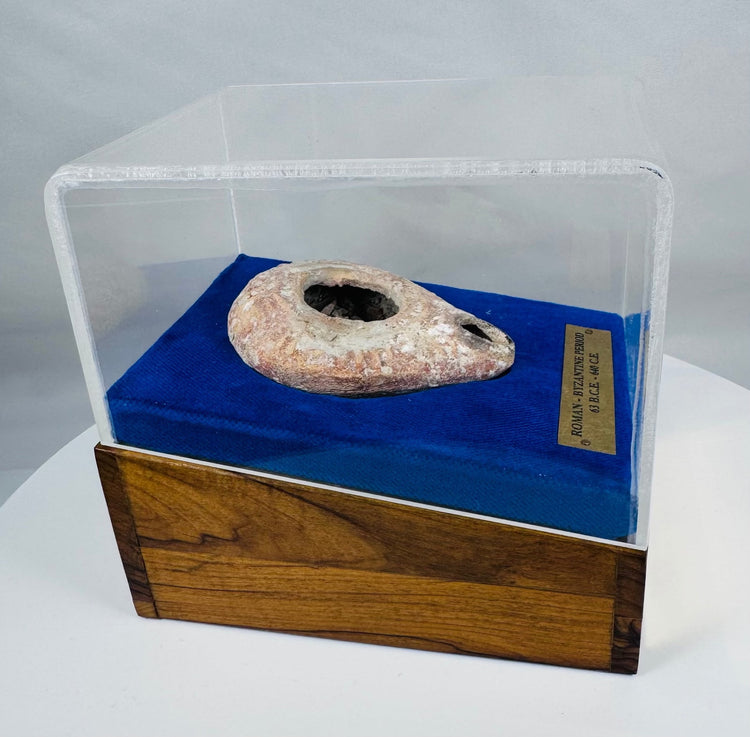
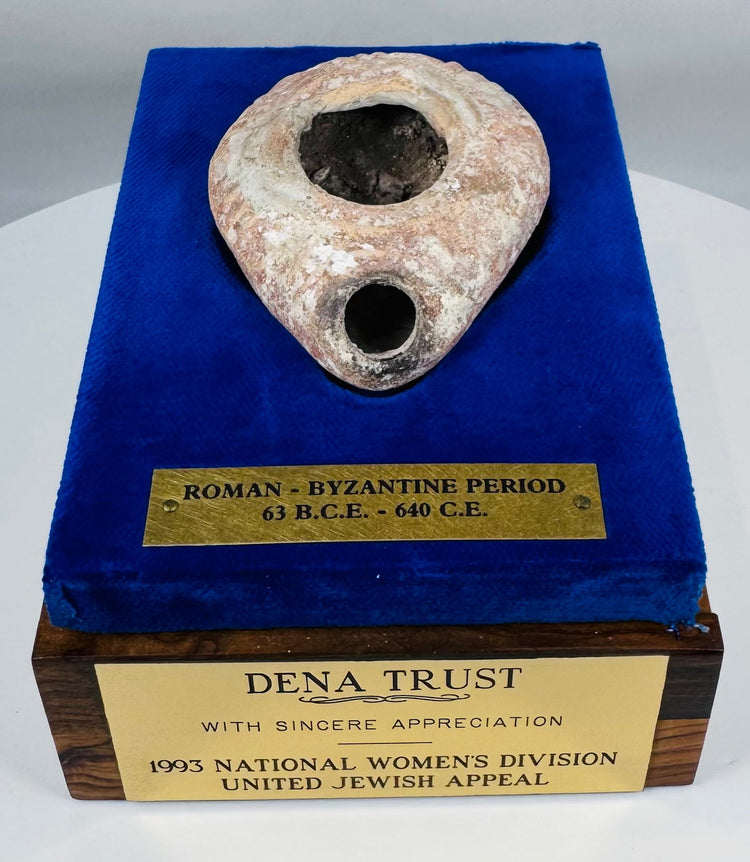
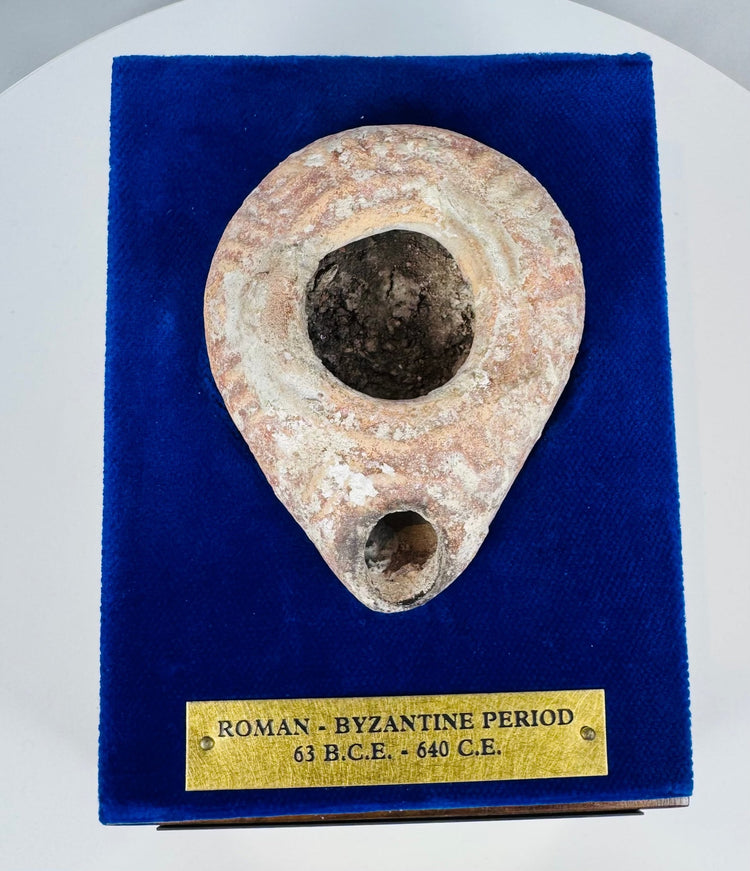
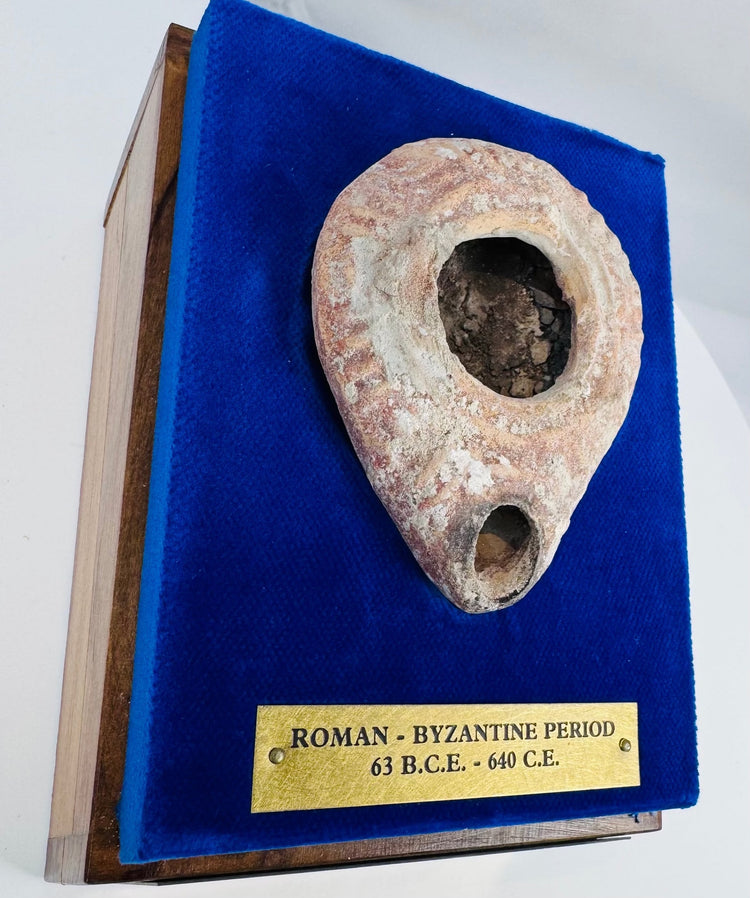
The lamp has an oval body with a broad central filling hole and a short projecting nozzle. The wick hole at the end of the nozzle retains visible blackening, consistent with use of the lamp for burning oil.
Formed from pinkish terracotta, the surface is largely undecorated and displays extensive whitish mineral deposits, burial encrustation, and age-related wear.
Its straightforward functional design reflects the practical ceramic lighting vessels used in ancient Judaea, where small terracotta lamps provided portable illumination in domestic and other everyday settings.
The lamp is preserved within a later custom presentation case with a blue velvet mount, acrylic cover, and engraved brass plaques. The commemorative plaque records its presentation by the Dena Trust – 1993 National Women's Division United Jewish Appeal.
Features
- Oval body
- Wide central filling hole
- Short projecting nozzle
- Blackened wick hole indicating ancient use
- Pinkish terracotta fabric
- Whitish mineral deposits
- Largely undecorated surface
- Archaeological burial encrustation
- Presented in a later commemorative display case
Cultural Significance
Terracotta oil lamps were essential objects of daily life throughout ancient Judaea and the wider Near East. Filled with oil and fitted with a wick through the nozzle, they provided a simple and effective source of household illumination.
This example's form has been identified by the specialist as Herodian type, while the surviving blackening around the wick hole provides physical evidence of its original functional use.
The later presentation case adds a separate element to the object's modern history, documenting its association with the Dena Trust and National Women's Division United Jewish Appeal in 1993.
Condition
Ancient archaeological condition with surface wear, whitish mineral deposits, burial encrustation, and minor abrasions throughout. The oval body, filling hole, short nozzle, and wick opening remain readily identifiable. Blackening survives around the wick hole.
The later presentation case exhibits minor age-related wear but remains presentable.
Dimensions (Approximate)
Lamp
Length: 3 in
Width: 2.5 in
Display Case
Length: 5.25 in
Width: 5.25 in
Height: 4.2 in
Age (Approximate)
1,700–1,900 years old
Provenance
From a Palm Beach, Florida estate collection.
Accompanied by a custom presentation display bearing the inscription:
“DENA TRUST – With Sincere Appreciation – 1993 National Women's Division United Jewish Appeal.”
The display suggests the lamp was presented as a commemorative or appreciation gift associated with the Dena Trust and the National Women's Division of the United Jewish Appeal in 1993.
The piece was later examined by Luca Salvaggio, an Italian archaeologist and specialist in ancient Mediterranean and Near Eastern material. He holds a Postgraduate Diploma from the Italian Archaeological School at Athens (IASA) and is accredited for preventive archaeology by the Italian Ministry of Culture (MiC). Salvaggio identified the object as a Herodian-type terracotta oil lamp from Judaea, dating to the 2nd–3rd century CE, based on its oval body, wide filling hole, short nozzle, blackened wick opening, pinkish clay fabric, and largely undecorated surface.
Learn More
Explore the history and development of ancient Mediterranean oil lamps through Milwaukee Public Museum
Browse our curated Roman and Greek Artifacts Collection
Description
Historical Context & Origin
Region: Judaea
Material: Terracotta
Period: 2nd–3rd Century CE
Type: Herodian-type oil lamp
Description
This ancient terracotta oil lamp from Judaea is identified as a Herodian type and dates to approximately the 2nd–3rd century CE.
The lamp has an oval body with a broad central filling hole and a short projecting nozzle. The wick hole at the end of the nozzle retains visible blackening, consistent with use of the lamp for burning oil.
Formed from pinkish terracotta, the surface is largely undecorated and displays extensive whitish mineral deposits, burial encrustation, and age-related wear.
Its straightforward functional design reflects the practical ceramic lighting vessels used in ancient Judaea, where small terracotta lamps provided portable illumination in domestic and other everyday settings.
The lamp is preserved within a later custom presentation case with a blue velvet mount, acrylic cover, and engraved brass plaques. The commemorative plaque records its presentation by the Dena Trust – 1993 National Women's Division United Jewish Appeal.
Features
- Oval body
- Wide central filling hole
- Short projecting nozzle
- Blackened wick hole indicating ancient use
- Pinkish terracotta fabric
- Whitish mineral deposits
- Largely undecorated surface
- Archaeological burial encrustation
- Presented in a later commemorative display case
Cultural Significance
Terracotta oil lamps were essential objects of daily life throughout ancient Judaea and the wider Near East. Filled with oil and fitted with a wick through the nozzle, they provided a simple and effective source of household illumination.
This example's form has been identified by the specialist as Herodian type, while the surviving blackening around the wick hole provides physical evidence of its original functional use.
The later presentation case adds a separate element to the object's modern history, documenting its association with the Dena Trust and National Women's Division United Jewish Appeal in 1993.
Condition
Ancient archaeological condition with surface wear, whitish mineral deposits, burial encrustation, and minor abrasions throughout. The oval body, filling hole, short nozzle, and wick opening remain readily identifiable. Blackening survives around the wick hole.
The later presentation case exhibits minor age-related wear but remains presentable.
Dimensions (Approximate)
Lamp
Length: 3 in
Width: 2.5 in
Display Case
Length: 5.25 in
Width: 5.25 in
Height: 4.2 in
Age (Approximate)
1,700–1,900 years old
Provenance
From a Palm Beach, Florida estate collection.
Accompanied by a custom presentation display bearing the inscription:
“DENA TRUST – With Sincere Appreciation – 1993 National Women's Division United Jewish Appeal.”
The display suggests the lamp was presented as a commemorative or appreciation gift associated with the Dena Trust and the National Women's Division of the United Jewish Appeal in 1993.
The piece was later examined by Luca Salvaggio, an Italian archaeologist and specialist in ancient Mediterranean and Near Eastern material. He holds a Postgraduate Diploma from the Italian Archaeological School at Athens (IASA) and is accredited for preventive archaeology by the Italian Ministry of Culture (MiC). Salvaggio identified the object as a Herodian-type terracotta oil lamp from Judaea, dating to the 2nd–3rd century CE, based on its oval body, wide filling hole, short nozzle, blackened wick opening, pinkish clay fabric, and largely undecorated surface.
Learn More
Explore the history and development of ancient Mediterranean oil lamps through Milwaukee Public Museum
Browse our curated Roman and Greek Artifacts Collection
You May Also Like
