



Ancient Luristan Bronze Dagger Blade | Western Iran | Late 2nd–Early 1st Millennium BCE
Couldn't load pickup availability


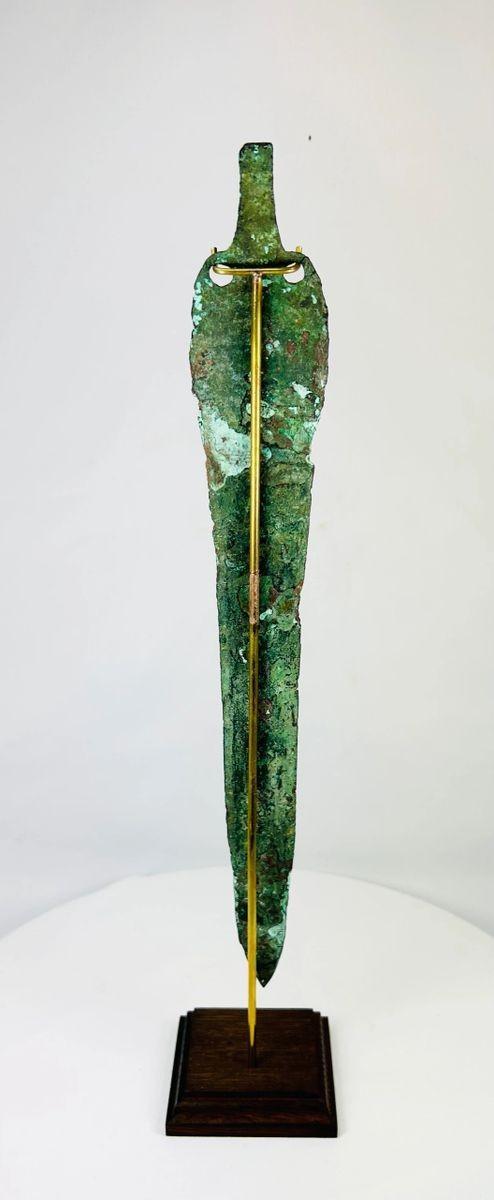
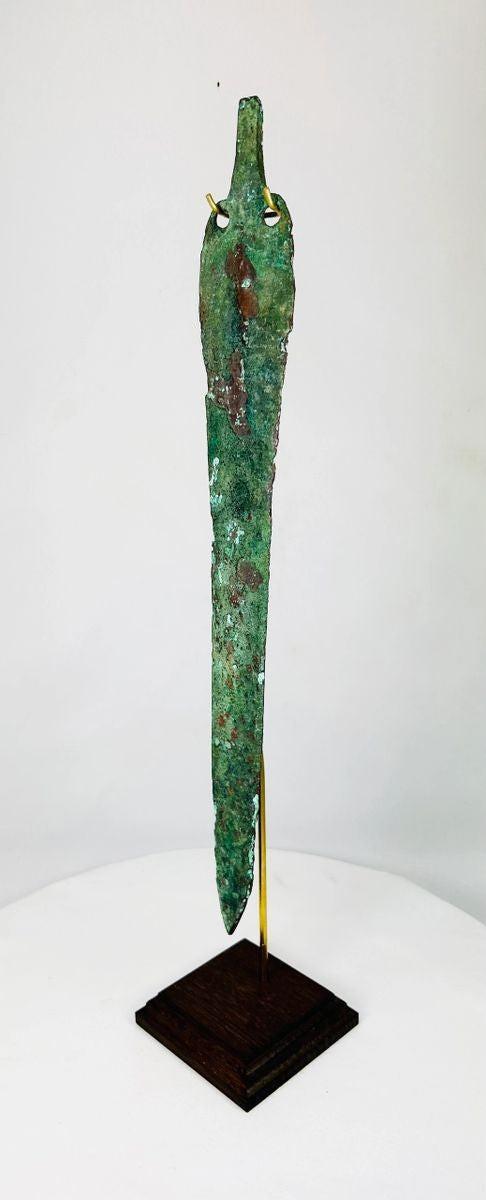
Ancient Luristan Bronze Dagger Blade | Western Iran | Late 2nd–Early 1st Millennium BCE
Description
More
Less
Historical Context & Origin
Region: Luristan, Western Iran
Material: Bronze
Period: Late 2nd to Early 1st Millennium BCE, circa 1200–900 BCE
Description
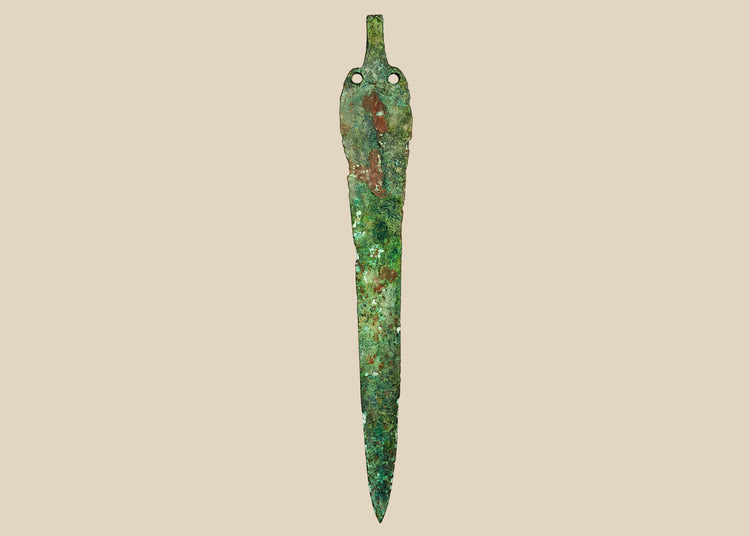
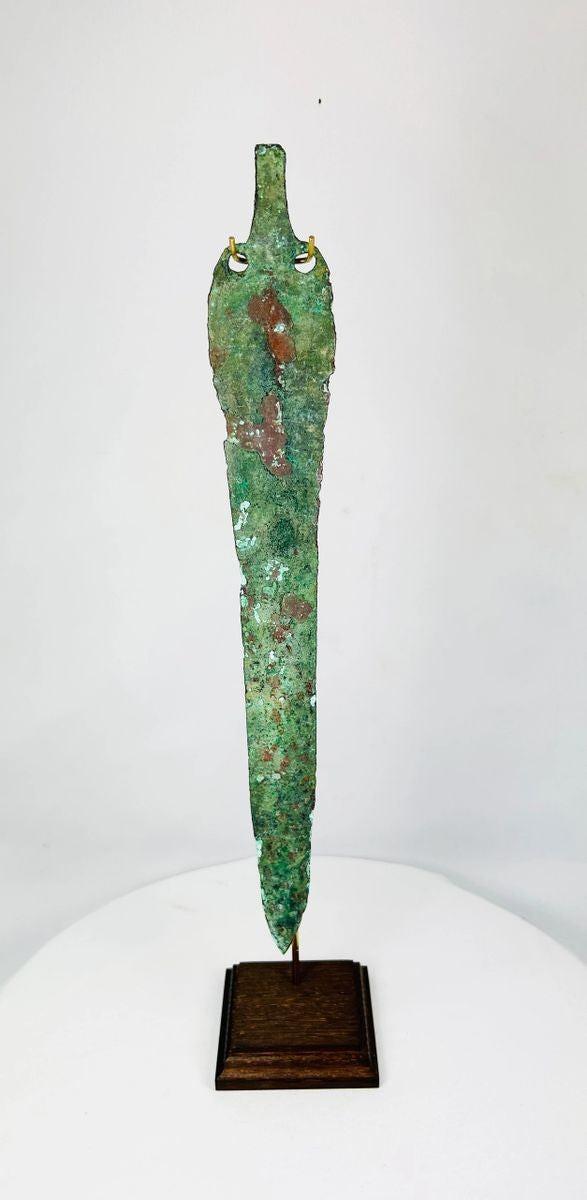
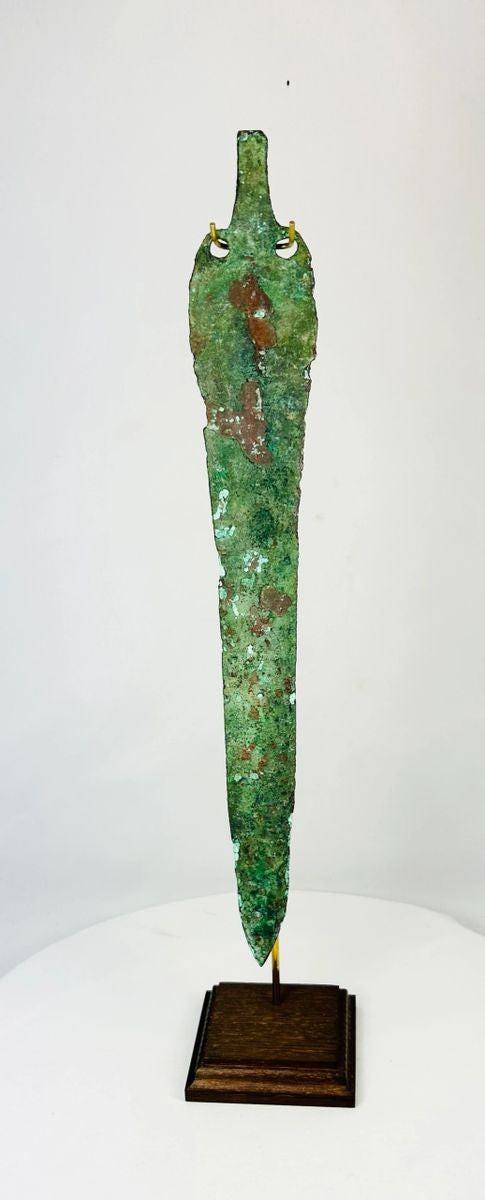
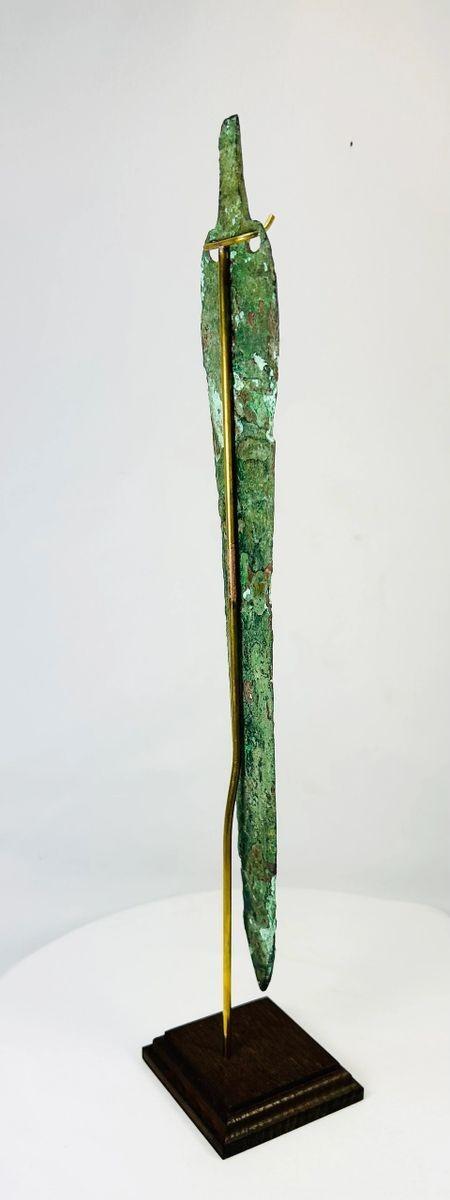
This ancient Luristan bronze dagger blade dates to the late 2nd to early 1st millennium BCE and represents the distinctive metalworking traditions of ancient western Iran. The blade is flat and tapers steadily to the point, with rounded shoulders and a narrow tang.
Two perforations positioned at the shoulders, together with the tang, were used to secure a separately made hilt with rivets, which is now missing. The surviving blade retains its complete overall profile despite age-related weathering along the edges.
The surface displays a developed green patina with areas of reddish-brown corrosion, characteristic of ancient archaeological bronze.
Features
- Flat blade tapering to the point
- Rounded shoulders and narrow tang
- Two perforations used to secure the original separate hilt
- Original hilt now absent
- Green patina with reddish-brown corrosion
- Weathered edges with overall blade profile preserved
- Mounted on a custom display stand
Cultural Significance
Luristan, in western Iran, is renowned for its sophisticated Bronze and Early Iron Age metalwork, particularly weapons, horse fittings, and ceremonial objects. Dagger blades of this form demonstrate the advanced bronze-working traditions of the region and the use of separately manufactured hilts secured by rivets.
Comparable examples have been documented among archaeological collections of Luristan bronzes, supporting the cultural attribution and dating of this blade.
Condition
Ancient condition with a developed green patina and areas of reddish-brown corrosion. The blade edges show weathering and age-related surface loss, while the overall profile remains complete. The original separately attached hilt is no longer present.
Dimensions (Approximate)
Length: 14.5 in
Age (Approximate)
2,900–3,200 years old
Provenance
Formerly part of the BC Galleries Collection, Melbourne, Australia. Established in 1976, BC Galleries was a prominent independent Australian dealer specializing in ancient art and antiquities, tribal art, ethnographica, and historical objects from a broad range of cultures. Subsequently held in a private collection in Armadale, Victoria, Australia.
Expert Assessment: Examined by Luca Salvaggio, an Italian archaeologist specializing in ancient Mediterranean and Near Eastern material, with a Postgraduate Diploma from the Italian Archaeological School at Athens (IASA) and accreditation for preventive archaeology from the Italian Ministry of Culture (MiC). He attributed the bronze dagger blade to Luristan, Western Iran, dating to the late 2nd to early 1st millennium BCE, circa 1200–900 BCE.
Learn More
Explore a comparable ancient Luristan bronze dagger at The Metropolitan Museum of Art
Explore our Historical Warfare & Exploration Collection
Description
Historical Context & Origin
Region: Luristan, Western Iran
Material: Bronze
Period: Late 2nd to Early 1st Millennium BCE, circa 1200–900 BCE
Description
This ancient Luristan bronze dagger blade dates to the late 2nd to early 1st millennium BCE and represents the distinctive metalworking traditions of ancient western Iran. The blade is flat and tapers steadily to the point, with rounded shoulders and a narrow tang.
Two perforations positioned at the shoulders, together with the tang, were used to secure a separately made hilt with rivets, which is now missing. The surviving blade retains its complete overall profile despite age-related weathering along the edges.
The surface displays a developed green patina with areas of reddish-brown corrosion, characteristic of ancient archaeological bronze.
Features
- Flat blade tapering to the point
- Rounded shoulders and narrow tang
- Two perforations used to secure the original separate hilt
- Original hilt now absent
- Green patina with reddish-brown corrosion
- Weathered edges with overall blade profile preserved
- Mounted on a custom display stand
Cultural Significance
Luristan, in western Iran, is renowned for its sophisticated Bronze and Early Iron Age metalwork, particularly weapons, horse fittings, and ceremonial objects. Dagger blades of this form demonstrate the advanced bronze-working traditions of the region and the use of separately manufactured hilts secured by rivets.
Comparable examples have been documented among archaeological collections of Luristan bronzes, supporting the cultural attribution and dating of this blade.
Condition
Ancient condition with a developed green patina and areas of reddish-brown corrosion. The blade edges show weathering and age-related surface loss, while the overall profile remains complete. The original separately attached hilt is no longer present.
Dimensions (Approximate)
Length: 14.5 in
Age (Approximate)
2,900–3,200 years old
Provenance
Formerly part of the BC Galleries Collection, Melbourne, Australia. Established in 1976, BC Galleries was a prominent independent Australian dealer specializing in ancient art and antiquities, tribal art, ethnographica, and historical objects from a broad range of cultures. Subsequently held in a private collection in Armadale, Victoria, Australia.
Expert Assessment: Examined by Luca Salvaggio, an Italian archaeologist specializing in ancient Mediterranean and Near Eastern material, with a Postgraduate Diploma from the Italian Archaeological School at Athens (IASA) and accreditation for preventive archaeology from the Italian Ministry of Culture (MiC). He attributed the bronze dagger blade to Luristan, Western Iran, dating to the late 2nd to early 1st millennium BCE, circa 1200–900 BCE.
Learn More
Explore a comparable ancient Luristan bronze dagger at The Metropolitan Museum of Art
Explore our Historical Warfare & Exploration Collection
You May Also Like
