

Ancient Mediterranean Terracotta Relief Plaque Fragment | Male Face | Circa 3rd Century BCE – 2nd Century CE
Couldn't load pickup availability


Ancient Mediterranean Terracotta Relief Plaque Fragment | Male Face | Circa 3rd Century BCE – 2nd Century CE
Description
More
Less
Historical Context & Origin
Region: Eastern Mediterranean, possibly Greek, Hellenistic, or Roman provincial
Material: Mold-made terracotta with traces of red pigment
Period: Hellenistic–Roman Period, circa 3rd Century BCE–2nd Century CE
Description
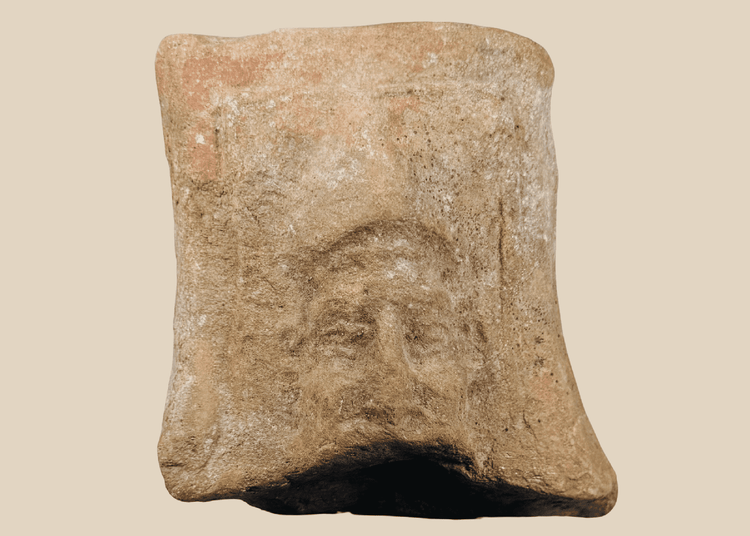
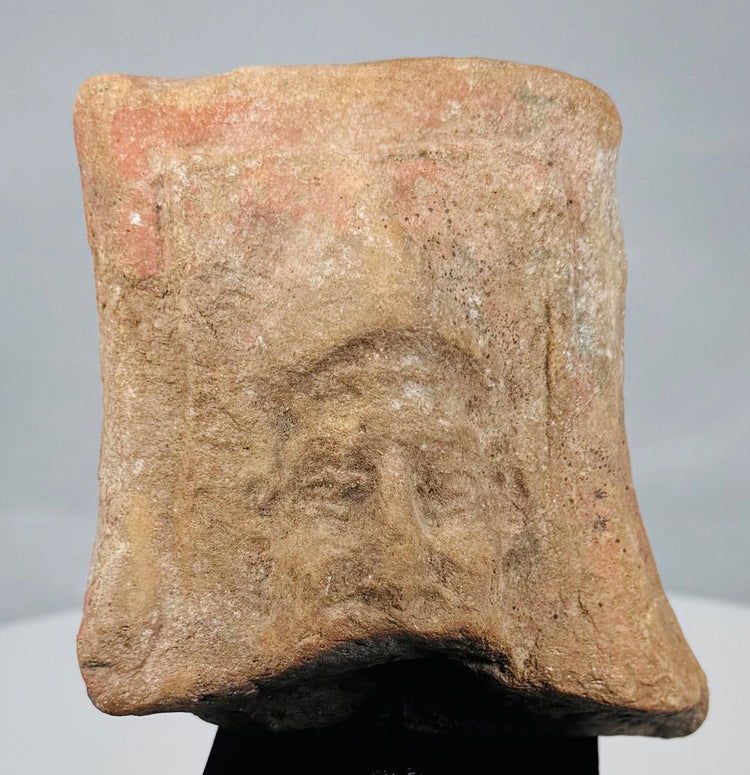
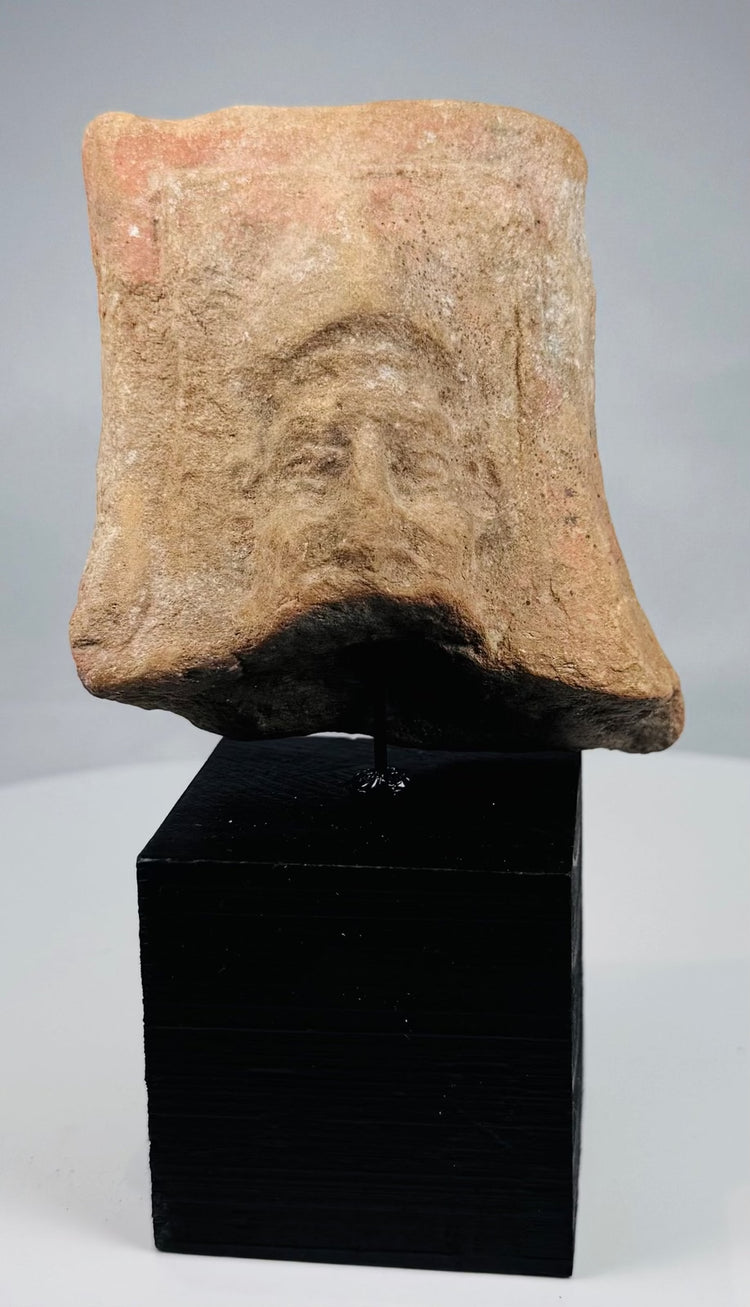
This intriguing ancient terracotta fragment is best described as the upper portion of a mold-made relief plaque, featuring the frontal face of a mature male figure modeled in shallow relief. The subject has deeply set eyes, a broad nose, pronounced facial contours, and what appears to be a moustache or short beard. His weathered expression may represent an elderly mortal, deity, theatrical character, or protective mask.
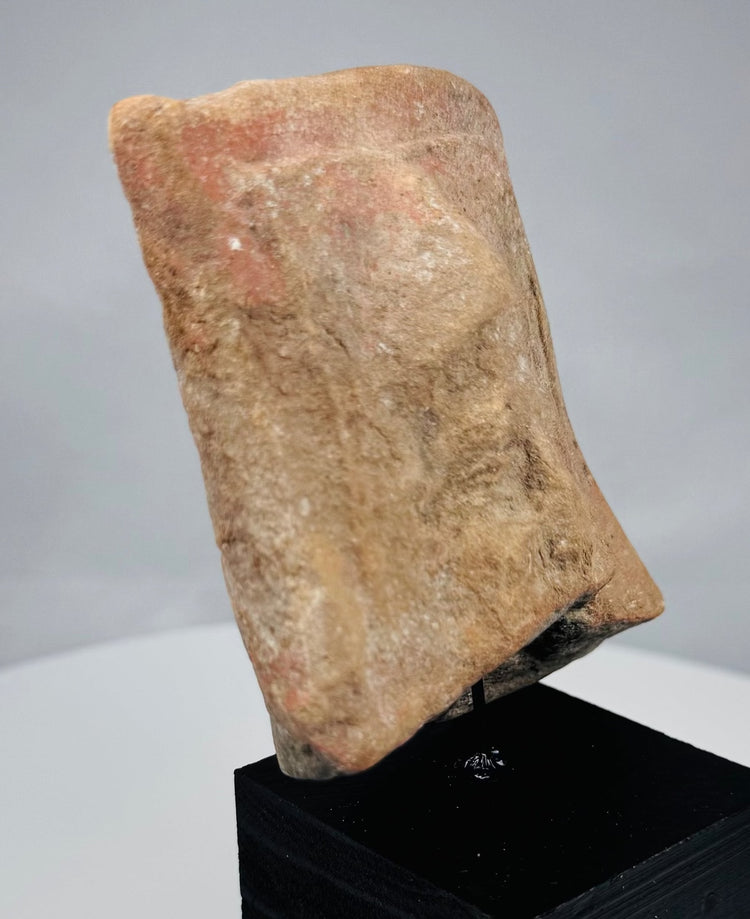
The face is positioned within a lightly recessed rectangular field bordered by raised framing lines. Faint reddish pigment remains visible around the upper and side borders, indicating that the plaque was originally painted. Ancient terracotta reliefs were frequently enhanced with mineral pigments, although much of their original colour is now lost. Comparable ancient plaques were produced from molds and could retain painted surfaces or coloured slips.
The irregular concave lower edge suggests that this object survives as the upper portion of a larger composition. It may originally have formed part of a votive plaque, architectural ornament, funerary furnishing, or decorative relief panel.
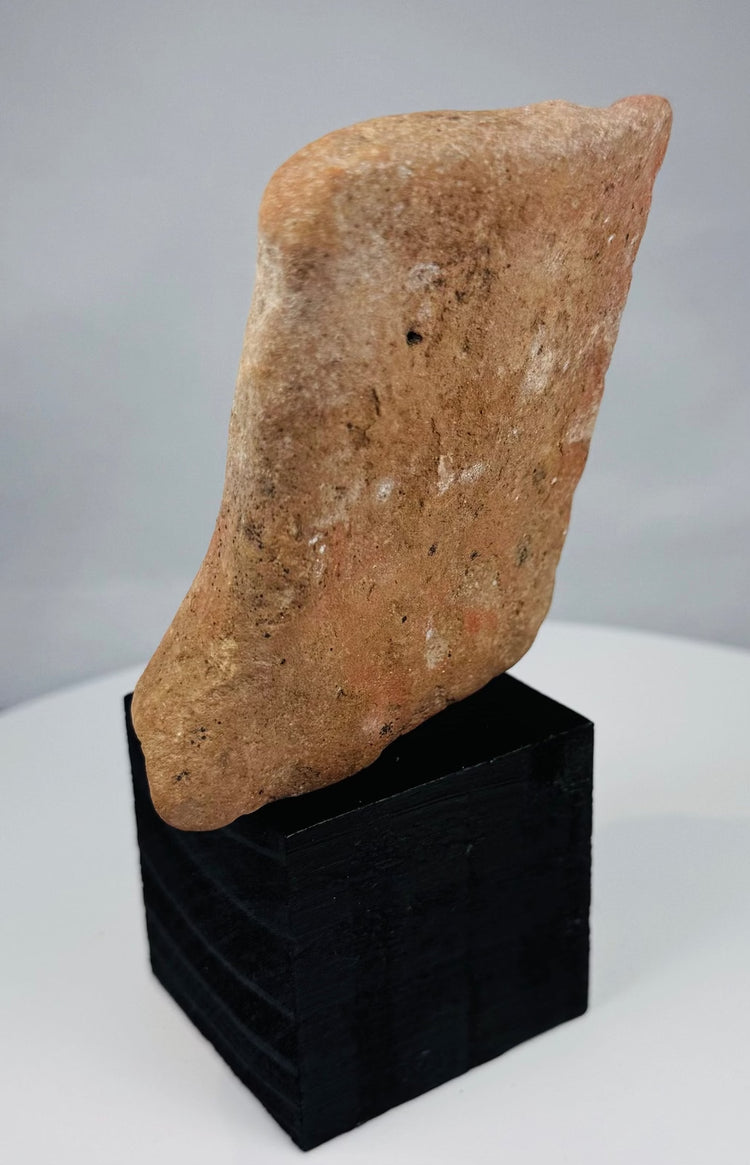
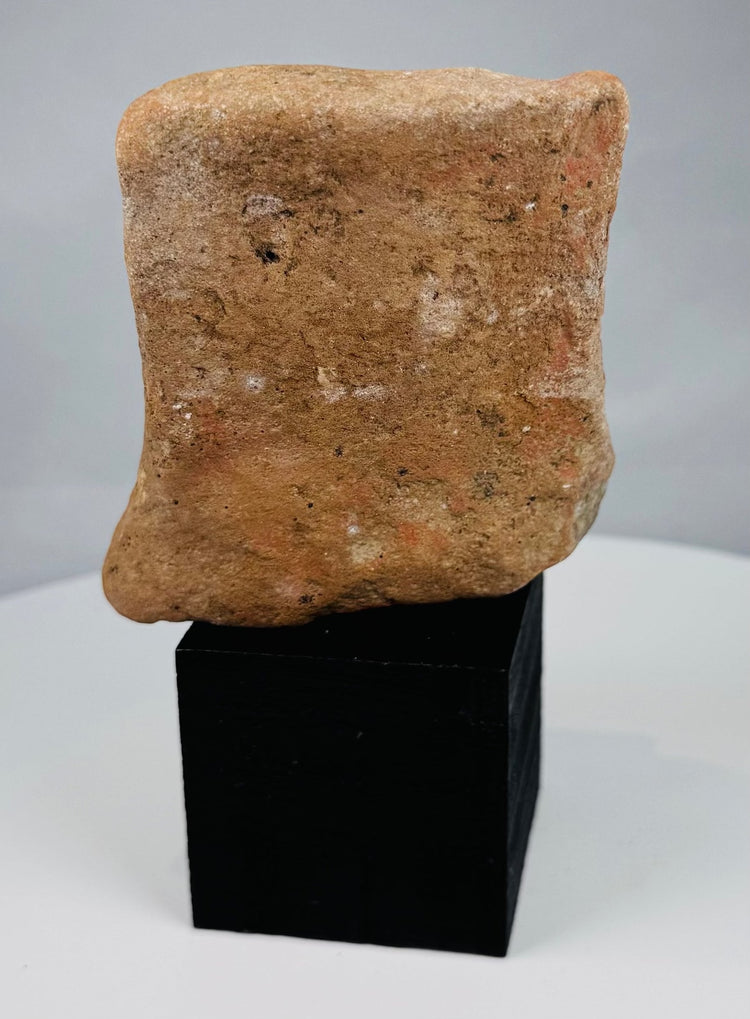
The reverse is plain and roughly finished, consistent with an object intended to be viewed primarily from the front. It is presented on a later custom black display stand.
Features
- Frontal male face rendered in shallow relief
- Mature or elderly facial characteristics
- Raised rectangular framing border
- Surviving traces of red surface pigment
- Likely upper portion of a larger relief composition
- Possible votive, funerary, or architectural function
- Mounted on a later custom display stand
- Longstanding New York collection provenance
Cultural Significance
Small mold-made terracotta reliefs were produced throughout the ancient Mediterranean for religious, funerary, domestic, and architectural purposes. Their subjects included deities, worshippers, theatrical masks, mythological figures, and ordinary individuals. Terracotta offered an accessible means of reproducing sacred and decorative imagery, while the application of coloured pigments gave the finished object a substantially more vivid appearance than its present weathered surface suggests.
Condition
The plaque survives as a fragment, with substantial loss to the lower portion and expected softening of the molded facial details. The surface exhibits extensive age-related wear, abrasions, mineral deposits, scattered discoloration, small chips, and losses along the edges. Faint traces of reddish pigment remain around portions of the border. The reverse is weathered and unfinished. Mounted on a later custom black display stand. Condition is consistent with considerable age and archaeological preservation.
Dimensions (Approximate)
Height: 5.5 in
Width: 3.5 in
Depth: 2 in
Age (Approximate)
1,800–2,300 years old
Provenance
Formerly in the collection of Jack Guevrekian, Manhasset, New York, a noted New York numismatist and collector with a particular interest in Armenian coinage, antiquities, and ancient material. Guevrekian assembled an extensive collection over several decades, a significant portion of which was publicly offered as The Jack Guevrekian Collection by the Numismatic & Antiquarian Service Corporation of America in New York in 1977.
Subsequently held in a private New York City collection.
Later handled by the Howard S. Rose Gallery / Arte Primitivo in New York, a longstanding specialist gallery and auction house dealing in Pre-Columbian, Classical, Egyptian, Asian, and ethnographic antiquities and works of art. The gallery has conducted specialist auctions, exhibitions, and private sales from its New York premises.
Subsequently handled by Artemis Fine Arts / Artemis Gallery, a Colorado-based specialist in antiquities, ancient art, ethnographic material, and fine art that has been active in the field since 1993.
Then entered a private collection in Toronto, Ontario, Canada.
Learn More
View a related ancient terracotta relief in the collection of The Metropolitan Museum of Art
Explore our curated Collection of Ceramics, Pottery & Ancient Heritage Art
Description
Historical Context & Origin
Region: Eastern Mediterranean, possibly Greek, Hellenistic, or Roman provincial
Material: Mold-made terracotta with traces of red pigment
Period: Hellenistic–Roman Period, circa 3rd Century BCE–2nd Century CE
Description
This intriguing ancient terracotta fragment is best described as the upper portion of a mold-made relief plaque, featuring the frontal face of a mature male figure modeled in shallow relief. The subject has deeply set eyes, a broad nose, pronounced facial contours, and what appears to be a moustache or short beard. His weathered expression may represent an elderly mortal, deity, theatrical character, or protective mask.
The face is positioned within a lightly recessed rectangular field bordered by raised framing lines. Faint reddish pigment remains visible around the upper and side borders, indicating that the plaque was originally painted. Ancient terracotta reliefs were frequently enhanced with mineral pigments, although much of their original colour is now lost. Comparable ancient plaques were produced from molds and could retain painted surfaces or coloured slips.
The irregular concave lower edge suggests that this object survives as the upper portion of a larger composition. It may originally have formed part of a votive plaque, architectural ornament, funerary furnishing, or decorative relief panel.
The reverse is plain and roughly finished, consistent with an object intended to be viewed primarily from the front. It is presented on a later custom black display stand.
Features
- Frontal male face rendered in shallow relief
- Mature or elderly facial characteristics
- Raised rectangular framing border
- Surviving traces of red surface pigment
- Likely upper portion of a larger relief composition
- Possible votive, funerary, or architectural function
- Mounted on a later custom display stand
- Longstanding New York collection provenance
Cultural Significance
Small mold-made terracotta reliefs were produced throughout the ancient Mediterranean for religious, funerary, domestic, and architectural purposes. Their subjects included deities, worshippers, theatrical masks, mythological figures, and ordinary individuals. Terracotta offered an accessible means of reproducing sacred and decorative imagery, while the application of coloured pigments gave the finished object a substantially more vivid appearance than its present weathered surface suggests.
Condition
The plaque survives as a fragment, with substantial loss to the lower portion and expected softening of the molded facial details. The surface exhibits extensive age-related wear, abrasions, mineral deposits, scattered discoloration, small chips, and losses along the edges. Faint traces of reddish pigment remain around portions of the border. The reverse is weathered and unfinished. Mounted on a later custom black display stand. Condition is consistent with considerable age and archaeological preservation.
Dimensions (Approximate)
Height: 5.5 in
Width: 3.5 in
Depth: 2 in
Age (Approximate)
1,800–2,300 years old
Provenance
Formerly in the collection of Jack Guevrekian, Manhasset, New York, a noted New York numismatist and collector with a particular interest in Armenian coinage, antiquities, and ancient material. Guevrekian assembled an extensive collection over several decades, a significant portion of which was publicly offered as The Jack Guevrekian Collection by the Numismatic & Antiquarian Service Corporation of America in New York in 1977.
Subsequently held in a private New York City collection.
Later handled by the Howard S. Rose Gallery / Arte Primitivo in New York, a longstanding specialist gallery and auction house dealing in Pre-Columbian, Classical, Egyptian, Asian, and ethnographic antiquities and works of art. The gallery has conducted specialist auctions, exhibitions, and private sales from its New York premises.
Subsequently handled by Artemis Fine Arts / Artemis Gallery, a Colorado-based specialist in antiquities, ancient art, ethnographic material, and fine art that has been active in the field since 1993.
Then entered a private collection in Toronto, Ontario, Canada.
Learn More
View a related ancient terracotta relief in the collection of The Metropolitan Museum of Art
Explore our curated Collection of Ceramics, Pottery & Ancient Heritage Art
You May Also Like
