

Mesopotamian Terracotta Head Fragment | Isin-Larsa to Old Babylonian Period | Circa 2000 – 1500 BCE
Couldn't load pickup availability


Mesopotamian Terracotta Head Fragment | Isin-Larsa to Old Babylonian Period | Circa 2000 – 1500 BCE
Description
More
Less
Historical Context & Origin
Region: Ancient Mesopotamia
Material: Terracotta
Period: Isin-Larsa to Old Babylonian Period, stylistically dated circa 2000–1500 BCE
Description
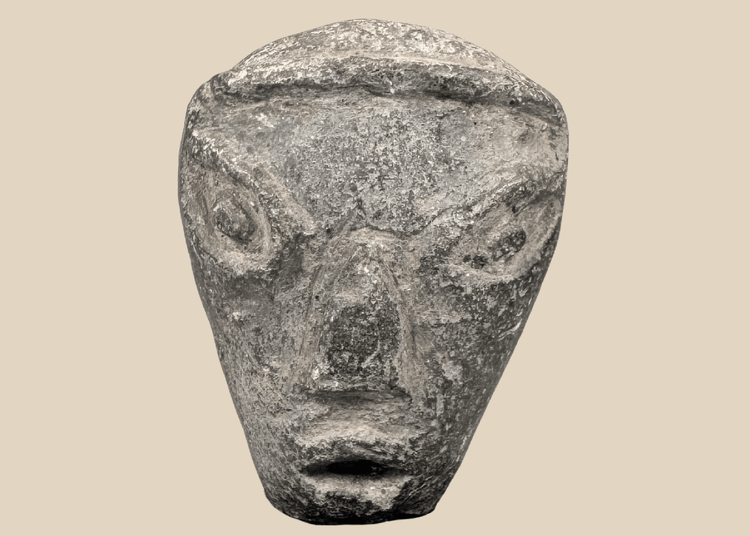
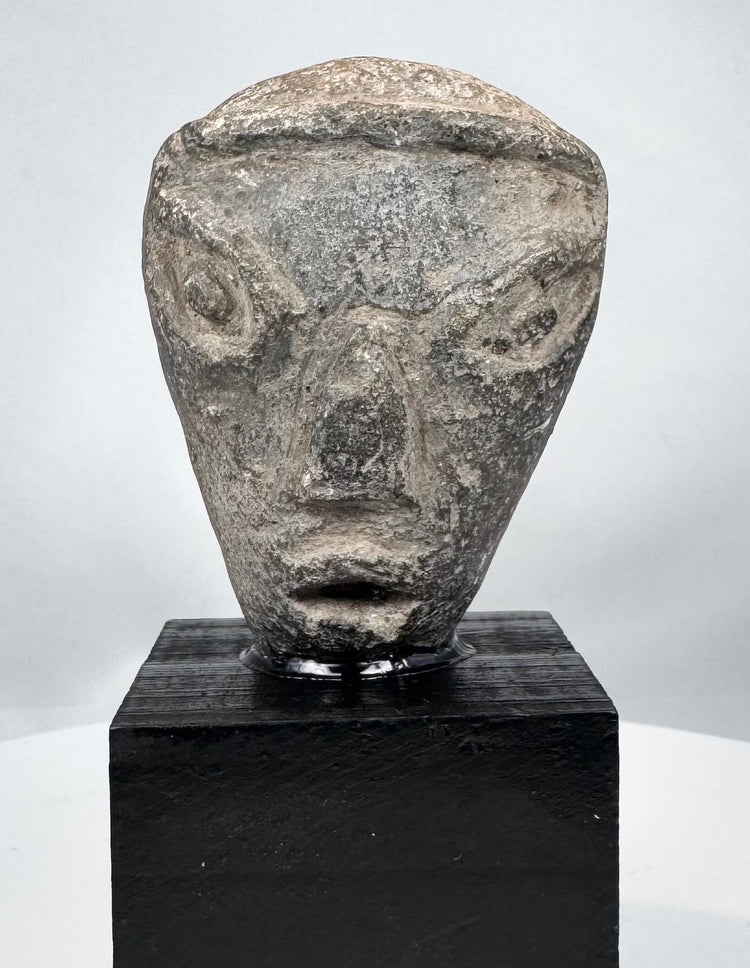
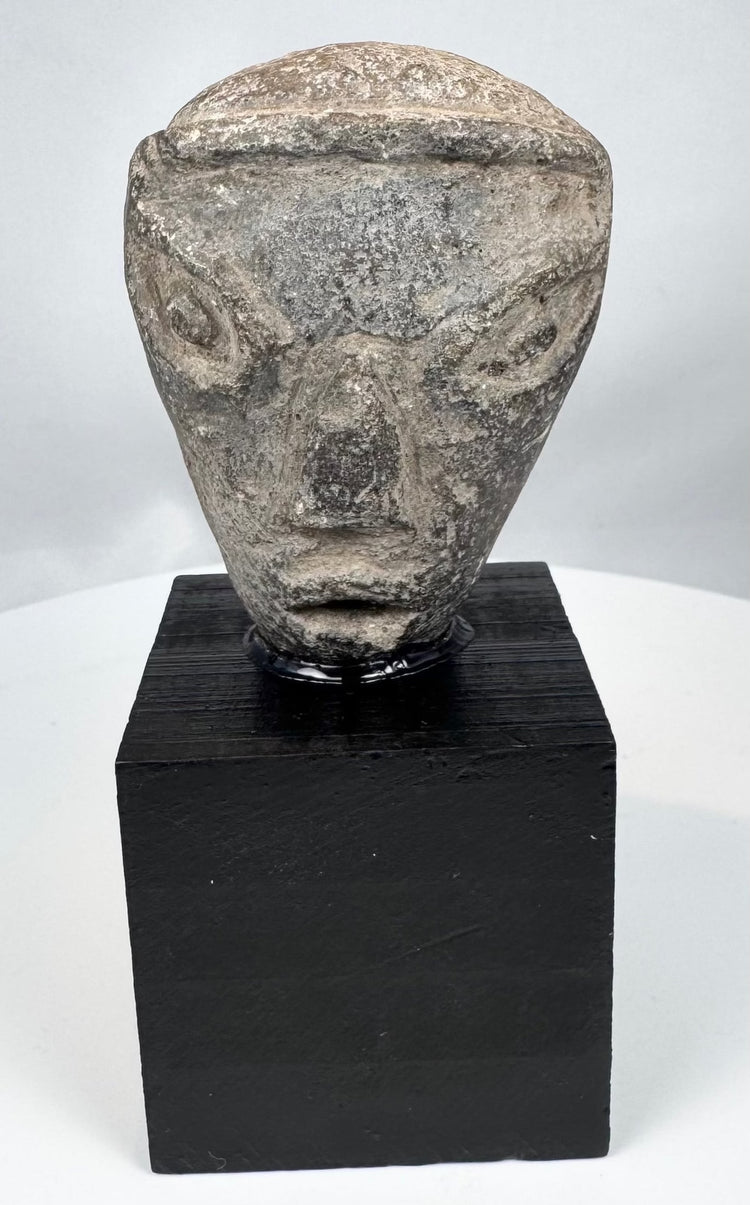
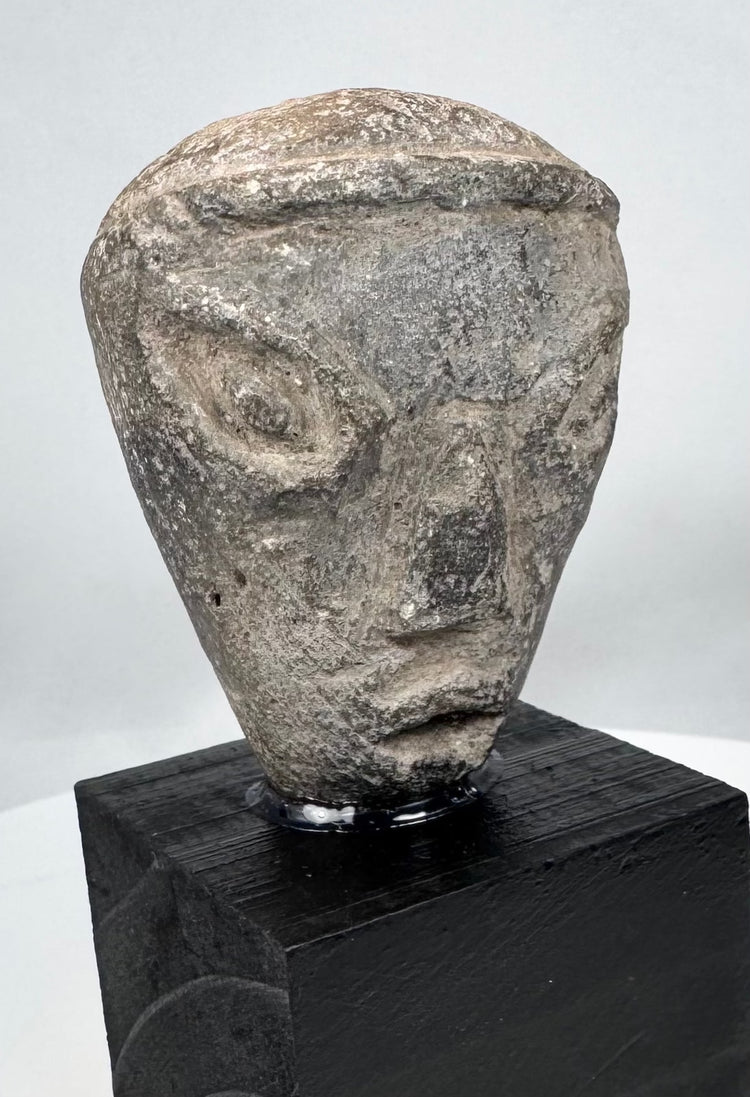
This ancient Mesopotamian terracotta head fragment depicts a youthful figure and is stylistically dated to the Isin-Larsa to Old Babylonian period, circa 2000–1500 BCE.
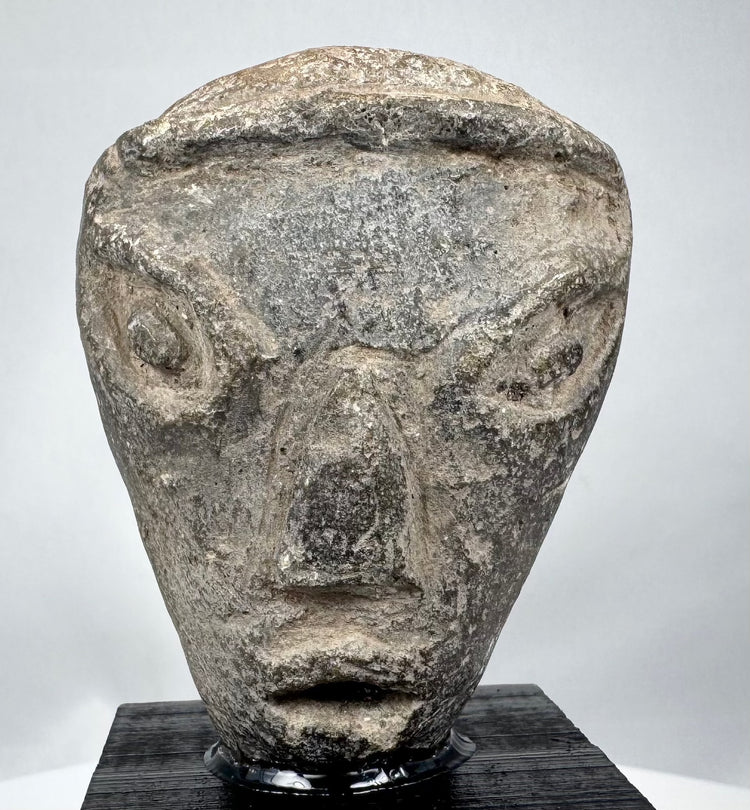
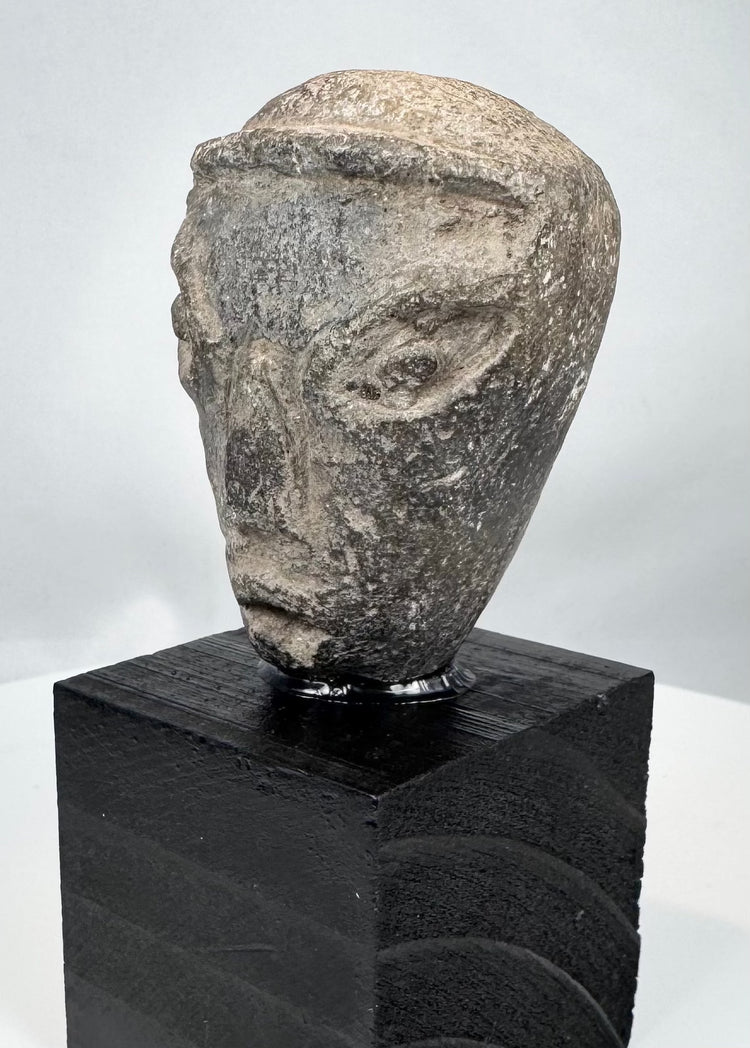
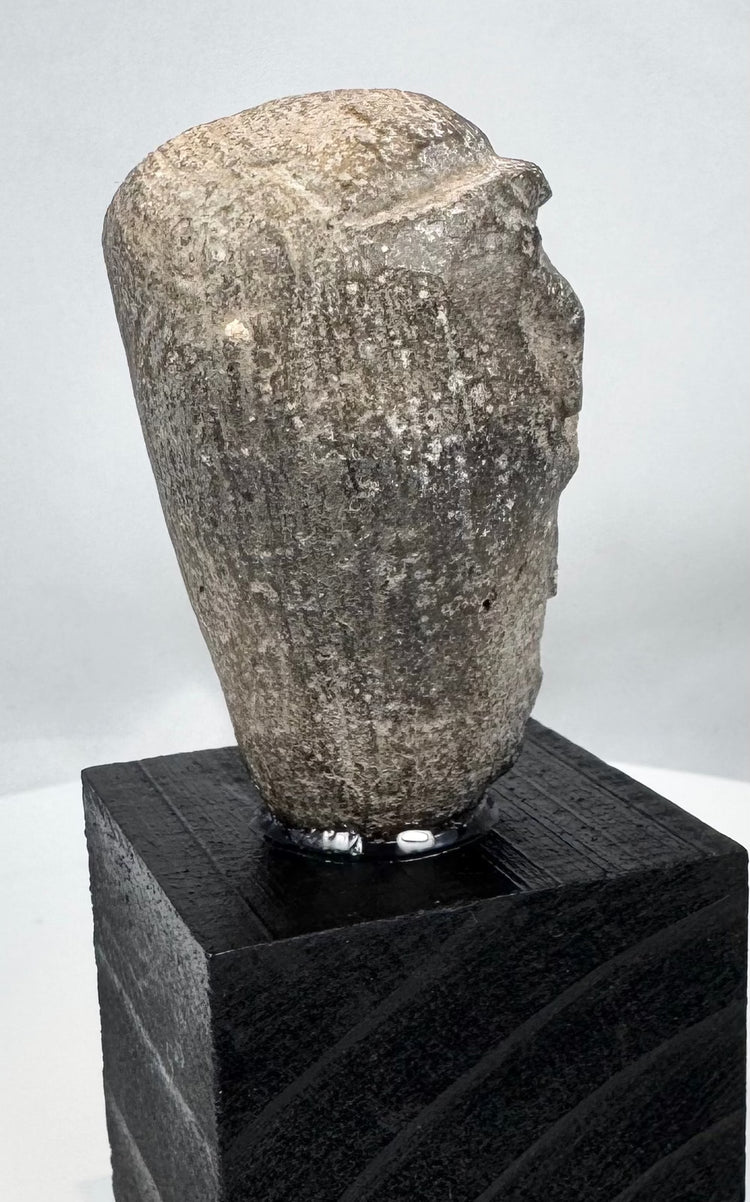
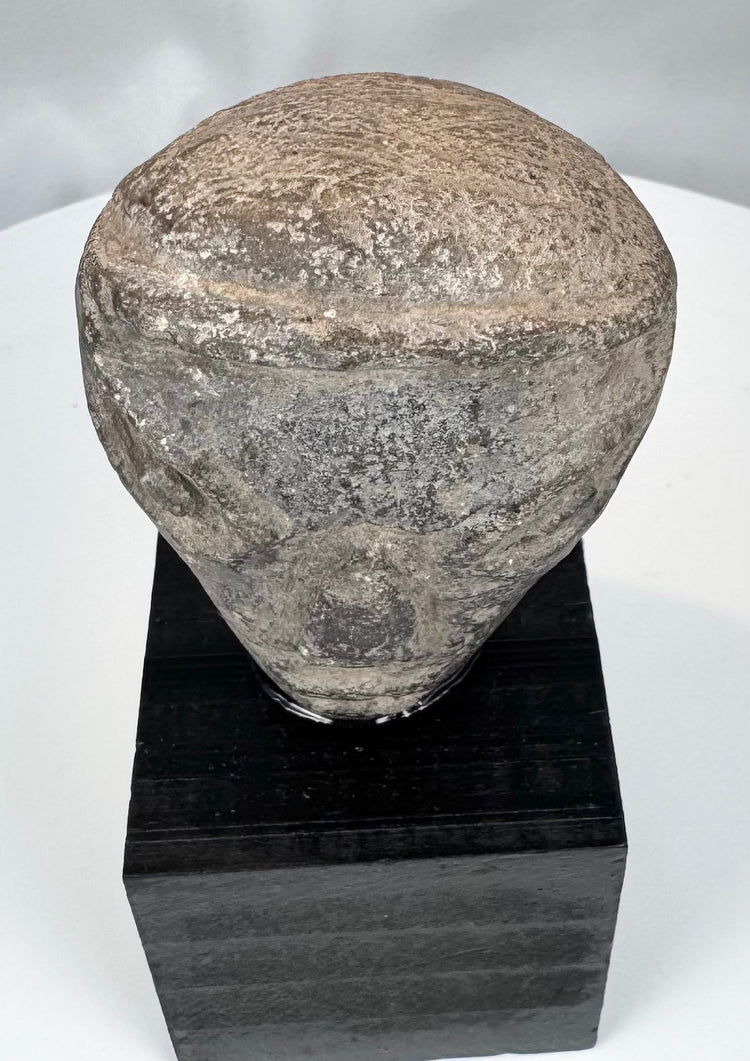
The face is elongated and highly stylized, with large almond-shaped eyes, a long angular nose, small recessed mouth, and heavy brows that slope toward the bridge of the nose. A raised horizontal band extends across the forehead, providing an additional distinctive element to the composition.
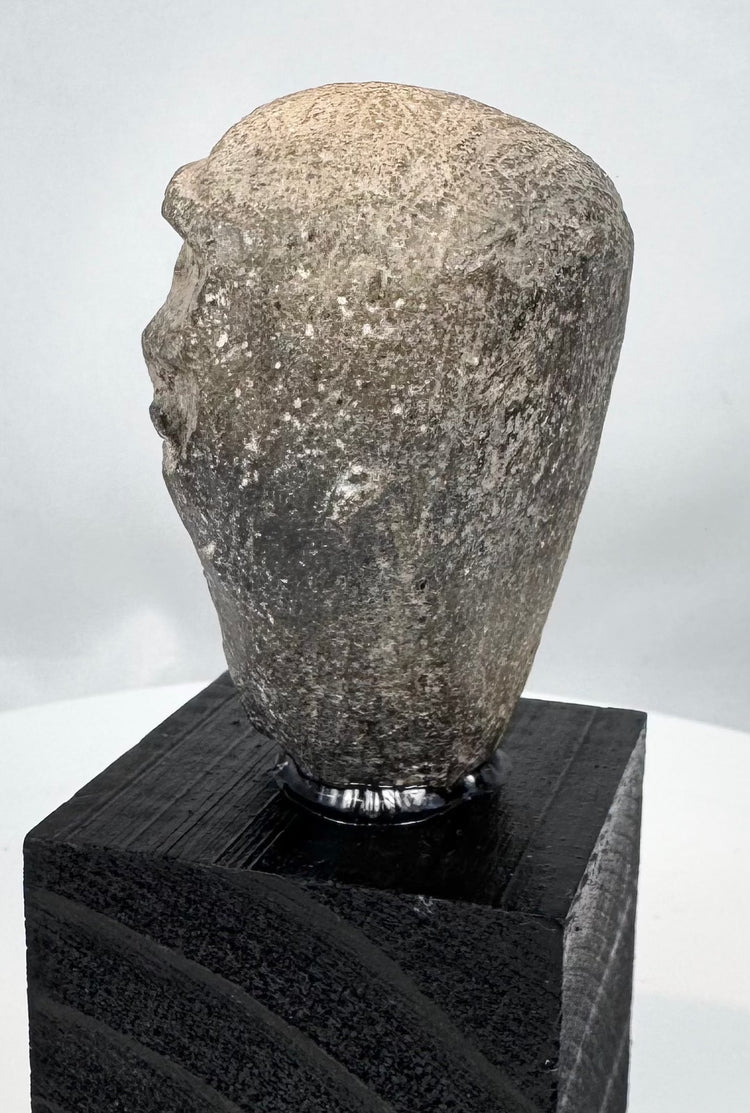
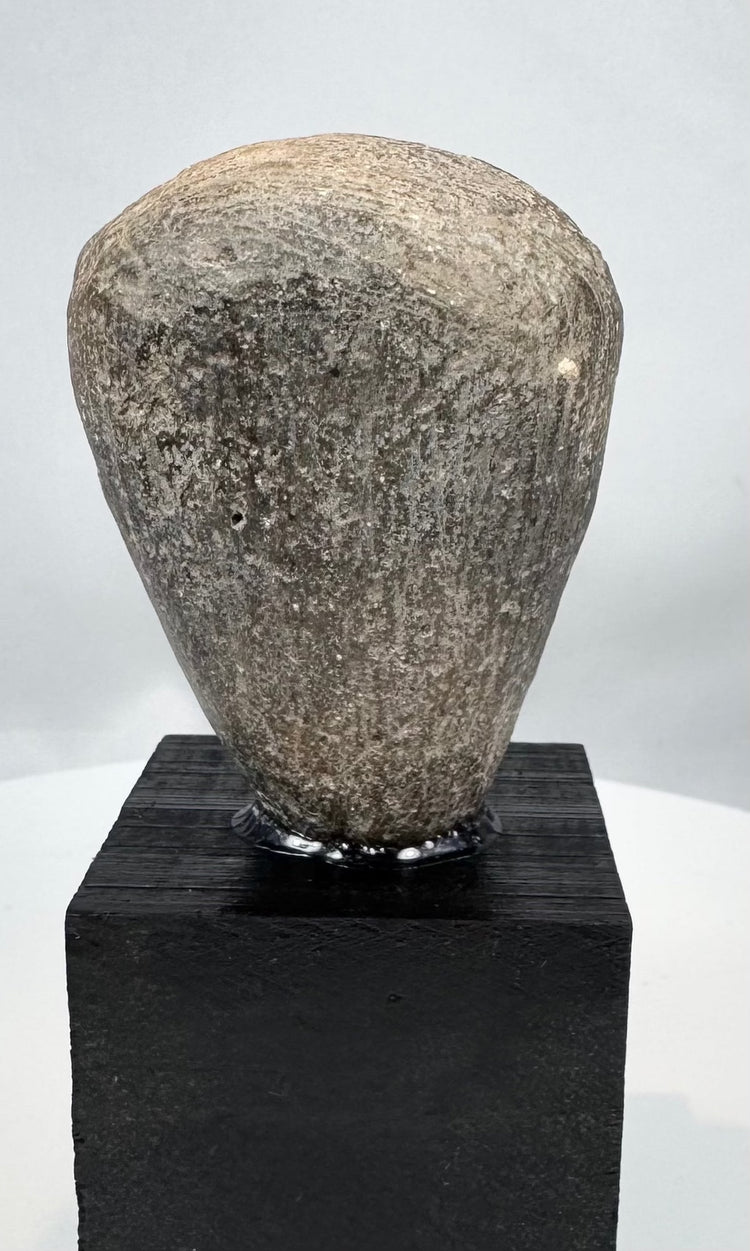
The reverse is plain and undecorated, indicating that the emphasis was placed entirely on the modeled facial features. Although fragmentary, the surviving head preserves a strong and recognizable example of ancient Mesopotamian figural representation.
The piece is mounted on a modern custom display stand for presentation.
Features
- Isin-Larsa to Old Babylonian stylistic attribution
- Depicts a youthful figure
- Elongated facial form
- Large almond-shaped eyes
- Long angular nose
- Small recessed mouth
- Heavy brows sloping toward the nose bridge
- Raised band across the forehead
- Plain undecorated reverse
- Mounted on a custom display stand
Cultural Significance
Terracotta figurines and modeled human representations formed an important part of artistic production in ancient Mesopotamia. Clay provided an accessible and versatile medium through which human and divine figures could be represented in a variety of contexts.
The elongated face, emphasized eyes, angular nose, heavy brows, and forehead band of this fragment provide the stylistic basis for its attribution to the Isin-Larsa to Old Babylonian period. In the absence of a documented archaeological excavation context, the dating is appropriately presented as a stylistic attribution rather than an exact archaeological date.
Condition
Ancient fragmentary condition with extensive weathering, surface pitting, mineral deposits, abrasions, and losses consistent with considerable age. The principal facial features remain clearly identifiable despite the worn surface. The reverse is plain and exhibits similar age-related weathering.
Dimensions (Approximate)
Height: 4.75 in
Width: 2 in
Depth: 2 in
Age (Approximate)
3,500–4,000 years old
Provenance
From a private New York City collection specializing in ancient Mesopotamian antiquities.
Subsequently handled by Palmyra Heritage Gallery, New York, USA, 2026. Palmyra Heritage Gallery is a New York dealer specializing in ancient coins and antiquities. According to the gallery, it has operated in New York since 1995 and handles material from Egyptian, Greek, Roman, Byzantine, Pre-Columbian, Islamic and other ancient cultures.
The piece was later examined by Luca Salvaggio, an Italian archaeologist and specialist in ancient Mediterranean and Near Eastern material. He holds a Postgraduate Diploma from the Italian Archaeological School at Athens (IASA) and is accredited for preventive archaeology by the Italian Ministry of Culture (MiC). Salvaggio identified the fragment as Mesopotamian terracotta, stylistically dating it to the Isin-Larsa to Old Babylonian period, circa 2000–1500 BCE.
Learn More
Discover a comparable ancient Mesopotamian terracotta head with distinctive facial features at the British Museum
Browse our Collection of Middle Eastern Antiquities & Ancient Art
Description
Historical Context & Origin
Region: Ancient Mesopotamia
Material: Terracotta
Period: Isin-Larsa to Old Babylonian Period, stylistically dated circa 2000–1500 BCE
Description
This ancient Mesopotamian terracotta head fragment depicts a youthful figure and is stylistically dated to the Isin-Larsa to Old Babylonian period, circa 2000–1500 BCE.
The face is elongated and highly stylized, with large almond-shaped eyes, a long angular nose, small recessed mouth, and heavy brows that slope toward the bridge of the nose. A raised horizontal band extends across the forehead, providing an additional distinctive element to the composition.
The reverse is plain and undecorated, indicating that the emphasis was placed entirely on the modeled facial features. Although fragmentary, the surviving head preserves a strong and recognizable example of ancient Mesopotamian figural representation.
The piece is mounted on a modern custom display stand for presentation.
Features
- Isin-Larsa to Old Babylonian stylistic attribution
- Depicts a youthful figure
- Elongated facial form
- Large almond-shaped eyes
- Long angular nose
- Small recessed mouth
- Heavy brows sloping toward the nose bridge
- Raised band across the forehead
- Plain undecorated reverse
- Mounted on a custom display stand
Cultural Significance
Terracotta figurines and modeled human representations formed an important part of artistic production in ancient Mesopotamia. Clay provided an accessible and versatile medium through which human and divine figures could be represented in a variety of contexts.
The elongated face, emphasized eyes, angular nose, heavy brows, and forehead band of this fragment provide the stylistic basis for its attribution to the Isin-Larsa to Old Babylonian period. In the absence of a documented archaeological excavation context, the dating is appropriately presented as a stylistic attribution rather than an exact archaeological date.
Condition
Ancient fragmentary condition with extensive weathering, surface pitting, mineral deposits, abrasions, and losses consistent with considerable age. The principal facial features remain clearly identifiable despite the worn surface. The reverse is plain and exhibits similar age-related weathering.
Dimensions (Approximate)
Height: 4.75 in
Width: 2 in
Depth: 2 in
Age (Approximate)
3,500–4,000 years old
Provenance
From a private New York City collection specializing in ancient Mesopotamian antiquities.
Subsequently handled by Palmyra Heritage Gallery, New York, USA, 2026. Palmyra Heritage Gallery is a New York dealer specializing in ancient coins and antiquities. According to the gallery, it has operated in New York since 1995 and handles material from Egyptian, Greek, Roman, Byzantine, Pre-Columbian, Islamic and other ancient cultures.
The piece was later examined by Luca Salvaggio, an Italian archaeologist and specialist in ancient Mediterranean and Near Eastern material. He holds a Postgraduate Diploma from the Italian Archaeological School at Athens (IASA) and is accredited for preventive archaeology by the Italian Ministry of Culture (MiC). Salvaggio identified the fragment as Mesopotamian terracotta, stylistically dating it to the Isin-Larsa to Old Babylonian period, circa 2000–1500 BCE.
Learn More
Discover a comparable ancient Mesopotamian terracotta head with distinctive facial features at the British Museum
Browse our Collection of Middle Eastern Antiquities & Ancient Art
You May Also Like
