
Ancient Middle Eastern White Stone Lugged Vessel | Circa 1st Millennium B.C.
Couldn't load pickup availability


Ancient Middle Eastern White Stone Lugged Vessel | Circa 1st Millennium B.C.
Description
More
Less
Historical Context & Origin
Region: Ancient Middle East
Material: Carved white stone
Period: Circa 1st millennium B.C.
Description
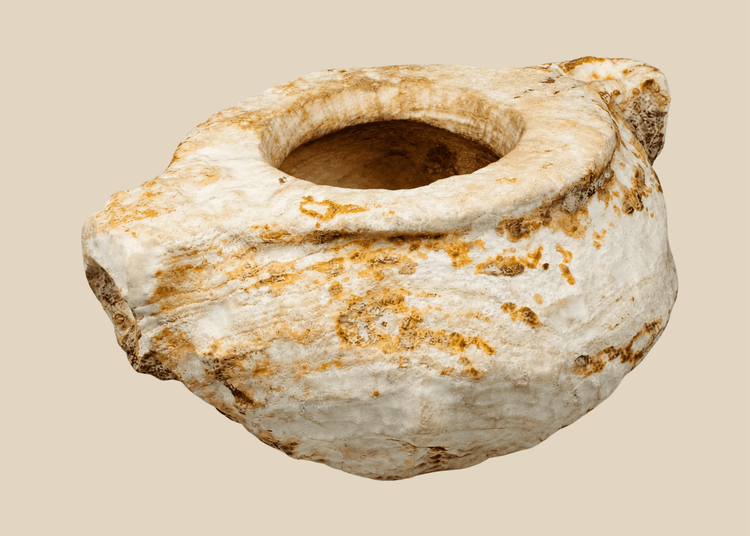
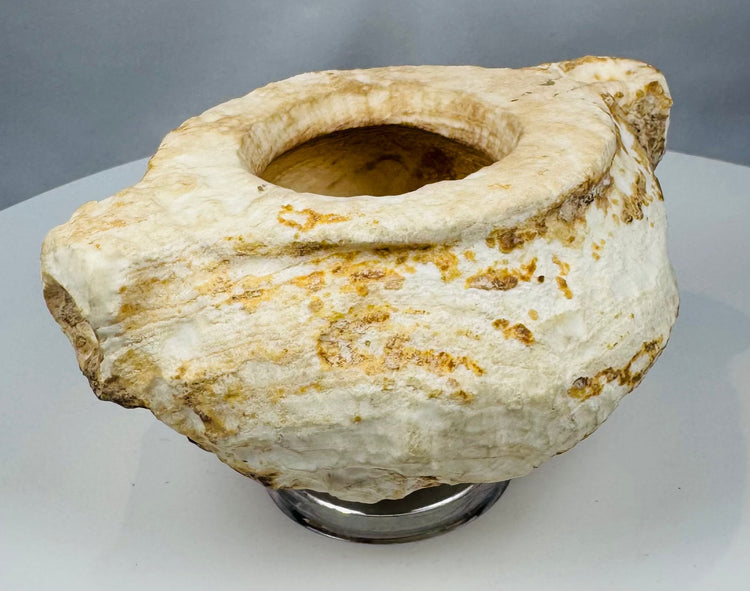
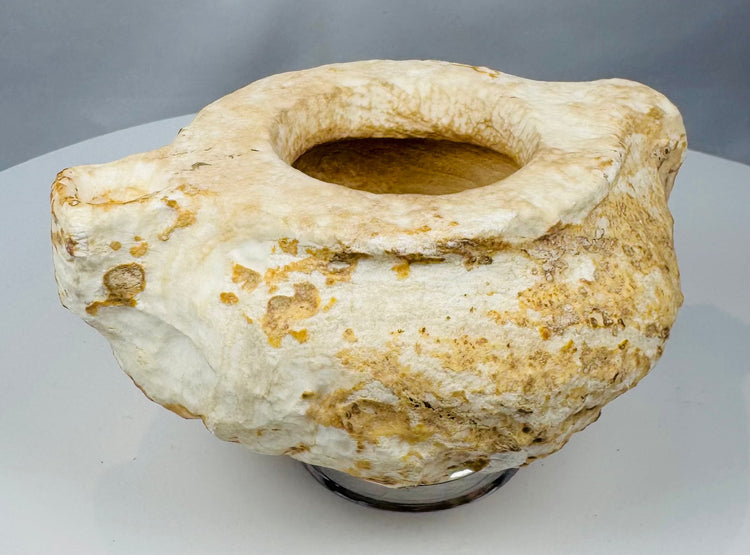
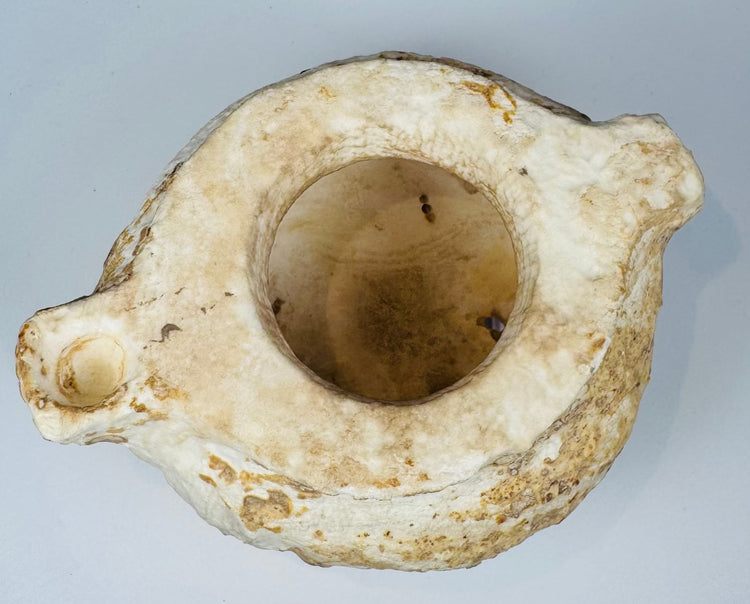
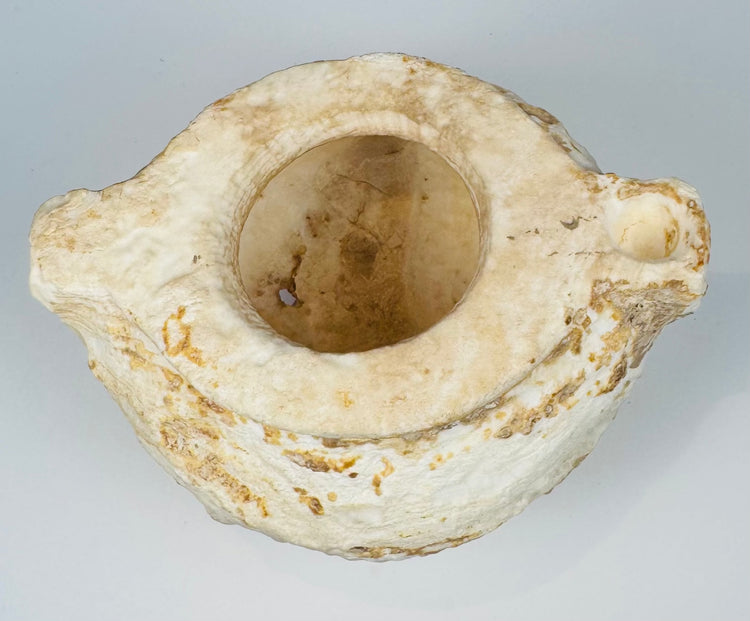
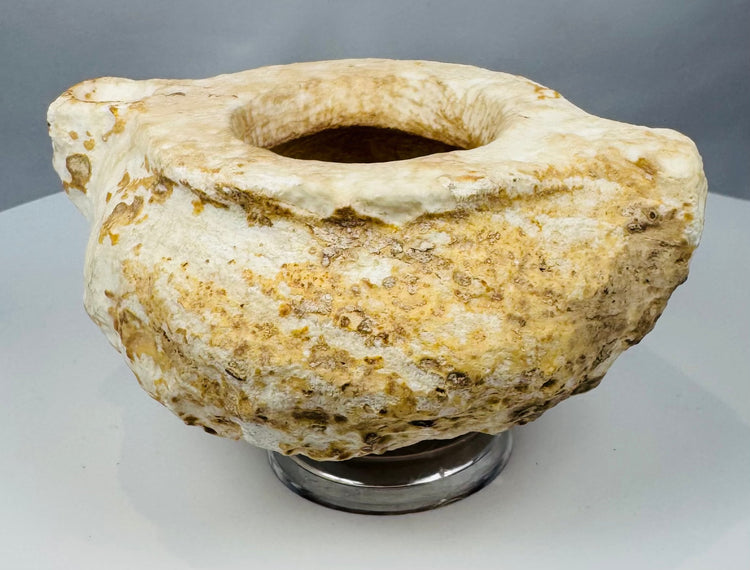
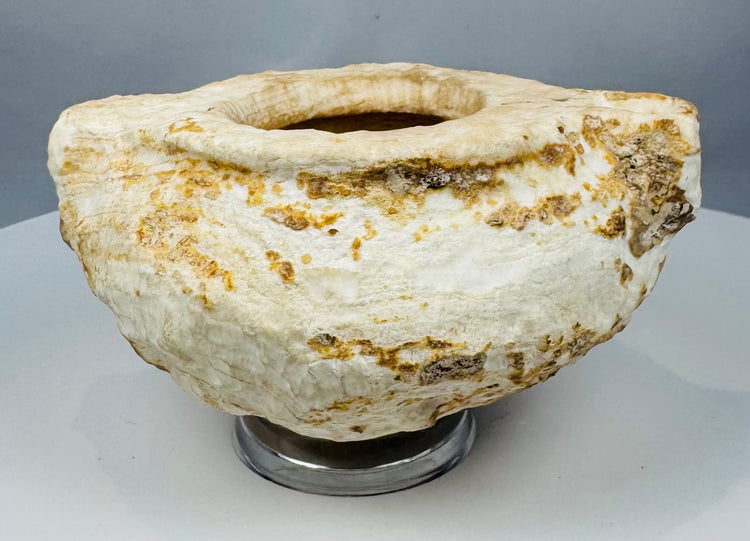
This ancient white stone vessel is a compact, heavily weathered example of carved stone container production from the ancient Middle East, dating to approximately the 1st millennium B.C. The vessel retains a distinctive low, broad form with a substantial flat rim and two opposing lug projections.
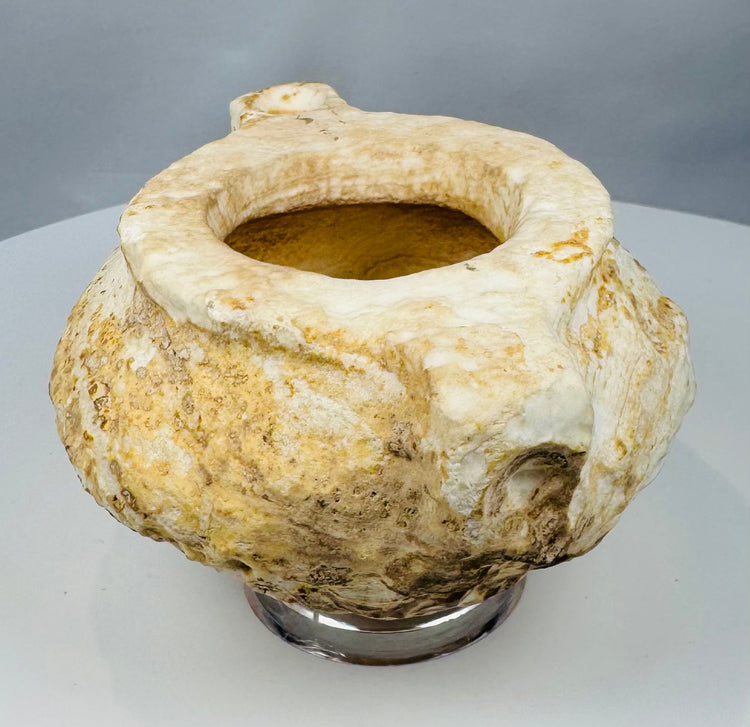
Carved from a pale cream-white stone, the vessel features a deeply hollowed central cavity surrounded by a thick, rounded rim. On opposing sides are integral lugs formed directly from the stone body, elements that may originally have assisted with handling, suspension, securing a covering, or attachment depending upon the vessel's original context.
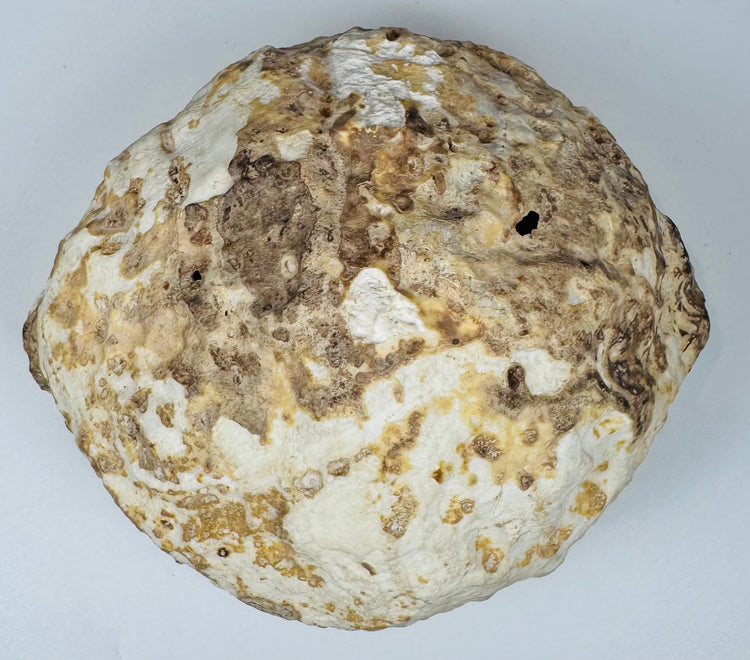
The exterior has undergone extensive natural weathering, leaving an irregular and highly textured surface with cream, ochre, tan, and brown mineral deposits. The contrast between the relatively smoother interior cavity and heavily eroded exterior provides a particularly strong sense of the object's considerable age.
Stone containers were valued throughout the ancient Near East because their production required considerably more labour than ordinary ceramic vessels. Depending upon context, such vessels could serve domestic, storage, cosmetic, ritual, funerary, or votive purposes.
Features
- Ancient carved white stone vessel
- Broad, low-profile body
- Wide flat rim surrounding a deeply hollowed interior
- Two opposing integral lug projections
- Extensive mineral and surface deposits
- Strongly weathered and eroded exterior
- Substantial hand-carved construction
Cultural Significance
Stone vessels represent an important category of ancient material culture across the Near East. Unlike pottery, which could be formed comparatively quickly from clay, stone containers required prolonged cutting, hollowing, grinding, and finishing.
The substantial rim and opposing lug configuration distinguish this example from simple bowls and jars, suggesting that its form was deliberately adapted for a particular method of handling, securing, or use. Its surviving surface deposits and pronounced weathering preserve evidence of its archaeological age and history.
Condition
Ancient condition with extensive age-related surface erosion, mineral deposits, encrustation, discoloration, abrasions, pitting, and losses throughout. The two opposing lug areas survive but display considerable weathering and erosion. Minor irregularities and losses are visible around the rim and exterior.
Dimensions (Approximate)
Height: 2.5 in
Diameter: 4.5 in
Age (Approximate)
2,000–3,000 years old
Provenance
Formerly in the collection of Jack Guevrekian, Manhasset, New York, a noted New York numismatist and collector with a particular interest in Armenian coinage and ancient material. Guevrekian assembled an extensive collection over several decades, a significant portion of which was publicly offered as The Jack Guevrekian Collection by the Numismatic & Antiquarian Service Corporation of America in New York in 1977.
Subsequently held in a private New York City collection and later handled by Artemis Fine Arts in 2026. Artemis Fine Arts is a specialist dealer in ancient art and antiquities, handling archaeological material and historical objects for the international collectors’ market.
Lastly acquired by a private collection in Toronto, Ontario, Canada.
Learn More
Learn about a related Achaemenid calcite vessel preserved by the British Museum.
Browse our Ceramics & Pottery: Ancient Heritage Art Collection.
Description
Historical Context & Origin
Region: Ancient Middle East
Material: Carved white stone
Period: Circa 1st millennium B.C.
Description
This ancient white stone vessel is a compact, heavily weathered example of carved stone container production from the ancient Middle East, dating to approximately the 1st millennium B.C. The vessel retains a distinctive low, broad form with a substantial flat rim and two opposing lug projections.
Carved from a pale cream-white stone, the vessel features a deeply hollowed central cavity surrounded by a thick, rounded rim. On opposing sides are integral lugs formed directly from the stone body, elements that may originally have assisted with handling, suspension, securing a covering, or attachment depending upon the vessel's original context.
The exterior has undergone extensive natural weathering, leaving an irregular and highly textured surface with cream, ochre, tan, and brown mineral deposits. The contrast between the relatively smoother interior cavity and heavily eroded exterior provides a particularly strong sense of the object's considerable age.
Stone containers were valued throughout the ancient Near East because their production required considerably more labour than ordinary ceramic vessels. Depending upon context, such vessels could serve domestic, storage, cosmetic, ritual, funerary, or votive purposes.
Features
- Ancient carved white stone vessel
- Broad, low-profile body
- Wide flat rim surrounding a deeply hollowed interior
- Two opposing integral lug projections
- Extensive mineral and surface deposits
- Strongly weathered and eroded exterior
- Substantial hand-carved construction
Cultural Significance
Stone vessels represent an important category of ancient material culture across the Near East. Unlike pottery, which could be formed comparatively quickly from clay, stone containers required prolonged cutting, hollowing, grinding, and finishing.
The substantial rim and opposing lug configuration distinguish this example from simple bowls and jars, suggesting that its form was deliberately adapted for a particular method of handling, securing, or use. Its surviving surface deposits and pronounced weathering preserve evidence of its archaeological age and history.
Condition
Ancient condition with extensive age-related surface erosion, mineral deposits, encrustation, discoloration, abrasions, pitting, and losses throughout. The two opposing lug areas survive but display considerable weathering and erosion. Minor irregularities and losses are visible around the rim and exterior.
Dimensions (Approximate)
Height: 2.5 in
Diameter: 4.5 in
Age (Approximate)
2,000–3,000 years old
Provenance
Formerly in the collection of Jack Guevrekian, Manhasset, New York, a noted New York numismatist and collector with a particular interest in Armenian coinage and ancient material. Guevrekian assembled an extensive collection over several decades, a significant portion of which was publicly offered as The Jack Guevrekian Collection by the Numismatic & Antiquarian Service Corporation of America in New York in 1977.
Subsequently held in a private New York City collection and later handled by Artemis Fine Arts in 2026. Artemis Fine Arts is a specialist dealer in ancient art and antiquities, handling archaeological material and historical objects for the international collectors’ market.
Lastly acquired by a private collection in Toronto, Ontario, Canada.
Learn More
Learn about a related Achaemenid calcite vessel preserved by the British Museum.
Browse our Ceramics & Pottery: Ancient Heritage Art Collection.
You May Also Like
