



Ancient Near Eastern White Stone Lugged Vessel | Circa 1st Millennium B.C.
Couldn't load pickup availability


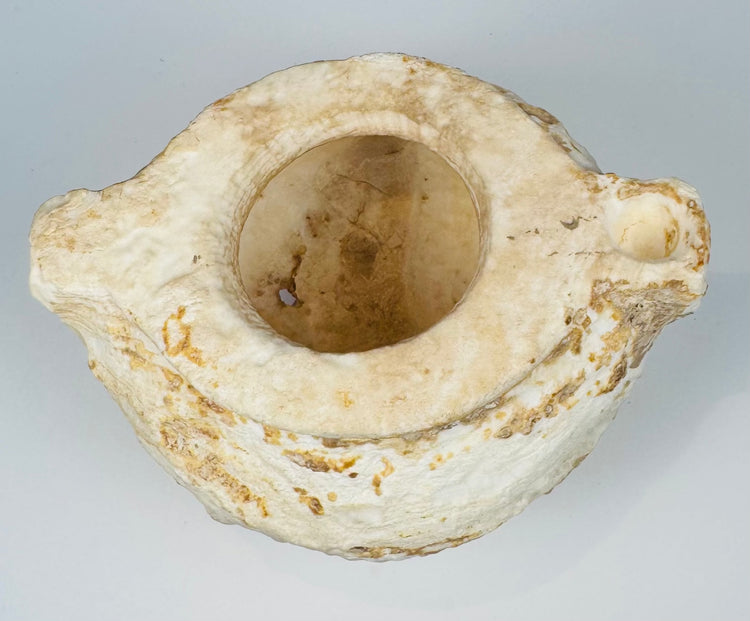
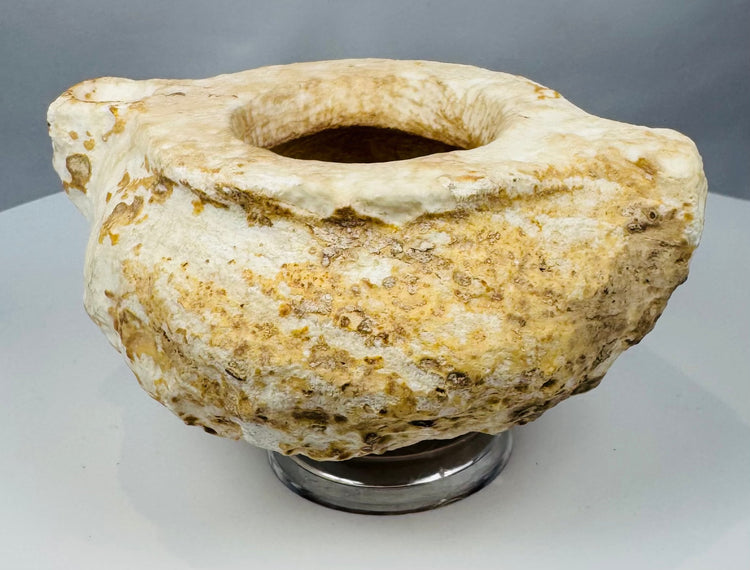
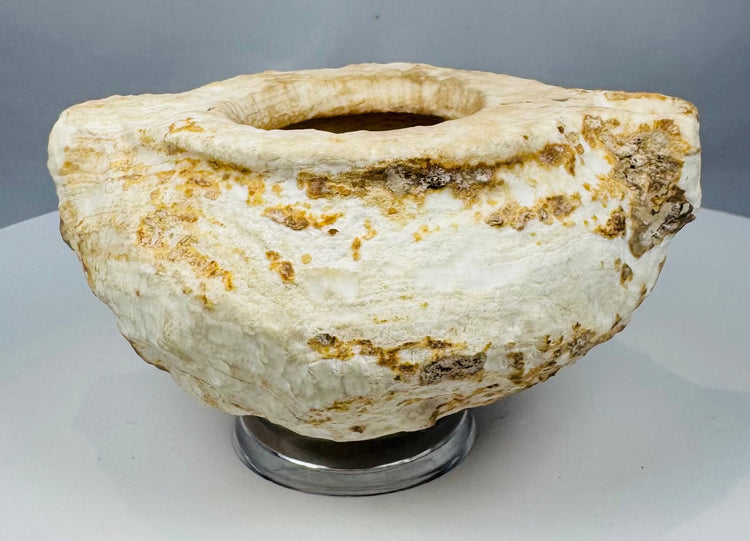
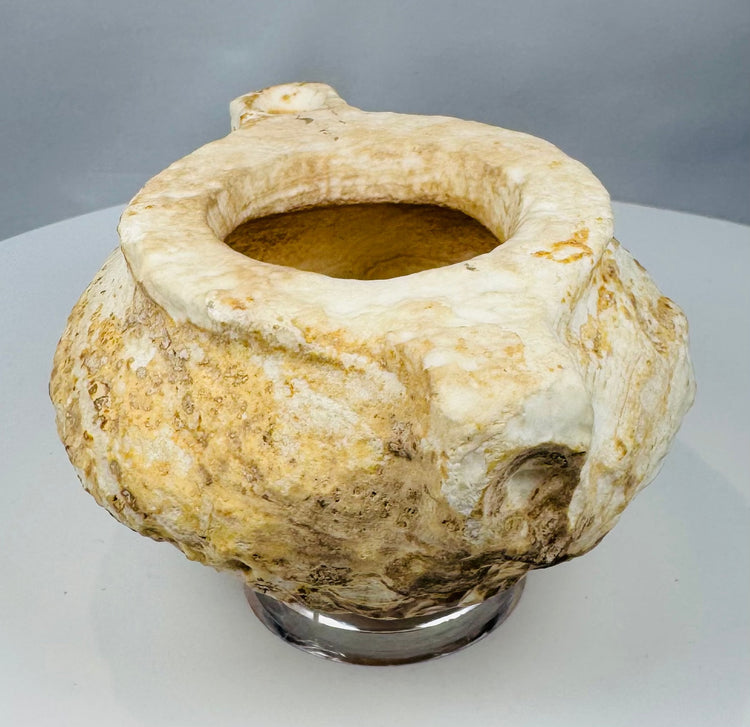
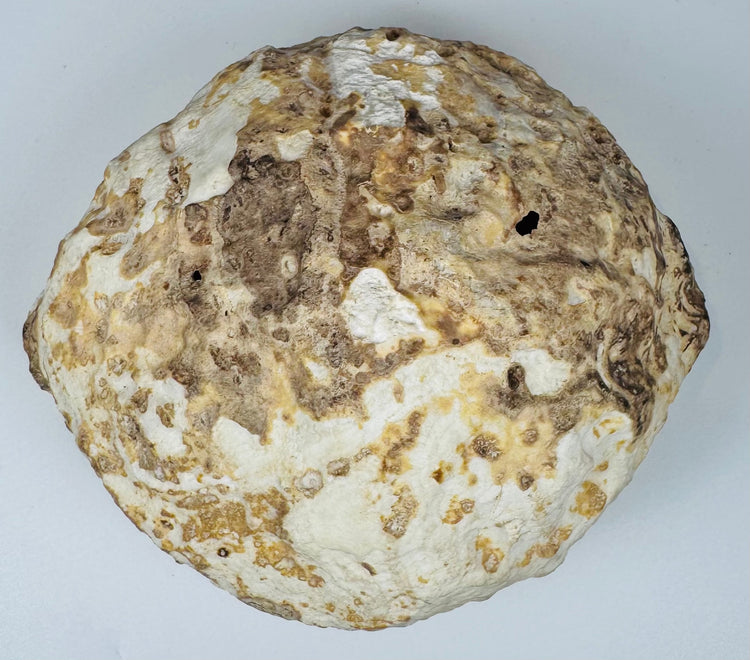
Ancient Near Eastern White Stone Lugged Vessel | Circa 1st Millennium B.C.
Description
More
Less
Historical Context & Origin
Region: Ancient Near East
Material: Carved alabaster
Period: 1st Millennium BCE
Description
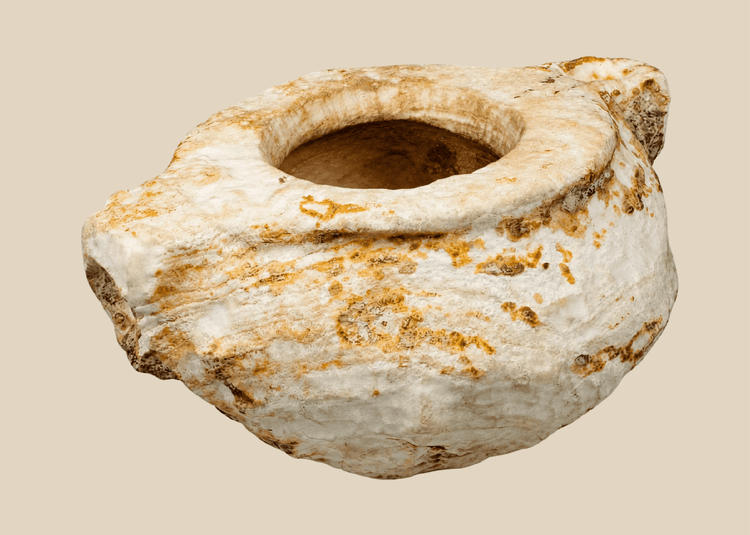
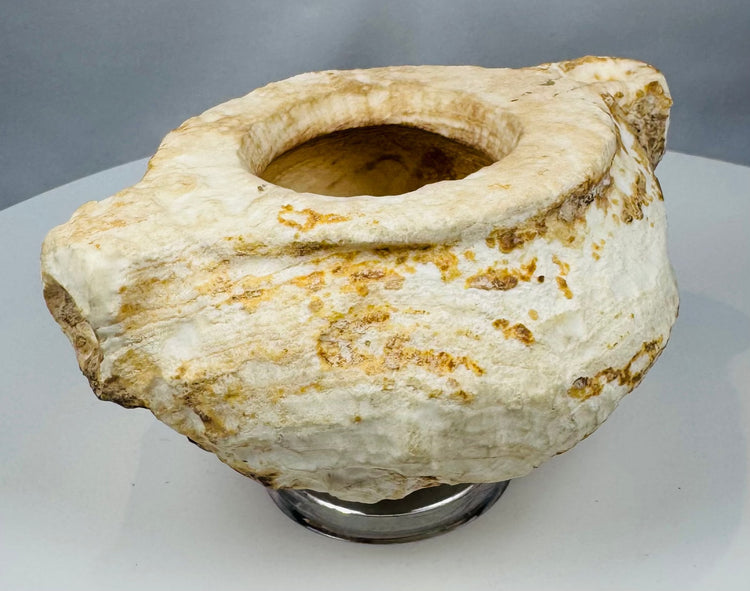
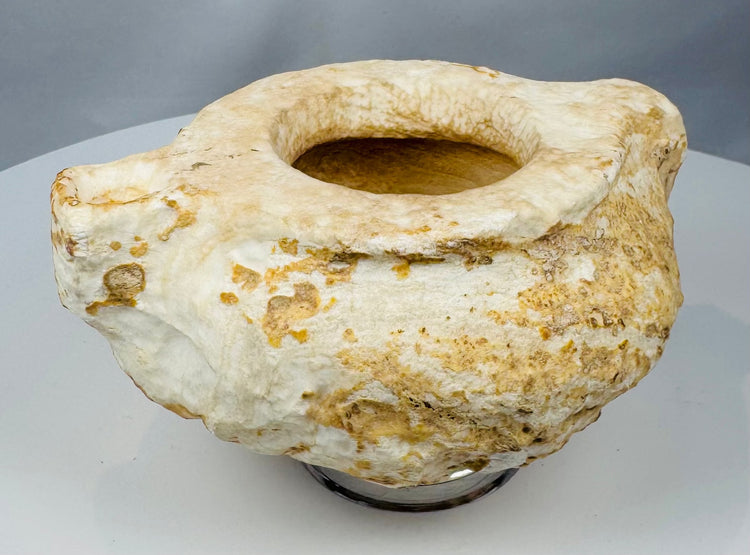
This ancient Near Eastern alabaster vessel dates to the 1st millennium BCE and is distinguished by its low, broad form and opposed integral lugs.
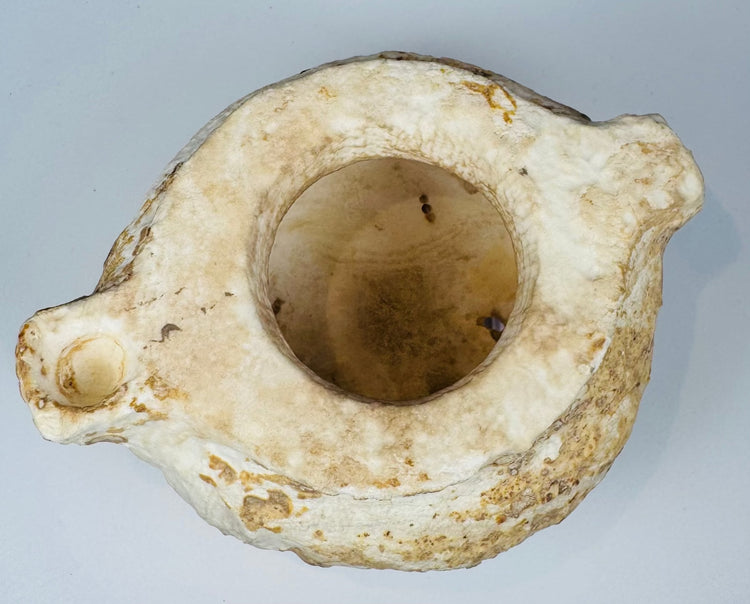
Carved from a single block of alabaster, the vessel features a wide flat rim surrounding a deeply hollowed interior. Two opposing lugs project from the body and were carved as part of the same stone block, with one lug pierced.
The alabaster displays a pale white ground with distinctive banded orange staining, while extensive weathering, mineral deposits, and surface erosion testify to its considerable antiquity.
This is a broad Near Eastern vessel type that cannot presently be assigned to one specific regional culture. Based on its relatively small dimensions, the vessel may have served a cosmetic or personal-use function, although its precise original purpose cannot be established with certainty.
Features
- Low, broad vessel form
- Wide flat rim
- Deeply hollowed interior
- Two opposed integral lugs
- One lug pierced
- White alabaster with banded orange staining
- Heavy archaeological weathering and mineral deposits
- Possible cosmetic function based on its dimensions
Cultural Significance
Stone vessels formed an important category of material culture throughout the ancient Near East. Their manufacture required significant skill, involving the cutting, hollowing, shaping, and finishing of a solid block of stone.
This example's broad profile, deeply hollowed interior, and opposed lug construction place it within a wider tradition of ancient Near Eastern stone vessels. Because this vessel type occurs broadly and is not diagnostic of a single culture or region, the attribution is appropriately maintained as Near Eastern, 1st millennium BCE.
Its compact proportions suggest that it may have been used as a cosmetic container or for another small-volume substance, although the absence of archaeological context prevents a definitive determination.
Condition
Ancient condition with heavy weathering, mineral deposits, surface erosion, and losses consistent with considerable age. The lugs exhibit notable erosion, and losses and abrasions are present around the rim and exterior. Despite the weathering, the overall vessel form and deeply hollowed interior remain clearly recognizable.
Dimensions (Approximate)
Height: 2.5 in
Diameter: 4.5 in
Age (Approximate)
2,000–3,000 years old
Provenance
Formerly in the collection of Jack Guevrekian, Manhasset, New York, a noted New York numismatist and collector with a particular interest in Armenian coinage and ancient material. Guevrekian assembled an extensive collection over several decades, a significant portion of which was publicly offered as The Jack Guevrekian Collection by the Numismatic & Antiquarian Service Corporation of America in New York in 1977.
Subsequently held in a private New York City collection and later handled by Artemis Fine Arts in 2026. Artemis Fine Arts is a specialist dealer in ancient art and antiquities, handling archaeological material and historical objects for the international collectors’ market.
Lastly acquired by a private collection in Toronto, Ontario, Canada.
Expert Assessment: Examined by Luca Salvaggio, an Italian archaeologist specializing in ancient Mediterranean and Near Eastern material, with a Postgraduate Diploma from the Italian Archaeological School at Athens (IASA) and accreditation from the Italian Ministry of Culture (MiC). He identified the vessel as an ancient Near Eastern alabaster lugged vessel dating to the 1st millennium BCE, based on its carved alabaster construction, low and broad profile, wide flat rim, deeply hollowed interior, and opposed integral lugs, including one pierced lug.
Learn More
Explore a related 1st-millennium BCE alabaster vessel with pierced lug handles preserved in the collection of The Metropolitan Museum of Art.
Browse our collection of Ceramics & Pottery: Ancient Heritage Art.
Description
Historical Context & Origin
Region: Ancient Near East
Material: Carved alabaster
Period: 1st Millennium BCE
Description
This ancient Near Eastern alabaster vessel dates to the 1st millennium BCE and is distinguished by its low, broad form and opposed integral lugs.
Carved from a single block of alabaster, the vessel features a wide flat rim surrounding a deeply hollowed interior. Two opposing lugs project from the body and were carved as part of the same stone block, with one lug pierced.
The alabaster displays a pale white ground with distinctive banded orange staining, while extensive weathering, mineral deposits, and surface erosion testify to its considerable antiquity.
This is a broad Near Eastern vessel type that cannot presently be assigned to one specific regional culture. Based on its relatively small dimensions, the vessel may have served a cosmetic or personal-use function, although its precise original purpose cannot be established with certainty.
Features
- Low, broad vessel form
- Wide flat rim
- Deeply hollowed interior
- Two opposed integral lugs
- One lug pierced
- White alabaster with banded orange staining
- Heavy archaeological weathering and mineral deposits
- Possible cosmetic function based on its dimensions
Cultural Significance
Stone vessels formed an important category of material culture throughout the ancient Near East. Their manufacture required significant skill, involving the cutting, hollowing, shaping, and finishing of a solid block of stone.
This example's broad profile, deeply hollowed interior, and opposed lug construction place it within a wider tradition of ancient Near Eastern stone vessels. Because this vessel type occurs broadly and is not diagnostic of a single culture or region, the attribution is appropriately maintained as Near Eastern, 1st millennium BCE.
Its compact proportions suggest that it may have been used as a cosmetic container or for another small-volume substance, although the absence of archaeological context prevents a definitive determination.
Condition
Ancient condition with heavy weathering, mineral deposits, surface erosion, and losses consistent with considerable age. The lugs exhibit notable erosion, and losses and abrasions are present around the rim and exterior. Despite the weathering, the overall vessel form and deeply hollowed interior remain clearly recognizable.
Dimensions (Approximate)
Height: 2.5 in
Diameter: 4.5 in
Age (Approximate)
2,000–3,000 years old
Provenance
Formerly in the collection of Jack Guevrekian, Manhasset, New York, a noted New York numismatist and collector with a particular interest in Armenian coinage and ancient material. Guevrekian assembled an extensive collection over several decades, a significant portion of which was publicly offered as The Jack Guevrekian Collection by the Numismatic & Antiquarian Service Corporation of America in New York in 1977.
Subsequently held in a private New York City collection and later handled by Artemis Fine Arts in 2026. Artemis Fine Arts is a specialist dealer in ancient art and antiquities, handling archaeological material and historical objects for the international collectors’ market.
Lastly acquired by a private collection in Toronto, Ontario, Canada.
Expert Assessment: Examined by Luca Salvaggio, an Italian archaeologist specializing in ancient Mediterranean and Near Eastern material, with a Postgraduate Diploma from the Italian Archaeological School at Athens (IASA) and accreditation from the Italian Ministry of Culture (MiC). He identified the vessel as an ancient Near Eastern alabaster lugged vessel dating to the 1st millennium BCE, based on its carved alabaster construction, low and broad profile, wide flat rim, deeply hollowed interior, and opposed integral lugs, including one pierced lug.
Learn More
Explore a related 1st-millennium BCE alabaster vessel with pierced lug handles preserved in the collection of The Metropolitan Museum of Art.
Browse our collection of Ceramics & Pottery: Ancient Heritage Art.
You May Also Like
