



Ancient Parthian Copper-Alloy Ladle | Iran | Circa 247 BCE–224 CE
Couldn't load pickup availability


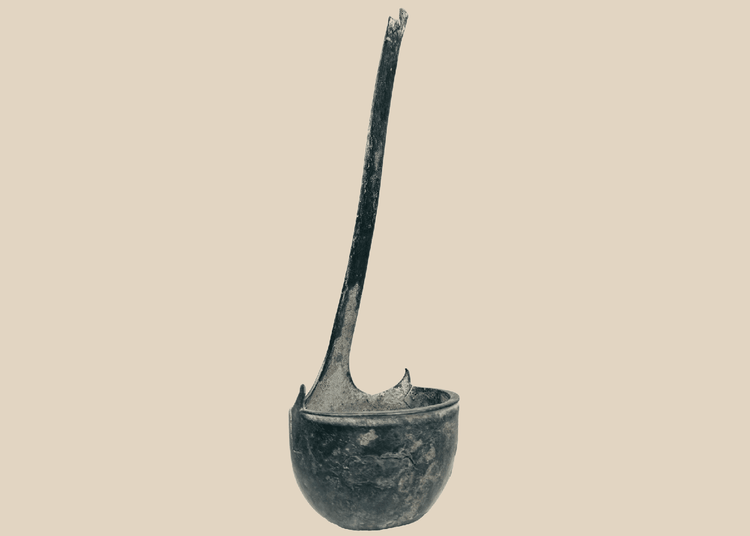
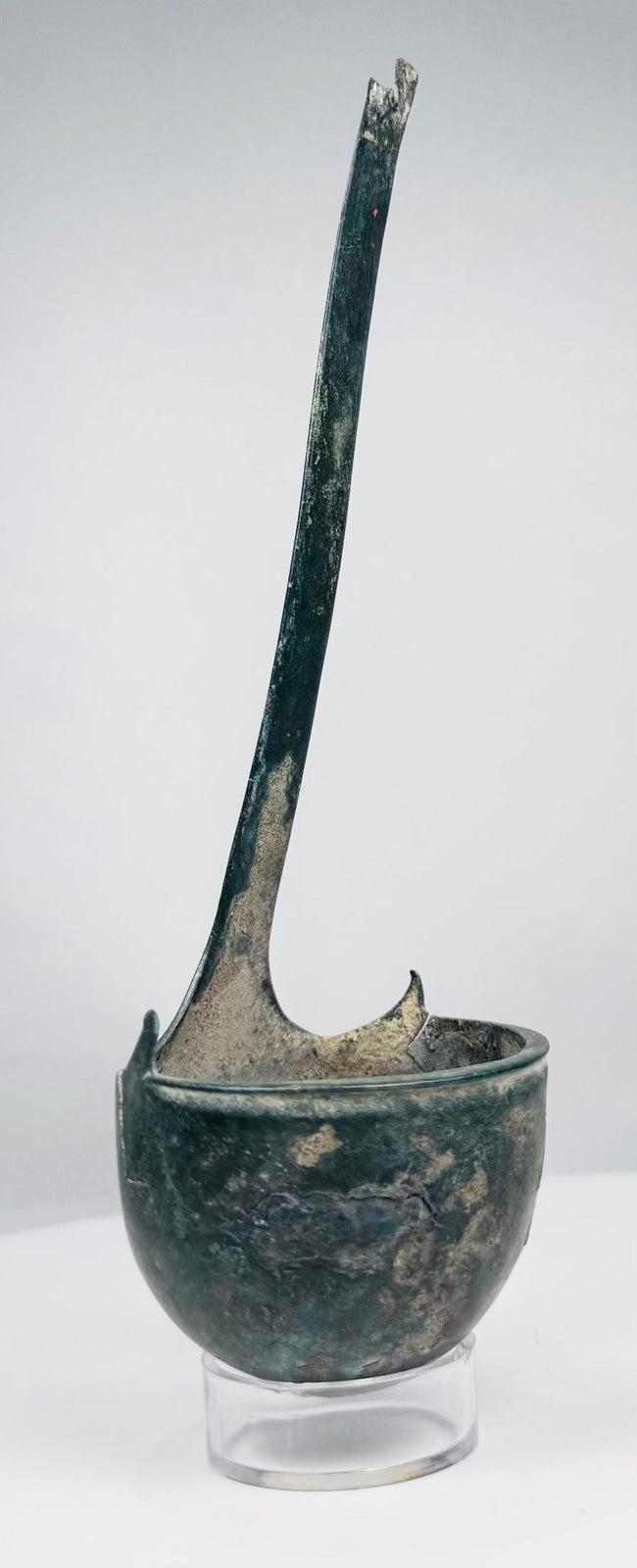
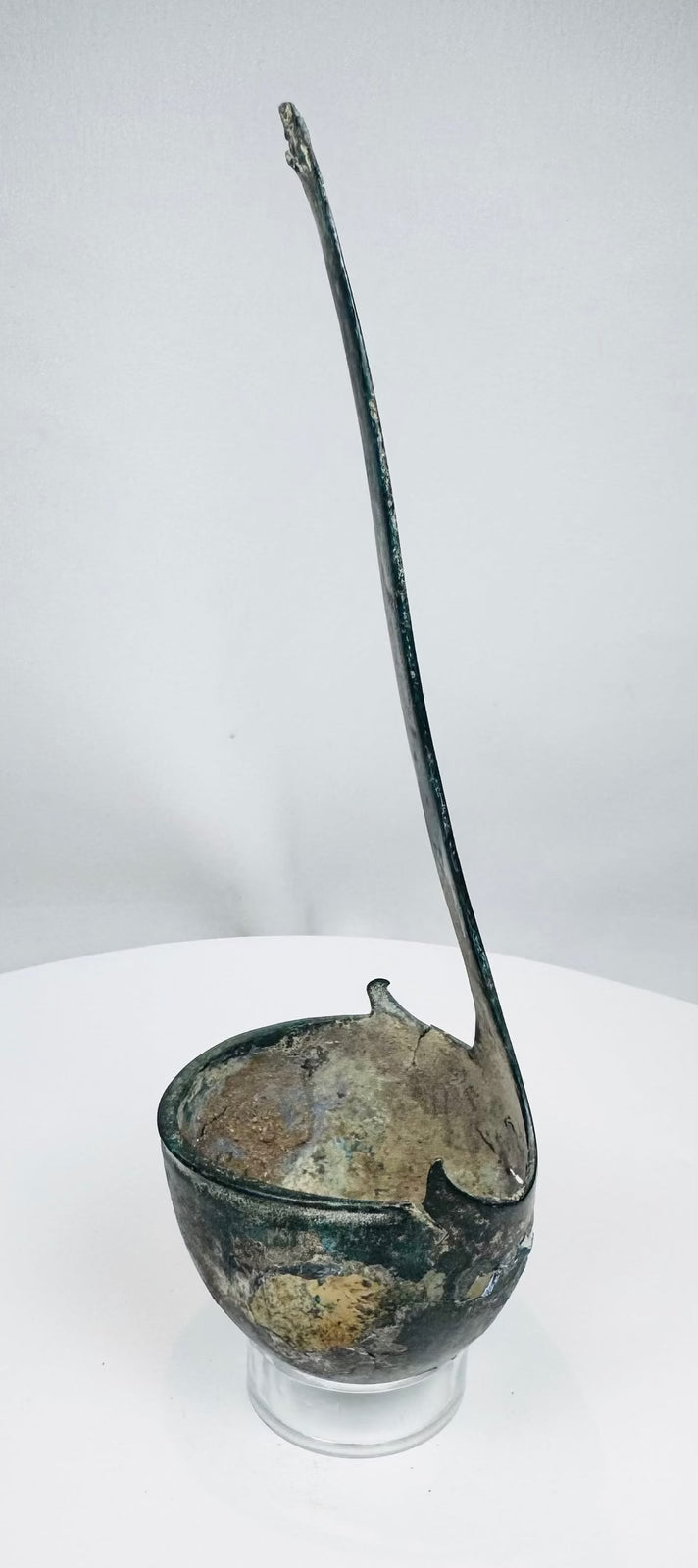
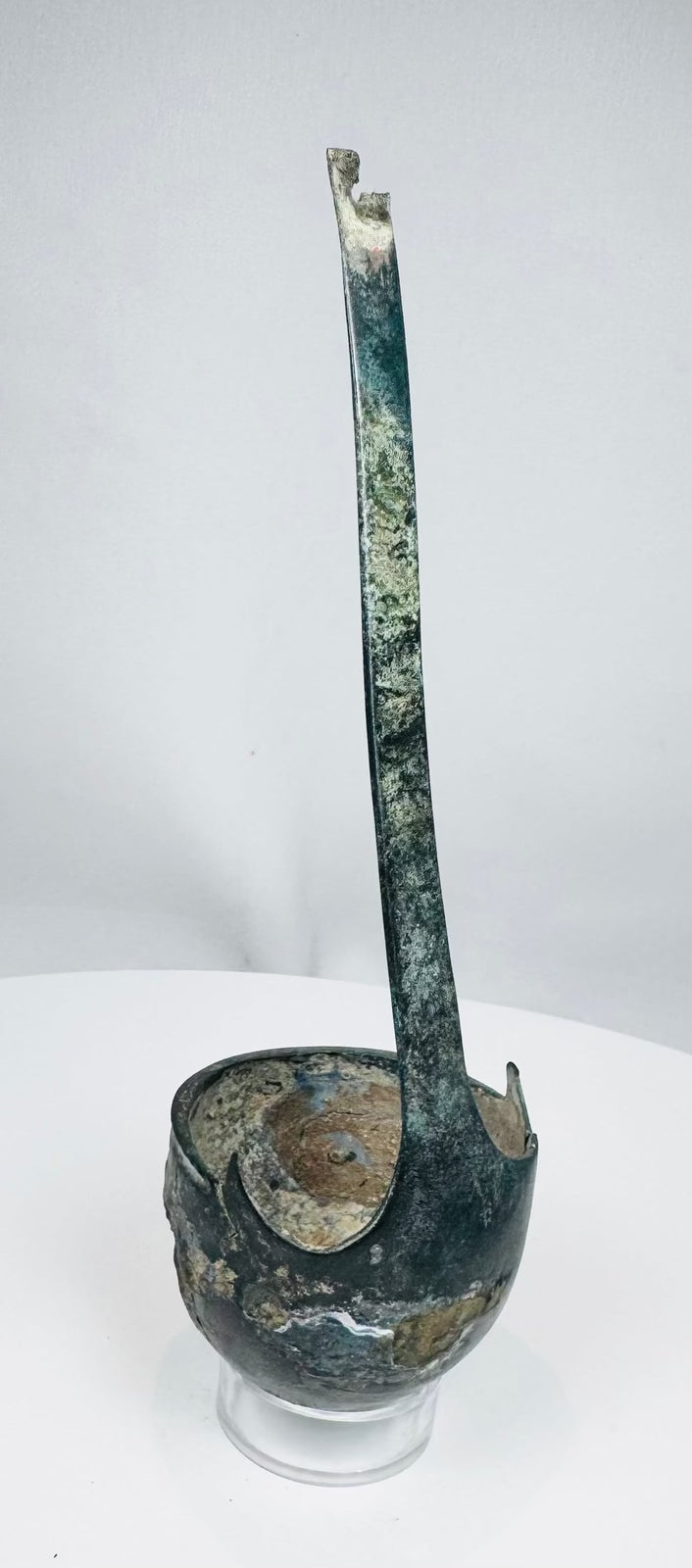
Ancient Parthian Copper-Alloy Ladle | Iran | Circa 247 BCE–224 CE
Description
More
Less
Historical Context & Origin
Region: Ancient Iran / Parthian Empire
Material: Copper alloy
Period: Parthian Period, 247 BCE–224 CE
Description
This ancient Parthian copper-alloy ladle dates to the period of the Parthian Empire, approximately 247 BCE–224 CE.
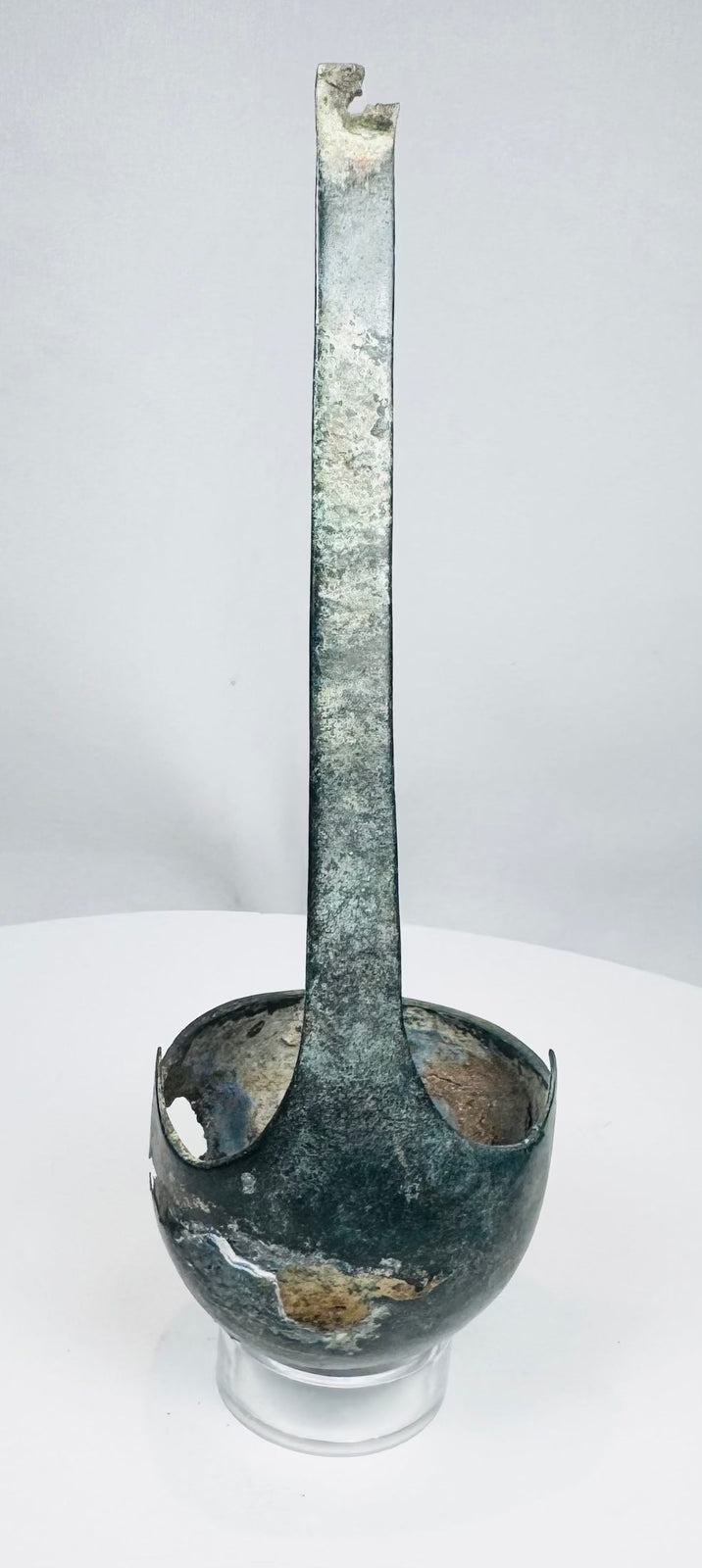
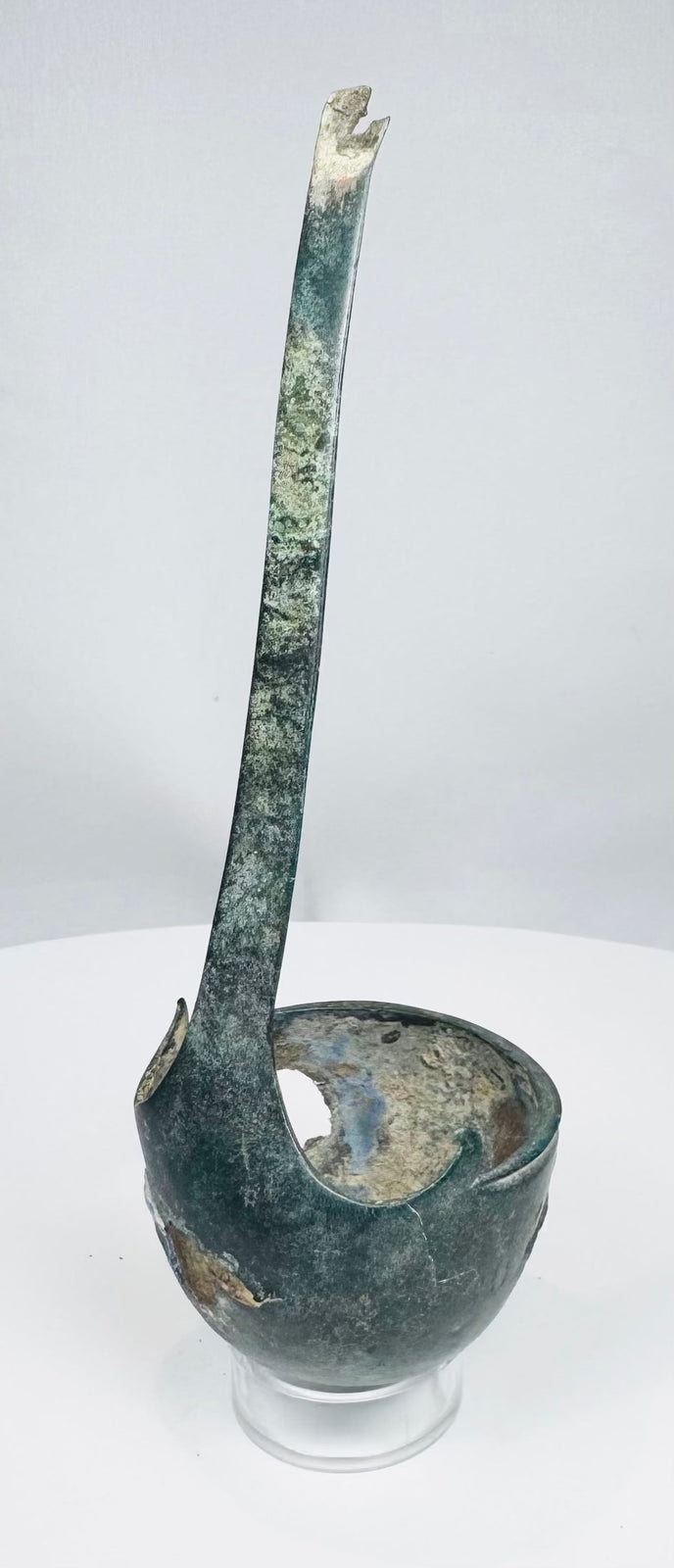
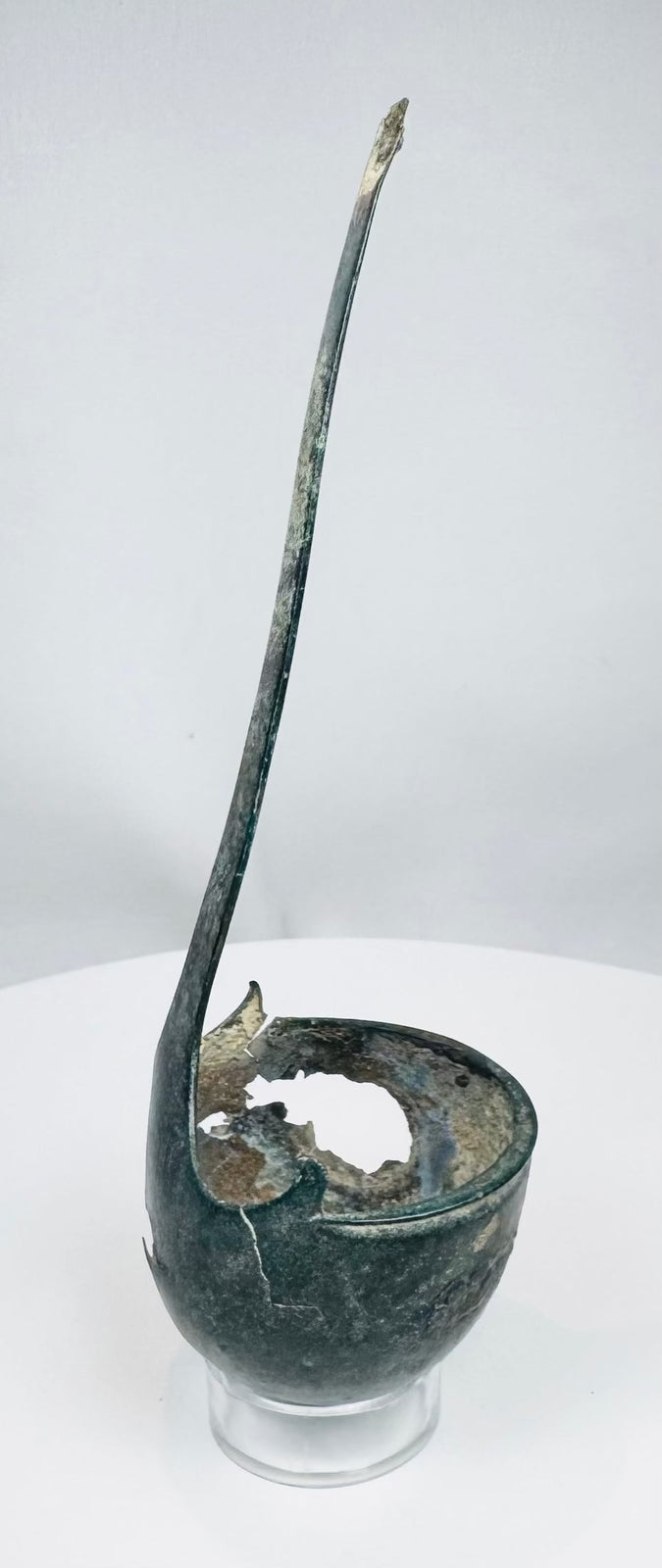
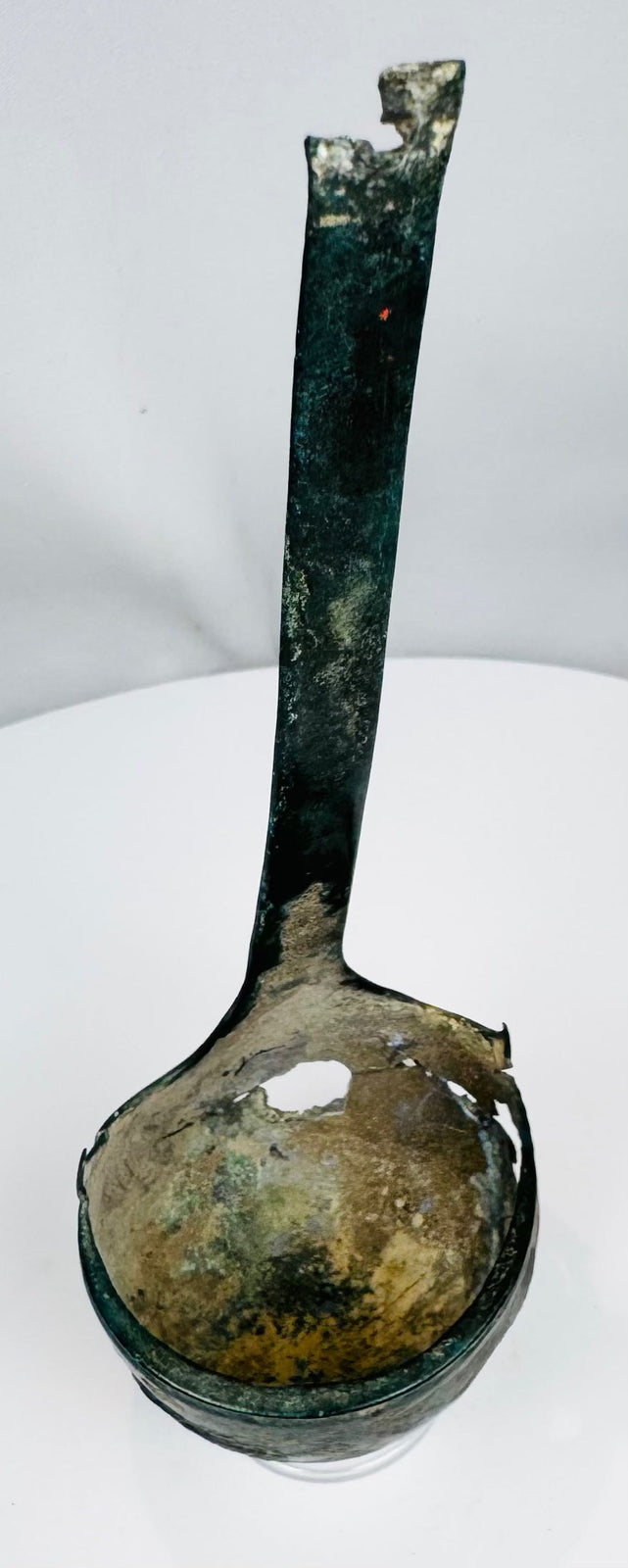
The utensil features a deep hemispherical bowl with a plain rim, joined to a long, gently curved handle of flattened section. The handle connects to the bowl through a broad triangular attachment plate, with a distinctive raised spur positioned beside the handle.
The elongated handle would have allowed liquids to be collected or transferred from deeper vessels. Its simple construction reflects the practical metalworking traditions of ancient Iran during the Parthian period.
The surface retains a dark grey-green archaeological patina, with extensive corrosion and mineralization consistent with considerable antiquity.
Features
- Deep hemispherical bowl
- Plain rim
- Long, gently curved flat-section handle
- Broad triangular attachment plate
- Single raised spur beside the handle
- Dark grey-green archaeological patina
- Fragmentary ancient condition
- Broken upper handle terminal
Cultural Significance
The Parthian Empire controlled a vast territory centred on ancient Iran and served as an important cultural and commercial link between the Mediterranean, Central Asia, and the Near East.
Metal utensils such as ladles formed part of everyday material culture and demonstrate the practical application of copper-alloy craftsmanship during the Parthian period. The deep bowl and extended handle would have made this example suitable for transferring or serving liquids, although its precise original context cannot be determined.
Condition
Fragmentary ancient condition. The bowl is heavily corroded and thinned, with areas of loss and perforation. The long handle survives but is bent, with corrosion, wear, and surface mineralization throughout.
The upper terminal of the handle is broken and incomplete. The triangular attachment plate and raised spur remain visible. The surface displays a dark grey-green patina consistent with archaeological copper alloy.
Dimensions (Approximate)
Overall Height: 6.5 in
Bowl Diameter: 2 in
Age (Approximate)
1,800–2,300 years old
Provenance
Formerly in the collection of Jack Guevrekian, Manhasset, New York, a noted New York numismatist and collector with a particular interest in Armenian coinage, antiquities, and ancient material. Guevrekian assembled an extensive collection over several decades, a significant portion of which was publicly offered as The Jack Guevrekian Collection by the Numismatic & Antiquarian Service Corporation of America in New York in 1977.
Subsequently held in a private New York City collection.
Later handled by the Howard S. Rose Gallery / Arte Primitivo in New York, a longstanding specialist gallery and auction house dealing in Pre-Columbian, Classical, Egyptian, Asian, and ethnographic antiquities and works of art. The gallery has conducted specialist auctions, exhibitions, and private sales from its New York premises.
Subsequently handled by Artemis Fine Arts / Artemis Gallery, a Colorado-based specialist in antiquities, ancient art, ethnographic material, and fine art that has been active in the field since 1993.
Then entered a private collection in Toronto, Ontario, Canada.
The piece was later examined by Luca Salvaggio, an Italian archaeologist and specialist in ancient Mediterranean and Near Eastern material. He holds a Postgraduate Diploma from the Italian Archaeological School at Athens (IASA) and is accredited for preventive archaeology by the Italian Ministry of Culture (MiC). Salvaggio identified the object as a Parthian copper-alloy ladle from Iran, dating to circa 247 BCE–224 CE, based on its deep hemispherical bowl, plain rim, long gently curved flat-section handle, broad triangular attachment plate, raised spur, and dark grey-green patina.
Learn More
View a related ancient Roman bronze simpulum in the collection of The Metropolitan Museum of Art
Explore our curated Collection of Roman & Greek Artifacts and Ancient Relics
Description
Historical Context & Origin
Region: Ancient Iran / Parthian Empire
Material: Copper alloy
Period: Parthian Period, 247 BCE–224 CE
Description
This ancient Parthian copper-alloy ladle dates to the period of the Parthian Empire, approximately 247 BCE–224 CE.
The utensil features a deep hemispherical bowl with a plain rim, joined to a long, gently curved handle of flattened section. The handle connects to the bowl through a broad triangular attachment plate, with a distinctive raised spur positioned beside the handle.
The elongated handle would have allowed liquids to be collected or transferred from deeper vessels. Its simple construction reflects the practical metalworking traditions of ancient Iran during the Parthian period.
The surface retains a dark grey-green archaeological patina, with extensive corrosion and mineralization consistent with considerable antiquity.
Features
- Deep hemispherical bowl
- Plain rim
- Long, gently curved flat-section handle
- Broad triangular attachment plate
- Single raised spur beside the handle
- Dark grey-green archaeological patina
- Fragmentary ancient condition
- Broken upper handle terminal
Cultural Significance
The Parthian Empire controlled a vast territory centred on ancient Iran and served as an important cultural and commercial link between the Mediterranean, Central Asia, and the Near East.
Metal utensils such as ladles formed part of everyday material culture and demonstrate the practical application of copper-alloy craftsmanship during the Parthian period. The deep bowl and extended handle would have made this example suitable for transferring or serving liquids, although its precise original context cannot be determined.
Condition
Fragmentary ancient condition. The bowl is heavily corroded and thinned, with areas of loss and perforation. The long handle survives but is bent, with corrosion, wear, and surface mineralization throughout.
The upper terminal of the handle is broken and incomplete. The triangular attachment plate and raised spur remain visible. The surface displays a dark grey-green patina consistent with archaeological copper alloy.
Dimensions (Approximate)
Overall Height: 6.5 in
Bowl Diameter: 2 in
Age (Approximate)
1,800–2,300 years old
Provenance
Formerly in the collection of Jack Guevrekian, Manhasset, New York, a noted New York numismatist and collector with a particular interest in Armenian coinage, antiquities, and ancient material. Guevrekian assembled an extensive collection over several decades, a significant portion of which was publicly offered as The Jack Guevrekian Collection by the Numismatic & Antiquarian Service Corporation of America in New York in 1977.
Subsequently held in a private New York City collection.
Later handled by the Howard S. Rose Gallery / Arte Primitivo in New York, a longstanding specialist gallery and auction house dealing in Pre-Columbian, Classical, Egyptian, Asian, and ethnographic antiquities and works of art. The gallery has conducted specialist auctions, exhibitions, and private sales from its New York premises.
Subsequently handled by Artemis Fine Arts / Artemis Gallery, a Colorado-based specialist in antiquities, ancient art, ethnographic material, and fine art that has been active in the field since 1993.
Then entered a private collection in Toronto, Ontario, Canada.
The piece was later examined by Luca Salvaggio, an Italian archaeologist and specialist in ancient Mediterranean and Near Eastern material. He holds a Postgraduate Diploma from the Italian Archaeological School at Athens (IASA) and is accredited for preventive archaeology by the Italian Ministry of Culture (MiC). Salvaggio identified the object as a Parthian copper-alloy ladle from Iran, dating to circa 247 BCE–224 CE, based on its deep hemispherical bowl, plain rim, long gently curved flat-section handle, broad triangular attachment plate, raised spur, and dark grey-green patina.
Learn More
View a related ancient Roman bronze simpulum in the collection of The Metropolitan Museum of Art
Explore our curated Collection of Roman & Greek Artifacts and Ancient Relics
You May Also Like
