

Ancient Persian Bronze Tanged Arrow Point | Late Bronze–Early Iron Age | Circa 1400 – 1000 BCE
Couldn't load pickup availability


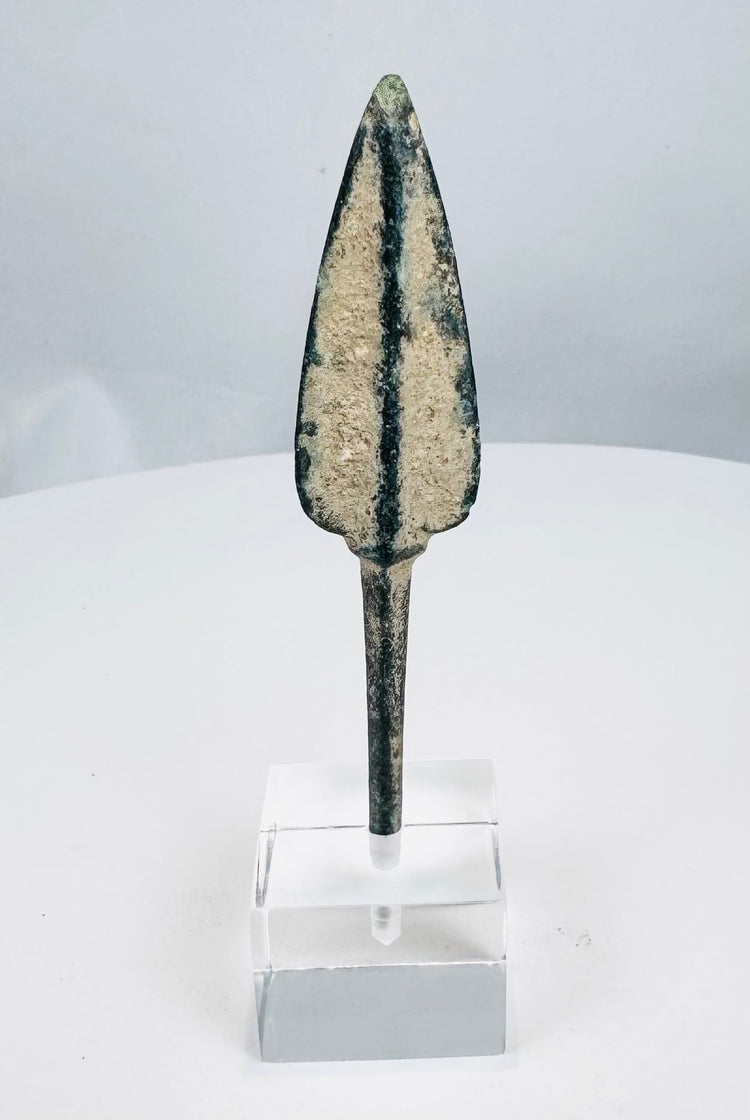
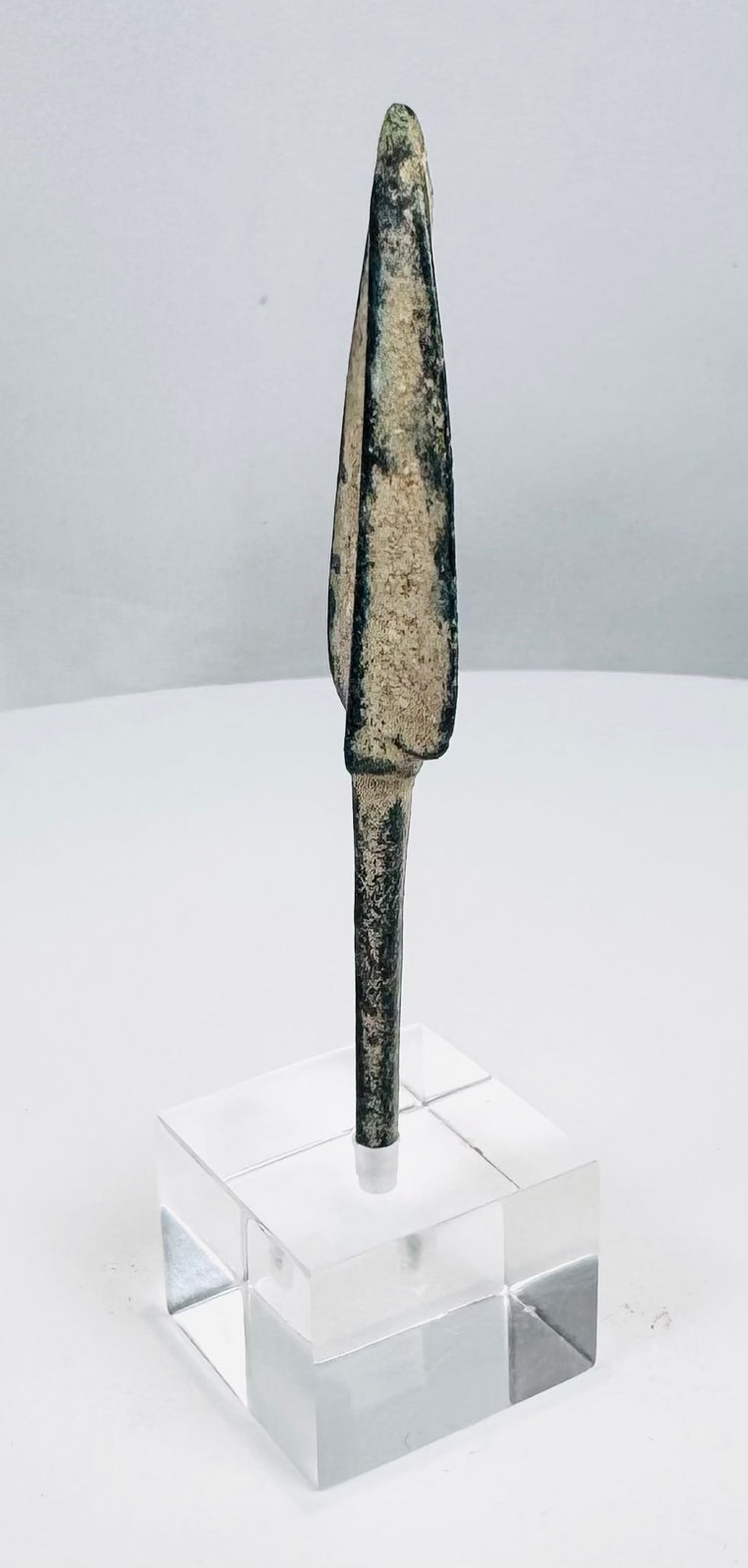
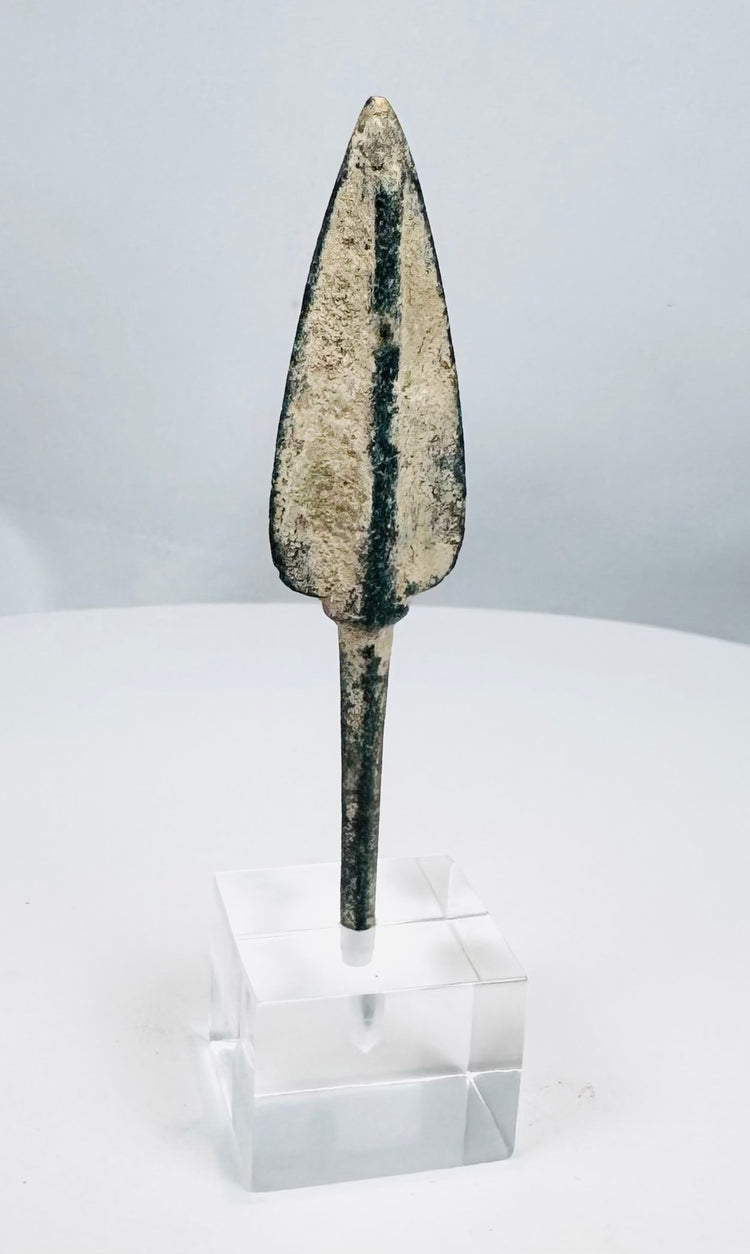
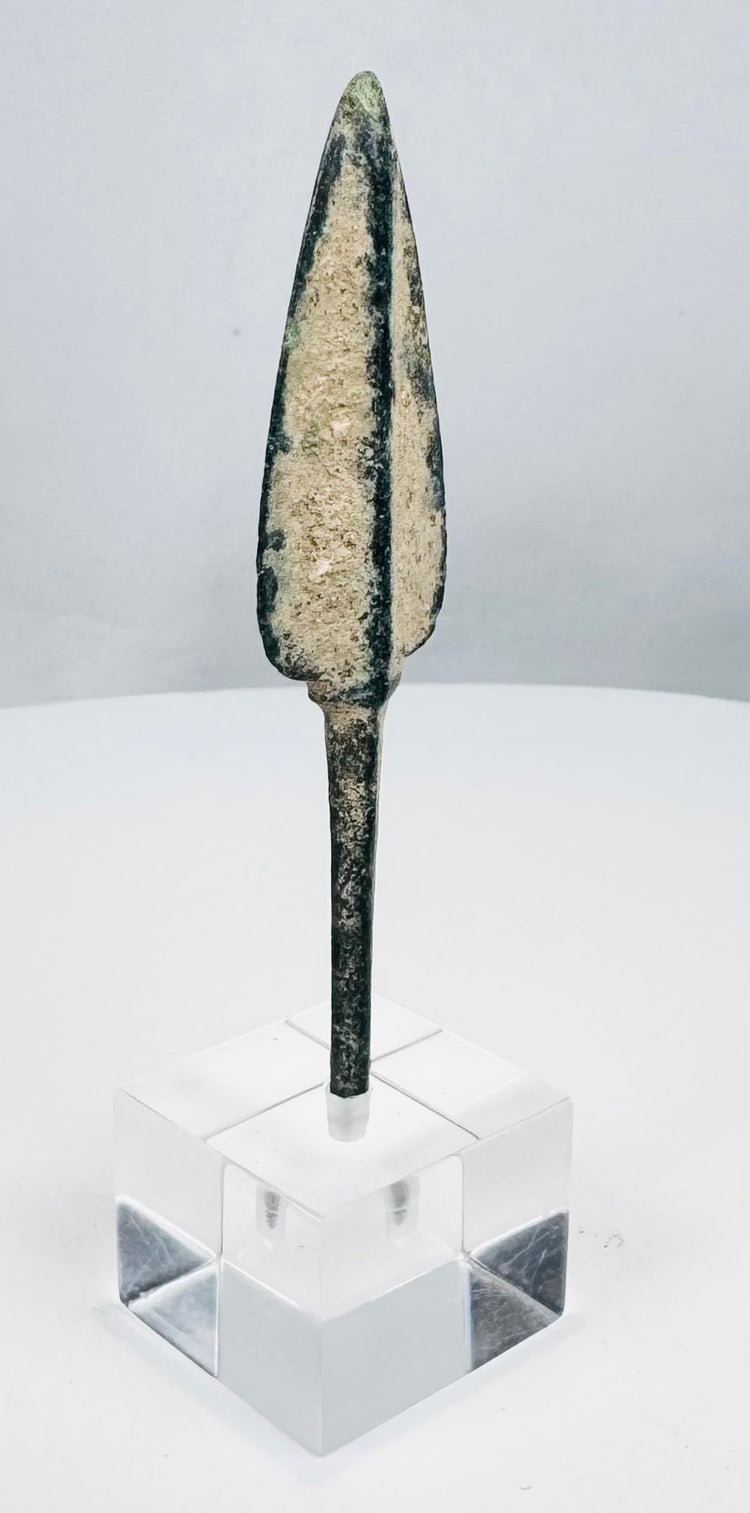
Ancient Persian Bronze Tanged Arrow Point | Late Bronze–Early Iron Age | Circa 1400 – 1000 BCE
Description
More
Less
Historical Context & Origin
Region: Western Asia, likely Iranian Plateau
Material: Cast bronze / copper alloy
Period: Late Bronze Age–Early Iron Age, circa 14th–10th Century BCE
Description
This ancient Western Asiatic bronze weapon point is a well-preserved tanged example dating broadly from the Late Bronze Age through the Early Iron Age.
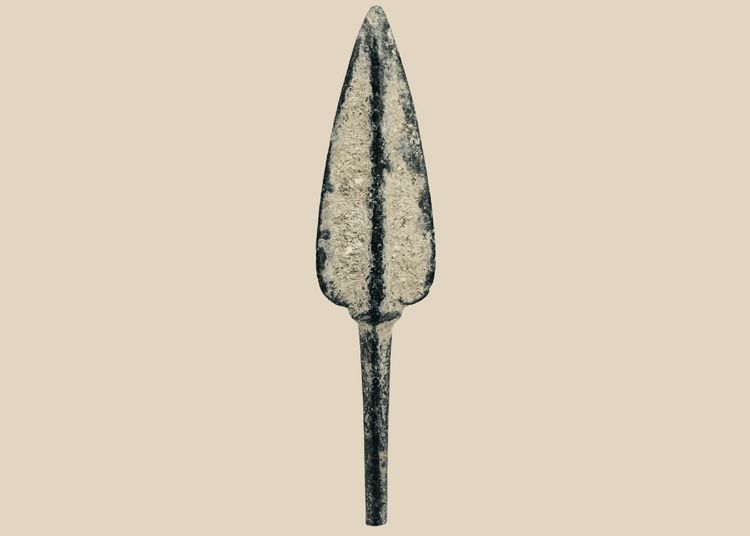
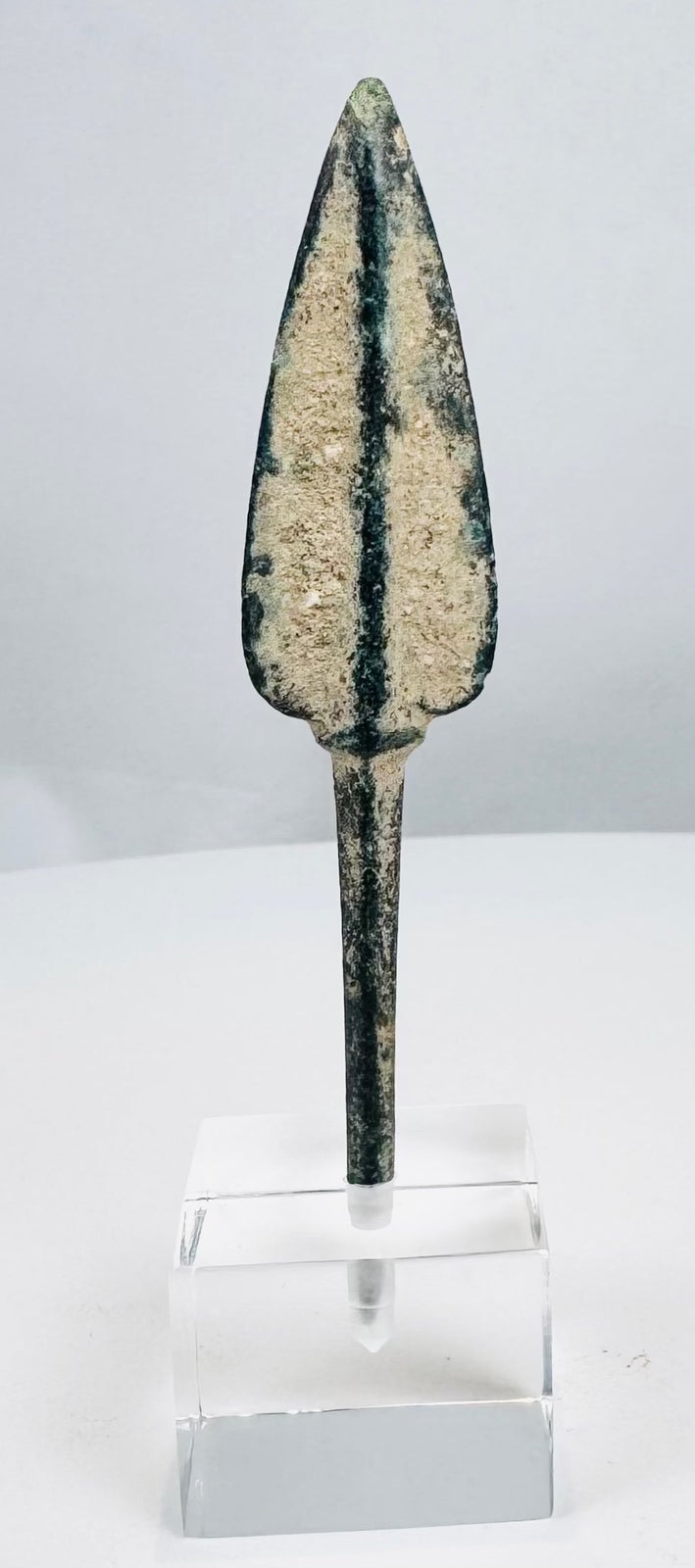
The blade is formed with an elongated lanceolate or leaf-shaped profile, broadest through the lower half before tapering evenly toward a rounded point. A pronounced raised central rib extends along the length of the blade, strengthening the point while reducing the amount of metal required during casting. The two blade faces slope outward from this central ridge, creating a reinforced profile capable of withstanding impact.
At the base, the blade narrows into a long rectangular tang. This would originally have been inserted into a prepared wooden shaft and secured with binding, natural adhesive, or a tight pressure fit. The extended tang remains unusually complete and provides clear evidence of the weapon’s original method of attachment.
The surface displays dark green and blue-green patination beneath extensive pale mineral deposits, producing a visually striking contrast that emphasizes the raised central rib and surviving blade edges. This natural surface alteration is consistent with the long-term burial and preservation of ancient copper-alloy objects.
Bronze projectile points of this general form were produced throughout Western Asia during the Bronze and Early Iron Ages. Similar tanged and ribbed points were used for hunting and warfare across the Iranian Plateau and neighbouring regions.
Features
- Cast from bronze or copper alloy
- Elongated lanceolate or leaf-shaped blade
- Pronounced raised central strengthening rib
- Long surviving rectangular attachment tang
- Possible heavy arrowhead, dart point, javelin head, or light spear point
- Green, blue-green, black, and pale mineral patination
- Substantially complete and well-balanced profile
- Mounted upright on a modern clear acrylic display base
Cultural Significance
Bronze projectile points were essential elements of hunting and military equipment throughout ancient Western Asia. Different blade forms were created according to the desired balance between penetration, cutting capacity, strength, and weight.
The pronounced central rib visible on this example reinforced the blade and helped prevent bending during impact. Its broad leaf-shaped profile provided a comparatively wide cutting surface, while the tapered point concentrated force at the moment of contact. The long tang allowed the metal head to be mounted securely onto a wooden shaft.
The object dates to a transitional period when bronze weapon-making traditions remained important even as iron became increasingly widespread. Bronze continued to be valued because it could be cast into strong, carefully controlled forms incorporating raised ribs, shoulders, and attachment elements.
Although commonly marketed as Persian bronze arrowheads, larger examples such as this can be difficult to distinguish confidently from dart, javelin, or light spear points without knowing the dimensions of the original shaft.
Condition
The weapon point remains in good archaeological condition and retains a strong overall profile. The surface exhibits extensive green and blue-green patination, pale mineral encrustation, pitting, discoloration, casting irregularities, edge wear, and localized surface losses consistent with ancient burial and long-term preservation.
The tip is slightly rounded from age and wear, while the blade edges display minor irregularities and localized losses. The raised central rib remains clearly defined on both faces. The long attachment tang is substantially intact and shows oxidation, surface deposits, and minor wear.
The object has been mounted upright on a modern clear acrylic display base.
Dimensions (Approximate)
Overall Height: 3.75 in
Age (Approximate)
3,025–3,425 years old
Provenance
Formerly part of a private London, United Kingdom collection assembled during the 1990s.
Learn More
View a related ancient bronze projectile point in the collection of The Metropolitan Museum of Art
Explore our curated Collection of Arms, Armour & Historical Weaponry
Description
Historical Context & Origin
Region: Western Asia, likely Iranian Plateau
Material: Cast bronze / copper alloy
Period: Late Bronze Age–Early Iron Age, circa 14th–10th Century BCE
Description
This ancient Western Asiatic bronze weapon point is a well-preserved tanged example dating broadly from the Late Bronze Age through the Early Iron Age.
The blade is formed with an elongated lanceolate or leaf-shaped profile, broadest through the lower half before tapering evenly toward a rounded point. A pronounced raised central rib extends along the length of the blade, strengthening the point while reducing the amount of metal required during casting. The two blade faces slope outward from this central ridge, creating a reinforced profile capable of withstanding impact.
At the base, the blade narrows into a long rectangular tang. This would originally have been inserted into a prepared wooden shaft and secured with binding, natural adhesive, or a tight pressure fit. The extended tang remains unusually complete and provides clear evidence of the weapon’s original method of attachment.
The surface displays dark green and blue-green patination beneath extensive pale mineral deposits, producing a visually striking contrast that emphasizes the raised central rib and surviving blade edges. This natural surface alteration is consistent with the long-term burial and preservation of ancient copper-alloy objects.
Bronze projectile points of this general form were produced throughout Western Asia during the Bronze and Early Iron Ages. Similar tanged and ribbed points were used for hunting and warfare across the Iranian Plateau and neighbouring regions.
Features
- Cast from bronze or copper alloy
- Elongated lanceolate or leaf-shaped blade
- Pronounced raised central strengthening rib
- Long surviving rectangular attachment tang
- Possible heavy arrowhead, dart point, javelin head, or light spear point
- Green, blue-green, black, and pale mineral patination
- Substantially complete and well-balanced profile
- Mounted upright on a modern clear acrylic display base
Cultural Significance
Bronze projectile points were essential elements of hunting and military equipment throughout ancient Western Asia. Different blade forms were created according to the desired balance between penetration, cutting capacity, strength, and weight.
The pronounced central rib visible on this example reinforced the blade and helped prevent bending during impact. Its broad leaf-shaped profile provided a comparatively wide cutting surface, while the tapered point concentrated force at the moment of contact. The long tang allowed the metal head to be mounted securely onto a wooden shaft.
The object dates to a transitional period when bronze weapon-making traditions remained important even as iron became increasingly widespread. Bronze continued to be valued because it could be cast into strong, carefully controlled forms incorporating raised ribs, shoulders, and attachment elements.
Although commonly marketed as Persian bronze arrowheads, larger examples such as this can be difficult to distinguish confidently from dart, javelin, or light spear points without knowing the dimensions of the original shaft.
Condition
The weapon point remains in good archaeological condition and retains a strong overall profile. The surface exhibits extensive green and blue-green patination, pale mineral encrustation, pitting, discoloration, casting irregularities, edge wear, and localized surface losses consistent with ancient burial and long-term preservation.
The tip is slightly rounded from age and wear, while the blade edges display minor irregularities and localized losses. The raised central rib remains clearly defined on both faces. The long attachment tang is substantially intact and shows oxidation, surface deposits, and minor wear.
The object has been mounted upright on a modern clear acrylic display base.
Dimensions (Approximate)
Overall Height: 3.75 in
Age (Approximate)
3,025–3,425 years old
Provenance
Formerly part of a private London, United Kingdom collection assembled during the 1990s.
Learn More
View a related ancient bronze projectile point in the collection of The Metropolitan Museum of Art
Explore our curated Collection of Arms, Armour & Historical Weaponry
You May Also Like
