

Ancient Roman–Byzantine Bronze Finger Ring | Broad Circular Bezel | Eastern Mediterranean | Circa 1st–8th Century CE
Couldn't load pickup availability





Ancient Roman–Byzantine Bronze Finger Ring | Broad Circular Bezel | Eastern Mediterranean | Circa 1st–8th Century CE
Description
More
Less
Historical Context & Origin
Region: Eastern Mediterranean
Material: Bronze
Period: Roman to Early Byzantine Period, circa 1st–8th century CE
Description
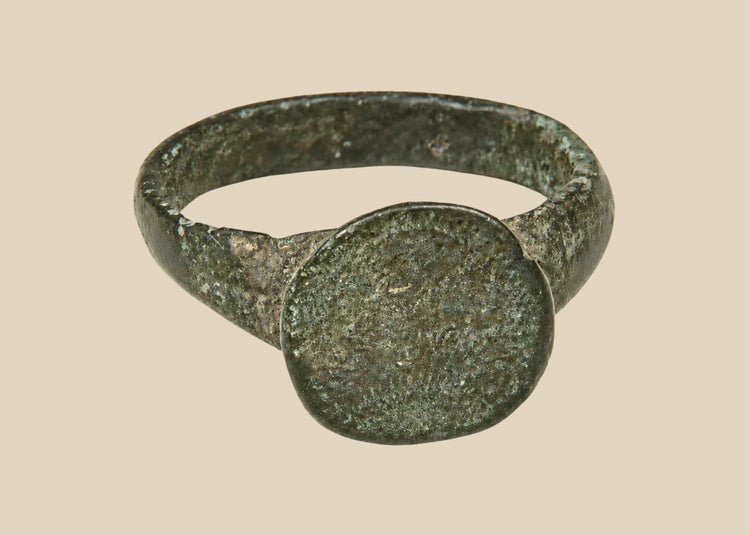
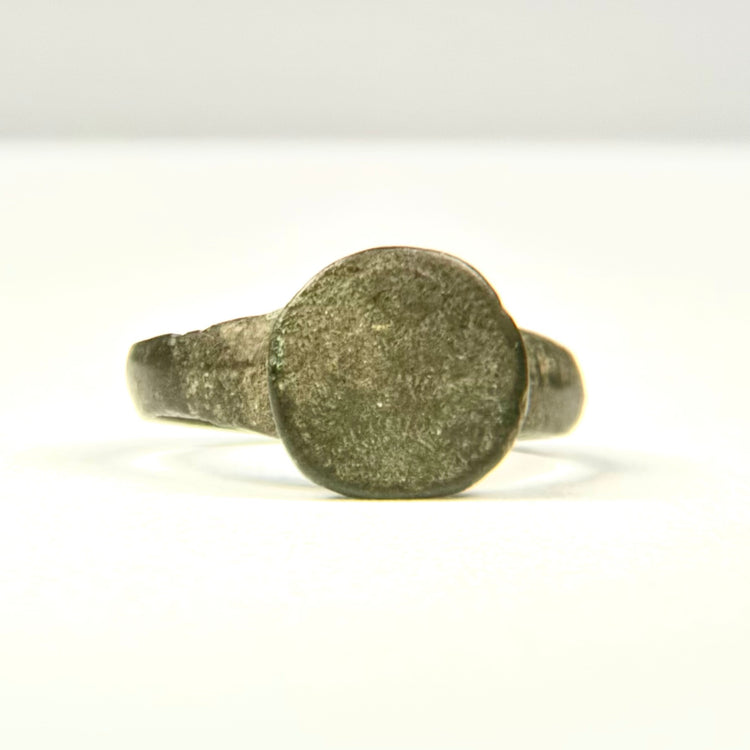
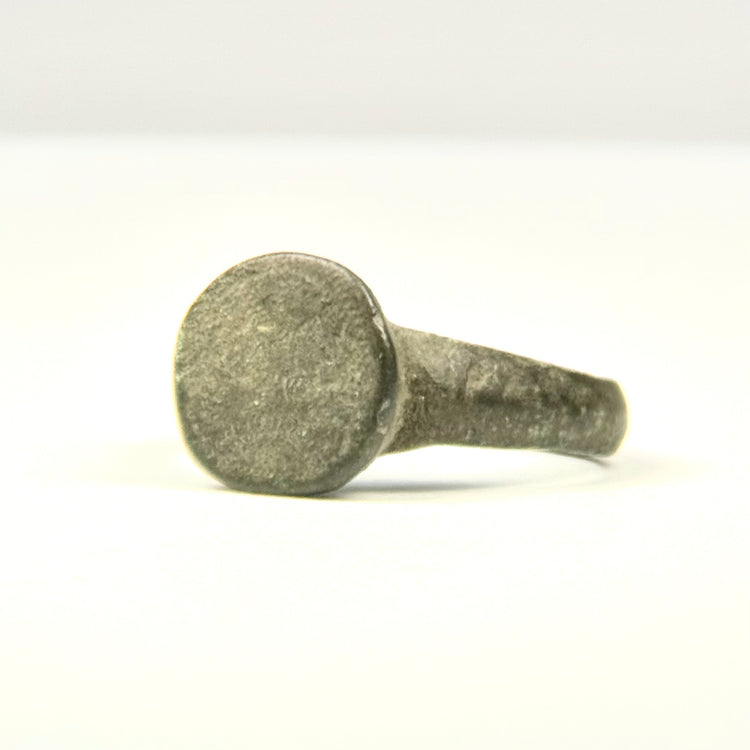
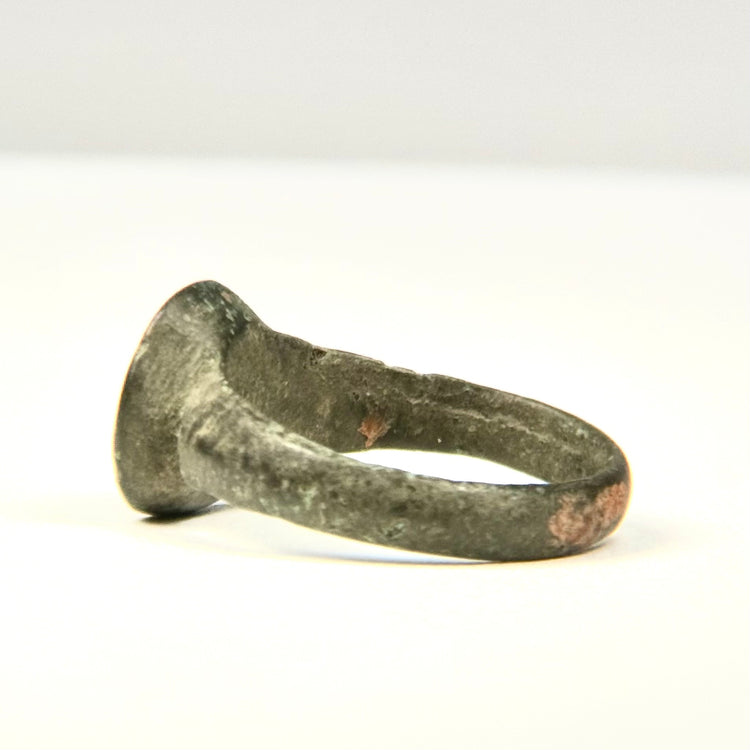
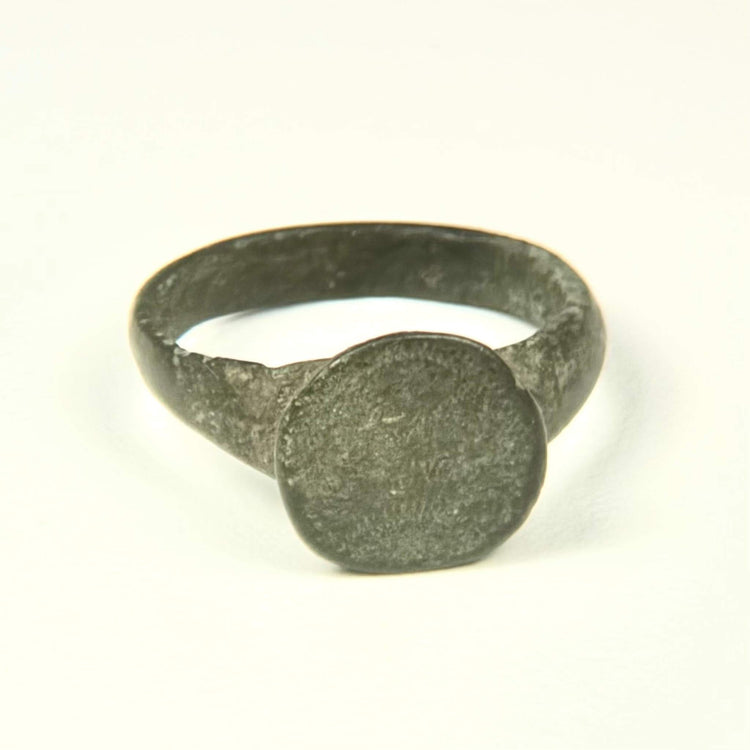
An ancient bronze finger ring dating to the Roman through Early Byzantine period, characterized by a substantial hoop, expanding shoulders, and a prominent broad circular bezel.
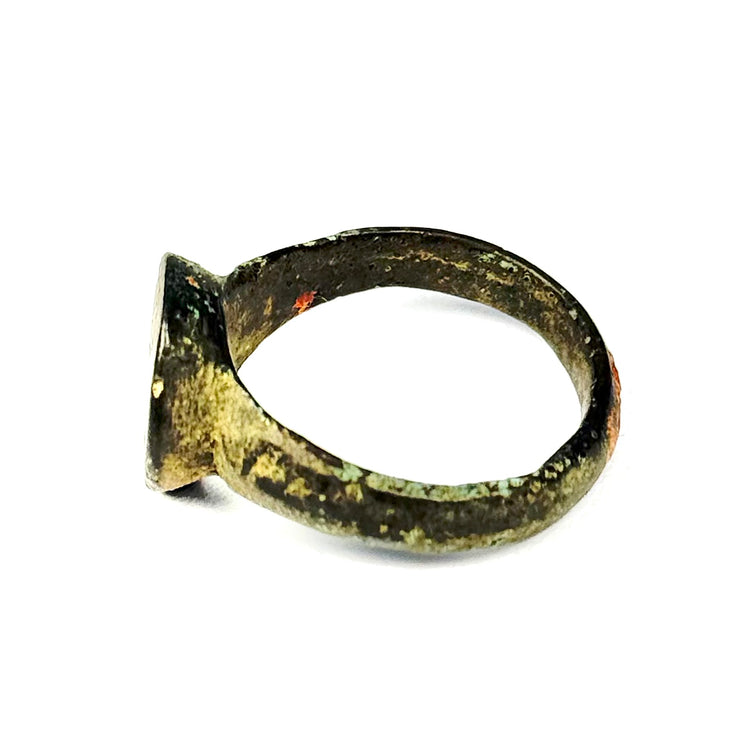
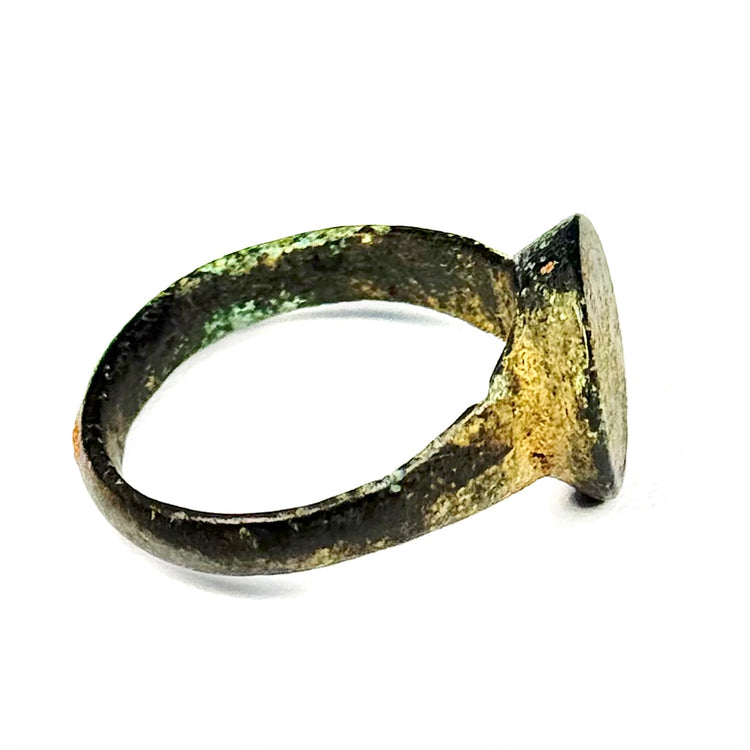
The ring is formed from solid cast bronze, with the band gradually widening toward the shoulders before joining the raised, nearly circular bezel. The bezel presents a broad, relatively flat surface characteristic of signet-style ring forms used throughout the Roman and Byzantine worlds. Its surface is now heavily worn, and no clearly identifiable engraved motif, inscription, monogram, or figural device remains visible.
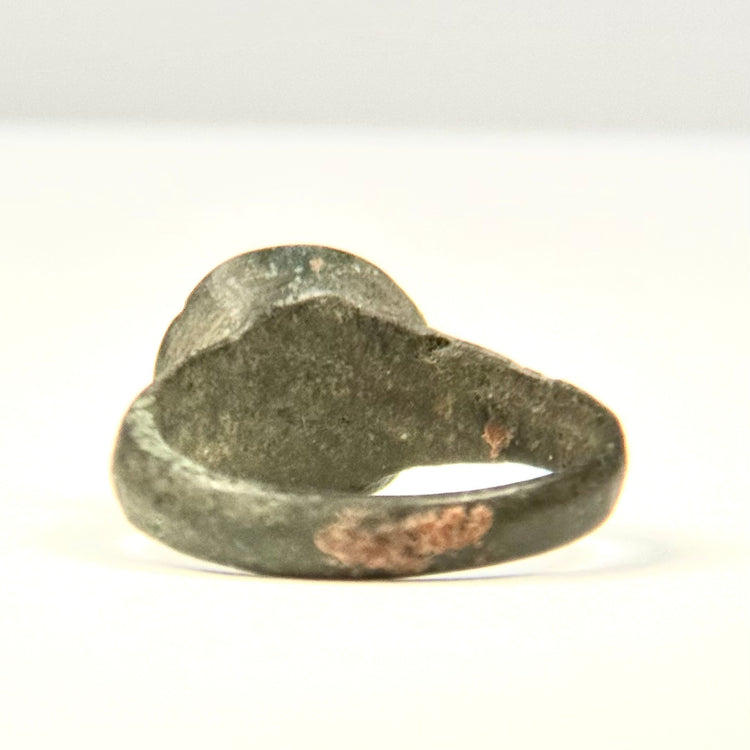
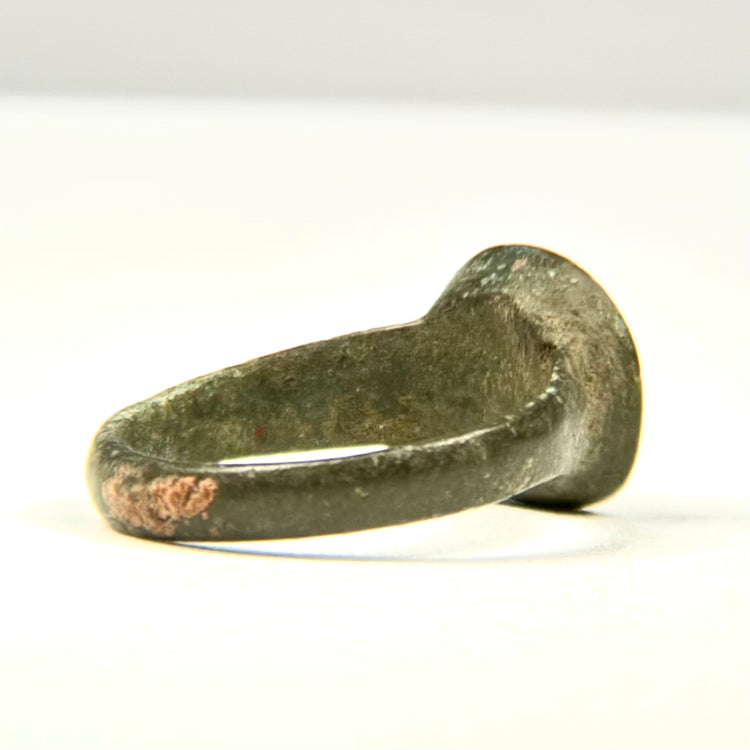
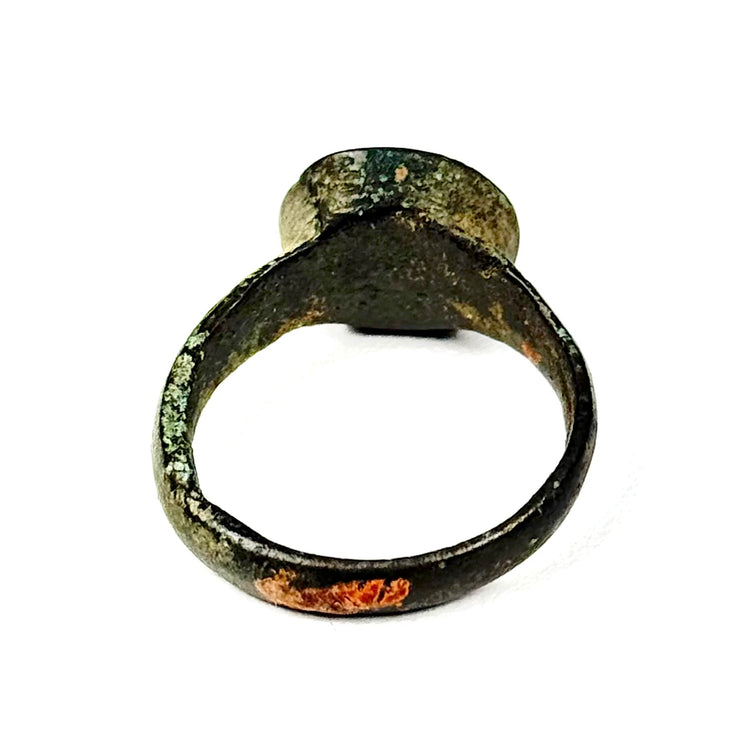
The hoop narrows toward the rear and retains a slightly irregular, hand-finished profile. Across the surface is a naturally developed dark olive-green and brown patina, accompanied by lighter mineral deposits and localized reddish-brown oxidation. These variations are particularly visible along the band and are consistent with prolonged age and archaeological preservation.
Broad-bezel bronze rings were worn throughout the Roman Mediterranean and continued into Late Antiquity and the Byzantine period. Depending on their decoration, such rings could function as personal jewellery, identity markers, symbolic objects, or signets. In this example, the extensive wear to the bezel prevents a secure interpretation of any original decoration or specific function.
Features
- Broad circular-to-subcircular bezel
- Signet-style form with expanding shoulders
- Solid cast bronze construction
- Hoop gradually narrows toward the rear
- Broad, flat bezel surface with extensive age-related wear
- Dark olive-green and brown naturally developed patina
- Areas of mineral deposition and localized reddish-brown oxidation
Cultural Significance
Finger rings were among the most personal forms of adornment in the Roman and Byzantine worlds. They were worn by people across a wide range of social backgrounds and could serve decorative, symbolic, religious, administrative, or practical purposes.
Rings with broad bezels were particularly suitable for engraved names, monograms, religious imagery, geometric devices, portraits, and personal symbols. Some were also engraved in reverse for use as seals. Although the original surface treatment of this example can no longer be identified with certainty, its form illustrates the continuity of bronze ring traditions from the Roman Imperial period through Late Antiquity and into the Byzantine world.
Condition
Good ancient condition consistent with considerable age and use. The ring remains intact overall and retains its complete hoop and prominent bezel. The bronze displays extensive natural patination, surface abrasion, pitting, mineral deposits, softened edges, and localized reddish-brown oxidation. The bezel face is heavily worn and does not preserve a clearly legible design. Minor irregularity and age-related deformation are visible throughout the hoop.
Dimensions (Approximate)
Ring Size: US 8
Age (Approximate)
1,200–2,000 years old
Provenance
Acquired in London during the 1970s. The artifact later entered the collection of Dr. Arnold Saslow, a noted numismatist and antiquarian who handled ancient coins, antiquities, and other historic objects over several decades, and was associated with Ye Olde Curiosity Shoppe in New Jersey. It was subsequently handled by Artemis Fine Arts, a U.S.-based gallery specializing in ancient, Classical, Pre-Columbian, and ethnographic art.
Learn More
Explore a related Early Byzantine bronze signet ring in the collection of the British Museum
Browse our collection of Ancient Rings & Jewelry
Description
Historical Context & Origin
Region: Eastern Mediterranean
Material: Bronze
Period: Roman to Early Byzantine Period, circa 1st–8th century CE
Description
An ancient bronze finger ring dating to the Roman through Early Byzantine period, characterized by a substantial hoop, expanding shoulders, and a prominent broad circular bezel.
The ring is formed from solid cast bronze, with the band gradually widening toward the shoulders before joining the raised, nearly circular bezel. The bezel presents a broad, relatively flat surface characteristic of signet-style ring forms used throughout the Roman and Byzantine worlds. Its surface is now heavily worn, and no clearly identifiable engraved motif, inscription, monogram, or figural device remains visible.
The hoop narrows toward the rear and retains a slightly irregular, hand-finished profile. Across the surface is a naturally developed dark olive-green and brown patina, accompanied by lighter mineral deposits and localized reddish-brown oxidation. These variations are particularly visible along the band and are consistent with prolonged age and archaeological preservation.
Broad-bezel bronze rings were worn throughout the Roman Mediterranean and continued into Late Antiquity and the Byzantine period. Depending on their decoration, such rings could function as personal jewellery, identity markers, symbolic objects, or signets. In this example, the extensive wear to the bezel prevents a secure interpretation of any original decoration or specific function.
Features
- Broad circular-to-subcircular bezel
- Signet-style form with expanding shoulders
- Solid cast bronze construction
- Hoop gradually narrows toward the rear
- Broad, flat bezel surface with extensive age-related wear
- Dark olive-green and brown naturally developed patina
- Areas of mineral deposition and localized reddish-brown oxidation
Cultural Significance
Finger rings were among the most personal forms of adornment in the Roman and Byzantine worlds. They were worn by people across a wide range of social backgrounds and could serve decorative, symbolic, religious, administrative, or practical purposes.
Rings with broad bezels were particularly suitable for engraved names, monograms, religious imagery, geometric devices, portraits, and personal symbols. Some were also engraved in reverse for use as seals. Although the original surface treatment of this example can no longer be identified with certainty, its form illustrates the continuity of bronze ring traditions from the Roman Imperial period through Late Antiquity and into the Byzantine world.
Condition
Good ancient condition consistent with considerable age and use. The ring remains intact overall and retains its complete hoop and prominent bezel. The bronze displays extensive natural patination, surface abrasion, pitting, mineral deposits, softened edges, and localized reddish-brown oxidation. The bezel face is heavily worn and does not preserve a clearly legible design. Minor irregularity and age-related deformation are visible throughout the hoop.
Dimensions (Approximate)
Ring Size: US 8
Age (Approximate)
1,200–2,000 years old
Provenance
Acquired in London during the 1970s. The artifact later entered the collection of Dr. Arnold Saslow, a noted numismatist and antiquarian who handled ancient coins, antiquities, and other historic objects over several decades, and was associated with Ye Olde Curiosity Shoppe in New Jersey. It was subsequently handled by Artemis Fine Arts, a U.S.-based gallery specializing in ancient, Classical, Pre-Columbian, and ethnographic art.
Learn More
Explore a related Early Byzantine bronze signet ring in the collection of the British Museum
Browse our collection of Ancient Rings & Jewelry
You May Also Like
