

Ancient Roman Glass Bracelet with Applied Nodular Decoration | Circa 2nd–4th Century AD
Couldn't load pickup availability


Ancient Roman Glass Bracelet with Applied Nodular Decoration | Circa 2nd–4th Century AD
Description
More
Less
Historical Context & Origin
Region: Roman Empire
Material: Glass
Period: Roman Imperial Period, Circa 2nd–4th Century AD
Description
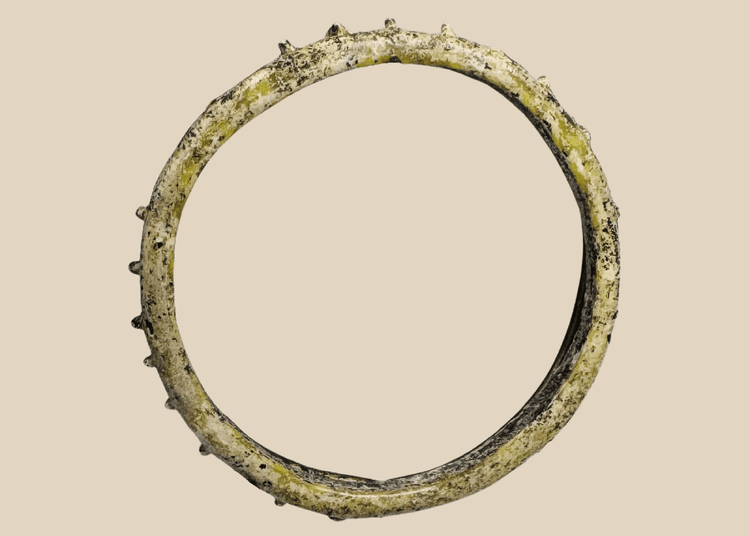
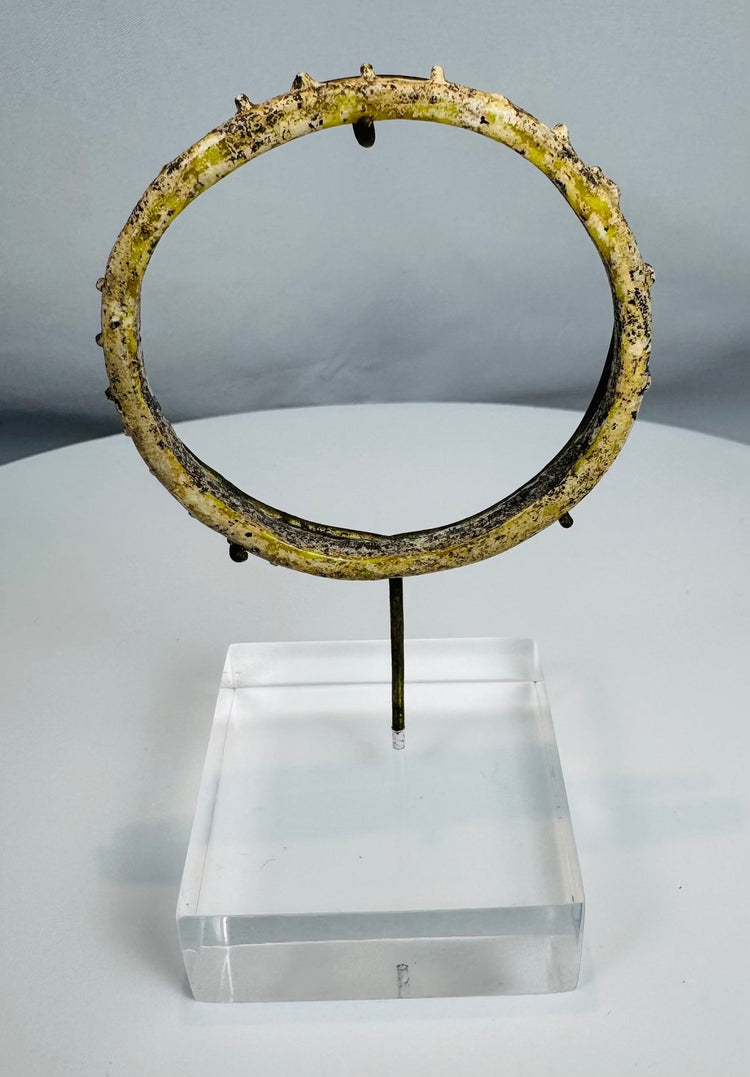
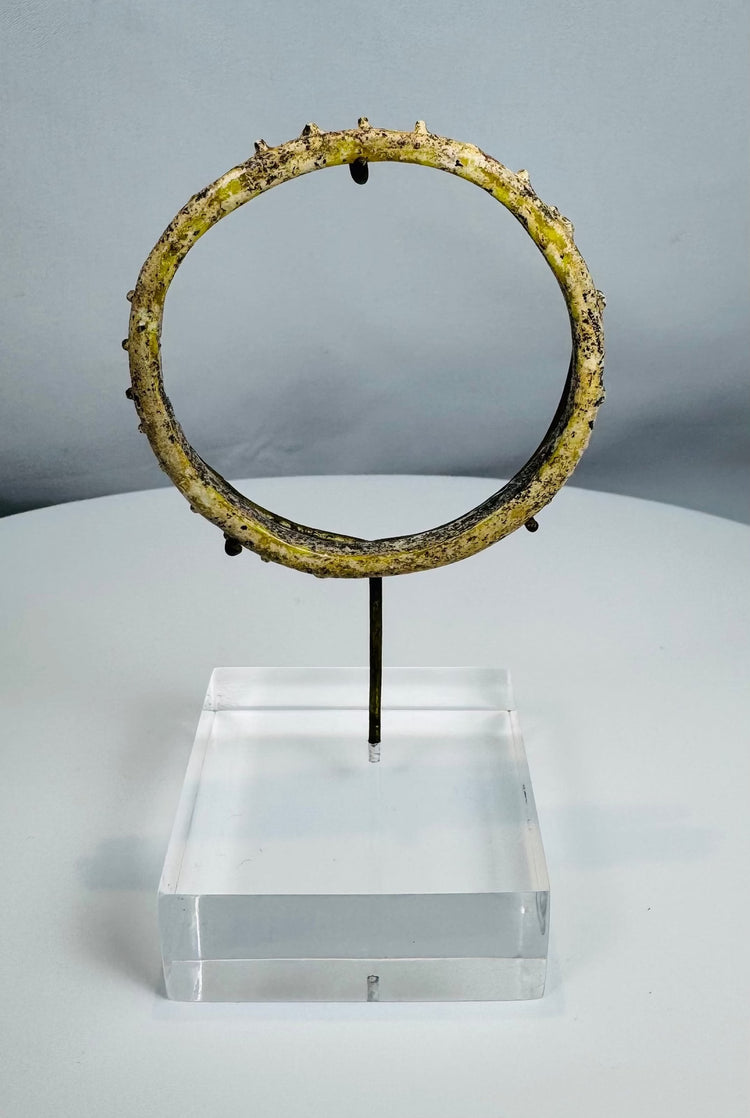
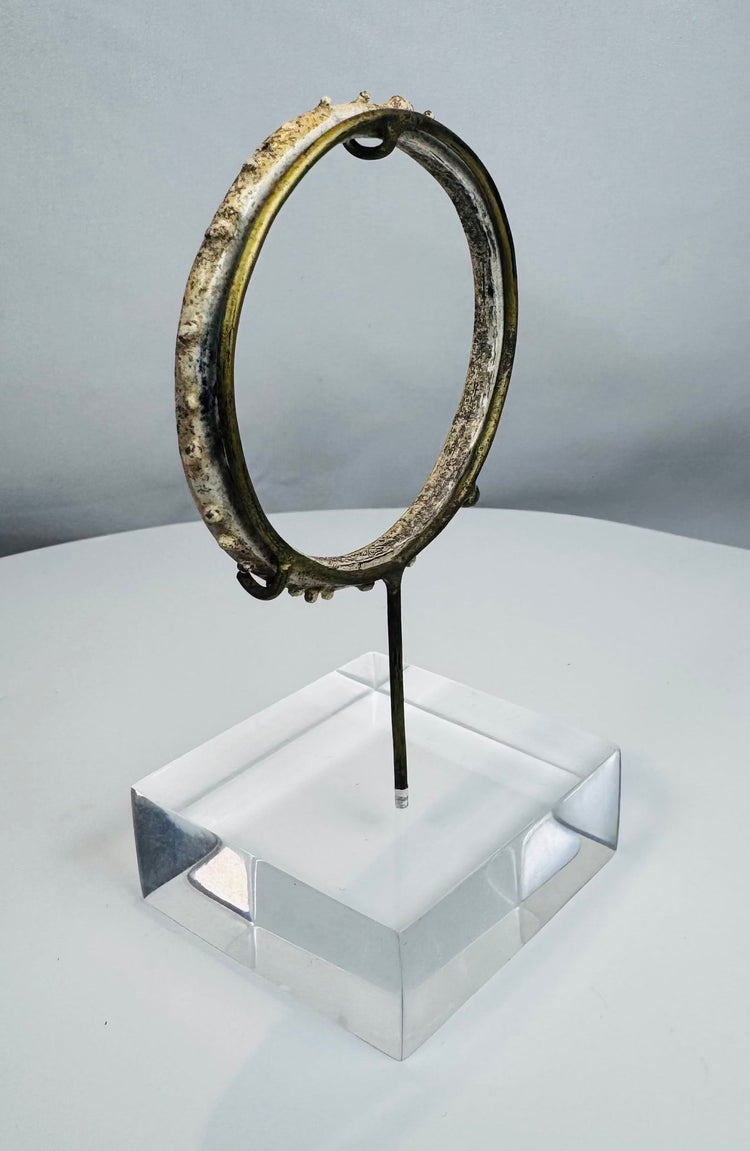
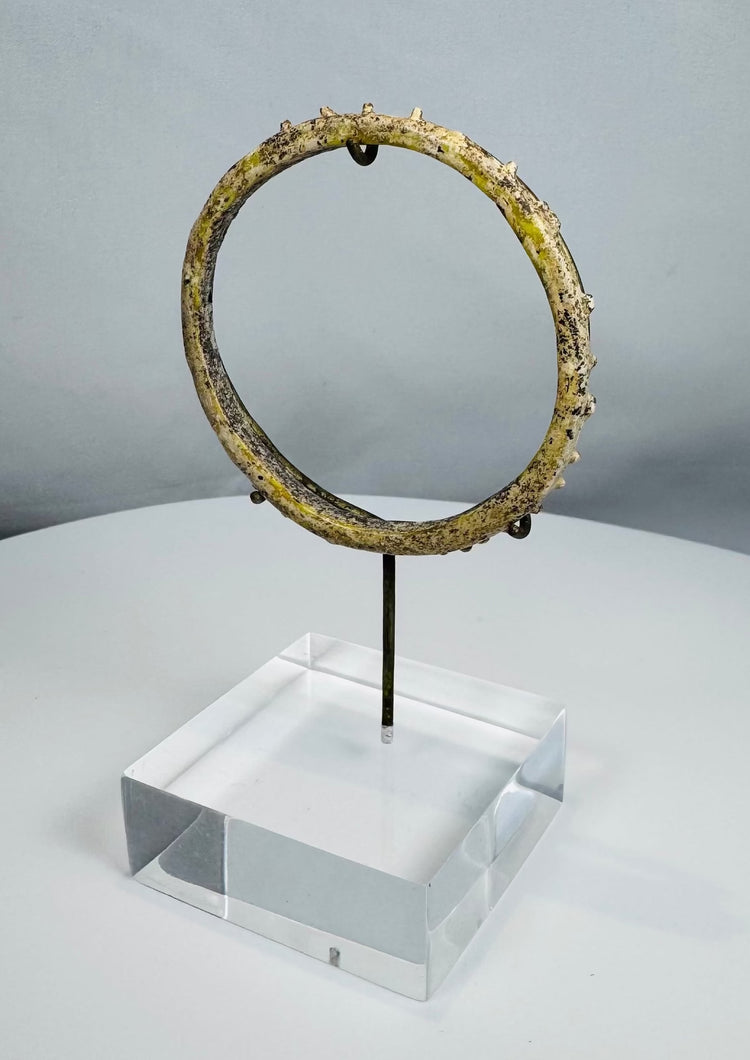
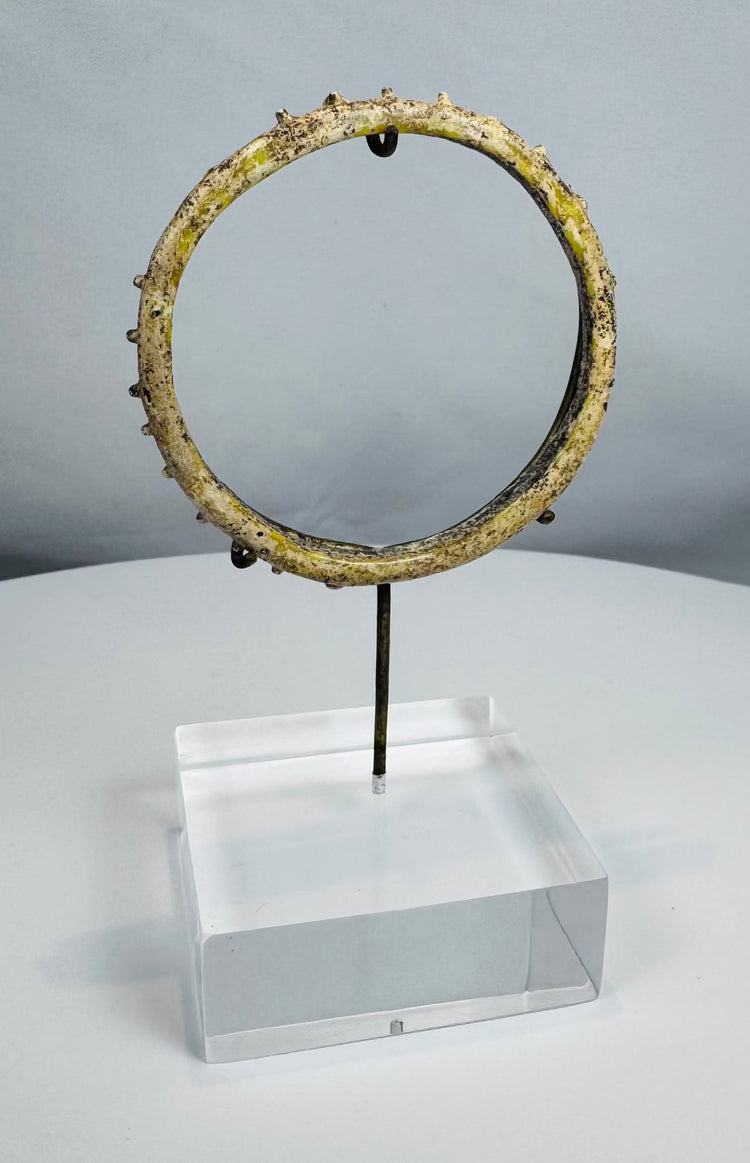
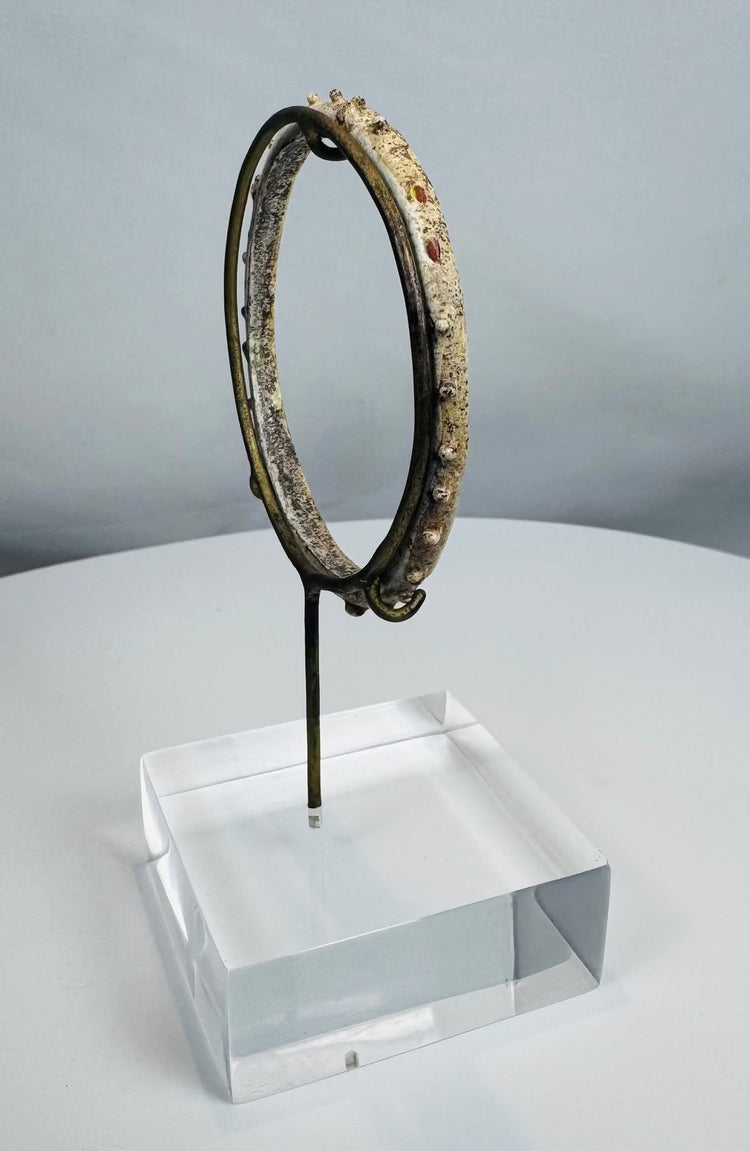
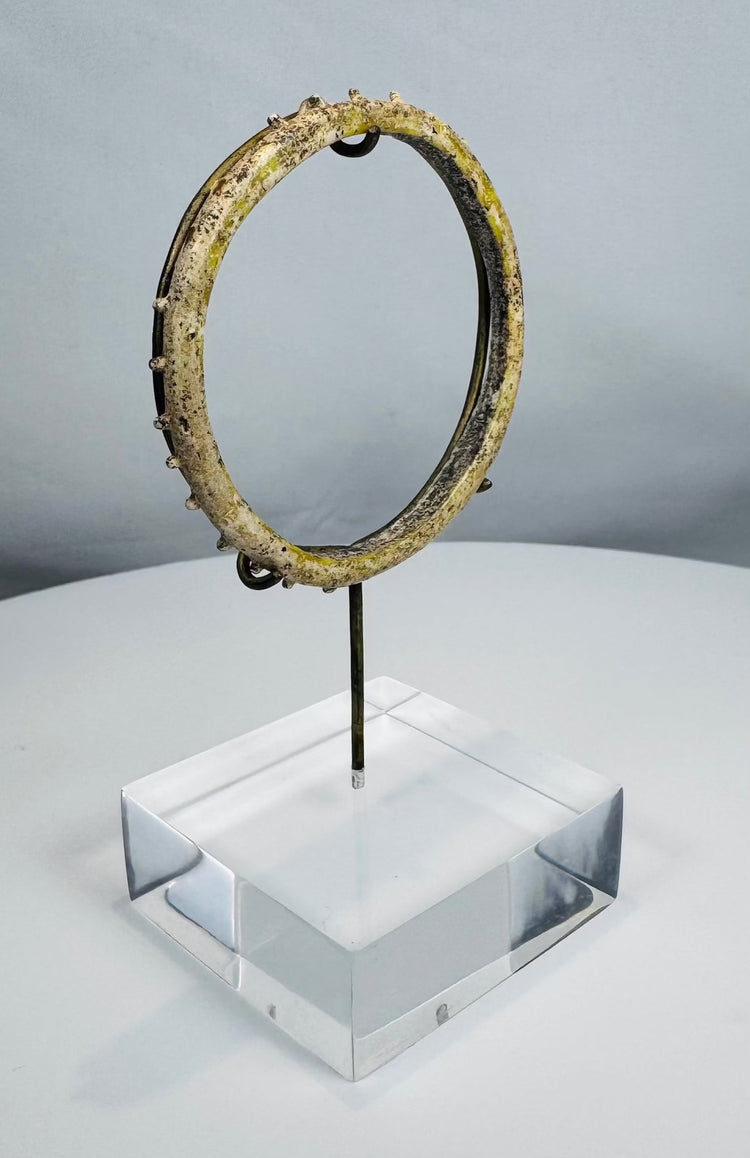
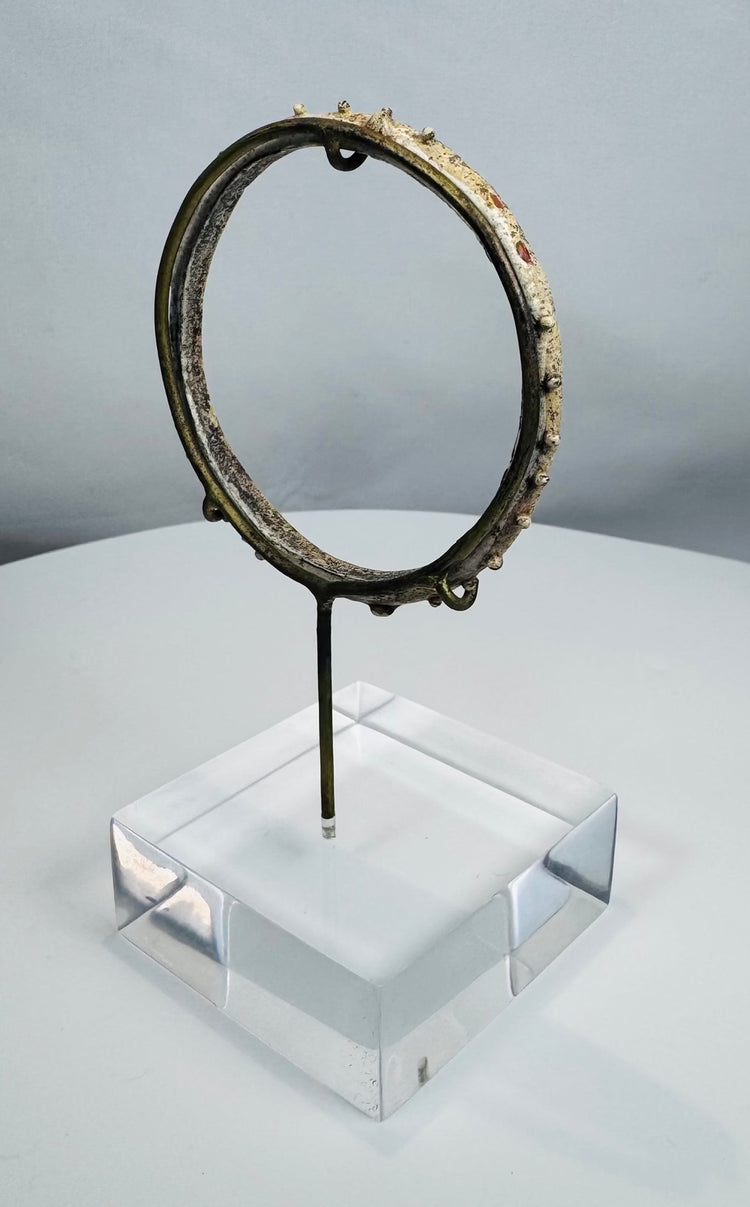
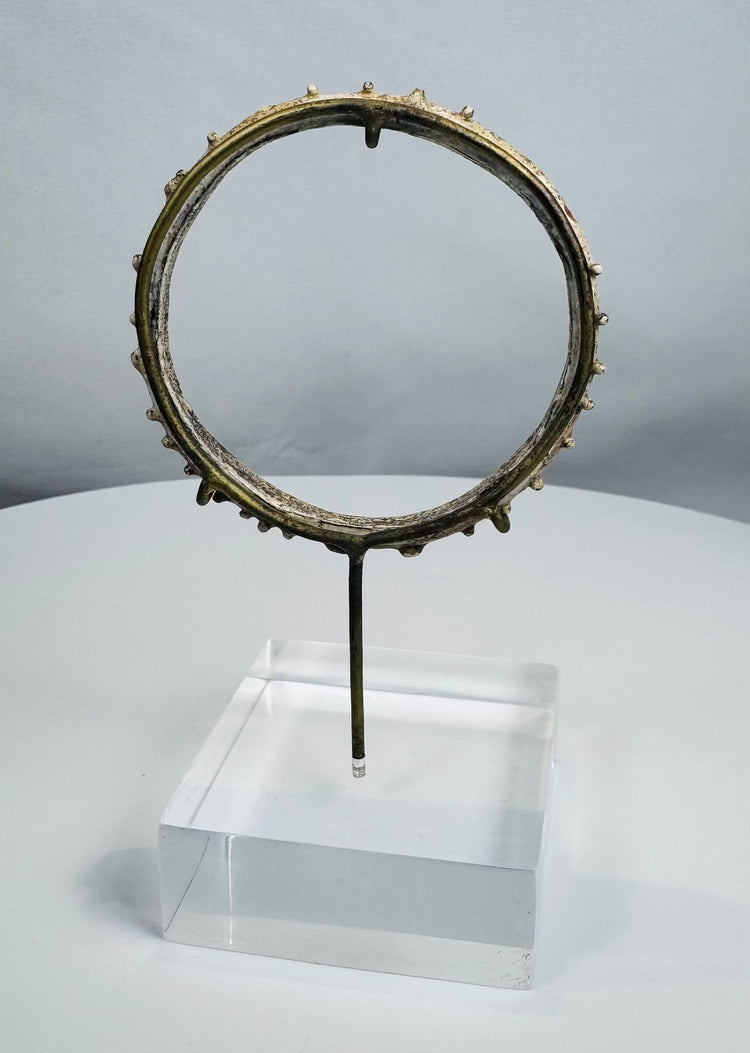
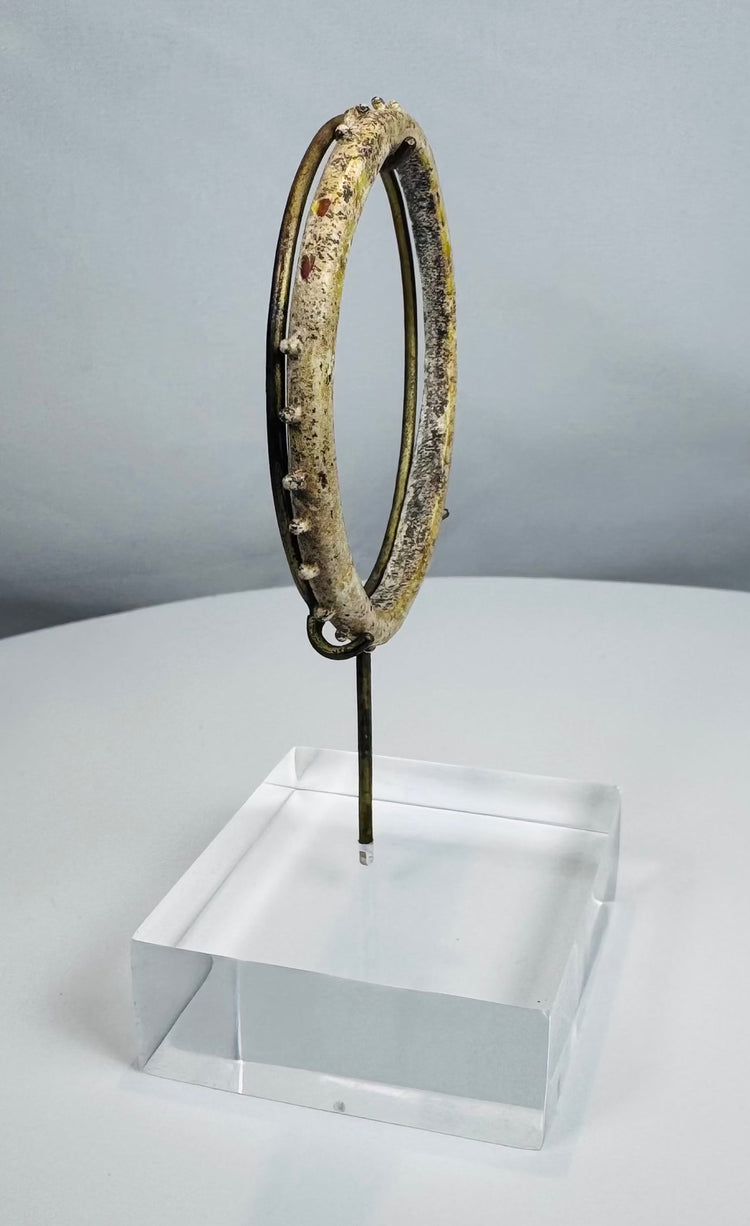
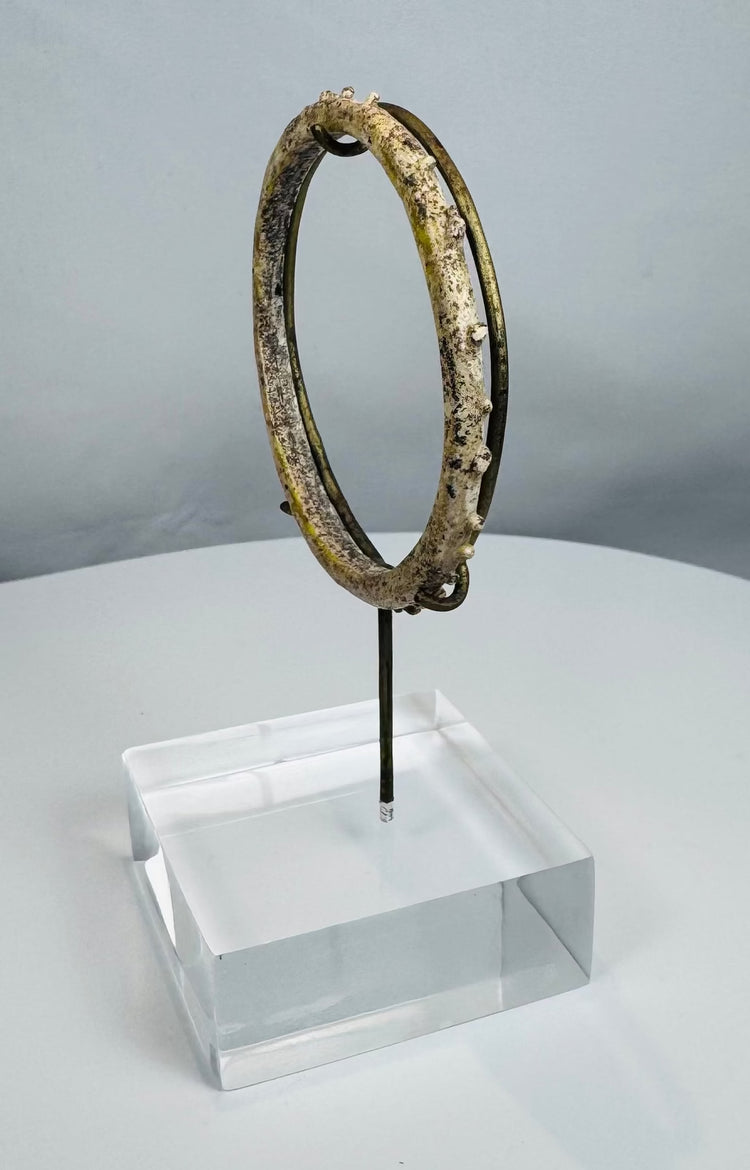
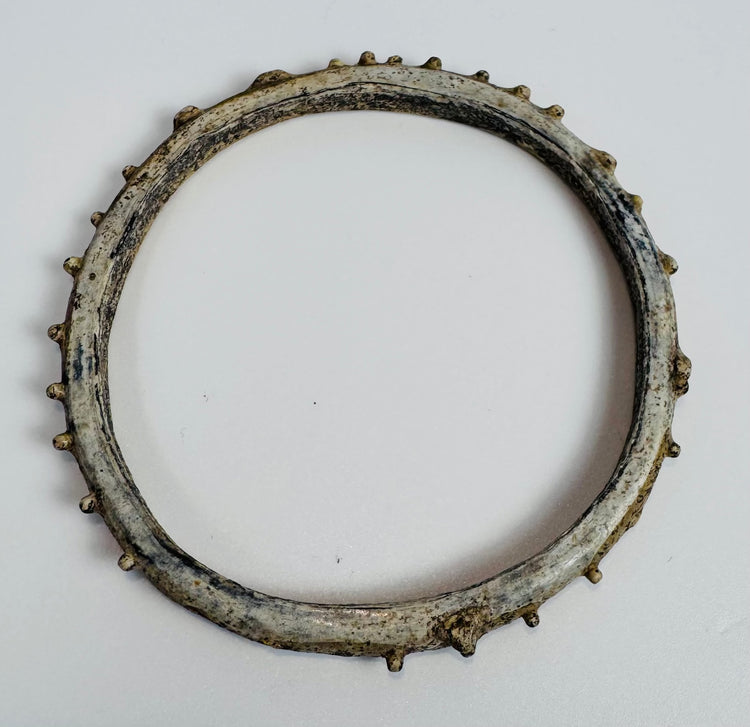
This authentic ancient Roman glass bracelet is a remarkable example of personal adornment from the Roman Imperial period. Formed from a circular band of glass and decorated with regularly spaced applied nodules around the exterior circumference, the bracelet demonstrates the skill and artistry of Roman glassworkers who transformed a practical material into fashionable jewelry.
Roman glass bracelets were typically produced by drawing heated glass into rods and shaping them into circular forms while still malleable. Decorative applied nodules were added separately, creating a distinctive ornamental effect that was particularly popular throughout the eastern provinces of the Roman Empire and across the wider Mediterranean world.
Glass bracelets were widely worn by both adults and children and are frequently recovered from domestic settlements, urban centers, and burial contexts. They provided an attractive and affordable alternative to precious metal jewelry while reflecting contemporary fashions and personal identity.
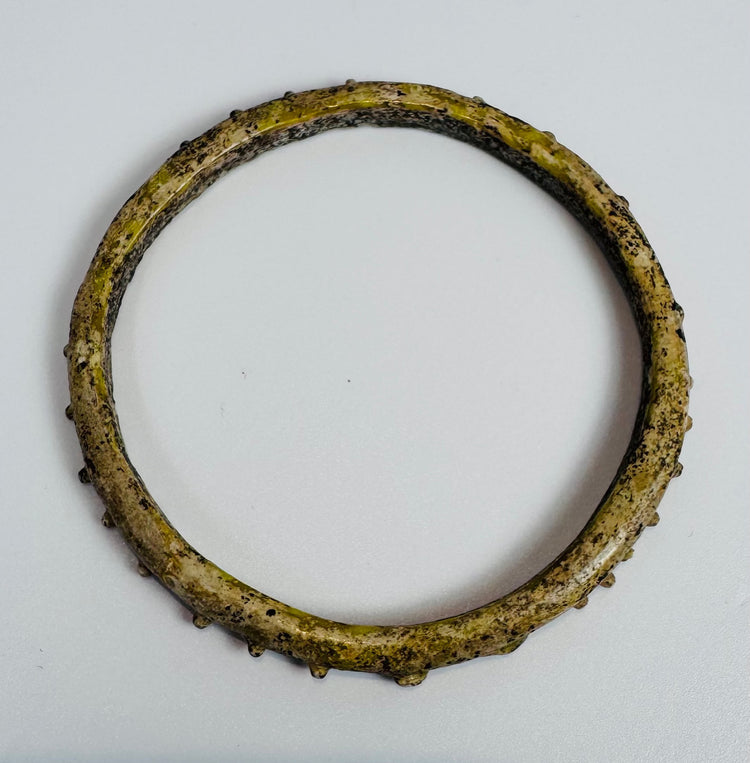
The bracelet displays attractive archaeological weathering, mineral accretions, and surface iridescence developed during centuries of burial. These natural deposits create a visually striking appearance while attesting to the artifact's considerable antiquity. Complete examples of ancient Roman glass bracelets are increasingly difficult to obtain, as many survive only in fragmentary condition due to the fragile nature of ancient glass.
Features
- Authentic ancient Roman glass bracelet
- Decorated with applied nodular ornamentation
- Complete circular form
- Attractive archaeological weathering and mineral deposits
- Exhibits desirable ancient glass iridescence and patination
- Produced using traditional Roman glassworking techniques
- Fine example of Roman personal adornment
- Suitable for collections of ancient jewelry, Roman antiquities, and archaeological glass
Cultural Significance
Jewelry played an important role in Roman society, serving as both personal adornment and a reflection of status, identity, and cultural expression. Glass bracelets were worn throughout the empire and demonstrate the widespread availability of glass as both a functional and decorative material. Surviving examples provide valuable insight into ancient craftsmanship, trade networks, and everyday life across the Roman world.
Condition
Ancient condition with expected archaeological weathering, mineral accretions, surface encrustation, iridescence, and age-related wear. Preserved in a complete circular form and remains highly displayable. Please review photographs carefully for condition details.
Dimensions (Approximate)
Bracelet Diameter: 2.5 in
Overall Height with Stand: 5 in
Age (Approximate)
1,600–1,800 years old
Provenance
From a private collection in Vero Beach, Florida, USA, specializing in antique and historic jewelry.
Learn More
Explore Roman glass craftsmanship through the collection of the Metropolitan Museum of Art
Description
Historical Context & Origin
Region: Roman Empire
Material: Glass
Period: Roman Imperial Period, Circa 2nd–4th Century AD
Description
This authentic ancient Roman glass bracelet is a remarkable example of personal adornment from the Roman Imperial period. Formed from a circular band of glass and decorated with regularly spaced applied nodules around the exterior circumference, the bracelet demonstrates the skill and artistry of Roman glassworkers who transformed a practical material into fashionable jewelry.
Roman glass bracelets were typically produced by drawing heated glass into rods and shaping them into circular forms while still malleable. Decorative applied nodules were added separately, creating a distinctive ornamental effect that was particularly popular throughout the eastern provinces of the Roman Empire and across the wider Mediterranean world.
Glass bracelets were widely worn by both adults and children and are frequently recovered from domestic settlements, urban centers, and burial contexts. They provided an attractive and affordable alternative to precious metal jewelry while reflecting contemporary fashions and personal identity.
The bracelet displays attractive archaeological weathering, mineral accretions, and surface iridescence developed during centuries of burial. These natural deposits create a visually striking appearance while attesting to the artifact's considerable antiquity. Complete examples of ancient Roman glass bracelets are increasingly difficult to obtain, as many survive only in fragmentary condition due to the fragile nature of ancient glass.
Features
- Authentic ancient Roman glass bracelet
- Decorated with applied nodular ornamentation
- Complete circular form
- Attractive archaeological weathering and mineral deposits
- Exhibits desirable ancient glass iridescence and patination
- Produced using traditional Roman glassworking techniques
- Fine example of Roman personal adornment
- Suitable for collections of ancient jewelry, Roman antiquities, and archaeological glass
Cultural Significance
Jewelry played an important role in Roman society, serving as both personal adornment and a reflection of status, identity, and cultural expression. Glass bracelets were worn throughout the empire and demonstrate the widespread availability of glass as both a functional and decorative material. Surviving examples provide valuable insight into ancient craftsmanship, trade networks, and everyday life across the Roman world.
Condition
Ancient condition with expected archaeological weathering, mineral accretions, surface encrustation, iridescence, and age-related wear. Preserved in a complete circular form and remains highly displayable. Please review photographs carefully for condition details.
Dimensions (Approximate)
Bracelet Diameter: 2.5 in
Overall Height with Stand: 5 in
Age (Approximate)
1,600–1,800 years old
Provenance
From a private collection in Vero Beach, Florida, USA, specializing in antique and historic jewelry.
Learn More
Explore Roman glass craftsmanship through the collection of the Metropolitan Museum of Art
You May Also Like
