



Ancient Roman Glass Lentoid Flask | Late Imperial–Early Byzantine | Circa 4th – 6th Century CE
Couldn't load pickup availability


Ancient Roman Glass Lentoid Flask | Late Imperial–Early Byzantine | Circa 4th – 6th Century CE
Description
More
Less
Historical Context & Origin
Region: Roman World
Material: Free-blown pale blue-green glass
Period: Late Imperial to Early Byzantine Period, circa 4th–6th Century CE
Description
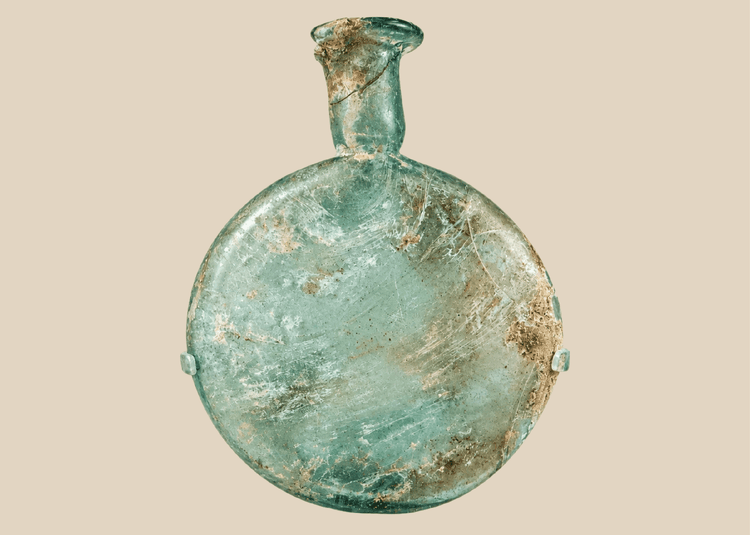
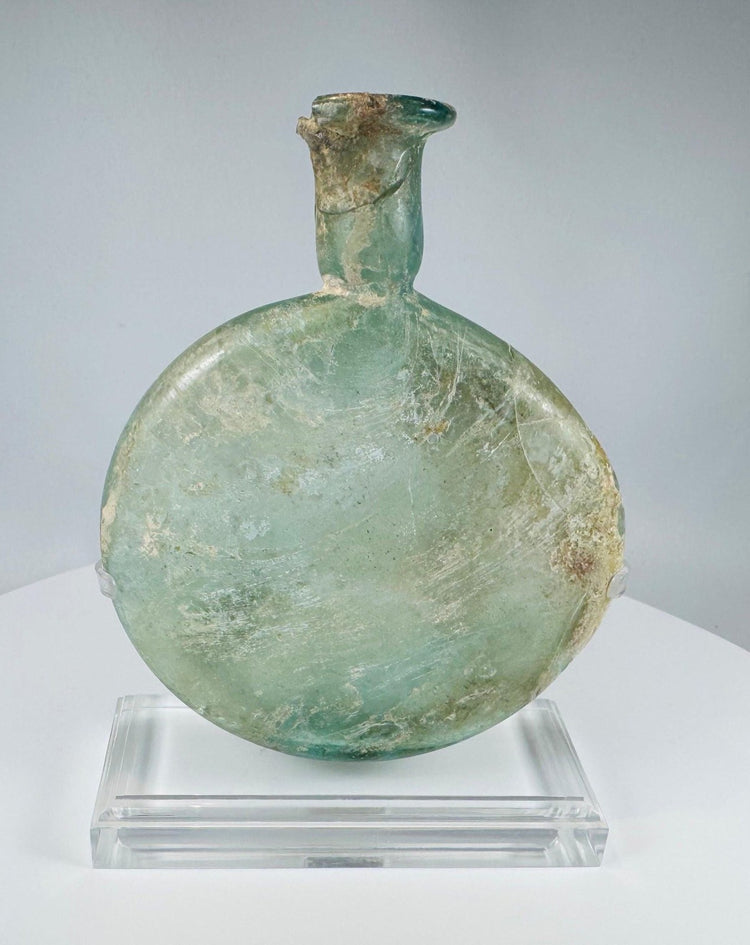
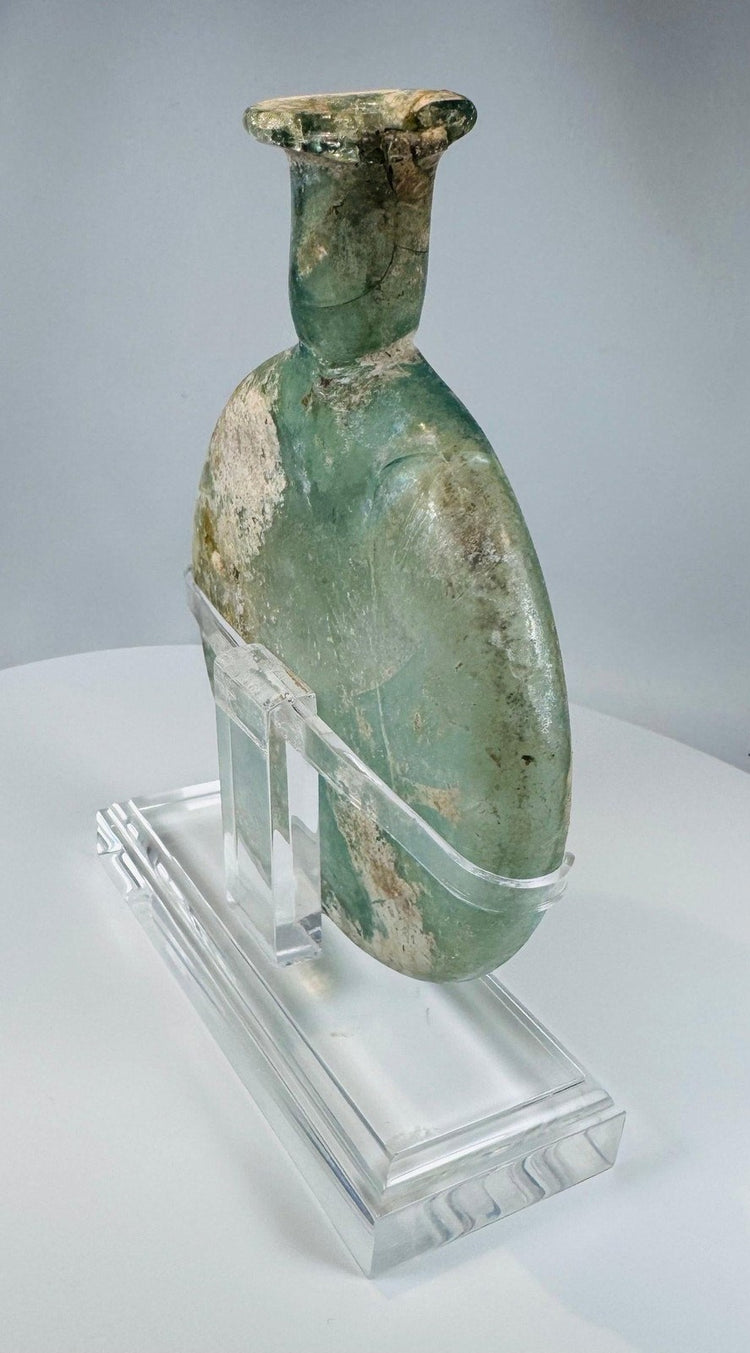
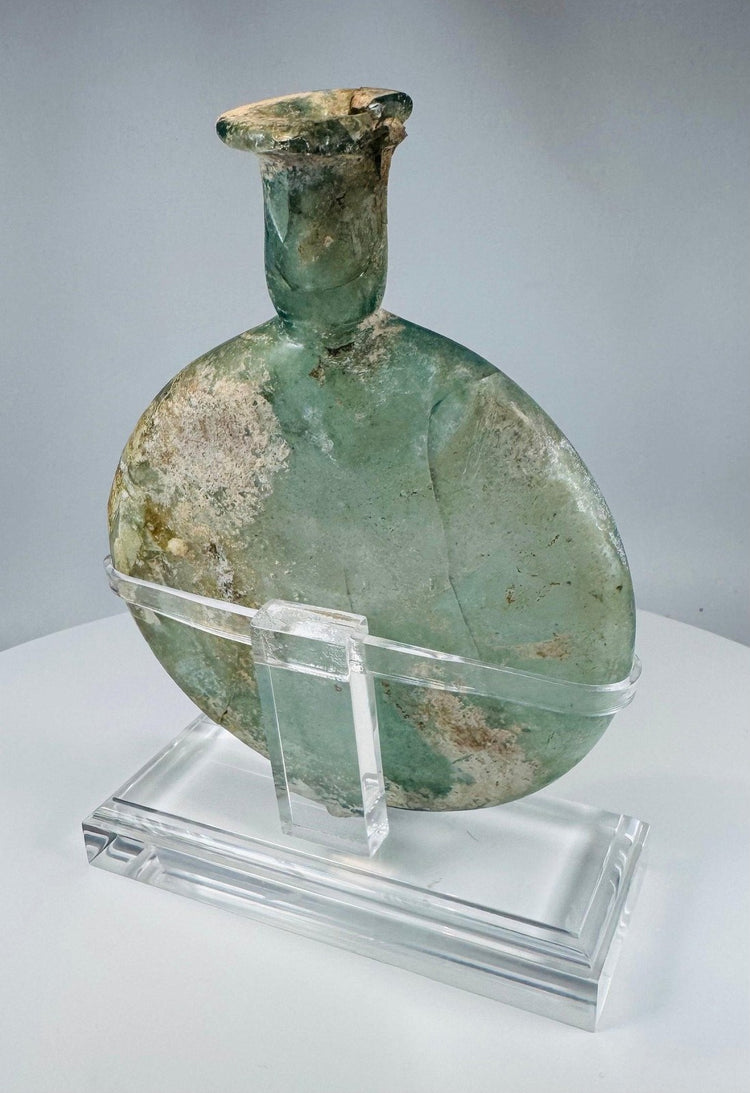
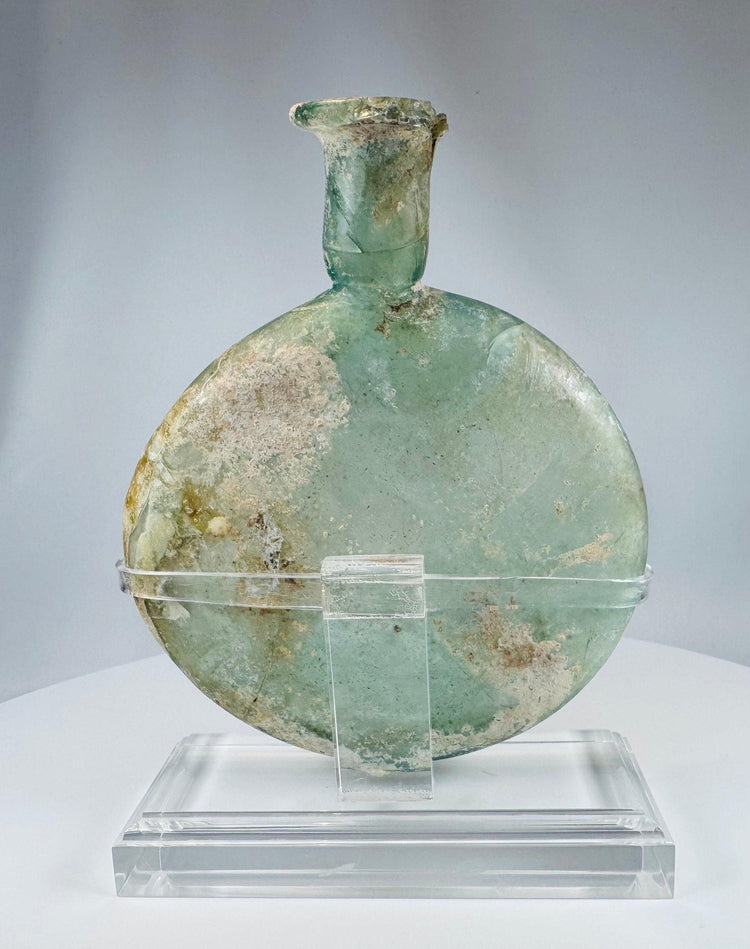
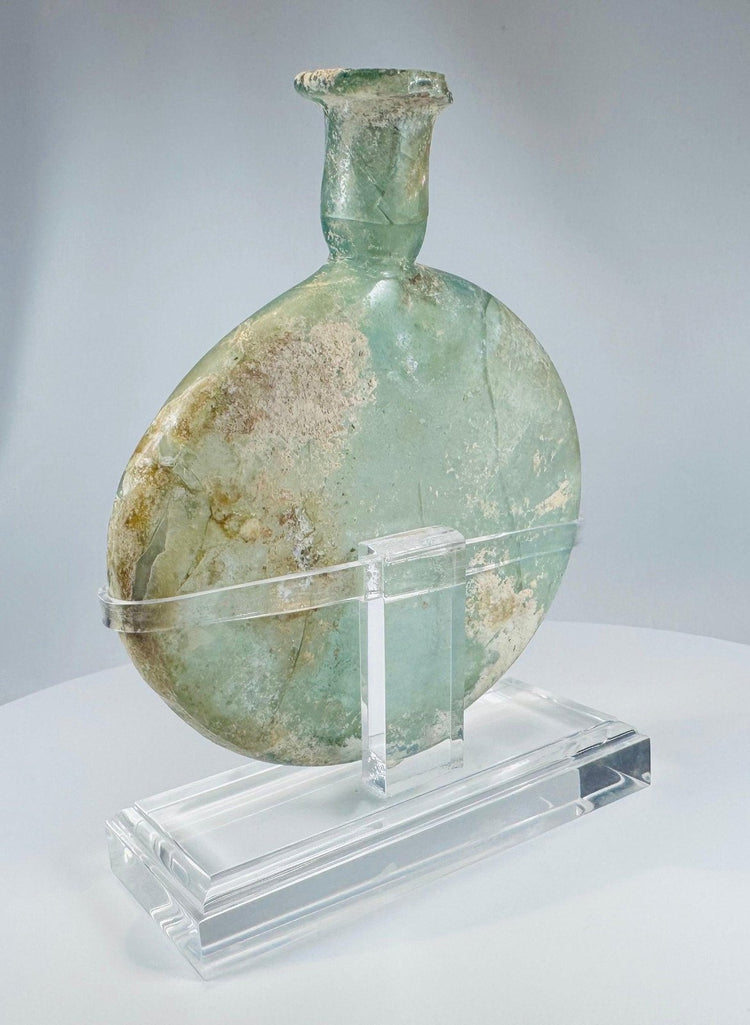
This ancient Roman lentoid glass flask dates to approximately the 4th–6th century CE, spanning the Late Imperial to Early Byzantine period.
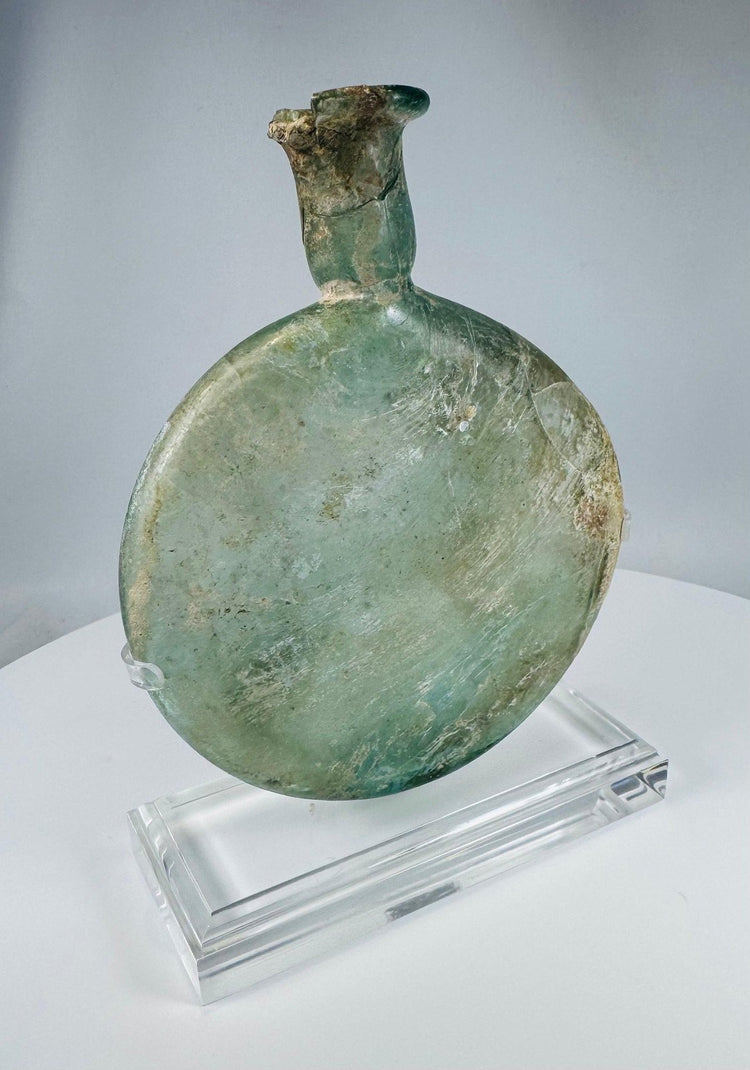
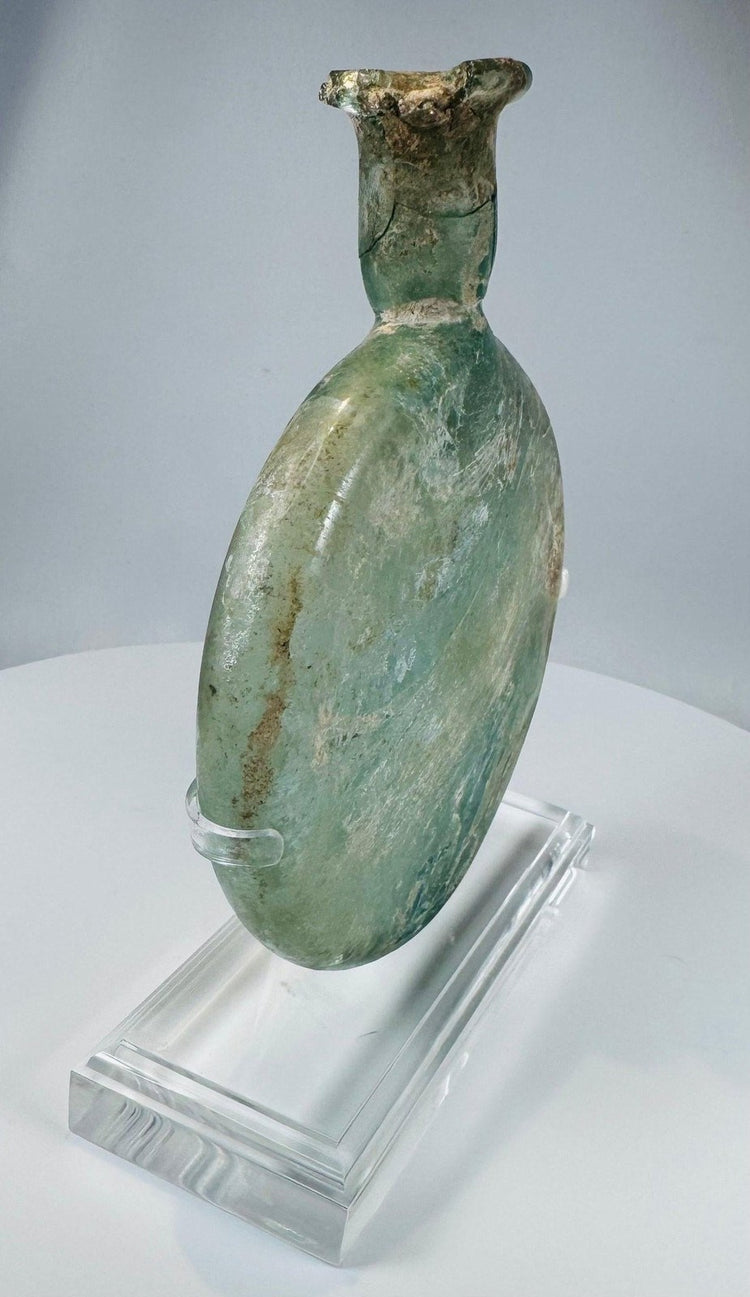
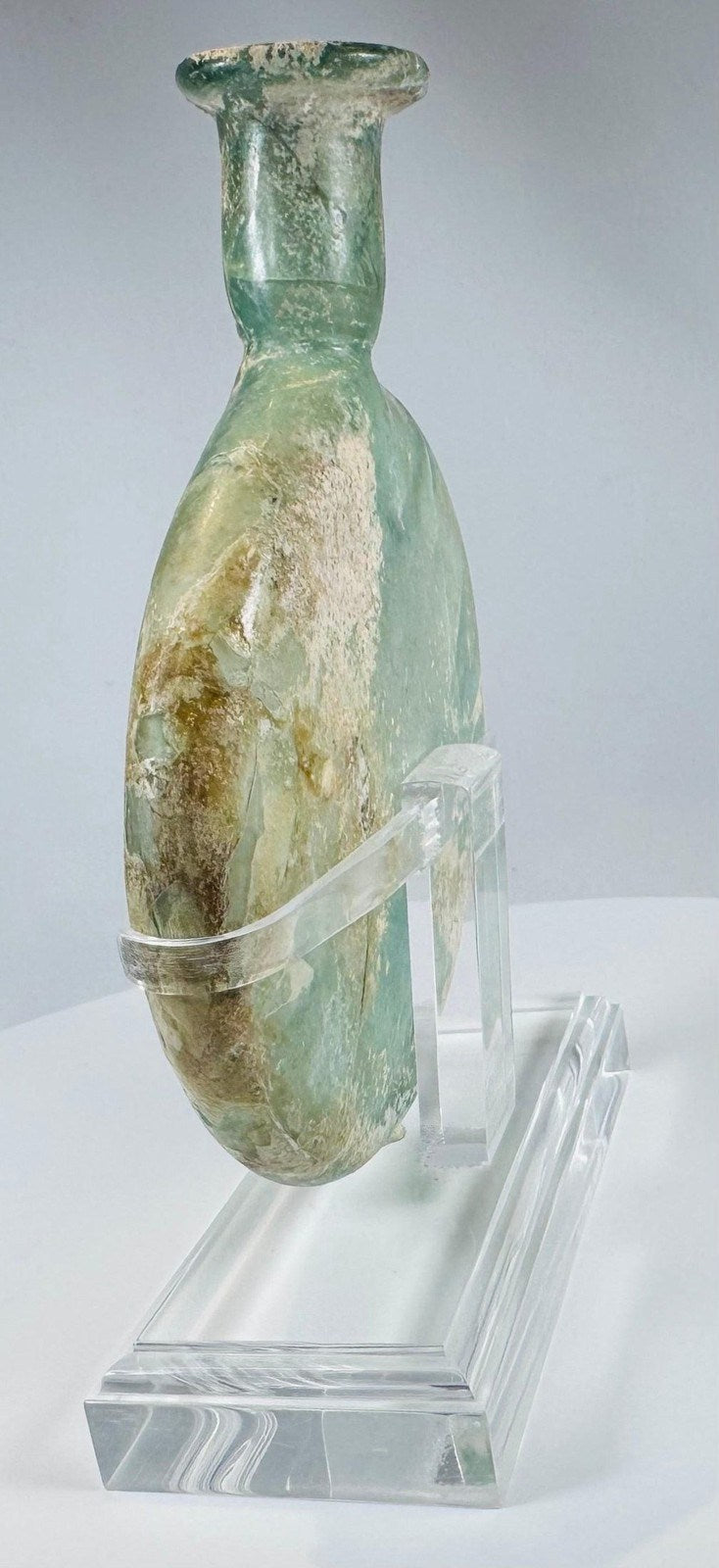
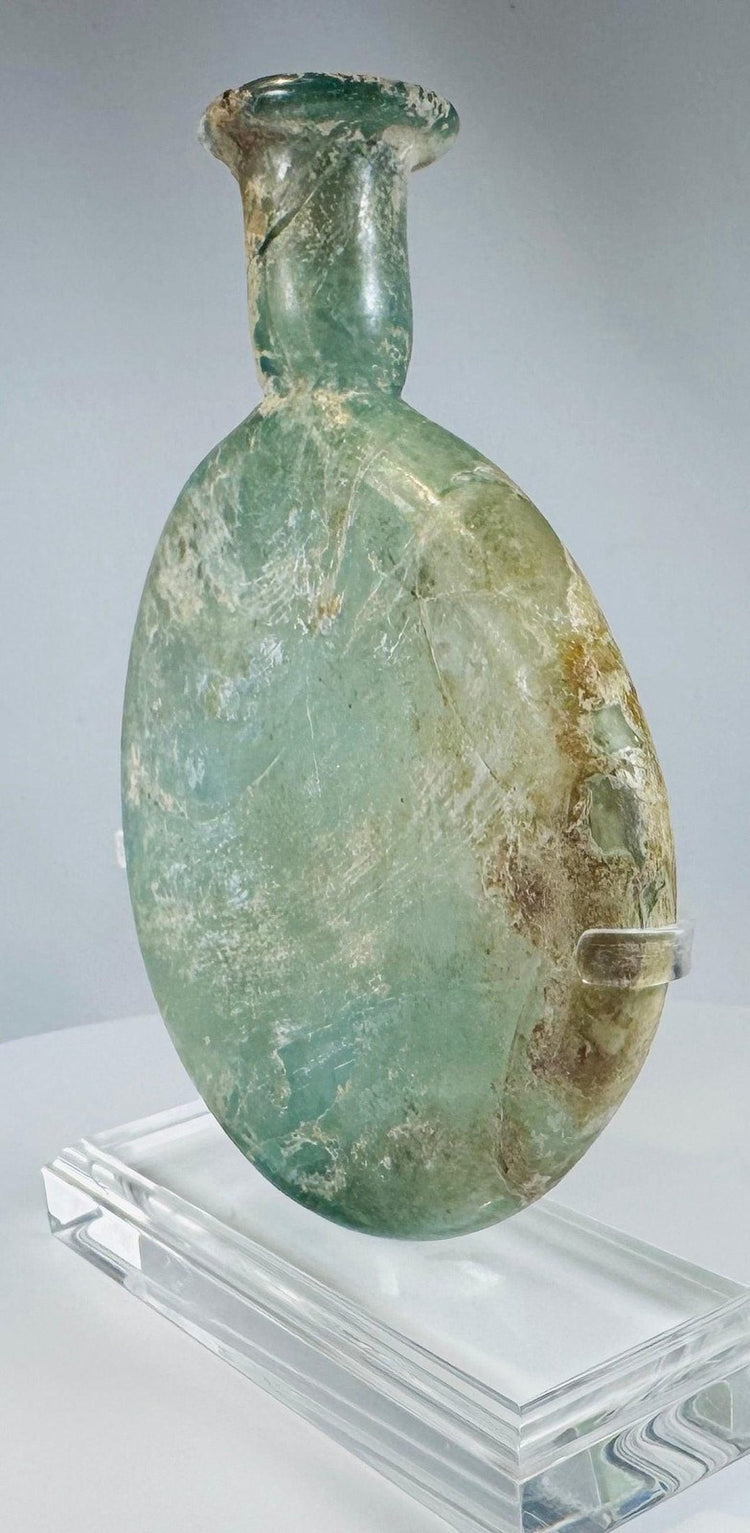
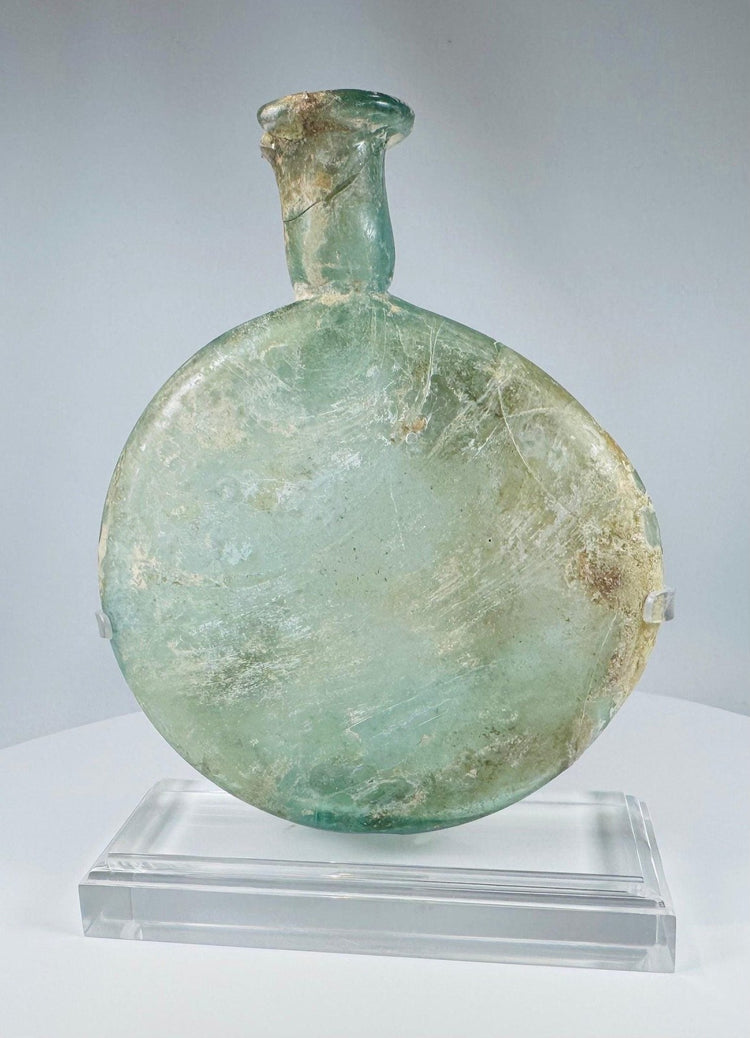
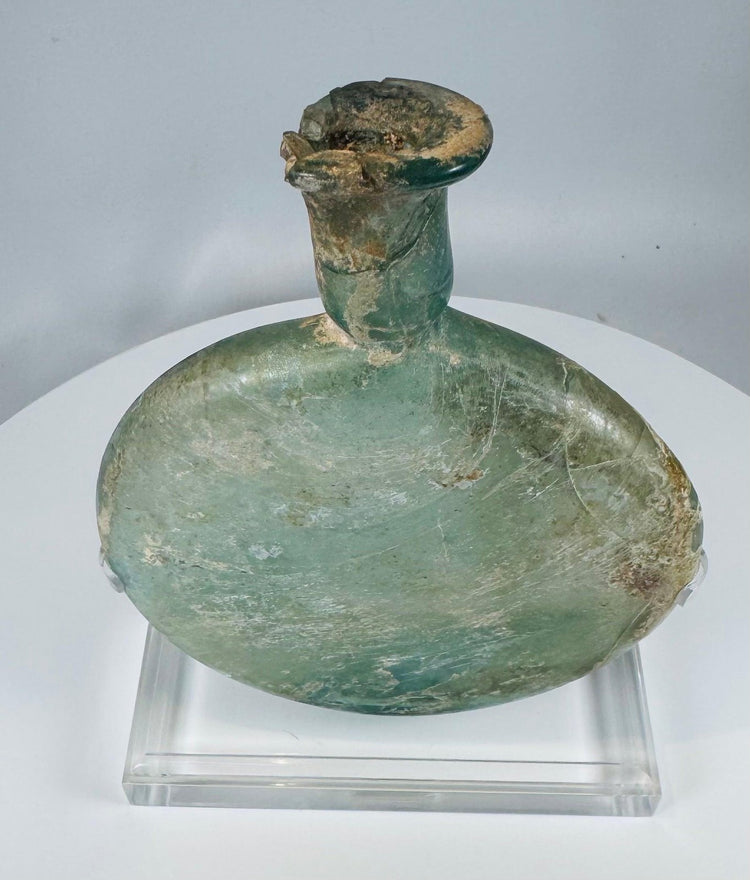
Free-blown in pale blue-green glass, the vessel has a distinctive flattened circular, or lentoid, body, rising to a short cylindrical neck and terminating in a folded, slightly flared rim. Its compressed circular profile gives the vessel an elegant form characteristic of this class of Late Antique glass containers.
The surface exhibits naturally developed iridescence, brown burial encrustation, mineral deposits, and weathering resulting from prolonged archaeological burial.
A visible crack and old repair are present at the neck, while a small area of loss is visible along the rim. Despite these age-related condition issues, the vessel retains its characteristic form and remains suitable for display.
A comparable Roman lentoid bottle is held by The Metropolitan Museum of Art, New York, inventory no. 17.194.93.
Features
- Flattened circular body
- Short cylindrical neck
- Folded, slightly flared rim
- Pale blue-green translucent glass
- Natural ancient iridescence
- Brown burial encrustation and mineral deposits
- Old repair and visible crack at the neck
- Small loss to the rim
- Comparable form in The Metropolitan Museum of Art
Cultural Significance
Glassblowing allowed Roman and Late Antique craftsmen to create lightweight vessels in a wide variety of specialized forms. Flattened or lentoid bottles were produced for holding relatively small quantities of liquids and other substances, although the exact original contents of this example cannot be determined without archaeological context.
Its form belongs to the later development of Roman glass production and continued into the Early Byzantine period, demonstrating the longevity and adaptability of glassworking traditions across Late Antiquity.
Condition
Ancient archaeological condition with natural iridescence, brown burial encrustation, mineral deposits, and surface weathering throughout. A visible crack and old repair are present at the neck, together with a small loss at the rim. The flattened body remains substantially intact and retains its overall profile.
Dimensions (Approximate)
Height: 5.75 in
Age (Approximate)
1,400–1,700 years old
Provenance
Offered by Thomaston Place Auction Galleries, Thomaston, Maine, United States, on August 24, 2013, as Lot 487. Following the auction, the piece entered a private collection in Windsor, Connecticut, United States.
The piece was later examined by Luca Salvaggio, an Italian archaeologist and specialist in ancient Mediterranean material. He holds a Postgraduate Diploma from the Italian Archaeological School at Athens (IASA) and is accredited for preventive archaeology by the Italian Ministry of Culture (MiC). Salvaggio identified the vessel as a Roman free-blown glass lentoid flask dating to the Late Imperial to Early Byzantine period, circa 4th–6th century CE, based on its flattened circular body, short cylindrical neck, folded slightly flared rim, pale blue-green glass, natural iridescence, and burial encrustation.
Learn More
Examine a remarkably preserved Roman glass vessel at the Abbey Museum
Explore Our Collection of Roman & Greek Artifacts
Description
Historical Context & Origin
Region: Roman World
Material: Free-blown pale blue-green glass
Period: Late Imperial to Early Byzantine Period, circa 4th–6th Century CE
Description
This ancient Roman lentoid glass flask dates to approximately the 4th–6th century CE, spanning the Late Imperial to Early Byzantine period.
Free-blown in pale blue-green glass, the vessel has a distinctive flattened circular, or lentoid, body, rising to a short cylindrical neck and terminating in a folded, slightly flared rim. Its compressed circular profile gives the vessel an elegant form characteristic of this class of Late Antique glass containers.
The surface exhibits naturally developed iridescence, brown burial encrustation, mineral deposits, and weathering resulting from prolonged archaeological burial.
A visible crack and old repair are present at the neck, while a small area of loss is visible along the rim. Despite these age-related condition issues, the vessel retains its characteristic form and remains suitable for display.
A comparable Roman lentoid bottle is held by The Metropolitan Museum of Art, New York, inventory no. 17.194.93.
Features
- Flattened circular body
- Short cylindrical neck
- Folded, slightly flared rim
- Pale blue-green translucent glass
- Natural ancient iridescence
- Brown burial encrustation and mineral deposits
- Old repair and visible crack at the neck
- Small loss to the rim
- Comparable form in The Metropolitan Museum of Art
Cultural Significance
Glassblowing allowed Roman and Late Antique craftsmen to create lightweight vessels in a wide variety of specialized forms. Flattened or lentoid bottles were produced for holding relatively small quantities of liquids and other substances, although the exact original contents of this example cannot be determined without archaeological context.
Its form belongs to the later development of Roman glass production and continued into the Early Byzantine period, demonstrating the longevity and adaptability of glassworking traditions across Late Antiquity.
Condition
Ancient archaeological condition with natural iridescence, brown burial encrustation, mineral deposits, and surface weathering throughout. A visible crack and old repair are present at the neck, together with a small loss at the rim. The flattened body remains substantially intact and retains its overall profile.
Dimensions (Approximate)
Height: 5.75 in
Age (Approximate)
1,400–1,700 years old
Provenance
Offered by Thomaston Place Auction Galleries, Thomaston, Maine, United States, on August 24, 2013, as Lot 487. Following the auction, the piece entered a private collection in Windsor, Connecticut, United States.
The piece was later examined by Luca Salvaggio, an Italian archaeologist and specialist in ancient Mediterranean material. He holds a Postgraduate Diploma from the Italian Archaeological School at Athens (IASA) and is accredited for preventive archaeology by the Italian Ministry of Culture (MiC). Salvaggio identified the vessel as a Roman free-blown glass lentoid flask dating to the Late Imperial to Early Byzantine period, circa 4th–6th century CE, based on its flattened circular body, short cylindrical neck, folded slightly flared rim, pale blue-green glass, natural iridescence, and burial encrustation.
Learn More
Examine a remarkably preserved Roman glass vessel at the Abbey Museum
Explore Our Collection of Roman & Greek Artifacts
You May Also Like
