


Ancient Eastern Mediterranean Glass Unguentarium | 1st–2nd Century CE
Couldn't load pickup availability







Ancient Eastern Mediterranean Glass Unguentarium | 1st–2nd Century CE
Description
More
Less
Historical Context & Origin
Region: Eastern Mediterranean
Material: Free-Blown Pale Green Glass
Period: Circa 1st–2nd Century CE, Roman Imperial Period
Description
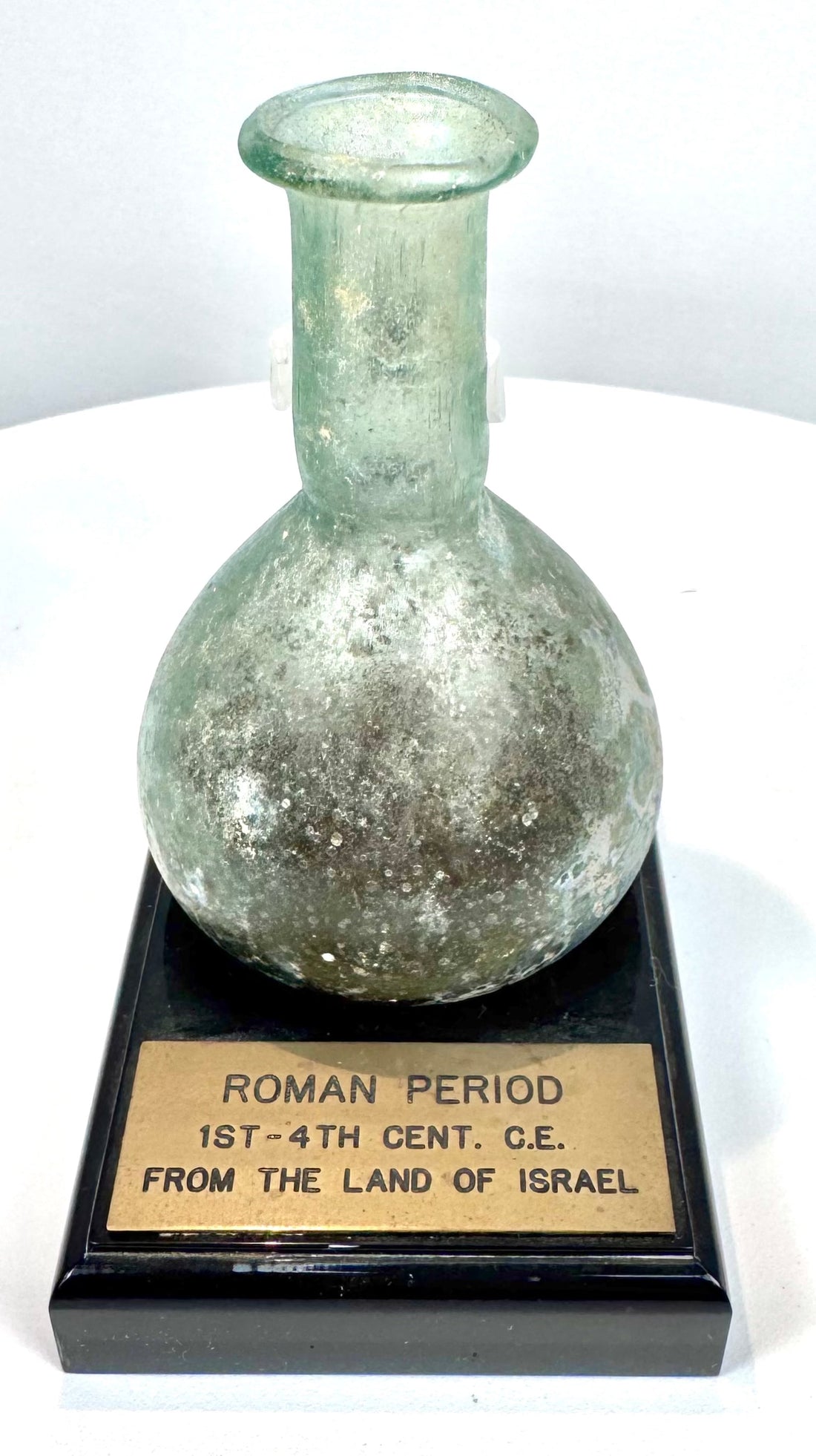
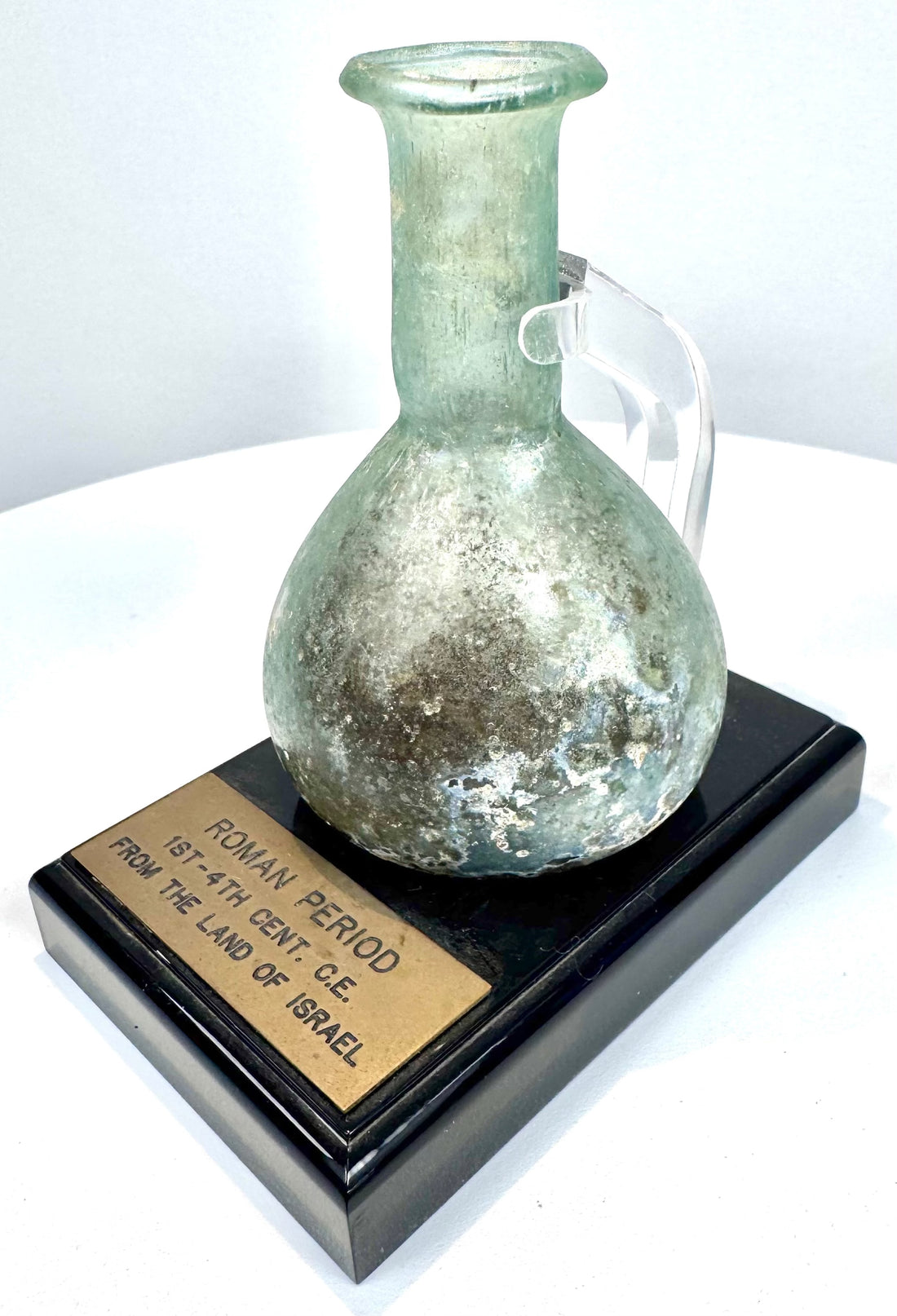
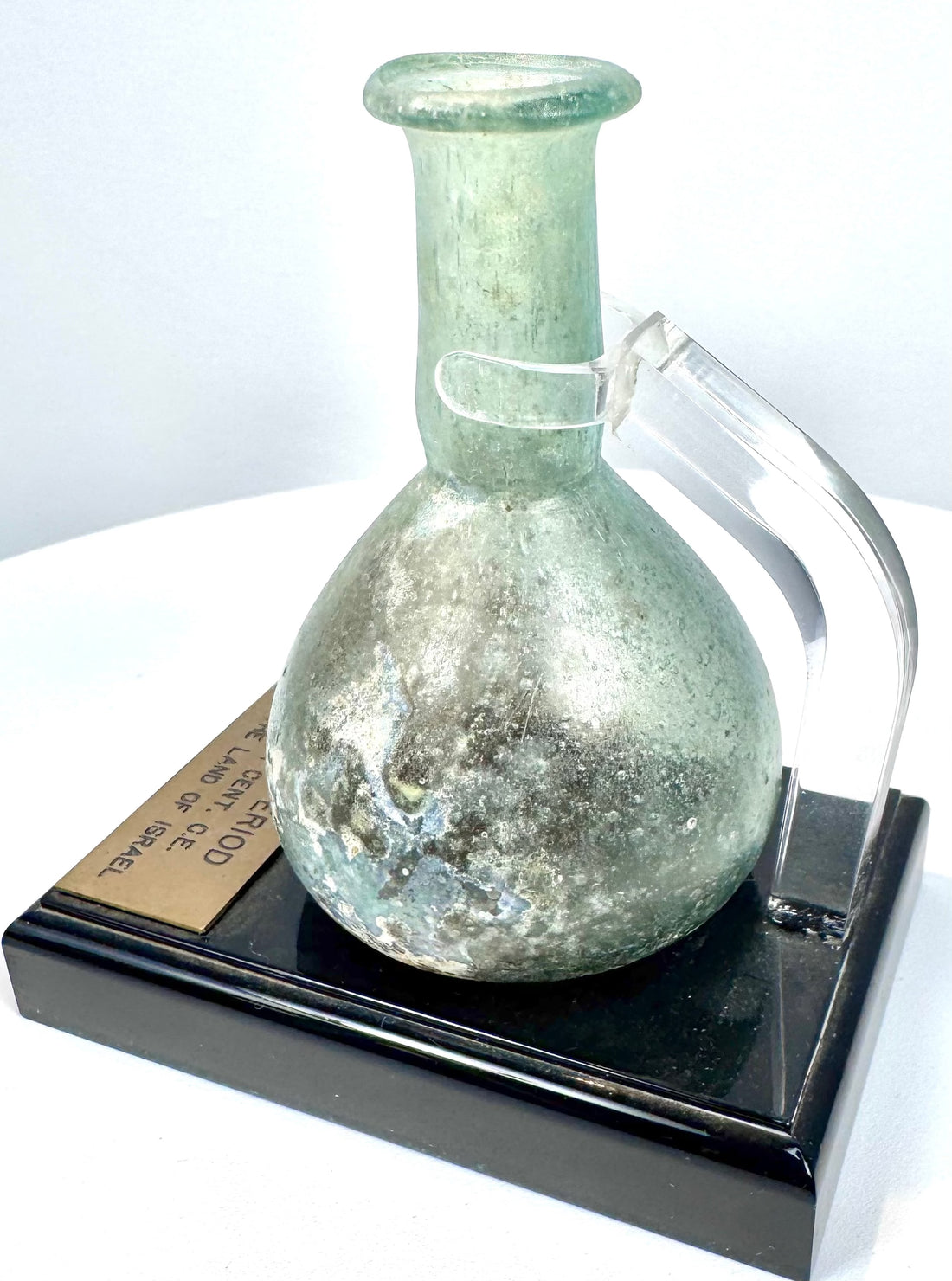
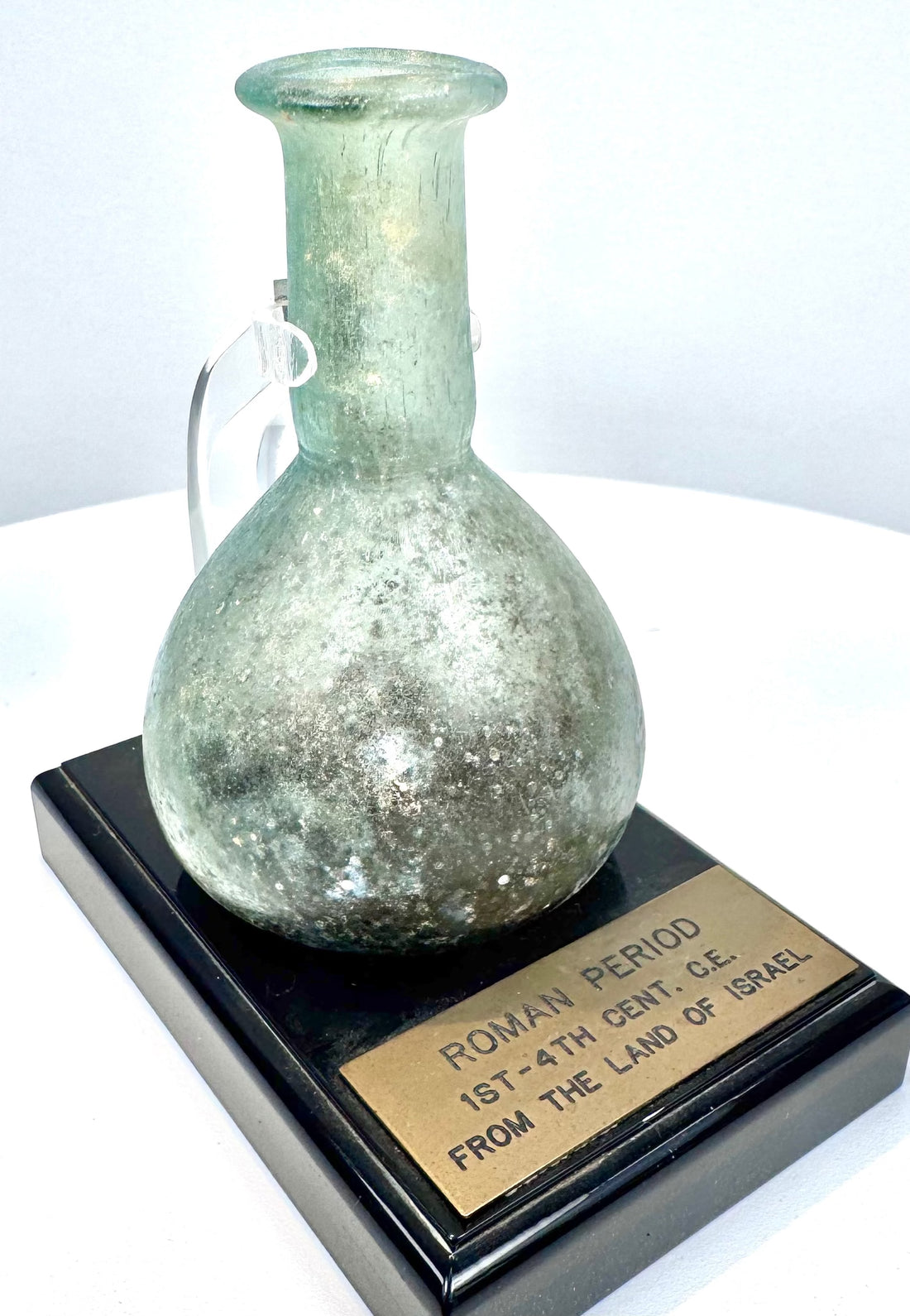
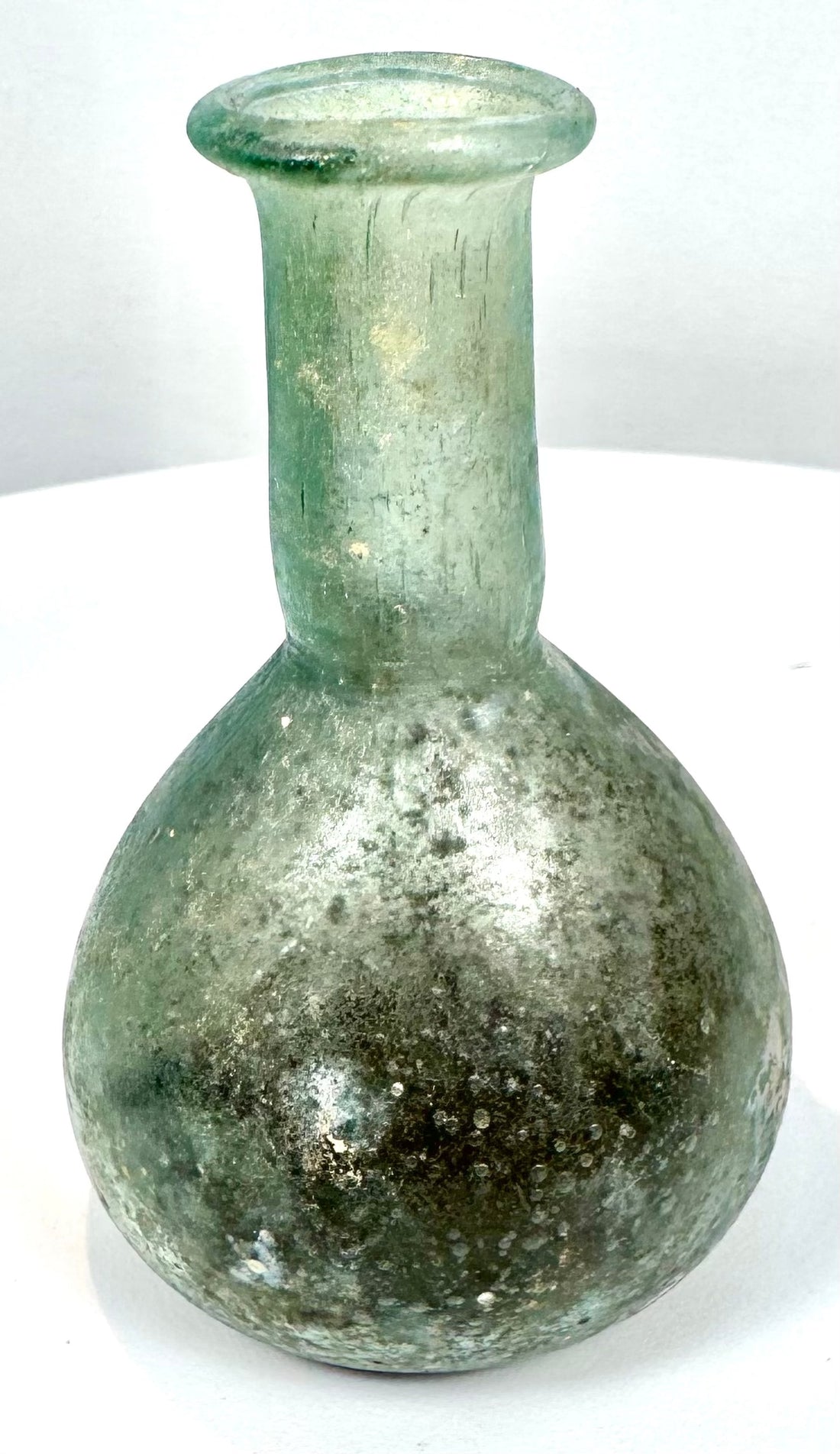
This attractive ancient Eastern Mediterranean glass unguentarium features a generously rounded, nearly spherical body rising into a slender cylindrical neck and terminating in a pronounced, outward-flaring rim with a thickened folded lip. Its elegant proportions and delicate construction reflect the sophisticated glassmaking traditions that flourished throughout the Eastern Mediterranean during the early Roman Imperial period.
The vessel displays a soft sea-green colour, with subtle variations of pale turquoise and deeper green visible beneath extensive mineral deposits and surface weathering.
Its rounded body exhibits an appealing mottled appearance, with areas of darker earthy encrustation, pale mineral accretions, and localized iridescence. These surface characteristics contribute to its distinctive archaeological appearance and demonstrate the effects of prolonged environmental exposure on ancient glass.
The elongated cylindrical neck remains well defined, displaying fine linear surface markings and subtle variations in the glass fabric. The upper opening is finished with a thickened, outward-flaring folded lip, characteristic of ancient glassmaking techniques in which heated glass was manipulated to strengthen and finish the vessel's mouth.
Produced using the free-blowing technique, the vessel exemplifies the technological developments that transformed glass production throughout the Mediterranean during the Roman Imperial period. Its rounded body, narrow neck, and functional proportions are consistent with containers traditionally associated with the storage and dispensing of perfumes, aromatic oils, ointments, and other valued preparations.
Features
- Free-blown pale sea-green glass construction
- Rounded, nearly spherical body with a slender cylindrical neck
- Pronounced outward-flaring rim with a thickened folded lip
- Subtle turquoise and deeper green coloration throughout the glass
- Extensive mineral encrustations, earthy deposits, and localized iridescence
- Fine linear surface markings along the elongated neck
- Substantially intact form retaining its characteristic ancient vessel silhouette
- Attributed to the Eastern Mediterranean, circa 1st–2nd century CE
Cultural Significance
Ancient Eastern Mediterranean glass unguentaria offer fascinating insight into the development of glassmaking, personal care, commerce, and material culture during the early Roman Imperial period.
Small glass vessels of this form were widely used for storing perfumes, aromatic oils, cosmetics, medicinal preparations, and other valuable substances. Such materials played important roles in personal grooming, bathing practices, religious observances, and funerary traditions throughout the Mediterranean world.
The development and widespread adoption of glassblowing during the 1st century BCE revolutionized ancient glass production. This technological advancement enabled craftsmen to produce vessels more efficiently, with greater diversity in shape, size, and design, making glass containers increasingly accessible across different levels of society.
The Eastern Mediterranean was particularly significant in the history of ancient glassmaking, with established centres of production and extensive commercial networks connecting workshops, merchants, and consumers throughout the region.
Glass unguentaria have been recovered from domestic, commercial, and funerary archaeological contexts, illustrating their importance in both everyday life and ceremonial practices. Their varied forms and manufacturing characteristics provide valuable evidence of changing tastes, technological developments, and regional craftsmanship.
The present example, attributed to the Eastern Mediterranean during the 1st–2nd century CE, reflects these established traditions through its carefully proportioned globular body, elongated neck, and distinctively folded rim.
Its surviving form, pale green glass fabric, and extensive surface weathering provide an intriguing connection to the craftsmanship and material culture of the ancient Mediterranean world.
Condition
The vessel presents as substantially intact, retaining its rounded body, elongated cylindrical neck, and outward-flaring mouth.
Extensive surface weathering is present throughout, including mineral and earthy encrustations, pitting, discoloration, and localized iridescence.
Fine linear markings are visible along the neck, together with natural variations in the glass surface. The rounded body exhibits scattered mineral deposits and darker areas of accumulated surface encrustation.
No major losses are apparent in the supplied photographs, although the presence of fine cracks or historical repairs cannot be conclusively determined from photographic examination alone.
Dimensions (Approximate)
Height: 3.5 in
Age (Approximate)
1,800–2,000 years old
Provenance
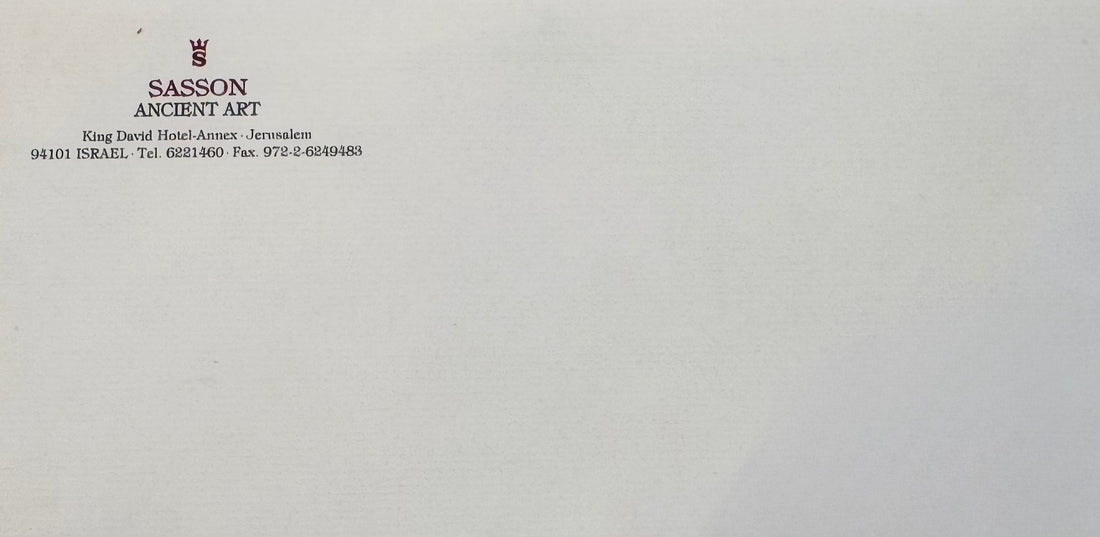
Formerly acquired by a private collector from West Long Branch, New Jersey, USA, through Sasson Ancient Art, Jerusalem, Israel, on August 16, 1998.
The accompanying historical invoice was issued by Sasson Ancient Art, formerly located at the King David Hotel Annex in Jerusalem. The document identifies the artifact as a "Roman Glass Unguentarium" dating from the 1st–2nd century CE.
Expert Assessment: Examined by Luca Salvaggio, an Italian archaeologist specializing in ancient Mediterranean material, with a Postgraduate Diploma from the Italian Archaeological School at Athens (IASA) and accreditation for preventive archaeology from the Italian Ministry of Culture (MiC). He identified the vessel as an Eastern Mediterranean glass unguentarium dating to the 1st–2nd century CE, refining its previous classification as a Roman green glass unguentarium. His assessment considered its free-blown pale green glass construction, rounded globular body, slender cylindrical neck, outward-flaring rim with thickened folded lip, and extensive surface weathering characterized by mineral encrustations, pitting, discoloration, and localized iridescence.
Learn More
Discover a comparable Roman glass unguentarium featuring a globular body and folded rim at the J. Paul Getty Museum
Browse Our Collection of Historical Glass Artifacts & Collectibles
Description
Historical Context & Origin
Region: Eastern Mediterranean
Material: Free-Blown Pale Green Glass
Period: Circa 1st–2nd Century CE, Roman Imperial Period
Description
This attractive ancient Eastern Mediterranean glass unguentarium features a generously rounded, nearly spherical body rising into a slender cylindrical neck and terminating in a pronounced, outward-flaring rim with a thickened folded lip. Its elegant proportions and delicate construction reflect the sophisticated glassmaking traditions that flourished throughout the Eastern Mediterranean during the early Roman Imperial period.
The vessel displays a soft sea-green colour, with subtle variations of pale turquoise and deeper green visible beneath extensive mineral deposits and surface weathering.
Its rounded body exhibits an appealing mottled appearance, with areas of darker earthy encrustation, pale mineral accretions, and localized iridescence. These surface characteristics contribute to its distinctive archaeological appearance and demonstrate the effects of prolonged environmental exposure on ancient glass.
The elongated cylindrical neck remains well defined, displaying fine linear surface markings and subtle variations in the glass fabric. The upper opening is finished with a thickened, outward-flaring folded lip, characteristic of ancient glassmaking techniques in which heated glass was manipulated to strengthen and finish the vessel's mouth.
Produced using the free-blowing technique, the vessel exemplifies the technological developments that transformed glass production throughout the Mediterranean during the Roman Imperial period. Its rounded body, narrow neck, and functional proportions are consistent with containers traditionally associated with the storage and dispensing of perfumes, aromatic oils, ointments, and other valued preparations.
Features
- Free-blown pale sea-green glass construction
- Rounded, nearly spherical body with a slender cylindrical neck
- Pronounced outward-flaring rim with a thickened folded lip
- Subtle turquoise and deeper green coloration throughout the glass
- Extensive mineral encrustations, earthy deposits, and localized iridescence
- Fine linear surface markings along the elongated neck
- Substantially intact form retaining its characteristic ancient vessel silhouette
- Attributed to the Eastern Mediterranean, circa 1st–2nd century CE
Cultural Significance
Ancient Eastern Mediterranean glass unguentaria offer fascinating insight into the development of glassmaking, personal care, commerce, and material culture during the early Roman Imperial period.
Small glass vessels of this form were widely used for storing perfumes, aromatic oils, cosmetics, medicinal preparations, and other valuable substances. Such materials played important roles in personal grooming, bathing practices, religious observances, and funerary traditions throughout the Mediterranean world.
The development and widespread adoption of glassblowing during the 1st century BCE revolutionized ancient glass production. This technological advancement enabled craftsmen to produce vessels more efficiently, with greater diversity in shape, size, and design, making glass containers increasingly accessible across different levels of society.
The Eastern Mediterranean was particularly significant in the history of ancient glassmaking, with established centres of production and extensive commercial networks connecting workshops, merchants, and consumers throughout the region.
Glass unguentaria have been recovered from domestic, commercial, and funerary archaeological contexts, illustrating their importance in both everyday life and ceremonial practices. Their varied forms and manufacturing characteristics provide valuable evidence of changing tastes, technological developments, and regional craftsmanship.
The present example, attributed to the Eastern Mediterranean during the 1st–2nd century CE, reflects these established traditions through its carefully proportioned globular body, elongated neck, and distinctively folded rim.
Its surviving form, pale green glass fabric, and extensive surface weathering provide an intriguing connection to the craftsmanship and material culture of the ancient Mediterranean world.
Condition
The vessel presents as substantially intact, retaining its rounded body, elongated cylindrical neck, and outward-flaring mouth.
Extensive surface weathering is present throughout, including mineral and earthy encrustations, pitting, discoloration, and localized iridescence.
Fine linear markings are visible along the neck, together with natural variations in the glass surface. The rounded body exhibits scattered mineral deposits and darker areas of accumulated surface encrustation.
No major losses are apparent in the supplied photographs, although the presence of fine cracks or historical repairs cannot be conclusively determined from photographic examination alone.
Dimensions (Approximate)
Height: 3.5 in
Age (Approximate)
1,800–2,000 years old
Provenance
Formerly acquired by a private collector from West Long Branch, New Jersey, USA, through Sasson Ancient Art, Jerusalem, Israel, on August 16, 1998.
The accompanying historical invoice was issued by Sasson Ancient Art, formerly located at the King David Hotel Annex in Jerusalem. The document identifies the artifact as a "Roman Glass Unguentarium" dating from the 1st–2nd century CE.
Expert Assessment: Examined by Luca Salvaggio, an Italian archaeologist specializing in ancient Mediterranean material, with a Postgraduate Diploma from the Italian Archaeological School at Athens (IASA) and accreditation for preventive archaeology from the Italian Ministry of Culture (MiC). He identified the vessel as an Eastern Mediterranean glass unguentarium dating to the 1st–2nd century CE, refining its previous classification as a Roman green glass unguentarium. His assessment considered its free-blown pale green glass construction, rounded globular body, slender cylindrical neck, outward-flaring rim with thickened folded lip, and extensive surface weathering characterized by mineral encrustations, pitting, discoloration, and localized iridescence.
Learn More
Discover a comparable Roman glass unguentarium featuring a globular body and folded rim at the J. Paul Getty Museum
Browse Our Collection of Historical Glass Artifacts & Collectibles
You May Also Like
