



Ancient Roman Green Glass Unguentarium Perfume Bottle | Roman Imperial Period | Circa 1st–4th Century CE
Couldn't load pickup availability


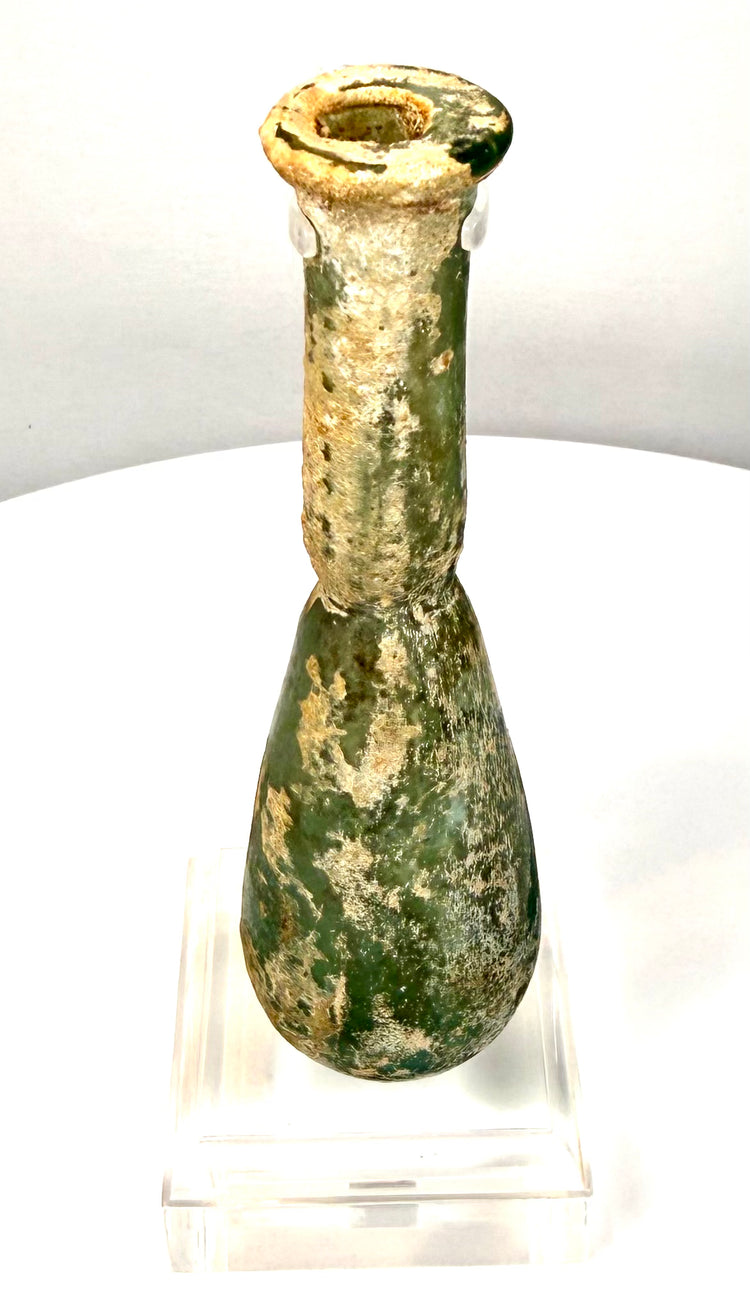


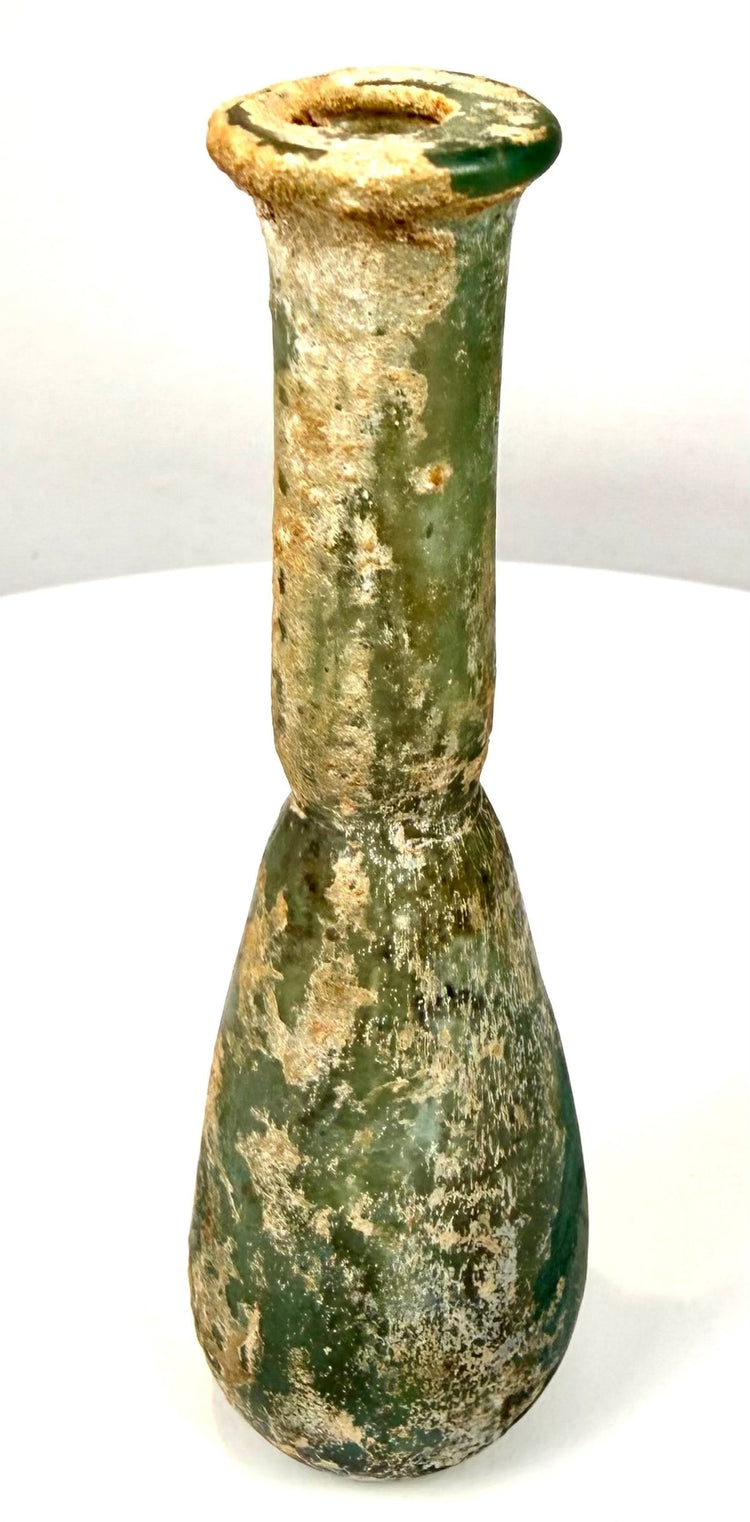
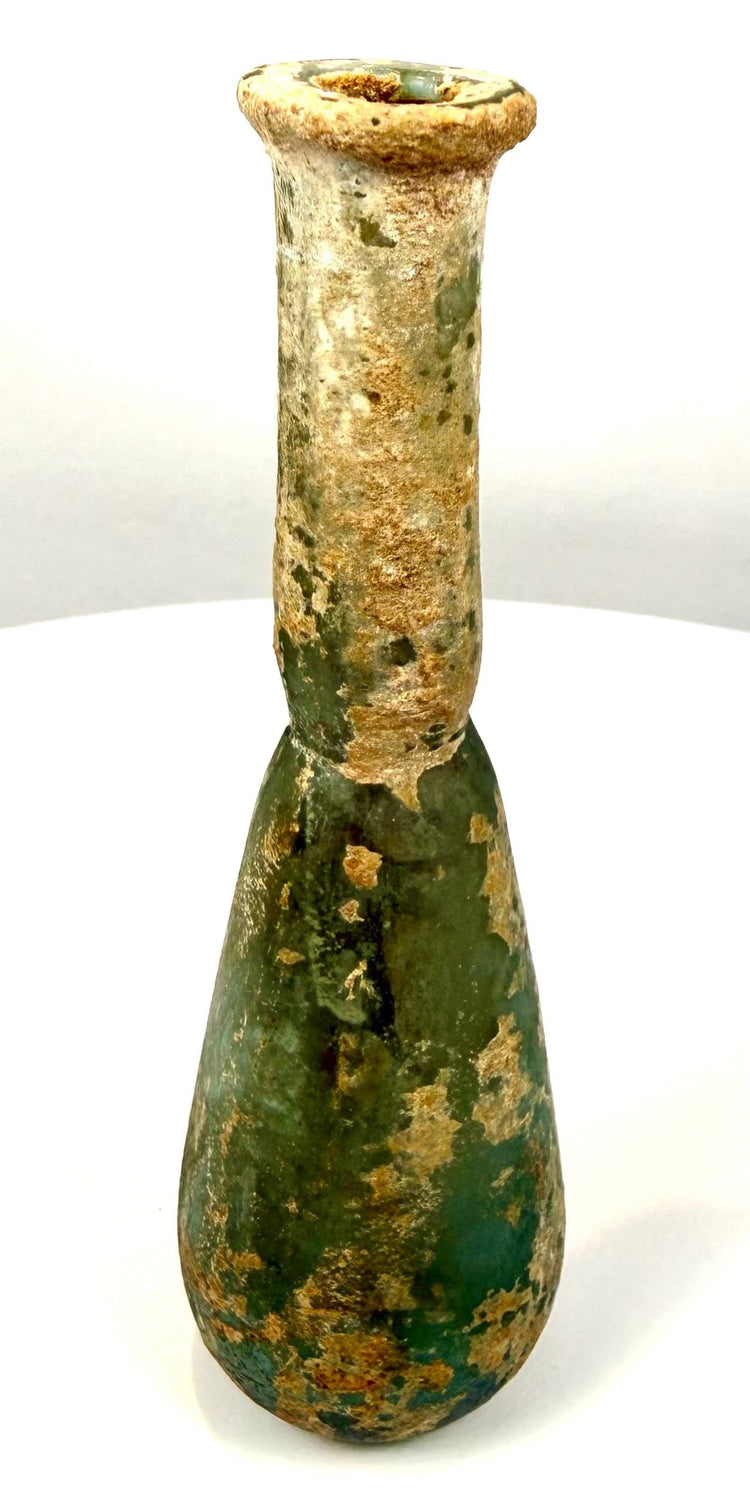


Ancient Roman Green Glass Unguentarium Perfume Bottle | Roman Imperial Period | Circa 1st–4th Century CE
Description
More
Less
Historical Context & Origin
Region: Roman Empire, Mediterranean Region
Material: Blown green glass with extensive surface weathering and mineral encrustation
Period: Roman Imperial Period, circa 1st–4th century CE
Description
An ancient Roman green glass unguentarium, or perfume vessel, attributed to the Roman Imperial Period, circa 1st–4th century CE. This elegantly proportioned vessel features an elongated cylindrical neck, a pronounced outward-flaring circular rim, and a distinctive pear-shaped body that tapers gracefully toward its upper section. Its characteristic form reflects the practical and refined glassmaking traditions of the ancient Roman world.
The vessel displays a deep olive-green to emerald-green appearance, with extensive cream-coloured, beige, and earthy mineral deposits distributed across its exterior. These irregular areas of surface encrustation and weathering create a richly textured appearance, contrasting with surviving regions of smoother green glass. The resulting surface character is consistent with the effects of prolonged environmental exposure commonly encountered on archaeological glass.
The elongated neck terminates in a thickened, rounded rim surrounding a relatively narrow opening. This configuration was particularly suitable for containing and dispensing small quantities of valuable liquids, including perfumes, scented oils, cosmetic preparations, and medicinal substances.
Roman glassmakers employed sophisticated glassblowing techniques to manufacture vessels in a variety of specialized forms. The rounded lower body of this example provided space for its contents, while the narrow neck helped regulate their release. Subtle irregularities in the vessel's proportions and surface reflect the characteristics of manually produced glass objects.
Unguentaria of this general type circulated throughout the Roman Empire and were associated with personal grooming, fragrance, medicinal preparations, and funerary practices. Although frequently described in the antiquities trade as tear bottles or lachrymatories, their principal recognized function was the storage of oils, perfumes, and related substances rather than the collection of tears.
Features
- Ancient Roman blown-glass unguentarium dating to circa 1st–4th century CE
- Traditional pear-shaped body with an elongated cylindrical neck
- Pronounced outward-flaring circular rim with a thickened, rounded lip
- Deep olive-green to emerald-green glass appearance
- Extensive cream-coloured, beige, and earthy mineral encrustations
- Irregular surface weathering, deposits, and areas of exposed green glass
- Narrow opening designed for controlled dispensing of liquids
- Form associated with Roman perfumes, oils, and cosmetic preparations
- Distinctive proportions characteristic of ancient Roman glassmaking traditions
Cultural Significance
Glassmaking was among the important technological achievements of the Roman world. Although glass had been manufactured for centuries before the Roman Empire, the development and widespread adoption of glassblowing during the late 1st century BCE transformed its production. This innovation allowed artisans to create an increasingly diverse range of vessels, making glass containers more accessible throughout Roman society.
Unguentaria occupied a significant place within everyday Roman life. Fragrances, aromatic oils, and cosmetic preparations were used in personal grooming, bathing, social activities, and religious observances. Small glass containers provided a practical means of storing these substances while protecting their contents and allowing careful dispensing.
Perfumes and scented oils also held cultural importance within Roman bathing traditions. Public and private baths were central features of Roman social life, and the application of oils and fragrances formed part of established bathing and personal-care practices.
Unguentaria have additionally been recovered from ancient burial contexts, where vessels containing oils or fragrances accompanied the deceased as funerary offerings. Their presence in such settings illustrates the relationship between personal possessions, ritual traditions, and Roman beliefs concerning death and remembrance.
The green coloration and heavily weathered appearance of this example contribute to its distinctive visual character. Its surviving form provides an interesting representation of the functional elegance associated with Roman glass vessels and the enduring influence of ancient glassmaking techniques.
Condition
The vessel retains its recognizable pear-shaped body, elongated neck, and flared circular rim.
Extensive age-associated surface weathering is visible, including cream-coloured and earthy mineral encrustations, surface dulling, localized pitting, and variations in colour and texture. The deposits are particularly pronounced along the neck and rim, with additional irregular accumulations across the rounded body.
The rim exhibits surface irregularities and localized wear, while portions of the green glass remain visible beneath the encrustations. The vessel appears substantially complete in the supplied photographs, although the heavy surface deposits limit assessment of fine cracks or historic repairs.
The existing surface deposits have been retained as part of the vessel's present appearance.
Dimensions (Approximate)
Height: 4.5 in
Age (Approximate)
1,600–2,000 years old
Provenance
Formerly part of a private collection in Newark, New Jersey, United States. Subsequently handled through the antiquities auction market, where the vessel was catalogued as an ancient Roman glass unguentarium dating to approximately the 1st–4th century CE.
Learn More
A related Roman blown-glass perfume bottle dating to the 1st–2nd century CE, featuring an elongated neck and weathered surface, is preserved in the Metropolitan Museum of Art's collection
More ancient glassware and historical objects are featured in our Roman & Greek Artifacts Collection
Description
Historical Context & Origin
Region: Roman Empire, Mediterranean Region
Material: Blown green glass with extensive surface weathering and mineral encrustation
Period: Roman Imperial Period, circa 1st–4th century CE
Description
An ancient Roman green glass unguentarium, or perfume vessel, attributed to the Roman Imperial Period, circa 1st–4th century CE. This elegantly proportioned vessel features an elongated cylindrical neck, a pronounced outward-flaring circular rim, and a distinctive pear-shaped body that tapers gracefully toward its upper section. Its characteristic form reflects the practical and refined glassmaking traditions of the ancient Roman world.
The vessel displays a deep olive-green to emerald-green appearance, with extensive cream-coloured, beige, and earthy mineral deposits distributed across its exterior. These irregular areas of surface encrustation and weathering create a richly textured appearance, contrasting with surviving regions of smoother green glass. The resulting surface character is consistent with the effects of prolonged environmental exposure commonly encountered on archaeological glass.
The elongated neck terminates in a thickened, rounded rim surrounding a relatively narrow opening. This configuration was particularly suitable for containing and dispensing small quantities of valuable liquids, including perfumes, scented oils, cosmetic preparations, and medicinal substances.
Roman glassmakers employed sophisticated glassblowing techniques to manufacture vessels in a variety of specialized forms. The rounded lower body of this example provided space for its contents, while the narrow neck helped regulate their release. Subtle irregularities in the vessel's proportions and surface reflect the characteristics of manually produced glass objects.
Unguentaria of this general type circulated throughout the Roman Empire and were associated with personal grooming, fragrance, medicinal preparations, and funerary practices. Although frequently described in the antiquities trade as tear bottles or lachrymatories, their principal recognized function was the storage of oils, perfumes, and related substances rather than the collection of tears.
Features
- Ancient Roman blown-glass unguentarium dating to circa 1st–4th century CE
- Traditional pear-shaped body with an elongated cylindrical neck
- Pronounced outward-flaring circular rim with a thickened, rounded lip
- Deep olive-green to emerald-green glass appearance
- Extensive cream-coloured, beige, and earthy mineral encrustations
- Irregular surface weathering, deposits, and areas of exposed green glass
- Narrow opening designed for controlled dispensing of liquids
- Form associated with Roman perfumes, oils, and cosmetic preparations
- Distinctive proportions characteristic of ancient Roman glassmaking traditions
Cultural Significance
Glassmaking was among the important technological achievements of the Roman world. Although glass had been manufactured for centuries before the Roman Empire, the development and widespread adoption of glassblowing during the late 1st century BCE transformed its production. This innovation allowed artisans to create an increasingly diverse range of vessels, making glass containers more accessible throughout Roman society.
Unguentaria occupied a significant place within everyday Roman life. Fragrances, aromatic oils, and cosmetic preparations were used in personal grooming, bathing, social activities, and religious observances. Small glass containers provided a practical means of storing these substances while protecting their contents and allowing careful dispensing.
Perfumes and scented oils also held cultural importance within Roman bathing traditions. Public and private baths were central features of Roman social life, and the application of oils and fragrances formed part of established bathing and personal-care practices.
Unguentaria have additionally been recovered from ancient burial contexts, where vessels containing oils or fragrances accompanied the deceased as funerary offerings. Their presence in such settings illustrates the relationship between personal possessions, ritual traditions, and Roman beliefs concerning death and remembrance.
The green coloration and heavily weathered appearance of this example contribute to its distinctive visual character. Its surviving form provides an interesting representation of the functional elegance associated with Roman glass vessels and the enduring influence of ancient glassmaking techniques.
Condition
The vessel retains its recognizable pear-shaped body, elongated neck, and flared circular rim.
Extensive age-associated surface weathering is visible, including cream-coloured and earthy mineral encrustations, surface dulling, localized pitting, and variations in colour and texture. The deposits are particularly pronounced along the neck and rim, with additional irregular accumulations across the rounded body.
The rim exhibits surface irregularities and localized wear, while portions of the green glass remain visible beneath the encrustations. The vessel appears substantially complete in the supplied photographs, although the heavy surface deposits limit assessment of fine cracks or historic repairs.
The existing surface deposits have been retained as part of the vessel's present appearance.
Dimensions (Approximate)
Height: 4.5 in
Age (Approximate)
1,600–2,000 years old
Provenance
Formerly part of a private collection in Newark, New Jersey, United States. Subsequently handled through the antiquities auction market, where the vessel was catalogued as an ancient Roman glass unguentarium dating to approximately the 1st–4th century CE.
Learn More
A related Roman blown-glass perfume bottle dating to the 1st–2nd century CE, featuring an elongated neck and weathered surface, is preserved in the Metropolitan Museum of Art's collection
More ancient glassware and historical objects are featured in our Roman & Greek Artifacts Collection
You May Also Like
