



Ancient Roman Terracotta Oil Lamp Depicting Priapus | Circa 2nd Century CE
Couldn't load pickup availability





Ancient Roman Terracotta Oil Lamp Depicting Priapus | Circa 2nd Century CE
Description
More
Less
Historical Context & Origin
Region: Roman Empire (Precise Provincial Origin Unknown)
Material: Mould-Made Terracotta (Fired Clay)
Period: Roman Imperial Period, circa 2nd Century CE
Description
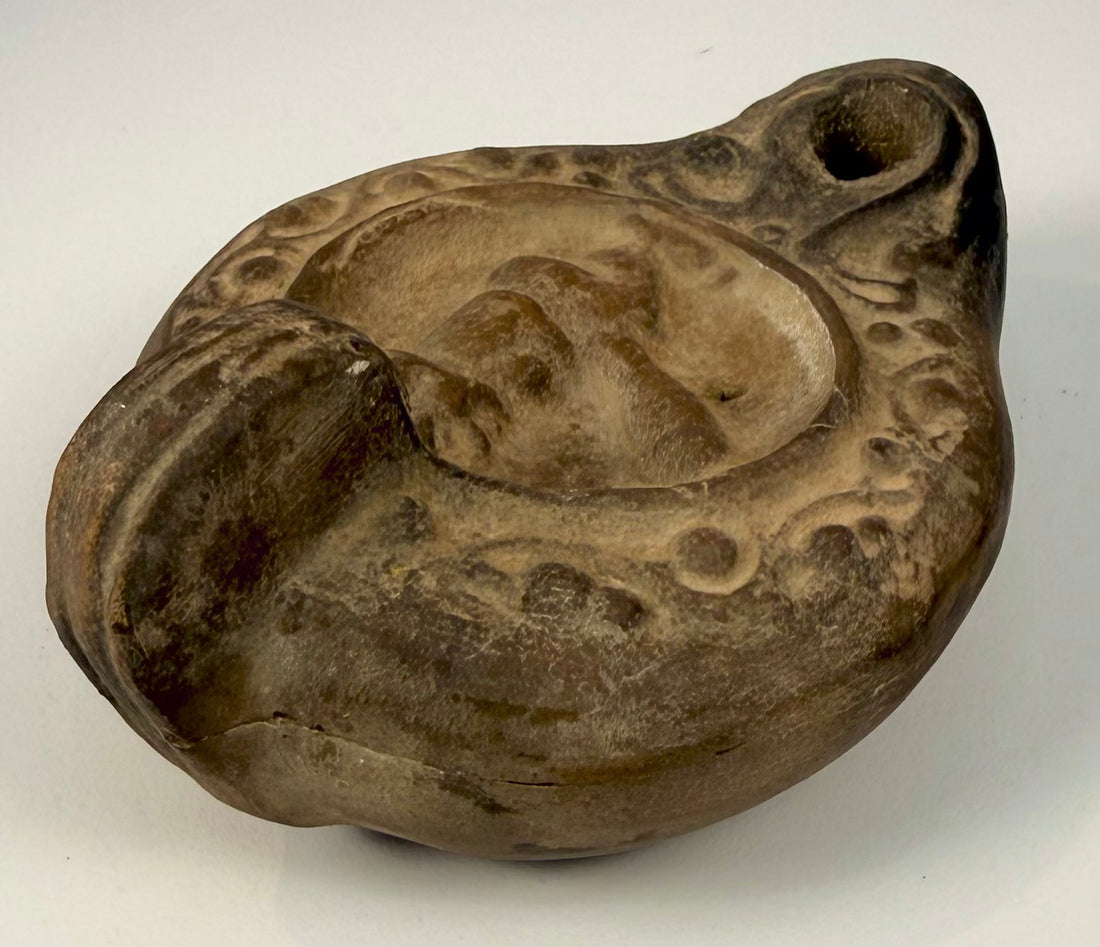
This distinctive ancient Roman terracotta oil lamp features a central relief depicting Priapus, the Roman deity associated with fertility, gardens, and protective symbolism. Dating to the 2nd century CE, the lamp represents an intriguing example of Roman domestic material culture, combining practical illumination with mythological imagery and elaborate decorative ornamentation.
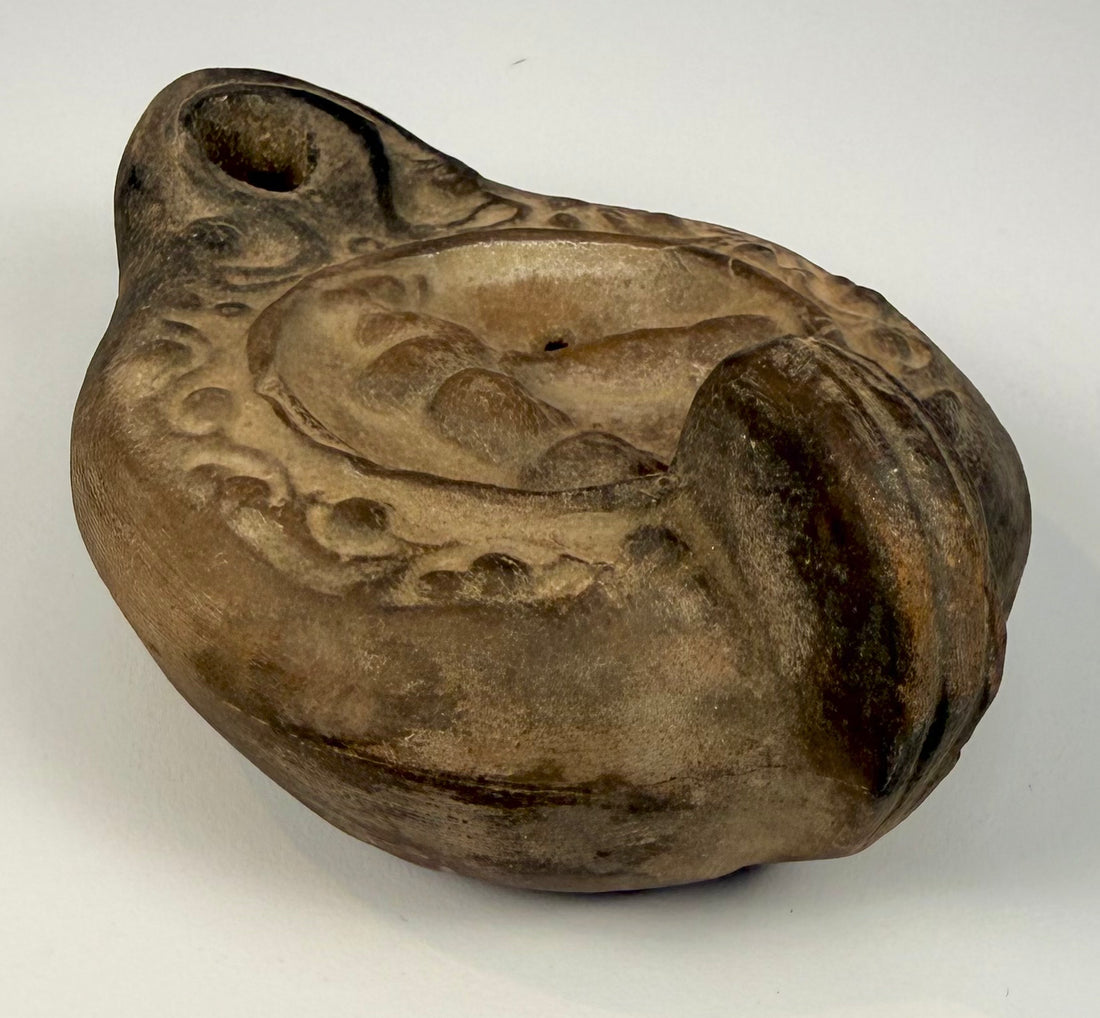
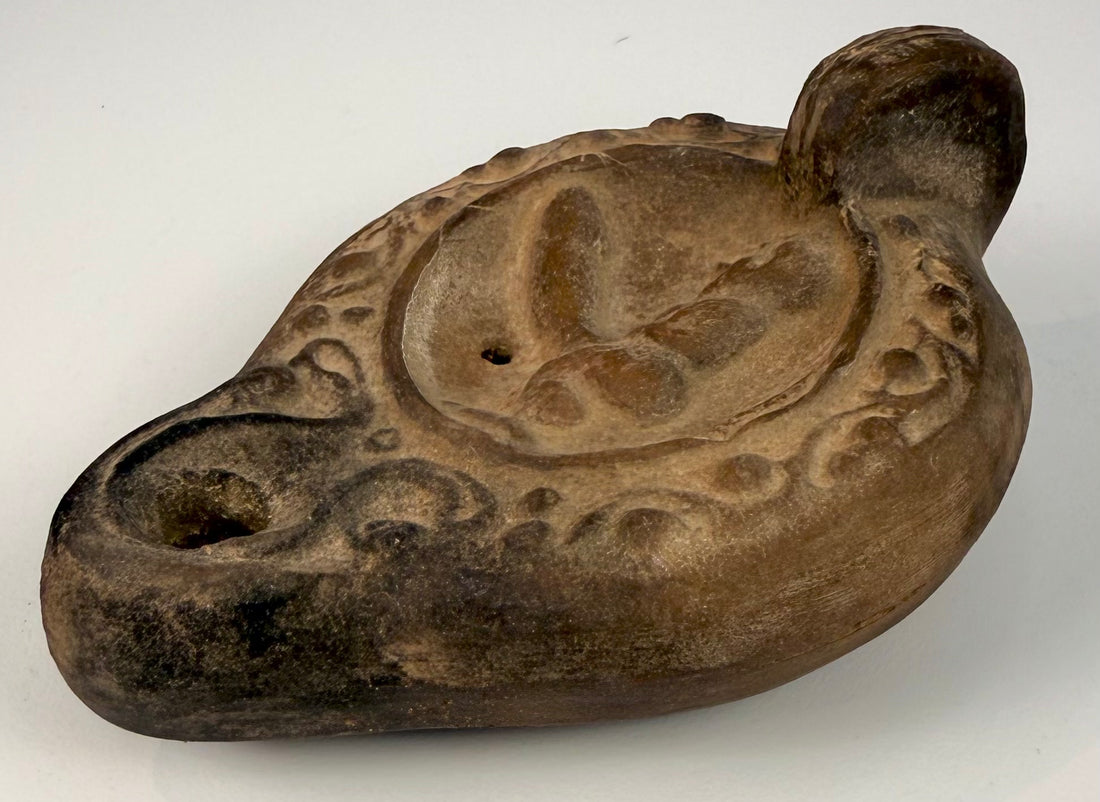
The lamp possesses a rounded body with a short projecting nozzle containing a circular wick-hole. A pointed lug extends from the rear, while the broad shoulder is decorated with a repeated arrangement of circular, oval, and scrolling motifs, framed by concentric moulded borders.
At the centre, the recessed discus features a relief representation of Priapus, identifiable through the exaggerated phallic imagery traditionally associated with this deity. Although the finer details have been softened by extensive surface wear, the surviving composition retains its distinctive figural character. A small filling-hole is incorporated into the decorated discus.
The surrounding shoulder displays a carefully arranged ornamental pattern, with repeating geometric and scrolling elements creating a decorative border around the central mythological scene. These moulded details reflect the established techniques employed by Roman lampmakers to produce functional objects with elaborate visual decoration.
The short projecting nozzle exhibits pronounced darkening around the wick opening, together with accumulated deposits and surface abrasions. Such discoloration may reflect historical use, although its precise cause cannot be established from appearance alone.
The underside features a recessed circular base without a legible maker's mark. While many Roman lamps bear workshop stamps or identifying inscriptions, others were produced with plain or undecorated bases.
Fashioned from mould-made terracotta, the lamp retains its overall form despite extensive surface wear, minor chips, and accumulated deposits.
Features
-
Central recessed discus featuring a relief representation of Priapus
-
Distinctive phallic imagery associated with Roman fertility and protective symbolism
-
Rounded body with a short projecting nozzle and circular wick-hole
-
Decorative shoulder featuring repeated circles, ovals, and scrolling motifs
-
Concentric moulded borders framing the central mythological relief
-
Pointed rear lug
-
Small filling-hole incorporated into the recessed discus
-
Recessed circular base without a legible maker's mark
-
Darkened nozzle area with accumulated deposits
-
Extensive surface wear, abrasions, minor chips, and age-related irregularities
Cultural Significance
Terracotta oil lamps were essential household objects throughout the Roman Empire, providing illumination in private residences, workshops, commercial establishments, religious spaces, and public buildings.
Beyond their practical function, Roman lamps frequently incorporated decorative imagery reflecting the religious beliefs, mythology, popular culture, and artistic traditions of the ancient world.
Among the many subjects represented were gods and goddesses, gladiators, animals, theatrical scenes, mythological figures, and symbols associated with prosperity, fertility, and divine protection.
Priapus occupied a distinctive position within Roman religious and artistic traditions. Associated particularly with fertility, gardens, agricultural abundance, and the protection of property, he was commonly represented with exaggerated male genitalia, which served as his most recognizable iconographic attribute.
In Roman visual culture, phallic imagery frequently carried symbolic meanings extending beyond sexuality. Such representations could function as apotropaic symbols, intended to avert harmful influences, including the evil eye, while invoking fertility, good fortune, and prosperity.
Priapus was particularly associated with gardens, orchards, and agricultural boundaries, where representations of the deity could serve a protective role. His image also appeared in decorative art and everyday material culture, reflecting the intersection of humour, religious belief, and fertility symbolism in Roman society.
The incorporation of Priapus into the decoration of a terracotta oil lamp illustrates how mythological and symbolic imagery could be integrated into practical household objects.
The repeated geometric and scrolling motifs surrounding the central relief further demonstrate the decorative sophistication of Roman mould-made lamp production. Such vessels were manufactured in workshops throughout the Empire, with moulding techniques allowing recognizable designs and figural compositions to be reproduced.
Condition
The lamp survives in substantially complete condition, retaining its rounded body, projecting nozzle, pointed rear lug, and decorated central discus.
Extensive surface wear is present throughout, including abrasions, minor chips, scattered deposits, and areas of uneven coloration.
The central relief depicting Priapus remains recognizable, although the finer details of the figure have been softened by surface erosion and accumulated wear.
The decorated shoulder retains its repeating circular, oval, and scrolling motifs, together with the concentric mouldings framing the recessed discus.
Pronounced darkening is visible around the circular wick-hole, while the surrounding nozzle exhibits surface deposits and minor irregularities.
The underside retains a recessed circular base without a legible maker's mark.
Dimensions (Approximate)
Length: 4 in
Width: 3 in
Height: 1.5 in
Age (Approximate)
1,825–1,925 years old
Provenance
Formerly part of a private collection in Indiana, USA, having been acquired from a gallery in New York in 1996. Subsequently handled by Ripley Auctions & Appraisals, Indianapolis, Indiana. Ripley Auctions is an established Indianapolis auction house with more than three decades of experience handling fine art, antiques, antiquities, collectibles, and estate collections, serving collectors and buyers nationally and internationally.
Expert Assessment: Examined by Luca Salvaggio, an Italian archaeologist specializing in ancient Mediterranean material, with a Postgraduate Diploma from the Italian Archaeological School at Athens (IASA) and accreditation for preventive archaeology from the Italian Ministry of Culture (MiC). He identified the artifact as a Roman terracotta oil lamp depicting Priapus, dating to the 2nd century CE, refining its previous classification as an erotic oil lamp featuring an ithyphallic male figure. The lamp's distinguishing characteristics include its mould-made rounded body, short projecting nozzle with circular wick-hole, pointed rear lug, decorative shoulder with repeated circular, oval, and scrolling motifs, recessed discus featuring the worn relief of Priapus, and circular recessed base without a legible maker's mark.
Learn More
View a comparable Roman terracotta oil lamp featuring an ithyphallic figure at the J. Paul Getty Museum
Browse Our Collection of Roman & Greek Artifacts
Description
Historical Context & Origin
Region: Roman Empire (Precise Provincial Origin Unknown)
Material: Mould-Made Terracotta (Fired Clay)
Period: Roman Imperial Period, circa 2nd Century CE
Description
This distinctive ancient Roman terracotta oil lamp features a central relief depicting Priapus, the Roman deity associated with fertility, gardens, and protective symbolism. Dating to the 2nd century CE, the lamp represents an intriguing example of Roman domestic material culture, combining practical illumination with mythological imagery and elaborate decorative ornamentation.
The lamp possesses a rounded body with a short projecting nozzle containing a circular wick-hole. A pointed lug extends from the rear, while the broad shoulder is decorated with a repeated arrangement of circular, oval, and scrolling motifs, framed by concentric moulded borders.
At the centre, the recessed discus features a relief representation of Priapus, identifiable through the exaggerated phallic imagery traditionally associated with this deity. Although the finer details have been softened by extensive surface wear, the surviving composition retains its distinctive figural character. A small filling-hole is incorporated into the decorated discus.
The surrounding shoulder displays a carefully arranged ornamental pattern, with repeating geometric and scrolling elements creating a decorative border around the central mythological scene. These moulded details reflect the established techniques employed by Roman lampmakers to produce functional objects with elaborate visual decoration.
The short projecting nozzle exhibits pronounced darkening around the wick opening, together with accumulated deposits and surface abrasions. Such discoloration may reflect historical use, although its precise cause cannot be established from appearance alone.
The underside features a recessed circular base without a legible maker's mark. While many Roman lamps bear workshop stamps or identifying inscriptions, others were produced with plain or undecorated bases.
Fashioned from mould-made terracotta, the lamp retains its overall form despite extensive surface wear, minor chips, and accumulated deposits.
Features
-
Central recessed discus featuring a relief representation of Priapus
-
Distinctive phallic imagery associated with Roman fertility and protective symbolism
-
Rounded body with a short projecting nozzle and circular wick-hole
-
Decorative shoulder featuring repeated circles, ovals, and scrolling motifs
-
Concentric moulded borders framing the central mythological relief
-
Pointed rear lug
-
Small filling-hole incorporated into the recessed discus
-
Recessed circular base without a legible maker's mark
-
Darkened nozzle area with accumulated deposits
-
Extensive surface wear, abrasions, minor chips, and age-related irregularities
Cultural Significance
Terracotta oil lamps were essential household objects throughout the Roman Empire, providing illumination in private residences, workshops, commercial establishments, religious spaces, and public buildings.
Beyond their practical function, Roman lamps frequently incorporated decorative imagery reflecting the religious beliefs, mythology, popular culture, and artistic traditions of the ancient world.
Among the many subjects represented were gods and goddesses, gladiators, animals, theatrical scenes, mythological figures, and symbols associated with prosperity, fertility, and divine protection.
Priapus occupied a distinctive position within Roman religious and artistic traditions. Associated particularly with fertility, gardens, agricultural abundance, and the protection of property, he was commonly represented with exaggerated male genitalia, which served as his most recognizable iconographic attribute.
In Roman visual culture, phallic imagery frequently carried symbolic meanings extending beyond sexuality. Such representations could function as apotropaic symbols, intended to avert harmful influences, including the evil eye, while invoking fertility, good fortune, and prosperity.
Priapus was particularly associated with gardens, orchards, and agricultural boundaries, where representations of the deity could serve a protective role. His image also appeared in decorative art and everyday material culture, reflecting the intersection of humour, religious belief, and fertility symbolism in Roman society.
The incorporation of Priapus into the decoration of a terracotta oil lamp illustrates how mythological and symbolic imagery could be integrated into practical household objects.
The repeated geometric and scrolling motifs surrounding the central relief further demonstrate the decorative sophistication of Roman mould-made lamp production. Such vessels were manufactured in workshops throughout the Empire, with moulding techniques allowing recognizable designs and figural compositions to be reproduced.
Condition
The lamp survives in substantially complete condition, retaining its rounded body, projecting nozzle, pointed rear lug, and decorated central discus.
Extensive surface wear is present throughout, including abrasions, minor chips, scattered deposits, and areas of uneven coloration.
The central relief depicting Priapus remains recognizable, although the finer details of the figure have been softened by surface erosion and accumulated wear.
The decorated shoulder retains its repeating circular, oval, and scrolling motifs, together with the concentric mouldings framing the recessed discus.
Pronounced darkening is visible around the circular wick-hole, while the surrounding nozzle exhibits surface deposits and minor irregularities.
The underside retains a recessed circular base without a legible maker's mark.
Dimensions (Approximate)
Length: 4 in
Width: 3 in
Height: 1.5 in
Age (Approximate)
1,825–1,925 years old
Provenance
Formerly part of a private collection in Indiana, USA, having been acquired from a gallery in New York in 1996. Subsequently handled by Ripley Auctions & Appraisals, Indianapolis, Indiana. Ripley Auctions is an established Indianapolis auction house with more than three decades of experience handling fine art, antiques, antiquities, collectibles, and estate collections, serving collectors and buyers nationally and internationally.
Expert Assessment: Examined by Luca Salvaggio, an Italian archaeologist specializing in ancient Mediterranean material, with a Postgraduate Diploma from the Italian Archaeological School at Athens (IASA) and accreditation for preventive archaeology from the Italian Ministry of Culture (MiC). He identified the artifact as a Roman terracotta oil lamp depicting Priapus, dating to the 2nd century CE, refining its previous classification as an erotic oil lamp featuring an ithyphallic male figure. The lamp's distinguishing characteristics include its mould-made rounded body, short projecting nozzle with circular wick-hole, pointed rear lug, decorative shoulder with repeated circular, oval, and scrolling motifs, recessed discus featuring the worn relief of Priapus, and circular recessed base without a legible maker's mark.
Learn More
View a comparable Roman terracotta oil lamp featuring an ithyphallic figure at the J. Paul Getty Museum
Browse Our Collection of Roman & Greek Artifacts
You May Also Like
