

Ancient Roman Figural Relief Fragment in Volcanic Tuff | Circa 1st Century BCE – 2nd Century CE
Couldn't load pickup availability


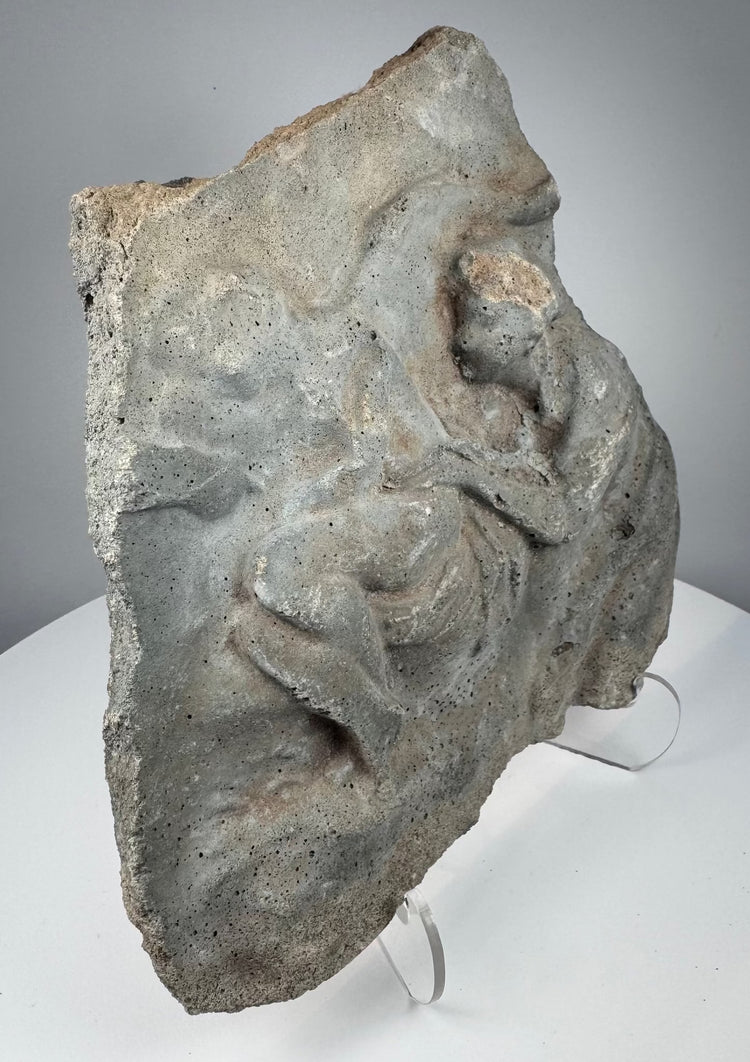
Ancient Roman Figural Relief Fragment in Volcanic Tuff | Circa 1st Century BCE – 2nd Century CE
Description
More
Less
Historical Context & Origin
Region: Central Italy / Roman World
Material: Grey porous volcanic stone, probably tuff
Period: Roman Republic to Imperial Period, circa 1st Century BCE–2nd Century CE
Description
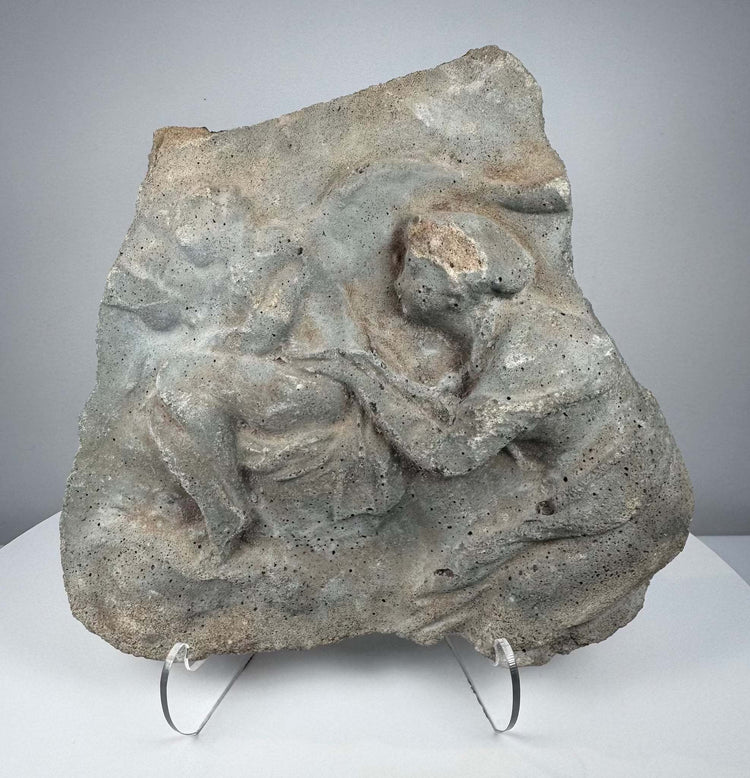
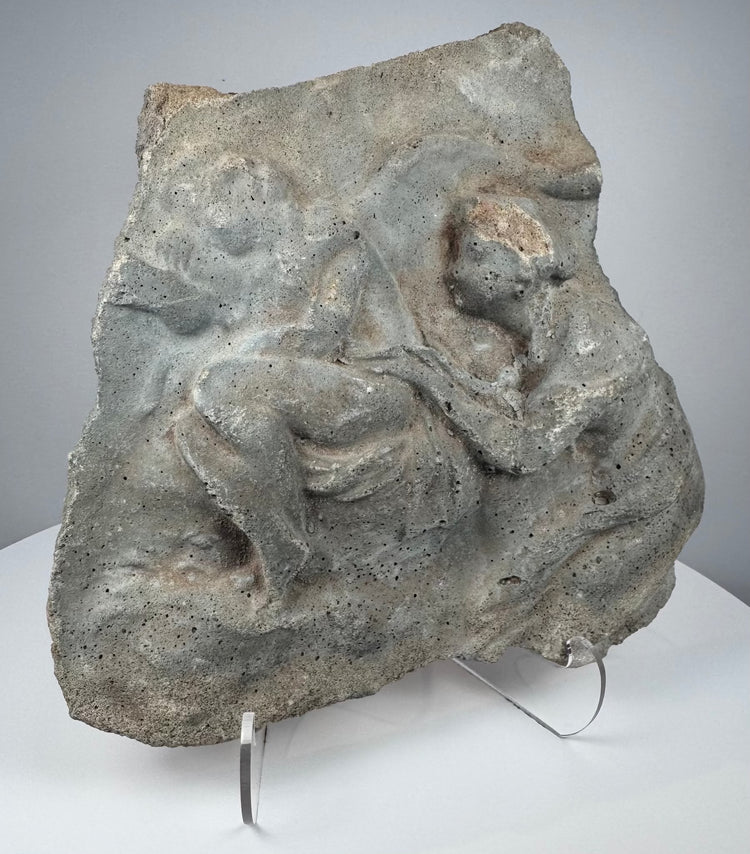
This ancient Roman figural relief fragment is carved from grey porous volcanic stone, probably tuff, and dates broadly from the 1st century BCE to the 2nd century CE.
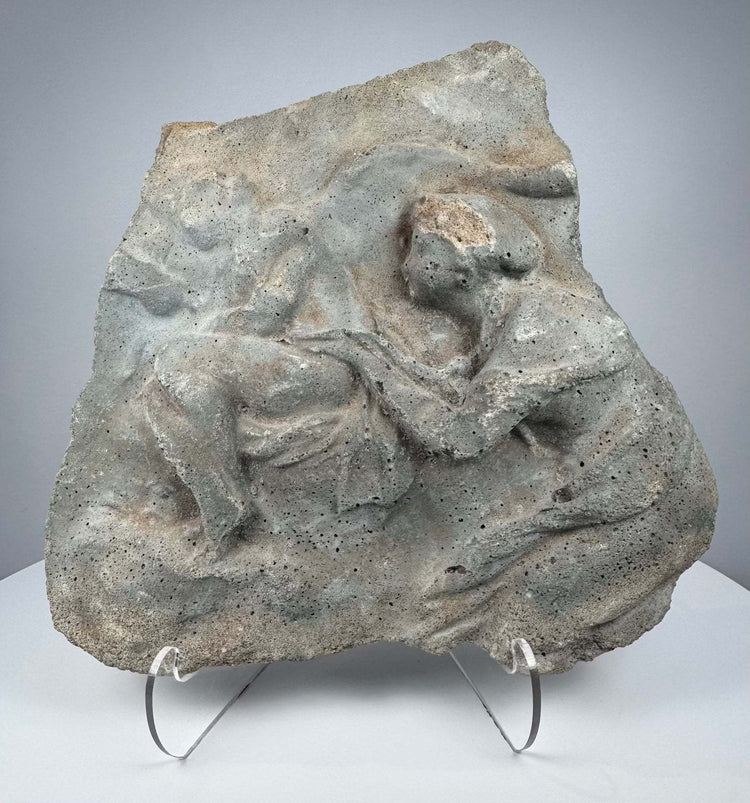
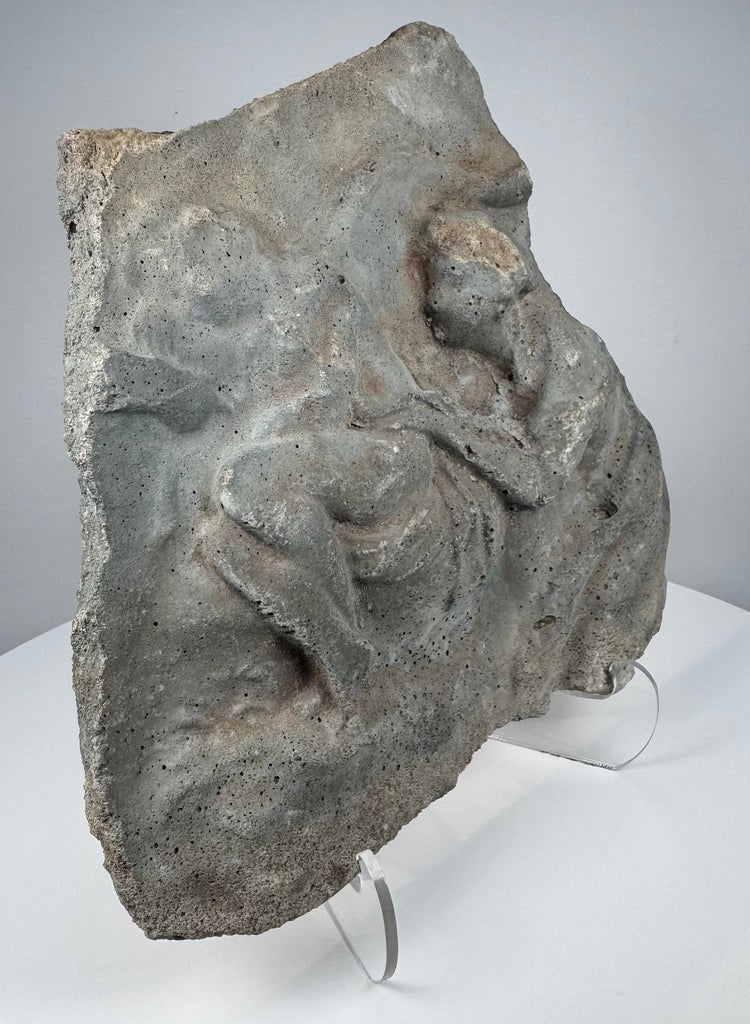
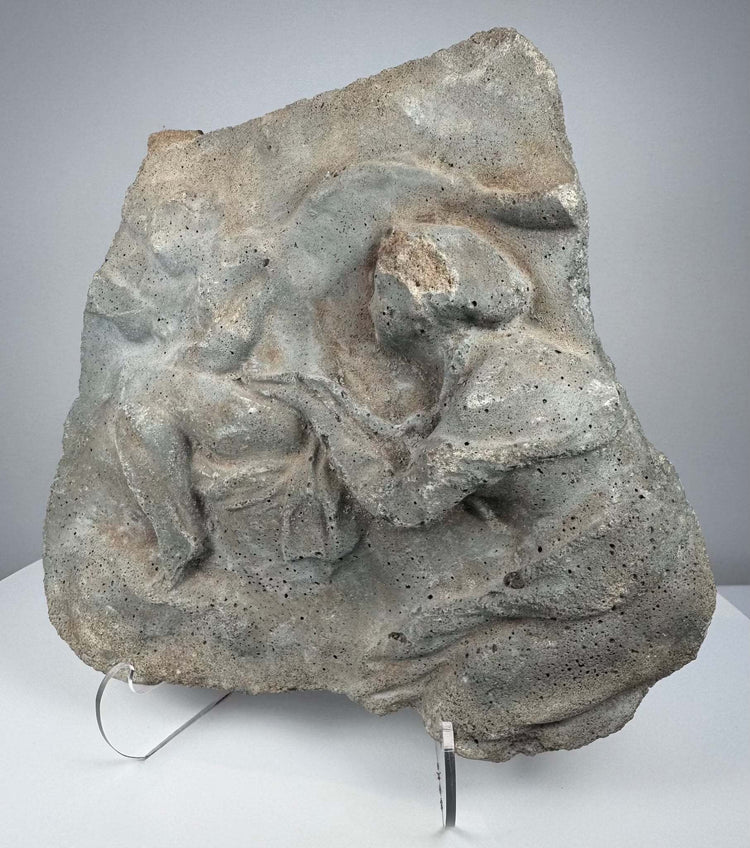
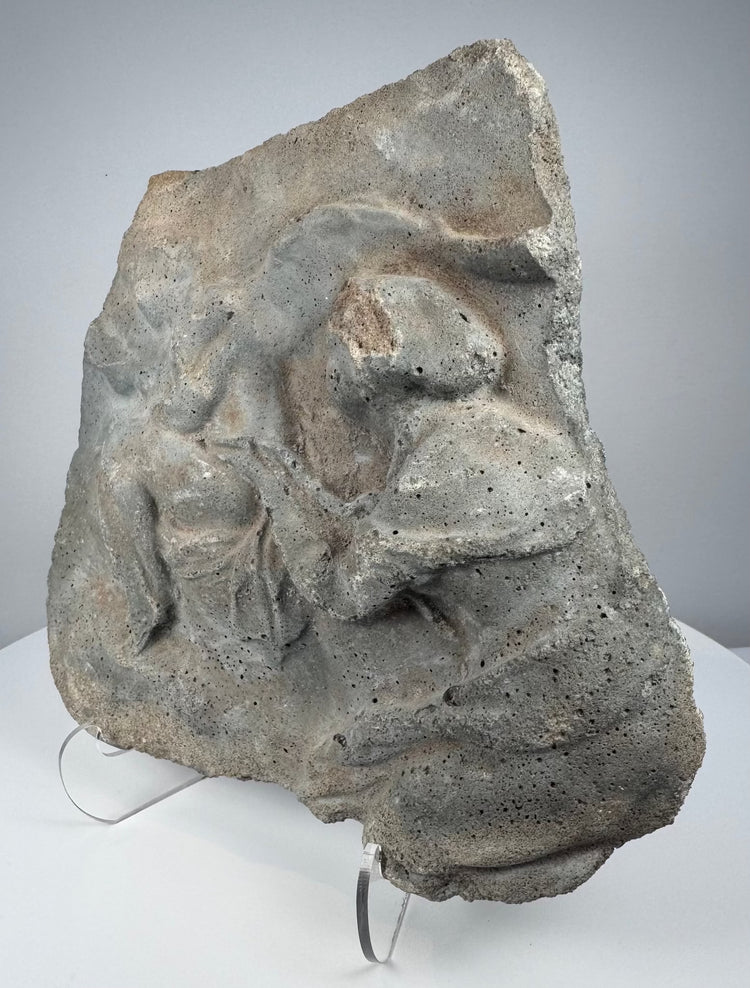
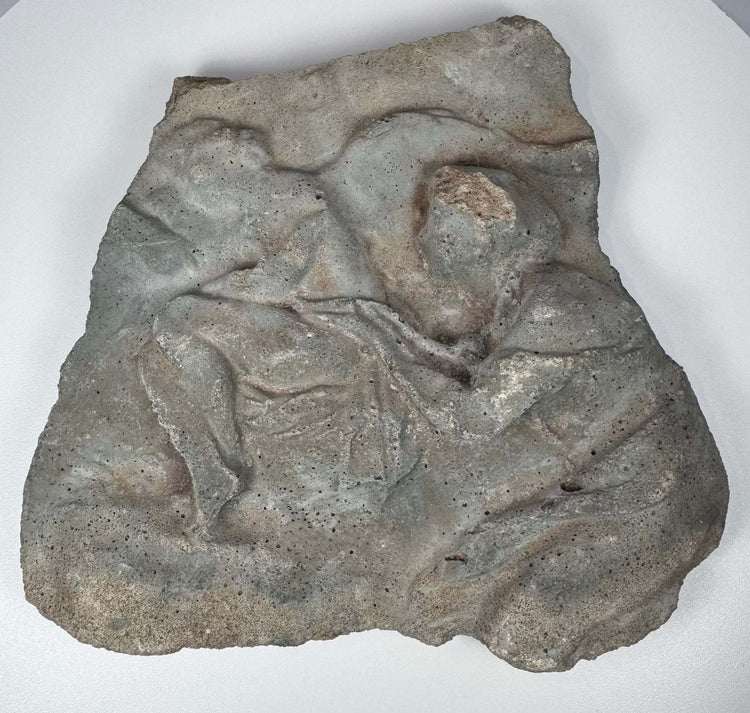
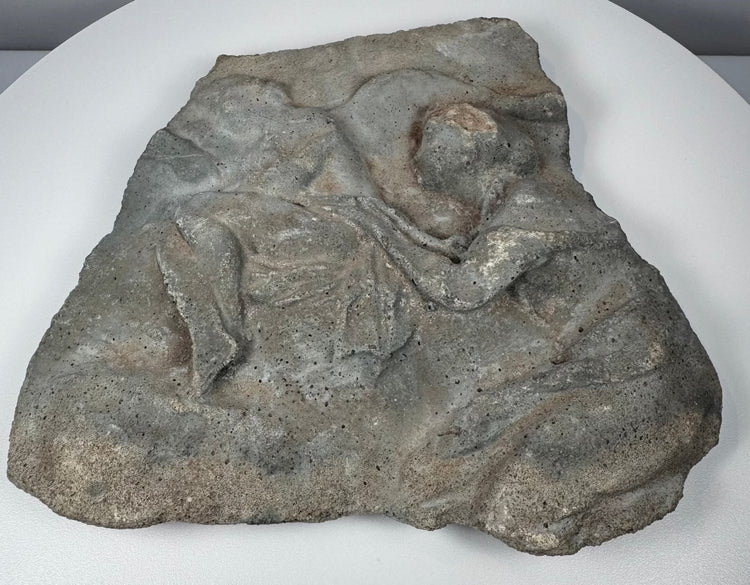
The surviving composition depicts two figures in relief. The principal figure is seated with the head bent forward, one leg raised, and drapery extending across the lap. To the left is a second, more fragmentary figure, of which only portions of the head and body remain.
Although extensive weathering has softened much of the original carving, the principal composition and areas of drapery remain identifiable. The stone's coarse, porous texture is consistent with volcanic tuff, a material widely employed in Central Italy during the Roman period.
Features
- Roman Republican to Imperial period
- Grey porous volcanic stone, probably tuff
- Two surviving figures in relief
- Seated principal figure with head inclined forward
- One raised leg with drapery across the lap
- Partial second figure surviving at the left
- Heavy archaeological weathering and mineral encrustation
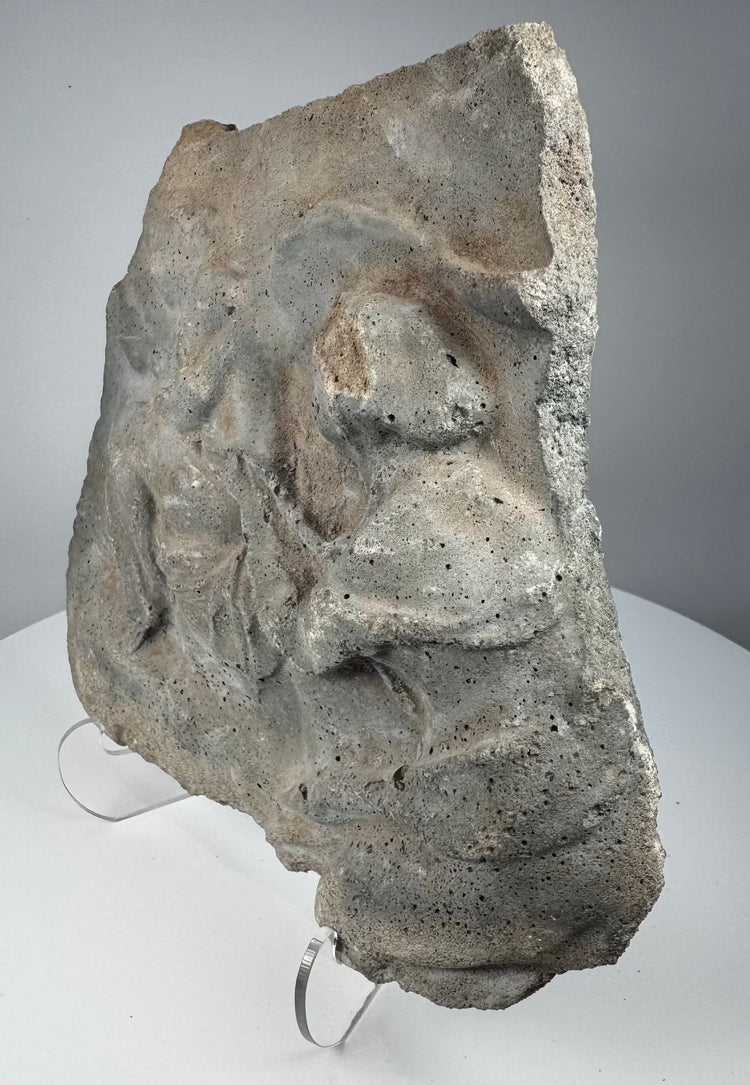
- Mounted on a modern display stand
Cultural Significance
Figural relief sculpture was widely employed throughout the Roman world in architectural, funerary, religious, and decorative contexts. Relief carving allowed complex human compositions and narrative scenes to be incorporated into monuments and other stone structures.
Volcanic tuff was an important building and sculptural material in Central Italy, where abundant local deposits made it readily available throughout the Republican and Imperial periods.
The precise original subject and function of this fragment cannot be established from the surviving portion alone, but its material, carving style, and figural composition support its attribution to the Roman world of Central Italy.
Condition
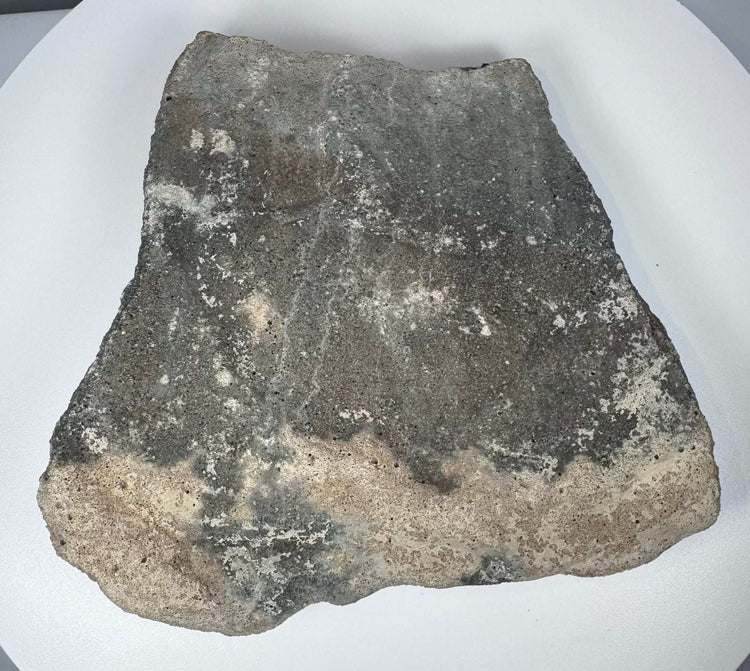
Ancient fragmentary condition with heavy weathering that has softened the original carving. Losses are present around the edges, together with extensive pitting, mineral deposits, encrustation, and surface erosion.
Despite these losses, the seated figure, raised leg, drapery, and surviving portions of the second figure remain discernible. Mounted on a modern transparent display stand.
Dimensions (Approximate)
Height: 7.5 in
Width: 7 in
Age (Approximate)
1,800–2,100 years old
Provenance
Formerly held in a private collection in Branford, Connecticut, USA, comprising a collection of European artifacts.
Expert Assessment: Examined by Luca Salvaggio, an Italian archaeologist specializing in ancient Mediterranean and Near Eastern material, with a Postgraduate Diploma from the Italian Archaeological School at Athens (IASA) and accreditation from the Italian Ministry of Culture (MiC). He identified the fragment as a Roman figural relief from Central Italy dating broadly from the 1st century BCE to the 2nd century CE, carved from grey porous volcanic stone, probably tuff, based on its surviving seated figure with head inclined forward, raised leg, drapery across the lap, and partial second figure at the left.
Learn More
Explore an ancient Italian tuff cinerary urn with figural relief carving in the collection of the British Museum.
Browse our collection of Roman & Greek Artifacts & Ancient Relics.
Description
Historical Context & Origin
Region: Central Italy / Roman World
Material: Grey porous volcanic stone, probably tuff
Period: Roman Republic to Imperial Period, circa 1st Century BCE–2nd Century CE
Description
This ancient Roman figural relief fragment is carved from grey porous volcanic stone, probably tuff, and dates broadly from the 1st century BCE to the 2nd century CE.
The surviving composition depicts two figures in relief. The principal figure is seated with the head bent forward, one leg raised, and drapery extending across the lap. To the left is a second, more fragmentary figure, of which only portions of the head and body remain.
Although extensive weathering has softened much of the original carving, the principal composition and areas of drapery remain identifiable. The stone's coarse, porous texture is consistent with volcanic tuff, a material widely employed in Central Italy during the Roman period.
Features
- Roman Republican to Imperial period
- Grey porous volcanic stone, probably tuff
- Two surviving figures in relief
- Seated principal figure with head inclined forward
- One raised leg with drapery across the lap
- Partial second figure surviving at the left
- Heavy archaeological weathering and mineral encrustation
- Mounted on a modern display stand
Cultural Significance
Figural relief sculpture was widely employed throughout the Roman world in architectural, funerary, religious, and decorative contexts. Relief carving allowed complex human compositions and narrative scenes to be incorporated into monuments and other stone structures.
Volcanic tuff was an important building and sculptural material in Central Italy, where abundant local deposits made it readily available throughout the Republican and Imperial periods.
The precise original subject and function of this fragment cannot be established from the surviving portion alone, but its material, carving style, and figural composition support its attribution to the Roman world of Central Italy.
Condition
Ancient fragmentary condition with heavy weathering that has softened the original carving. Losses are present around the edges, together with extensive pitting, mineral deposits, encrustation, and surface erosion.
Despite these losses, the seated figure, raised leg, drapery, and surviving portions of the second figure remain discernible. Mounted on a modern transparent display stand.
Dimensions (Approximate)
Height: 7.5 in
Width: 7 in
Age (Approximate)
1,800–2,100 years old
Provenance
Formerly held in a private collection in Branford, Connecticut, USA, comprising a collection of European artifacts.
Expert Assessment: Examined by Luca Salvaggio, an Italian archaeologist specializing in ancient Mediterranean and Near Eastern material, with a Postgraduate Diploma from the Italian Archaeological School at Athens (IASA) and accreditation from the Italian Ministry of Culture (MiC). He identified the fragment as a Roman figural relief from Central Italy dating broadly from the 1st century BCE to the 2nd century CE, carved from grey porous volcanic stone, probably tuff, based on its surviving seated figure with head inclined forward, raised leg, drapery across the lap, and partial second figure at the left.
Learn More
Explore an ancient Italian tuff cinerary urn with figural relief carving in the collection of the British Museum.
Browse our collection of Roman & Greek Artifacts & Ancient Relics.
You May Also Like
