

Ancient Holy Land Samaritan Geometric Terracotta Oil Lamp | Circa 6th – 7th Century AD
Couldn't load pickup availability


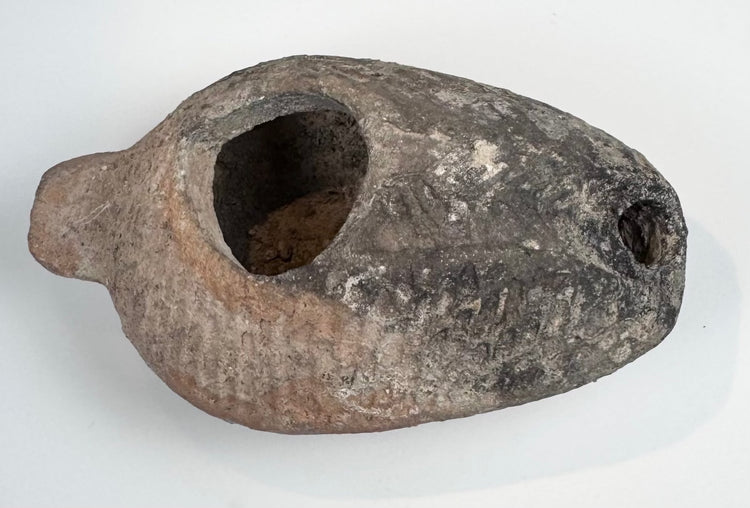
Ancient Holy Land Samaritan Geometric Terracotta Oil Lamp | Circa 6th – 7th Century AD
Description
More
Less
Historical Context & Origin
Region: Holy Land / Levant
Material: Terracotta
Period: Circa 6th–7th Century AD
Description
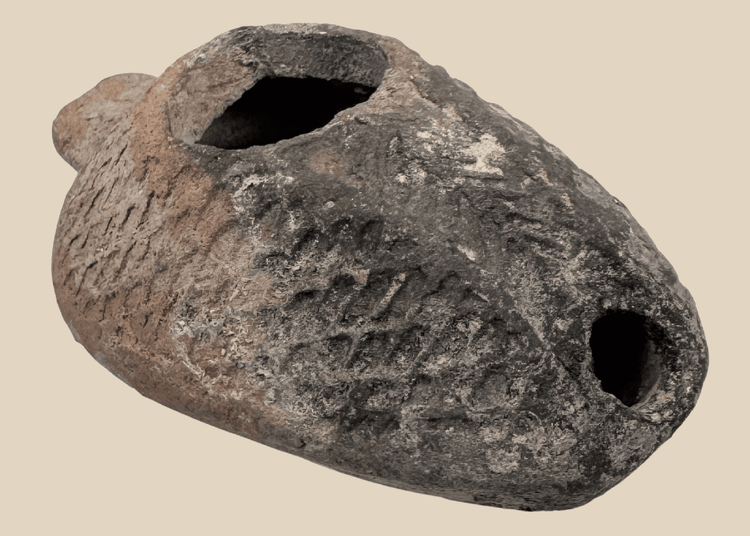
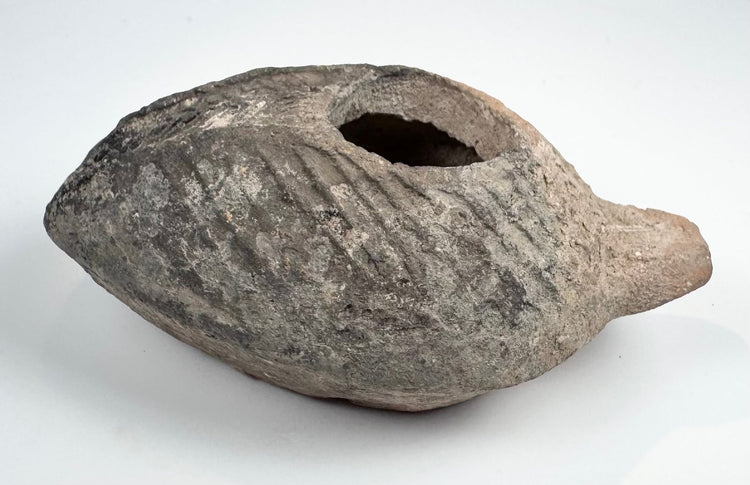
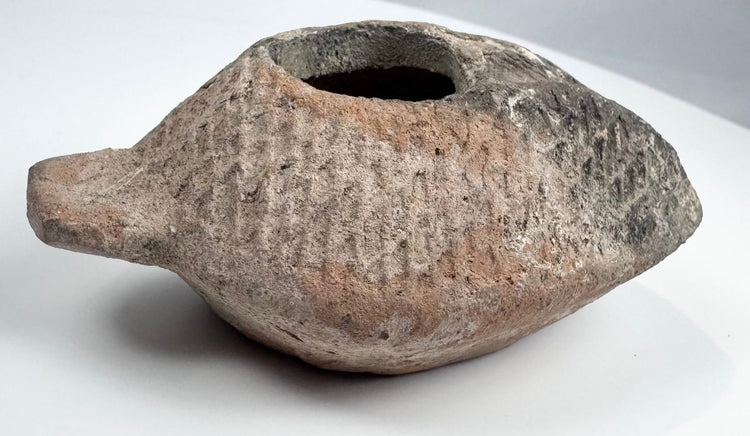
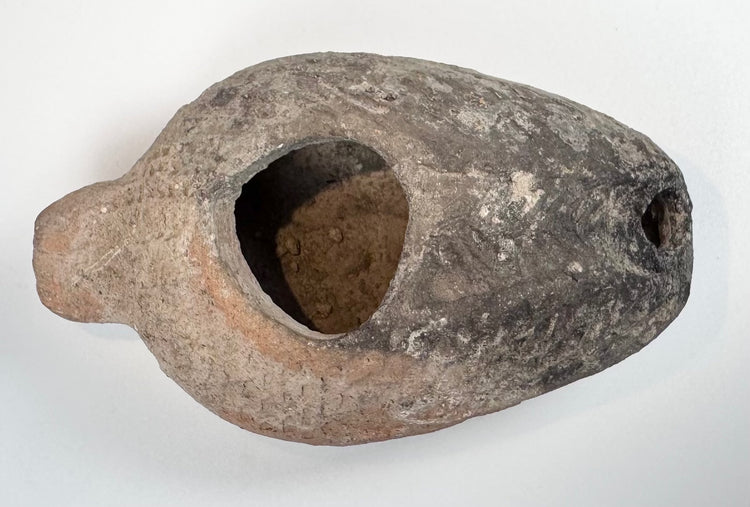
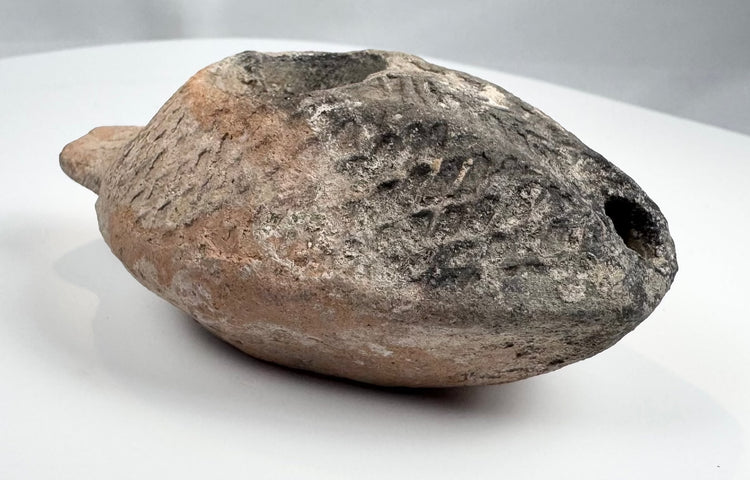
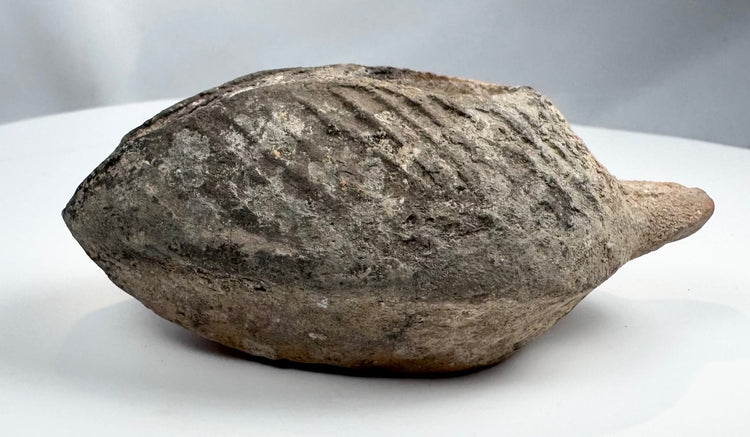
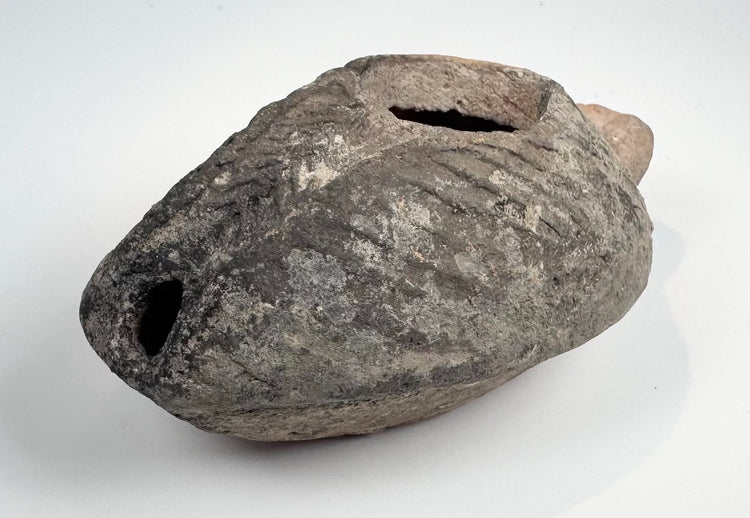
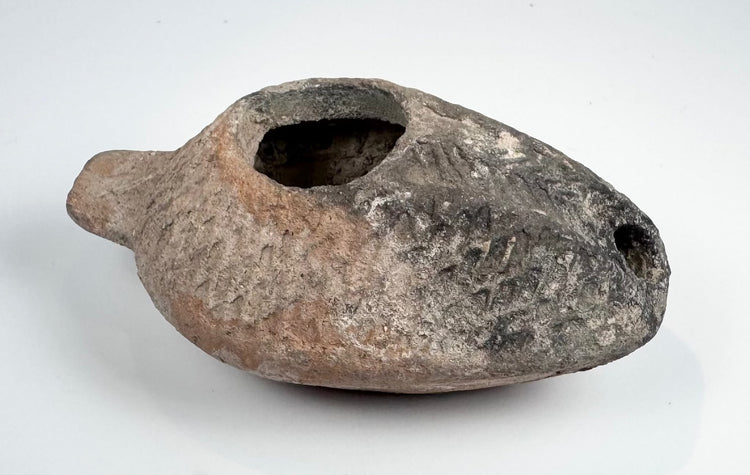
This ancient terracotta oil lamp originates from the Holy Land and belongs to the Samaritan lamp tradition of the Early Byzantine period, circa 6th–7th century AD. The compact vessel is formed with an elongated oval body, projecting nozzle, large central filling aperture, and a smaller wick opening at the front.
The upper surface is decorated with a series of incised and impressed geometric motifs arranged around the shoulder. These abstract patterns are characteristic of the decorative vocabulary encountered on Samaritan lamps of Late Antique Palestine, where geometric and non-figural ornament was frequently employed.
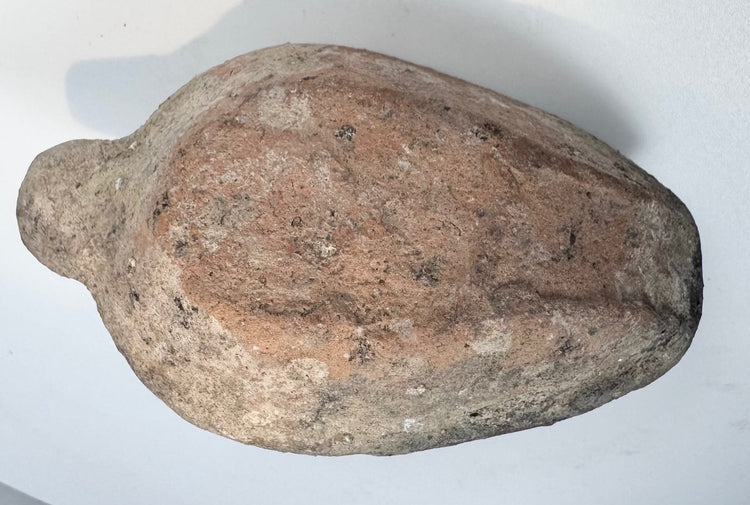
The lamp retains an extensively weathered surface with areas of darkened discoloration surrounding the nozzle and upper body. Such deposits may be consistent with prolonged burial and use, although the dark coloration should not be interpreted as definitive evidence of ancient burning without further analysis. The underside remains comparatively undecorated and preserves the natural reddish-brown color of the fired clay.
Features
- Ancient Holy Land terracotta oil lamp
- Associated with the Samaritan lamp tradition
- Large central filling aperture
- Distinct projecting nozzle and wick opening
- Geometric decoration arranged across the shoulder
- Hand-finished reddish-brown terracotta body
- Darkened surface deposits and extensive ancient patina
- Compact Late Antique form
Cultural Significance
Oil lamps were among the most common household objects of the ancient Mediterranean and Near East, providing illumination through a simple reservoir of oil and a fiber wick positioned within the nozzle. Their forms and decorative patterns changed considerably over time, allowing surviving lamps to provide important evidence for the communities that produced and used them.
Samaritan communities flourished in Palestine during Late Antiquity, particularly in Samaria and surrounding regions. Lamps associated with these communities developed recognizable forms and decorative traditions, frequently incorporating geometric, architectural and symbolic ornament. This example represents the everyday material culture of the Holy Land during a period in which Samaritan, Christian, Jewish and other communities lived within the broader Byzantine world.
Condition
Ancient condition with substantial surface weathering, mineral deposits, encrustation, abrasions and discoloration consistent with age and burial. Darkened areas are particularly visible across the decorated upper surface and around the nozzle. The filling aperture, wick opening, body and projecting nozzle remain intact and clearly defined. Geometric decoration remains visible despite considerable surface wear. Please refer closely to the photographs for the complete condition.
Dimensions (Approximate)
Length: 3.75 in
Age (Approximate)
1,300–1,500 years old
Provenance
From a private California, USA collection; acquired approximately 25 years ago.
Learn More
Learn more about the form, decoration, and historical use of Samaritan lamps through the North Carolina Museum of Art’s Samaritan Oil Lamp
Discover additional objects connected with daily life, craftsmanship, and practical traditions across the ancient world in our Collection of Functional Tools and Ancient Implements
Description
Historical Context & Origin
Region: Holy Land / Levant
Material: Terracotta
Period: Circa 6th–7th Century AD
Description
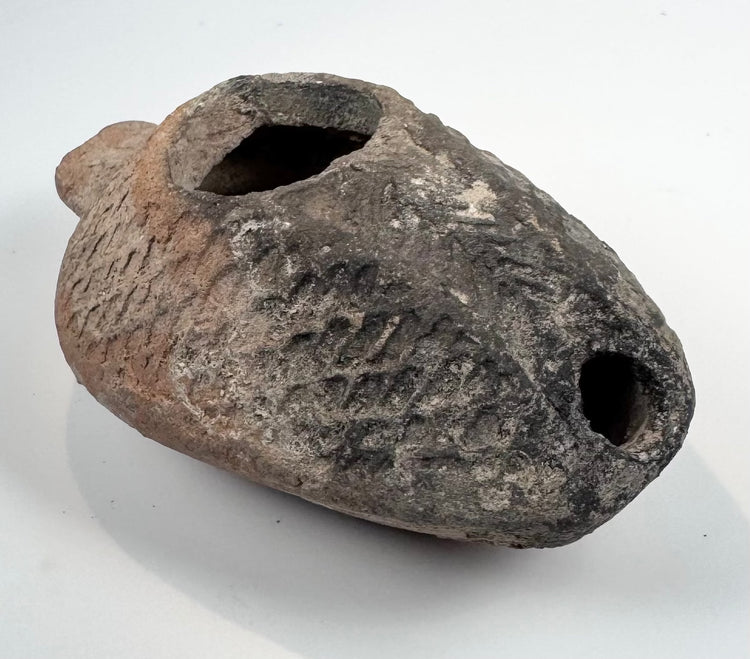
This ancient terracotta oil lamp originates from the Holy Land and belongs to the Samaritan lamp tradition of the Early Byzantine period, circa 6th–7th century AD. The compact vessel is formed with an elongated oval body, projecting nozzle, large central filling aperture, and a smaller wick opening at the front.
The upper surface is decorated with a series of incised and impressed geometric motifs arranged around the shoulder. These abstract patterns are characteristic of the decorative vocabulary encountered on Samaritan lamps of Late Antique Palestine, where geometric and non-figural ornament was frequently employed.
The lamp retains an extensively weathered surface with areas of darkened discoloration surrounding the nozzle and upper body. Such deposits may be consistent with prolonged burial and use, although the dark coloration should not be interpreted as definitive evidence of ancient burning without further analysis. The underside remains comparatively undecorated and preserves the natural reddish-brown color of the fired clay.
Features
- Ancient Holy Land terracotta oil lamp
- Associated with the Samaritan lamp tradition
- Large central filling aperture
- Distinct projecting nozzle and wick opening
- Geometric decoration arranged across the shoulder
- Hand-finished reddish-brown terracotta body
- Darkened surface deposits and extensive ancient patina
- Compact Late Antique form
Cultural Significance
Oil lamps were among the most common household objects of the ancient Mediterranean and Near East, providing illumination through a simple reservoir of oil and a fiber wick positioned within the nozzle. Their forms and decorative patterns changed considerably over time, allowing surviving lamps to provide important evidence for the communities that produced and used them.
Samaritan communities flourished in Palestine during Late Antiquity, particularly in Samaria and surrounding regions. Lamps associated with these communities developed recognizable forms and decorative traditions, frequently incorporating geometric, architectural and symbolic ornament. This example represents the everyday material culture of the Holy Land during a period in which Samaritan, Christian, Jewish and other communities lived within the broader Byzantine world.
Condition
Ancient condition with substantial surface weathering, mineral deposits, encrustation, abrasions and discoloration consistent with age and burial. Darkened areas are particularly visible across the decorated upper surface and around the nozzle. The filling aperture, wick opening, body and projecting nozzle remain intact and clearly defined. Geometric decoration remains visible despite considerable surface wear. Please refer closely to the photographs for the complete condition.
Dimensions (Approximate)
Length: 3.75 in
Age (Approximate)
1,300–1,500 years old
Provenance
From a private California, USA collection; acquired approximately 25 years ago.
Learn More
Learn more about the form, decoration, and historical use of Samaritan lamps through the North Carolina Museum of Art’s Samaritan Oil Lamp
Discover additional objects connected with daily life, craftsmanship, and practical traditions across the ancient world in our Collection of Functional Tools and Ancient Implements
You May Also Like
