



Ancient Sicilian Terracotta Votive Figural Group | Magna Graecia | Detailed Provenance | Circa 8th–3rd Century BCE
Couldn't load pickup availability


Ancient Sicilian Terracotta Votive Figural Group | Magna Graecia | Detailed Provenance | Circa 8th–3rd Century BCE
Description
More
Less
Historical Context & Origin
Culture: Magna Graecia / Ancient Sicily (Greek Colonial Period)
Region: Taormina, Sicily, Italy
Material: Terracotta
Period: Circa 8th–3rd Century BCE (per accompanying collection documentation)
Description
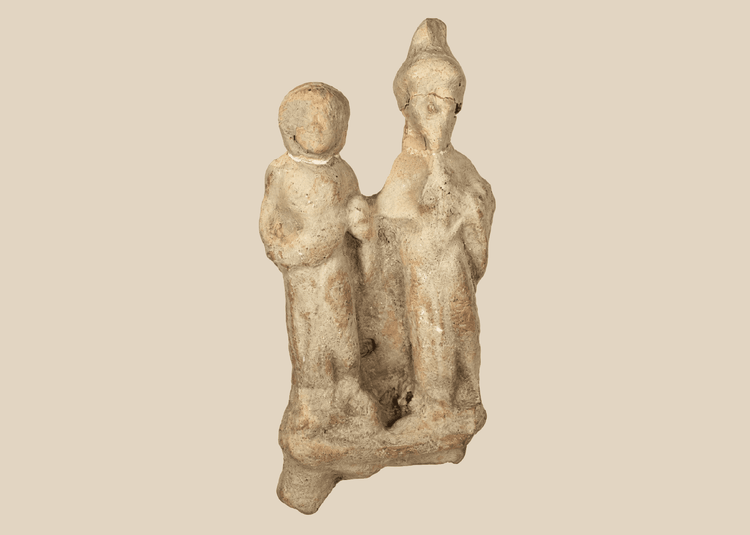
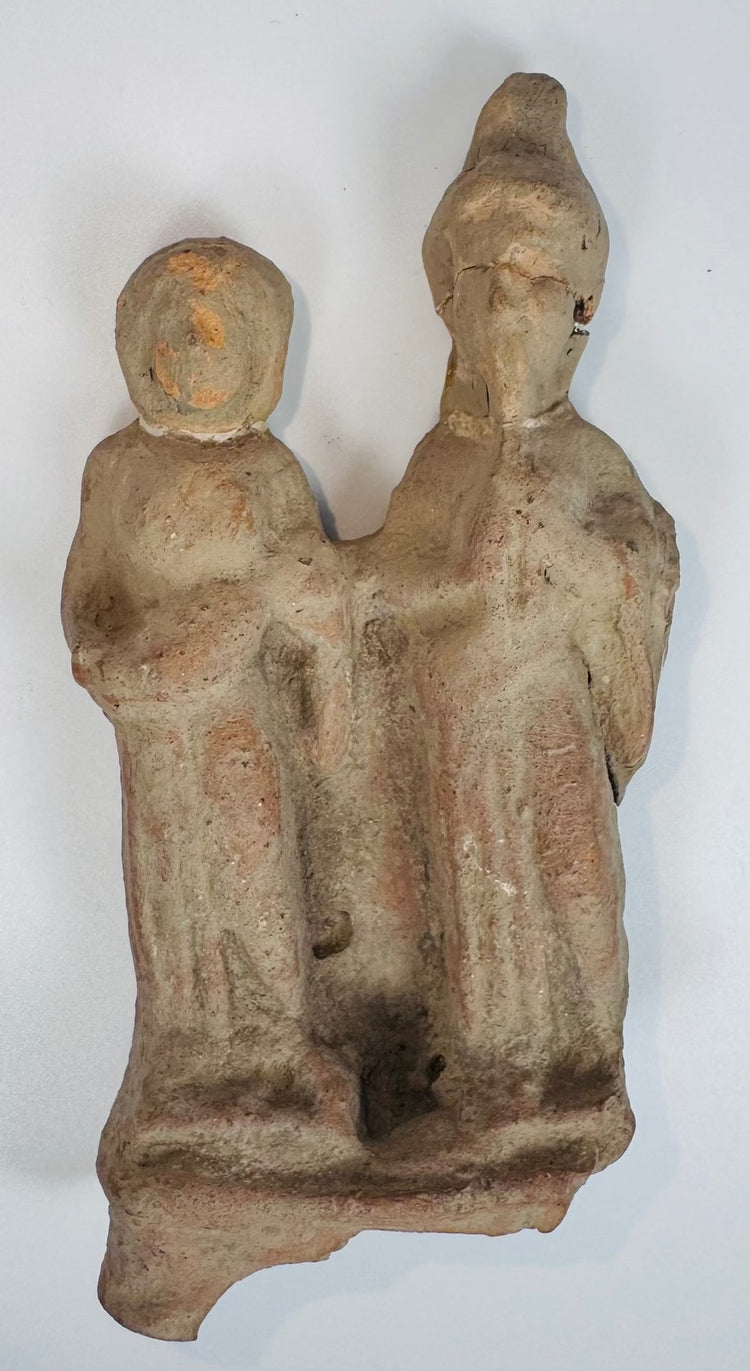
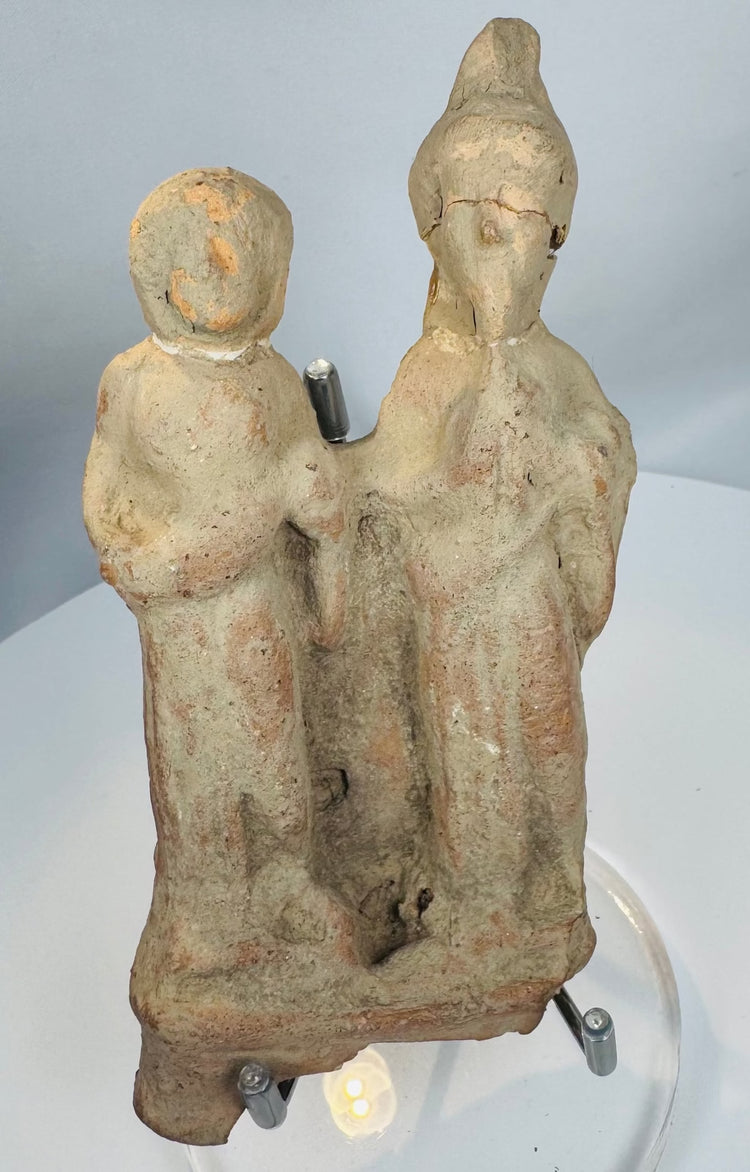
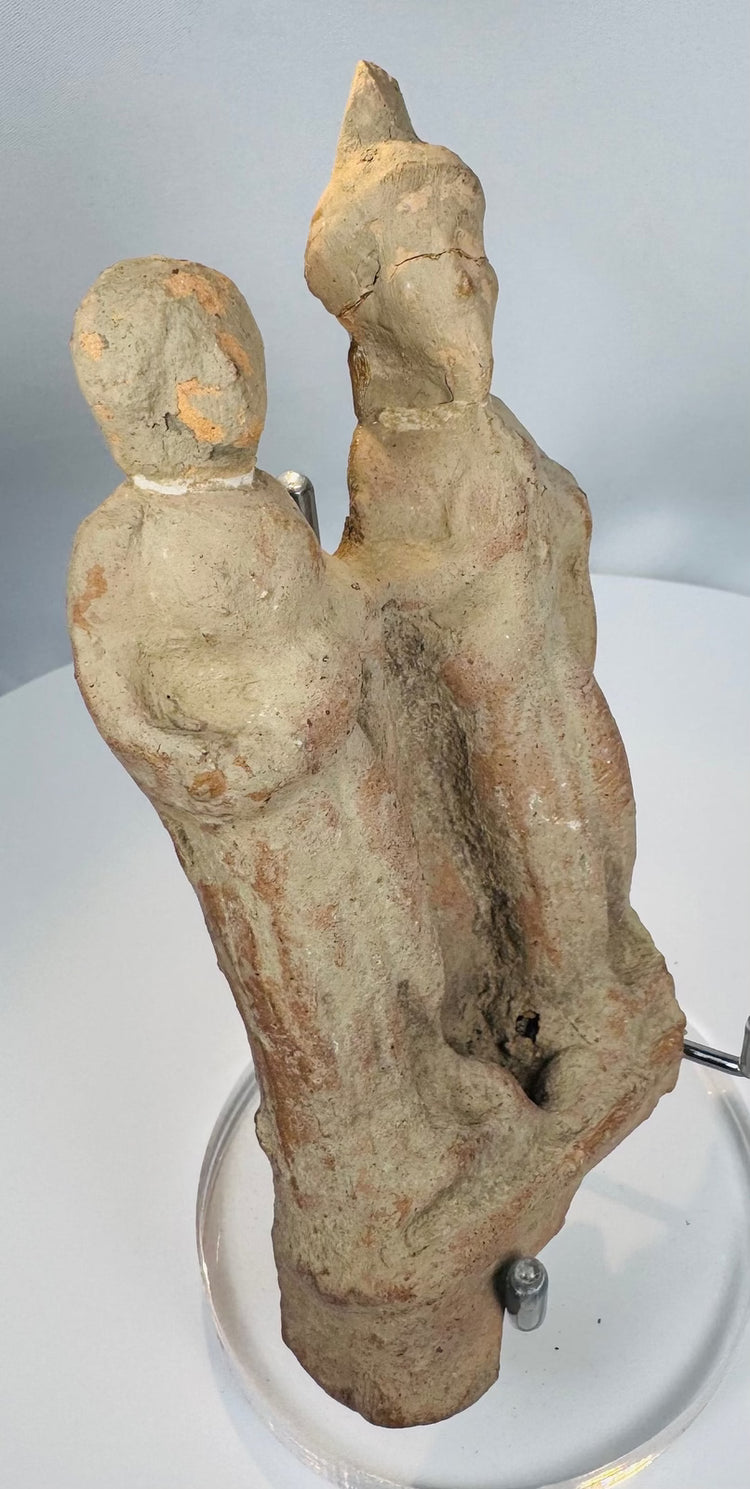
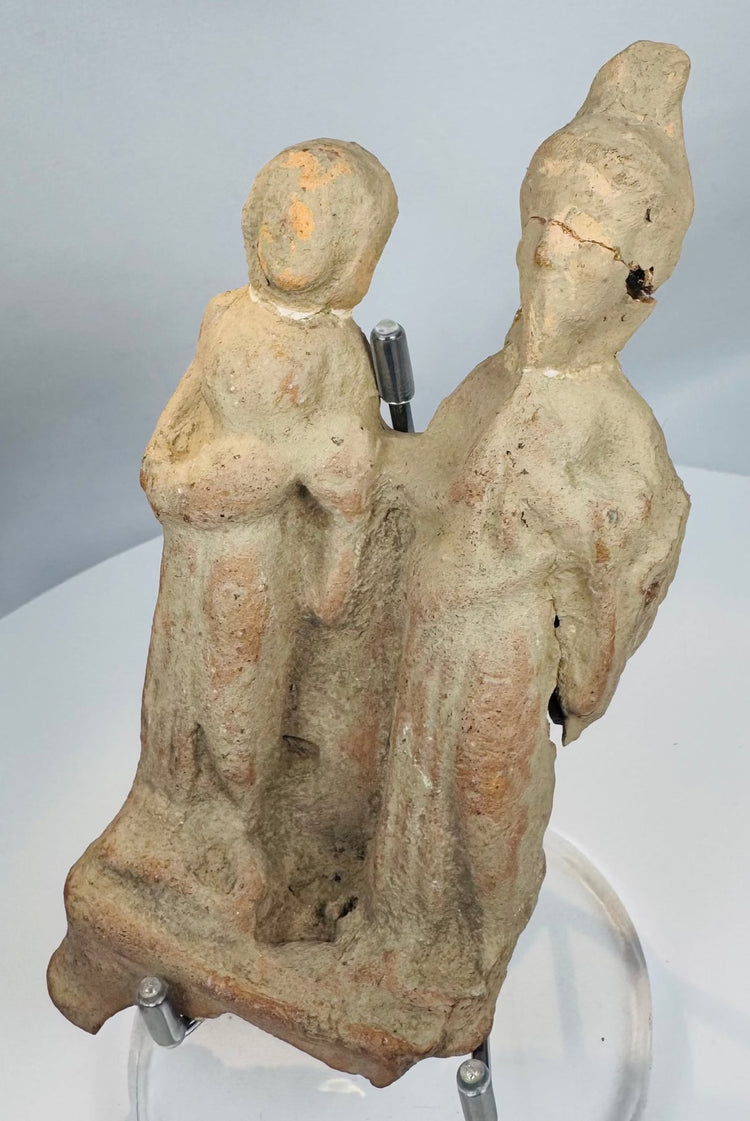
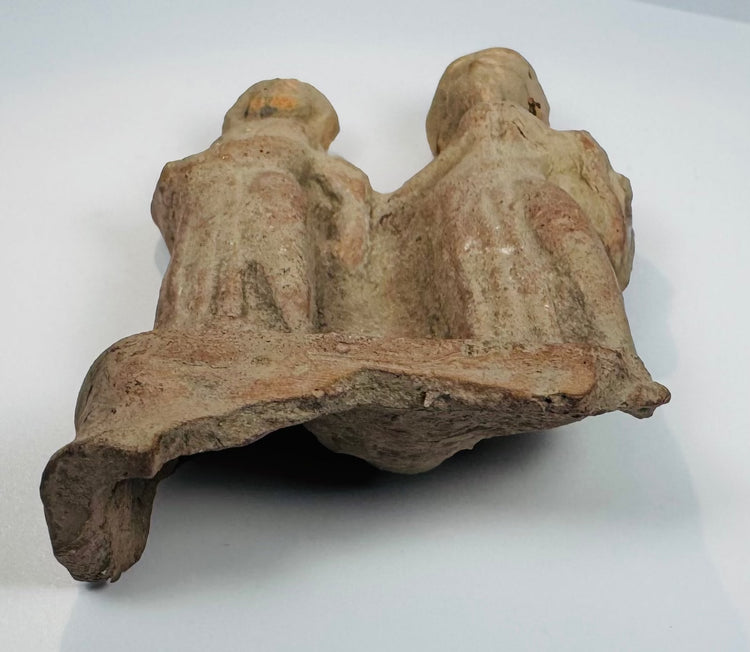
This intriguing terracotta figural group depicts two standing human figures rendered in a highly stylized manner. One figure appears female, characterized by pronounced breasts and a broad torso, while the second figure wears a tall conical headdress or hood. The pair stand side-by-side upon an integral base, forming a unified sculptural composition.
Although the precise identification of the scene remains uncertain, pieces of this type are generally associated with the rich votive and religious traditions of the Greek colonies of southern Italy and Sicily. Terracotta figures and figural groups were commonly deposited within sanctuaries, shrines, and tombs as offerings to deities or ancestors. Their simplified forms often emphasize symbolic and ritual significance rather than naturalistic representation.
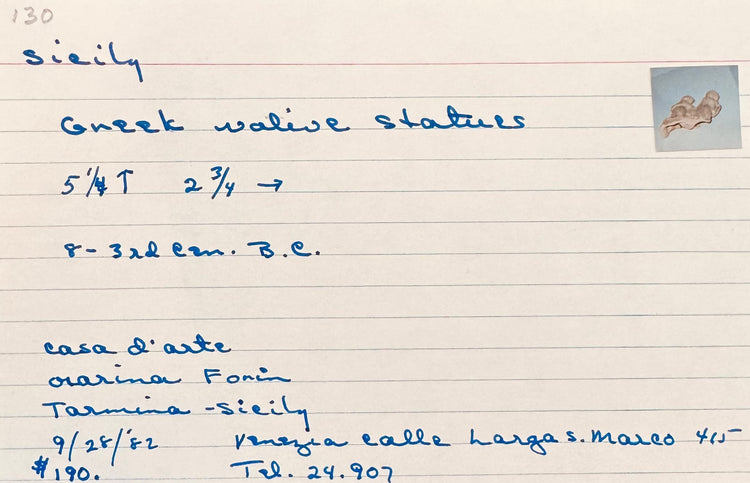
The accompanying provenance card identifies the piece as a pair of "Greek votive statues" acquired from Casa d'Arte in Taormina, Sicily, on September 28, 1982. The card further attributes the figures to the 8th–3rd century BCE, reflecting an early collection attribution. While a specific dating cannot be conclusively verified today, the piece is consistent with ancient Mediterranean terracotta votive traditions.
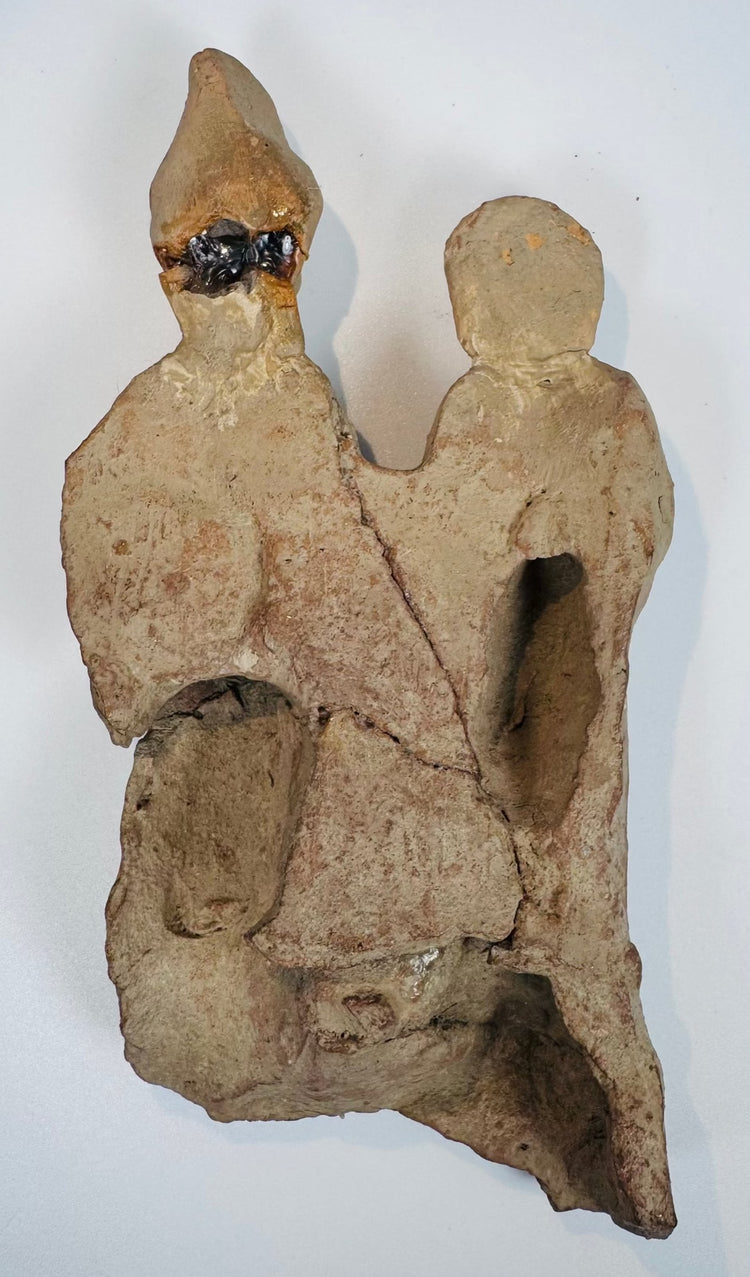
The sculpture survives as an archaeological fragment and exhibits substantial age-related wear, mineral deposits, surface encrustation, and old repairs. Despite these losses, the figures remain clearly recognizable and retain strong visual presence.
Features
- Ancient terracotta figural group fragment
- Depicts two standing human figures
- One figure with prominent headdress or hood
- Integral architectural-style base
- Ancient hand-modeled construction
- Accompanied by original 1982 collection card and photograph
- Ex-Casa d'Arte, Taormina, Sicily
Cultural Significance
Terracotta votive figures formed an important component of religious life throughout the Greek colonies of Sicily and southern Italy. Such objects were offered within sanctuaries dedicated to local and pan-Hellenic deities, serving as expressions of devotion, gratitude, protection, or commemoration. Examples depicting paired figures are often associated with family, fertility, divine companionship, or ritual participation. Even fragmentary examples provide valuable insight into the artistic and religious traditions of the ancient Mediterranean.
Condition
Archaeological condition with losses, surface wear, encrustation, pitting, old repairs, cracks, and restoration visible throughout. One figure exhibits an old repaired break through the head. Surface deposits and areas of loss consistent with age and excavation. Stable and displayable.
Dimensions (Approximate)
Height: 6 in
Width: 2.75 in
Depth: 1 in
Age (Approximate)
2,300–2,800 years old (based on accompanying collection attribution)
Provenance
Formerly part of the McMillan Collection, an extensive private collection assembled over several decades with a particular focus on ancient Mediterranean, Classical, and archaeological material. The collection included antiquities acquired from established European dealers and galleries during the mid-to-late 20th century and was accompanied by handwritten catalog cards, photographs, and acquisition records documenting many of the pieces.
Acquired from Casa d'Arte, Taormina, Sicily, Italy, on September 28, 1982, accompanied by the original collection card and photograph identifying the piece as "Greek votive statues" dating to the 8th–3rd century BCE. Subsequently held in a private collection in Saint Paul, Minnesota.
Note: The original McMillan collection card and period photograph accompany the artifact and form part of its documented collecting history.
Learn More
Learn about the history and legacy of Magna Graecia and the Greek colonies of southern Italy
Description
Historical Context & Origin
Culture: Magna Graecia / Ancient Sicily (Greek Colonial Period)
Region: Taormina, Sicily, Italy
Material: Terracotta
Period: Circa 8th–3rd Century BCE (per accompanying collection documentation)
Description
This intriguing terracotta figural group depicts two standing human figures rendered in a highly stylized manner. One figure appears female, characterized by pronounced breasts and a broad torso, while the second figure wears a tall conical headdress or hood. The pair stand side-by-side upon an integral base, forming a unified sculptural composition.
Although the precise identification of the scene remains uncertain, pieces of this type are generally associated with the rich votive and religious traditions of the Greek colonies of southern Italy and Sicily. Terracotta figures and figural groups were commonly deposited within sanctuaries, shrines, and tombs as offerings to deities or ancestors. Their simplified forms often emphasize symbolic and ritual significance rather than naturalistic representation.
The accompanying provenance card identifies the piece as a pair of "Greek votive statues" acquired from Casa d'Arte in Taormina, Sicily, on September 28, 1982. The card further attributes the figures to the 8th–3rd century BCE, reflecting an early collection attribution. While a specific dating cannot be conclusively verified today, the piece is consistent with ancient Mediterranean terracotta votive traditions.
The sculpture survives as an archaeological fragment and exhibits substantial age-related wear, mineral deposits, surface encrustation, and old repairs. Despite these losses, the figures remain clearly recognizable and retain strong visual presence.
Features
- Ancient terracotta figural group fragment
- Depicts two standing human figures
- One figure with prominent headdress or hood
- Integral architectural-style base
- Ancient hand-modeled construction
- Accompanied by original 1982 collection card and photograph
- Ex-Casa d'Arte, Taormina, Sicily
Cultural Significance
Terracotta votive figures formed an important component of religious life throughout the Greek colonies of Sicily and southern Italy. Such objects were offered within sanctuaries dedicated to local and pan-Hellenic deities, serving as expressions of devotion, gratitude, protection, or commemoration. Examples depicting paired figures are often associated with family, fertility, divine companionship, or ritual participation. Even fragmentary examples provide valuable insight into the artistic and religious traditions of the ancient Mediterranean.
Condition
Archaeological condition with losses, surface wear, encrustation, pitting, old repairs, cracks, and restoration visible throughout. One figure exhibits an old repaired break through the head. Surface deposits and areas of loss consistent with age and excavation. Stable and displayable.
Dimensions (Approximate)
Height: 6 in
Width: 2.75 in
Depth: 1 in
Age (Approximate)
2,300–2,800 years old (based on accompanying collection attribution)
Provenance
Formerly part of the McMillan Collection, an extensive private collection assembled over several decades with a particular focus on ancient Mediterranean, Classical, and archaeological material. The collection included antiquities acquired from established European dealers and galleries during the mid-to-late 20th century and was accompanied by handwritten catalog cards, photographs, and acquisition records documenting many of the pieces.
Acquired from Casa d'Arte, Taormina, Sicily, Italy, on September 28, 1982, accompanied by the original collection card and photograph identifying the piece as "Greek votive statues" dating to the 8th–3rd century BCE. Subsequently held in a private collection in Saint Paul, Minnesota.
Note: The original McMillan collection card and period photograph accompany the artifact and form part of its documented collecting history.
Learn More
Learn about the history and legacy of Magna Graecia and the Greek colonies of southern Italy
You May Also Like
