

Ancient Mediterranean Ceramic Oil Lamp with Pierced Handle | Circa 4th – 8th Century CE
Couldn't load pickup availability


Ancient Mediterranean Ceramic Oil Lamp with Pierced Handle | Circa 4th – 8th Century CE
Description
More
Less
Historical Context & Origin
Region: Eastern Mediterranean / Near East
Material: Terracotta
Period: Late Antiquity to Early Islamic Period, circa 4th–8th century CE
Description
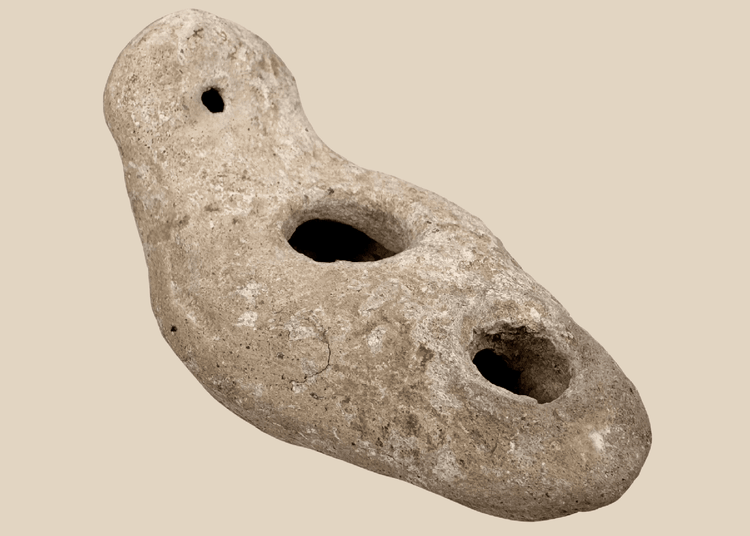
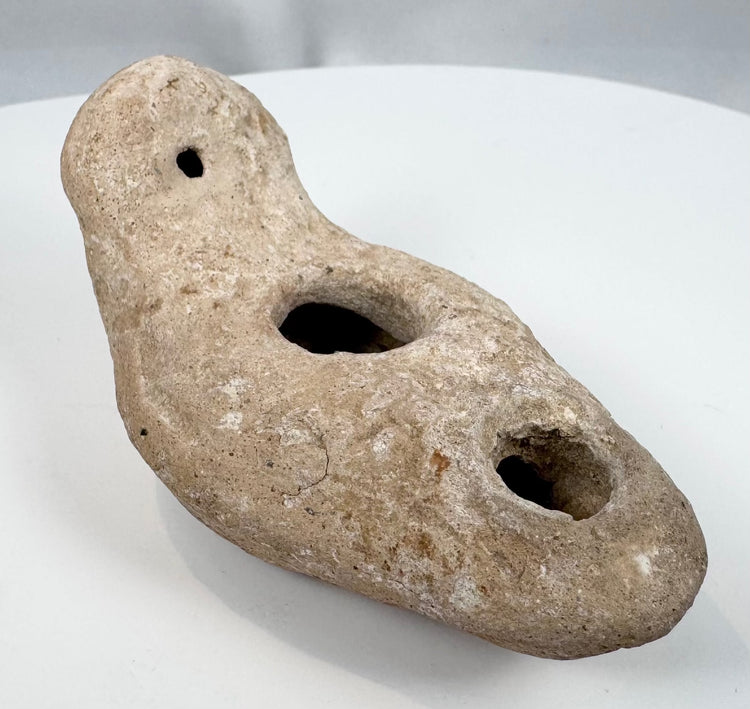
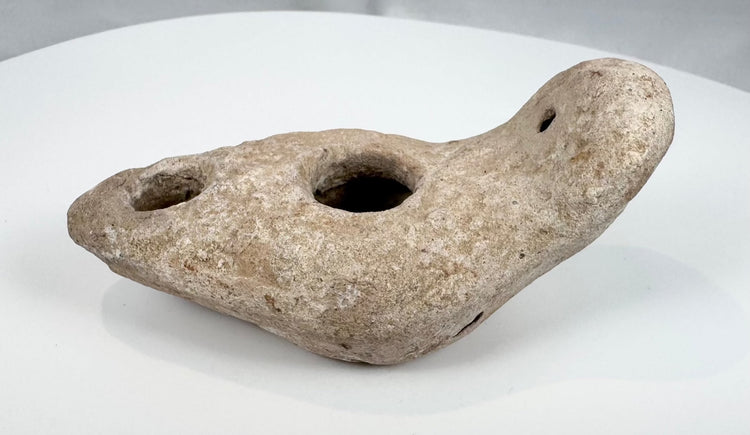
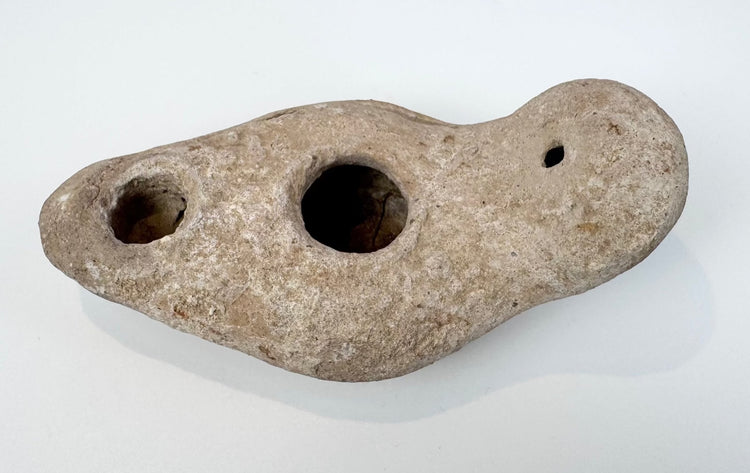
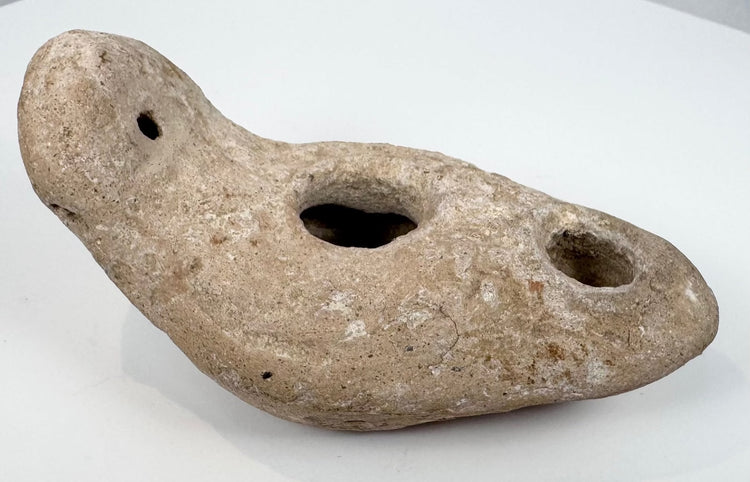
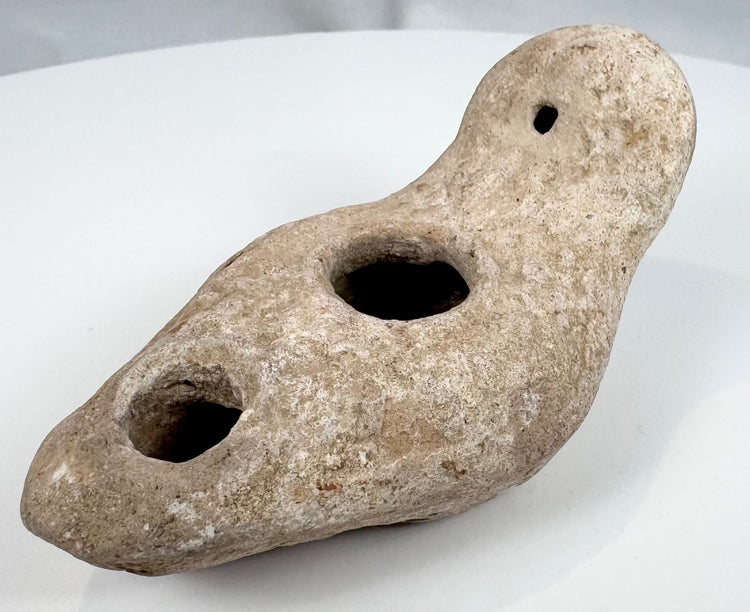
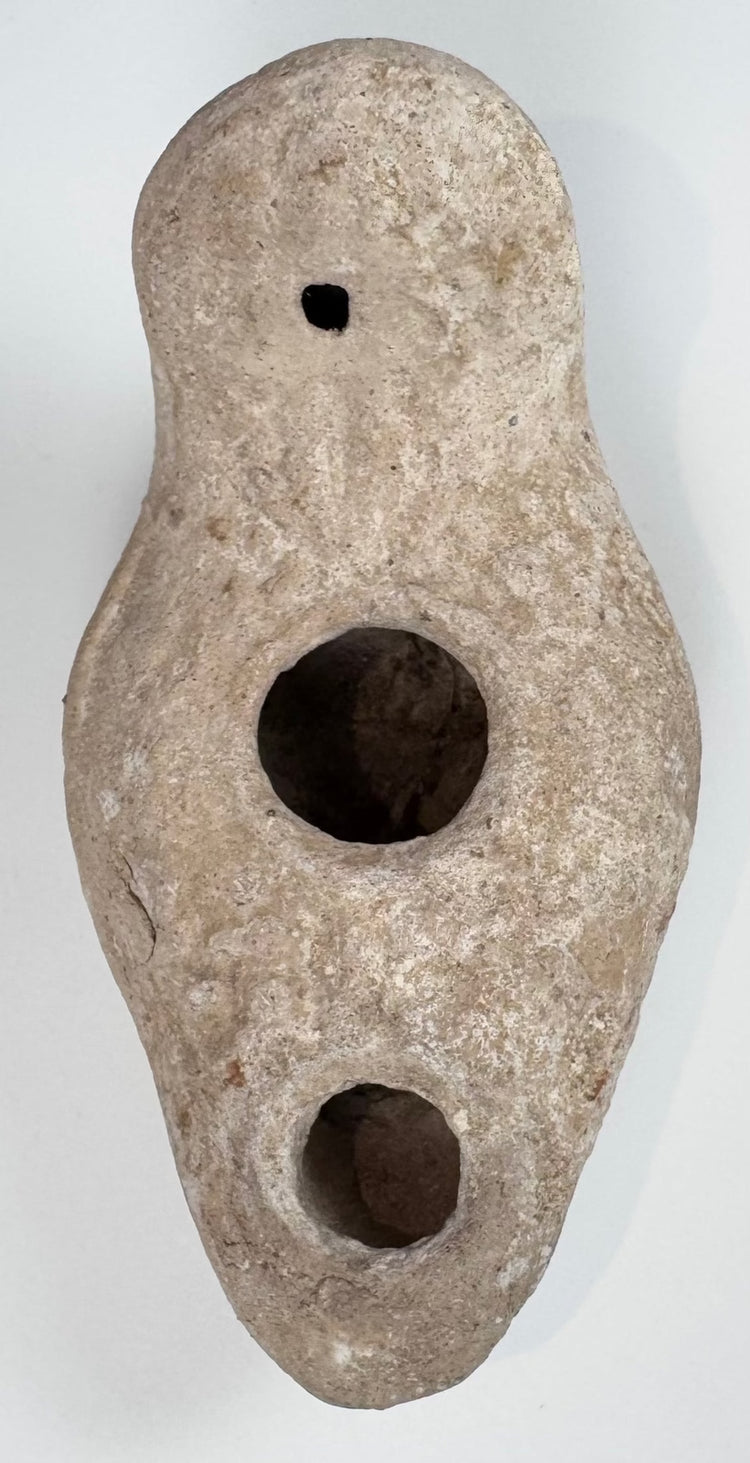
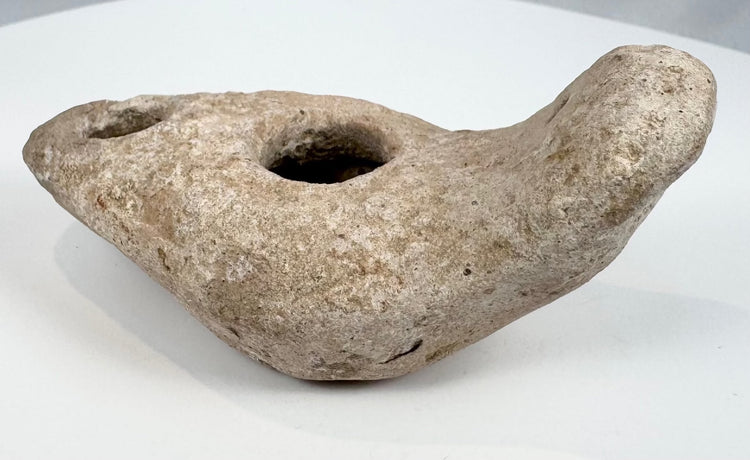
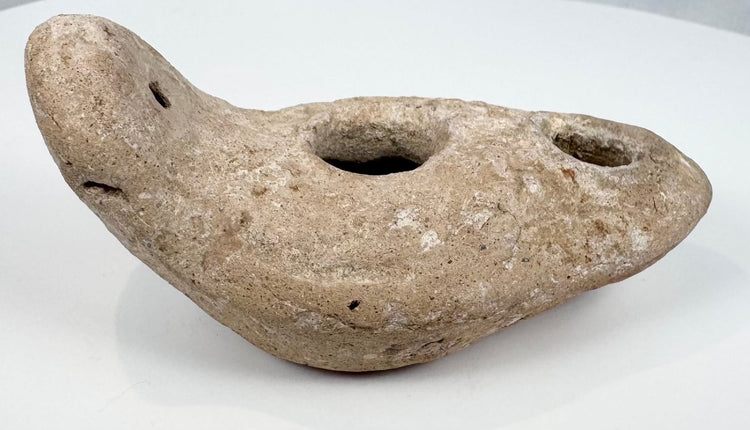
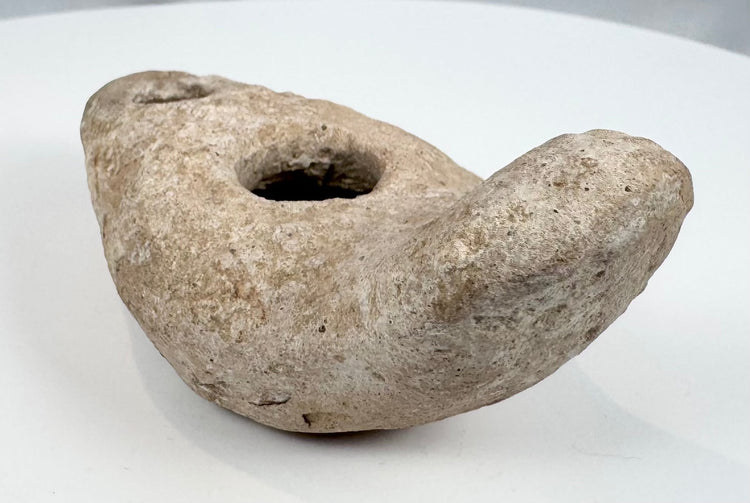
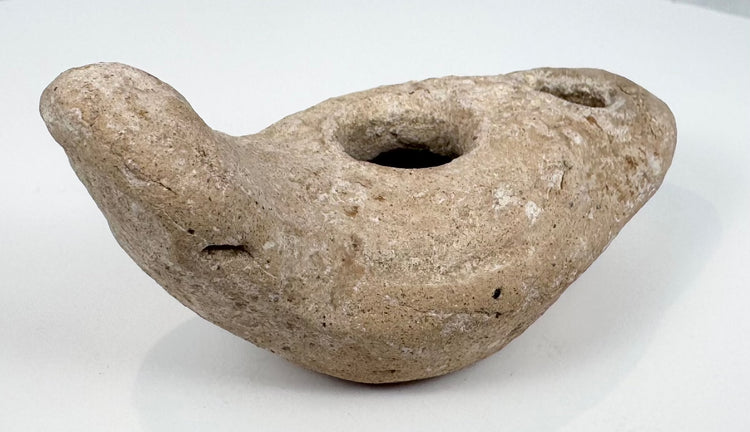
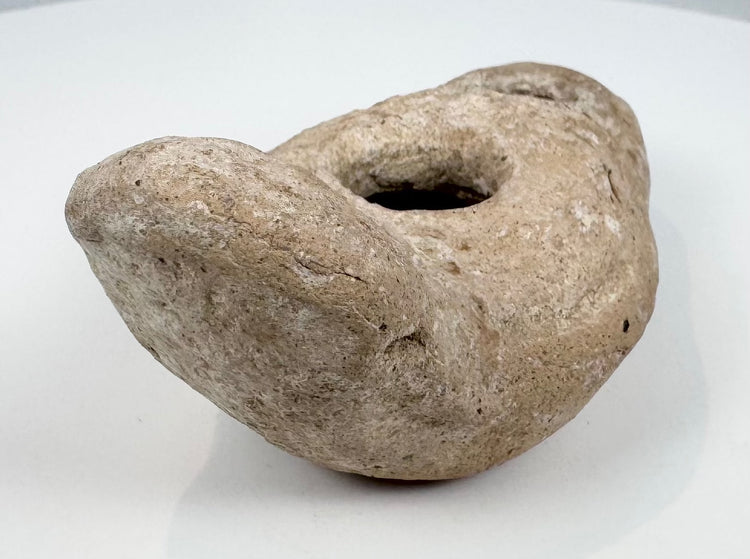
This ancient terracotta oil lamp displays the simple functional construction used for everyday illumination throughout the Eastern Mediterranean and Near East during Late Antiquity. Hand-formed from pale buff earthenware, the lamp features a rounded enclosed reservoir, central filling aperture, separate wick opening at the forward end, and a distinctive raised rear lug pierced horizontally.
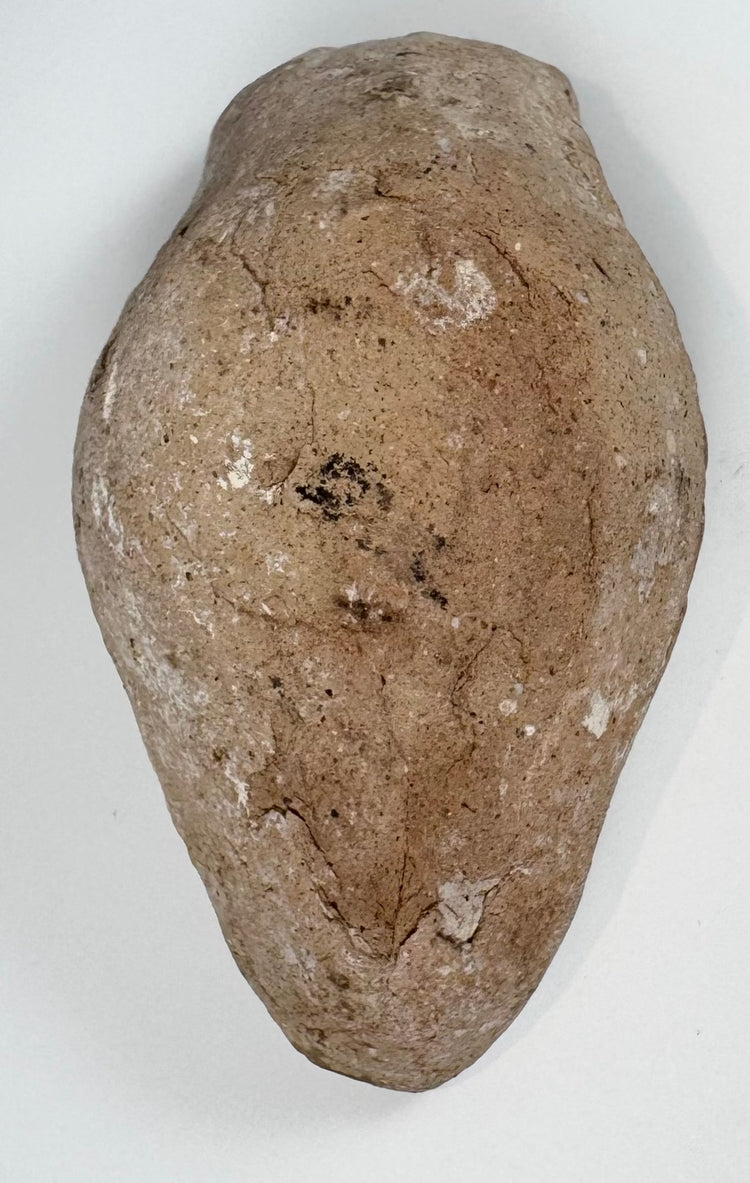
The vessel has an intentionally uncomplicated and strongly utilitarian appearance, with gently asymmetrical contours characteristic of individual ceramic manufacture. Extensive surface weathering, mineral deposits, abrasions and softened edges contribute to the archaeological character of the piece.
Features
- Ancient hand-formed terracotta oil lamp
- Central opening for filling the reservoir with oil
- Separate forward aperture for placement of the wick
- Raised rear lug with pierced suspension or handling hole
- Pale buff earthenware fabric
- Irregular handmade contours and asymmetrical construction
- Extensive mineral deposits, surface weathering and age-related wear
- Compact utilitarian design intended for portable illumination
Cultural Significance
Oil lamps were indispensable objects throughout the ancient Mediterranean and Near East, providing inexpensive and portable illumination within homes, workshops, religious buildings and other spaces. Fuel—commonly olive oil—was poured into the central reservoir while a textile wick positioned within the forward aperture produced the flame.
During Late Antiquity, lamp production encompassed everything from highly decorated molded examples to much simpler locally manufactured vessels intended for everyday use. The restrained construction of this example reflects the practical nature of such lighting equipment and provides a tangible connection to daily life in the ancient world.
Condition
Well-preserved overall with extensive surface wear, mineral deposits, encrustation, abrasions and discoloration consistent with considerable age. Fine cracking and minor surface losses are visible throughout, particularly on the underside and around the apertures. The reservoir, wick opening and pierced rear lug remain intact and clearly defined. Please refer closely to all photographs for the complete condition.
Dimensions (Approximate)
Length: 4 in
Width: 2.25 in
Age (Approximate)
1,200–1,700 years old
Provenance
From a private Toronto, Ontario, Canada collection specializing in ancient Mediterranean and Near Eastern antiquities.
Learn More
Learn about the development, use, and changing forms of ancient lighting through the Mediterranean Oil Lamp Collection at the Milwaukee Public Museum.
Browse our Collection of Functional Tools, Ancient Implements and Craft used in daily life across historic cultures.
Description
Historical Context & Origin
Region: Eastern Mediterranean / Near East
Material: Terracotta
Period: Late Antiquity to Early Islamic Period, circa 4th–8th century CE
Description
This ancient terracotta oil lamp displays the simple functional construction used for everyday illumination throughout the Eastern Mediterranean and Near East during Late Antiquity. Hand-formed from pale buff earthenware, the lamp features a rounded enclosed reservoir, central filling aperture, separate wick opening at the forward end, and a distinctive raised rear lug pierced horizontally.
The vessel has an intentionally uncomplicated and strongly utilitarian appearance, with gently asymmetrical contours characteristic of individual ceramic manufacture. Extensive surface weathering, mineral deposits, abrasions and softened edges contribute to the archaeological character of the piece.
Features
- Ancient hand-formed terracotta oil lamp
- Central opening for filling the reservoir with oil
- Separate forward aperture for placement of the wick
- Raised rear lug with pierced suspension or handling hole
- Pale buff earthenware fabric
- Irregular handmade contours and asymmetrical construction
- Extensive mineral deposits, surface weathering and age-related wear
- Compact utilitarian design intended for portable illumination
Cultural Significance
Oil lamps were indispensable objects throughout the ancient Mediterranean and Near East, providing inexpensive and portable illumination within homes, workshops, religious buildings and other spaces. Fuel—commonly olive oil—was poured into the central reservoir while a textile wick positioned within the forward aperture produced the flame.
During Late Antiquity, lamp production encompassed everything from highly decorated molded examples to much simpler locally manufactured vessels intended for everyday use. The restrained construction of this example reflects the practical nature of such lighting equipment and provides a tangible connection to daily life in the ancient world.
Condition
Well-preserved overall with extensive surface wear, mineral deposits, encrustation, abrasions and discoloration consistent with considerable age. Fine cracking and minor surface losses are visible throughout, particularly on the underside and around the apertures. The reservoir, wick opening and pierced rear lug remain intact and clearly defined. Please refer closely to all photographs for the complete condition.
Dimensions (Approximate)
Length: 4 in
Width: 2.25 in
Age (Approximate)
1,200–1,700 years old
Provenance
From a private Toronto, Ontario, Canada collection specializing in ancient Mediterranean and Near Eastern antiquities.
Learn More
Learn about the development, use, and changing forms of ancient lighting through the Mediterranean Oil Lamp Collection at the Milwaukee Public Museum.
Browse our Collection of Functional Tools, Ancient Implements and Craft used in daily life across historic cultures.
You May Also Like
