


Ancient Veracruz Ceremonial Stone Head Hacha | Classic Period | Circa 600 – 900 CE
Couldn't load pickup availability




Ancient Veracruz Ceremonial Stone Head Hacha | Classic Period | Circa 600 – 900 CE
Description
More
Less
Historical Context & Origin
Region: Gulf Coast of Mexico, likely Veracruz
Material: Carved stone with surviving surface pigment or mineral deposits
Period: Classic Period, likely circa 600–900 CE
Description
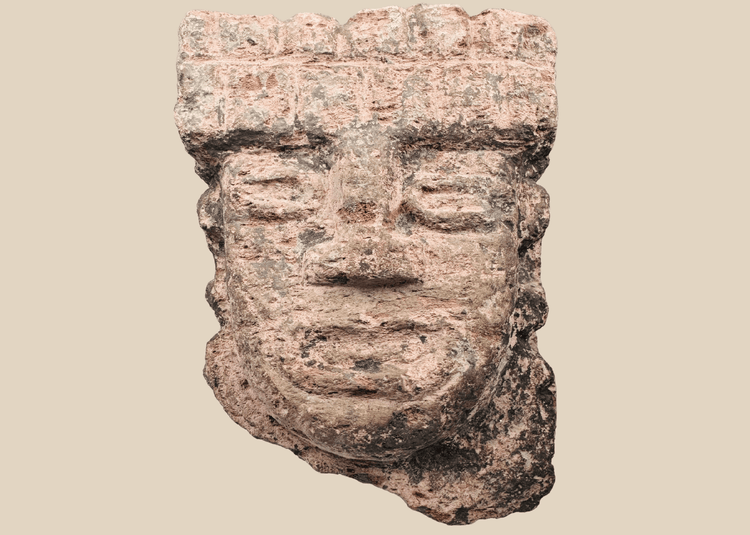
This substantial Pre-Columbian carved stone head represents a human or supernatural visage wearing a broad, highly structured headdress and is most consistent with the ceremonial stone sculptures known as hachas, produced within the Classic Veracruz cultural tradition.
The face is powerfully modelled in high relief, with heavy partially closed eyes beneath pronounced brows, a broad projecting nose, substantial cheek planes, a wide mouth, and a rounded lower jaw. The expression is solemn and highly stylized, giving the sculpture the imposing visual presence characteristic of ritual stonework from ancient Mesoamerica.
Across the forehead is an especially distinctive architectural or stepped headdress composed of a broad horizontal band surmounted by a series of raised rectangular elements. Similar attention to elaborate headgear occurs throughout Classic Veracruz sculpture, where costume and headdress elements could communicate ceremonial identity, supernatural associations, status, or participation in ritual performance.
The lateral edges retain additional projecting and recessed details suggesting extensions of the headdress, hair, ear ornaments, or associated ceremonial regalia.
Particularly striking are the surviving pinkish-red deposits visible across much of the front and sides. Ancient Veracruz stone sculpture was sometimes enhanced with pigment, including red coloration, and surviving museum examples retain traces of pigment on ceremonial hachas and related stone sculpture.
The reverse is comparatively flat and roughly finished, with several recessed openings or cavities visible within the stone. This contrast between the highly developed frontal surface and comparatively utilitarian reverse is consistent with an object intended primarily to be viewed from the front or incorporated into a larger ceremonial context.
Features
- Substantial carved stone ceremonial head
- Most consistent with the Classic Veracruz hacha tradition
- Human or supernatural facial representation
- Broad ceremonial headdress with raised rectangular elements
- Deeply modelled eyes and pronounced brows
- Broad projecting nose
- Heavy cheeks and prominent mouth
- Strongly three-dimensional facial modelling
- Surviving pinkish-red surface deposits and possible pigment
- Weathered archaeological surface
Cultural Significance
Hachas form part of one of the most distinctive sculptural traditions associated with the ancient Mesoamerican ballgame.
In Veracruz, ceremonial stone objects known today as yokes, hachas, and palmas were closely connected with ballgame imagery and ritual. Although their exact manner of ceremonial use remains a subject of scholarship, surviving stone examples are generally understood as ritual counterparts to equipment associated with ballplayers rather than objects intended for ordinary athletic use. The tradition developed particularly strongly in southern Veracruz before spreading into other parts of Mesoamerica.
Human-headed examples could portray aged individuals, nobles, ritual participants, supernatural beings, or figures wearing elaborate animal and ceremonial headdresses. The Cleveland Museum of Art, Denver Art Museum, and Metropolitan Museum of Art all preserve related human and zoomorphic hachas demonstrating the remarkable variety of this stone-carving tradition.
Condition
The sculpture remains in archaeological condition with substantial surface weathering, mineral deposits, encrustation, abrasions, pitting, erosion, scratches, edge losses, chips, and areas of softened carved detail consistent with considerable age. The nose, mouth, headdress, lateral projections, and other raised elements display varying degrees of wear and loss. Numerous areas of pinkish-red coloration remain across the surface together with darker grey, brown, and black mineral deposits. The reverse is heavily weathered and roughly finished with natural and/or worked depressions and cavities visible.
Dimensions (Approximate)
Height: 7 in
Width: 5.25 in
Depth: 3.25 in
Age (Approximate)
1,100–1,400 years old
Provenance
Formerly from a private collection in Scarborough, Ontario, Canada, assembled by a lifelong collector with a particular interest in Pre-Columbian artifacts and antiquities.
Learn More
Study a related Classic Veracruz ballgame hacha preserved by the Cleveland Museum of Art.
Browse our Collection of Ancient Pre-Columbian Artifacts and Relics.
Description
Historical Context & Origin
Region: Gulf Coast of Mexico, likely Veracruz
Material: Carved stone with surviving surface pigment or mineral deposits
Period: Classic Period, likely circa 600–900 CE
Description
This substantial Pre-Columbian carved stone head represents a human or supernatural visage wearing a broad, highly structured headdress and is most consistent with the ceremonial stone sculptures known as hachas, produced within the Classic Veracruz cultural tradition.
The face is powerfully modelled in high relief, with heavy partially closed eyes beneath pronounced brows, a broad projecting nose, substantial cheek planes, a wide mouth, and a rounded lower jaw. The expression is solemn and highly stylized, giving the sculpture the imposing visual presence characteristic of ritual stonework from ancient Mesoamerica.
Across the forehead is an especially distinctive architectural or stepped headdress composed of a broad horizontal band surmounted by a series of raised rectangular elements. Similar attention to elaborate headgear occurs throughout Classic Veracruz sculpture, where costume and headdress elements could communicate ceremonial identity, supernatural associations, status, or participation in ritual performance.
The lateral edges retain additional projecting and recessed details suggesting extensions of the headdress, hair, ear ornaments, or associated ceremonial regalia.
Particularly striking are the surviving pinkish-red deposits visible across much of the front and sides. Ancient Veracruz stone sculpture was sometimes enhanced with pigment, including red coloration, and surviving museum examples retain traces of pigment on ceremonial hachas and related stone sculpture.
The reverse is comparatively flat and roughly finished, with several recessed openings or cavities visible within the stone. This contrast between the highly developed frontal surface and comparatively utilitarian reverse is consistent with an object intended primarily to be viewed from the front or incorporated into a larger ceremonial context.
Features
- Substantial carved stone ceremonial head
- Most consistent with the Classic Veracruz hacha tradition
- Human or supernatural facial representation
- Broad ceremonial headdress with raised rectangular elements
- Deeply modelled eyes and pronounced brows
- Broad projecting nose
- Heavy cheeks and prominent mouth
- Strongly three-dimensional facial modelling
- Surviving pinkish-red surface deposits and possible pigment
- Weathered archaeological surface
Cultural Significance
Hachas form part of one of the most distinctive sculptural traditions associated with the ancient Mesoamerican ballgame.
In Veracruz, ceremonial stone objects known today as yokes, hachas, and palmas were closely connected with ballgame imagery and ritual. Although their exact manner of ceremonial use remains a subject of scholarship, surviving stone examples are generally understood as ritual counterparts to equipment associated with ballplayers rather than objects intended for ordinary athletic use. The tradition developed particularly strongly in southern Veracruz before spreading into other parts of Mesoamerica.
Human-headed examples could portray aged individuals, nobles, ritual participants, supernatural beings, or figures wearing elaborate animal and ceremonial headdresses. The Cleveland Museum of Art, Denver Art Museum, and Metropolitan Museum of Art all preserve related human and zoomorphic hachas demonstrating the remarkable variety of this stone-carving tradition.
Condition
The sculpture remains in archaeological condition with substantial surface weathering, mineral deposits, encrustation, abrasions, pitting, erosion, scratches, edge losses, chips, and areas of softened carved detail consistent with considerable age. The nose, mouth, headdress, lateral projections, and other raised elements display varying degrees of wear and loss. Numerous areas of pinkish-red coloration remain across the surface together with darker grey, brown, and black mineral deposits. The reverse is heavily weathered and roughly finished with natural and/or worked depressions and cavities visible.
Dimensions (Approximate)
Height: 7 in
Width: 5.25 in
Depth: 3.25 in
Age (Approximate)
1,100–1,400 years old
Provenance
Formerly from a private collection in Scarborough, Ontario, Canada, assembled by a lifelong collector with a particular interest in Pre-Columbian artifacts and antiquities.
Learn More
Study a related Classic Veracruz ballgame hacha preserved by the Cleveland Museum of Art.
Browse our Collection of Ancient Pre-Columbian Artifacts and Relics.
You May Also Like
