

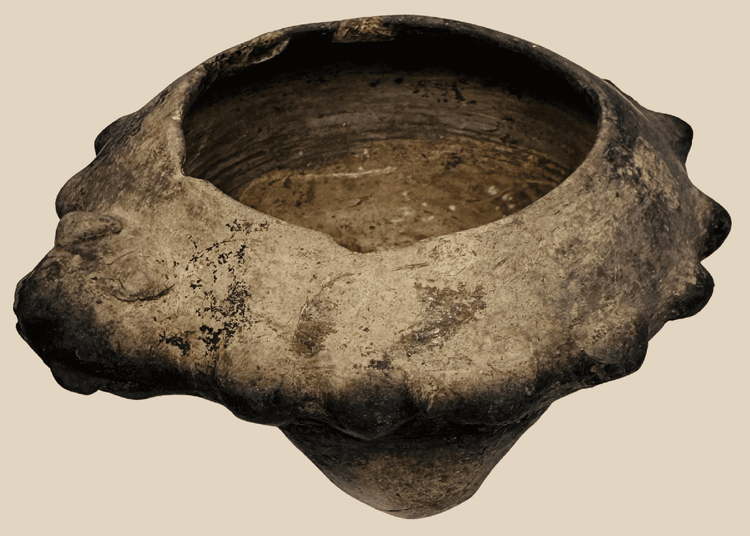
Ancient West Mexican Tripod Bowl with Animal Heads | Colima Culture | Circa 300 BCE–300 CE
Couldn't load pickup availability


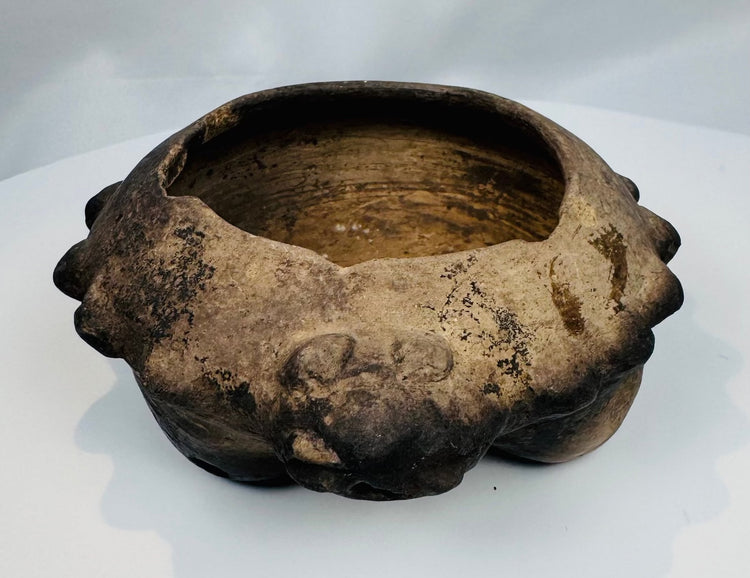
Ancient West Mexican Tripod Bowl with Animal Heads | Colima Culture | Circa 300 BCE–300 CE
Description
More
Less
Historical Context & Origin
Region: West Mexico (Colima / Jalisco / Nayarit)
Material: Terracotta
Period: Late Pre-Columbian Period, circa 300 BCE–300 CE
Description
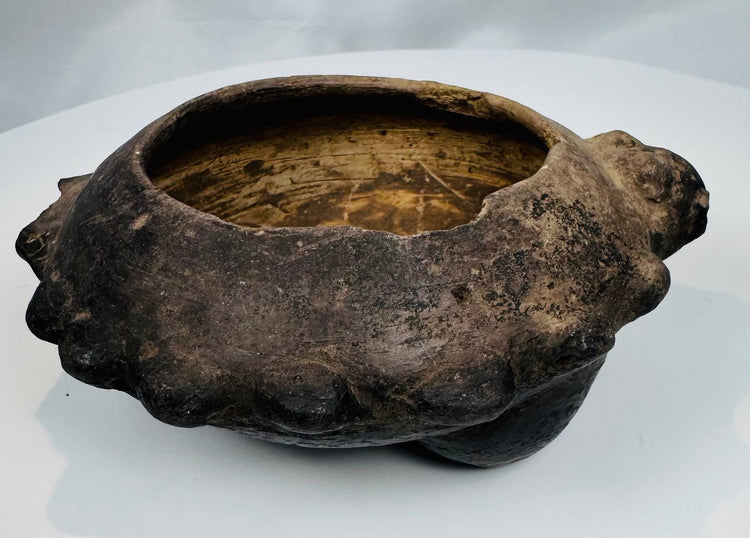
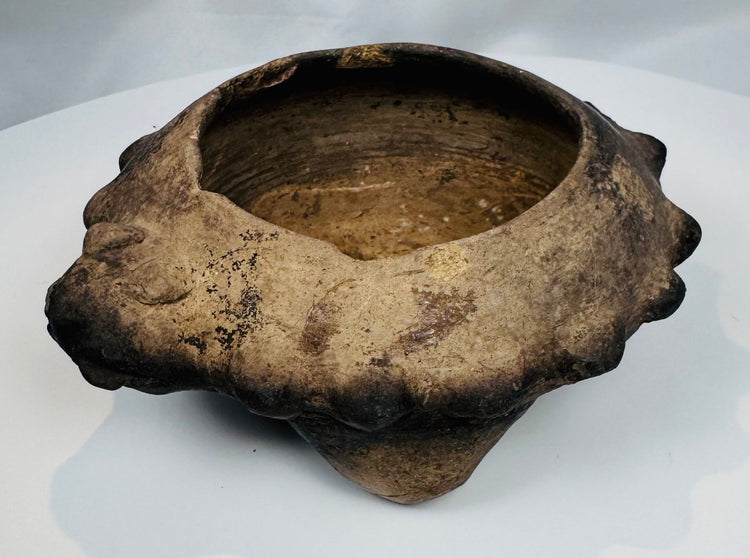
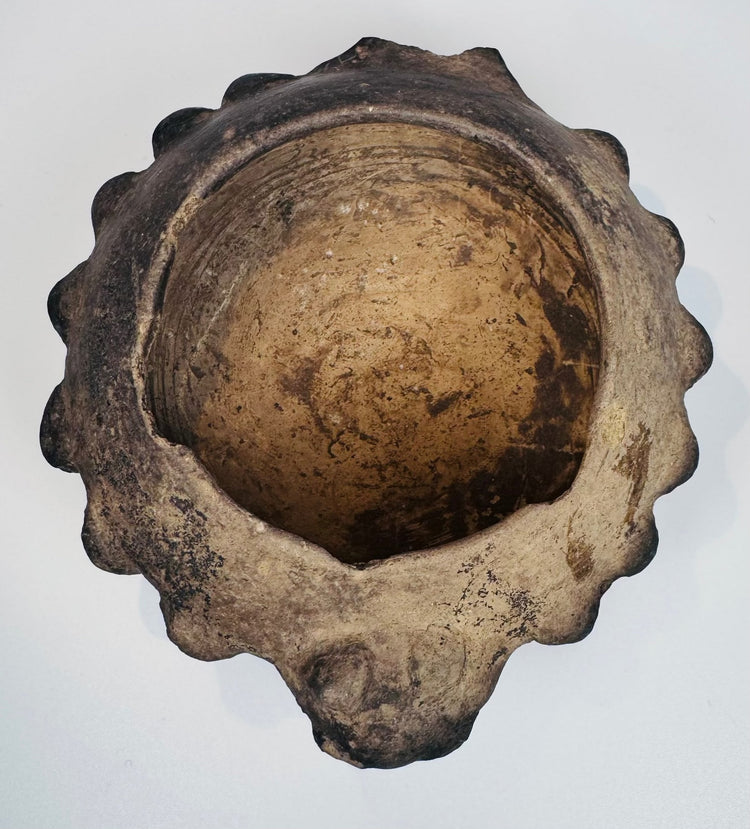
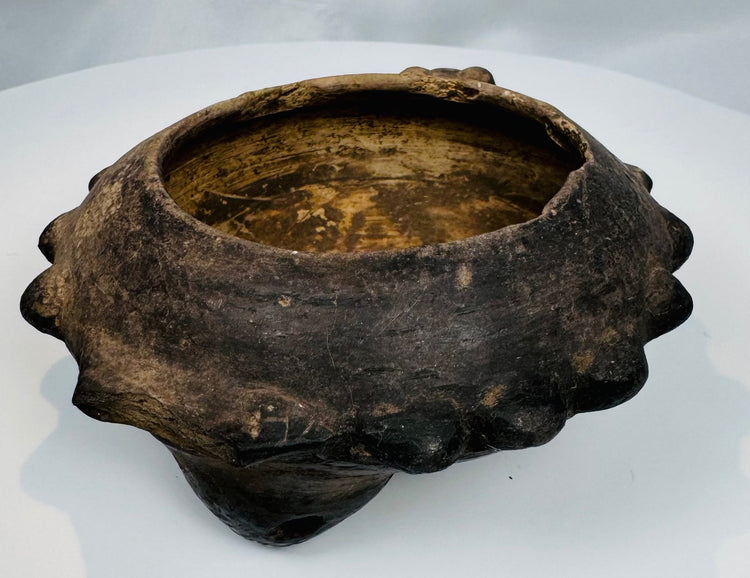
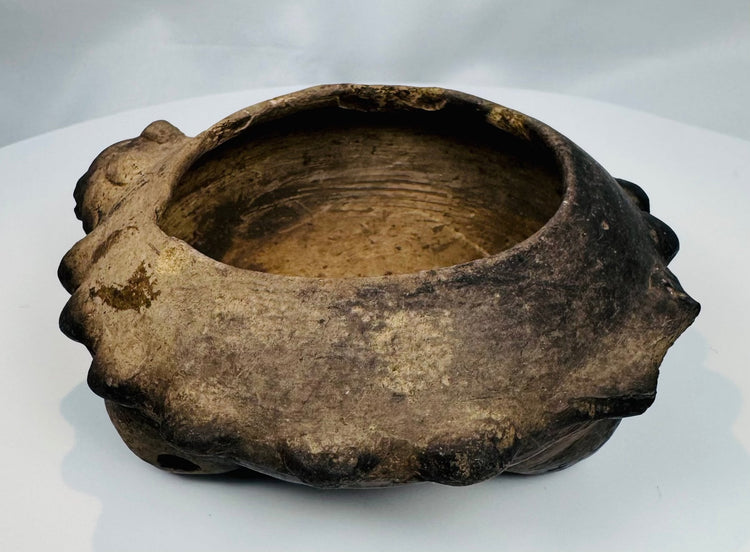
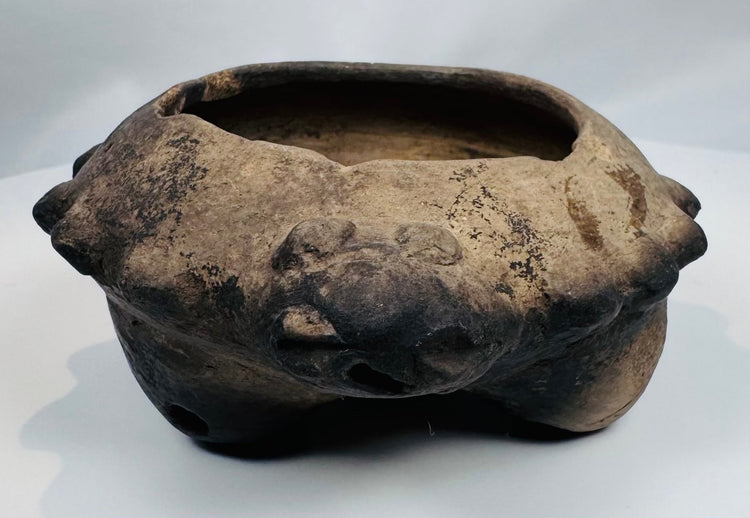
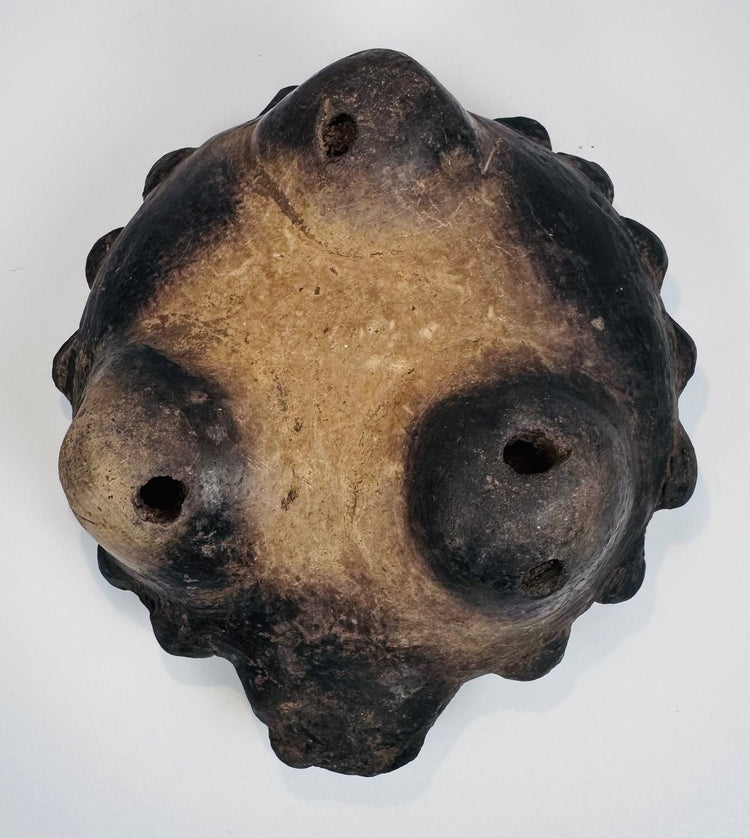
This rare Pre-Columbian terracotta tripod vessel features a deep circular bowl supported by three hollow tripod legs and embellished with multiple sculpted zoomorphic heads projecting from the rim. The vessel displays a warm buff-colored clay body with extensive darkened surface areas resulting from ancient firing techniques, burial conditions, and age-related patination.
The modeled heads exhibit stylized facial features with rounded snouts, recessed eyes, and perforated openings, likely representing a sacred animal associated with ritual, fertility, or ancestral symbolism. Such vessels were produced throughout western Mexico, particularly within the ceramic traditions of Colima, Jalisco, and Nayarit, where animal imagery played an important role in funerary and ceremonial contexts.
The hollow tripod supports would have provided stability while reducing overall weight, a hallmark of sophisticated Pre-Columbian ceramic engineering. Vessels of this type may have served as offering containers, food presentation vessels, incense burners, or ceremonial objects placed within tombs as part of elite burial assemblages.
Features
- Authentic Pre-Columbian West Mexican tripod vessel
- Multiple modeled zoomorphic heads around the rim
- Hollow tripod support construction
- Hand-formed terracotta ceramic
- Attractive archaeological patina and age-related wear
- Deep bowl form suitable for ritual or domestic use
- Fine display piece representing ancient Mesoamerican craftsmanship
- Old collection inventory label present
Cultural Significance
The cultures of western Mexico produced some of the most distinctive ceramic traditions in the ancient Americas. Potters frequently created vessels incorporating animals believed to possess spiritual significance, including dogs, felines, birds, and other creatures associated with fertility, protection, and the afterlife.
Tripod vessels such as this were often deposited in shaft tombs alongside effigy figures and ceremonial objects, serving both practical and symbolic functions. Their survival offers valuable insight into the artistic and spiritual traditions of ancient Mesoamerican societies more than two thousand years ago.
Condition
Good archaeological condition. Surface wear, mineral deposits, firing variations, abrasions, and minor losses consistent with age and burial. No major restoration observed. Presents exceptionally well for display.
Dimensions (Approximate)
Height: 2 in
Diameter: 5 in
Age (Approximate)
1,700–2,300 years old
Provenance
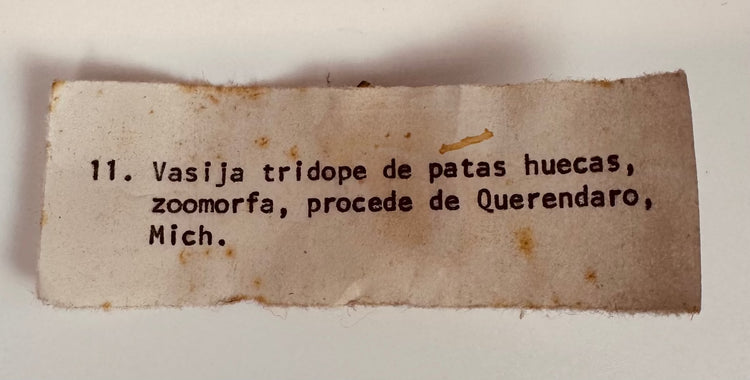
From a private collection in Saint Paul, Minnesota, USA. Accompanied by an old collection label identifying the vessel as a "zoomorphic tripod vessel with hollow legs" from Queréndaro, Michoacán, Mexico. The piece formed part of a long-held collection of Pre-Columbian and archaeological artifacts assembled over many years.
Learn More
Learn about the Indigenous peoples of Colima and Western Mexico
Browse Our Collection of Ancient Ceramics & Pottery
Description
Historical Context & Origin
Region: West Mexico (Colima / Jalisco / Nayarit)
Material: Terracotta
Period: Late Pre-Columbian Period, circa 300 BCE–300 CE
Description
This rare Pre-Columbian terracotta tripod vessel features a deep circular bowl supported by three hollow tripod legs and embellished with multiple sculpted zoomorphic heads projecting from the rim. The vessel displays a warm buff-colored clay body with extensive darkened surface areas resulting from ancient firing techniques, burial conditions, and age-related patination.
The modeled heads exhibit stylized facial features with rounded snouts, recessed eyes, and perforated openings, likely representing a sacred animal associated with ritual, fertility, or ancestral symbolism. Such vessels were produced throughout western Mexico, particularly within the ceramic traditions of Colima, Jalisco, and Nayarit, where animal imagery played an important role in funerary and ceremonial contexts.
The hollow tripod supports would have provided stability while reducing overall weight, a hallmark of sophisticated Pre-Columbian ceramic engineering. Vessels of this type may have served as offering containers, food presentation vessels, incense burners, or ceremonial objects placed within tombs as part of elite burial assemblages.
Features
- Authentic Pre-Columbian West Mexican tripod vessel
- Multiple modeled zoomorphic heads around the rim
- Hollow tripod support construction
- Hand-formed terracotta ceramic
- Attractive archaeological patina and age-related wear
- Deep bowl form suitable for ritual or domestic use
- Fine display piece representing ancient Mesoamerican craftsmanship
- Old collection inventory label present
Cultural Significance
The cultures of western Mexico produced some of the most distinctive ceramic traditions in the ancient Americas. Potters frequently created vessels incorporating animals believed to possess spiritual significance, including dogs, felines, birds, and other creatures associated with fertility, protection, and the afterlife.
Tripod vessels such as this were often deposited in shaft tombs alongside effigy figures and ceremonial objects, serving both practical and symbolic functions. Their survival offers valuable insight into the artistic and spiritual traditions of ancient Mesoamerican societies more than two thousand years ago.
Condition
Good archaeological condition. Surface wear, mineral deposits, firing variations, abrasions, and minor losses consistent with age and burial. No major restoration observed. Presents exceptionally well for display.
Dimensions (Approximate)
Height: 2 in
Diameter: 5 in
Age (Approximate)
1,700–2,300 years old
Provenance
From a private collection in Saint Paul, Minnesota, USA. Accompanied by an old collection label identifying the vessel as a "zoomorphic tripod vessel with hollow legs" from Queréndaro, Michoacán, Mexico. The piece formed part of a long-held collection of Pre-Columbian and archaeological artifacts assembled over many years.
Learn More
Learn about the Indigenous peoples of Colima and Western Mexico
Browse Our Collection of Ancient Ceramics & Pottery
You May Also Like
