



Ancient Anatolian Yortan Pig Effigy Vessel | Early Bronze Age II | 2700–2500 BCE
Couldn't load pickup availability


Ancient Anatolian Yortan Pig Effigy Vessel | Early Bronze Age II | 2700–2500 BCE
Description
More
Less
Historical Context & Origin
Region: Northwestern Anatolia, Ancient Anatolia (Yortan Culture)
Material: Hand-formed blackware terracotta with pale mineral encrustation
Period: Early Bronze Age II, circa 2700–2500 BCE
Description
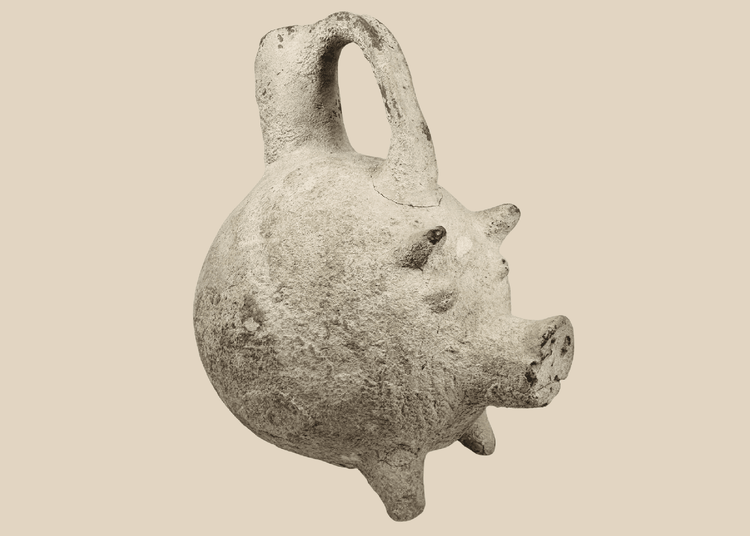
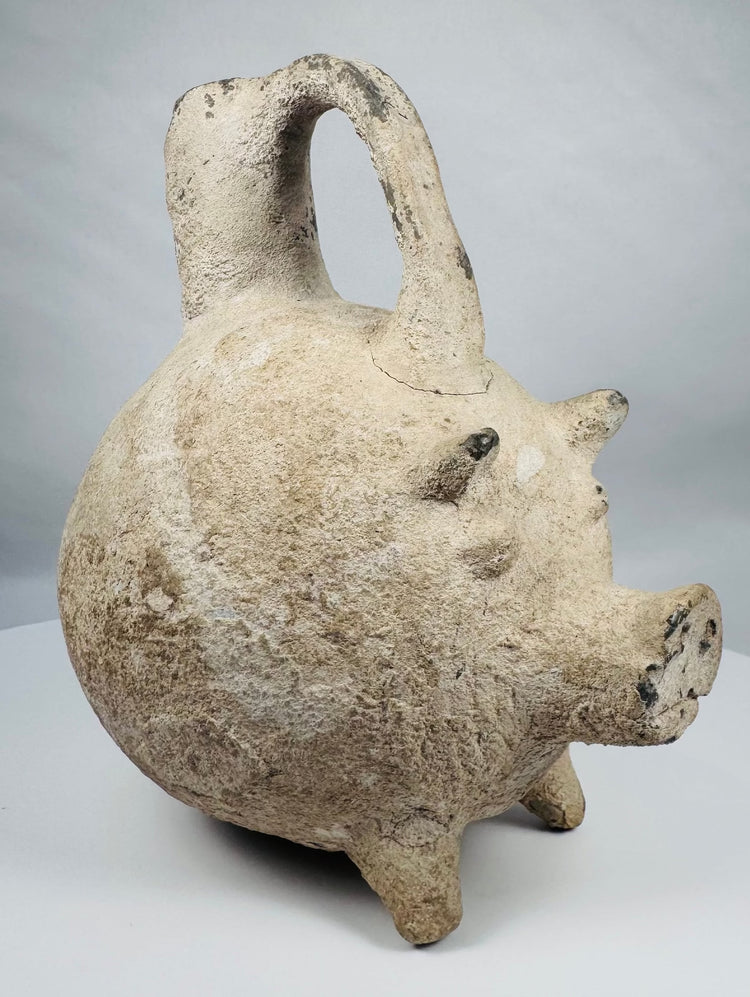
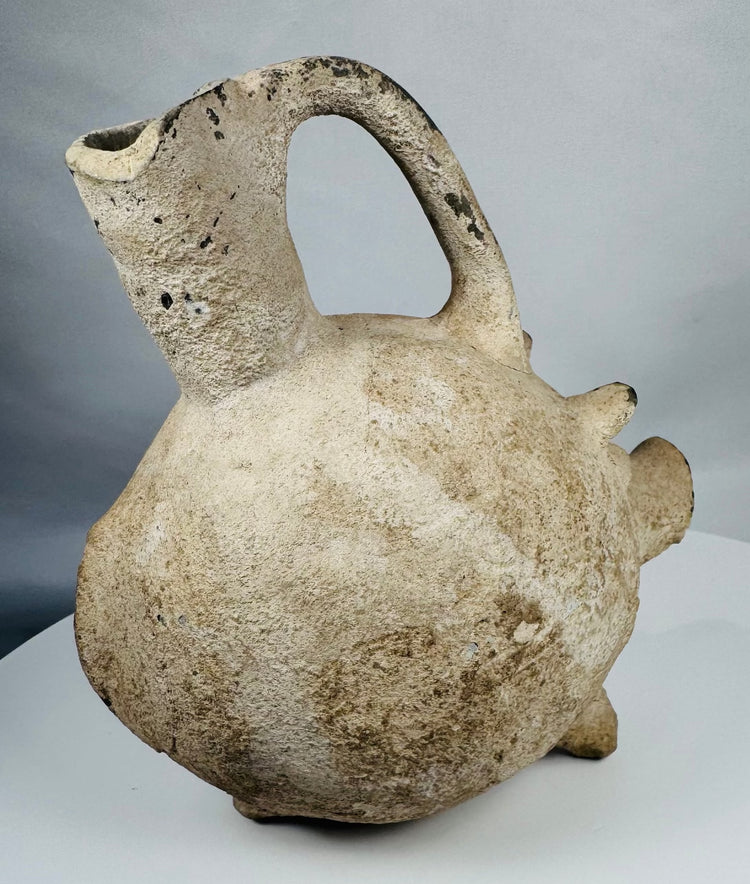
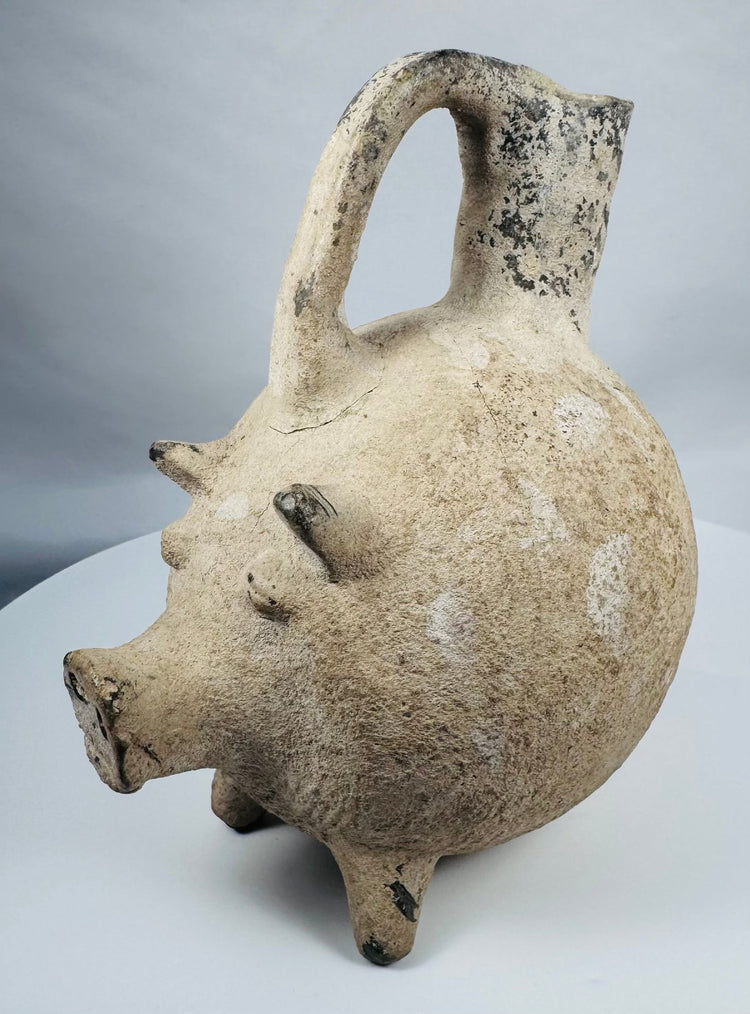
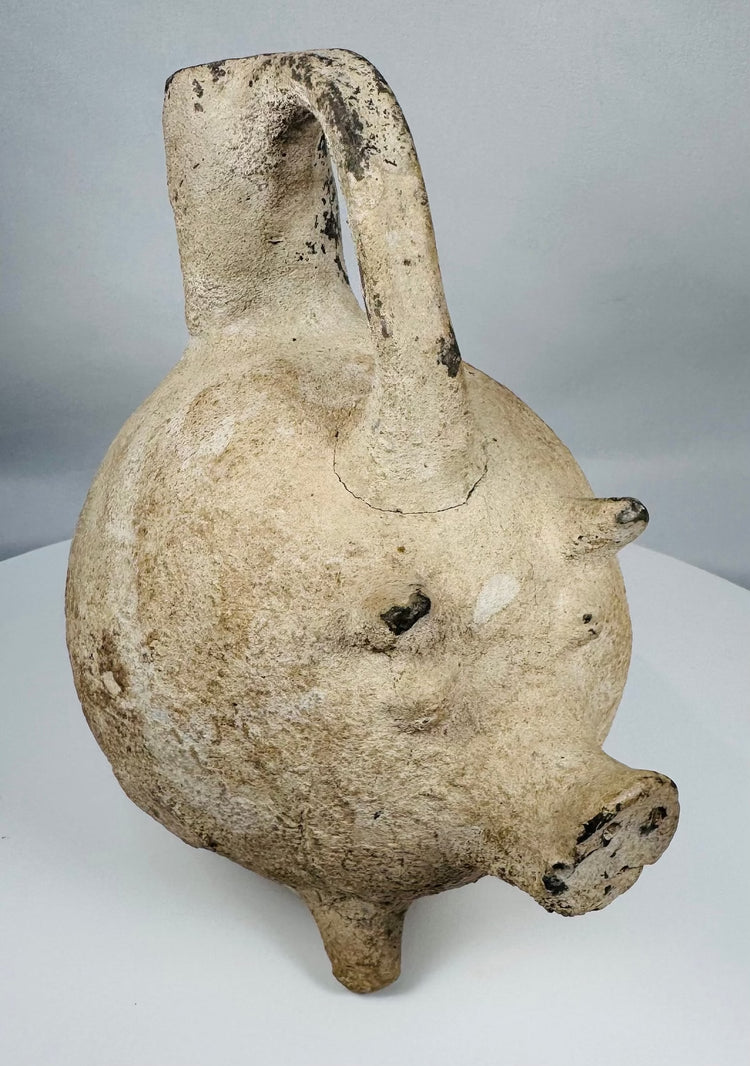
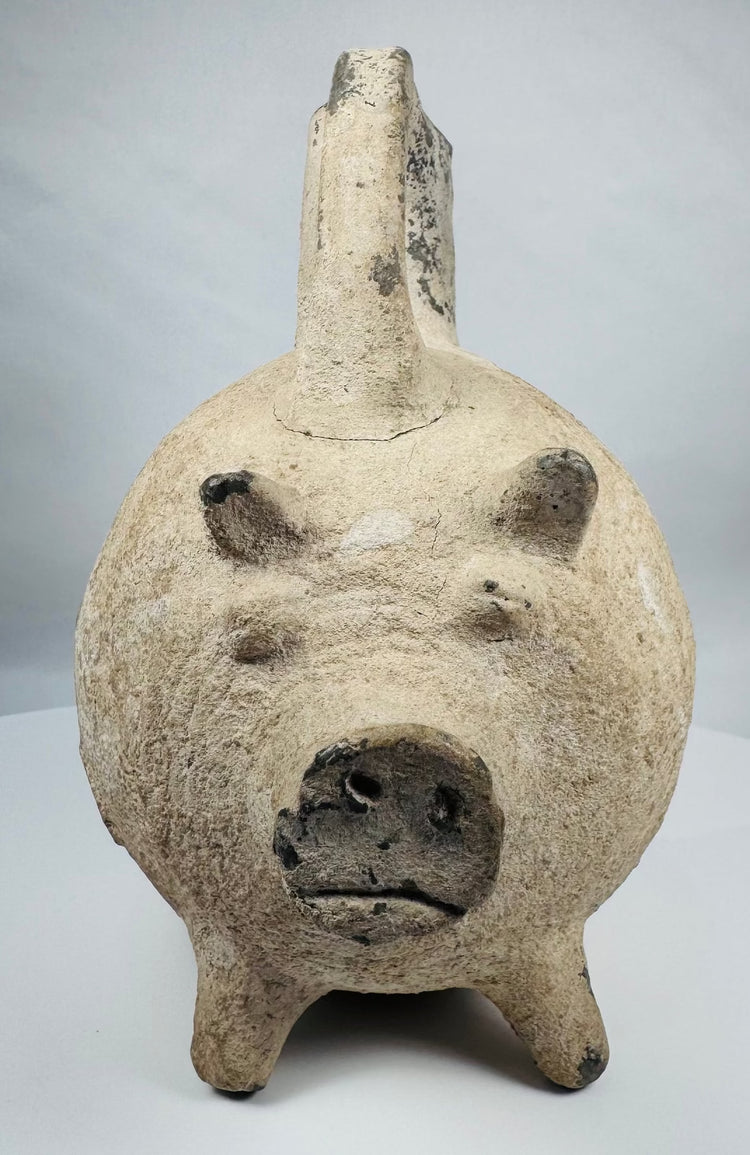
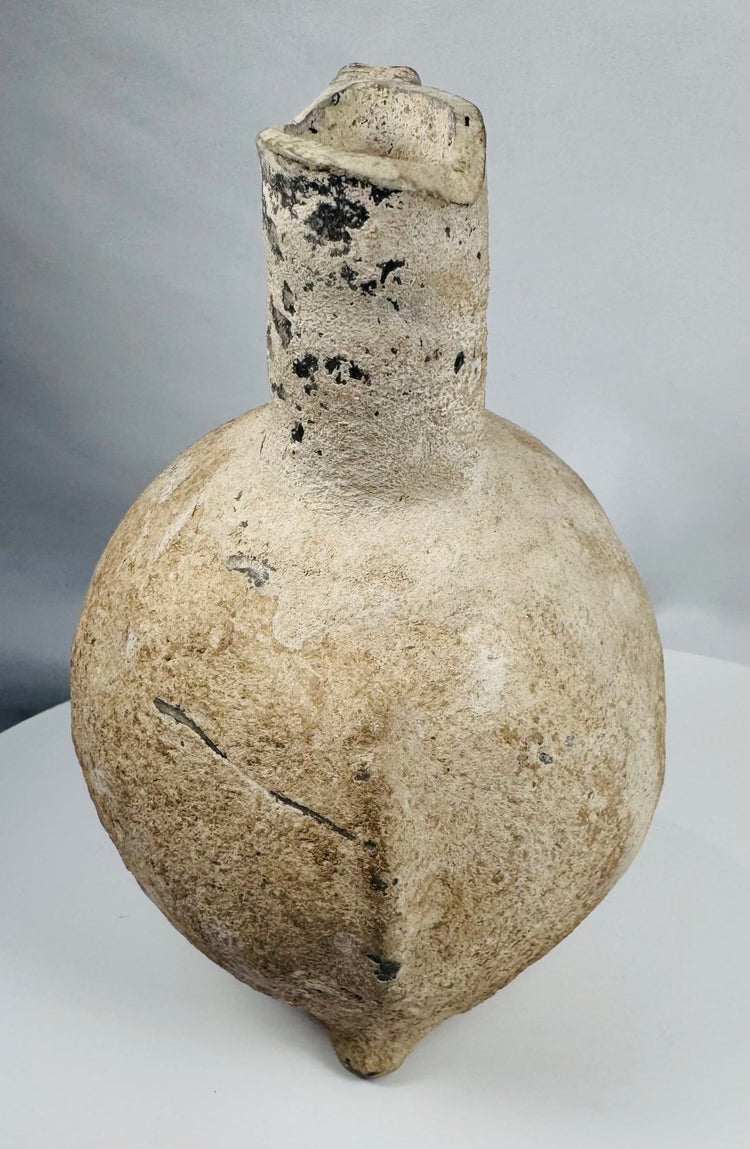
This remarkable ancient Anatolian zoomorphic vessel is hand-formed in the shape of a pig and attributed to the Yortan Culture of northwestern Anatolia, dating to the Early Bronze Age II, circa 2700–2500 BCE.
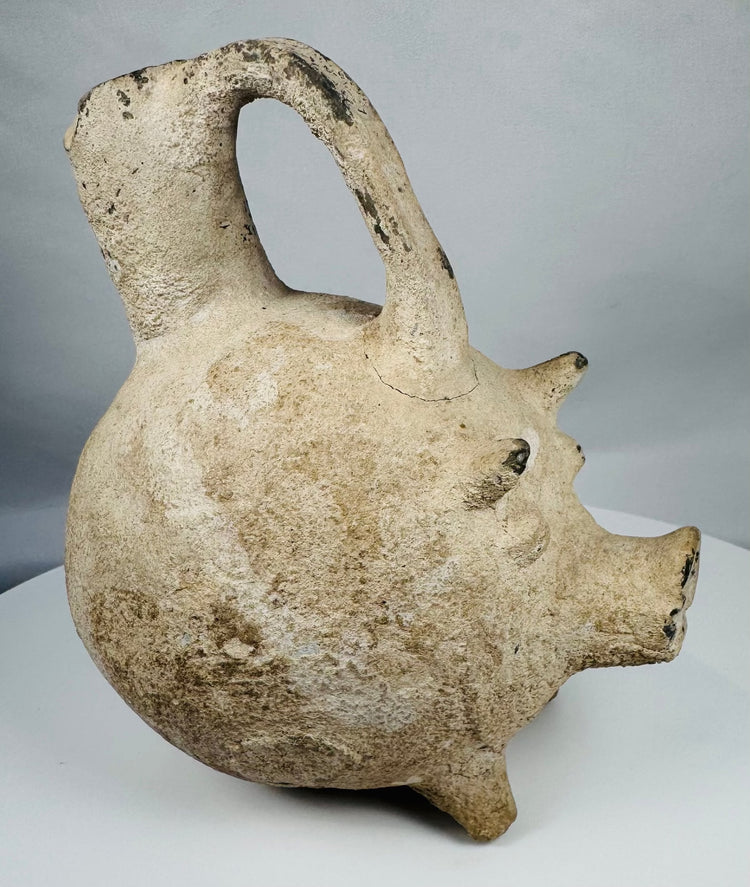
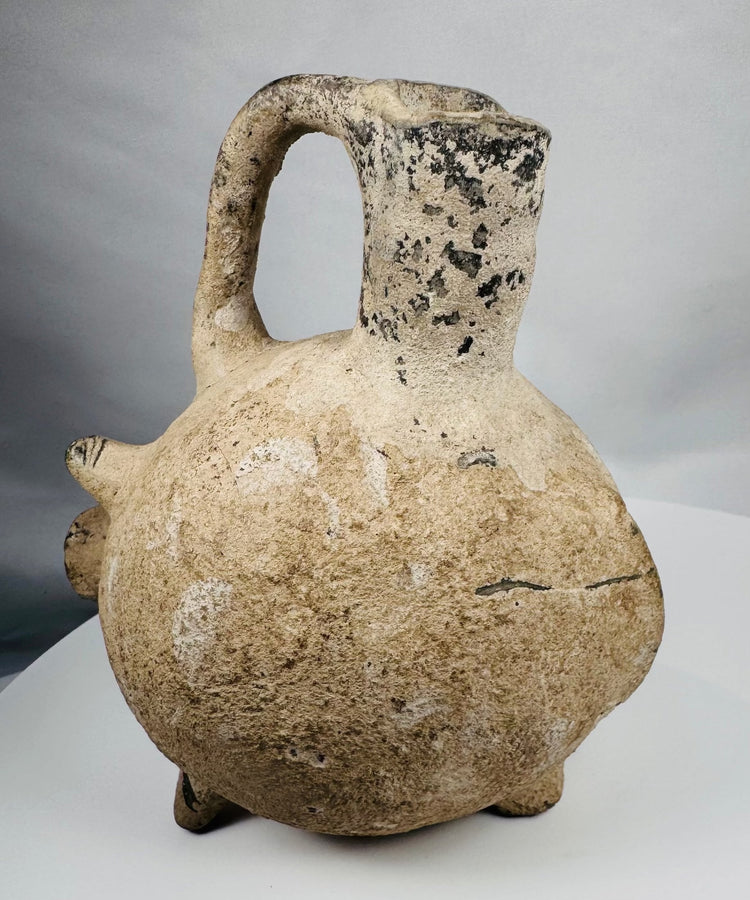
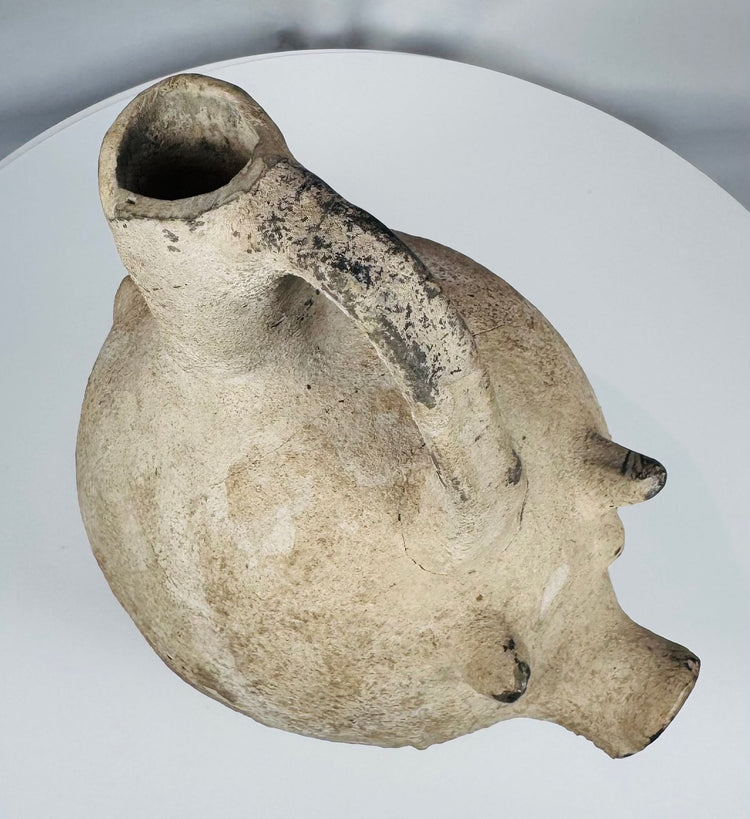
The vessel has a globular body supported by three short legs and a broad, flat-ended snout. Small applied ears and pellet-shaped eyes define the face, while a distinctive tall arched handle rises from the back and terminates in a flaring spout. A small applied pellet is also present on the rump.
Much of the surface is covered by pale mineral encrustation acquired over centuries of burial. Where this encrustation has flaked away—particularly around the snout, ears, and upper handle—the vessel's original dark ceramic fabric can be seen beneath. These characteristics, together with the vessel's form and construction, support its attribution to Yortan blackware pottery.
Features
- Hand-formed blackware terracotta
- Globular body supported by three short legs
- Broad, flat-ended snout
- Applied ears and pellet-shaped eyes
- Tall arched handle terminating in a flaring spout
- Small applied pellet detail on the rump
- Pale archaeological mineral encrustation
Cultural Significance
The Yortan Culture of northwestern Anatolia is particularly recognized for its distinctive Early Bronze Age funerary pottery. Its blackware ceramics are characterized by dark fabrics, highly stylized forms, applied decorative features, and unusual vessel shapes.
The dark ceramic fabric visible beneath the mineral encrustation, together with the arched handle, short legs, applied facial features, and pellet decoration, led the specialist to attribute this vessel to the Yortan Culture and date it to circa 2700–2500 BCE.
Condition
Ancient condition with extensive pale mineral encrustation and age-related surface wear. Areas of encrustation have flaked away, revealing the dark ceramic fabric beneath. A repaired break is visible at the base of the handle, with additional chips and surface losses consistent with considerable age and archaeological preservation.
Dimensions (Approximate)
Height: 6.75 in
Width: 6 in
Depth: 5.75 in
Age (Approximate)
4,500–4,700 years old
Provenance
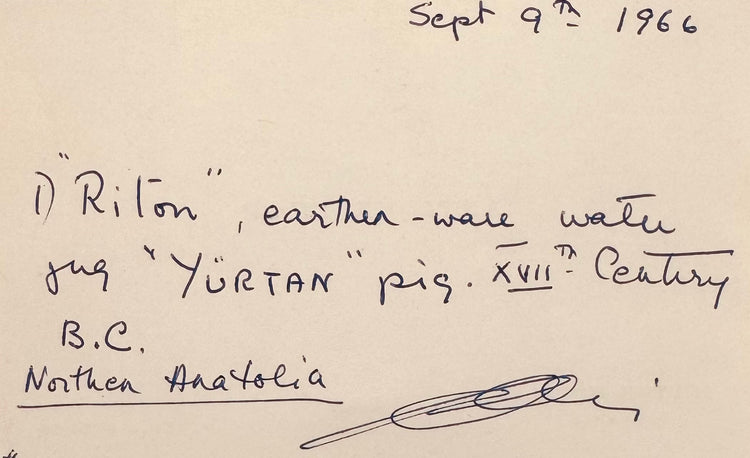
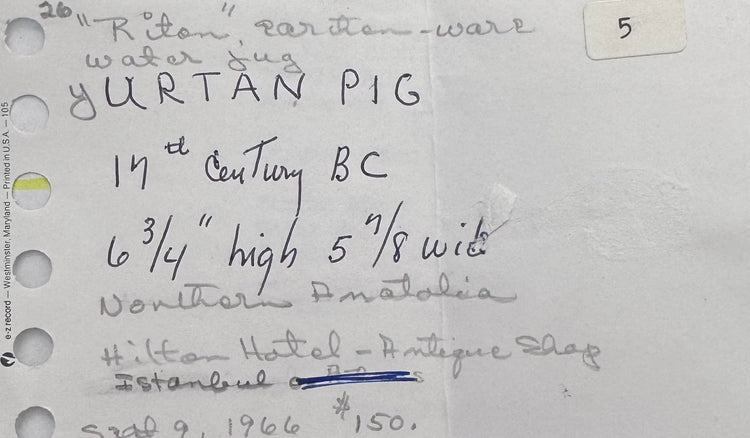
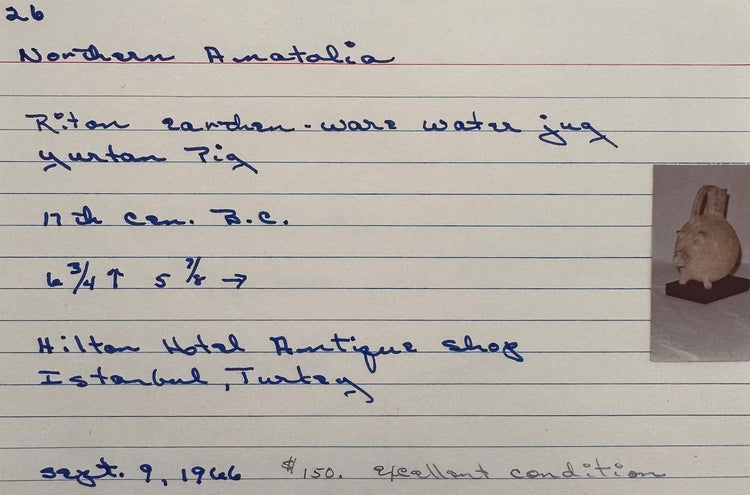
Purchased on September 9, 1966, from the Antique Shop at the Hilton Hotel, Istanbul, Turkey, and subsequently retained in the McMillan Collection, Minnesota, USA, for nearly six decades. The vessel is accompanied by its original McMillan Collection inventory card identifying the piece as a "Yortan Pig Water Jug" from Northern Anatolia and dating it to the 17th Century BCE. The inventory card records the date and location of acquisition and includes an original period photograph of the vessel as it appeared in the collection in the 1980s.
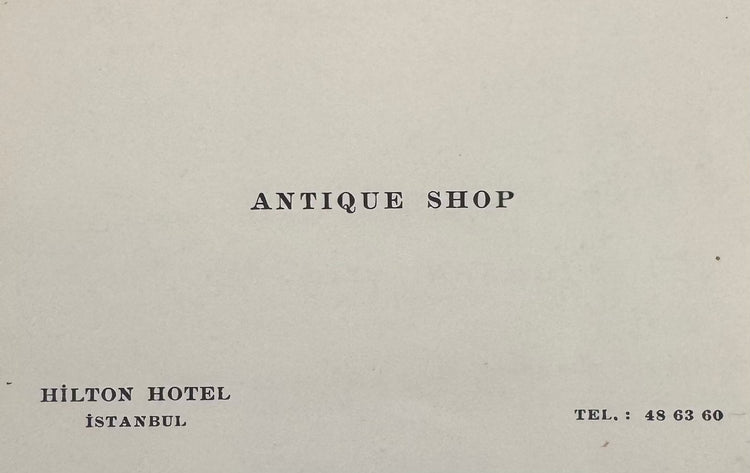
Additional accompanying documentation includes the original Hilton Hotel Antique Shop card from Istanbul, the original McMillan Collection inventory records listing the vessel as Item No. 26, and the collection valuation guide documenting the object within the McMillan Collection archive.
Expert Assessment: Examined by Luca Salvaggio, an Italian archaeologist specializing in Greek, Roman, Near Eastern, Cypriot, and Mediterranean archaeological material, with a Postgraduate Diploma from the Italian Archaeological School at Athens (IASA) and accreditation for preventive archaeology from the Italian Ministry of Culture (MiC). He attributed the vessel to the Yortan Culture of northwestern Anatolia, dating to the Early Bronze Age II, circa 2700–2500 BCE, based on its blackware fabric, arched handle, short legs, applied facial features, and overall form. His signed specialist report accompanies the piece and is included with the purchase.
Learn More
Learn about the Early Bronze Age Yortan Culture of Ancient Anatolia
Description
Historical Context & Origin
Region: Northwestern Anatolia, Ancient Anatolia (Yortan Culture)
Material: Hand-formed blackware terracotta with pale mineral encrustation
Period: Early Bronze Age II, circa 2700–2500 BCE
Description
This remarkable ancient Anatolian zoomorphic vessel is hand-formed in the shape of a pig and attributed to the Yortan Culture of northwestern Anatolia, dating to the Early Bronze Age II, circa 2700–2500 BCE.
The vessel has a globular body supported by three short legs and a broad, flat-ended snout. Small applied ears and pellet-shaped eyes define the face, while a distinctive tall arched handle rises from the back and terminates in a flaring spout. A small applied pellet is also present on the rump.
Much of the surface is covered by pale mineral encrustation acquired over centuries of burial. Where this encrustation has flaked away—particularly around the snout, ears, and upper handle—the vessel's original dark ceramic fabric can be seen beneath. These characteristics, together with the vessel's form and construction, support its attribution to Yortan blackware pottery.
Features
- Hand-formed blackware terracotta
- Globular body supported by three short legs
- Broad, flat-ended snout
- Applied ears and pellet-shaped eyes
- Tall arched handle terminating in a flaring spout
- Small applied pellet detail on the rump
- Pale archaeological mineral encrustation
Cultural Significance
The Yortan Culture of northwestern Anatolia is particularly recognized for its distinctive Early Bronze Age funerary pottery. Its blackware ceramics are characterized by dark fabrics, highly stylized forms, applied decorative features, and unusual vessel shapes.
The dark ceramic fabric visible beneath the mineral encrustation, together with the arched handle, short legs, applied facial features, and pellet decoration, led the specialist to attribute this vessel to the Yortan Culture and date it to circa 2700–2500 BCE.
Condition
Ancient condition with extensive pale mineral encrustation and age-related surface wear. Areas of encrustation have flaked away, revealing the dark ceramic fabric beneath. A repaired break is visible at the base of the handle, with additional chips and surface losses consistent with considerable age and archaeological preservation.
Dimensions (Approximate)
Height: 6.75 in
Width: 6 in
Depth: 5.75 in
Age (Approximate)
4,500–4,700 years old
Provenance
Purchased on September 9, 1966, from the Antique Shop at the Hilton Hotel, Istanbul, Turkey, and subsequently retained in the McMillan Collection, Minnesota, USA, for nearly six decades. The vessel is accompanied by its original McMillan Collection inventory card identifying the piece as a "Yortan Pig Water Jug" from Northern Anatolia and dating it to the 17th Century BCE. The inventory card records the date and location of acquisition and includes an original period photograph of the vessel as it appeared in the collection in the 1980s.
Additional accompanying documentation includes the original Hilton Hotel Antique Shop card from Istanbul, the original McMillan Collection inventory records listing the vessel as Item No. 26, and the collection valuation guide documenting the object within the McMillan Collection archive.
Expert Assessment: Examined by Luca Salvaggio, an Italian archaeologist specializing in Greek, Roman, Near Eastern, Cypriot, and Mediterranean archaeological material, with a Postgraduate Diploma from the Italian Archaeological School at Athens (IASA) and accreditation for preventive archaeology from the Italian Ministry of Culture (MiC). He attributed the vessel to the Yortan Culture of northwestern Anatolia, dating to the Early Bronze Age II, circa 2700–2500 BCE, based on its blackware fabric, arched handle, short legs, applied facial features, and overall form. His signed specialist report accompanies the piece and is included with the purchase.
Learn More
Learn about the Early Bronze Age Yortan Culture of Ancient Anatolia
You May Also Like
