



Antique Black Forest Carved Walnut Fruit Basket Furniture Pediment | Circa 1880 – 1900
Couldn't load pickup availability


Antique Black Forest Carved Walnut Fruit Basket Furniture Pediment | Circa 1880 – 1900
Description
More
Less
Historical Context & Origin
Region: Continental Europe, probably Switzerland or southern Germany
Material: Hand-carved walnut or similar dark-stained hardwood with metal fasteners
Period: Late 19th century, circa 1880–1900
Description
An antique European carved hardwood furniture crest or pediment, probably produced within the tradition commonly described as Black Forest or Brienz woodcarving.
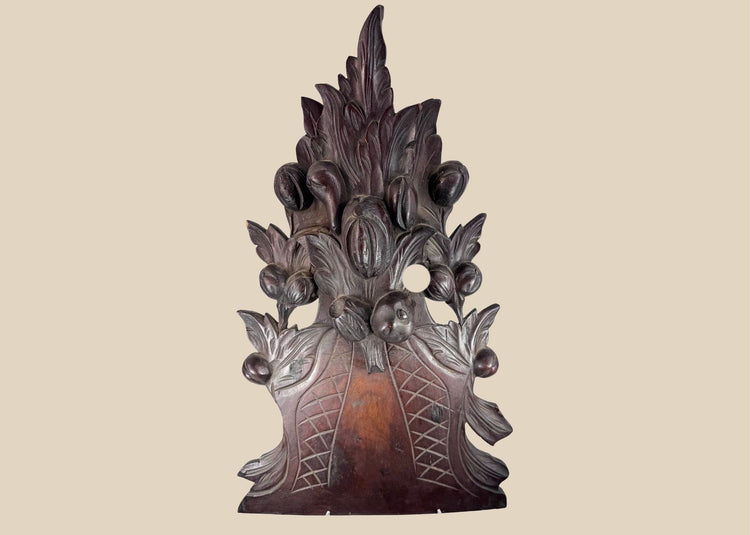
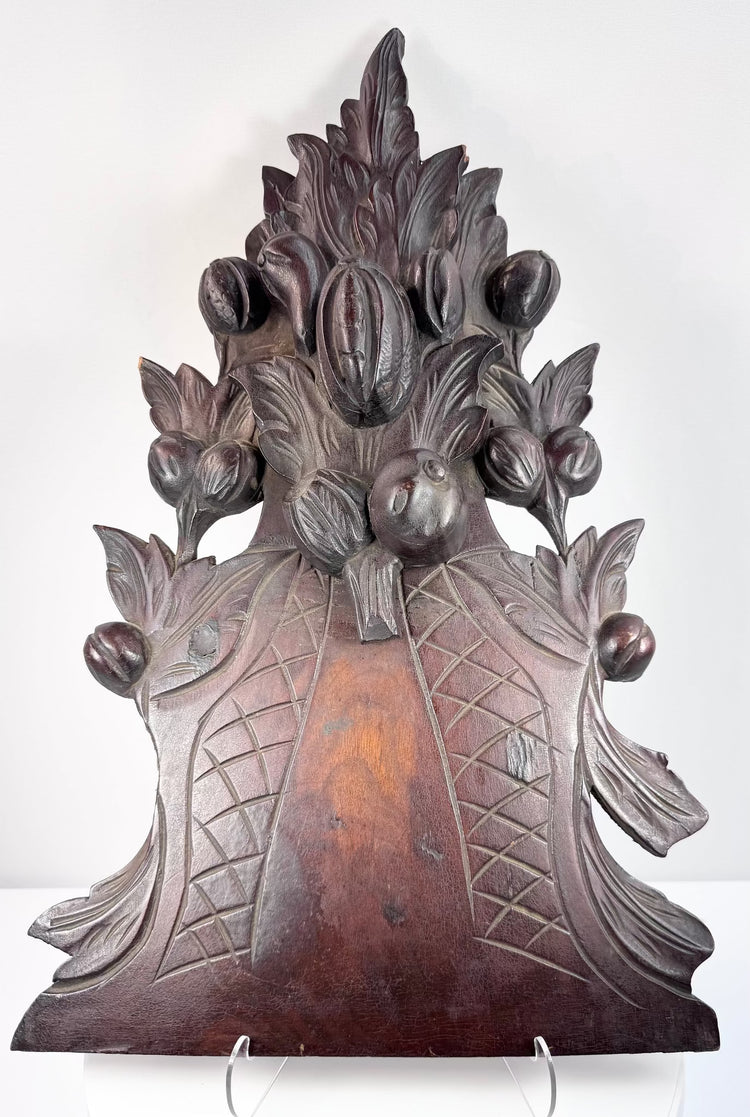
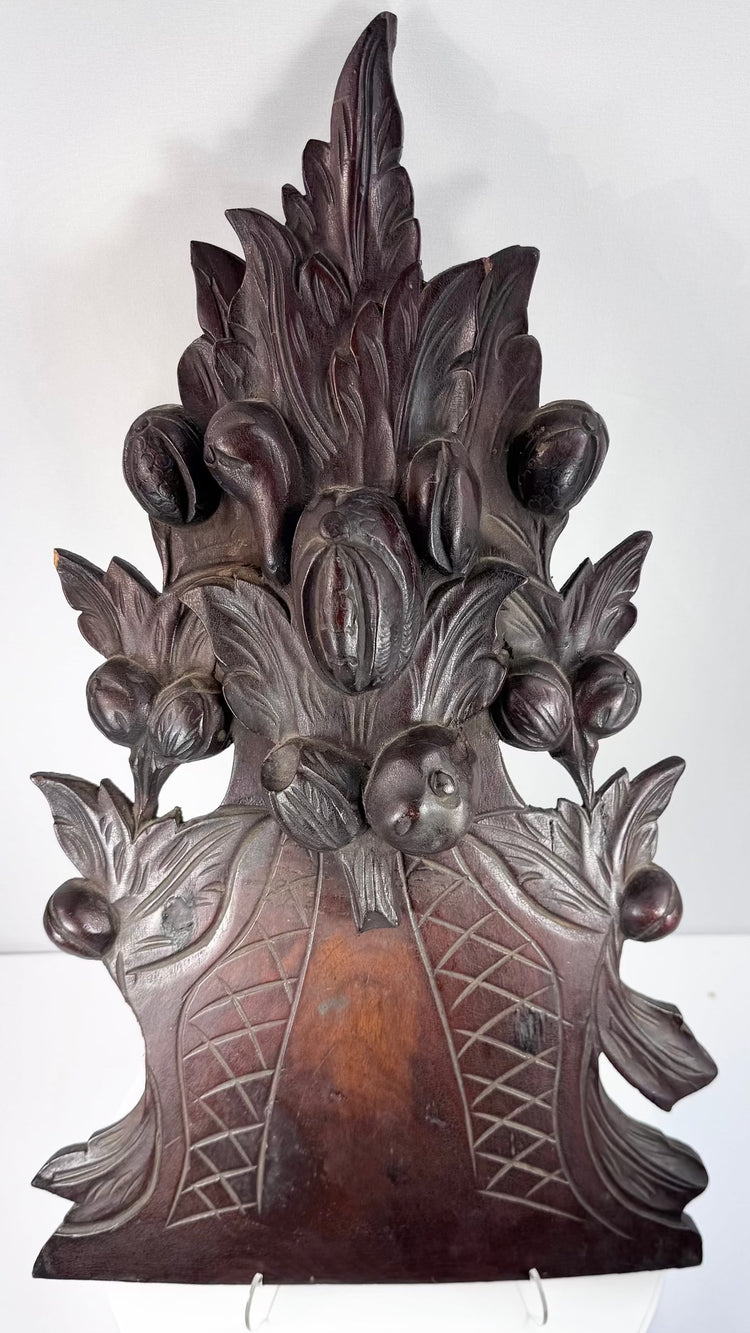
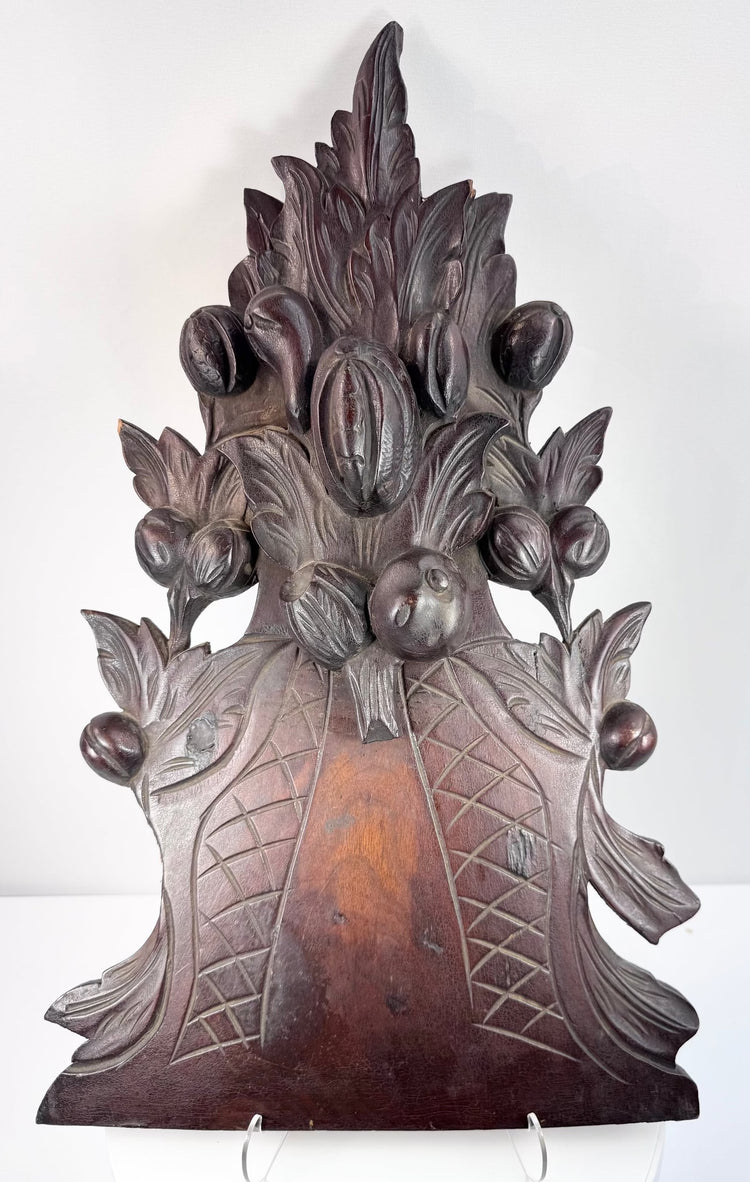
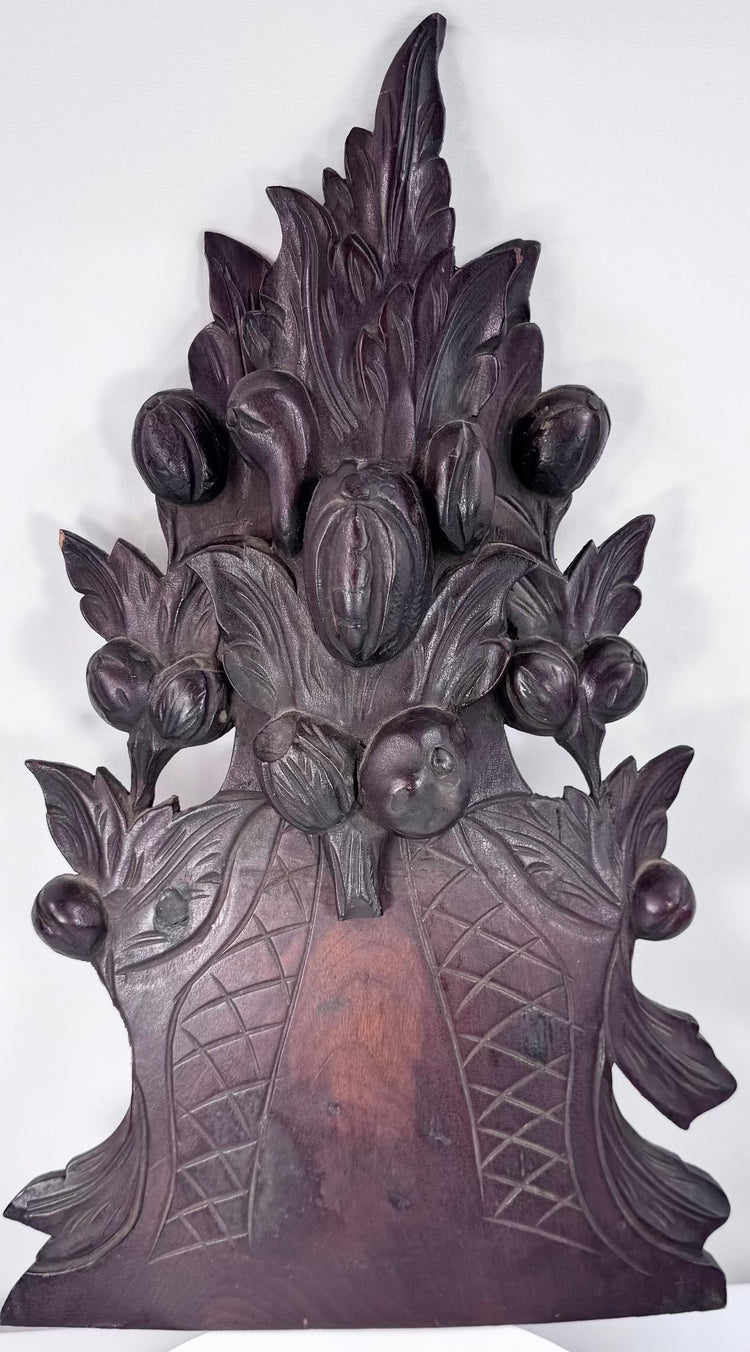
The composition depicts an overflowing basket filled with abundant fruit, seed pods, nuts, and densely layered foliage. A prominent elongated fruit or pod occupies the center, surrounded by rounded pomegranate-, peach-, and nut-like forms. Tall, flame-shaped leaves rise above the arrangement, creating a dramatic vertical silhouette.
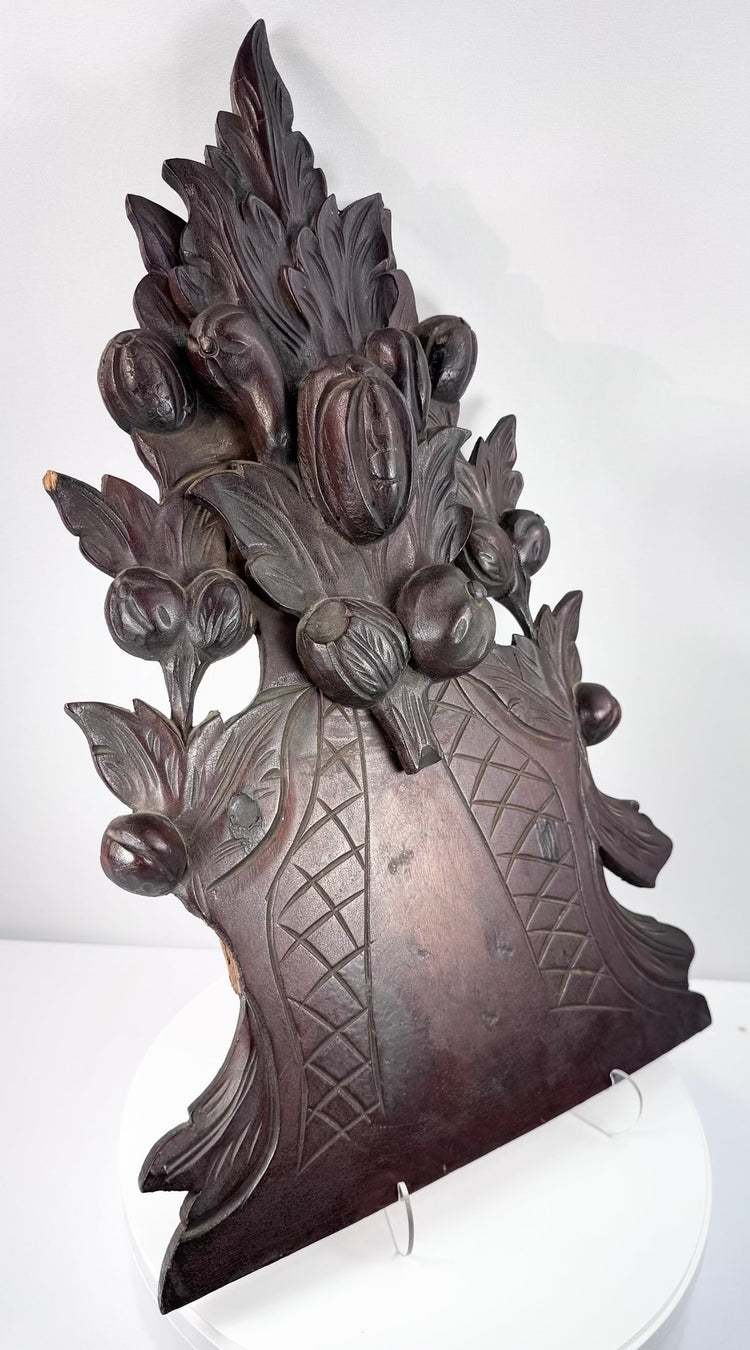
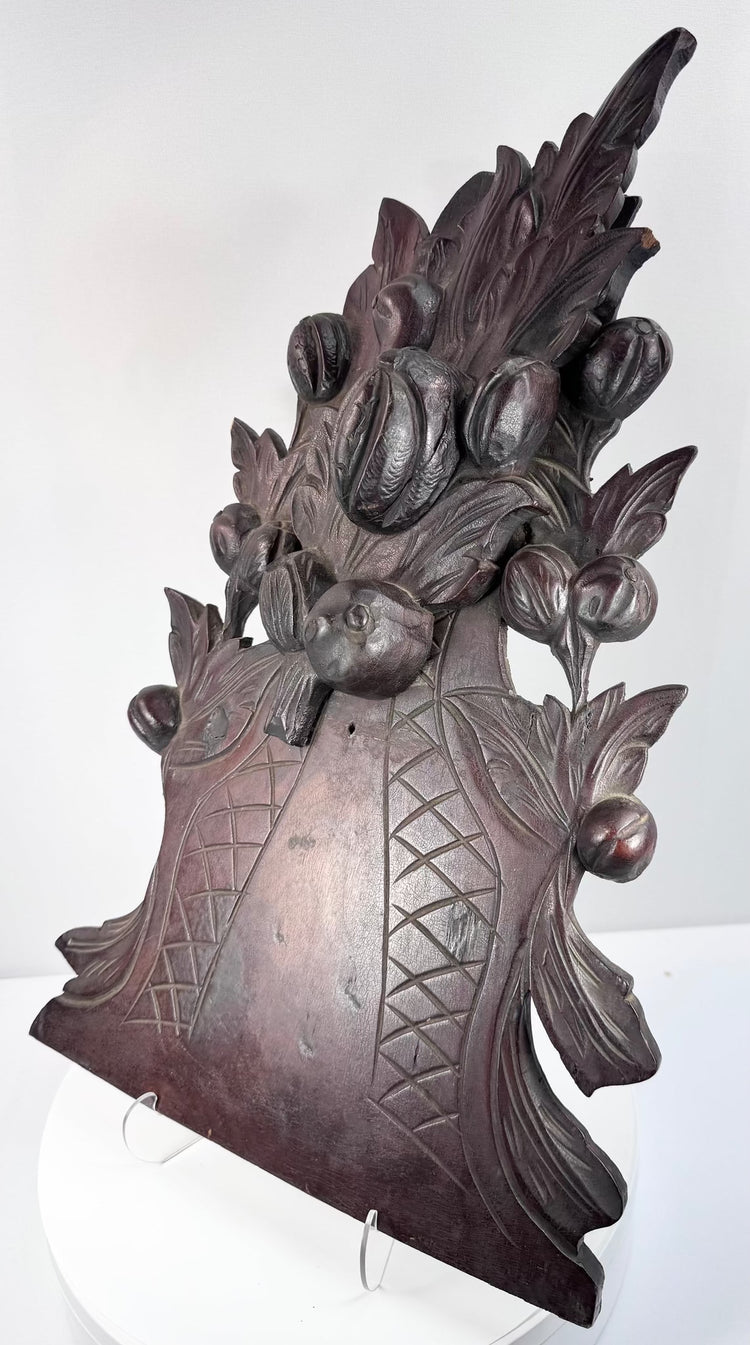
The lower portion is carved as a flaring woven basket, its surface decorated with deeply incised crosshatched latticework. Pierced openings between the lateral branches contribute additional depth, while individually carved and applied elements create a sculptural high-relief effect.
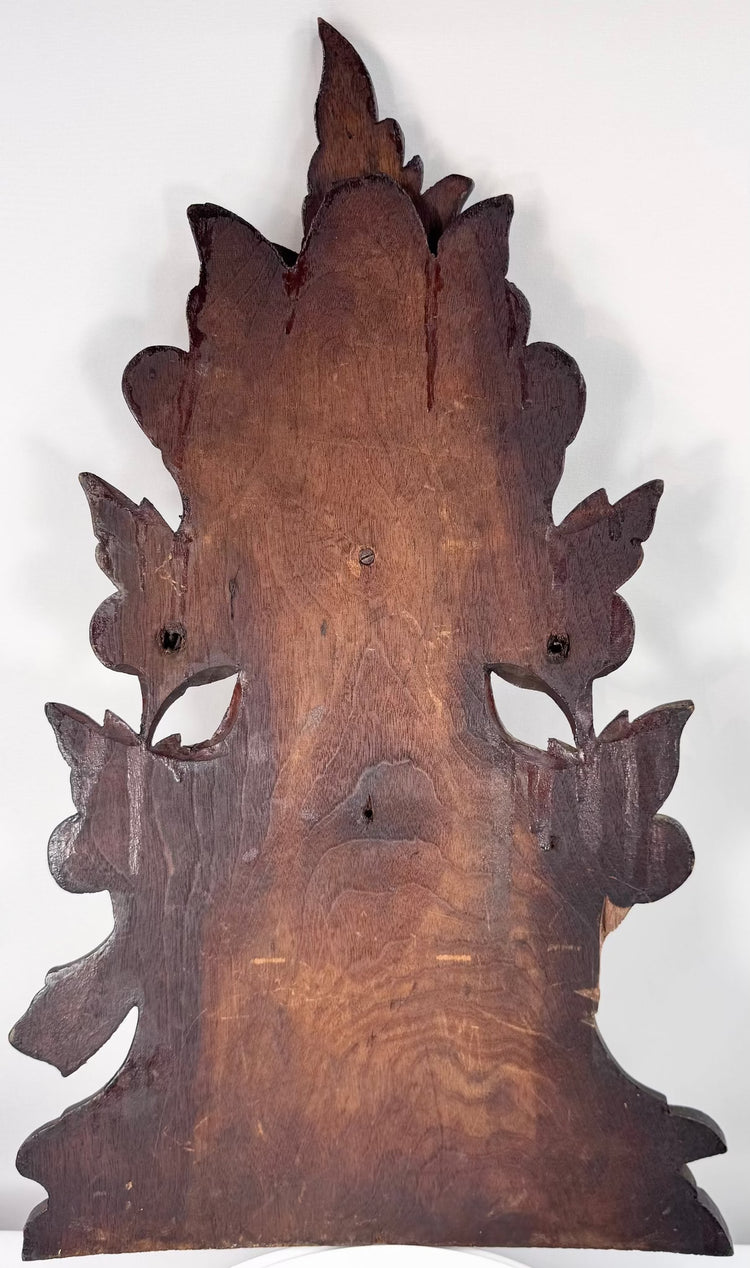
The dark reddish-brown finish has developed considerable variation and patina with age. The carving was not originally intended as an independent plaque. Its comparatively flat reverse retains attachment holes, screws, and other mounting evidence indicating that it once formed the ornamental crest of a larger furnishing, possibly a mirror, cabinet, sideboard, bed, or overdoor.
Features
- Black Forest–style naturalistic woodcarving
- Walnut or similar dark-stained hardwood
- Overflowing woven basket composition
- High-relief fruits, nuts, seed pods, and foliage
- Prominent pineapple- or pod-like central fruit
- Pierced and layered silhouette
- Deeply incised basket latticework
- Individually applied carved elements
- Old mounting holes, screws, and attachment points
- Rich reddish-brown surface and aged patina
Cultural Significance
Naturalistic woodcarving flourished in Switzerland and neighboring regions during the 19th century. Workshops around Brienz became particularly recognized for elaborate carvings inspired by native plants, animals, fruit, and rural life. These works were marketed internationally as decorative objects and as embellishments for fashionable household furniture.
Fruit-filled baskets traditionally communicated abundance, prosperity, fertility, and hospitality. Such imagery was particularly appropriate for dining-room sideboards, cabinets, and large mirrors intended for prosperous Victorian-era interiors.
Condition
Fair antique condition consistent with age and its history as a salvaged furniture fragment. Considerable wear includes surface scratches, abrasions, finish loss, discoloration, and variations in the reddish-brown patina.
There are scattered chips and losses to the projecting leaves, fruit, and outer edges, together with cracks, splits, filled areas, old adhesive residue, and evidence of earlier repairs or reattachment. Several carved elements appear to be missing or replaced, and exposed fasteners and vacant attachment points remain visible.
The reverse displays old scratches, stains, mounting holes, screws, and construction evidence associated with its former placement on a larger furnishing. The original parent furniture and mounting system are no longer present.
Dimensions (Approximate)
Height: 21 in
Width: 12.5 in
Depth: 0.5 in
Age (Approximate)
126–146 years old
Provenance
Formerly in a private collection in Chevy Chase, Maryland, United States, specializing in Asian art and related religious objects.
Subsequently handled by Sloans & Kenyon Auctioneers and Appraisers, a longstanding Maryland auction house serving the greater Washington, D.C., region. Tracing its history to Sloan & Co., established in 1853, the firm conducts professionally catalogued auctions featuring fine art, antiques, and historical collectibles.
Lastly acquired by a private collection in Toronto, Ontario, Canada.
Learn More
Learn about the celebrated 19th-century Brienz woodcarving tradition through the Swiss Woodcarving Museum
Browse our Collection of 19th-Century Artifacts
Description
Historical Context & Origin
Region: Continental Europe, probably Switzerland or southern Germany
Material: Hand-carved walnut or similar dark-stained hardwood with metal fasteners
Period: Late 19th century, circa 1880–1900
Description
An antique European carved hardwood furniture crest or pediment, probably produced within the tradition commonly described as Black Forest or Brienz woodcarving.
The composition depicts an overflowing basket filled with abundant fruit, seed pods, nuts, and densely layered foliage. A prominent elongated fruit or pod occupies the center, surrounded by rounded pomegranate-, peach-, and nut-like forms. Tall, flame-shaped leaves rise above the arrangement, creating a dramatic vertical silhouette.
The lower portion is carved as a flaring woven basket, its surface decorated with deeply incised crosshatched latticework. Pierced openings between the lateral branches contribute additional depth, while individually carved and applied elements create a sculptural high-relief effect.
The dark reddish-brown finish has developed considerable variation and patina with age. The carving was not originally intended as an independent plaque. Its comparatively flat reverse retains attachment holes, screws, and other mounting evidence indicating that it once formed the ornamental crest of a larger furnishing, possibly a mirror, cabinet, sideboard, bed, or overdoor.
Features
- Black Forest–style naturalistic woodcarving
- Walnut or similar dark-stained hardwood
- Overflowing woven basket composition
- High-relief fruits, nuts, seed pods, and foliage
- Prominent pineapple- or pod-like central fruit
- Pierced and layered silhouette
- Deeply incised basket latticework
- Individually applied carved elements
- Old mounting holes, screws, and attachment points
- Rich reddish-brown surface and aged patina
Cultural Significance
Naturalistic woodcarving flourished in Switzerland and neighboring regions during the 19th century. Workshops around Brienz became particularly recognized for elaborate carvings inspired by native plants, animals, fruit, and rural life. These works were marketed internationally as decorative objects and as embellishments for fashionable household furniture.
Fruit-filled baskets traditionally communicated abundance, prosperity, fertility, and hospitality. Such imagery was particularly appropriate for dining-room sideboards, cabinets, and large mirrors intended for prosperous Victorian-era interiors.
Condition
Fair antique condition consistent with age and its history as a salvaged furniture fragment. Considerable wear includes surface scratches, abrasions, finish loss, discoloration, and variations in the reddish-brown patina.
There are scattered chips and losses to the projecting leaves, fruit, and outer edges, together with cracks, splits, filled areas, old adhesive residue, and evidence of earlier repairs or reattachment. Several carved elements appear to be missing or replaced, and exposed fasteners and vacant attachment points remain visible.
The reverse displays old scratches, stains, mounting holes, screws, and construction evidence associated with its former placement on a larger furnishing. The original parent furniture and mounting system are no longer present.
Dimensions (Approximate)
Height: 21 in
Width: 12.5 in
Depth: 0.5 in
Age (Approximate)
126–146 years old
Provenance
Formerly in a private collection in Chevy Chase, Maryland, United States, specializing in Asian art and related religious objects.
Subsequently handled by Sloans & Kenyon Auctioneers and Appraisers, a longstanding Maryland auction house serving the greater Washington, D.C., region. Tracing its history to Sloan & Co., established in 1853, the firm conducts professionally catalogued auctions featuring fine art, antiques, and historical collectibles.
Lastly acquired by a private collection in Toronto, Ontario, Canada.
Learn More
Learn about the celebrated 19th-century Brienz woodcarving tradition through the Swiss Woodcarving Museum
Browse our Collection of 19th-Century Artifacts
You May Also Like
