

Burmese Bronze Shakyamuni Buddha in Earth-Touching Mudra | Konbaung Period, Circa 1780 – 1830
Couldn't load pickup availability


Burmese Bronze Shakyamuni Buddha in Earth-Touching Mudra | Konbaung Period, Circa 1780 – 1830
Description
More
Less
Historical Context & Origin
Region: Myanmar (Burma), possibly a central Burmese or Shan workshop
Material: Hollow-cast bronze or copper alloy with naturally developed patina
Period: Konbaung Period, Late 18th–Early 19th Century, Circa 1780–1830
Description
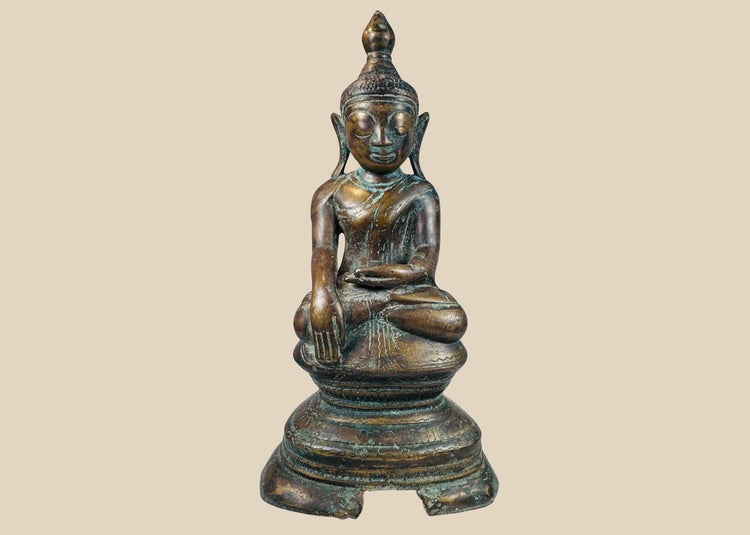
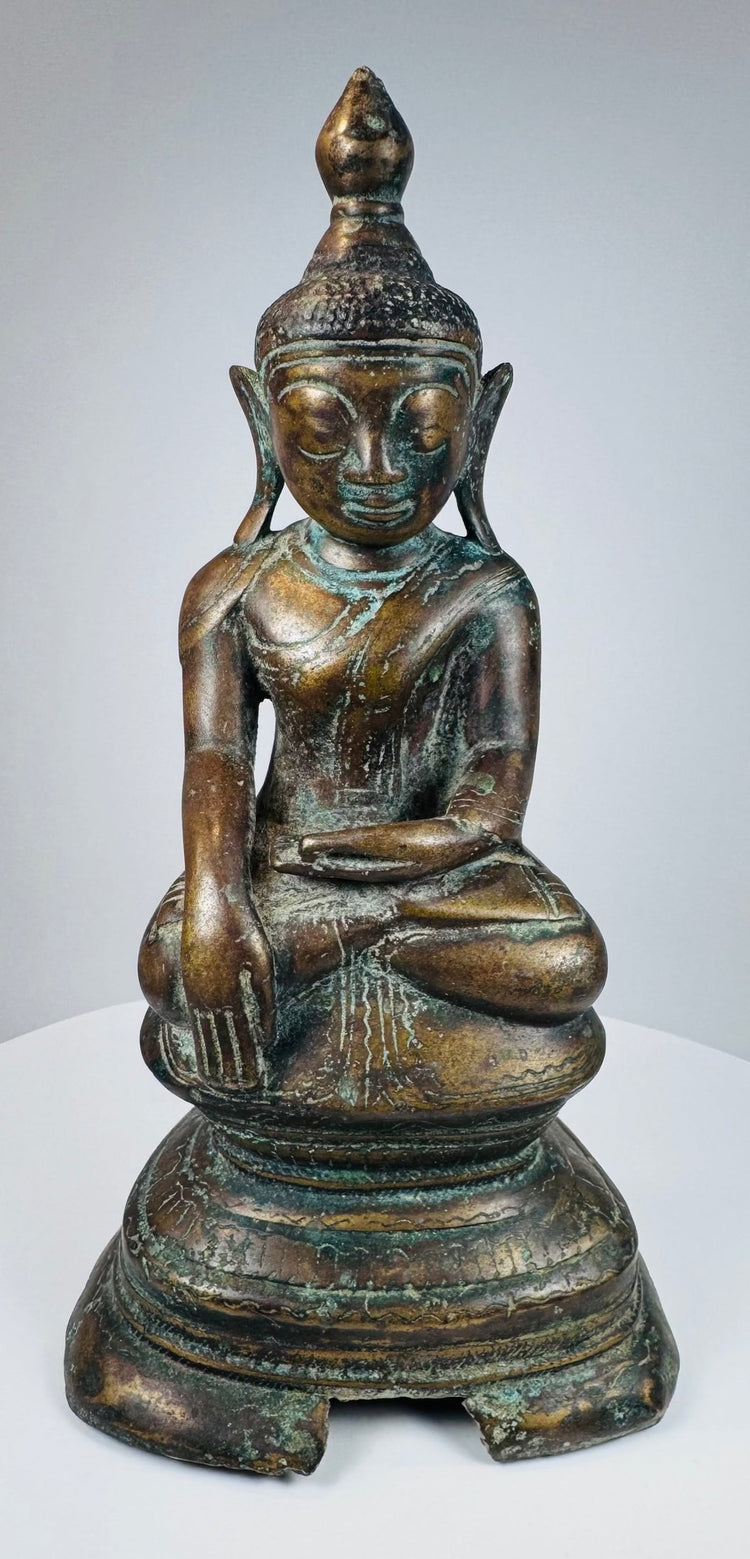
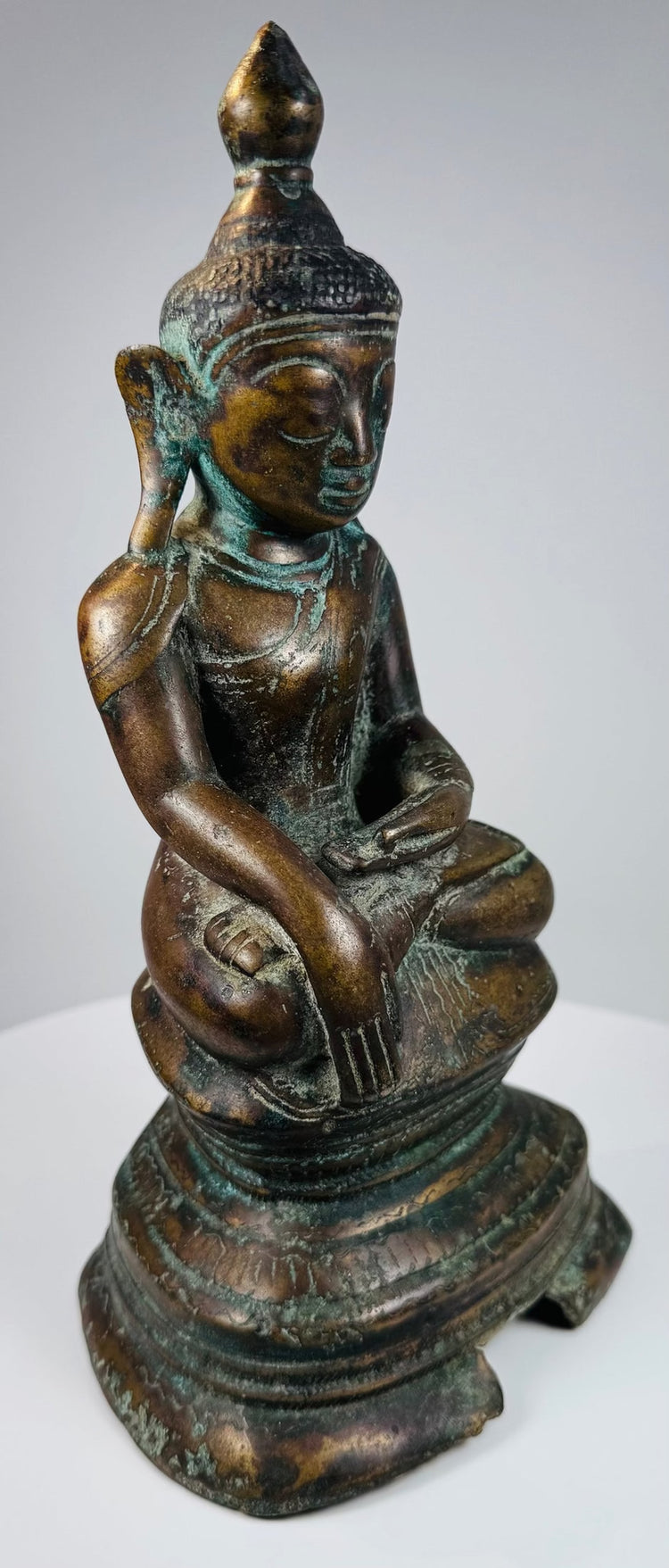
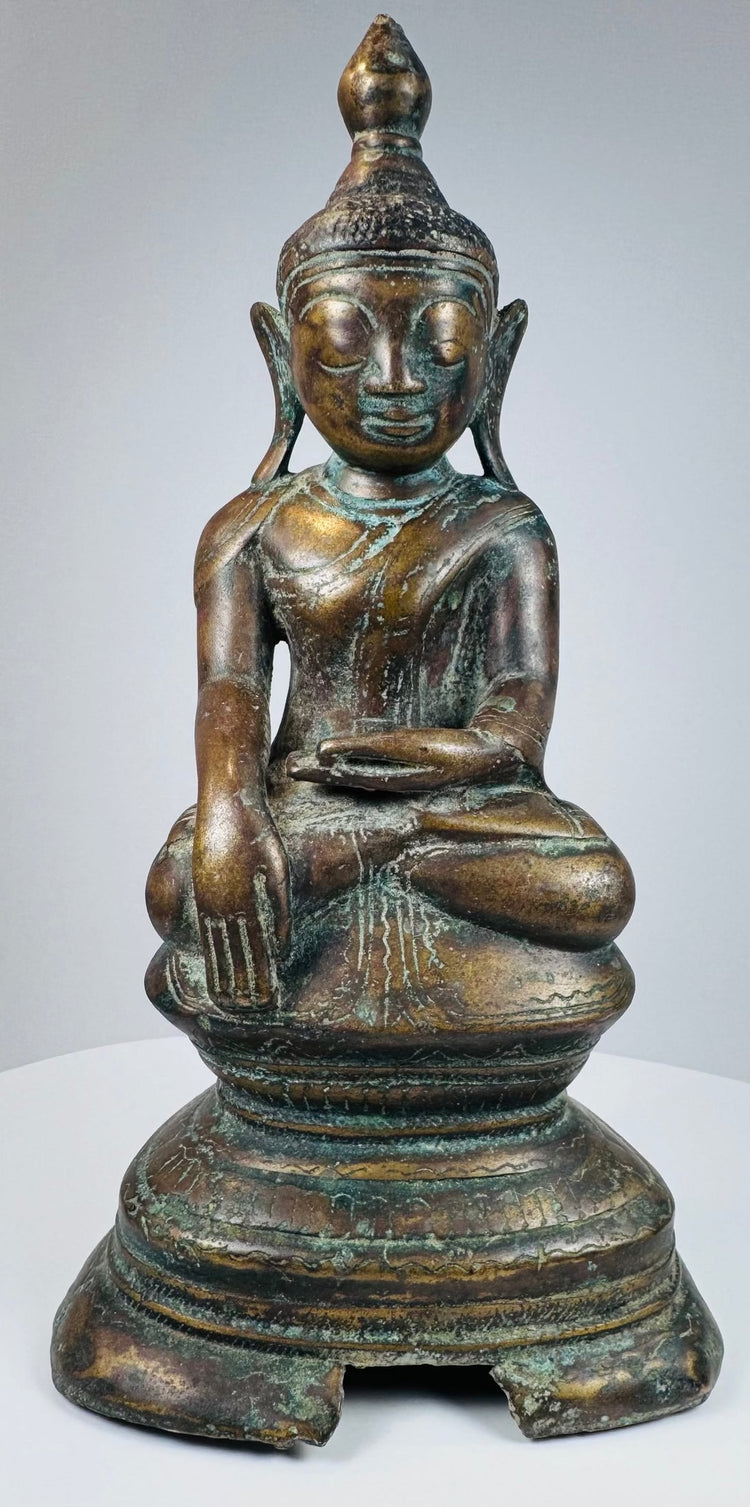
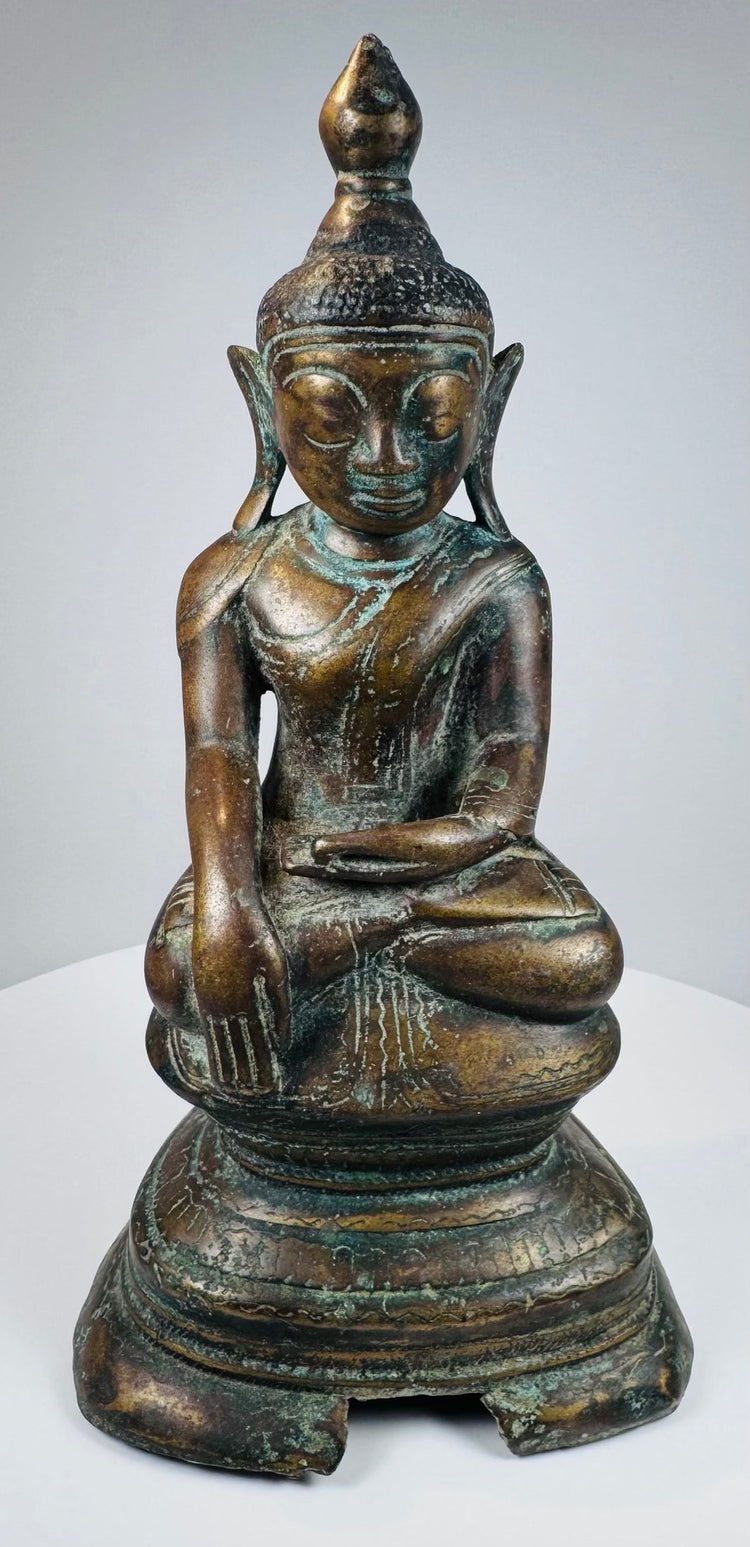
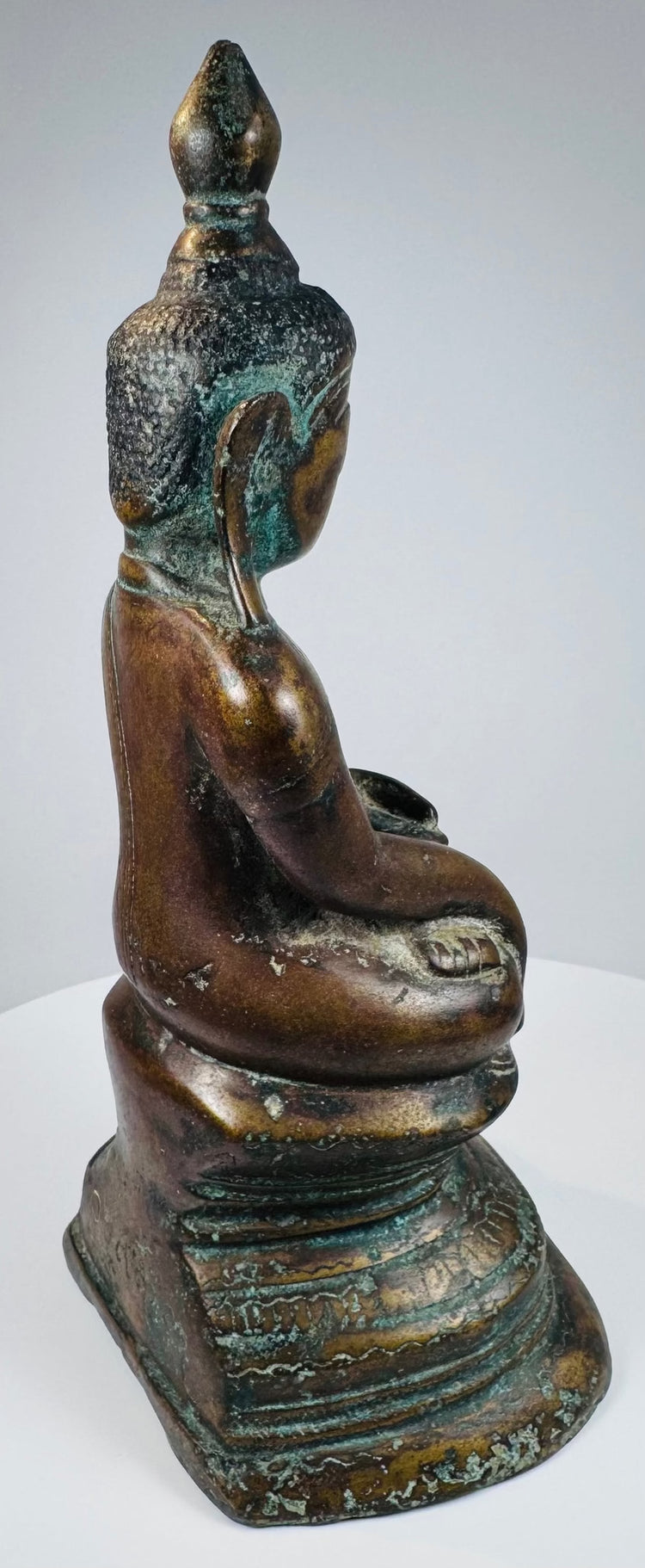
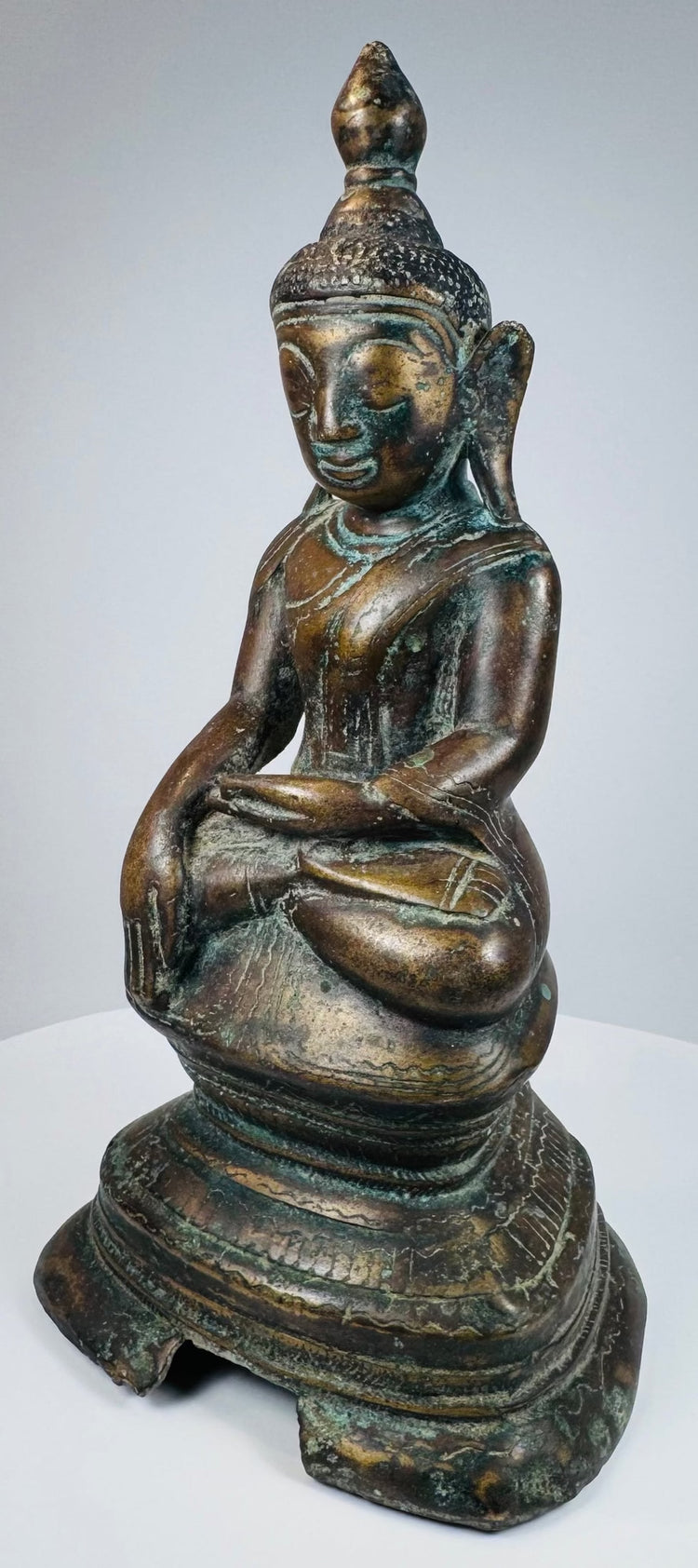
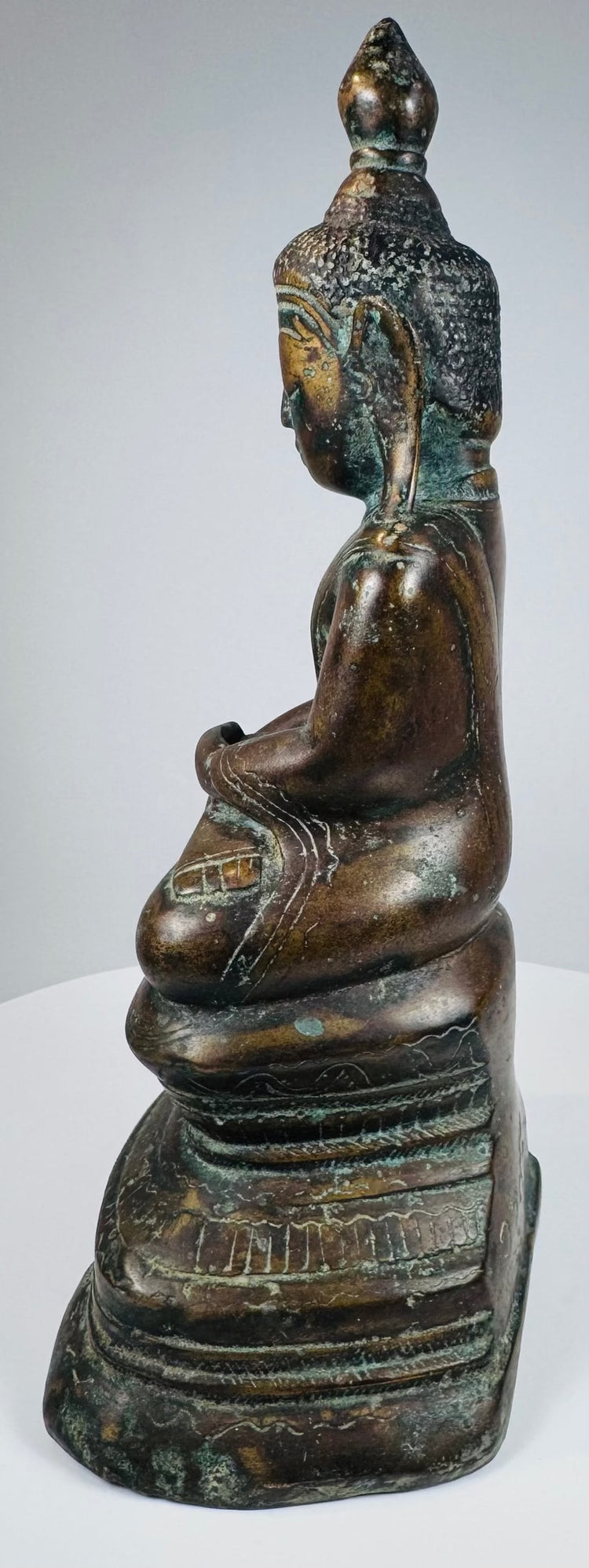
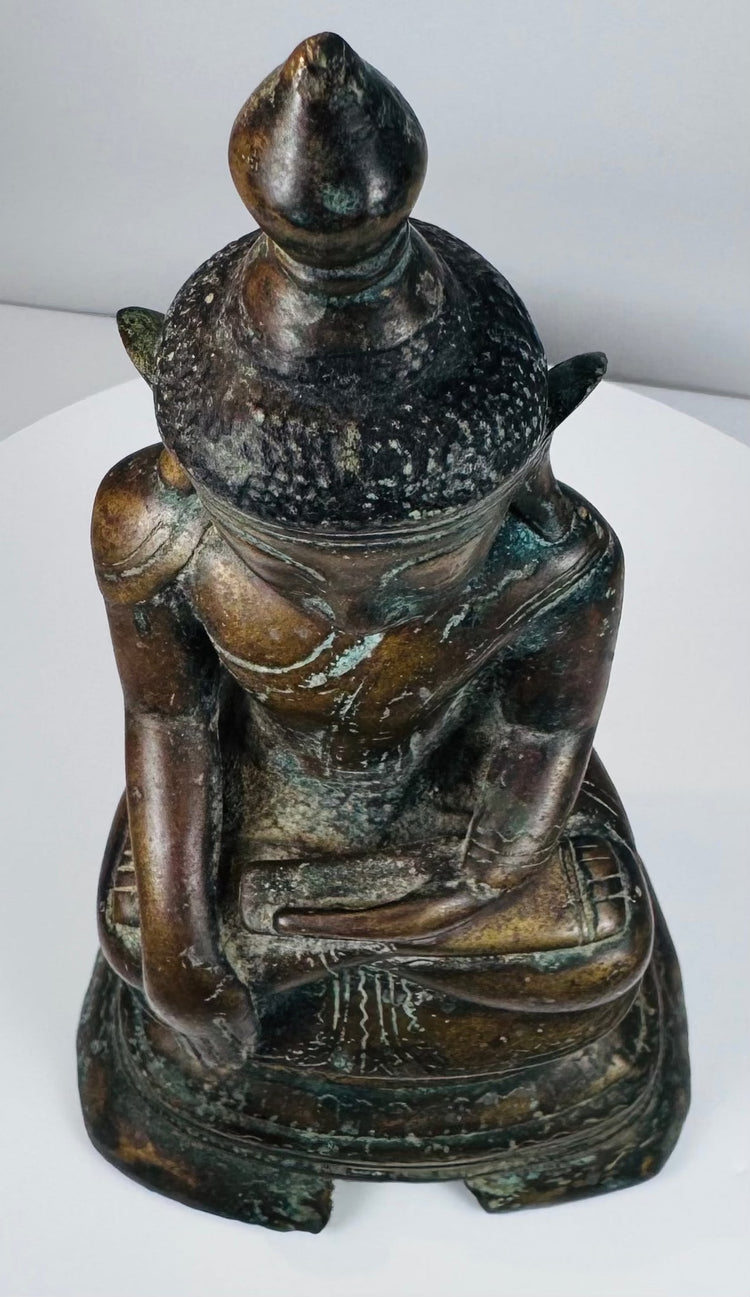
This finely cast bronze figure depicts Shakyamuni Buddha seated in meditation upon a high, tiered pedestal. Produced in Myanmar during the Konbaung period, the sculpture displays stylistic characteristics associated with Burmese Buddhist bronzes of the late 18th and early 19th centuries.
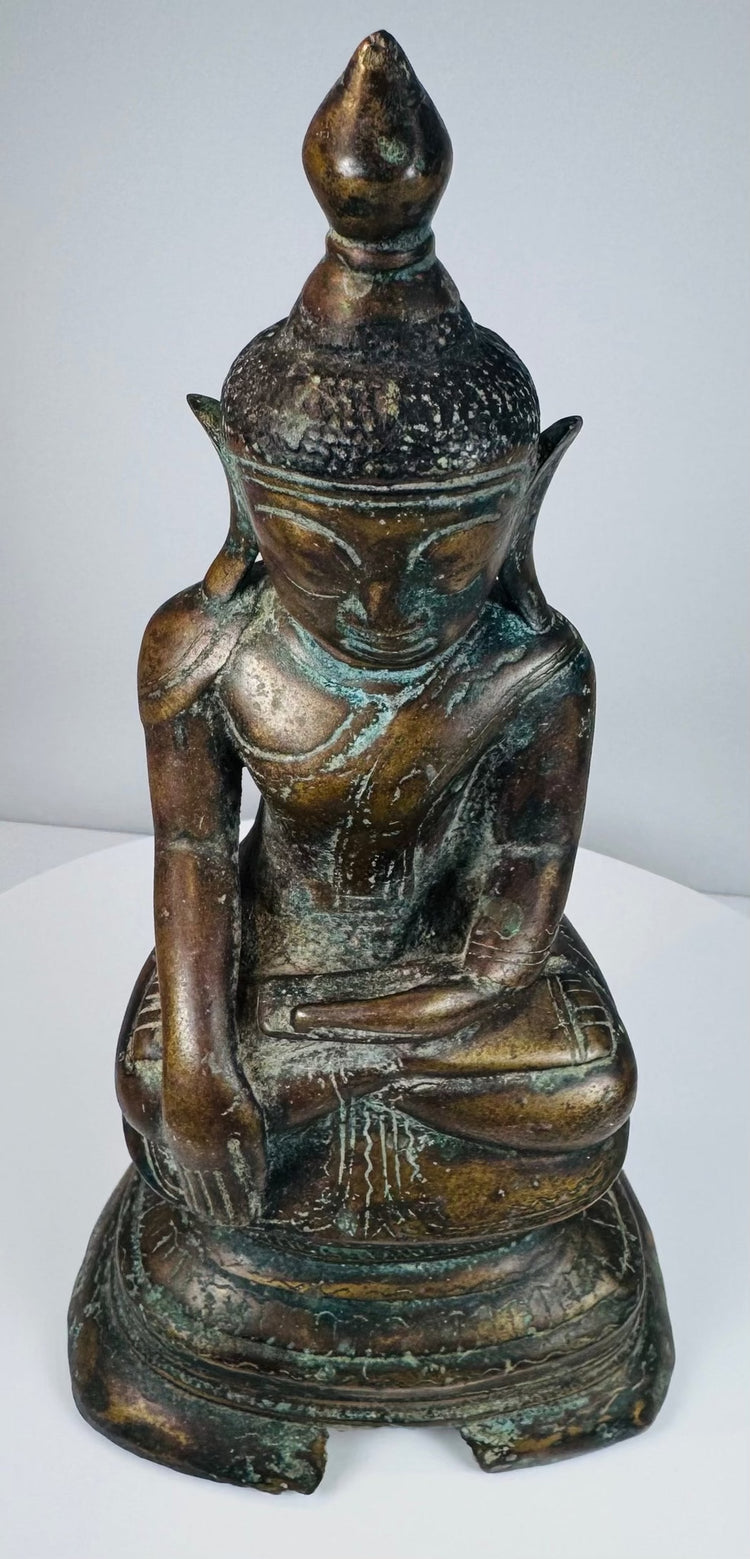
The Buddha is represented in bhumisparsha mudra, the earth-touching gesture. His right arm extends downward, with the fingers reaching toward the ground, while his left hand rests palm-upward in his lap in a gesture of meditation. This iconic pose recalls the moment immediately before the Buddha’s enlightenment, when he called upon the earth to bear witness to the accumulated merit of his previous lives.
The figure has a serene, rounded face with downcast eyes, gently arched brows, a small contemplative smile, and elongated earlobes symbolizing his former princely status. The hair is rendered as rows of small curls rising to a broad ushnisha, crowned by a distinctive bulbous lotus-bud finial. This form of finial, together with the restrained facial modelling and closely fitted monastic robe, is characteristic of Burmese sculpture from this period.
The Buddha wears a robe draped diagonally across the torso and over the left shoulder, leaving the right shoulder exposed. Incised lines define the garment and continue across the legs, adding texture to the otherwise smoothly modelled body. The figure sits cross-legged upon a rounded lotus throne supported by a substantial stepped pedestal decorated with bands of incised geometric ornament.
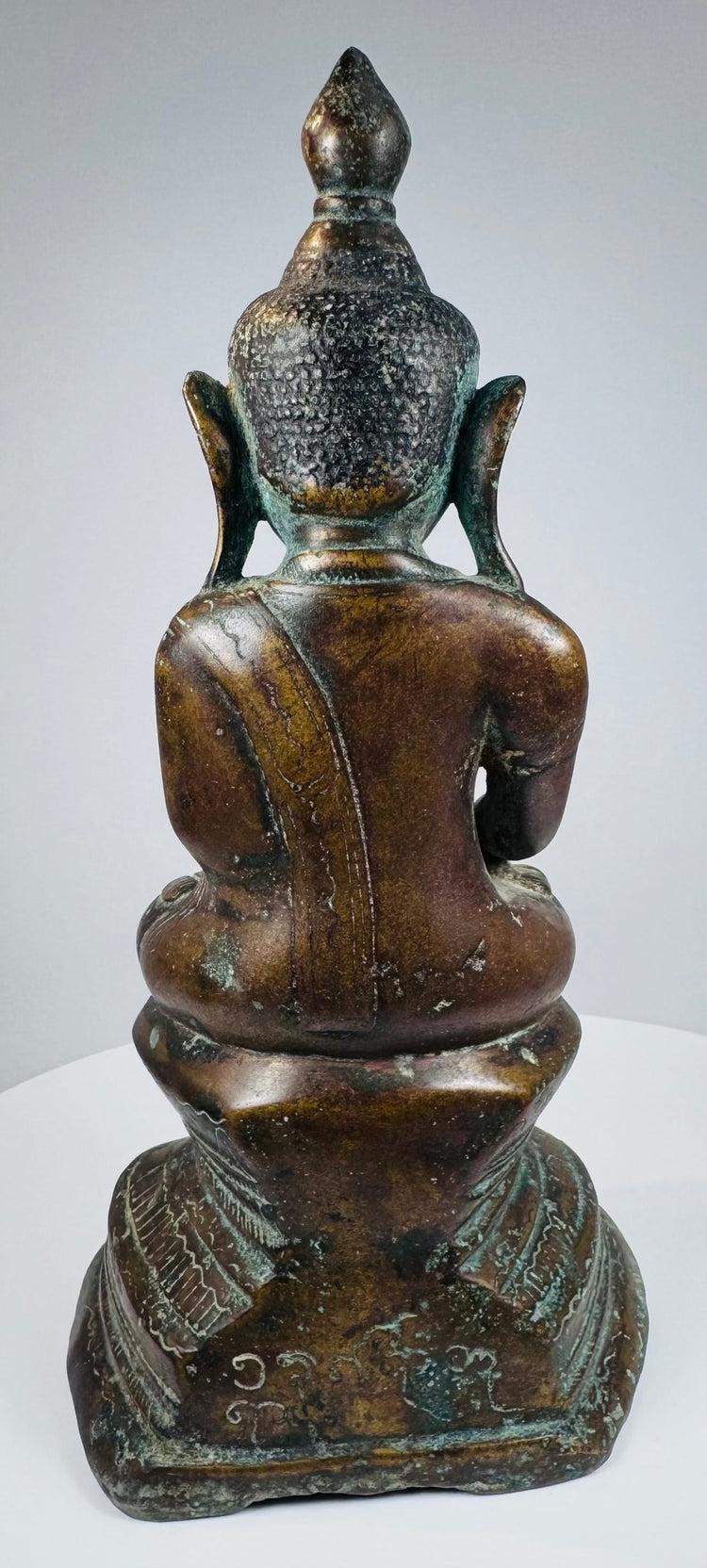
The bronze retains a rich reddish and golden-brown surface with areas of green verdigris, oxidation, and mineral accretion. These naturally developed variations give the sculpture considerable visual depth and reflect its age and history. Partially legible incised markings appear on the reverse of the pedestal but have not been translated.
Features
- Depicted in bhumisparsha mudra, the earth-touching gesture
- Left hand resting palm-upward in meditation
- Rounded face with downcast eyes and a serene expression
- Elongated earlobes and tightly curled hair
- Broad ushnisha surmounted by a lotus-bud finial
- Diagonally draped monastic robe with incised detailing
- Seated upon a decorated lotus throne and stepped pedestal
- Rich reddish-brown patina with green verdigris and mineral deposits
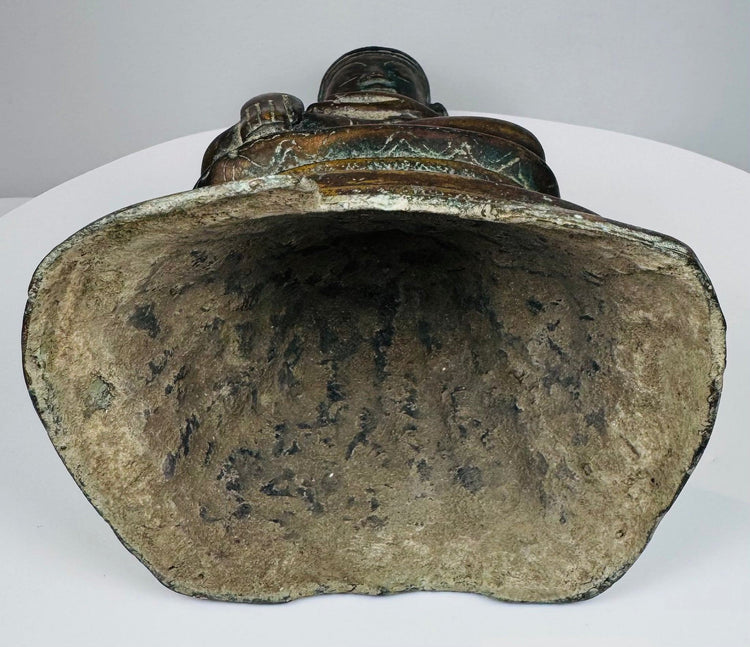
- Open underside consistent with traditional hollow-casting techniques
- Partially legible incised markings on the reverse of the pedestal
Cultural Significance
The earth-touching Buddha is among the most important devotional images in Southeast Asian Buddhism. The gesture refers to the Buddha’s confrontation with Mara, the embodiment of temptation and spiritual obstruction, on the eve of his enlightenment.
When Mara challenged his right to attain enlightenment, the Buddha reached down and touched the earth, calling it to witness the countless virtuous actions of his previous lives. The earth responded, confirming his merit and defeating Mara. The image therefore represents spiritual resolve, the overcoming of adversity, and the attainment of ultimate wisdom.
Bronze Buddha figures were commissioned for temples, monasteries, household shrines, and acts of religious merit. Their production required both technical skill and spiritual intention, with casting, finishing, and consecration forming part of the object’s sacred history. The lotus pedestal symbolizes purity and awakening, recalling the lotus flower that rises cleanly above muddy water.
Condition
Good antique condition with extensive wear consistent with age and devotional use. The surface exhibits oxidation, green verdigris, mineral accretions, abrasions, scratches, and areas of patina variation. Minor casting irregularities, small surface losses, and edge wear are present throughout. The underside remains open as part of the original hollow-casting process.
Dimensions (Approximate)
Height: 10 in
Width: 4.8 in
Depth: 3.75 in
Age (Approximate)
195–245 years old
Provenance
Property from the Preiser Collection.
The collection is associated with Dr. Franklin M. Preiser (1937–2022) of Arizona, a long-standing collector of Asian art. Works from the collection subsequently passed by descent before its later dispersal.
Subsequently handled by Andrew Jones Auctions of Los Angeles, a full-service auction and appraisal firm specializing in fine art, antiques, and Asian works of art. The auction house is supported by specialists with extensive international experience and regularly presents diverse collections and estates spanning several centuries.
Learn More
View a comparable Burmese seated Buddha in the earth-touching gesture in the collection of the British Museum
Explore our Collection of Buddhist & Hindu Relics and Sacred Statues
Description
Historical Context & Origin
Region: Myanmar (Burma), possibly a central Burmese or Shan workshop
Material: Hollow-cast bronze or copper alloy with naturally developed patina
Period: Konbaung Period, Late 18th–Early 19th Century, Circa 1780–1830
Description
This finely cast bronze figure depicts Shakyamuni Buddha seated in meditation upon a high, tiered pedestal. Produced in Myanmar during the Konbaung period, the sculpture displays stylistic characteristics associated with Burmese Buddhist bronzes of the late 18th and early 19th centuries.
The Buddha is represented in bhumisparsha mudra, the earth-touching gesture. His right arm extends downward, with the fingers reaching toward the ground, while his left hand rests palm-upward in his lap in a gesture of meditation. This iconic pose recalls the moment immediately before the Buddha’s enlightenment, when he called upon the earth to bear witness to the accumulated merit of his previous lives.
The figure has a serene, rounded face with downcast eyes, gently arched brows, a small contemplative smile, and elongated earlobes symbolizing his former princely status. The hair is rendered as rows of small curls rising to a broad ushnisha, crowned by a distinctive bulbous lotus-bud finial. This form of finial, together with the restrained facial modelling and closely fitted monastic robe, is characteristic of Burmese sculpture from this period.
The Buddha wears a robe draped diagonally across the torso and over the left shoulder, leaving the right shoulder exposed. Incised lines define the garment and continue across the legs, adding texture to the otherwise smoothly modelled body. The figure sits cross-legged upon a rounded lotus throne supported by a substantial stepped pedestal decorated with bands of incised geometric ornament.
The bronze retains a rich reddish and golden-brown surface with areas of green verdigris, oxidation, and mineral accretion. These naturally developed variations give the sculpture considerable visual depth and reflect its age and history. Partially legible incised markings appear on the reverse of the pedestal but have not been translated.
Features
- Depicted in bhumisparsha mudra, the earth-touching gesture
- Left hand resting palm-upward in meditation
- Rounded face with downcast eyes and a serene expression
- Elongated earlobes and tightly curled hair
- Broad ushnisha surmounted by a lotus-bud finial
- Diagonally draped monastic robe with incised detailing
- Seated upon a decorated lotus throne and stepped pedestal
- Rich reddish-brown patina with green verdigris and mineral deposits
- Open underside consistent with traditional hollow-casting techniques
- Partially legible incised markings on the reverse of the pedestal
Cultural Significance
The earth-touching Buddha is among the most important devotional images in Southeast Asian Buddhism. The gesture refers to the Buddha’s confrontation with Mara, the embodiment of temptation and spiritual obstruction, on the eve of his enlightenment.
When Mara challenged his right to attain enlightenment, the Buddha reached down and touched the earth, calling it to witness the countless virtuous actions of his previous lives. The earth responded, confirming his merit and defeating Mara. The image therefore represents spiritual resolve, the overcoming of adversity, and the attainment of ultimate wisdom.
Bronze Buddha figures were commissioned for temples, monasteries, household shrines, and acts of religious merit. Their production required both technical skill and spiritual intention, with casting, finishing, and consecration forming part of the object’s sacred history. The lotus pedestal symbolizes purity and awakening, recalling the lotus flower that rises cleanly above muddy water.
Condition
Good antique condition with extensive wear consistent with age and devotional use. The surface exhibits oxidation, green verdigris, mineral accretions, abrasions, scratches, and areas of patina variation. Minor casting irregularities, small surface losses, and edge wear are present throughout. The underside remains open as part of the original hollow-casting process.
Dimensions (Approximate)
Height: 10 in
Width: 4.8 in
Depth: 3.75 in
Age (Approximate)
195–245 years old
Provenance
Property from the Preiser Collection.
The collection is associated with Dr. Franklin M. Preiser (1937–2022) of Arizona, a long-standing collector of Asian art. Works from the collection subsequently passed by descent before its later dispersal.
Subsequently handled by Andrew Jones Auctions of Los Angeles, a full-service auction and appraisal firm specializing in fine art, antiques, and Asian works of art. The auction house is supported by specialists with extensive international experience and regularly presents diverse collections and estates spanning several centuries.
Learn More
View a comparable Burmese seated Buddha in the earth-touching gesture in the collection of the British Museum
Explore our Collection of Buddhist & Hindu Relics and Sacred Statues
You May Also Like
