



Antique Cased Daguerreotype Portrait of a Husband & Wife | Attributed Croatian Origin | Circa 1850–1860
Couldn't load pickup availability


Antique Cased Daguerreotype Portrait of a Husband & Wife | Attributed Croatian Origin | Circa 1850–1860
Description
More
Less
Historical Context & Origin
Region: Europe, with Croatia identified in an accompanying collector's note
Material: Early photographic plate, protective glass, gilt brass mat, embossed presentation case, and rose-red textile lining
Period: Mid-19th Century, circa 1850–1860 CE
Description
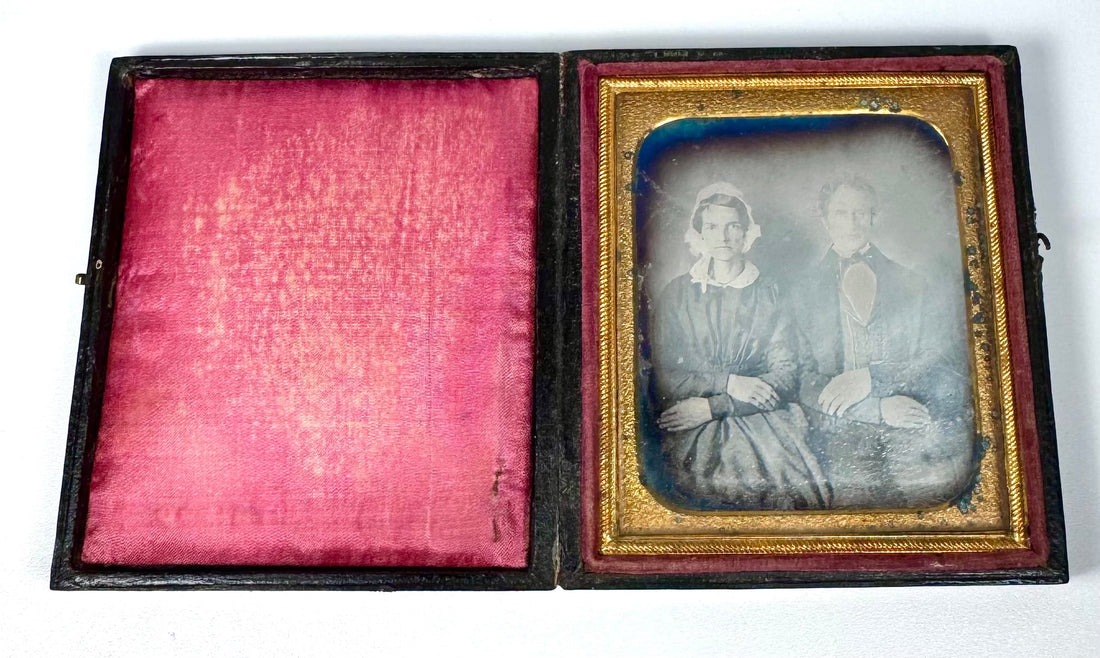
An evocative mid-19th-century cased photographic portrait depicting a formally dressed husband and wife seated together, preserved within an elaborately decorated hinged presentation case. Dating to circa 1850–1860, this intimate historical photograph captures the elegance of early portraiture and reflects the growing importance of photography in preserving personal identity, family relationships, and individual remembrance during the Victorian era.
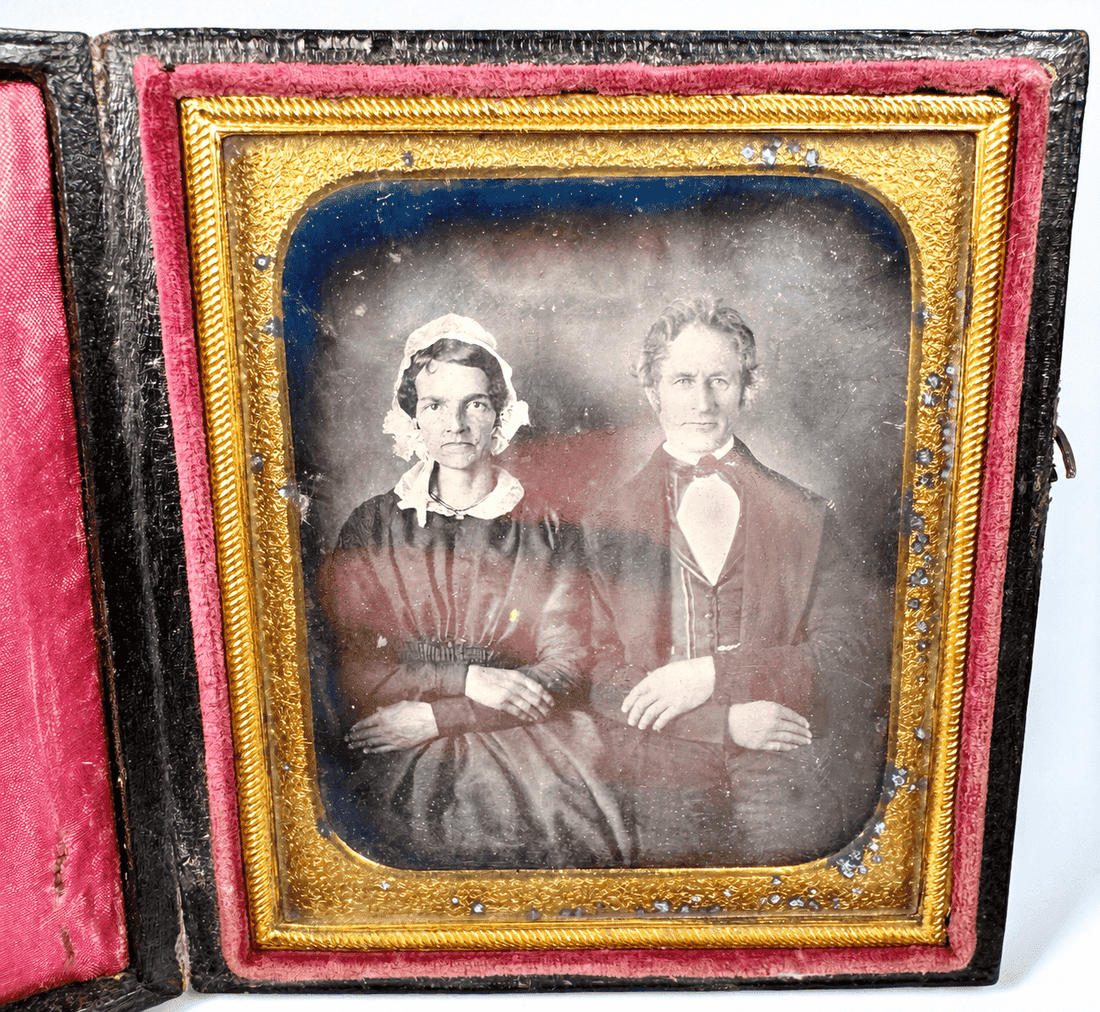
The composition presents a seated couple arranged closely together in a traditional studio portrait setting. Both individuals face the camera with composed expressions and carefully positioned hands, reflecting the formal conventions of early photographic portraiture.
The woman wears a dark, fitted dress with gathered fabric detailing and long sleeves, accompanied by a light-coloured bonnet framing her face. A contrasting white collar and delicate neck ornament provide additional decorative accents. Her hands rest together in her lap, creating a restrained and dignified appearance.
Seated beside her is a gentleman wearing a dark formal coat over a waistcoat and light-coloured shirt, complemented by neatly arranged neckwear. His carefully styled hair, upright posture, and composed expression reflect the refined clothing and presentation associated with mid-19th-century portrait photography.
The photograph preserves a remarkable sense of personal connection between the sitters. Their close positioning and coordinated formal attire convey the intimate character of early family portraiture, when photographic likenesses were often commissioned to commemorate important relationships and preserve images of loved ones.
The portrait is presented behind protective glass within an ornate gilt brass mat featuring a textured decorative surface, rounded rectangular opening, and finely detailed rope-pattern border. The elaborate metalwork frames the photographic image and provides a striking contrast against the darker tones of the portrait.
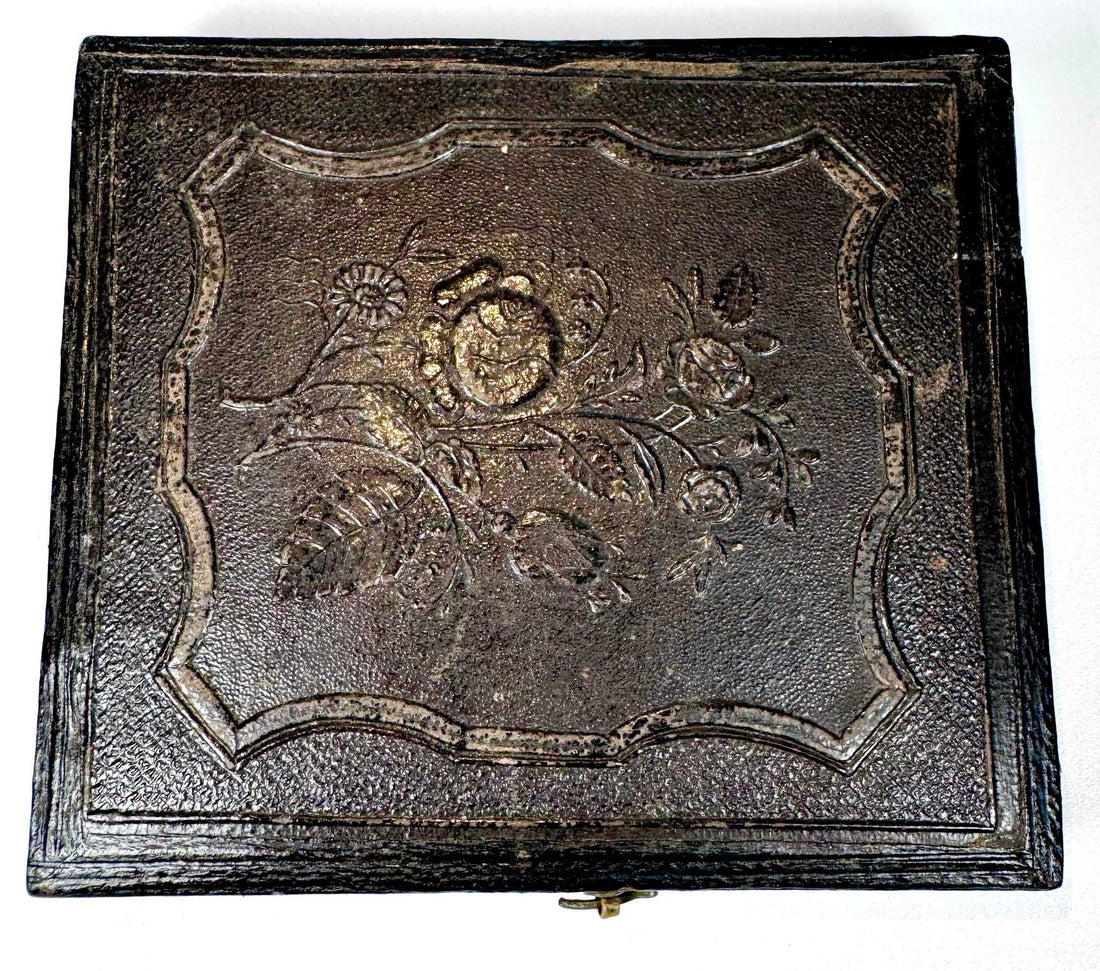
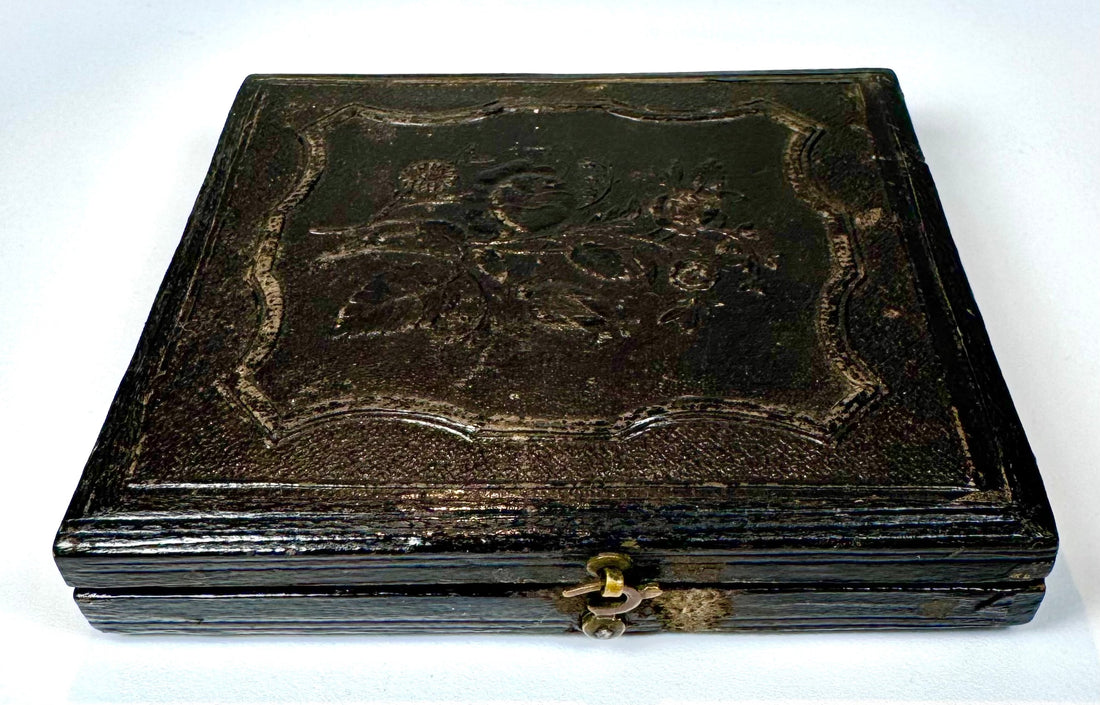
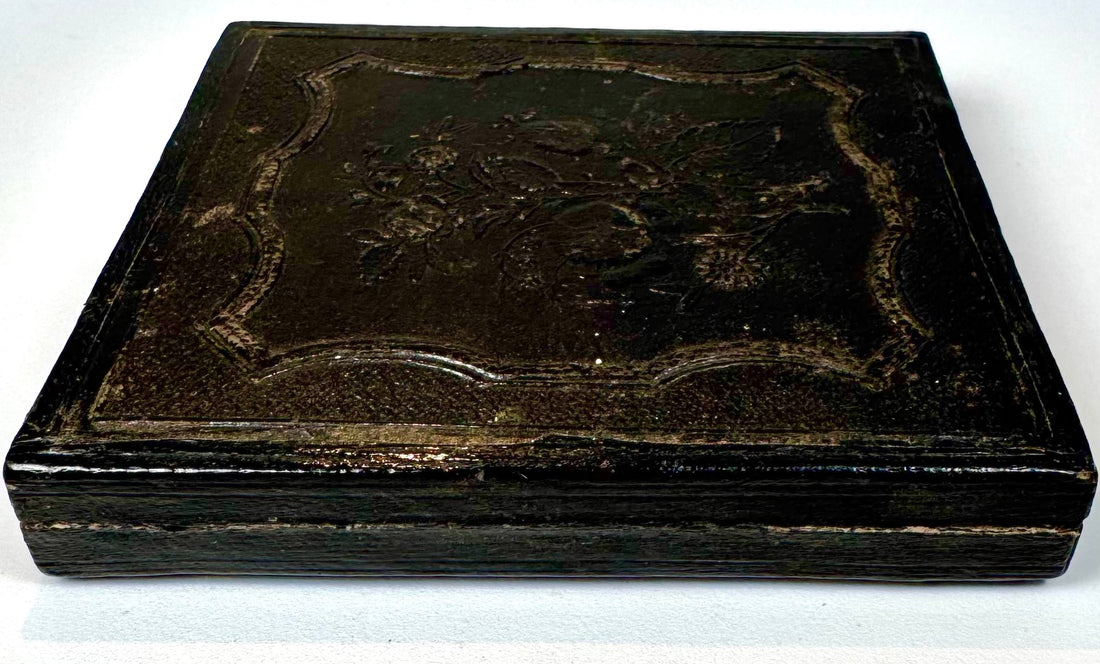
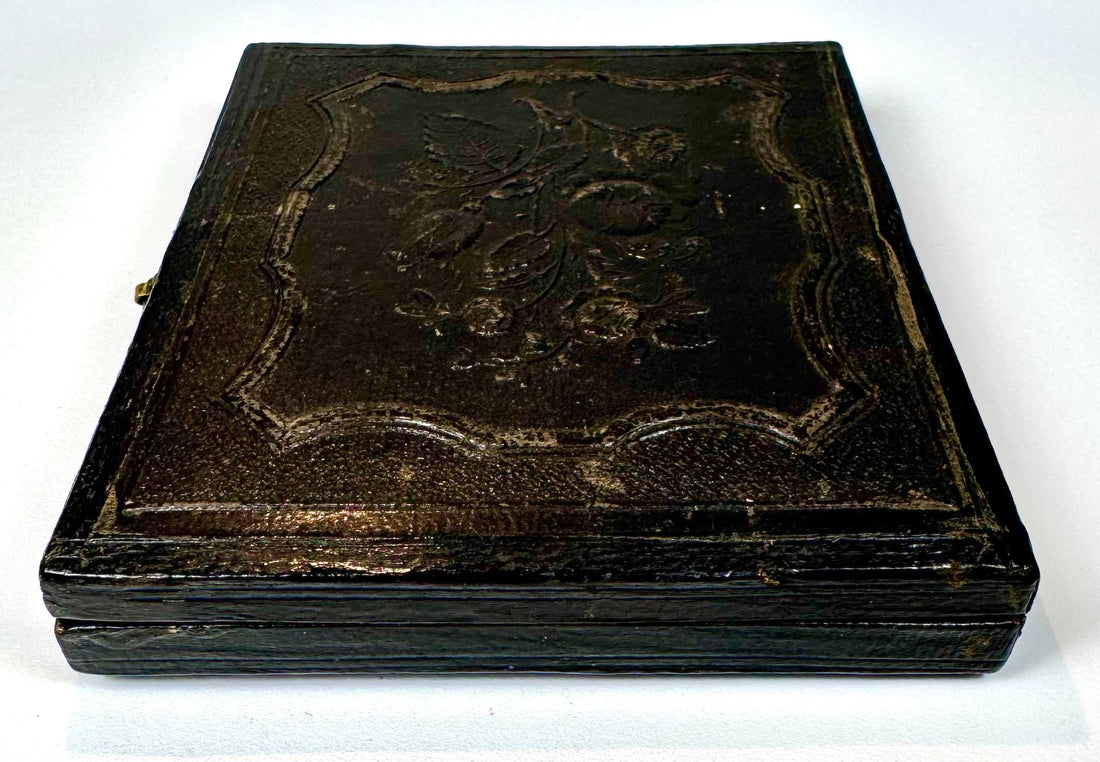
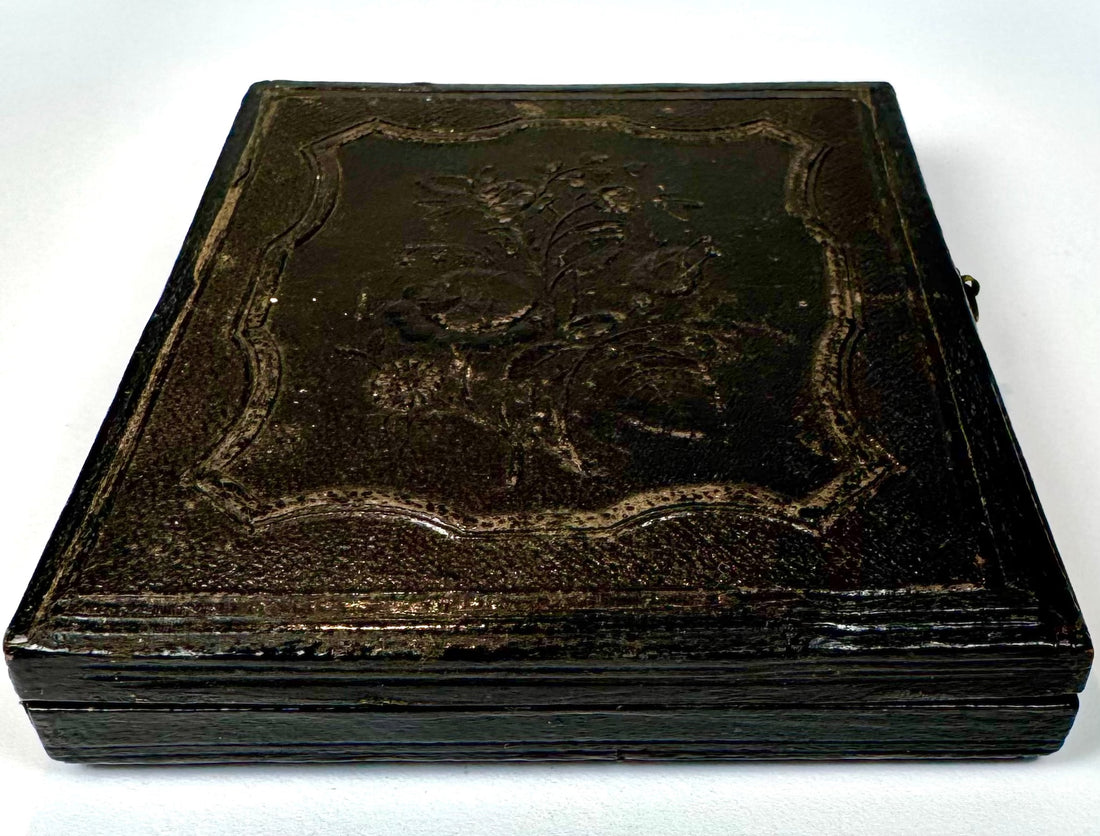
Surrounding the photographic assembly is a dark, embossed protective case with decorative exterior ornamentation. Its hinged construction allows the case to open like a miniature book, revealing the photograph on one side and a richly coloured textile-lined panel on the opposite interior.
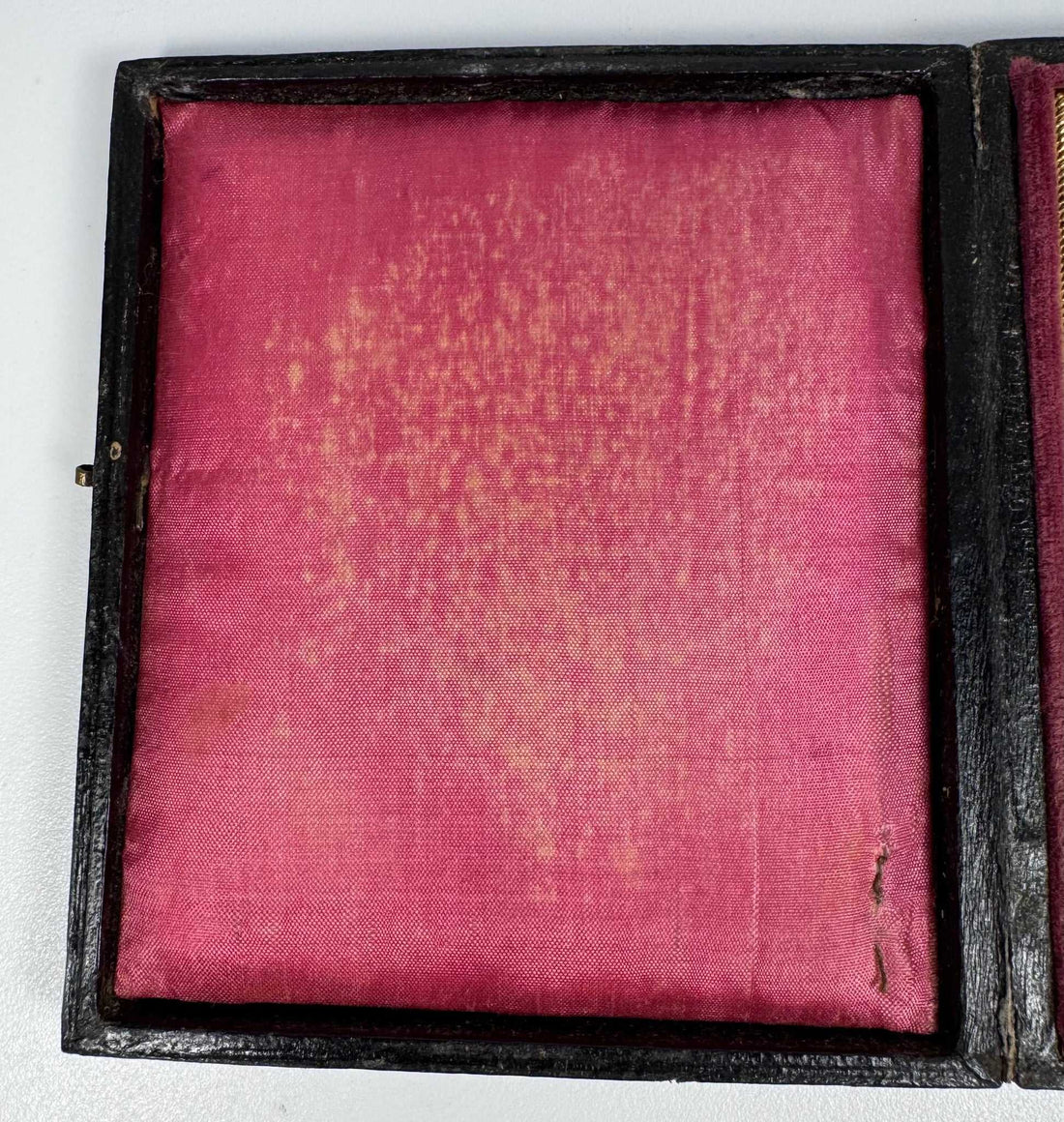
The interior retains a distinctive rose-red lining with visible woven texture, accompanied by matching fabric trim surrounding the photographic assembly. The warm colour of the lining contrasts with the gilt brass mat and dark case, emphasizing the decorative craftsmanship associated with early photographic presentation.
A small metal closure and fitted hinge complete the case's construction, reflecting the importance placed on protecting fragile photographic images while allowing them to be carried, displayed, and preserved as personal keepsakes.
The photographic surface exhibits areas of subdued contrast, reflective haze, and tonal variation, characteristic of the appearance of many surviving early photographic portraits. Despite these effects, the faces, garments, and seated arrangement remain clearly recognizable.
The compact format and decorative presentation correspond to the traditions of cased photography popular during the middle decades of the 19th century. Such photographs were produced using early direct-positive processes and were frequently enclosed behind glass within gilt-metal mats and protective cases.
An accompanying handwritten collector's note identifies the sitters as a husband and wife from Croatia. This historical association adds an additional dimension to the portrait, connecting the surviving photograph with the collecting history of European family imagery.
Combining early photographic technology, formal portraiture, ornate gilt-metal craftsmanship, and decorative textile presentation, this intimate historical object represents an important era in the development of personal photography.
Features
- Mid-19th-century cased photographic portrait depicting a formally dressed husband and wife
- Traditional seated studio composition with carefully arranged Victorian-era clothing and accessories
- Ornate gilt brass photographic mat with textured decoration and rope-pattern border
- Dark hinged protective case featuring decorative exterior embossing
- Rose-red textile-lined interior with matching fabric surround
- Protective glass covering the original photographic image
- Compact presentation case with fitted hinge and metal closure
- Accompanying handwritten collector's note identifying the couple as originating from Croatia
Cultural Significance
The middle decades of the 19th century marked a transformative period in the history of photography. Following the introduction of the daguerreotype process in 1839, photographic portraiture rapidly emerged as an increasingly accessible means of preserving individual likenesses and commemorating personal relationships.
Before the development of practical photographic processes, painted and drawn portraits were largely associated with individuals who could afford to commission professional artists. Photography transformed this tradition by introducing a new method of recording recognizable facial features, clothing, and personal appearance with unprecedented detail.
Daguerreotypes were among the earliest commercially successful photographic images. Produced on highly polished silver-coated copper plates, they created unique photographic likenesses distinguished by their reflective surfaces and finely rendered details.
During the 1850s, additional photographic technologies emerged, including the ambrotype, which employed a photographic image on glass, and the tintype, which used a darkened iron support. These developments expanded the availability of photographic portraiture and encouraged the establishment of portrait studios throughout Europe and North America.
Cased photographs became especially popular during this period. Their protective enclosures typically incorporated hinged coverings, gilt brass mats, glass protection, and richly coloured textile linings. These carefully assembled presentations transformed photographic portraits into intimate personal possessions that could be carried, displayed, or preserved within family collections.
The decorative treatment of photographic cases was an important aspect of their appeal. Embossed exterior surfaces, ornamental metalwork, and velvet or silk-lined interiors reflected contemporary tastes for elaborate craftsmanship and finely finished personal accessories.
Portraits depicting married couples occupied a meaningful place within early photographic culture. Such images recorded not only the physical appearance of their subjects but also the clothing, social conventions, and family relationships of the period.
Formal clothing and carefully arranged studio poses communicated dignity, respectability, and personal identity. The positioning of hands, expressions, hairstyles, and garments provides valuable visual evidence of the social customs and fashions of the mid-19th century.
Photography also played an important role in preserving family connections across geographical distances. Small cased portraits could be exchanged between relatives, retained as personal keepsakes, and passed down through successive generations.
The present portrait reflects these traditions through its intimate depiction of a seated couple, carefully arranged formal attire, ornate gilt brass mat, and decorative hinged presentation case.
Its accompanying handwritten collector's note adds further historical interest, associating the subjects with Croatia and preserving a later record of the photograph's identification and collecting history.
As an example of mid-19th-century cased photography, the portrait illustrates the relationship between technological innovation, decorative craftsmanship, and the enduring human desire to preserve personal memories and family connections.
Condition
The photographic portrait and accompanying presentation case exhibit visible wear consistent with their considerable age, including surface rubbing, minor abrasions, localized discoloration, and areas of deterioration.
The dark exterior case retains its hinged construction and decorative surface treatment, with wear along portions of the edges, corners, and embossed details. The metal closure remains present.
The rose-red interior textile lining displays areas of fading, discoloration, rubbing, and localized surface wear. Its rich colour and woven texture remain visible, preserving much of the case's original decorative character.
The gilt brass photographic mat retains its ornamental border and textured surface, accompanied by areas of patination, minor scratches, and localized discoloration.
The photographic image remains visible, preserving recognizable detail in the faces, clothing, and seated arrangement of both subjects. Areas of tonal variation, reflective haze, reduced contrast, and surface discoloration are present, particularly around portions of the photographic image.
The protective glass exhibits reflections and minor surface marks. The underlying photographic plate has not been removed from its protective assembly.
Overall, the portrait retains its recognizable historical composition and decorative presentation, with surviving case components contributing to its character as a mid-19th-century photographic keepsake.
Dimensions (Approximate)
Height: 3.7 in
Length: 3.2 in
Depth: 0.5 in
Age (Approximate)
165–175 years old
Provenance
Acquired from an antique store on April 28, 2004, as documented by an accompanying handwritten collector's note. Subsequently preserved within a private collection in Burlington, North Carolina, United States.
The original handwritten note identifies the portrait as depicting a "Man and his Wife from Croatia", with an additional reference to "Yugoslavia" and its geographical position between Central Europe and the Mediterranean. This notation has been retained as part of the object's documented collecting history, although the identities and national origins of the subjects remain unverified.
Learn More
Explore a comparable mid-19th-century cased photographic portrait of a seated couple, dating to circa 1850, in the collection of Musée d'Orsay
Discover more historical photographic portraits and Victorian-era keepsakes in our Victorian Artifacts & Historic Relics Collection
Description
Historical Context & Origin
Region: Europe, with Croatia identified in an accompanying collector's note
Material: Early photographic plate, protective glass, gilt brass mat, embossed presentation case, and rose-red textile lining
Period: Mid-19th Century, circa 1850–1860 CE
Description
An evocative mid-19th-century cased photographic portrait depicting a formally dressed husband and wife seated together, preserved within an elaborately decorated hinged presentation case. Dating to circa 1850–1860, this intimate historical photograph captures the elegance of early portraiture and reflects the growing importance of photography in preserving personal identity, family relationships, and individual remembrance during the Victorian era.
The composition presents a seated couple arranged closely together in a traditional studio portrait setting. Both individuals face the camera with composed expressions and carefully positioned hands, reflecting the formal conventions of early photographic portraiture.
The woman wears a dark, fitted dress with gathered fabric detailing and long sleeves, accompanied by a light-coloured bonnet framing her face. A contrasting white collar and delicate neck ornament provide additional decorative accents. Her hands rest together in her lap, creating a restrained and dignified appearance.
Seated beside her is a gentleman wearing a dark formal coat over a waistcoat and light-coloured shirt, complemented by neatly arranged neckwear. His carefully styled hair, upright posture, and composed expression reflect the refined clothing and presentation associated with mid-19th-century portrait photography.
The photograph preserves a remarkable sense of personal connection between the sitters. Their close positioning and coordinated formal attire convey the intimate character of early family portraiture, when photographic likenesses were often commissioned to commemorate important relationships and preserve images of loved ones.
The portrait is presented behind protective glass within an ornate gilt brass mat featuring a textured decorative surface, rounded rectangular opening, and finely detailed rope-pattern border. The elaborate metalwork frames the photographic image and provides a striking contrast against the darker tones of the portrait.
Surrounding the photographic assembly is a dark, embossed protective case with decorative exterior ornamentation. Its hinged construction allows the case to open like a miniature book, revealing the photograph on one side and a richly coloured textile-lined panel on the opposite interior.
The interior retains a distinctive rose-red lining with visible woven texture, accompanied by matching fabric trim surrounding the photographic assembly. The warm colour of the lining contrasts with the gilt brass mat and dark case, emphasizing the decorative craftsmanship associated with early photographic presentation.
A small metal closure and fitted hinge complete the case's construction, reflecting the importance placed on protecting fragile photographic images while allowing them to be carried, displayed, and preserved as personal keepsakes.
The photographic surface exhibits areas of subdued contrast, reflective haze, and tonal variation, characteristic of the appearance of many surviving early photographic portraits. Despite these effects, the faces, garments, and seated arrangement remain clearly recognizable.
The compact format and decorative presentation correspond to the traditions of cased photography popular during the middle decades of the 19th century. Such photographs were produced using early direct-positive processes and were frequently enclosed behind glass within gilt-metal mats and protective cases.
An accompanying handwritten collector's note identifies the sitters as a husband and wife from Croatia. This historical association adds an additional dimension to the portrait, connecting the surviving photograph with the collecting history of European family imagery.
Combining early photographic technology, formal portraiture, ornate gilt-metal craftsmanship, and decorative textile presentation, this intimate historical object represents an important era in the development of personal photography.
Features
- Mid-19th-century cased photographic portrait depicting a formally dressed husband and wife
- Traditional seated studio composition with carefully arranged Victorian-era clothing and accessories
- Ornate gilt brass photographic mat with textured decoration and rope-pattern border
- Dark hinged protective case featuring decorative exterior embossing
- Rose-red textile-lined interior with matching fabric surround
- Protective glass covering the original photographic image
- Compact presentation case with fitted hinge and metal closure
- Accompanying handwritten collector's note identifying the couple as originating from Croatia
Cultural Significance
The middle decades of the 19th century marked a transformative period in the history of photography. Following the introduction of the daguerreotype process in 1839, photographic portraiture rapidly emerged as an increasingly accessible means of preserving individual likenesses and commemorating personal relationships.
Before the development of practical photographic processes, painted and drawn portraits were largely associated with individuals who could afford to commission professional artists. Photography transformed this tradition by introducing a new method of recording recognizable facial features, clothing, and personal appearance with unprecedented detail.
Daguerreotypes were among the earliest commercially successful photographic images. Produced on highly polished silver-coated copper plates, they created unique photographic likenesses distinguished by their reflective surfaces and finely rendered details.
During the 1850s, additional photographic technologies emerged, including the ambrotype, which employed a photographic image on glass, and the tintype, which used a darkened iron support. These developments expanded the availability of photographic portraiture and encouraged the establishment of portrait studios throughout Europe and North America.
Cased photographs became especially popular during this period. Their protective enclosures typically incorporated hinged coverings, gilt brass mats, glass protection, and richly coloured textile linings. These carefully assembled presentations transformed photographic portraits into intimate personal possessions that could be carried, displayed, or preserved within family collections.
The decorative treatment of photographic cases was an important aspect of their appeal. Embossed exterior surfaces, ornamental metalwork, and velvet or silk-lined interiors reflected contemporary tastes for elaborate craftsmanship and finely finished personal accessories.
Portraits depicting married couples occupied a meaningful place within early photographic culture. Such images recorded not only the physical appearance of their subjects but also the clothing, social conventions, and family relationships of the period.
Formal clothing and carefully arranged studio poses communicated dignity, respectability, and personal identity. The positioning of hands, expressions, hairstyles, and garments provides valuable visual evidence of the social customs and fashions of the mid-19th century.
Photography also played an important role in preserving family connections across geographical distances. Small cased portraits could be exchanged between relatives, retained as personal keepsakes, and passed down through successive generations.
The present portrait reflects these traditions through its intimate depiction of a seated couple, carefully arranged formal attire, ornate gilt brass mat, and decorative hinged presentation case.
Its accompanying handwritten collector's note adds further historical interest, associating the subjects with Croatia and preserving a later record of the photograph's identification and collecting history.
As an example of mid-19th-century cased photography, the portrait illustrates the relationship between technological innovation, decorative craftsmanship, and the enduring human desire to preserve personal memories and family connections.
Condition
The photographic portrait and accompanying presentation case exhibit visible wear consistent with their considerable age, including surface rubbing, minor abrasions, localized discoloration, and areas of deterioration.
The dark exterior case retains its hinged construction and decorative surface treatment, with wear along portions of the edges, corners, and embossed details. The metal closure remains present.
The rose-red interior textile lining displays areas of fading, discoloration, rubbing, and localized surface wear. Its rich colour and woven texture remain visible, preserving much of the case's original decorative character.
The gilt brass photographic mat retains its ornamental border and textured surface, accompanied by areas of patination, minor scratches, and localized discoloration.
The photographic image remains visible, preserving recognizable detail in the faces, clothing, and seated arrangement of both subjects. Areas of tonal variation, reflective haze, reduced contrast, and surface discoloration are present, particularly around portions of the photographic image.
The protective glass exhibits reflections and minor surface marks. The underlying photographic plate has not been removed from its protective assembly.
Overall, the portrait retains its recognizable historical composition and decorative presentation, with surviving case components contributing to its character as a mid-19th-century photographic keepsake.
Dimensions (Approximate)
Height: 3.7 in
Length: 3.2 in
Depth: 0.5 in
Age (Approximate)
165–175 years old
Provenance
Acquired from an antique store on April 28, 2004, as documented by an accompanying handwritten collector's note. Subsequently preserved within a private collection in Burlington, North Carolina, United States.
The original handwritten note identifies the portrait as depicting a "Man and his Wife from Croatia", with an additional reference to "Yugoslavia" and its geographical position between Central Europe and the Mediterranean. This notation has been retained as part of the object's documented collecting history, although the identities and national origins of the subjects remain unverified.
Learn More
Explore a comparable mid-19th-century cased photographic portrait of a seated couple, dating to circa 1850, in the collection of Musée d'Orsay
Discover more historical photographic portraits and Victorian-era keepsakes in our Victorian Artifacts & Historic Relics Collection
You May Also Like
