

Chinese Carved Wooden | Offering Attendant | Late Qing to Early Republic Period | Circa 1850 – 1920
Couldn't load pickup availability


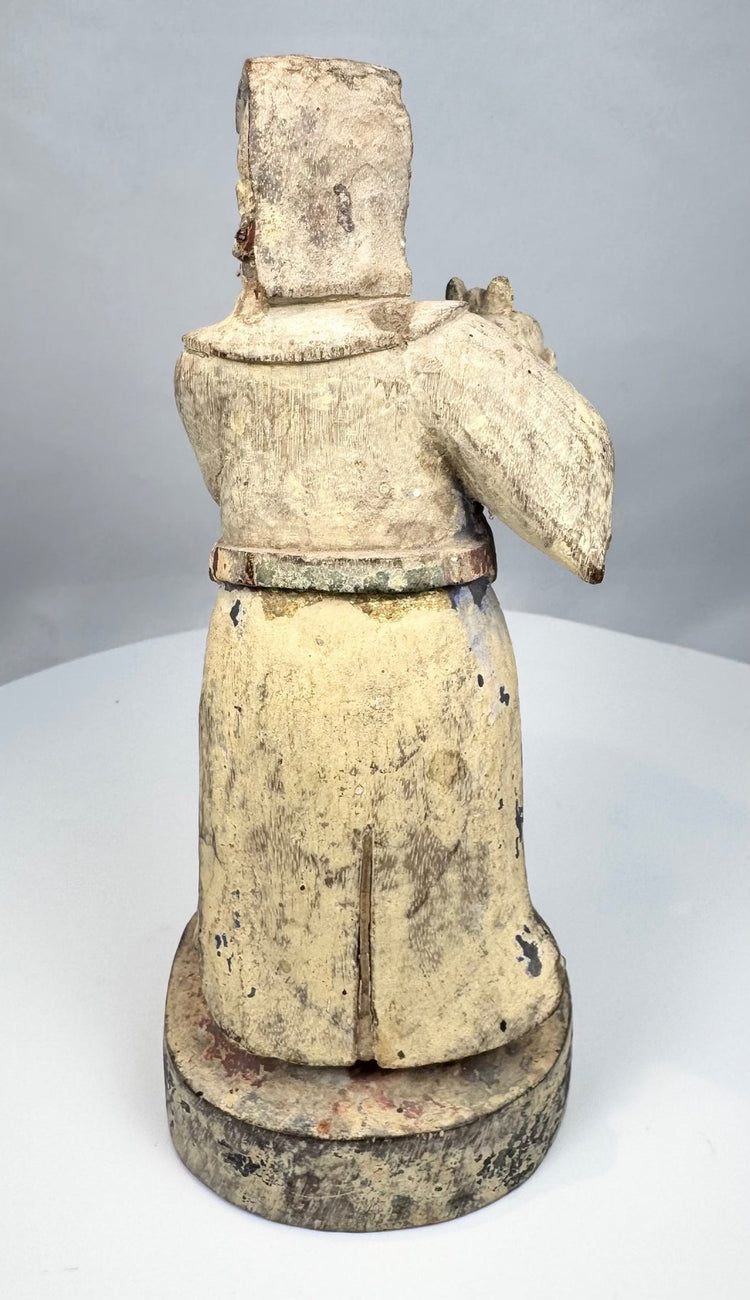
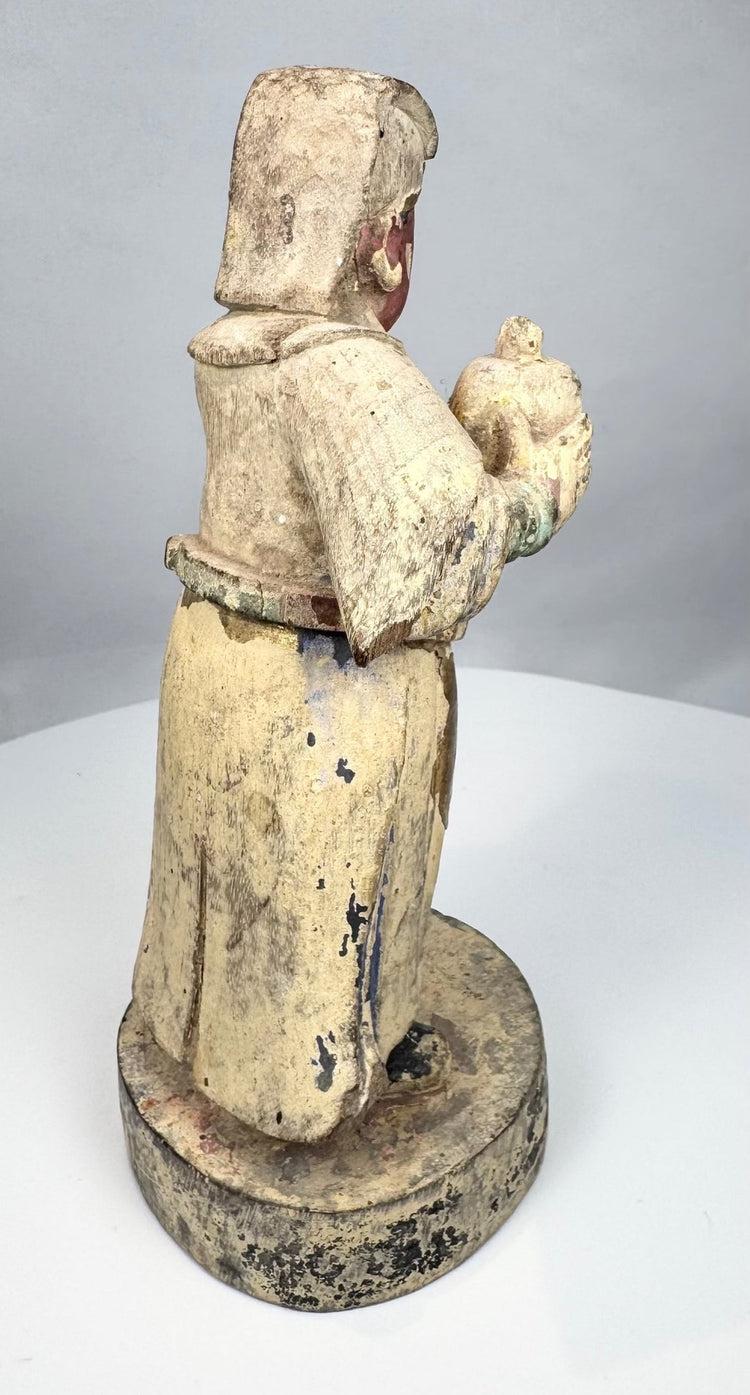
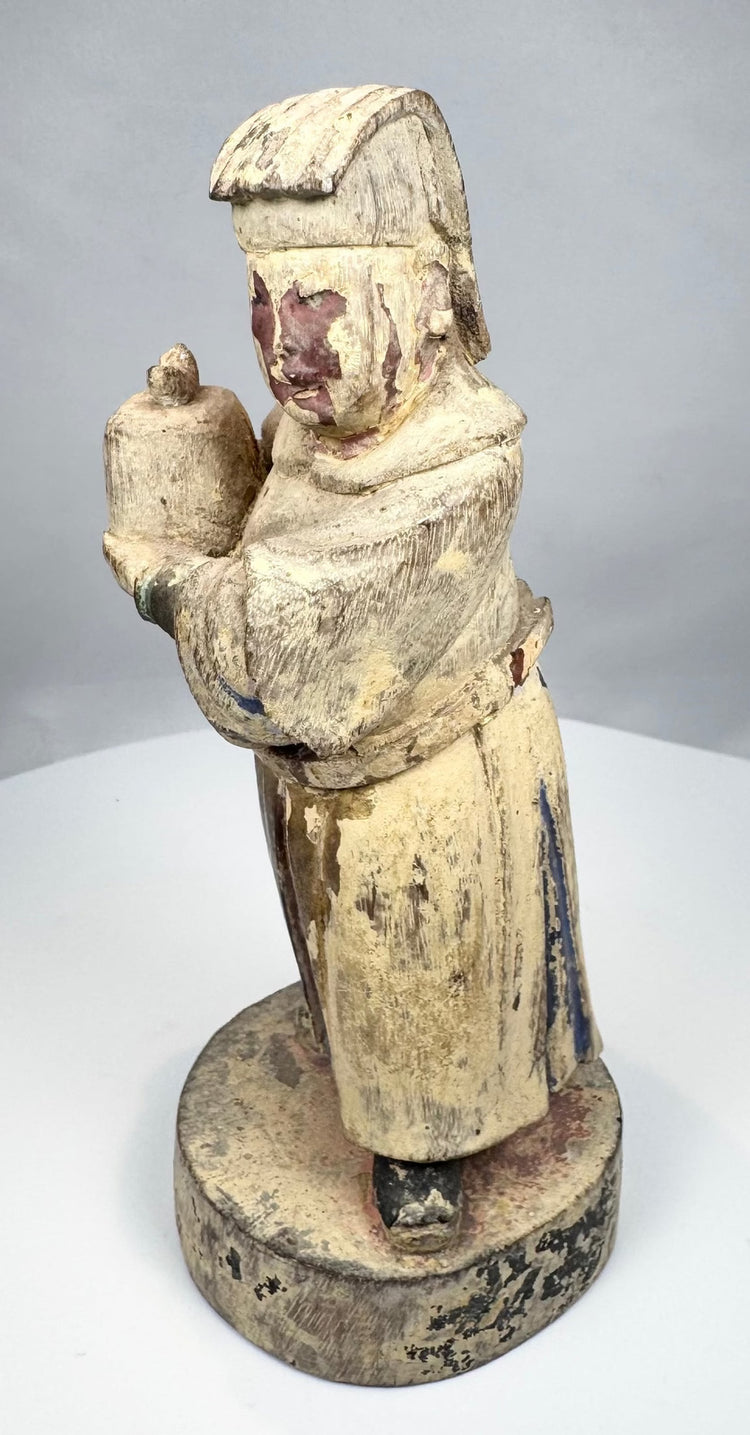
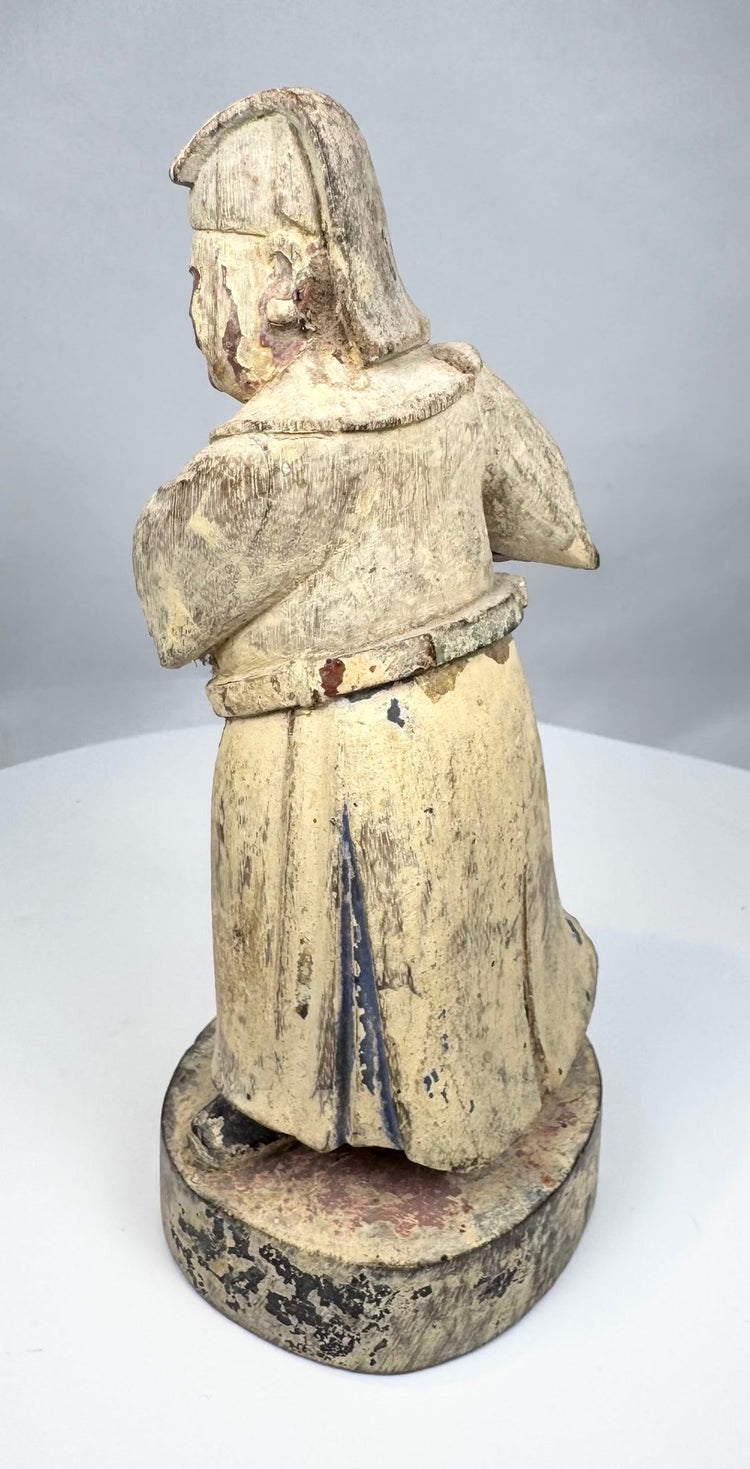
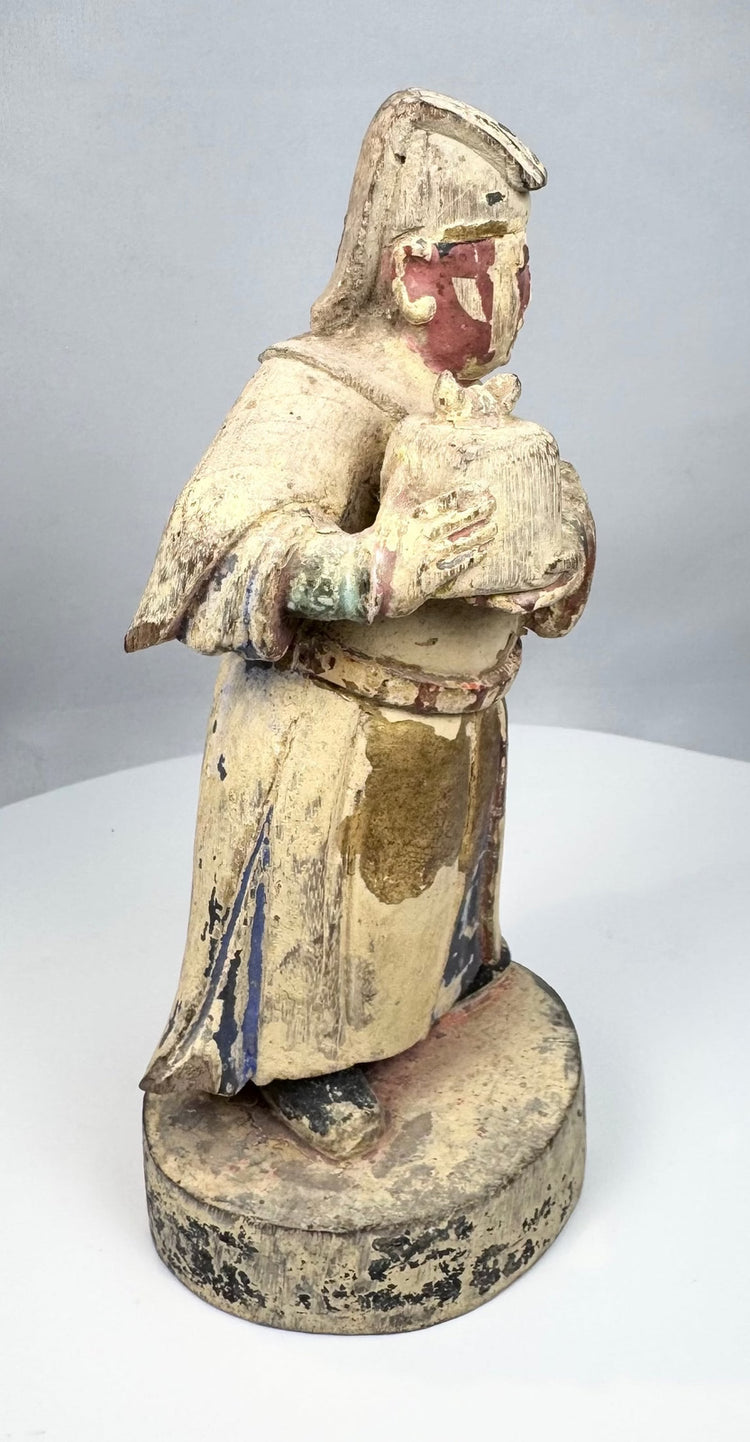
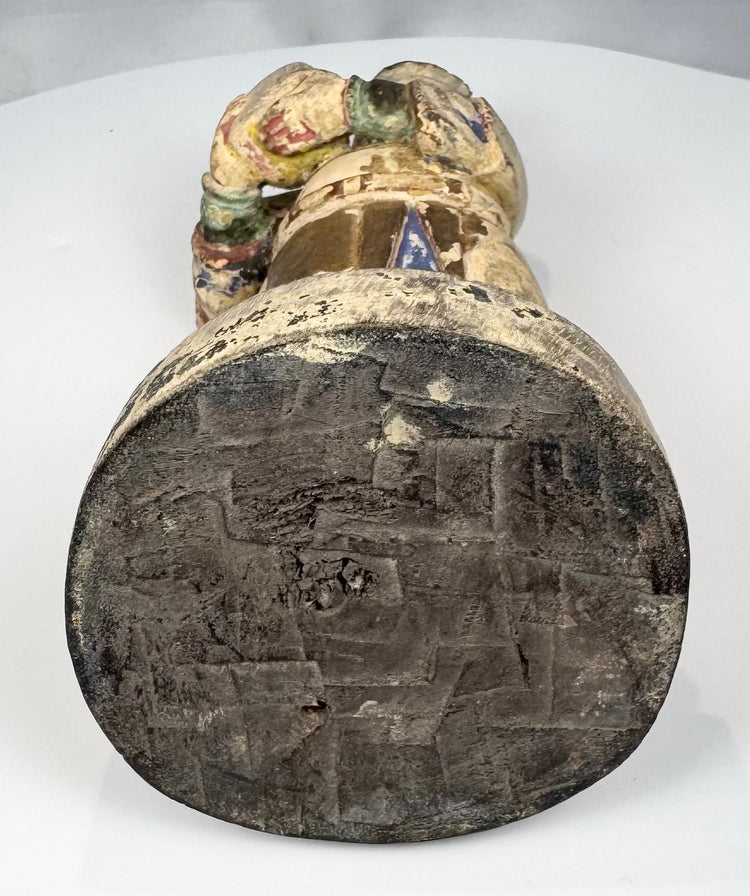
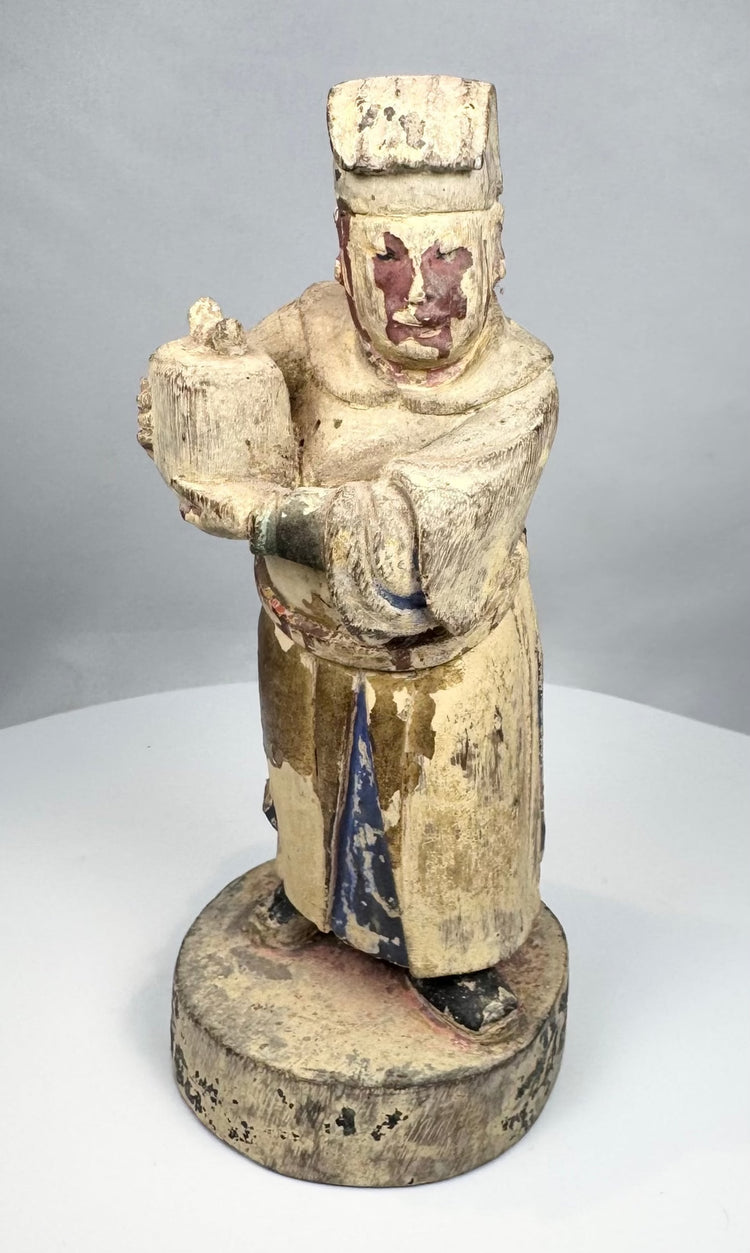
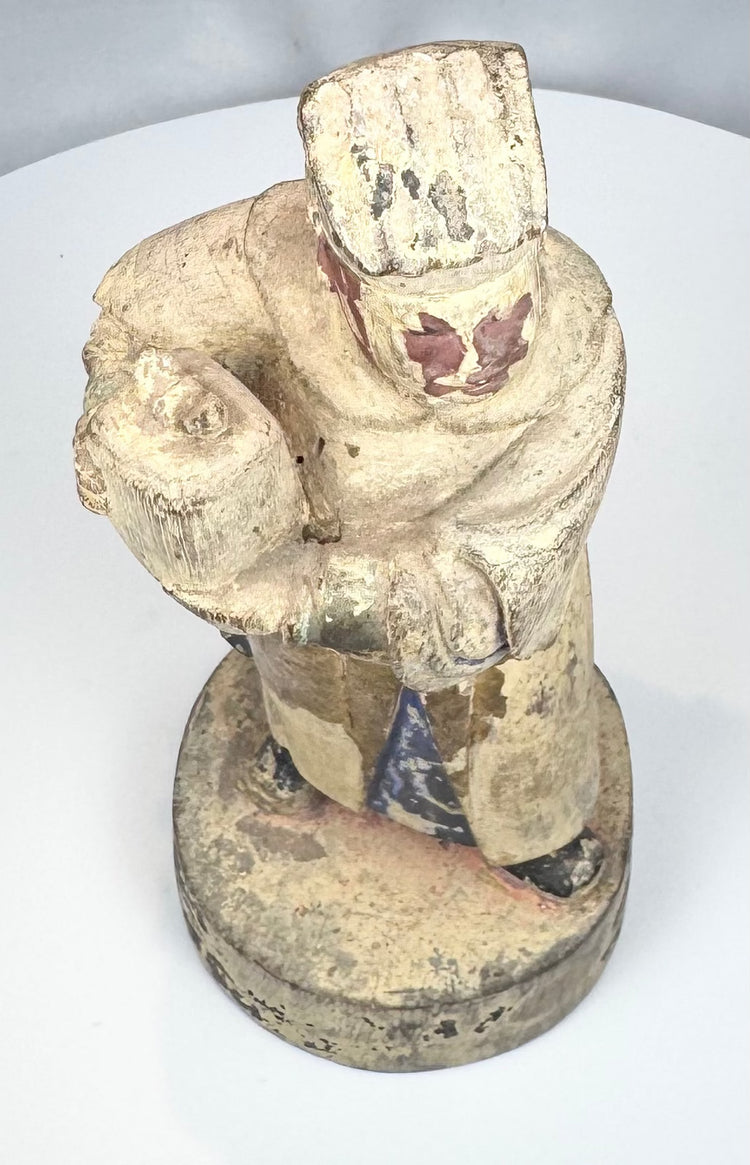
Chinese Carved Wooden | Offering Attendant | Late Qing to Early Republic Period | Circa 1850 – 1920
Description
More
Less
Historical Context & Origin
Region: China
Material: Hand-carved wood with surviving polychrome pigment
Period: Late Qing Dynasty to Early Republic Period, circa 1850–1920
Description
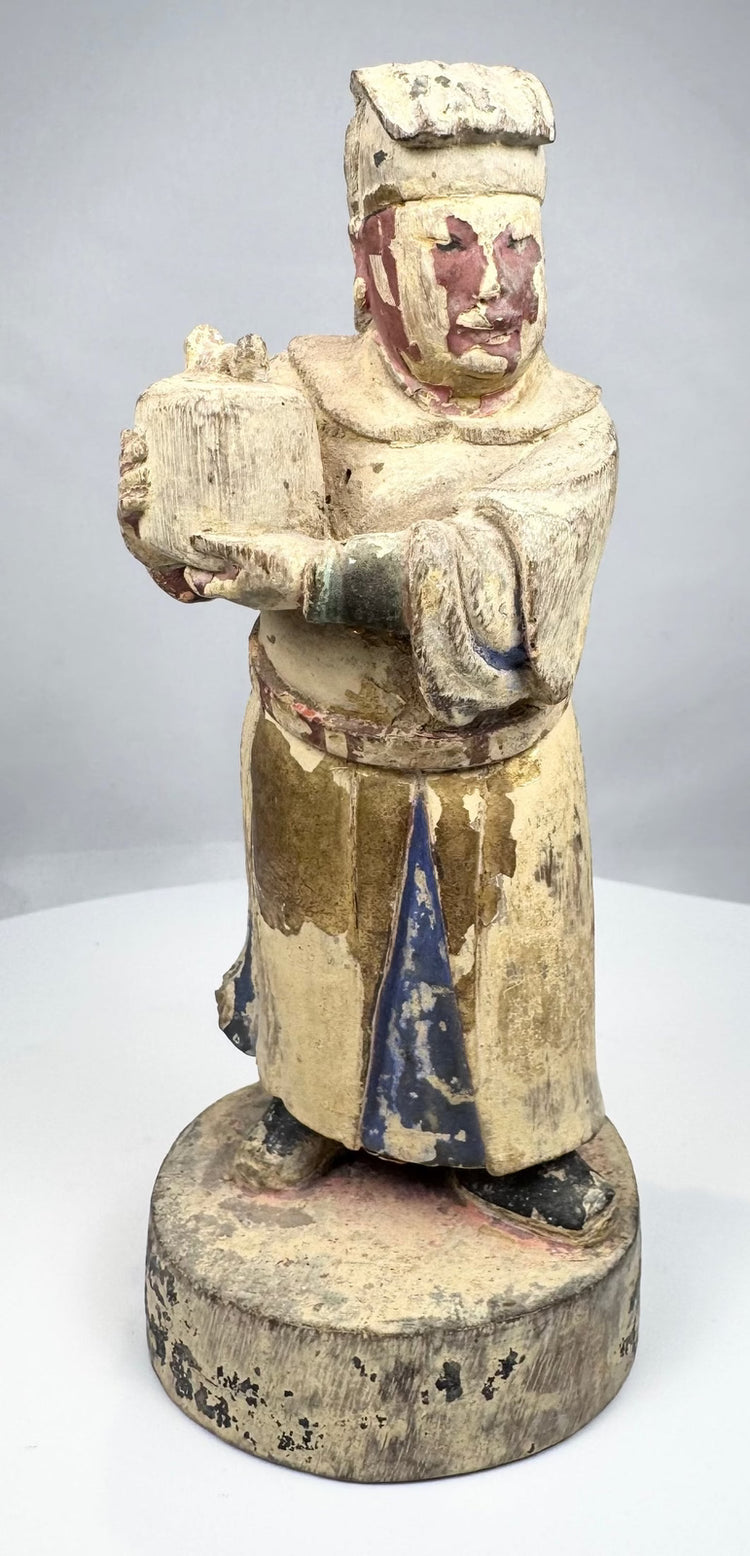
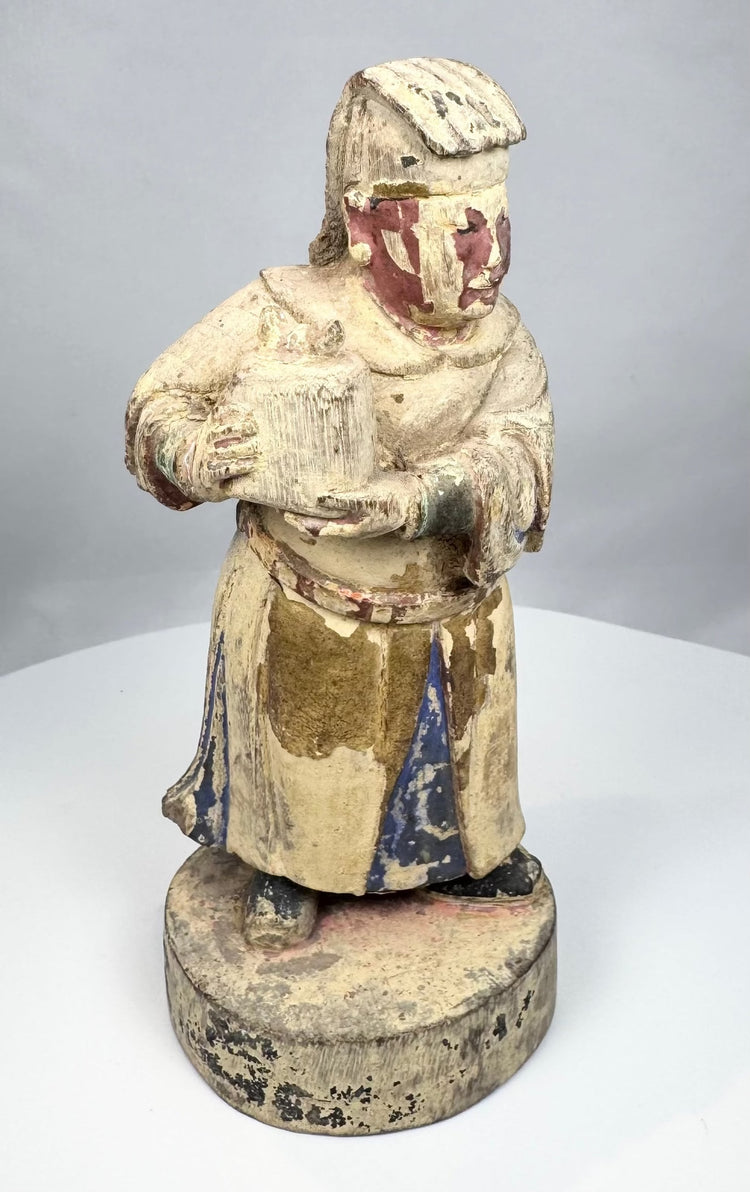
This antique Chinese polychrome wooden figure depicts a standing male attendant or minor official carrying a substantial ceremonial vessel in both hands.
The figure stands upright upon an integral circular pedestal and is represented wearing a long formal robe extending nearly to the feet. Broad sleeves surround the arms, while contrasting painted borders and triangular panels introduce blue, green, red, cream, and darker tones across the otherwise pale surface. Both arms extend forward to support a large cylindrical or slightly rectangular vessel held prominently against the torso. The object may represent an offering container, ritual vessel, covered jar, or similar ceremonial object associated with religious or temple service.
The figure's costume and formal posture suggest an attendant, official, or offering bearer rather than one of the principal deities of the Chinese religious pantheon.
His face is strongly modelled with a broad nose, small mouth, defined cheeks, and projecting ears. Considerable red pigment survives across the face beneath the pale surface layers, giving an indication of the sculpture's formerly much more colourful appearance. A tall cap or headdress rises above the forehead and extends toward the back of the head. Such headgear frequently appears in representations of officials, attendants, guardians, and members of the celestial bureaucracy depicted in Chinese religious art.
The sculpture retains extensive polychrome decoration. Cream and off-white dominate the robes, while areas of deep blue survive along the lower garment and sleeves, green appears around the cuffs, and red pigment remains particularly visible around the face, waist, hands, and base.
The irregular layering and wear of the pigments suggest that the figure may have undergone repainting during its period of devotional use. Repainting and renewal of wooden religious sculpture was a longstanding practice, and documented Chinese wooden figures sometimes preserve several successive decorative campaigns.
Features
- Standing male attendant or minor official
- Large ceremonial or offering vessel held in both hands
- Tall formal headdress or cap
- Long traditional robe with broad sleeves
- Integral circular wooden pedestal
- Surviving cream, red, blue, green, and dark pigment
- Strongly modelled facial features
- Visible hand-tool marks throughout the wood
- Substantial age-related wear to the painted surface
- Likely produced for shrine or temple display
Cultural Significance
Chinese religious sculpture frequently represented not only major Buddhist and Daoist deities but also attendants, guardians, officials, servants, and members of a larger celestial hierarchy.
Within temple and domestic shrine settings, subsidiary figures could flank a principal deity, carry offerings or ritual objects, and visually recreate the organization of an earthly imperial court in a supernatural setting.
The formal clothing and official-style headgear of this figure are particularly consistent with the concept of the celestial bureaucracy that became deeply embedded in Chinese popular and Daoist religious traditions.
Wood was an important material for Chinese devotional sculpture because it could be readily carved, painted, lacquered, gilded, repaired, and periodically renewed. Surviving examples therefore frequently retain complex surfaces combining original material with later devotional repainting and restoration. A documented Chinese polychrome wooden Guanyin in the Royal Ontario Museum, for example, has been repainted on multiple occasions over its long history.
Polychrome lacquered wooden religious figures continued to be produced during the Qing Dynasty, including guardian and attendant figures intended for religious or ceremonial environments.
Condition
The figure remains in antique condition with extensive age-related wear throughout.
The painted surface exhibits substantial flaking, rubbing, cracking, discoloration, abrasions, scratches, exposed wood, and losses to several layers of pigment. Cream-coloured surface decoration survives extensively across the figure, with particularly noticeable remnants of red, blue, green, brown, and black pigment.
The face exhibits significant paint loss, revealing large areas of underlying red coloration. The headdress, garment, sleeves, vessel, hands, feet, and pedestal similarly display extensive wear and scattered losses. There are small chips, dents, old cracks, abrasions, wood shrinkage, and irregularities consistent with the age and hand-carved construction of the sculpture. The underside of the base shows extensive old wear, staining, scratches, darkening, small holes, and surface deterioration.
Dimensions (Approximate)
Height: 6.5 in
Width: 2.5 in
Depth: 2.75 in
Age (Approximate)
100–175 years old
Provenance
Formerly part of a private collection in Falls Church, Virginia, USA, assembled with a particular focus on Chinese art, antiques, and decorative objects.
Learn More
Study a related Qing Dynasty carved and painted wooden attendant preserved by the Royal Ontario Museum.
Browse our Collection of Ancient Chinese Artifacts and Imperial Relics.
Description
Historical Context & Origin
Region: China
Material: Hand-carved wood with surviving polychrome pigment
Period: Late Qing Dynasty to Early Republic Period, circa 1850–1920
Description
This antique Chinese polychrome wooden figure depicts a standing male attendant or minor official carrying a substantial ceremonial vessel in both hands.
The figure stands upright upon an integral circular pedestal and is represented wearing a long formal robe extending nearly to the feet. Broad sleeves surround the arms, while contrasting painted borders and triangular panels introduce blue, green, red, cream, and darker tones across the otherwise pale surface. Both arms extend forward to support a large cylindrical or slightly rectangular vessel held prominently against the torso. The object may represent an offering container, ritual vessel, covered jar, or similar ceremonial object associated with religious or temple service.
The figure's costume and formal posture suggest an attendant, official, or offering bearer rather than one of the principal deities of the Chinese religious pantheon.
His face is strongly modelled with a broad nose, small mouth, defined cheeks, and projecting ears. Considerable red pigment survives across the face beneath the pale surface layers, giving an indication of the sculpture's formerly much more colourful appearance. A tall cap or headdress rises above the forehead and extends toward the back of the head. Such headgear frequently appears in representations of officials, attendants, guardians, and members of the celestial bureaucracy depicted in Chinese religious art.
The sculpture retains extensive polychrome decoration. Cream and off-white dominate the robes, while areas of deep blue survive along the lower garment and sleeves, green appears around the cuffs, and red pigment remains particularly visible around the face, waist, hands, and base.
The irregular layering and wear of the pigments suggest that the figure may have undergone repainting during its period of devotional use. Repainting and renewal of wooden religious sculpture was a longstanding practice, and documented Chinese wooden figures sometimes preserve several successive decorative campaigns.
Features
- Standing male attendant or minor official
- Large ceremonial or offering vessel held in both hands
- Tall formal headdress or cap
- Long traditional robe with broad sleeves
- Integral circular wooden pedestal
- Surviving cream, red, blue, green, and dark pigment
- Strongly modelled facial features
- Visible hand-tool marks throughout the wood
- Substantial age-related wear to the painted surface
- Likely produced for shrine or temple display
Cultural Significance
Chinese religious sculpture frequently represented not only major Buddhist and Daoist deities but also attendants, guardians, officials, servants, and members of a larger celestial hierarchy.
Within temple and domestic shrine settings, subsidiary figures could flank a principal deity, carry offerings or ritual objects, and visually recreate the organization of an earthly imperial court in a supernatural setting.
The formal clothing and official-style headgear of this figure are particularly consistent with the concept of the celestial bureaucracy that became deeply embedded in Chinese popular and Daoist religious traditions.
Wood was an important material for Chinese devotional sculpture because it could be readily carved, painted, lacquered, gilded, repaired, and periodically renewed. Surviving examples therefore frequently retain complex surfaces combining original material with later devotional repainting and restoration. A documented Chinese polychrome wooden Guanyin in the Royal Ontario Museum, for example, has been repainted on multiple occasions over its long history.
Polychrome lacquered wooden religious figures continued to be produced during the Qing Dynasty, including guardian and attendant figures intended for religious or ceremonial environments.
Condition
The figure remains in antique condition with extensive age-related wear throughout.
The painted surface exhibits substantial flaking, rubbing, cracking, discoloration, abrasions, scratches, exposed wood, and losses to several layers of pigment. Cream-coloured surface decoration survives extensively across the figure, with particularly noticeable remnants of red, blue, green, brown, and black pigment.
The face exhibits significant paint loss, revealing large areas of underlying red coloration. The headdress, garment, sleeves, vessel, hands, feet, and pedestal similarly display extensive wear and scattered losses. There are small chips, dents, old cracks, abrasions, wood shrinkage, and irregularities consistent with the age and hand-carved construction of the sculpture. The underside of the base shows extensive old wear, staining, scratches, darkening, small holes, and surface deterioration.
Dimensions (Approximate)
Height: 6.5 in
Width: 2.5 in
Depth: 2.75 in
Age (Approximate)
100–175 years old
Provenance
Formerly part of a private collection in Falls Church, Virginia, USA, assembled with a particular focus on Chinese art, antiques, and decorative objects.
Learn More
Study a related Qing Dynasty carved and painted wooden attendant preserved by the Royal Ontario Museum.
Browse our Collection of Ancient Chinese Artifacts and Imperial Relics.
You May Also Like
