

Antique Chinese Qing Dynasty Carved Gilt & Polychrome Wood Ancestor Figure | Circa 19th Century
Couldn't load pickup availability


Antique Chinese Qing Dynasty Carved Gilt & Polychrome Wood Ancestor Figure | Circa 19th Century
Description
More
Less
Historical Context & Origin
Region: China, East Asia
Material: Hand-carved wood with lacquer, polychrome pigments, and surviving gilt decoration
Period: Qing Dynasty, probably 19th century, circa 1800–1900
Description
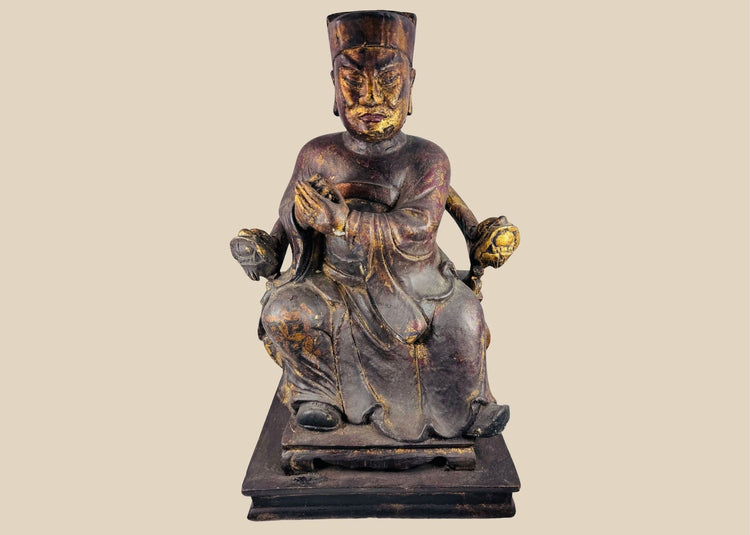
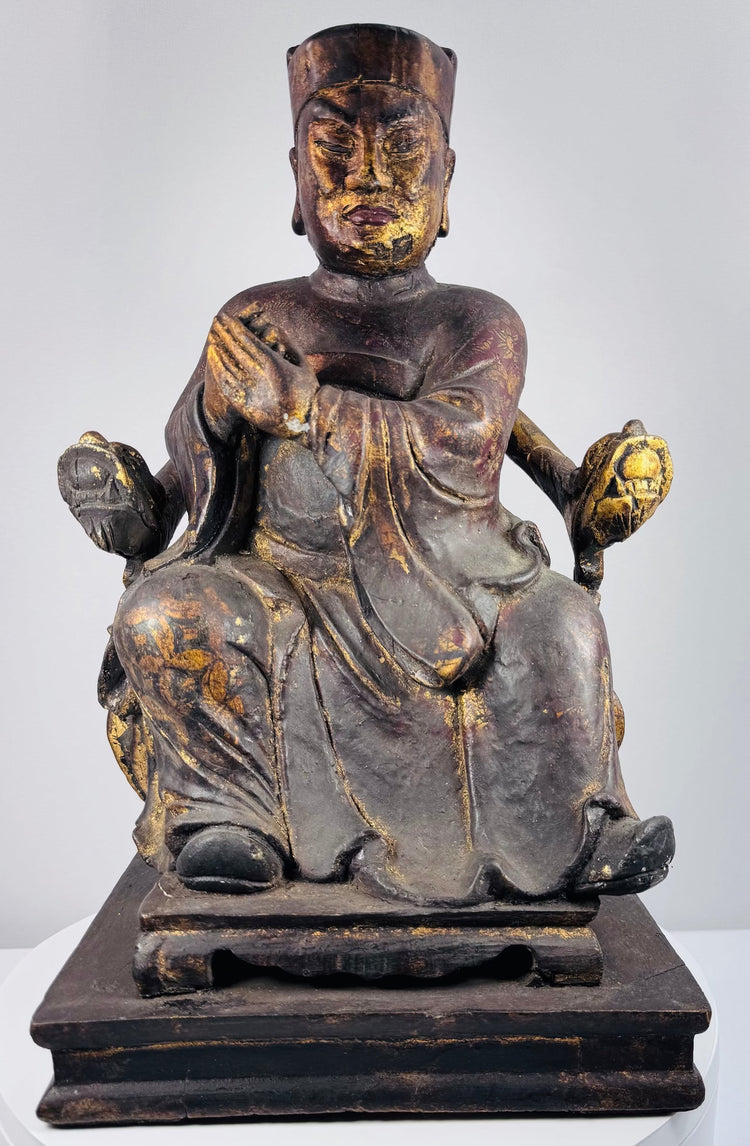
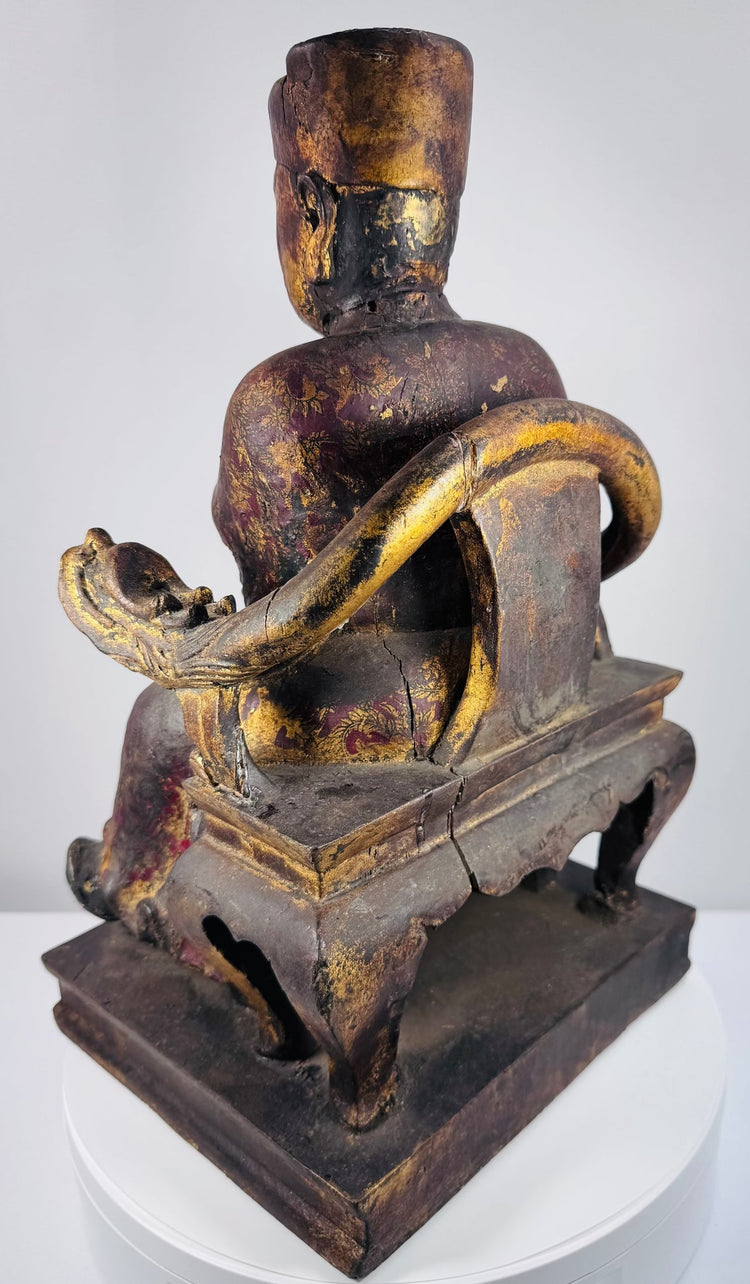
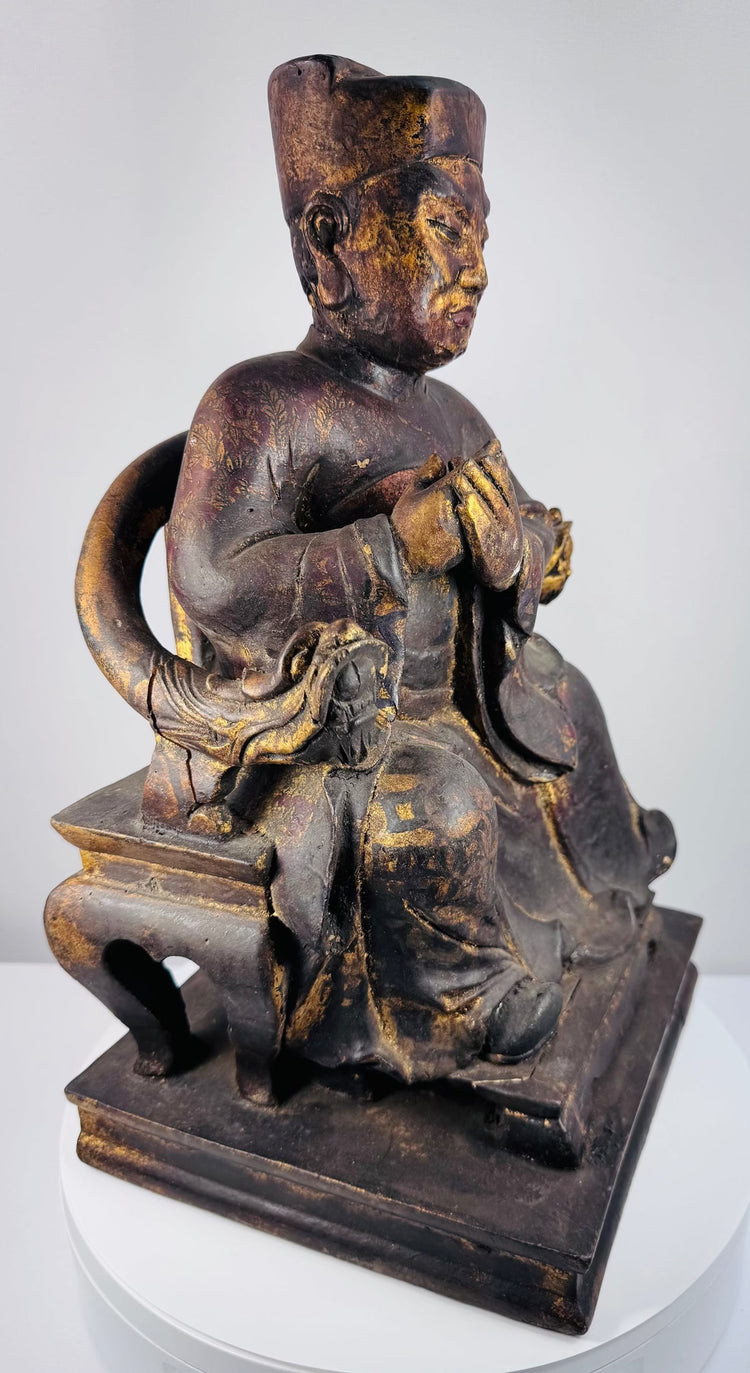
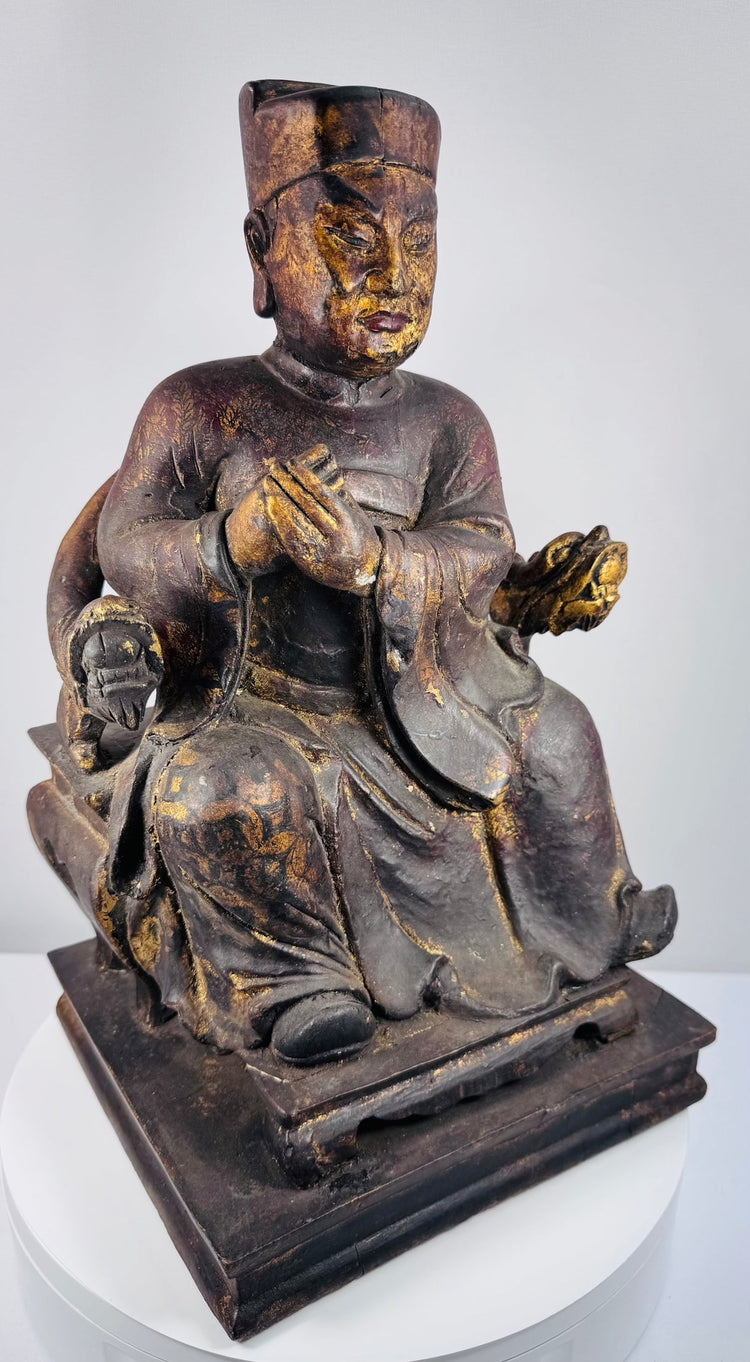
An imposing Chinese carved wooden ancestor figure, civil official, or deified dignitary, probably dating to the 19th-century Qing Dynasty.
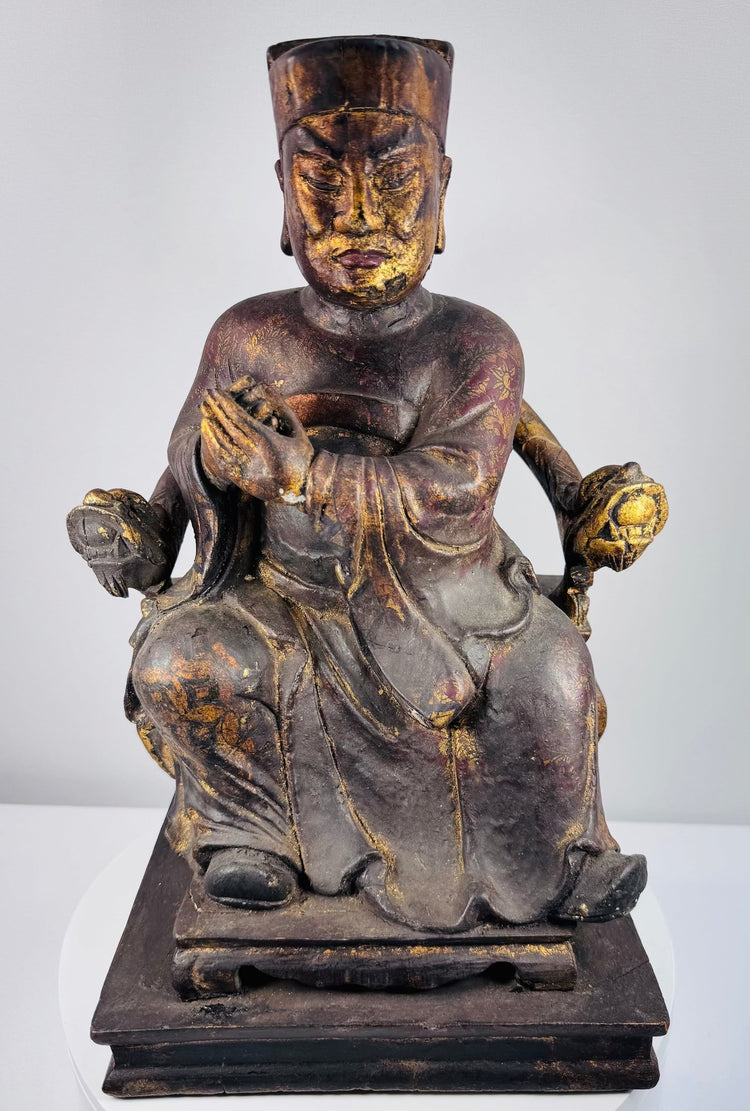
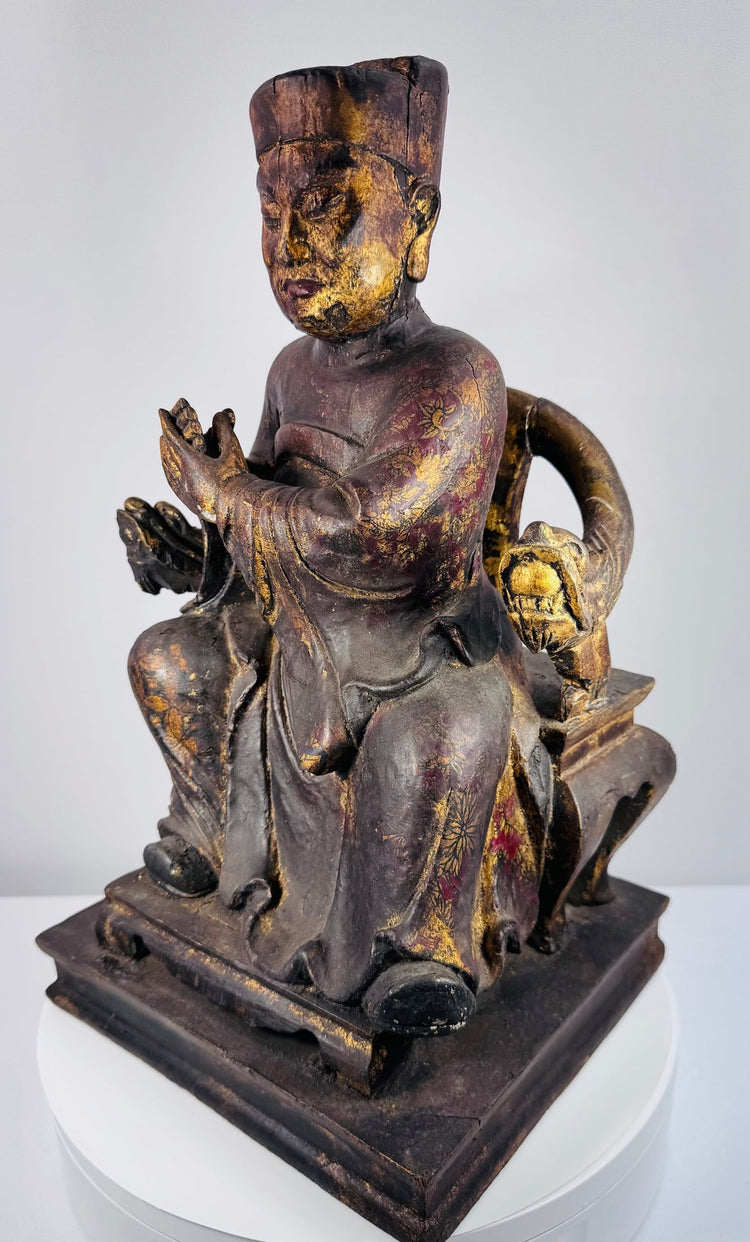
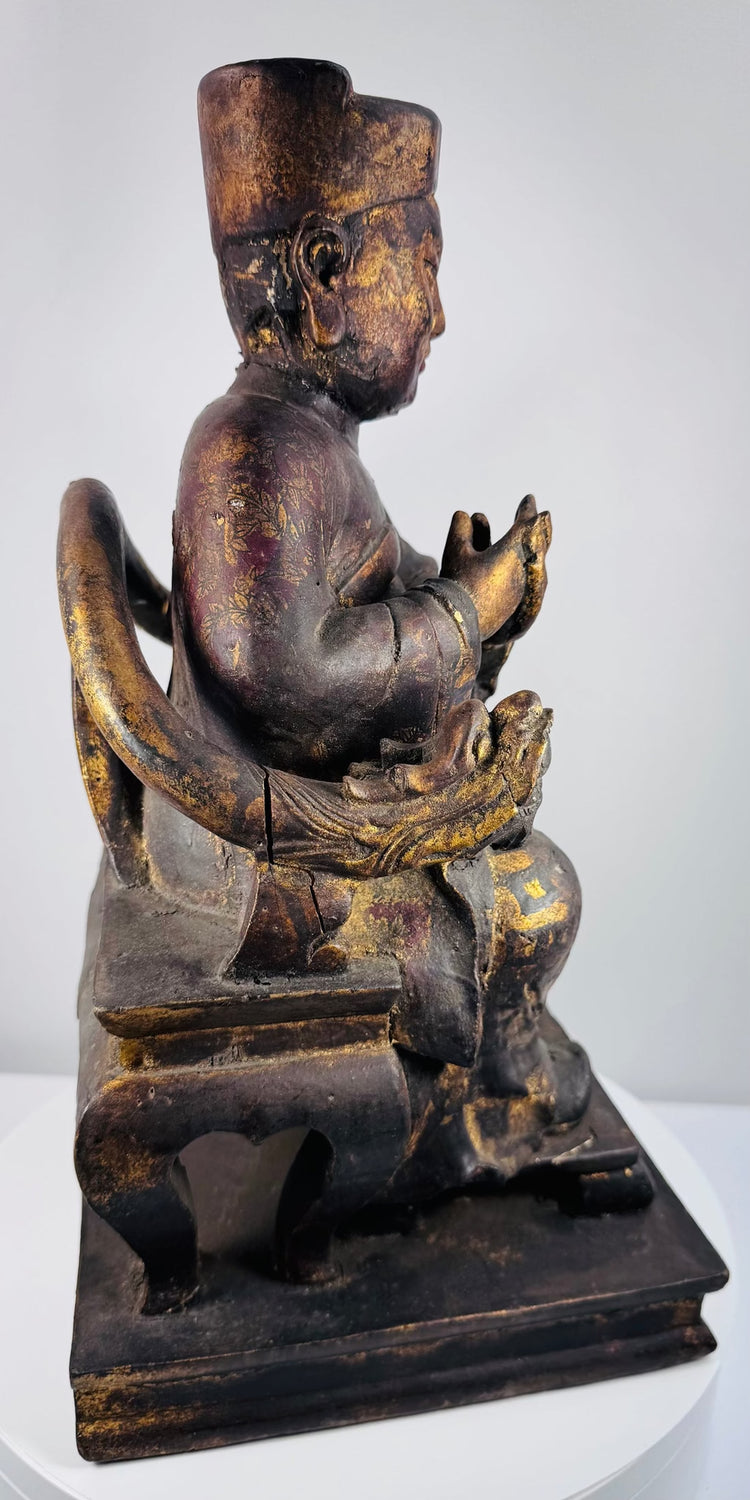
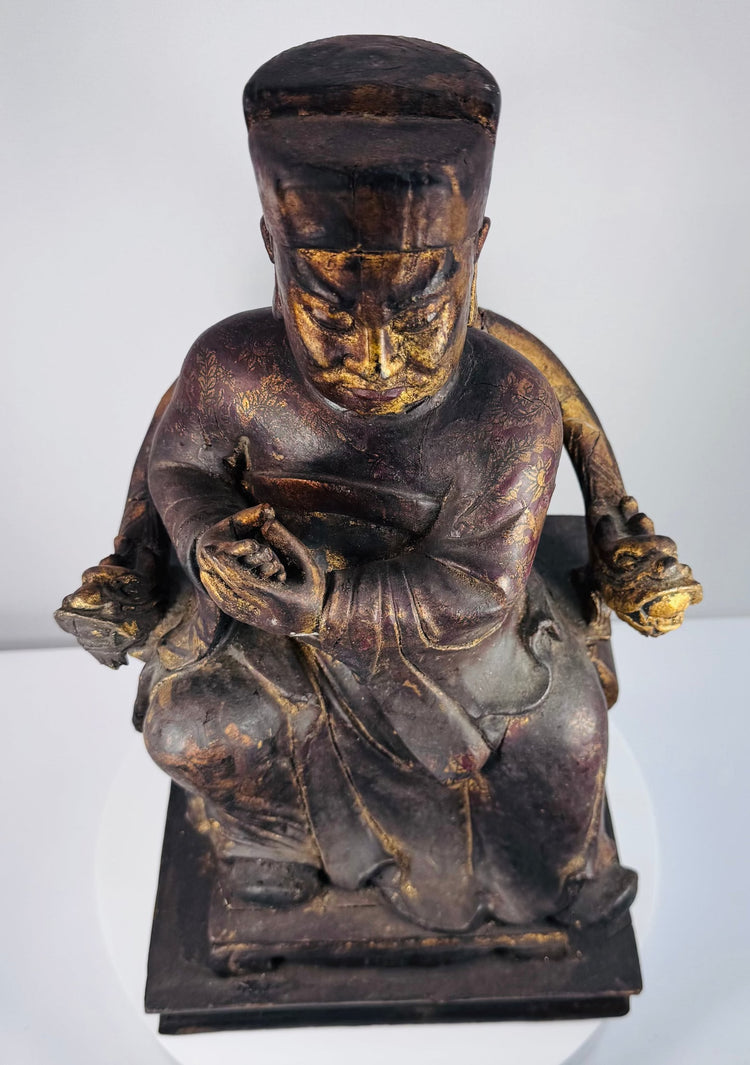
The dignified male figure is depicted seated frontally upon an elaborate horseshoe-back throne. He wears a tall square official’s cap and voluminous layered robes associated with rank, authority, and ceremonial office. His hands meet before his chest and appear to hold the remains of a court or ritual tablet, traditionally carried by officials during formal audiences.
The broad face is carved with an expression of composed authority, featuring elongated ears, gently defined eyes, and a restrained smile. Traces of dark lacquer, burgundy-red pigment, and gold decoration remain across the robes, including floral and brocade-like patterns that originally would have given the figure a richly ceremonial appearance.
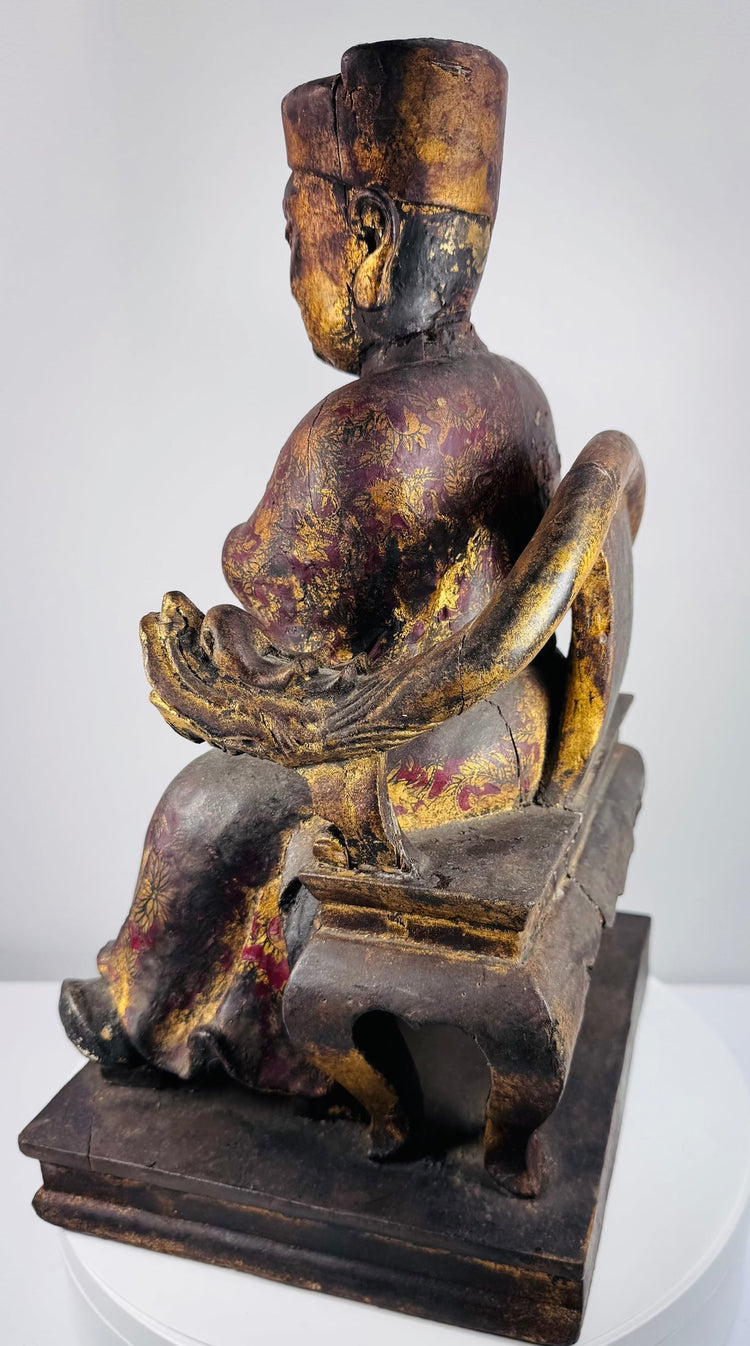
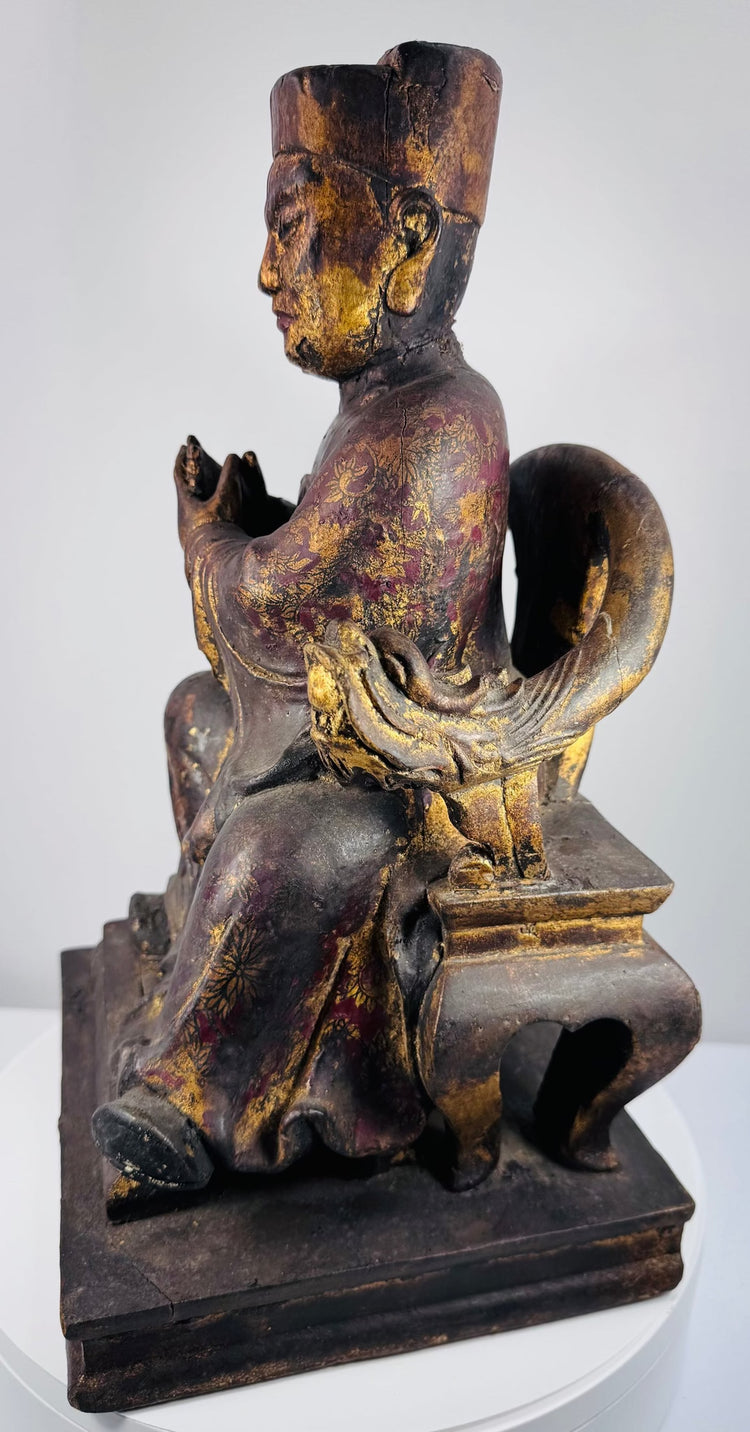
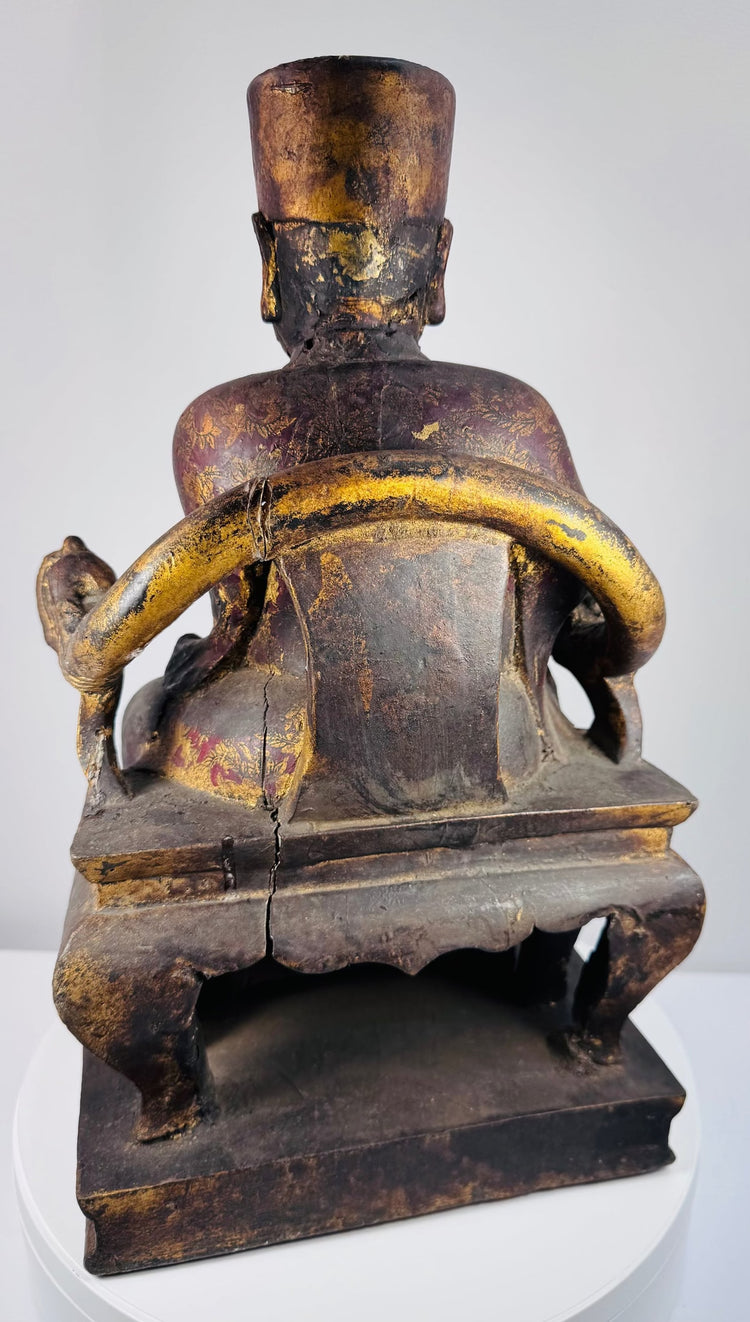
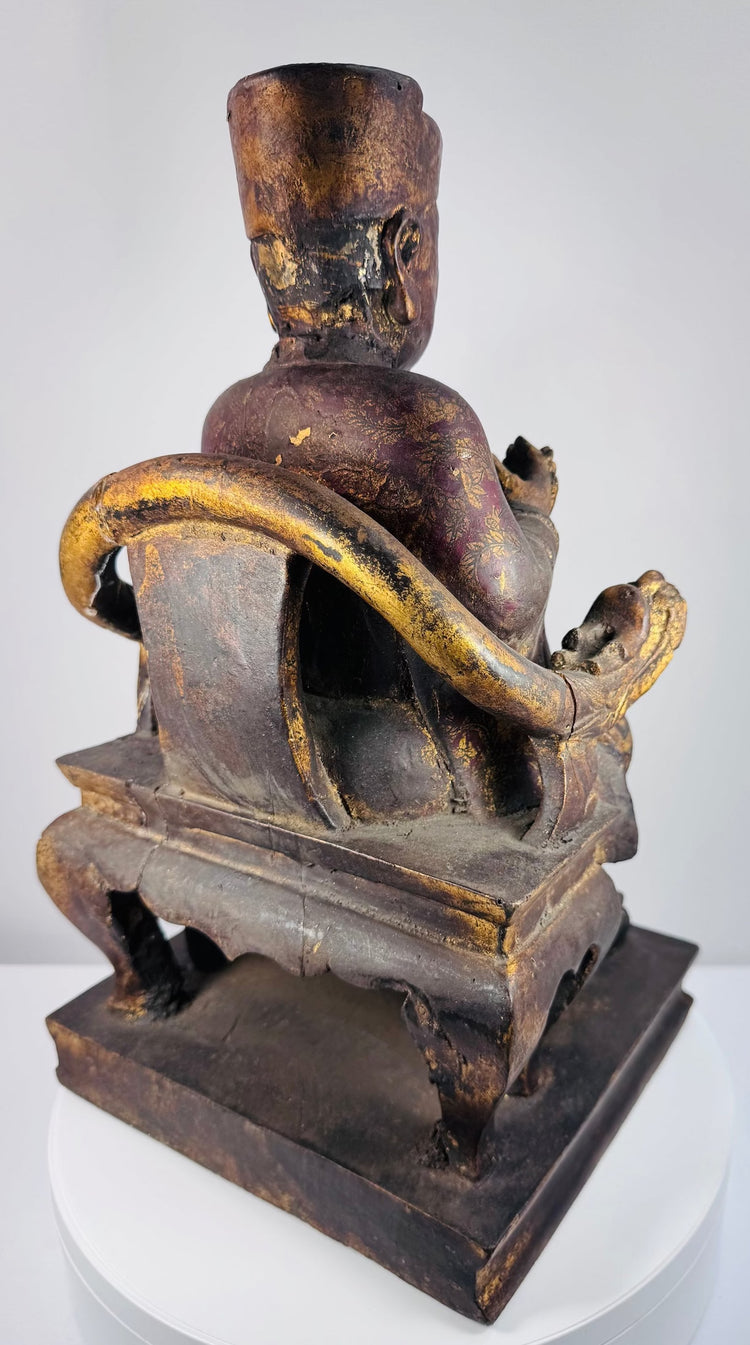
The surrounding chair incorporates curved arms terminating in boldly carved hand- or claw-like forms, one appearing to support a small orb. The chair rises upon an openwork platform above a substantial stepped rectangular plinth, creating a strongly architectural presentation.
Figures of this type may represent a revered ancestor shown in idealized official attire, a historical dignitary, or a deity belonging to Chinese Daoist or folk-religious traditions.
Features
- Seated ancestor, civil official, or deified dignitary
- Tall square official’s cap
- Formal layered court-style robes
- Fragmentary court or ritual tablet held before the chest
- Elaborate horseshoe-back throne or ceremonial chair
- Sculpted hand- or claw-like chair terminals
- Openwork chair platform and stepped wooden plinth
- Surviving burgundy-red, black, and gold decoration
- Floral and brocade-like gilt patterns
- Deeply aged and darkened surface patina
Cultural Significance
Ancestor veneration was an important component of traditional Chinese family and religious life. Sculpted ancestor figures could serve as three-dimensional counterparts to painted ancestor portraits, preserving the memory, authority, and continuing spiritual presence of deceased family members.
Officials and honored ancestors were frequently represented wearing formal robes and official caps while seated upon hierarchical chairs. Such imagery communicated social position, moral authority, and family prestige, whether or not the individual had held the precise rank depicted.
Condition
Fair antique condition consistent with significant age and historical use. The figure displays upright but with extensive age-related wear and numerous visible old repairs.
There are multiple shrinkage cracks, open splits, separations, chips, and areas of loss throughout the cap, head, neck, shoulders, hands, robes, chair, platform, and stepped base. The hands and held attribute are incomplete. The chair arms and carved terminals exhibit conspicuous fractures, repaired breaks, and apparent old reattachment or consolidation.
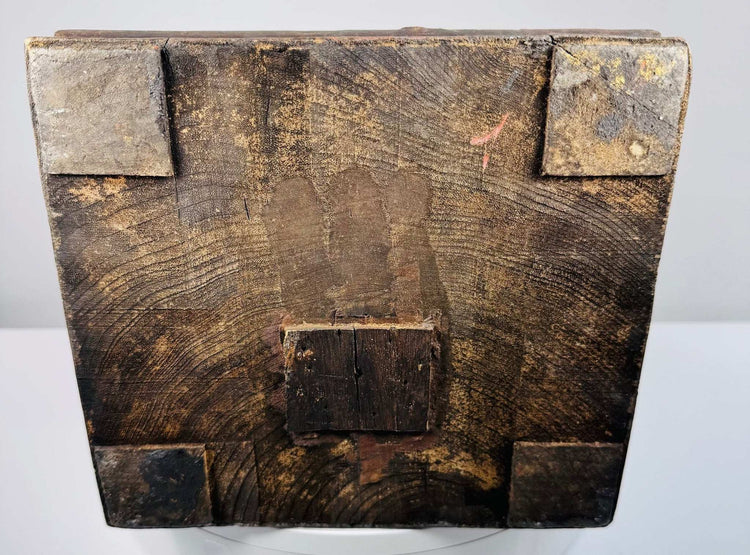
Large cracks and repaired sections are visible around the chair apron, side rails, rear platform, and lower plinth. Additional wooden reinforcement and stabilization blocks are visible beneath the base. Possible old adhesive, filling, retouching, and overpainting are present.
The lacquer, polychrome decoration, and gilding exhibit extensive wear, flaking, abrasion, darkening, and loss. Accumulated dust and deposits remain within recessed areas.
Dimensions (Approximate)
Height: 15.5 in
Width: 8.8 in
Depth: 8.2 in
Age (Approximate)
126–226 years old
Provenance
From a private collection in Los Angeles, California, United States.
Subsequently handled by Andrew Jones Auctions of Los Angeles, a full-service auction and appraisal firm specializing in fine art, antiques, and Asian works of art.
Learn More
Discover a related Qing Dynasty Chinese seated deity carved from painted and gilded wood in the collection of The British Museum
Explore our Collection of Ancient Chinese Artifacts & Imperial Relics
Description
Historical Context & Origin
Region: China, East Asia
Material: Hand-carved wood with lacquer, polychrome pigments, and surviving gilt decoration
Period: Qing Dynasty, probably 19th century, circa 1800–1900
Description
An imposing Chinese carved wooden ancestor figure, civil official, or deified dignitary, probably dating to the 19th-century Qing Dynasty.
The dignified male figure is depicted seated frontally upon an elaborate horseshoe-back throne. He wears a tall square official’s cap and voluminous layered robes associated with rank, authority, and ceremonial office. His hands meet before his chest and appear to hold the remains of a court or ritual tablet, traditionally carried by officials during formal audiences.
The broad face is carved with an expression of composed authority, featuring elongated ears, gently defined eyes, and a restrained smile. Traces of dark lacquer, burgundy-red pigment, and gold decoration remain across the robes, including floral and brocade-like patterns that originally would have given the figure a richly ceremonial appearance.
The surrounding chair incorporates curved arms terminating in boldly carved hand- or claw-like forms, one appearing to support a small orb. The chair rises upon an openwork platform above a substantial stepped rectangular plinth, creating a strongly architectural presentation.
Figures of this type may represent a revered ancestor shown in idealized official attire, a historical dignitary, or a deity belonging to Chinese Daoist or folk-religious traditions.
Features
- Seated ancestor, civil official, or deified dignitary
- Tall square official’s cap
- Formal layered court-style robes
- Fragmentary court or ritual tablet held before the chest
- Elaborate horseshoe-back throne or ceremonial chair
- Sculpted hand- or claw-like chair terminals
- Openwork chair platform and stepped wooden plinth
- Surviving burgundy-red, black, and gold decoration
- Floral and brocade-like gilt patterns
- Deeply aged and darkened surface patina
Cultural Significance
Ancestor veneration was an important component of traditional Chinese family and religious life. Sculpted ancestor figures could serve as three-dimensional counterparts to painted ancestor portraits, preserving the memory, authority, and continuing spiritual presence of deceased family members.
Officials and honored ancestors were frequently represented wearing formal robes and official caps while seated upon hierarchical chairs. Such imagery communicated social position, moral authority, and family prestige, whether or not the individual had held the precise rank depicted.
Condition
Fair antique condition consistent with significant age and historical use. The figure displays upright but with extensive age-related wear and numerous visible old repairs.
There are multiple shrinkage cracks, open splits, separations, chips, and areas of loss throughout the cap, head, neck, shoulders, hands, robes, chair, platform, and stepped base. The hands and held attribute are incomplete. The chair arms and carved terminals exhibit conspicuous fractures, repaired breaks, and apparent old reattachment or consolidation.
Large cracks and repaired sections are visible around the chair apron, side rails, rear platform, and lower plinth. Additional wooden reinforcement and stabilization blocks are visible beneath the base. Possible old adhesive, filling, retouching, and overpainting are present.
The lacquer, polychrome decoration, and gilding exhibit extensive wear, flaking, abrasion, darkening, and loss. Accumulated dust and deposits remain within recessed areas.
Dimensions (Approximate)
Height: 15.5 in
Width: 8.8 in
Depth: 8.2 in
Age (Approximate)
126–226 years old
Provenance
From a private collection in Los Angeles, California, United States.
Subsequently handled by Andrew Jones Auctions of Los Angeles, a full-service auction and appraisal firm specializing in fine art, antiques, and Asian works of art.
Learn More
Discover a related Qing Dynasty Chinese seated deity carved from painted and gilded wood in the collection of The British Museum
Explore our Collection of Ancient Chinese Artifacts & Imperial Relics
You May Also Like
