



Antique Circus Sideshow Mummified Head | Clay Curiosity with Human Teeth | Circa Late 19th - Early 20th Century
Couldn't load pickup availability







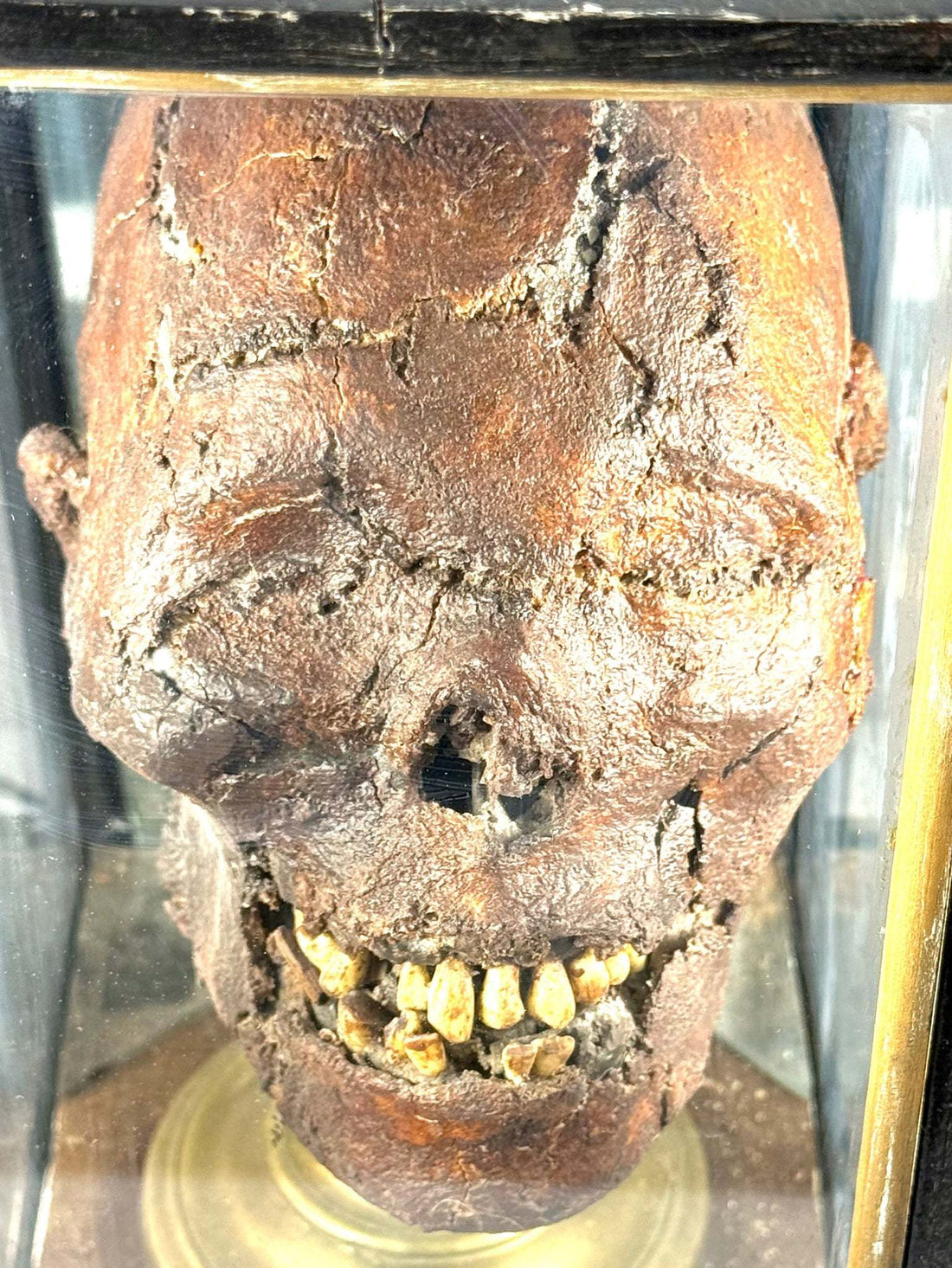
Antique Circus Sideshow Mummified Head | Clay Curiosity with Human Teeth | Circa Late 19th - Early 20th Century
Description
More
Less
Historical Context & Origin
Region: Likely Europe or North America; associated with historical circus, sideshow, and curiosity exhibition traditions
Material: Sculpted clay with apparently genuine human teeth; brass pedestal, wooden and glass display case, and aged paper label
Period: 20th Century, reflecting late 19th and early 20th-century sideshow traditions
Description
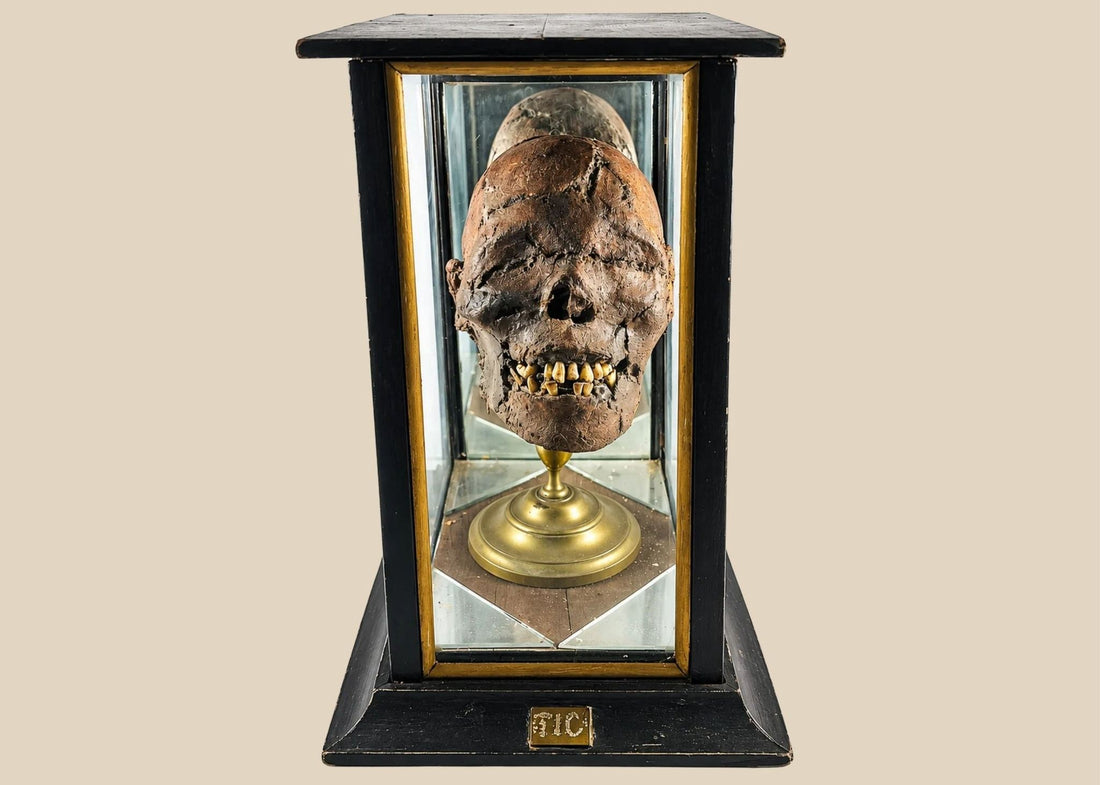
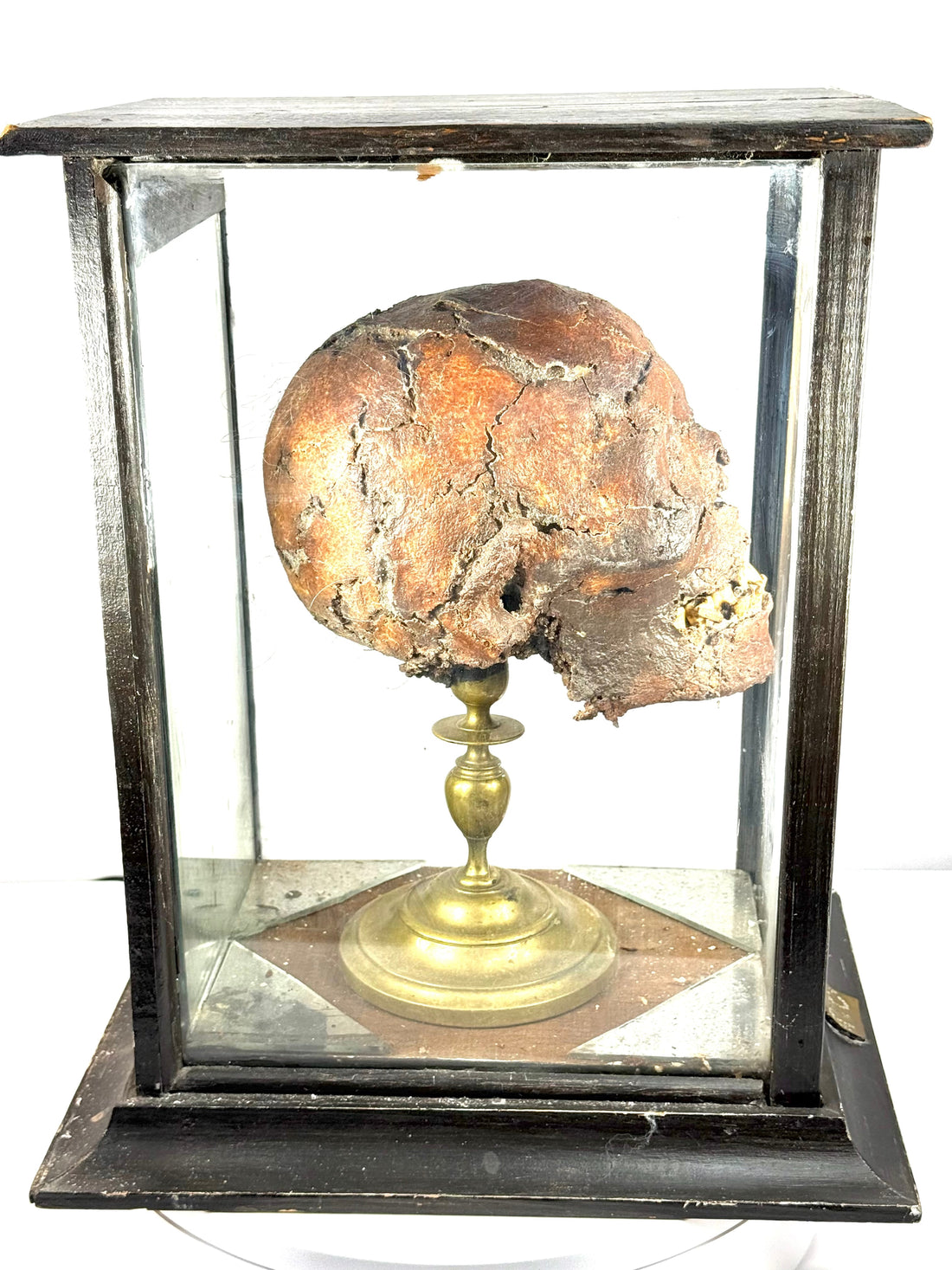
An unusual and historically intriguing antique sideshow curiosity known as “TIC,” consisting of a realistically modelled, mummified-style human head displayed within a traditional wooden and glass exhibition case.
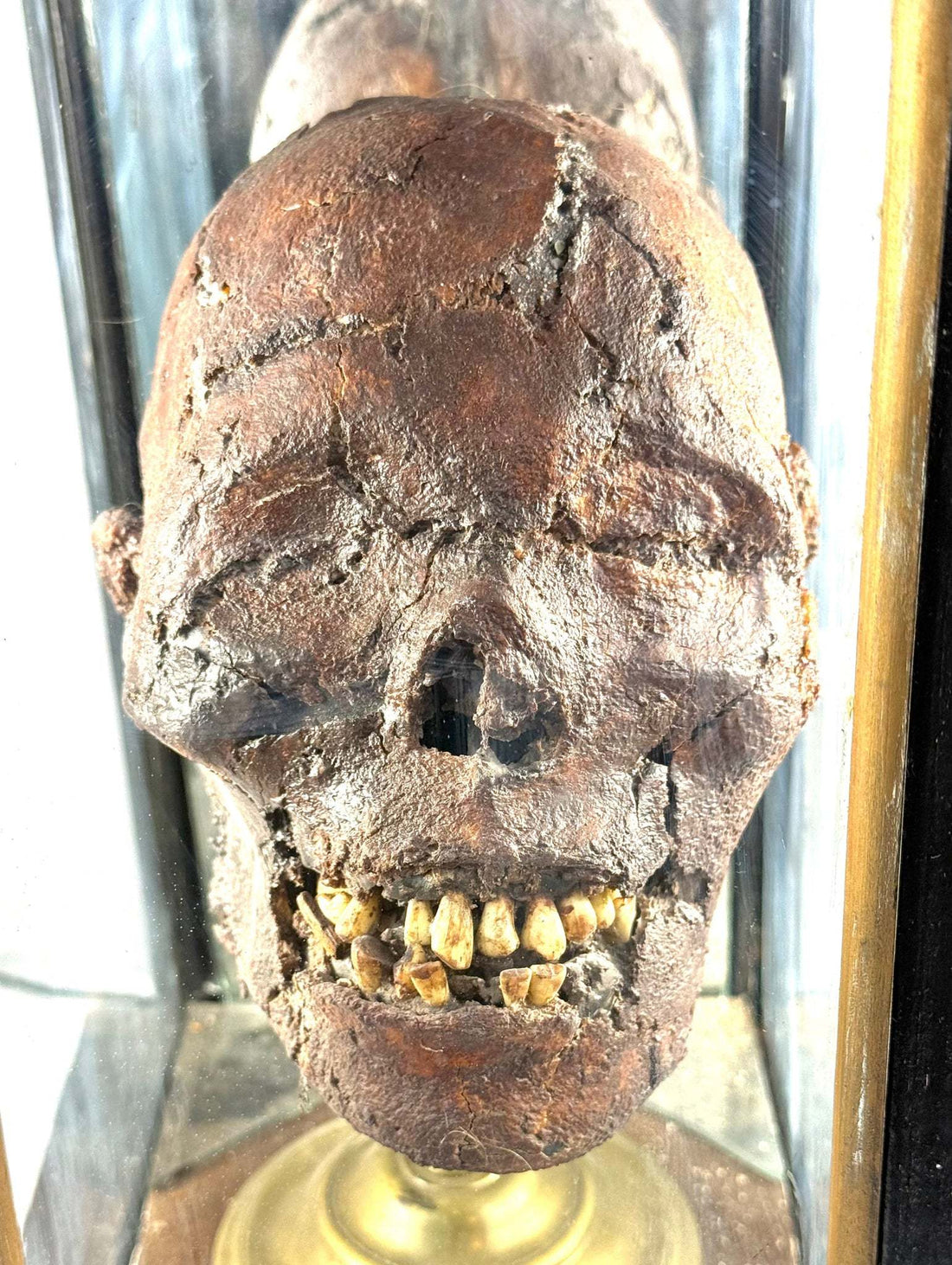
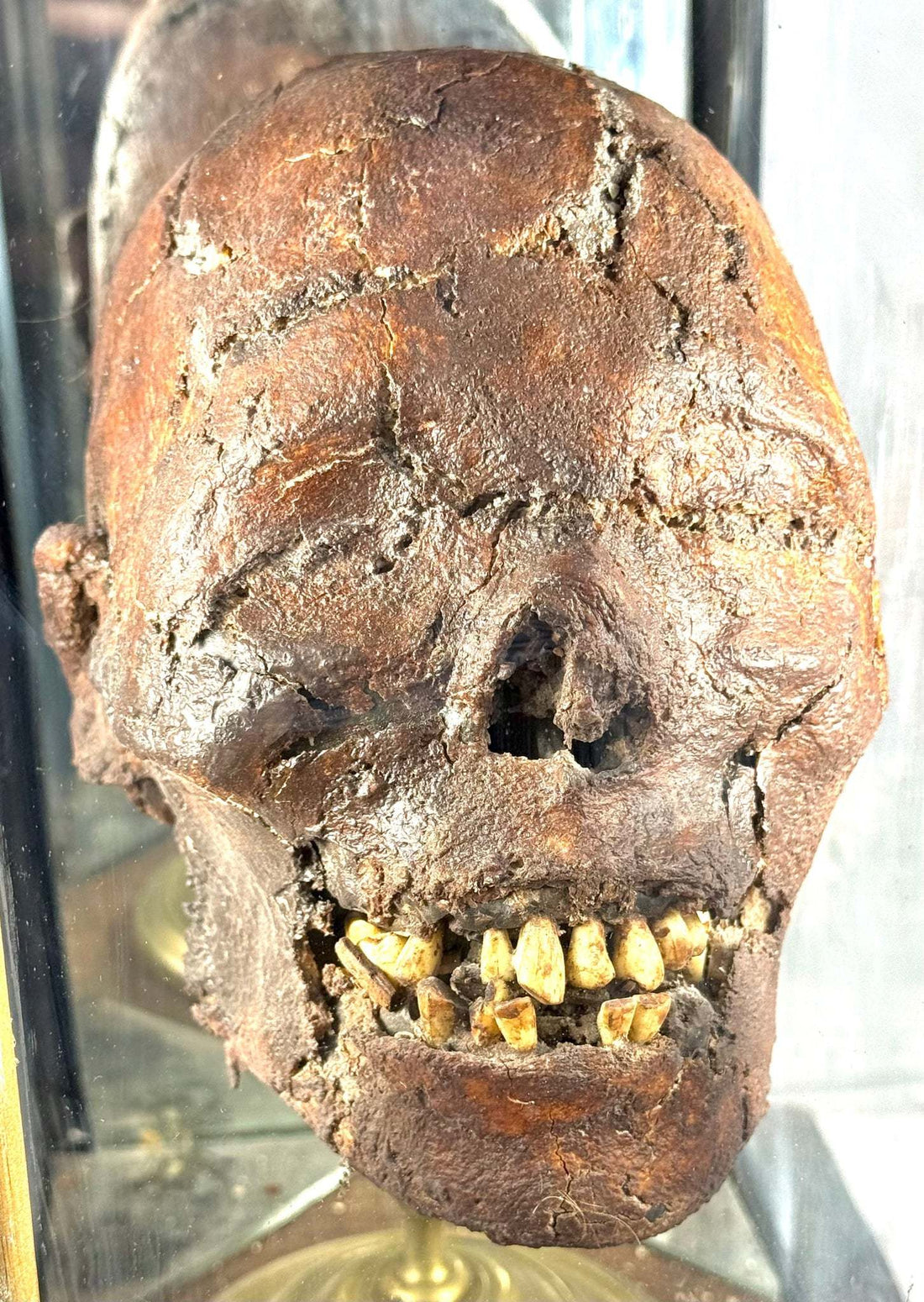
Constructed from sculpted clay and incorporating teeth described in a previous auction catalogue as apparently genuine human teeth, the head was designed to resemble preserved human remains. Its deeply weathered appearance, irregular facial contours, pronounced surface cracking, and exposed yellowed teeth create the dramatic visual effect associated with historical carnival and curiosity exhibitions.
The head features a heavily textured, mottled brown surface, with deeply recessed eye sockets, a deteriorated nasal area, and visible fissures extending across the forehead and facial structure. These details contribute to the convincing appearance of an aged, naturally preserved specimen.
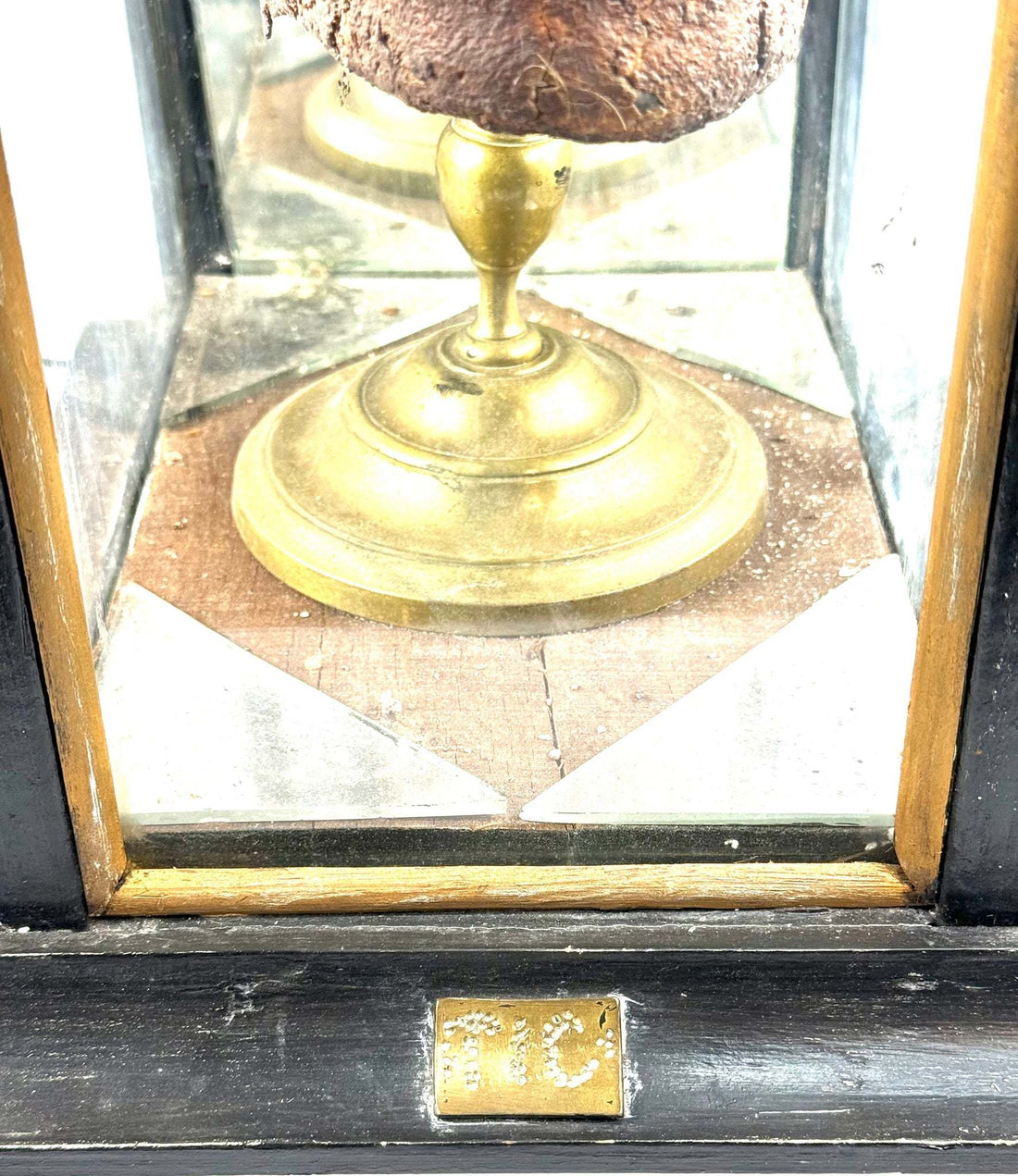
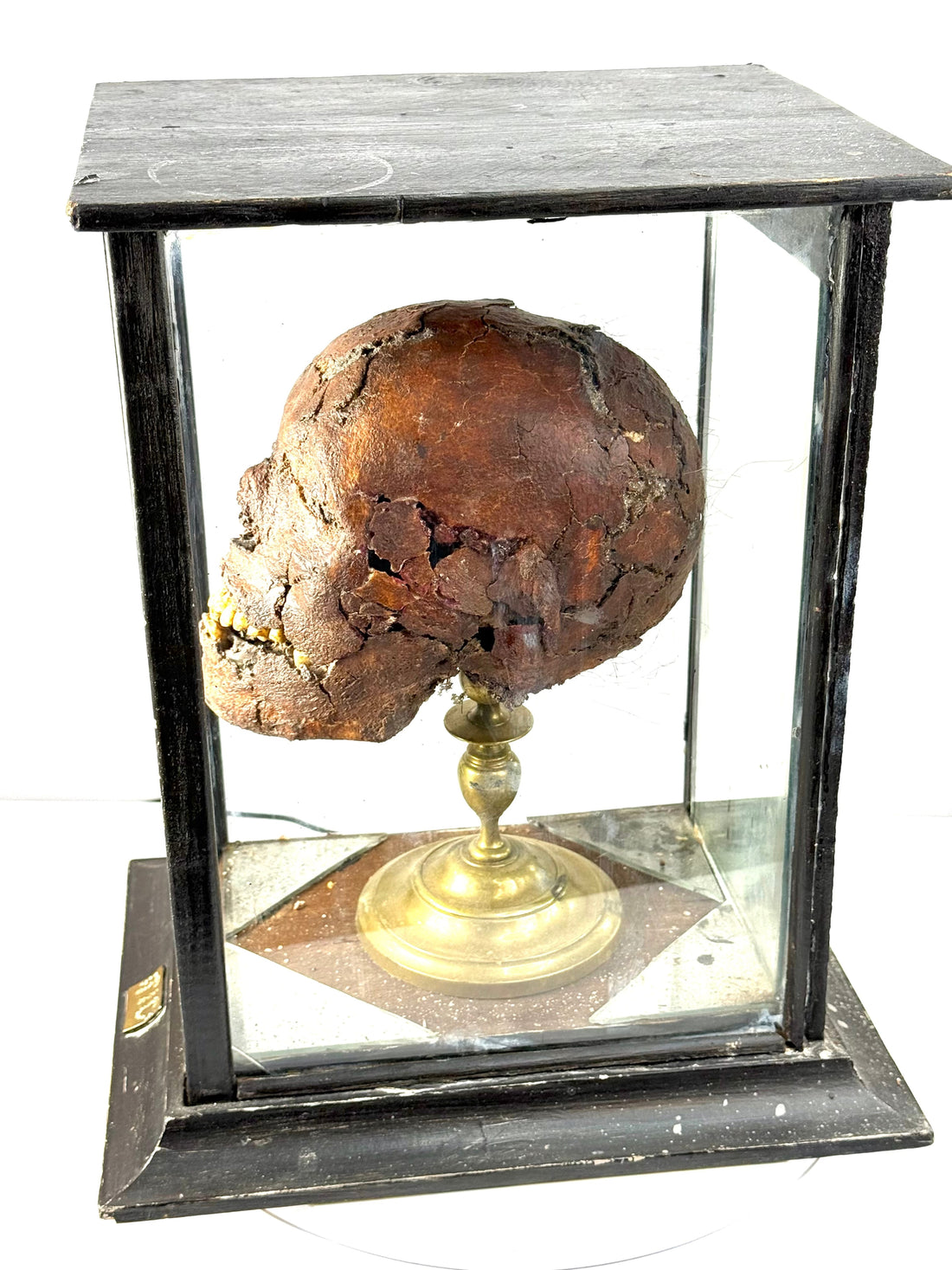
Mounted on a turned brass pedestal, the head is enclosed within a black-painted wooden display case featuring glass panels, reflective interior surfaces, and a small identification plaque inscribed “TIC.” The case preserves the traditional presentation associated with historical sideshow exhibits.
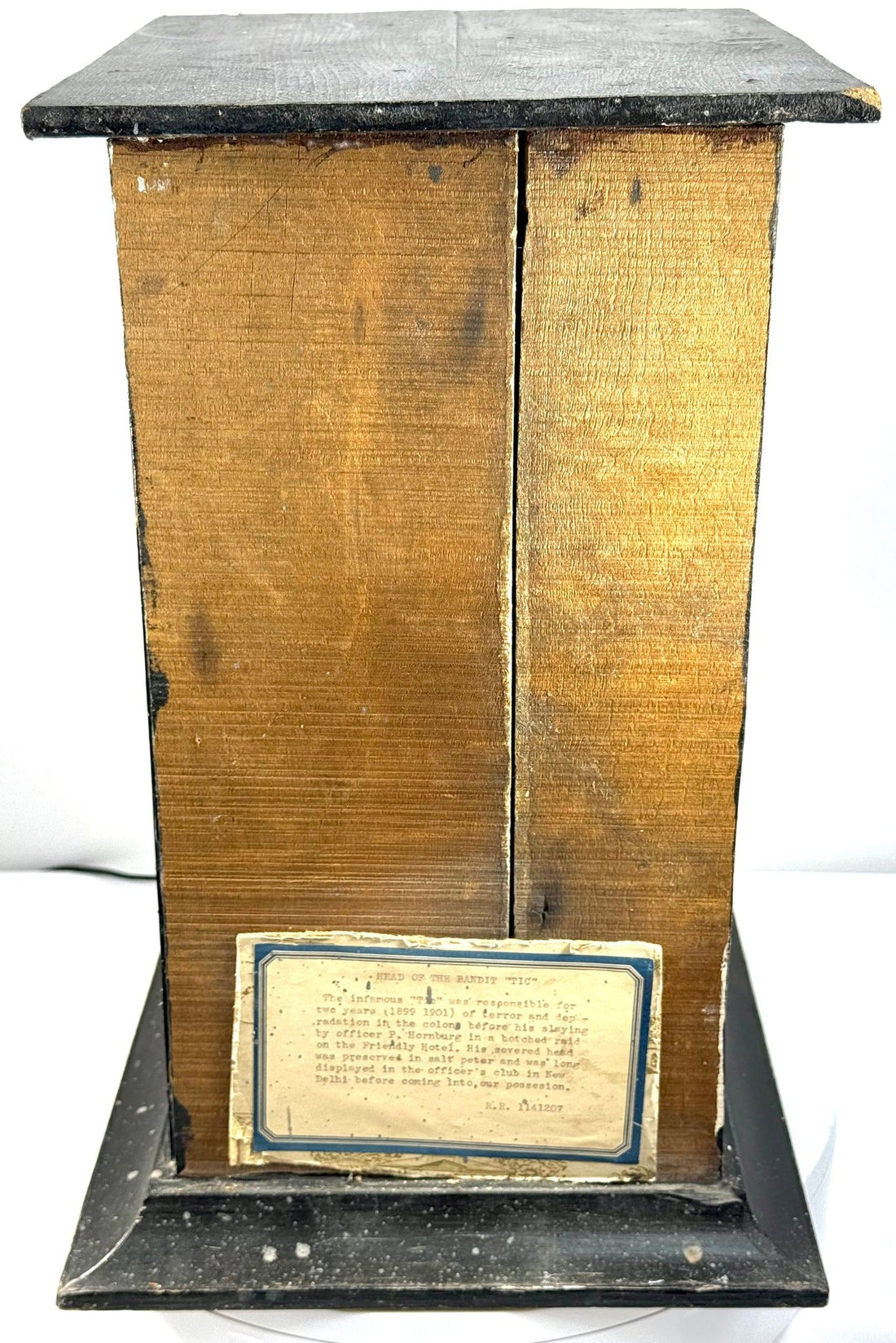
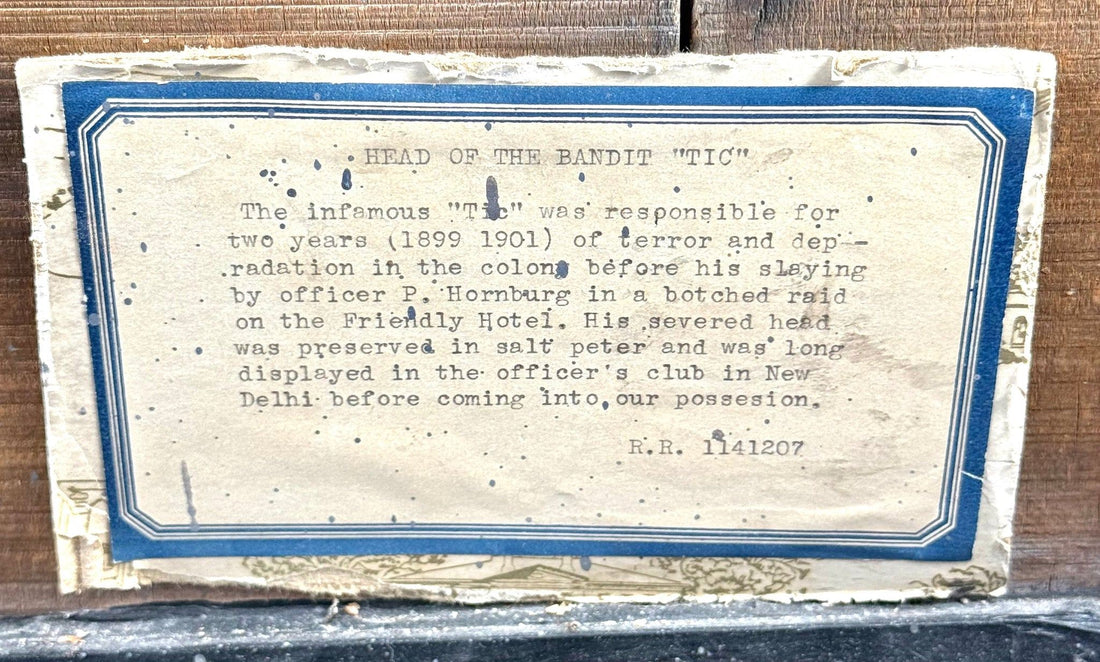
An especially interesting feature is the aged paper label affixed to the reverse of the display case. This label recounts the purported history of a colonial bandit known as “Tic,” whose head was supposedly preserved following his death in 1901. The account describes a confrontation with an officer, subsequent preservation in saltpeter, and exhibition in an officers' club in New Delhi.
Although this narrative forms an important part of the object's historical presentation, it should be understood as the story recorded on the exhibition label rather than independently verified historical fact.
Features
- Genuine human teeth
- Deeply textured and cracked surfaces resembling naturally preserved human remains
- Distinctive recessed facial features and exposed yellowed teeth
- Traditional turned brass pedestal supporting the head
- Black-painted wooden exhibition case with glass panels and reflective interior
- Small identification plaque inscribed “TIC”
- Aged paper label on the reverse documenting the purported history of the “Bandit Tic”
Historical Label — Transcription
An aged paper label affixed to the reverse of the wooden display case provides a dramatic account of the supposed identity and history of the individual represented.
“...responsible for two years (1899–1901) of terror and depredation in the colony before his slaying by officer P. Hornburg in a botched raid on the Friendly Hotel. His severed head was preserved in saltpeter and was long displayed in the officer’s club in New Delhi before coming into our possession.”
This inscription is an important surviving element of the exhibition display, illustrating the sensational storytelling traditionally used to attract audiences to travelling sideshows and curiosity collections. Its claims regarding the bandit's identity, death, and subsequent preservation have not been independently substantiated.
Cultural Significance
During the late 19th and early 20th centuries, travelling circuses, dime museums, and sideshow exhibitions became popular forms of entertainment throughout Europe and North America.
These attractions frequently displayed unusual anatomical specimens, purported mummies, criminal memorabilia, exotic curiosities, and fabricated objects accompanied by elaborate historical narratives.
Realistic replicas, sometimes incorporating actual biological materials, were presented alongside genuine specimens, deliberately blurring the distinction between scientific curiosity, theatrical illusion, and sensational storytelling.
The “TIC” display represents this distinctive exhibition tradition, combining sculptural craftsmanship, macabre subject matter, and a dramatic written account intended to enhance the object's perceived authenticity.
Condition
Antique condition, displaying substantial surface wear, cracking, and deterioration consistent with the object's aged presentation and construction.
The sculpted head exhibits extensive irregular cracking and fissures across the cranium, forehead, and facial surfaces. Areas surrounding the nose, eye sockets, cheeks, and jaw show pronounced surface erosion, abrasions, and localized material losses.
The surface retains a varied brown, grey, and earthy patina, with lighter exposed areas, accumulated discolouration, and an uneven textured finish. The visible teeth exhibit considerable yellowing, staining, and irregular positioning. Their precise material and stability have not been independently verified.
The brass pedestal displays age-related tarnishing, surface dulling, and handling marks.
The black-painted wooden display case exhibits visible abrasions, edge wear, scratches, and areas of paint loss, particularly along the upper frame and base. The glass and reflective interior surfaces display apparent age-related marks, spotting, and accumulated surface residue.
The aged paper label on the reverse displays toning, discolouration, and wear consistent with historical handling and storage.
Dimensions (Approximate)
Height: 14.5 in
Width: 9.5 in
Depth: 7 in
Age (Approximate)
120–150 years old
Provenance
Private Chicago, Illinois, USA collection, specializing in oddities, curiosities, and unusual historical objects.
Previously sold through Potter & Potter Auctions Inc., Chicago, Illinois, USA, in the Circus, Sideshows & Oddities auction, 29 July 2023, Lot 578.
By repute, formerly associated with the Phineas Taylor Barnum circus.
Learn More
Discover the rise and decline of circus spectacle through National Geographic’s History of the Circus
Explore the cultural history of sideshow curiosities in our article The Dark History of Mummified Heads and Sideshow Curiosities
Description
Historical Context & Origin
Region: Likely Europe or North America; associated with historical circus, sideshow, and curiosity exhibition traditions
Material: Sculpted clay with apparently genuine human teeth; brass pedestal, wooden and glass display case, and aged paper label
Period: 20th Century, reflecting late 19th and early 20th-century sideshow traditions
Description
An unusual and historically intriguing antique sideshow curiosity known as “TIC,” consisting of a realistically modelled, mummified-style human head displayed within a traditional wooden and glass exhibition case.
Constructed from sculpted clay and incorporating teeth described in a previous auction catalogue as apparently genuine human teeth, the head was designed to resemble preserved human remains. Its deeply weathered appearance, irregular facial contours, pronounced surface cracking, and exposed yellowed teeth create the dramatic visual effect associated with historical carnival and curiosity exhibitions.
The head features a heavily textured, mottled brown surface, with deeply recessed eye sockets, a deteriorated nasal area, and visible fissures extending across the forehead and facial structure. These details contribute to the convincing appearance of an aged, naturally preserved specimen.
Mounted on a turned brass pedestal, the head is enclosed within a black-painted wooden display case featuring glass panels, reflective interior surfaces, and a small identification plaque inscribed “TIC.” The case preserves the traditional presentation associated with historical sideshow exhibits.
An especially interesting feature is the aged paper label affixed to the reverse of the display case. This label recounts the purported history of a colonial bandit known as “Tic,” whose head was supposedly preserved following his death in 1901. The account describes a confrontation with an officer, subsequent preservation in saltpeter, and exhibition in an officers' club in New Delhi.
Although this narrative forms an important part of the object's historical presentation, it should be understood as the story recorded on the exhibition label rather than independently verified historical fact.
Features
- Genuine human teeth
- Deeply textured and cracked surfaces resembling naturally preserved human remains
- Distinctive recessed facial features and exposed yellowed teeth
- Traditional turned brass pedestal supporting the head
- Black-painted wooden exhibition case with glass panels and reflective interior
- Small identification plaque inscribed “TIC”
- Aged paper label on the reverse documenting the purported history of the “Bandit Tic”
Historical Label — Transcription
An aged paper label affixed to the reverse of the wooden display case provides a dramatic account of the supposed identity and history of the individual represented.
“...responsible for two years (1899–1901) of terror and depredation in the colony before his slaying by officer P. Hornburg in a botched raid on the Friendly Hotel. His severed head was preserved in saltpeter and was long displayed in the officer’s club in New Delhi before coming into our possession.”
This inscription is an important surviving element of the exhibition display, illustrating the sensational storytelling traditionally used to attract audiences to travelling sideshows and curiosity collections. Its claims regarding the bandit's identity, death, and subsequent preservation have not been independently substantiated.
Cultural Significance
During the late 19th and early 20th centuries, travelling circuses, dime museums, and sideshow exhibitions became popular forms of entertainment throughout Europe and North America.
These attractions frequently displayed unusual anatomical specimens, purported mummies, criminal memorabilia, exotic curiosities, and fabricated objects accompanied by elaborate historical narratives.
Realistic replicas, sometimes incorporating actual biological materials, were presented alongside genuine specimens, deliberately blurring the distinction between scientific curiosity, theatrical illusion, and sensational storytelling.
The “TIC” display represents this distinctive exhibition tradition, combining sculptural craftsmanship, macabre subject matter, and a dramatic written account intended to enhance the object's perceived authenticity.
Condition
Antique condition, displaying substantial surface wear, cracking, and deterioration consistent with the object's aged presentation and construction.
The sculpted head exhibits extensive irregular cracking and fissures across the cranium, forehead, and facial surfaces. Areas surrounding the nose, eye sockets, cheeks, and jaw show pronounced surface erosion, abrasions, and localized material losses.
The surface retains a varied brown, grey, and earthy patina, with lighter exposed areas, accumulated discolouration, and an uneven textured finish. The visible teeth exhibit considerable yellowing, staining, and irregular positioning. Their precise material and stability have not been independently verified.
The brass pedestal displays age-related tarnishing, surface dulling, and handling marks.
The black-painted wooden display case exhibits visible abrasions, edge wear, scratches, and areas of paint loss, particularly along the upper frame and base. The glass and reflective interior surfaces display apparent age-related marks, spotting, and accumulated surface residue.
The aged paper label on the reverse displays toning, discolouration, and wear consistent with historical handling and storage.
Dimensions (Approximate)
Height: 14.5 in
Width: 9.5 in
Depth: 7 in
Age (Approximate)
120–150 years old
Provenance
Private Chicago, Illinois, USA collection, specializing in oddities, curiosities, and unusual historical objects.
Previously sold through Potter & Potter Auctions Inc., Chicago, Illinois, USA, in the Circus, Sideshows & Oddities auction, 29 July 2023, Lot 578.
By repute, formerly associated with the Phineas Taylor Barnum circus.
Learn More
Discover the rise and decline of circus spectacle through National Geographic’s History of the Circus
Explore the cultural history of sideshow curiosities in our article The Dark History of Mummified Heads and Sideshow Curiosities
You May Also Like
