


Antique Dan Round-Eyed Mask | Côte d’Ivoire | Early 20th Century
Couldn't load pickup availability


Antique Dan Round-Eyed Mask | Côte d’Ivoire | Early 20th Century
Description
More
Less
Historical Context & Origin
Region: Western Côte d’Ivoire (Ivory Coast), near the Liberian border, West Africa
Culture: Dan peoples
Material: Hand-carved wood with incised decoration and aged surface patina
Period: Early 20th Century
Description
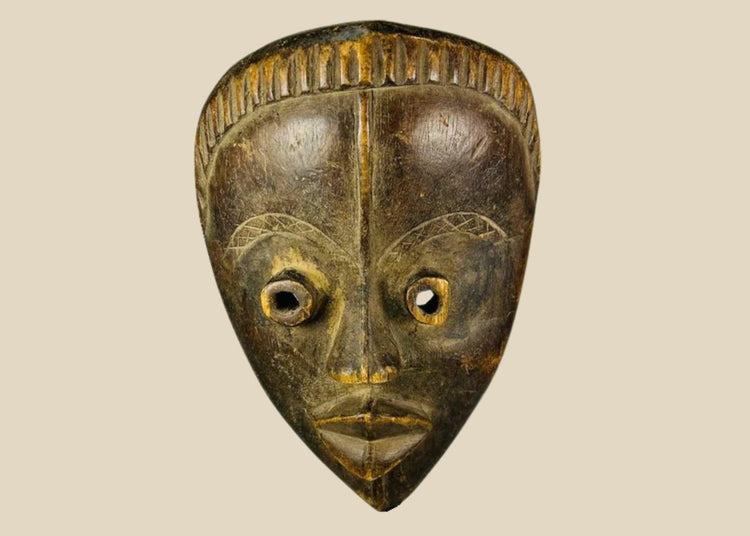
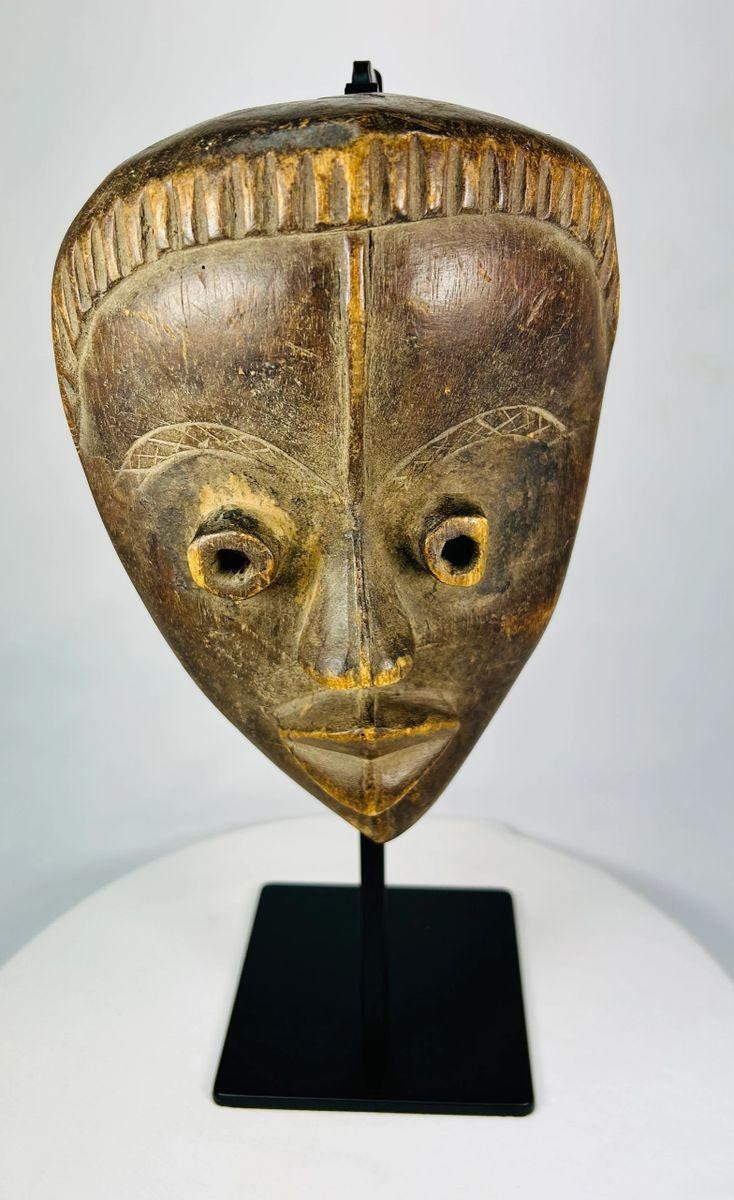
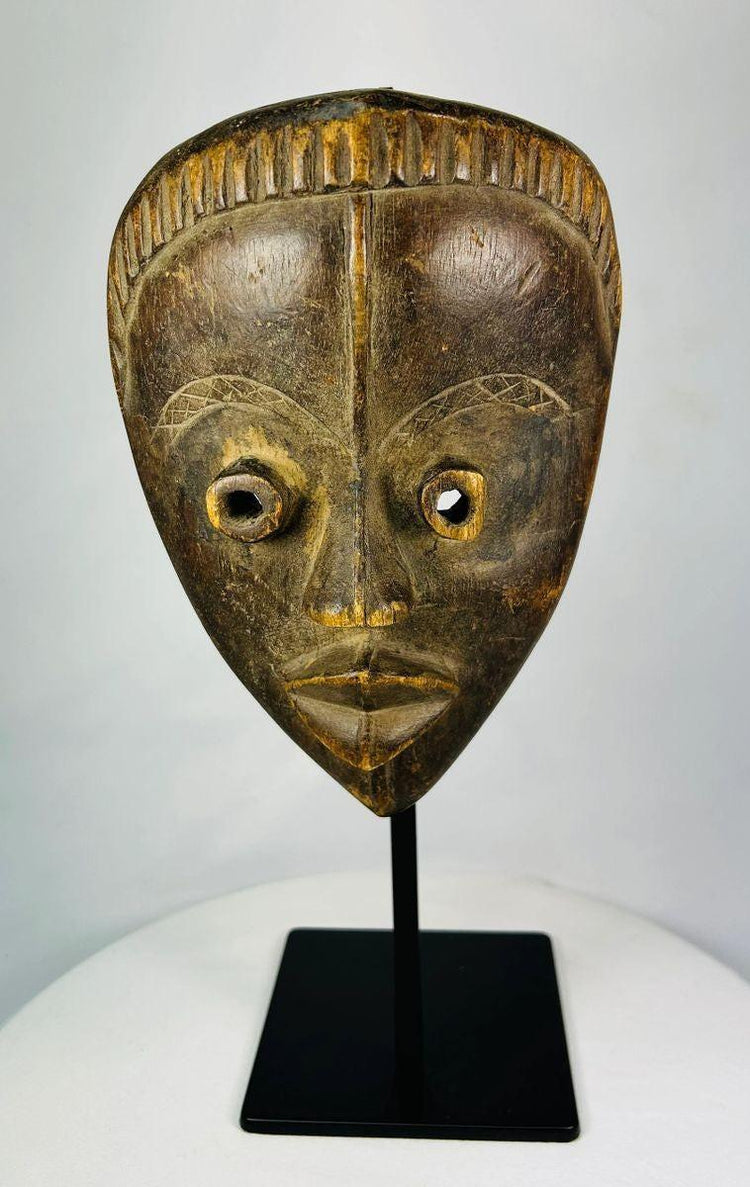
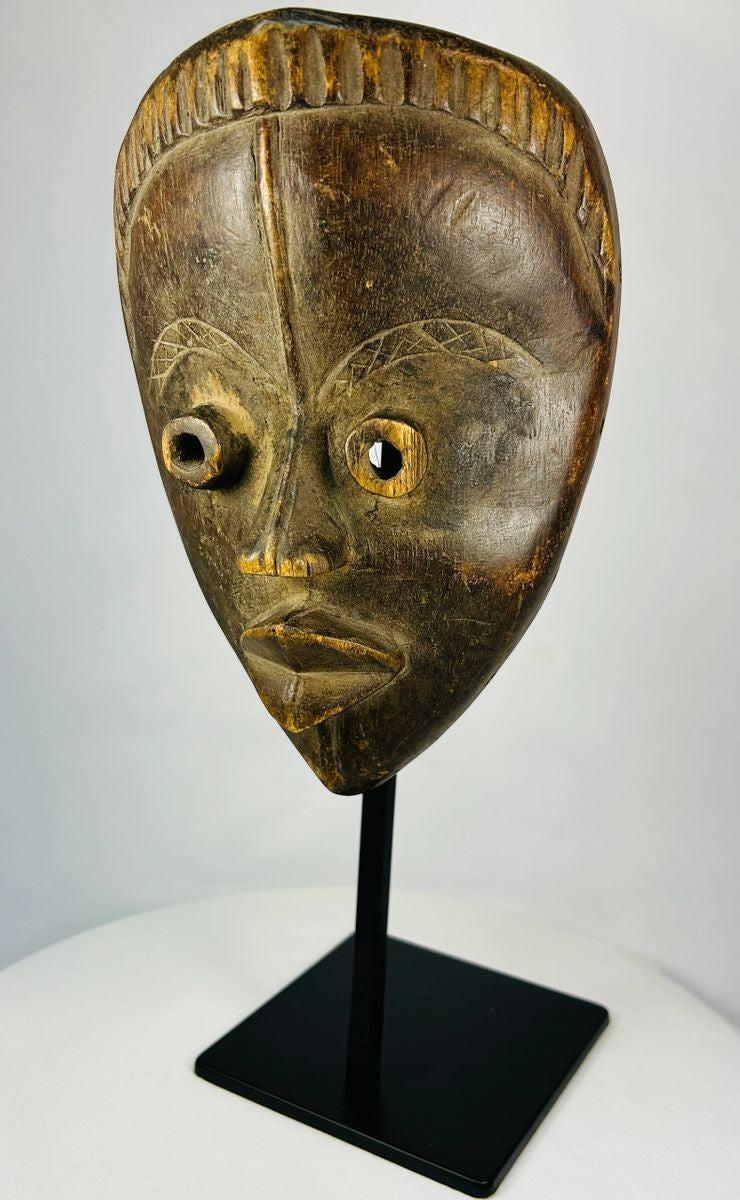
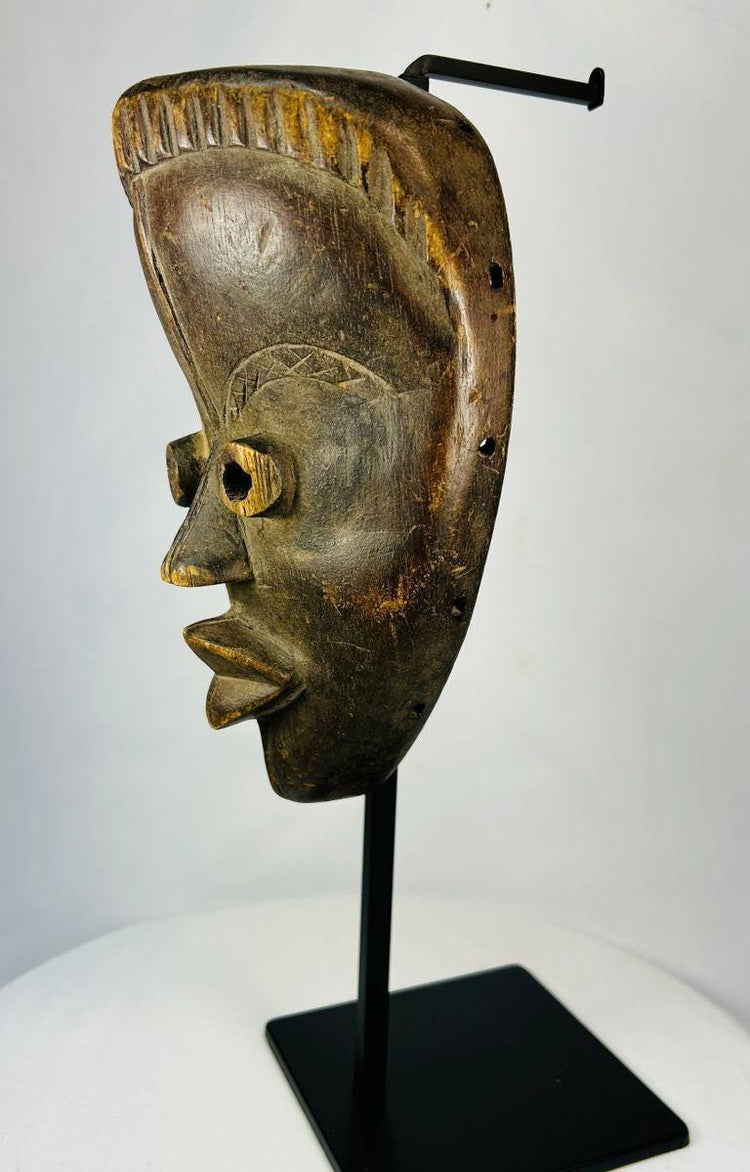
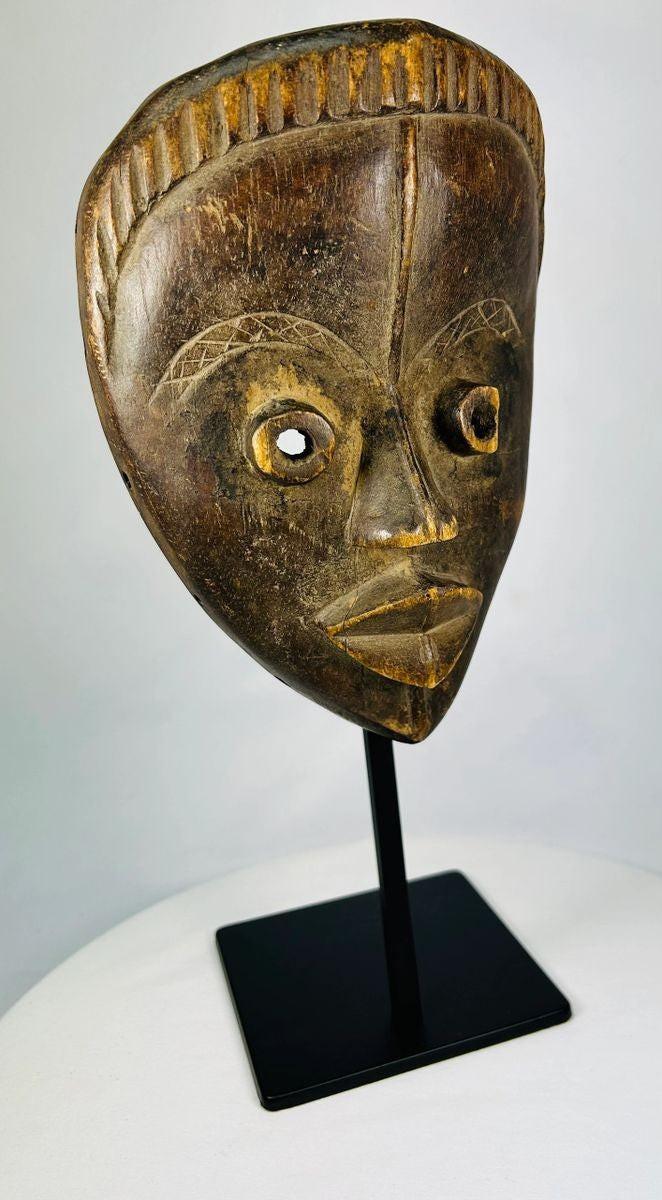
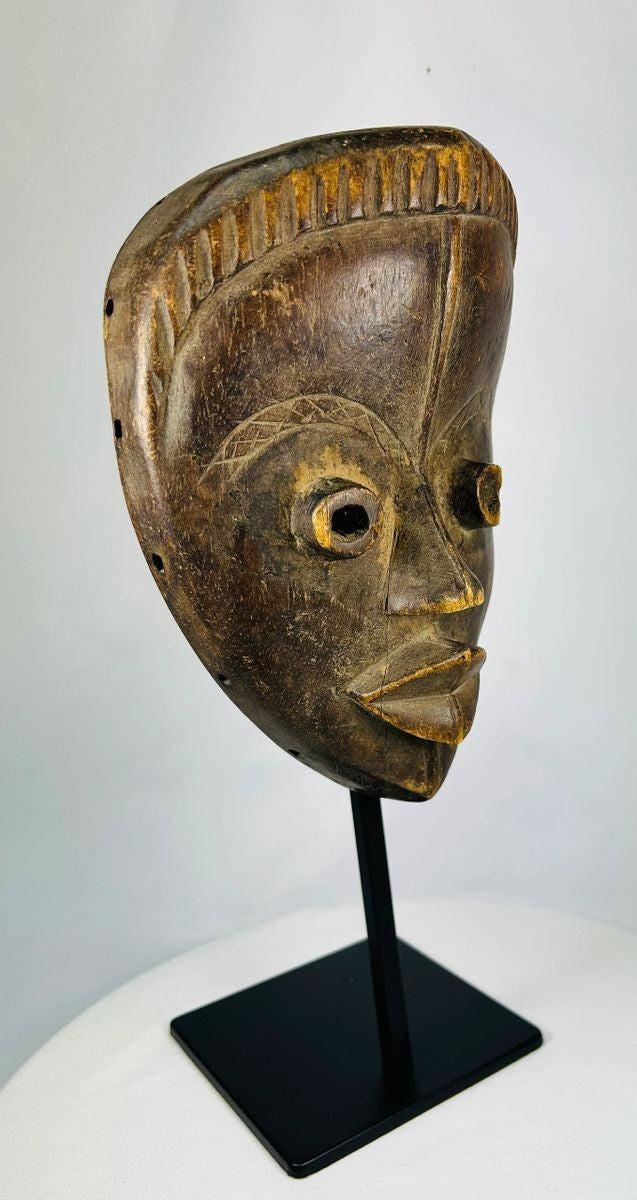
This finely carved face mask is attributed to the Dan peoples of western Côte d’Ivoire, whose masking traditions also extend across the nearby border into northeastern Liberia. Carved from a single piece of wood, the mask features a broad forehead, prominent central ridge, round tubular eye openings, a slender nose, projecting lips, and a pointed chin.
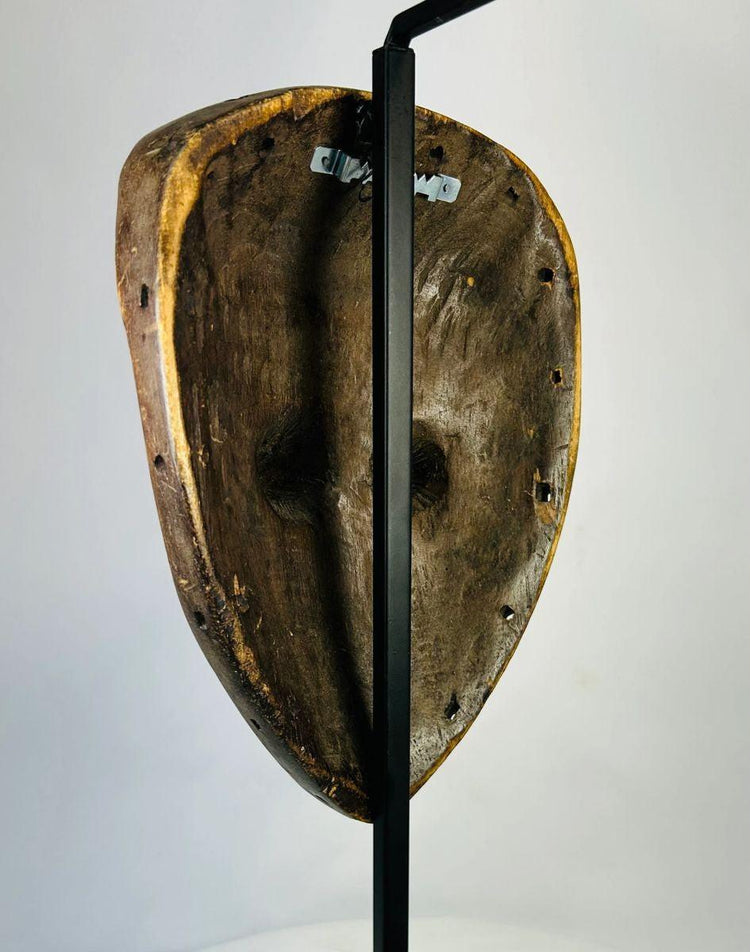
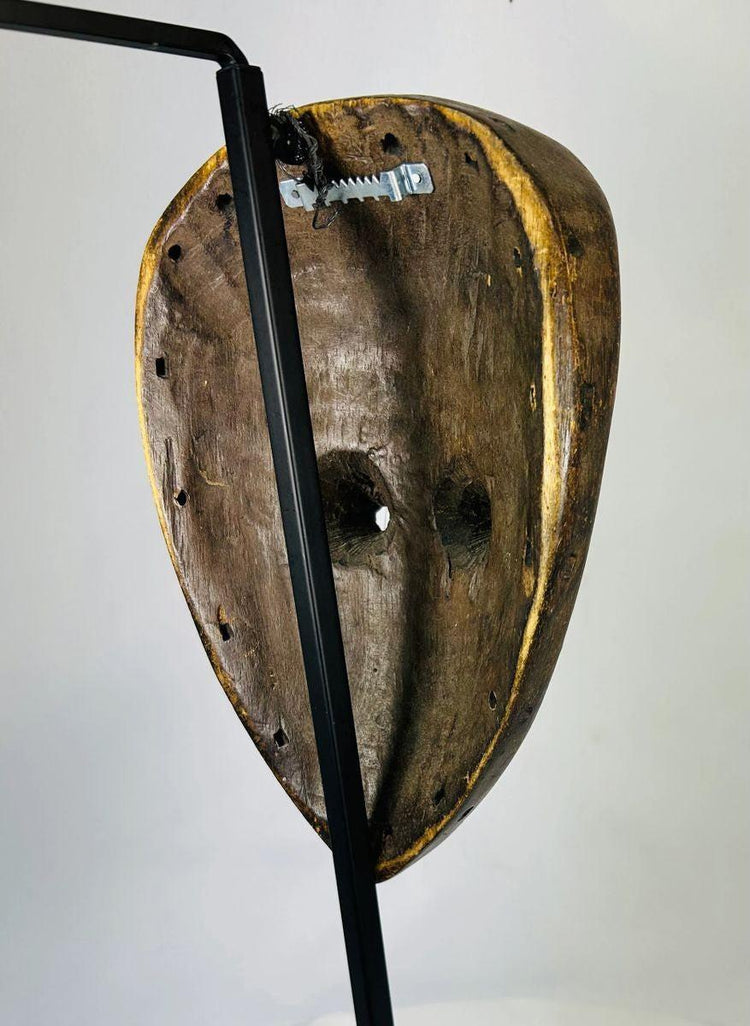
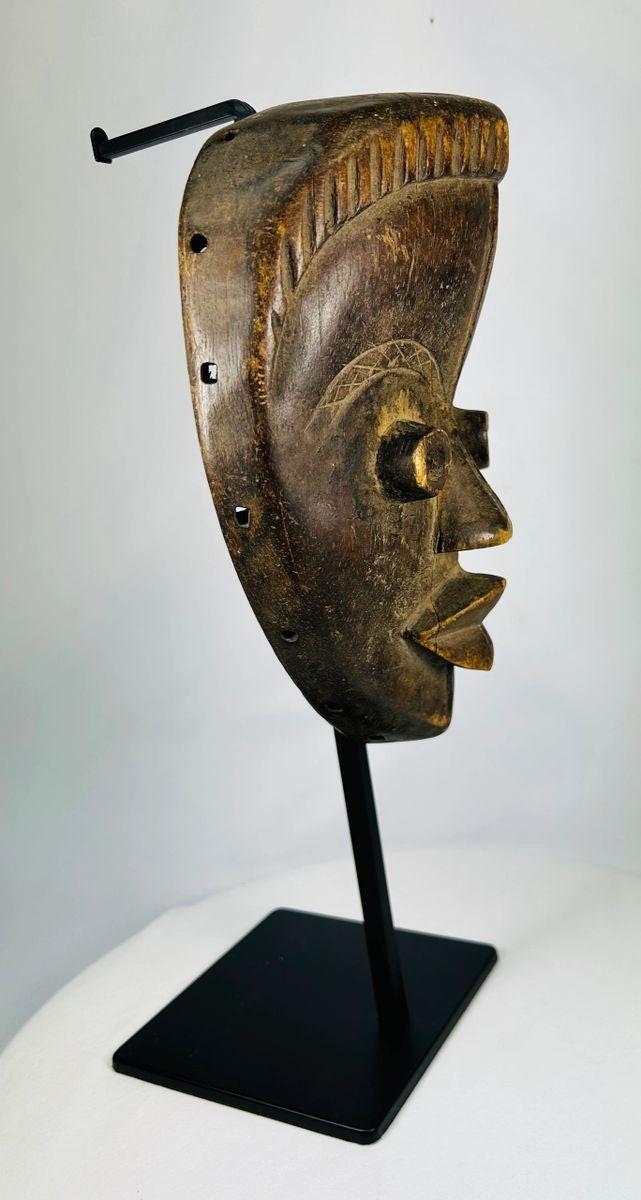
Crosshatched decoration above the eyes and a carefully segmented hairline or coiffure provide additional visual detail. Perforations surrounding the mask’s perimeter were intended for the attachment of cloth, raffia, cord, hair, or other components that would have connected the wooden face to a larger masquerade costume.
Features
- Distinctive round, tubular eye openings associated with northern Dan mask traditions
- Raised central ridge extending from the forehead toward the nose
- Incised crosshatched brow decoration and segmented coiffure detail
- Projecting lips and a tapered, pointed chin
- Perforated perimeter for the attachment of costume materials
- Deep brown patina with visible surface wear and pigment variation
Cultural Significance
Among the Dan peoples, masks were understood as physical manifestations of spirit forces known as ge or gle. Their individual identities and responsibilities were determined not only by the carved wooden face but also by their costumes, performers, owners, histories, and specific performance contexts.
Round-eyed Dan masks are frequently associated with energetic male masking traditions, including Gunyege runner masks worn during competitive races and related Zakpei or Sagbwe masks connected with community protection and fire watching. Because the original costume and performance history of this example are no longer documented, its precise ceremonial identity cannot be conclusively determined from its form alone.
Condition
The mask survives in very good condition for its age, with a deep brown patina, surface abrasions, pigment loss, scratches, and handling marks consistent with age and preservation. The carved features remain well defined, and the perimeter retains numerous original attachment perforations. Modern hanging and display hardware has been affixed to the reverse.
Dimensions (Approximate)
Height: 9.5 in
Width: 6.5 in
Age (Approximate)
Early 20th Century
Provenance
Formerly preserved in a private collection in Tavares, Florida, USA.
Learn More
Learn about round-eyed Dan masking traditions through the Metropolitan Museum of Art
Description
Historical Context & Origin
Region: Western Côte d’Ivoire (Ivory Coast), near the Liberian border, West Africa
Culture: Dan peoples
Material: Hand-carved wood with incised decoration and aged surface patina
Period: Early 20th Century
Description
This finely carved face mask is attributed to the Dan peoples of western Côte d’Ivoire, whose masking traditions also extend across the nearby border into northeastern Liberia. Carved from a single piece of wood, the mask features a broad forehead, prominent central ridge, round tubular eye openings, a slender nose, projecting lips, and a pointed chin.
Crosshatched decoration above the eyes and a carefully segmented hairline or coiffure provide additional visual detail. Perforations surrounding the mask’s perimeter were intended for the attachment of cloth, raffia, cord, hair, or other components that would have connected the wooden face to a larger masquerade costume.
Features
- Distinctive round, tubular eye openings associated with northern Dan mask traditions
- Raised central ridge extending from the forehead toward the nose
- Incised crosshatched brow decoration and segmented coiffure detail
- Projecting lips and a tapered, pointed chin
- Perforated perimeter for the attachment of costume materials
- Deep brown patina with visible surface wear and pigment variation
Cultural Significance
Among the Dan peoples, masks were understood as physical manifestations of spirit forces known as ge or gle. Their individual identities and responsibilities were determined not only by the carved wooden face but also by their costumes, performers, owners, histories, and specific performance contexts.
Round-eyed Dan masks are frequently associated with energetic male masking traditions, including Gunyege runner masks worn during competitive races and related Zakpei or Sagbwe masks connected with community protection and fire watching. Because the original costume and performance history of this example are no longer documented, its precise ceremonial identity cannot be conclusively determined from its form alone.
Condition
The mask survives in very good condition for its age, with a deep brown patina, surface abrasions, pigment loss, scratches, and handling marks consistent with age and preservation. The carved features remain well defined, and the perimeter retains numerous original attachment perforations. Modern hanging and display hardware has been affixed to the reverse.
Dimensions (Approximate)
Height: 9.5 in
Width: 6.5 in
Age (Approximate)
Early 20th Century
Provenance
Formerly preserved in a private collection in Tavares, Florida, USA.
Learn More
Learn about round-eyed Dan masking traditions through the Metropolitan Museum of Art
You May Also Like
