

Indian Carved Wood Gajalakshmi Architectural Panel | Late 19th to Early 20th Century
Couldn't load pickup availability


Indian Carved Wood Gajalakshmi Architectural Panel | Late 19th to Early 20th Century
Description
More
Less
Historical Context & Origin
Region: India, likely South India
Material: Carved wood
Period: Late 19th to early 20th century
Description
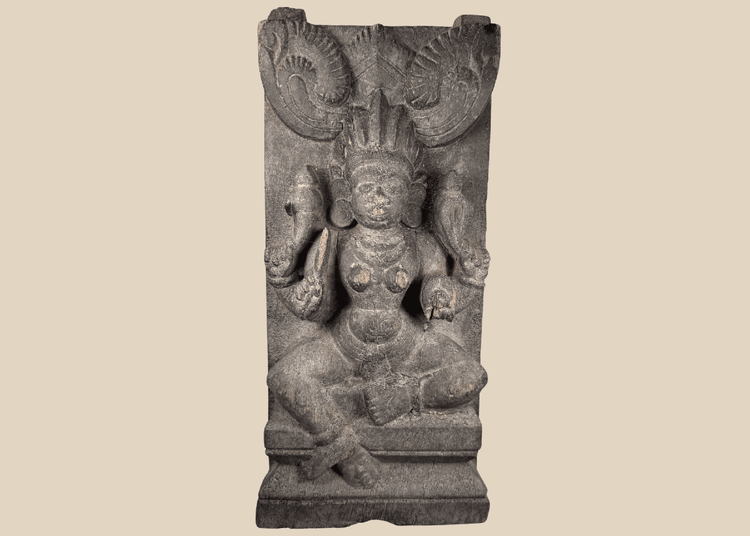
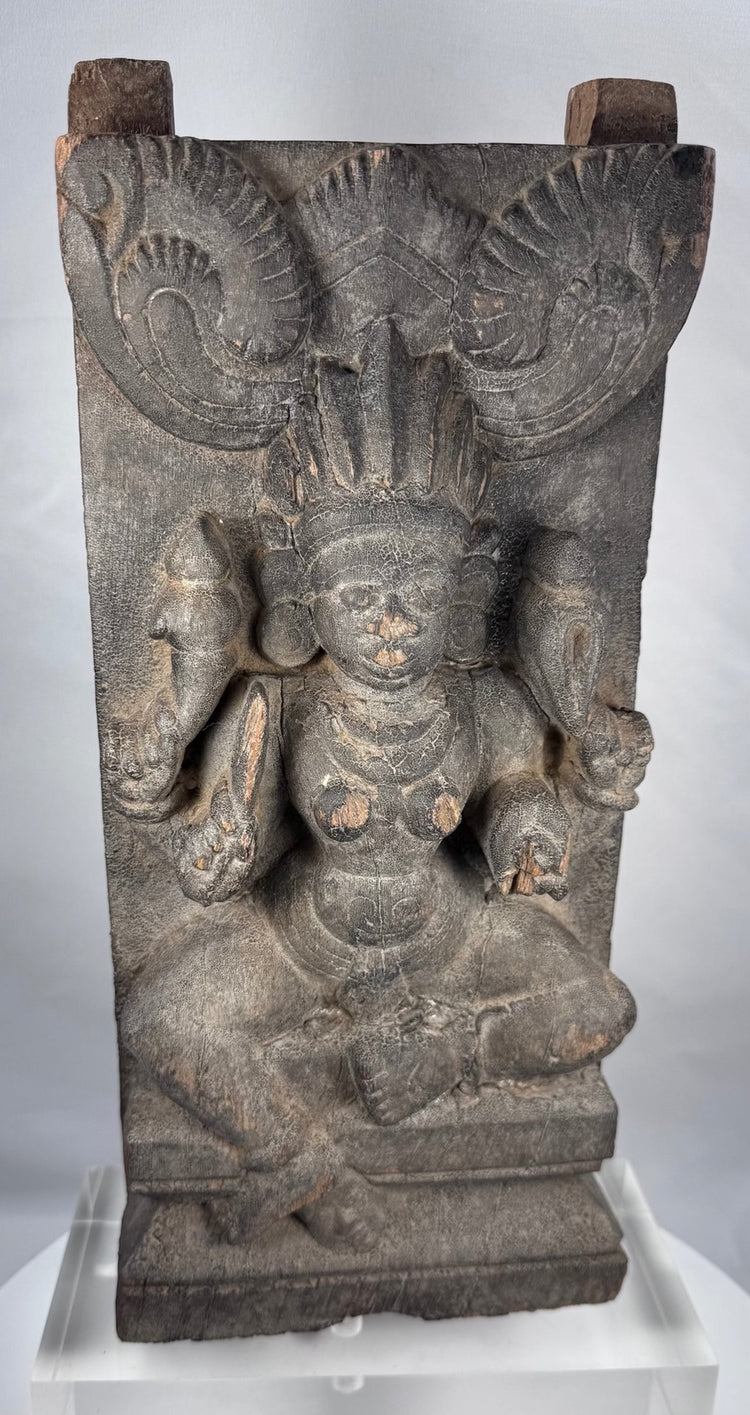
A substantial Indian architectural carving depicting Gajalakshmi, the elephant-associated manifestation of the Hindu goddess Lakshmi, traditionally connected with prosperity, abundance, fertility, and good fortune.
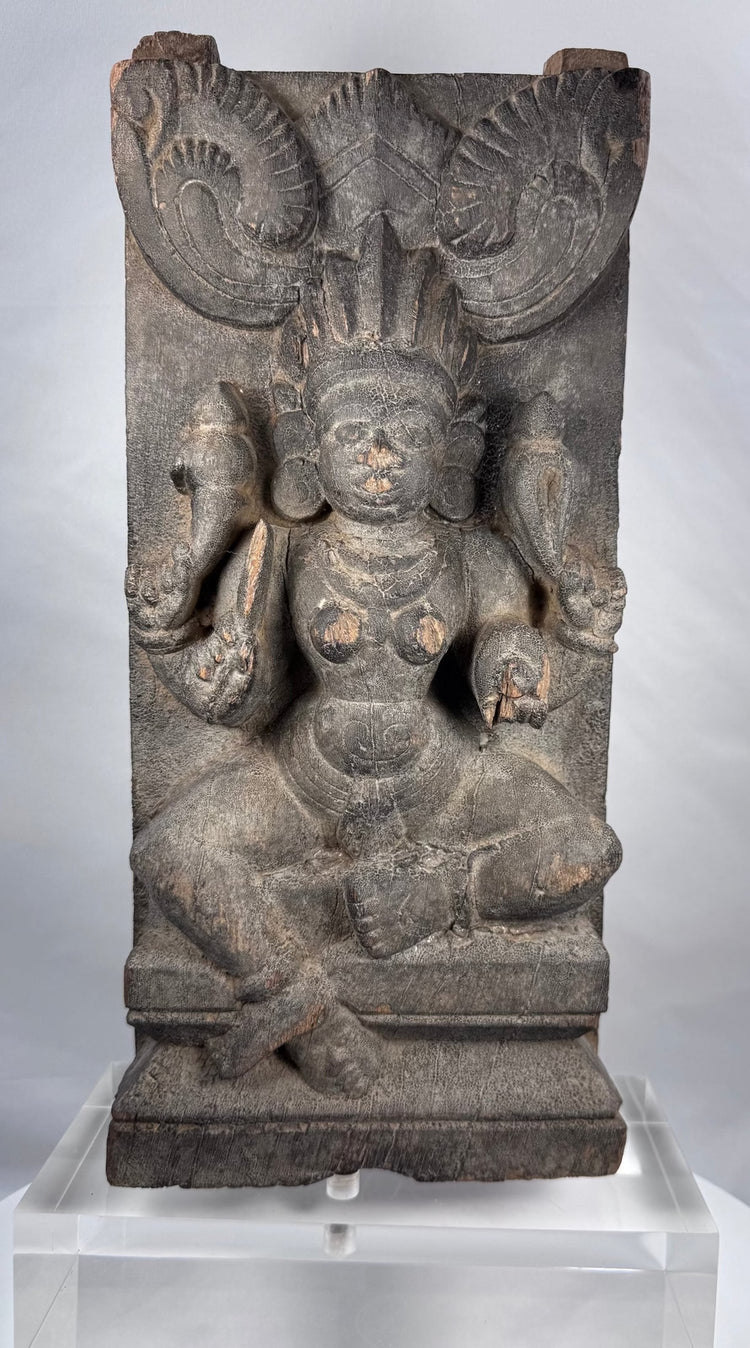
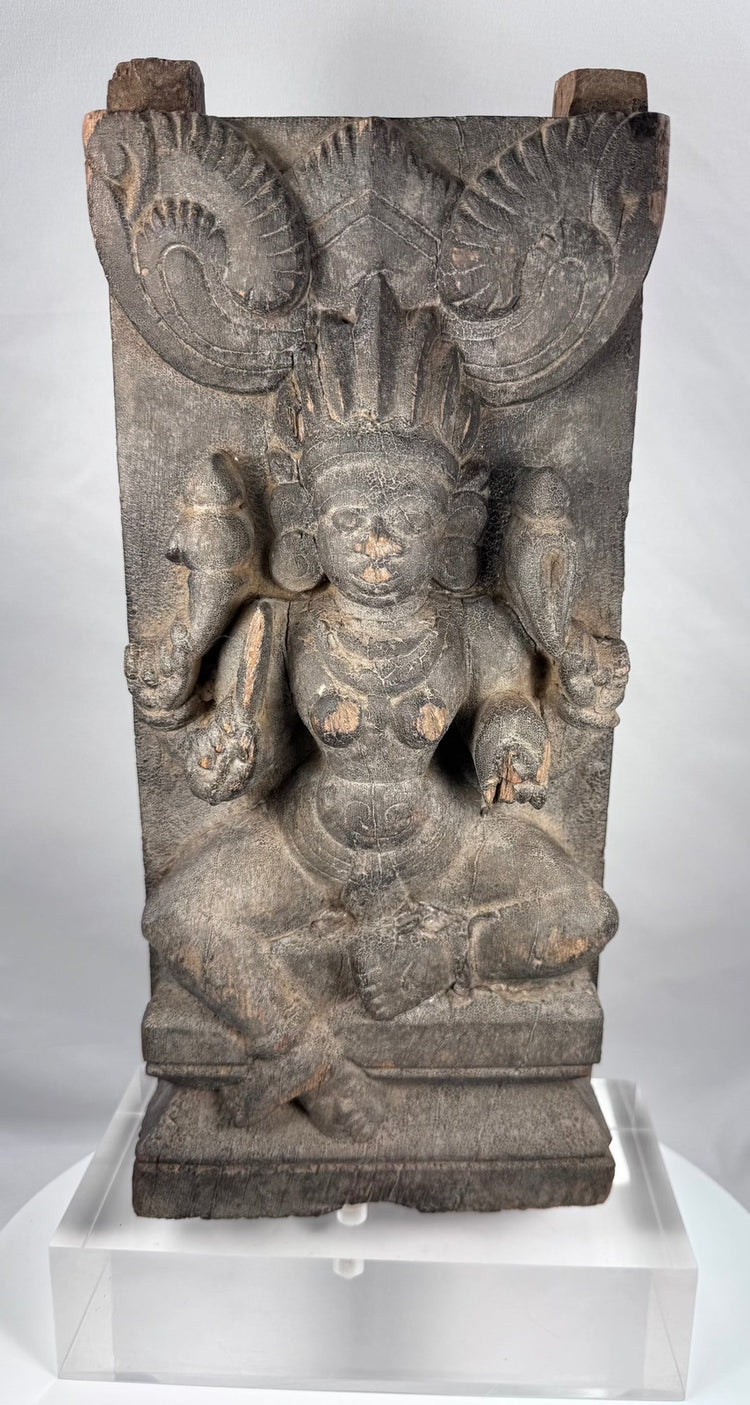
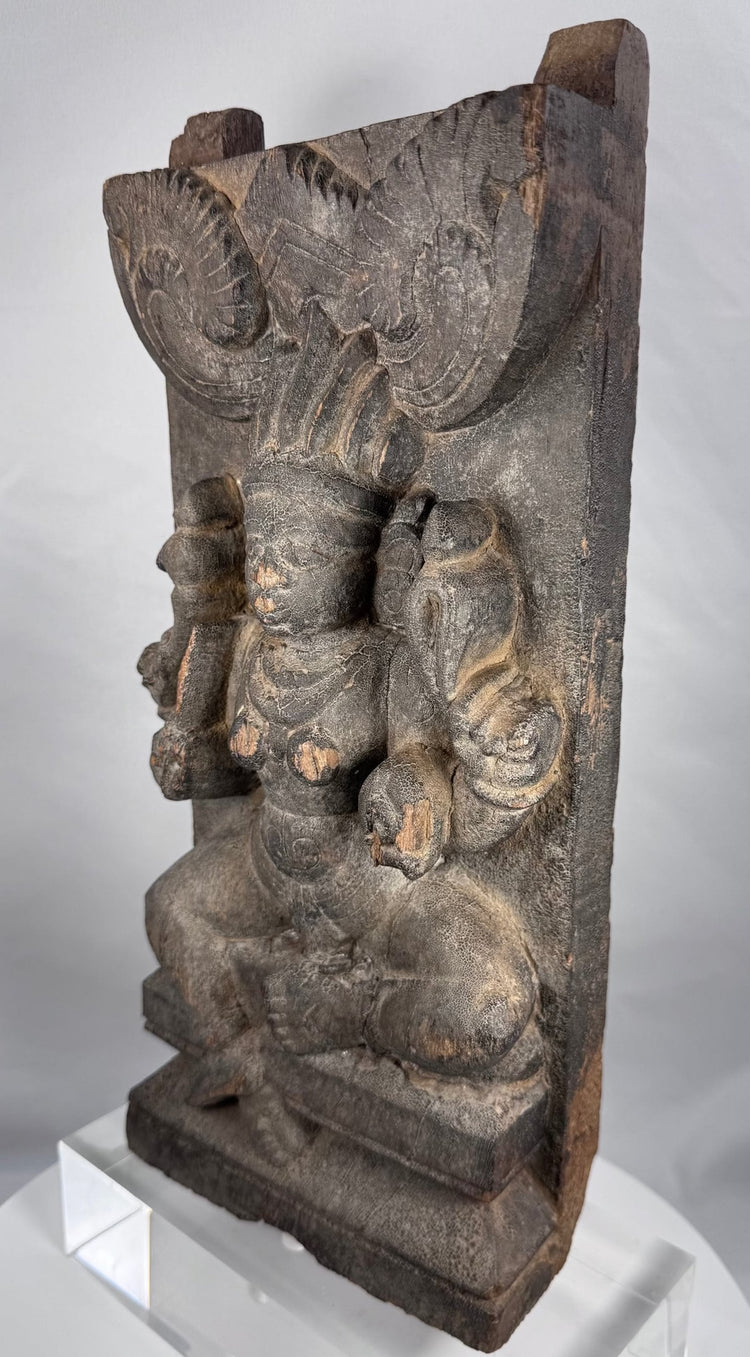
The deeply carved composition presents the goddess seated centrally in a cross-legged posture, crowned by an elaborate headdress and surrounded by a symmetrical arrangement of elephants. The pairing of Lakshmi with elephants is a long-established form of Gajalakshmi iconography in Indian art; elephants traditionally flank or lustrate the goddess and reinforce associations with prosperity, sovereignty, and abundance.
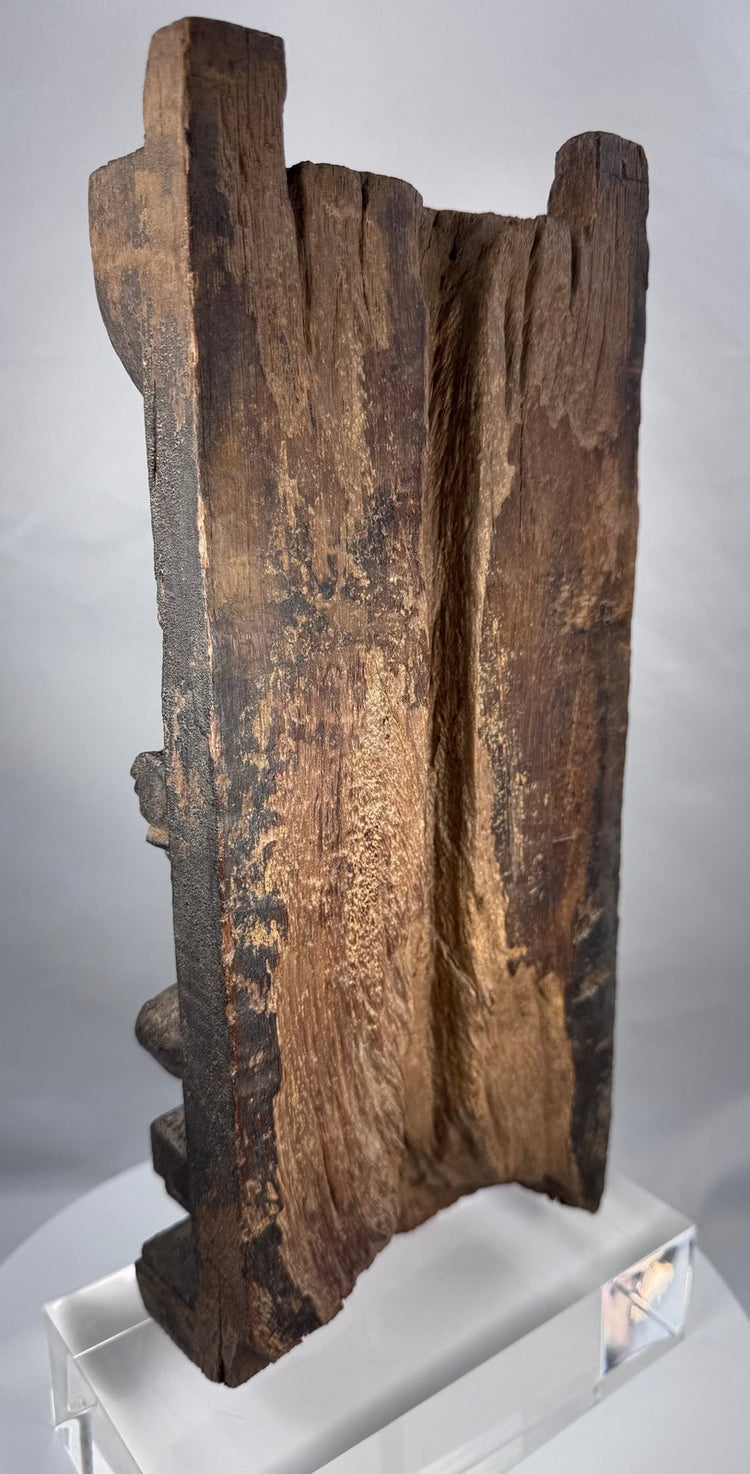
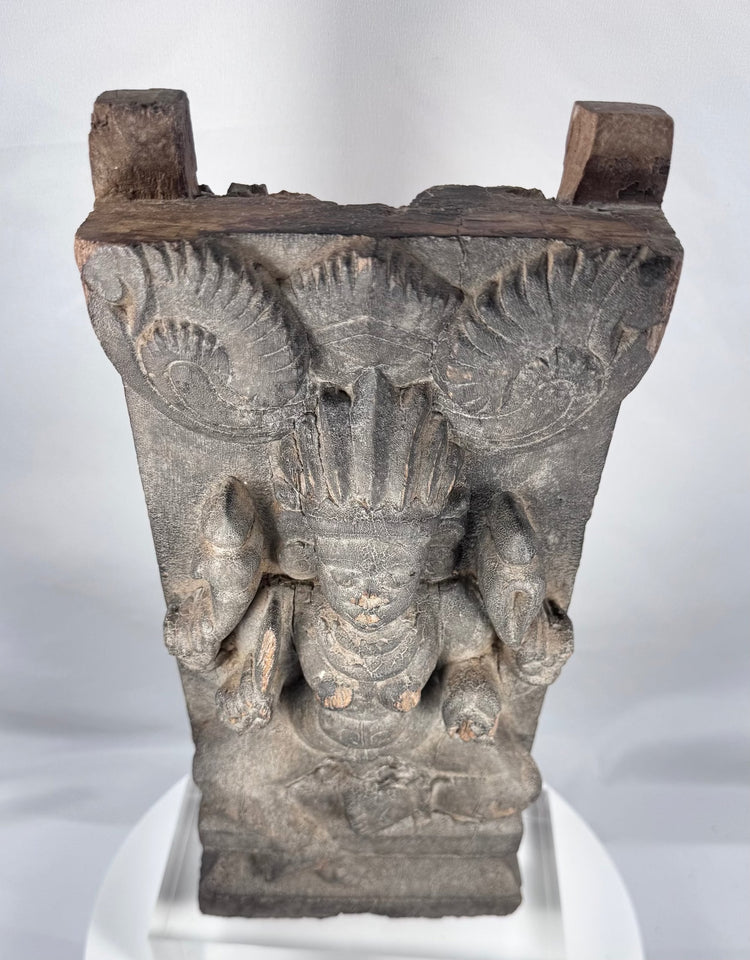
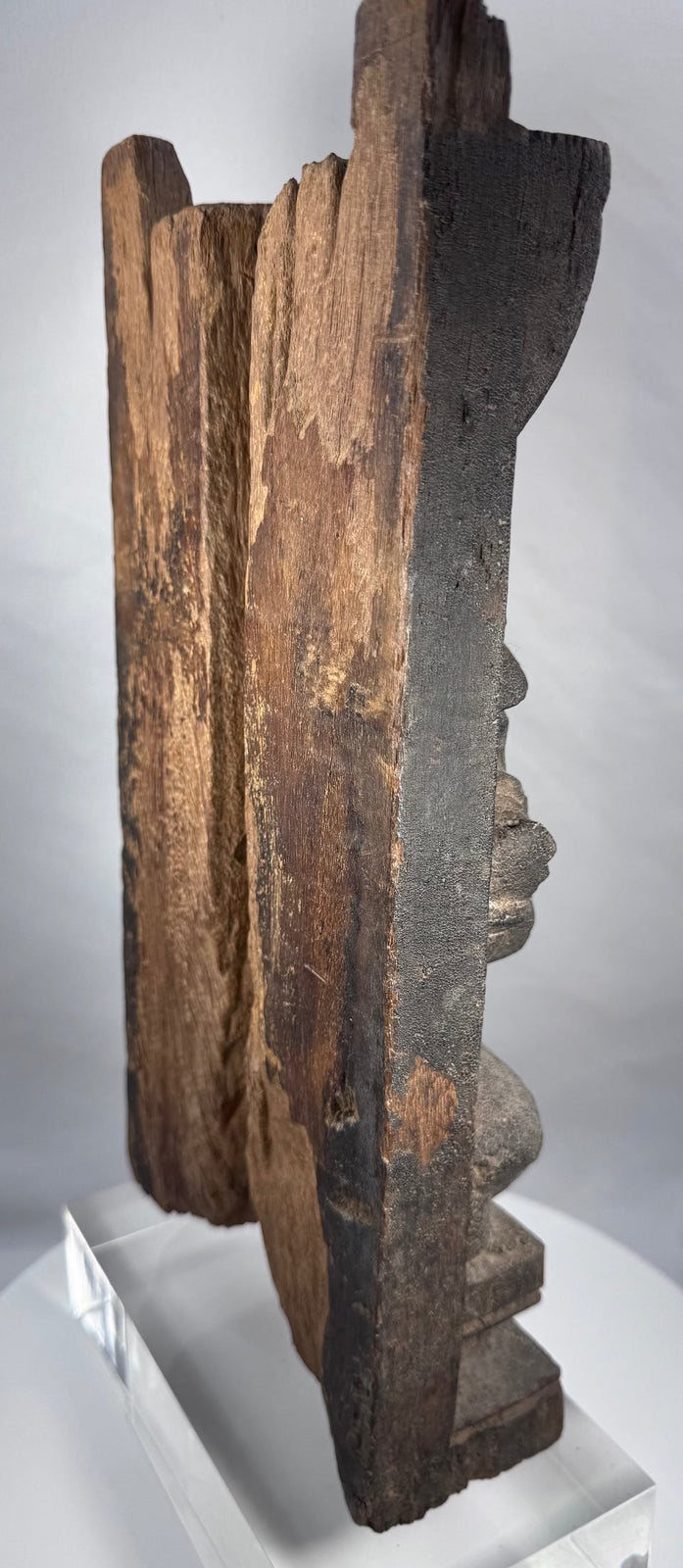
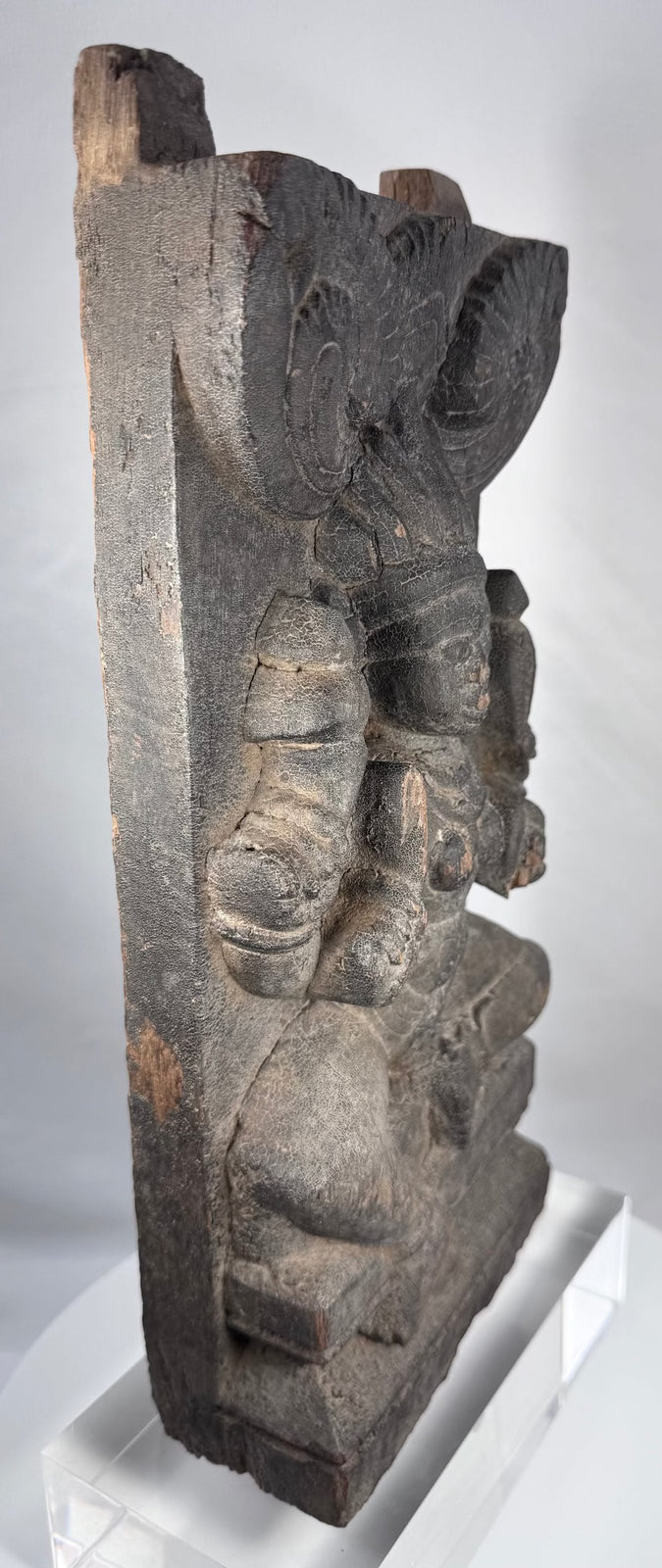
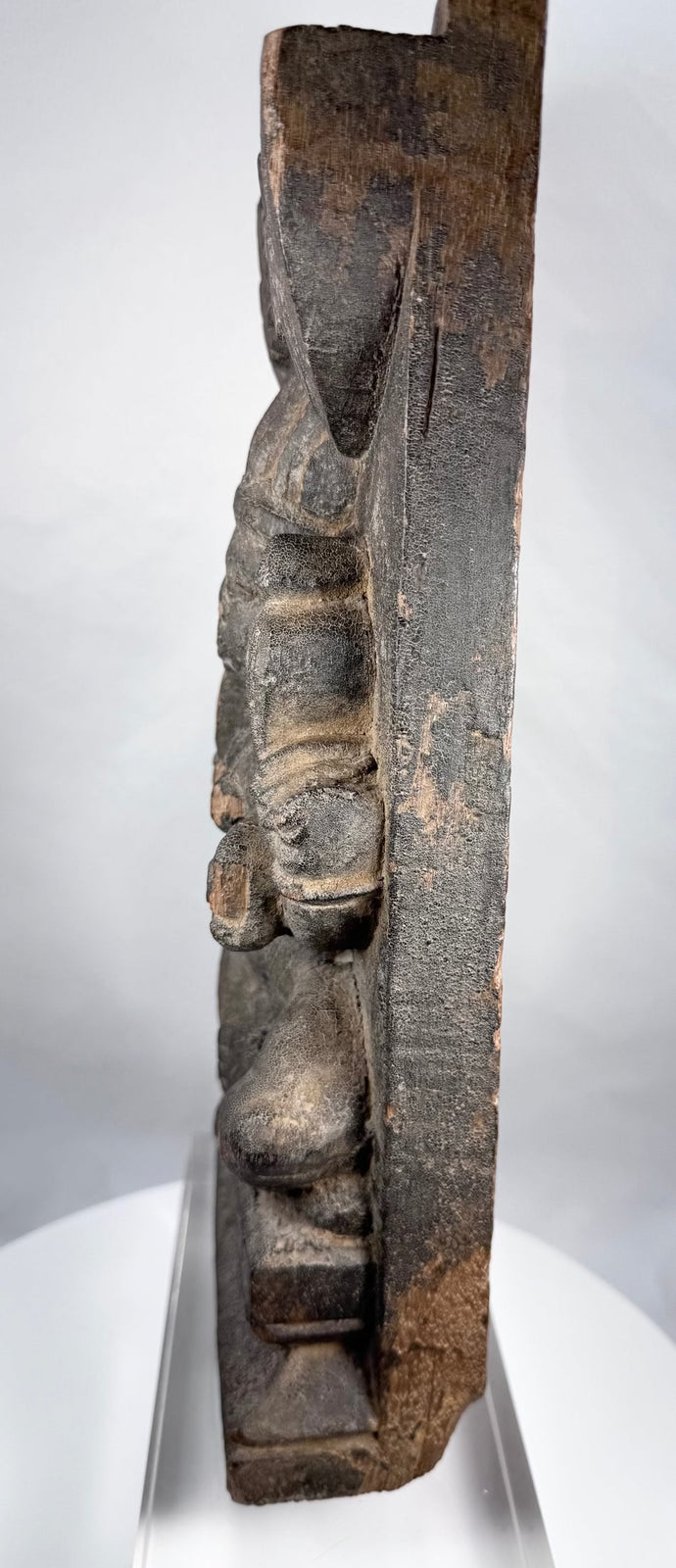
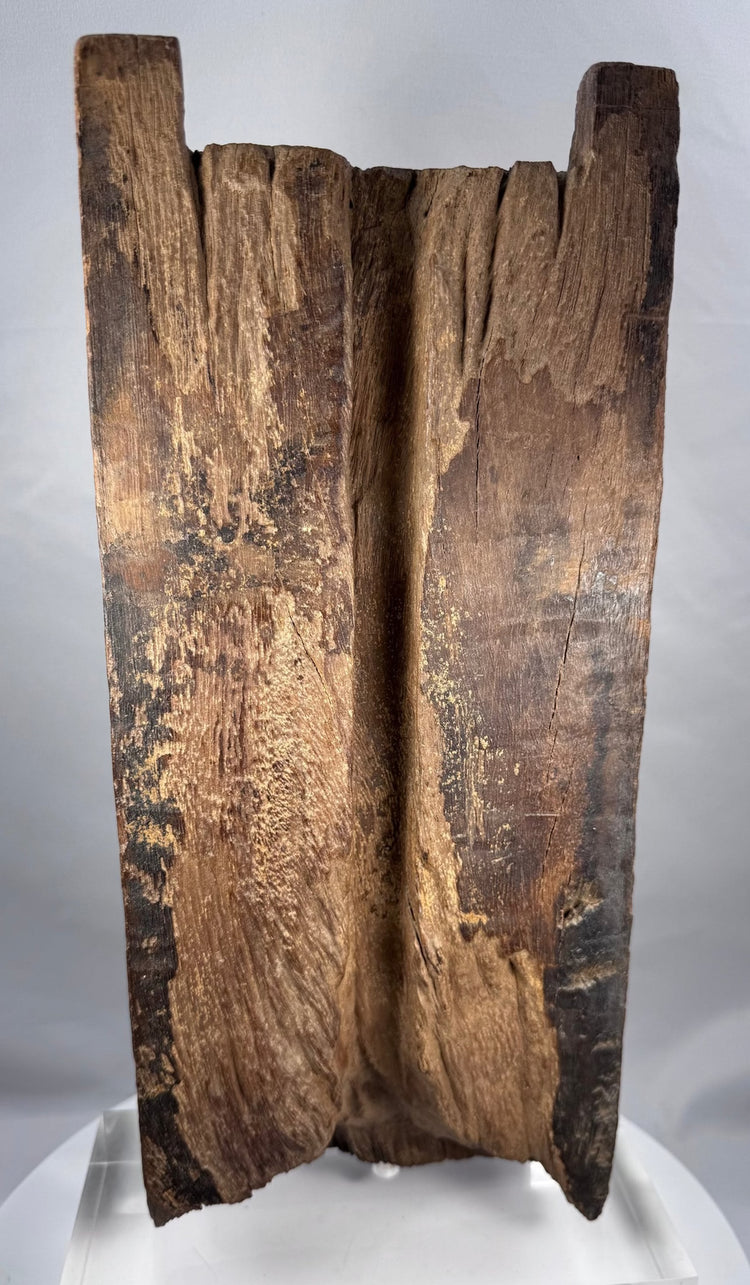
The panel was carved from a substantial section of timber, with the reverse retaining its heavy architectural form and pronounced central channel. Two projecting wooden tenons at the upper edge strongly suggest that the carving was originally incorporated into a larger architectural or decorative wooden structure rather than conceived as a freestanding sculpture.
Its dark, weathered surface, softened carving, exposed wood at points of wear, age cracking, and losses give the piece considerable visual character. It is now presented vertically on a custom-built display stand.
Features
- Deeply carved representation of the Hindu goddess Gajalakshmi
- Goddess depicted seated beneath an elaborate headdress
- Multiple elephants incorporated symmetrically around the central figure
- Substantial architectural timber construction
- Original projecting wooden tenons retained at the upper edge
- Deeply aged and weathered surface
- Traces of warmer natural wood visible beneath the darkened surface
- Mounted on a custom-built display stand
Cultural & Religious Significance
Lakshmi occupies an important position within Hindu tradition as a goddess associated with prosperity, fortune, abundance, and well-being. In her Gajalakshmi manifestation, she appears in association with elephants, an iconographic tradition with ancient roots in Indian art. The motif became particularly appropriate for entrances and architectural settings, where its auspicious associations could symbolically welcome prosperity into a sacred or domestic space. Historical and modern examples demonstrate the continued use of Gajalakshmi imagery on Indian architectural woodwork and door panels.
The present carving is particularly decorative because the goddess and elephants have been integrated into a single vertically arranged composition, transforming an architectural element into a powerful sculptural image.
Condition
Good overall condition consistent with considerable age and former architectural use. The carving exhibits extensive surface wear, age-related cracking, abrasions, small losses, softened details, discoloration, and areas where the underlying wood has become exposed. Larger losses and weathering are visible along portions of the upper edge and projecting elements. The reverse remains largely unfinished and heavily weathered, consistent with its original structural function. Please refer to the photographs for the complete condition.
Custom display stand included.
Dimensions (Approximate)
Height: 15.75 in
Width: 8 in
Depth: 4 in
Age (Approximate)
100–150 years old
Provenance
From a private collection in East Meadow, New York, USA.
Subsequently acquired by a prominent private collection in Toronto, Ontario, Canada, in 2024.
Learn More
Explore the symbolism of Gaja Lakshmi, Goddess of Fortune through an 8th-century example in The Metropolitan Museum of Art.
Browse our Collection of Statues, Figures and Carvings from ancient cultures and historic artistic traditions.
Description
Historical Context & Origin
Region: India, likely South India
Material: Carved wood
Period: Late 19th to early 20th century
Description
A substantial Indian architectural carving depicting Gajalakshmi, the elephant-associated manifestation of the Hindu goddess Lakshmi, traditionally connected with prosperity, abundance, fertility, and good fortune.
The deeply carved composition presents the goddess seated centrally in a cross-legged posture, crowned by an elaborate headdress and surrounded by a symmetrical arrangement of elephants. The pairing of Lakshmi with elephants is a long-established form of Gajalakshmi iconography in Indian art; elephants traditionally flank or lustrate the goddess and reinforce associations with prosperity, sovereignty, and abundance.
The panel was carved from a substantial section of timber, with the reverse retaining its heavy architectural form and pronounced central channel. Two projecting wooden tenons at the upper edge strongly suggest that the carving was originally incorporated into a larger architectural or decorative wooden structure rather than conceived as a freestanding sculpture.
Its dark, weathered surface, softened carving, exposed wood at points of wear, age cracking, and losses give the piece considerable visual character. It is now presented vertically on a custom-built display stand.
Features
- Deeply carved representation of the Hindu goddess Gajalakshmi
- Goddess depicted seated beneath an elaborate headdress
- Multiple elephants incorporated symmetrically around the central figure
- Substantial architectural timber construction
- Original projecting wooden tenons retained at the upper edge
- Deeply aged and weathered surface
- Traces of warmer natural wood visible beneath the darkened surface
- Mounted on a custom-built display stand
Cultural & Religious Significance
Lakshmi occupies an important position within Hindu tradition as a goddess associated with prosperity, fortune, abundance, and well-being. In her Gajalakshmi manifestation, she appears in association with elephants, an iconographic tradition with ancient roots in Indian art. The motif became particularly appropriate for entrances and architectural settings, where its auspicious associations could symbolically welcome prosperity into a sacred or domestic space. Historical and modern examples demonstrate the continued use of Gajalakshmi imagery on Indian architectural woodwork and door panels.
The present carving is particularly decorative because the goddess and elephants have been integrated into a single vertically arranged composition, transforming an architectural element into a powerful sculptural image.
Condition
Good overall condition consistent with considerable age and former architectural use. The carving exhibits extensive surface wear, age-related cracking, abrasions, small losses, softened details, discoloration, and areas where the underlying wood has become exposed. Larger losses and weathering are visible along portions of the upper edge and projecting elements. The reverse remains largely unfinished and heavily weathered, consistent with its original structural function. Please refer to the photographs for the complete condition.
Custom display stand included.
Dimensions (Approximate)
Height: 15.75 in
Width: 8 in
Depth: 4 in
Age (Approximate)
100–150 years old
Provenance
From a private collection in East Meadow, New York, USA.
Subsequently acquired by a prominent private collection in Toronto, Ontario, Canada, in 2024.
Learn More
Explore the symbolism of Gaja Lakshmi, Goddess of Fortune through an 8th-century example in The Metropolitan Museum of Art.
Browse our Collection of Statues, Figures and Carvings from ancient cultures and historic artistic traditions.
You May Also Like
