

Antique Japanese Iron-Bound Kiri Wood Ship Chest (Funa Tansu) with Chrysanthemum Lock | Edo Period, Circa 1780
Couldn't load pickup availability






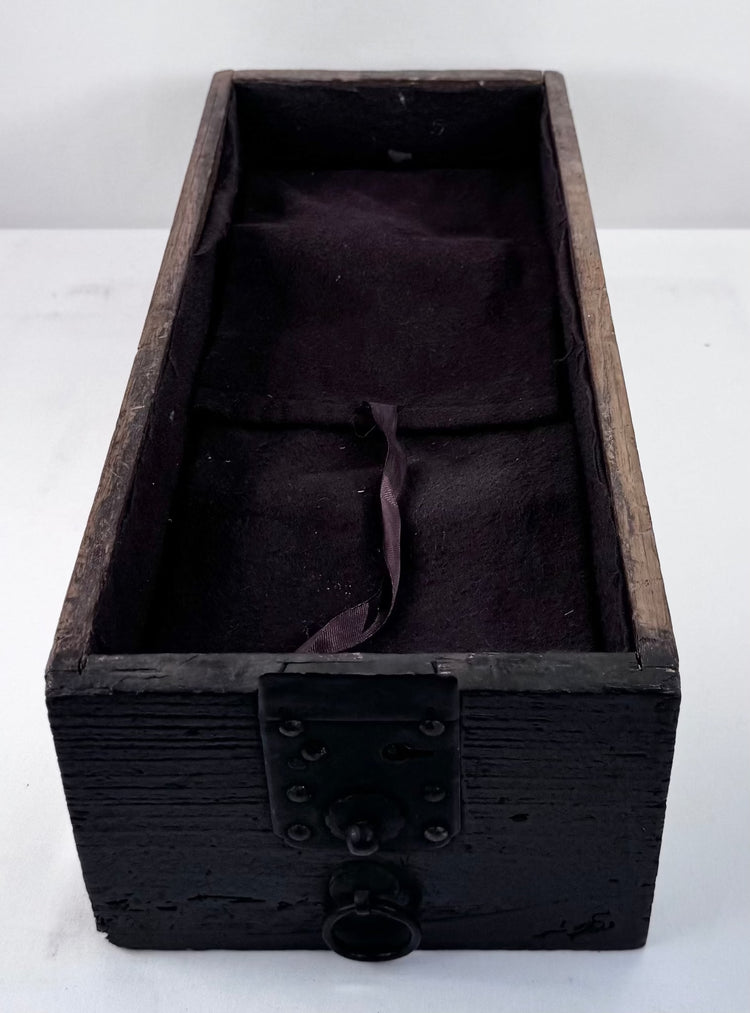
Antique Japanese Iron-Bound Kiri Wood Ship Chest (Funa Tansu) with Chrysanthemum Lock | Edo Period, Circa 1780
Description
More
Less
Historical Context & Origin
Region: Japan
Material: Kiri (paulownia) wood with black surface finish, hand-forged iron fittings, and later anti-tarnish textile lining
Period: Edo Period, circa 1780; later adapted for silver storage
Description
A rare and substantially constructed Japanese ship chest, or funa tansu, dating to the Edo Period and catalogued circa 1780.
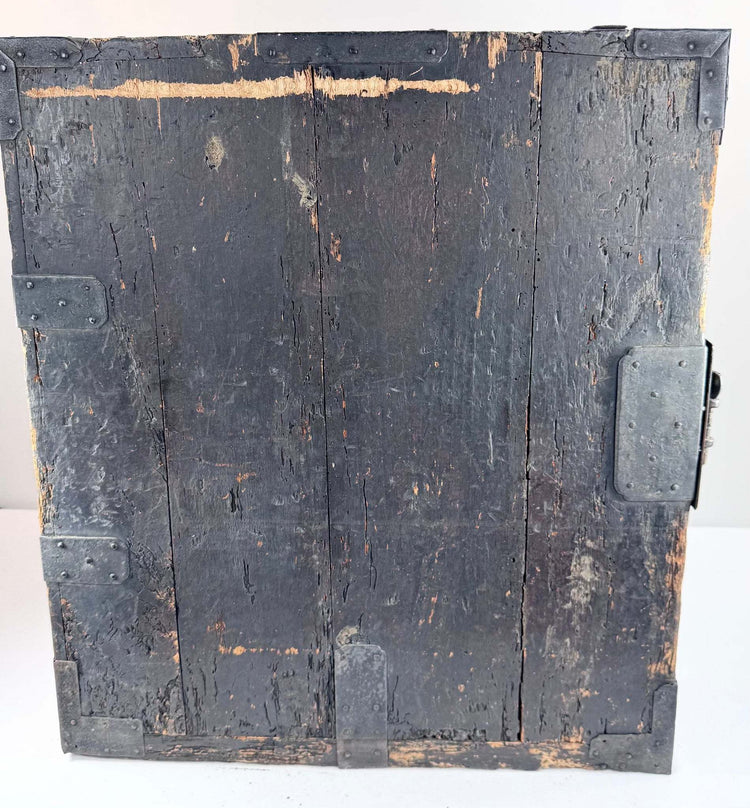
The chest is constructed from lightweight kiri, or paulownia wood, and extensively reinforced with hand-forged iron corner plates, crossbands, rivets, hinges, carrying hardware, and locking mechanisms. Its near-cubic proportions, large upper carrying handle, and exceptionally defensive ironwork are characteristic of shipboard chests created to protect money, contracts, account books, seals, and other valuable documents belonging to merchants and ship captains.
The front is secured by a heavily reinforced outer door fitted with five broad iron hinge straps. Its principal latch is ornamented with a chrysanthemum-form rosette, while additional iron bands extend horizontally and vertically across the exterior. The chrysanthemum was an important Japanese decorative emblem associated with longevity, refinement, and authority; its presence here should be understood as ornamental and does not indicate Imperial ownership.
Two slots incorporated into the top allowed coins, documents, or papers to be deposited without opening the primary locking door. This arrangement, together with the chest’s proportions, suggests that it belongs to the early kakesuzuri-type of funa tansu, a form associated particularly with the secure storage of shipboard documents and valuables.
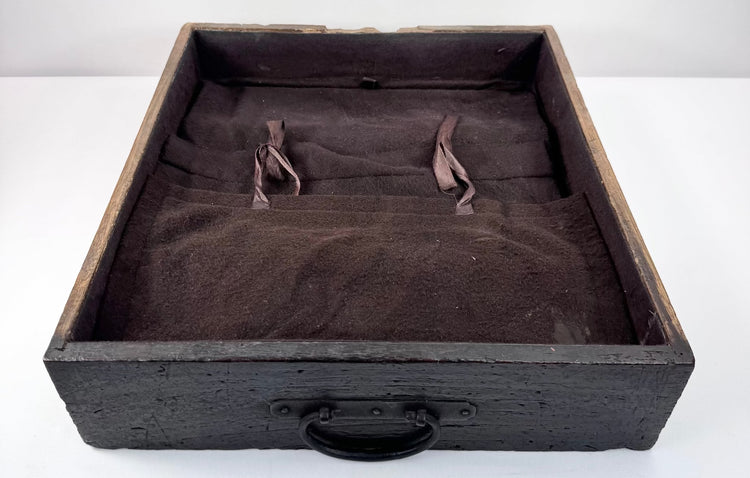
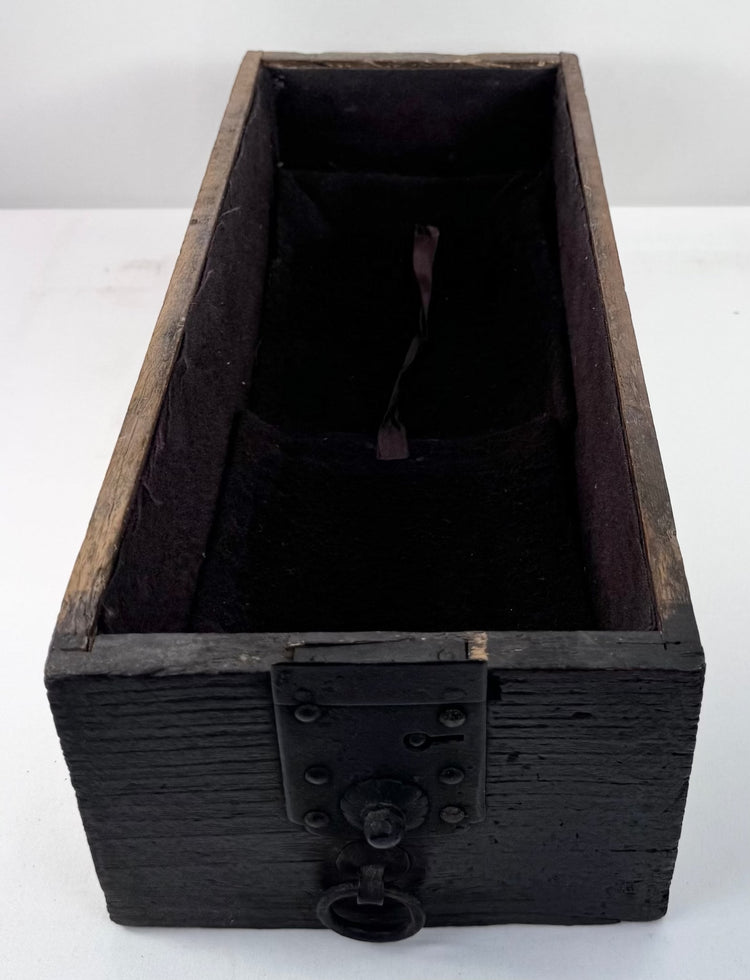
Opening the front door reveals five drawers and compartments: three full-width drawers above two smaller, individually lockable lower drawers. The drawer fronts retain iron ring pulls and decorative lock plates.
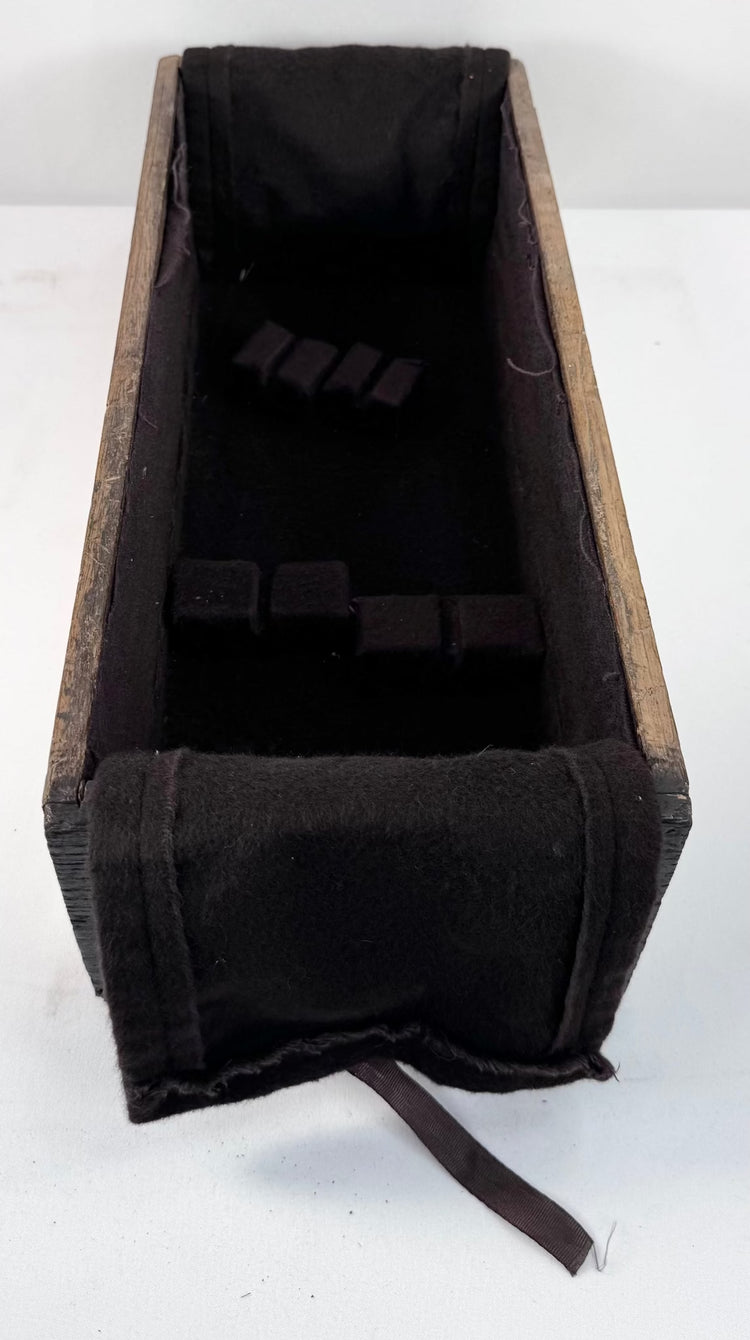
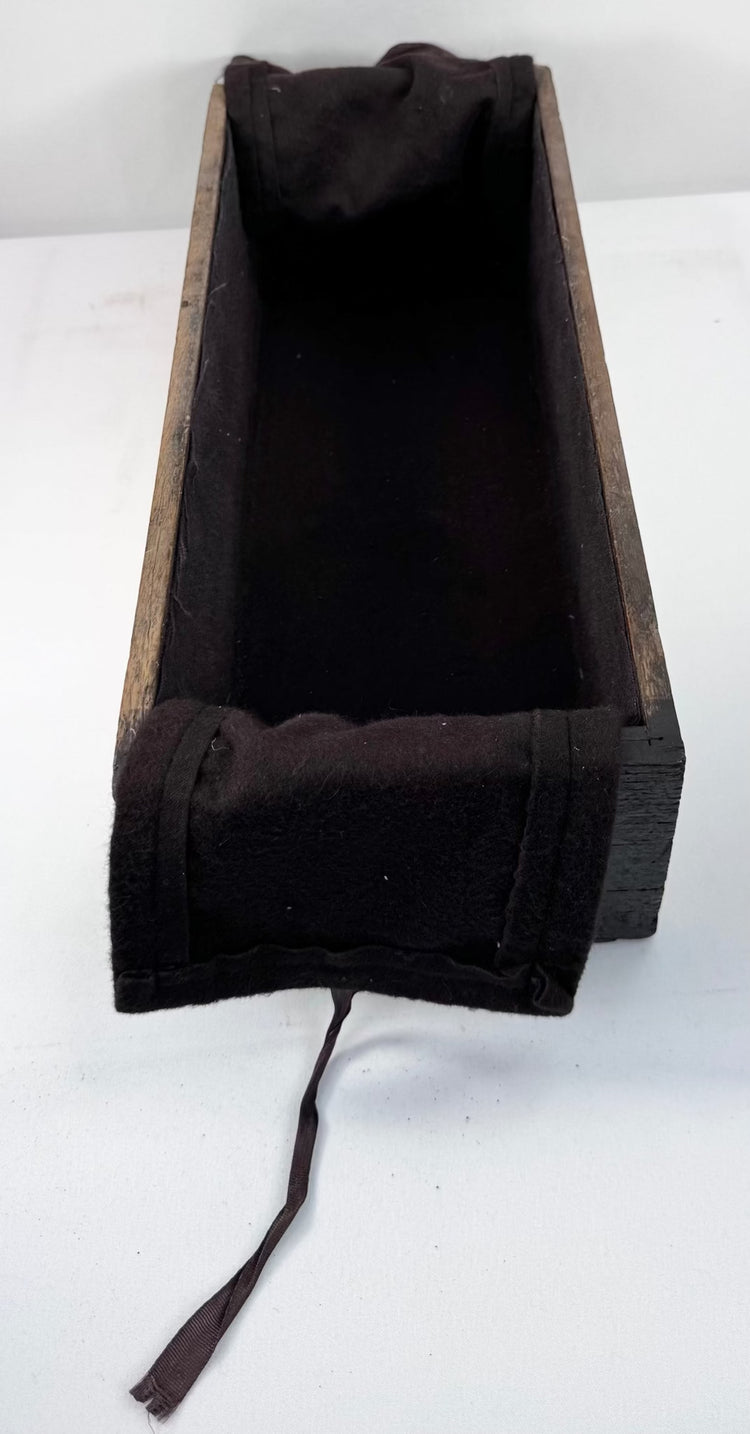
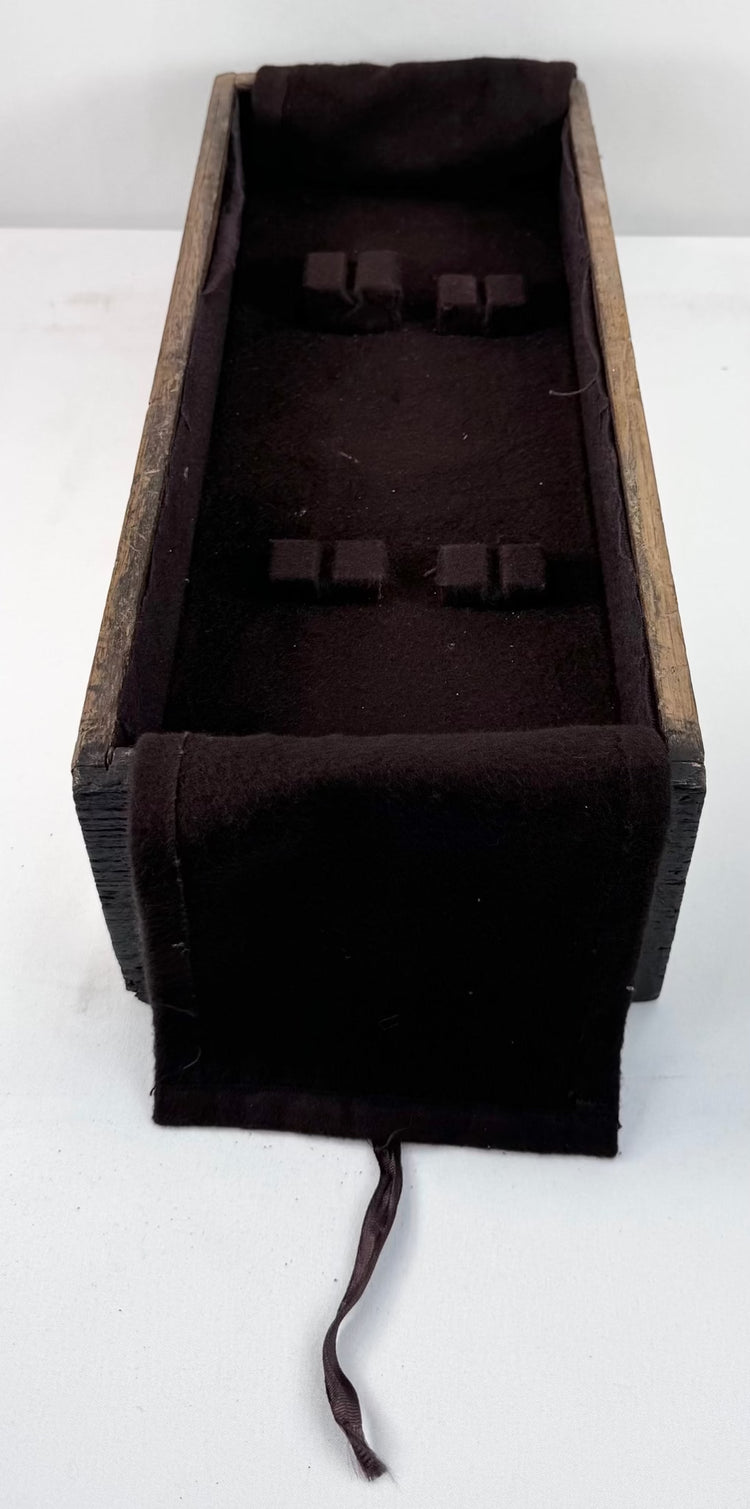
The interior was subsequently adapted for the storage of silver and flatware. Several drawers are fitted with dark anti-tarnish cloth, textile loops, ribbons, and divided arrangements intended to hold individual pieces of silver. These fittings are later additions and are not part of the original Edo-period construction.
Its heavily worn finish, exposed wood, oxidized ironwork, old repairs, and extensive historic patina communicate the considerable age and long working life of this remarkable maritime chest.
Features
- Early kakesuzuri-type document and valuables chest
- Lightweight kiri, or paulownia wood construction
- Extensive hand-forged iron reinforcement
- Riveted corner plates and intersecting iron crossbands
- Five broad right-side door hinges
- Chrysanthemum-form outer lock ornament
- Large iron carrying handle upon the top
- Separate coin and document access slots
- Heavily reinforced locking exterior door
- Five interior drawers and compartments
- Two smaller lower drawers with individual lock plates
- Traditional iron ring pulls
- Associated iron key
- Heavily aged black surface finish and historic patina
Cultural Significance
During the Edo Period, Japan’s coastal trading vessels transported rice, textiles, ceramics, timber, and other commodities between major commercial centers. Captains and merchants required secure portable storage for money, cargo accounts, contracts, seals, navigational papers, and other documents essential to maritime trade.
Funa tansu were consequently built as compact shipboard strongboxes. Their thick wooden bodies and extensive riveted iron fittings helped resist impact, forced entry, and the demanding conditions aboard wooden merchant vessels. The quantity and visual complexity of the ironwork also communicated the prosperity and social standing of the chest’s owner.
The kakesuzuri form is considered among the earliest specialized varieties of funa tansu, appearing toward the end of the 18th century. Its compact, deep construction and emphasis upon document and money storage correspond closely with this example.
The chest’s later conversion for the storage of silver provides an additional chapter in its history, demonstrating how a valuable Japanese maritime object was preserved and repurposed after its original working life had ended.
Condition
Fair historic condition consistent with extensive age and historical use.
The wooden surfaces display substantial loss and wear to the black finish, exposed wood, scratches, abrasions, dents, discoloration, edge wear, chips, and localized losses. Cracks, shrinkage splits, open seams, gaps, warping, and separation are visible throughout, particularly around the top, front rails, sides, edges, and corners. Evidence of old repairs, alterations, and stabilization may be present.
The iron fittings exhibit oxidation, corrosion, pitting, surface wear, discoloration, bends, and localized losses. Certain fasteners may be loose, missing, replaced, or repaired. The door and drawers were photographed in the open position; the operation of every lock and the completeness of the locking mechanisms have not been independently verified. One associated iron key is present.
The later anti-tarnish textile fittings exhibit dust, fading, fraying, staining, looseness, and areas of detachment. These fittings are not original to the Edo-period chest.
Dimensions (Approximate)
Height: 20.5 in
Width: 15.6 in
Depth: 17.5 in
Age (Approximate)
246 years old
Provenance
From a private collection in Toronto, Ontario, Canada.
Subsequently handled by Waddington’s Auctioneers & Appraisers, Toronto, Ontario, Canada. Established in 1850, Waddington’s is a longstanding Canadian auction house with specialist departments devoted to Asian and international art.
Learn More
Discover a 19th-century Japanese sea chest and learn more about the shipboard use of funa tansu in the collection of SFO Museum
Explore our Collection of Eastern Antiquities & Cultural Relics
Description
Historical Context & Origin
Region: Japan
Material: Kiri (paulownia) wood with black surface finish, hand-forged iron fittings, and later anti-tarnish textile lining
Period: Edo Period, circa 1780; later adapted for silver storage
Description
A rare and substantially constructed Japanese ship chest, or funa tansu, dating to the Edo Period and catalogued circa 1780.
The chest is constructed from lightweight kiri, or paulownia wood, and extensively reinforced with hand-forged iron corner plates, crossbands, rivets, hinges, carrying hardware, and locking mechanisms. Its near-cubic proportions, large upper carrying handle, and exceptionally defensive ironwork are characteristic of shipboard chests created to protect money, contracts, account books, seals, and other valuable documents belonging to merchants and ship captains.
The front is secured by a heavily reinforced outer door fitted with five broad iron hinge straps. Its principal latch is ornamented with a chrysanthemum-form rosette, while additional iron bands extend horizontally and vertically across the exterior. The chrysanthemum was an important Japanese decorative emblem associated with longevity, refinement, and authority; its presence here should be understood as ornamental and does not indicate Imperial ownership.
Two slots incorporated into the top allowed coins, documents, or papers to be deposited without opening the primary locking door. This arrangement, together with the chest’s proportions, suggests that it belongs to the early kakesuzuri-type of funa tansu, a form associated particularly with the secure storage of shipboard documents and valuables.
Opening the front door reveals five drawers and compartments: three full-width drawers above two smaller, individually lockable lower drawers. The drawer fronts retain iron ring pulls and decorative lock plates.
The interior was subsequently adapted for the storage of silver and flatware. Several drawers are fitted with dark anti-tarnish cloth, textile loops, ribbons, and divided arrangements intended to hold individual pieces of silver. These fittings are later additions and are not part of the original Edo-period construction.
Its heavily worn finish, exposed wood, oxidized ironwork, old repairs, and extensive historic patina communicate the considerable age and long working life of this remarkable maritime chest.
Features
- Early kakesuzuri-type document and valuables chest
- Lightweight kiri, or paulownia wood construction
- Extensive hand-forged iron reinforcement
- Riveted corner plates and intersecting iron crossbands
- Five broad right-side door hinges
- Chrysanthemum-form outer lock ornament
- Large iron carrying handle upon the top
- Separate coin and document access slots
- Heavily reinforced locking exterior door
- Five interior drawers and compartments
- Two smaller lower drawers with individual lock plates
- Traditional iron ring pulls
- Associated iron key
- Heavily aged black surface finish and historic patina
Cultural Significance
During the Edo Period, Japan’s coastal trading vessels transported rice, textiles, ceramics, timber, and other commodities between major commercial centers. Captains and merchants required secure portable storage for money, cargo accounts, contracts, seals, navigational papers, and other documents essential to maritime trade.
Funa tansu were consequently built as compact shipboard strongboxes. Their thick wooden bodies and extensive riveted iron fittings helped resist impact, forced entry, and the demanding conditions aboard wooden merchant vessels. The quantity and visual complexity of the ironwork also communicated the prosperity and social standing of the chest’s owner.
The kakesuzuri form is considered among the earliest specialized varieties of funa tansu, appearing toward the end of the 18th century. Its compact, deep construction and emphasis upon document and money storage correspond closely with this example.
The chest’s later conversion for the storage of silver provides an additional chapter in its history, demonstrating how a valuable Japanese maritime object was preserved and repurposed after its original working life had ended.
Condition
Fair historic condition consistent with extensive age and historical use.
The wooden surfaces display substantial loss and wear to the black finish, exposed wood, scratches, abrasions, dents, discoloration, edge wear, chips, and localized losses. Cracks, shrinkage splits, open seams, gaps, warping, and separation are visible throughout, particularly around the top, front rails, sides, edges, and corners. Evidence of old repairs, alterations, and stabilization may be present.
The iron fittings exhibit oxidation, corrosion, pitting, surface wear, discoloration, bends, and localized losses. Certain fasteners may be loose, missing, replaced, or repaired. The door and drawers were photographed in the open position; the operation of every lock and the completeness of the locking mechanisms have not been independently verified. One associated iron key is present.
The later anti-tarnish textile fittings exhibit dust, fading, fraying, staining, looseness, and areas of detachment. These fittings are not original to the Edo-period chest.
Dimensions (Approximate)
Height: 20.5 in
Width: 15.6 in
Depth: 17.5 in
Age (Approximate)
246 years old
Provenance
From a private collection in Toronto, Ontario, Canada.
Subsequently handled by Waddington’s Auctioneers & Appraisers, Toronto, Ontario, Canada. Established in 1850, Waddington’s is a longstanding Canadian auction house with specialist departments devoted to Asian and international art.
Learn More
Discover a 19th-century Japanese sea chest and learn more about the shipboard use of funa tansu in the collection of SFO Museum
Explore our Collection of Eastern Antiquities & Cultural Relics
You May Also Like
