

Antique Nepalese Dhyāngro Shaman's Drum | Himalayan Ritual Instrument | Circa Late 19th – Early 20th Century
Couldn't load pickup availability


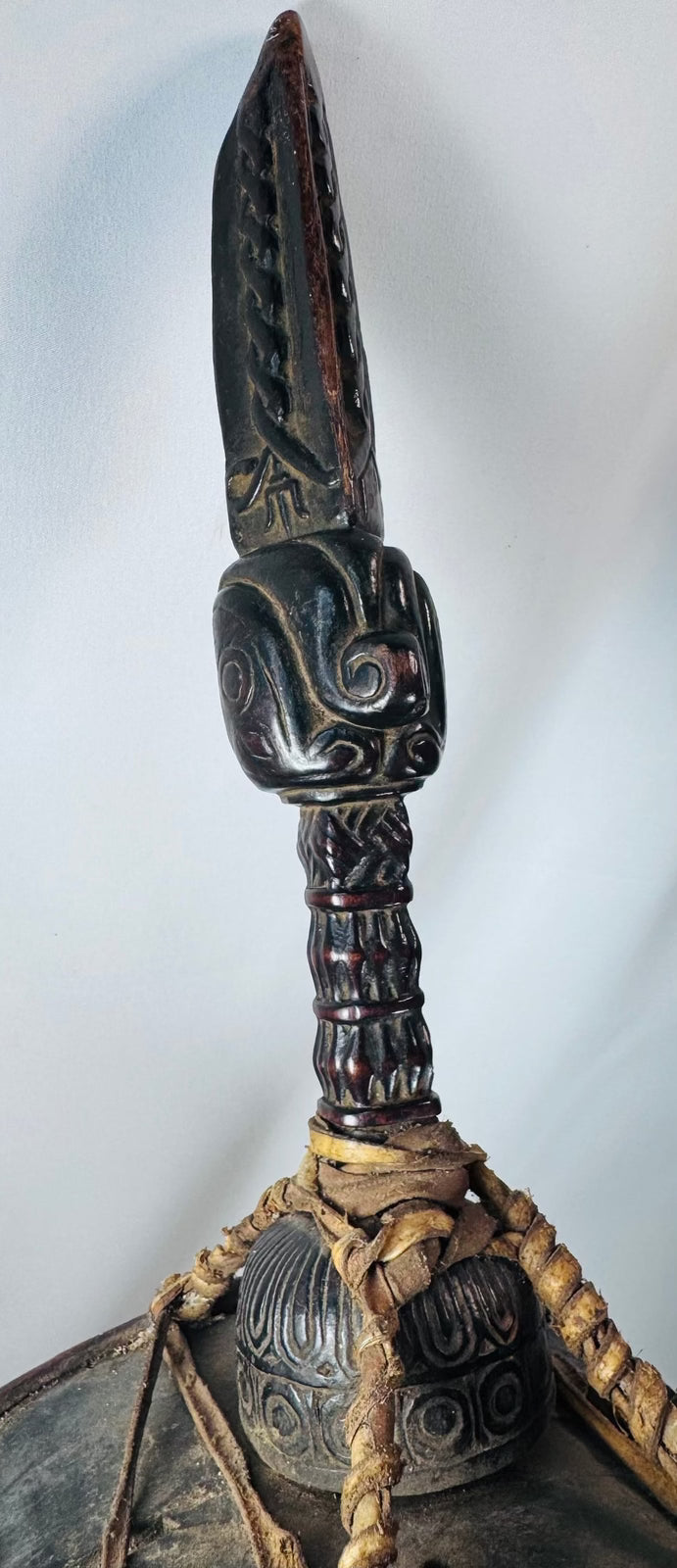
Antique Nepalese Dhyāngro Shaman's Drum | Himalayan Ritual Instrument | Circa Late 19th – Early 20th Century
Description
More
Less
Historical Context & Origin
Region: Nepal, Himalayan Region
Material: Carved hardwood, stretched hide leather, leather cordage
Period: Late 19th–Early 20th Century
Description
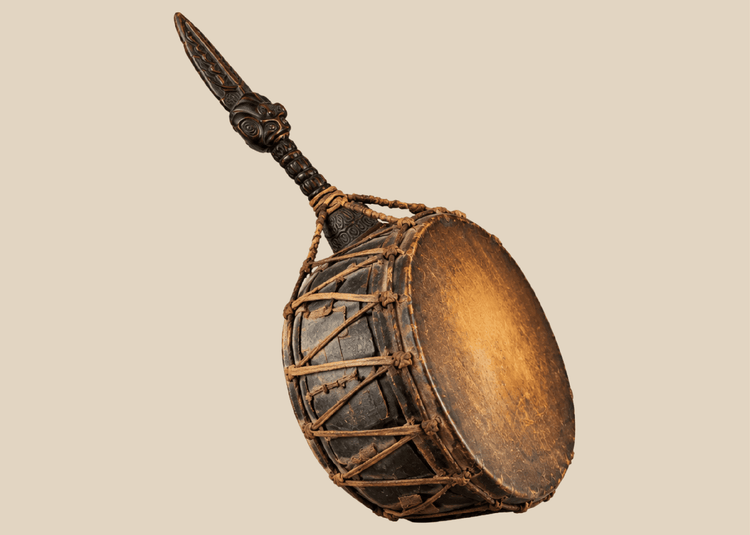
This impressive Himalayan ritual drum is a traditional Dhyāngro, a sacred ceremonial instrument used by Nepalese shamans known as Jhankri. Dhyāngro drums occupy a central role within the spiritual traditions of Nepal and have historically been employed during healing ceremonies, spirit invocations, divination rituals, protective rites, and trance-inducing performances.
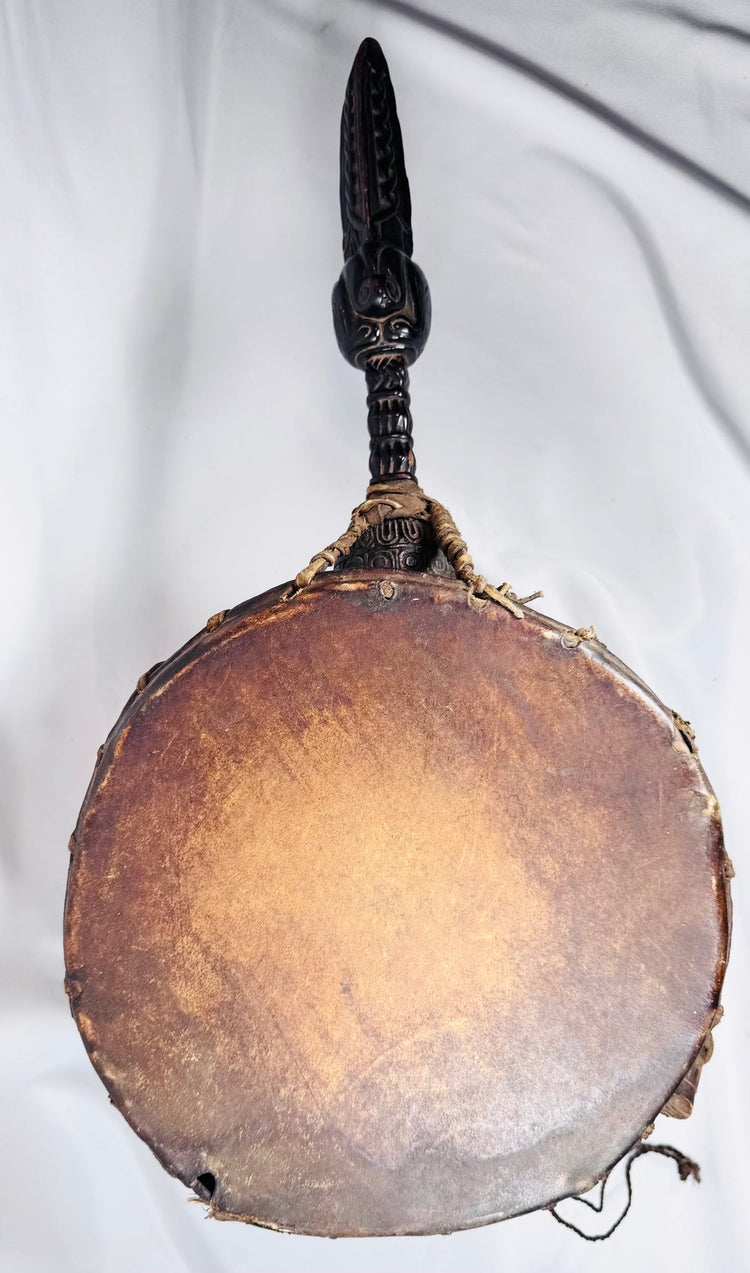
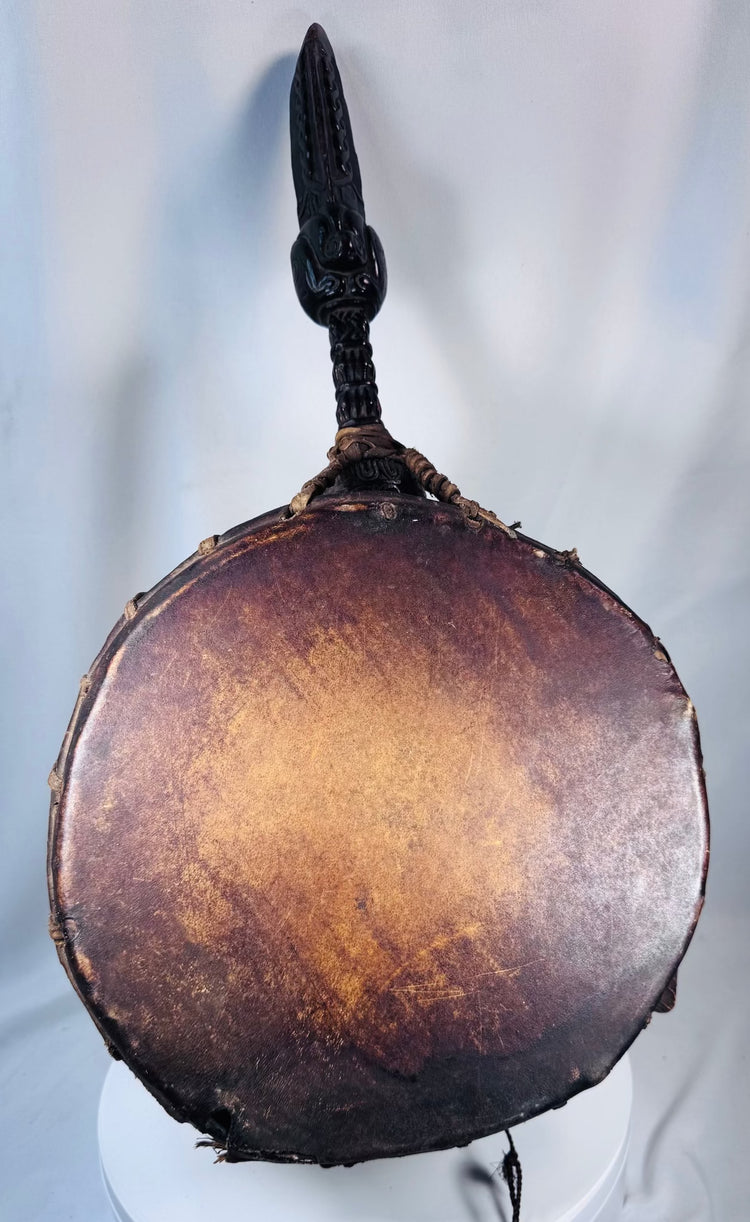
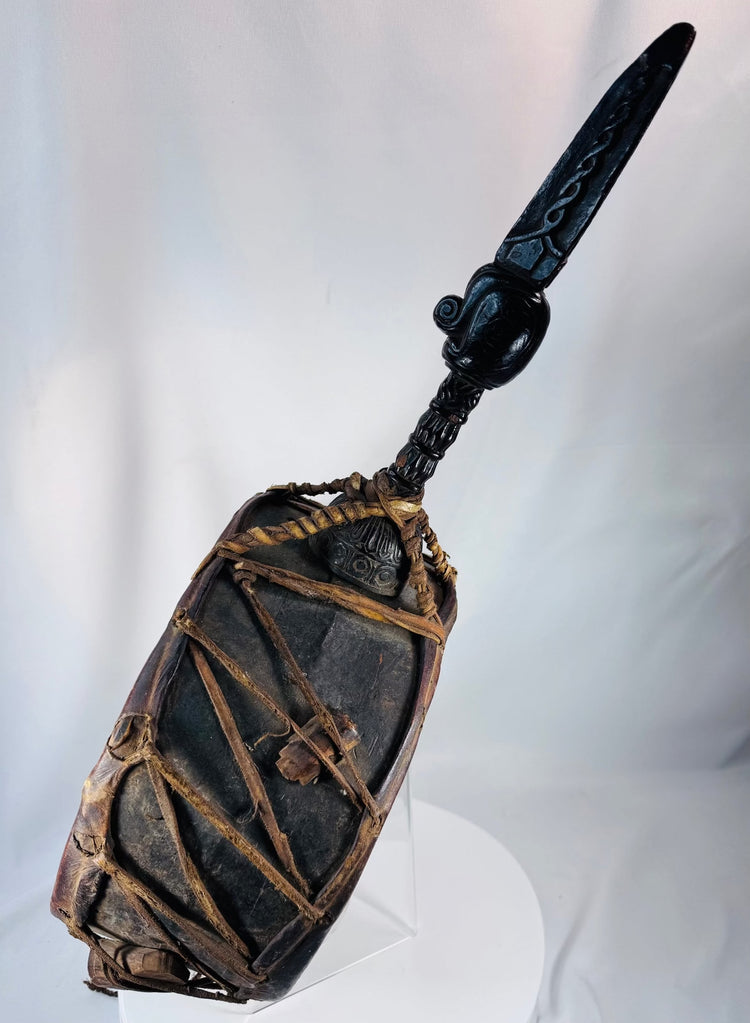
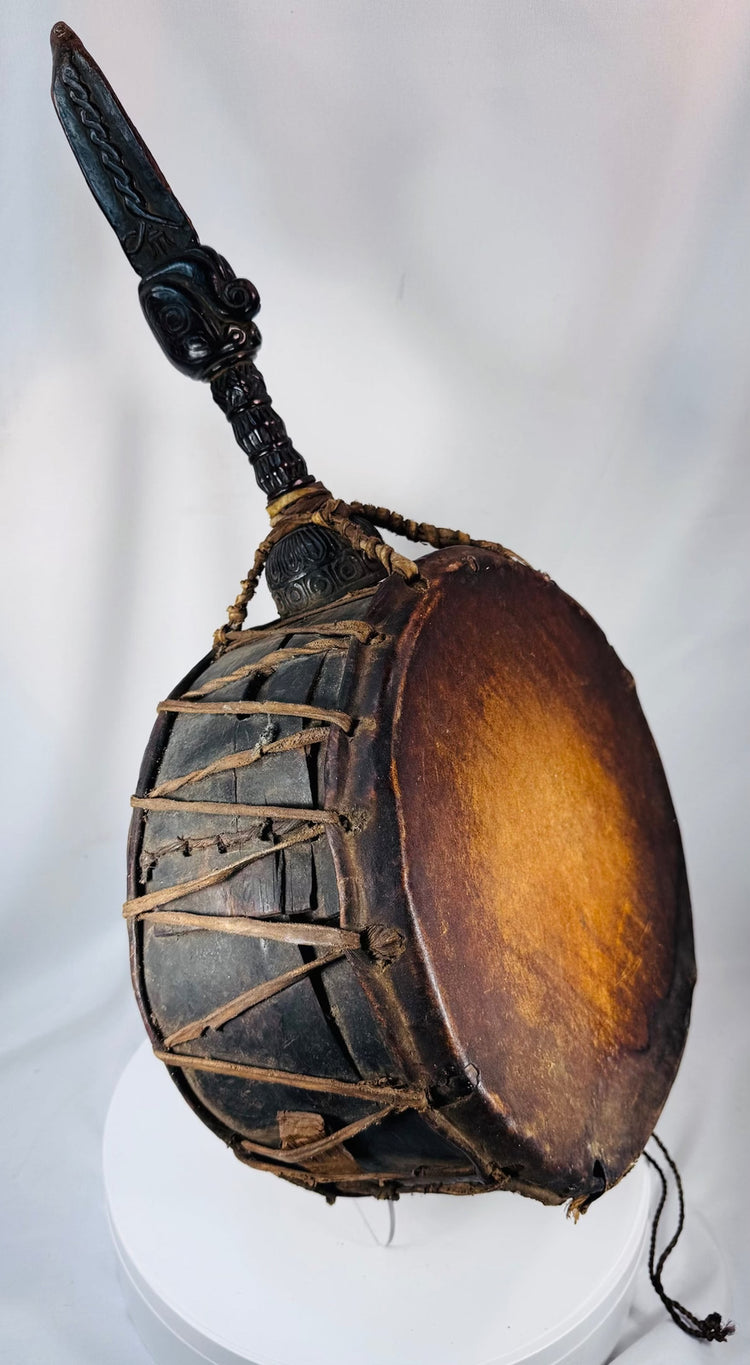
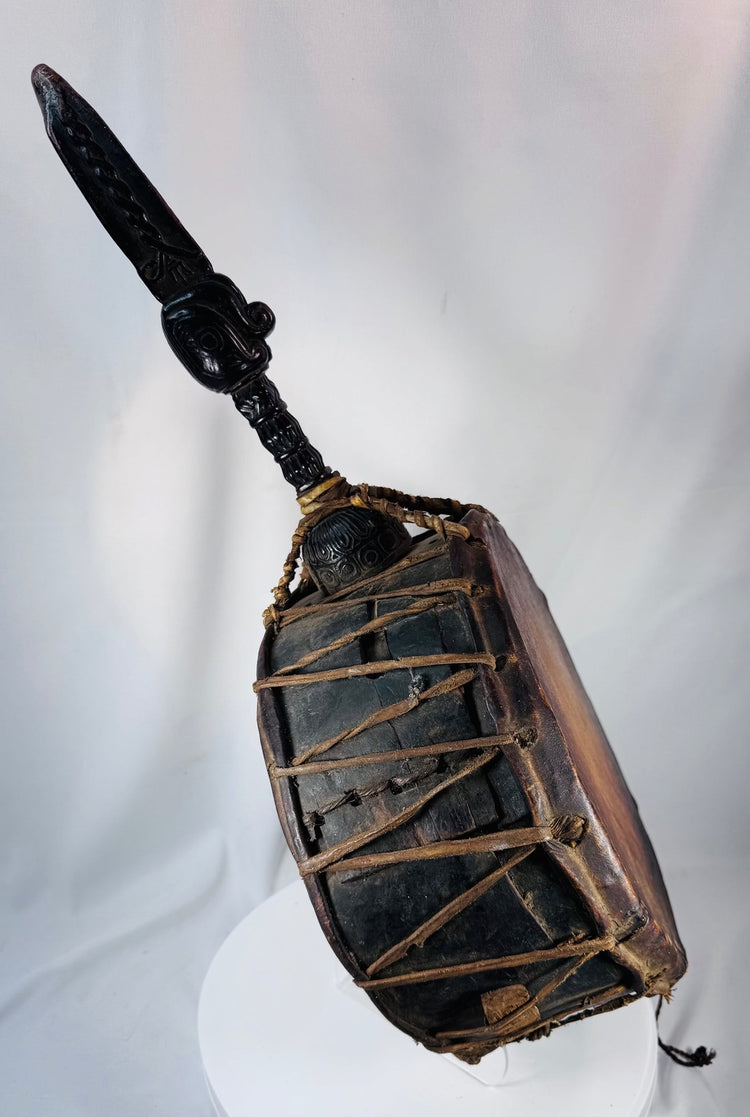
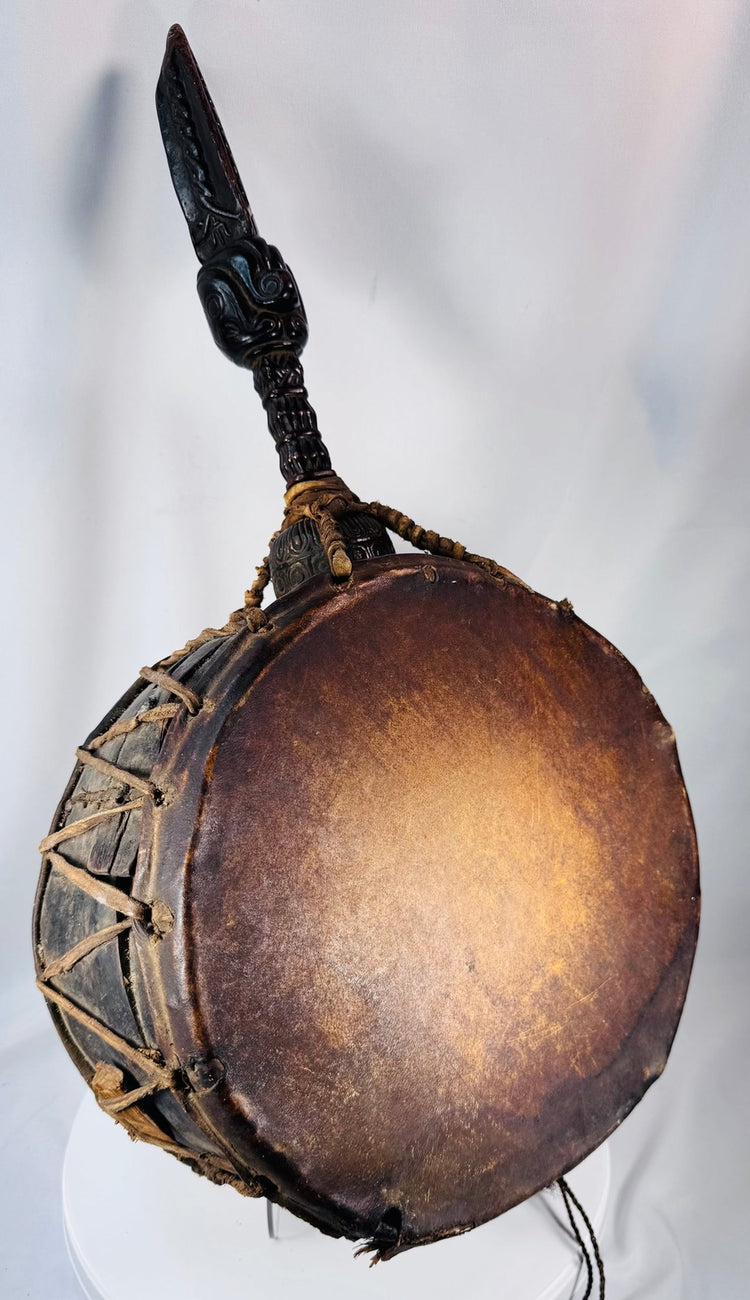
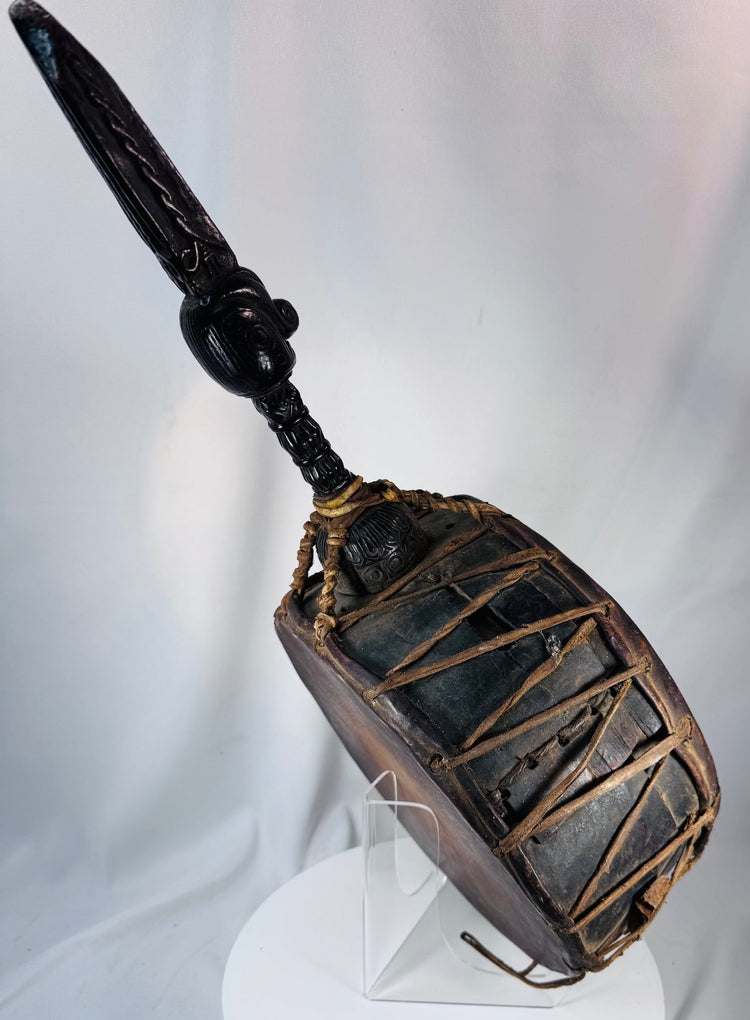
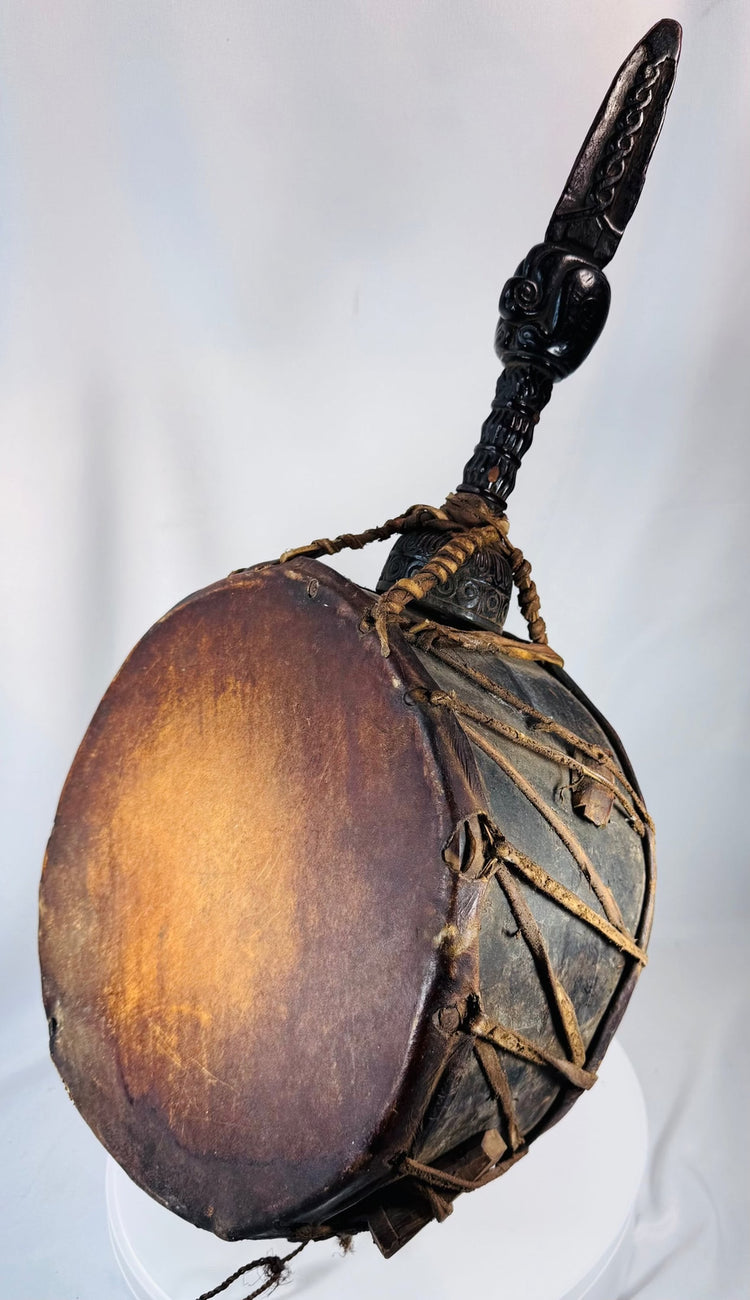
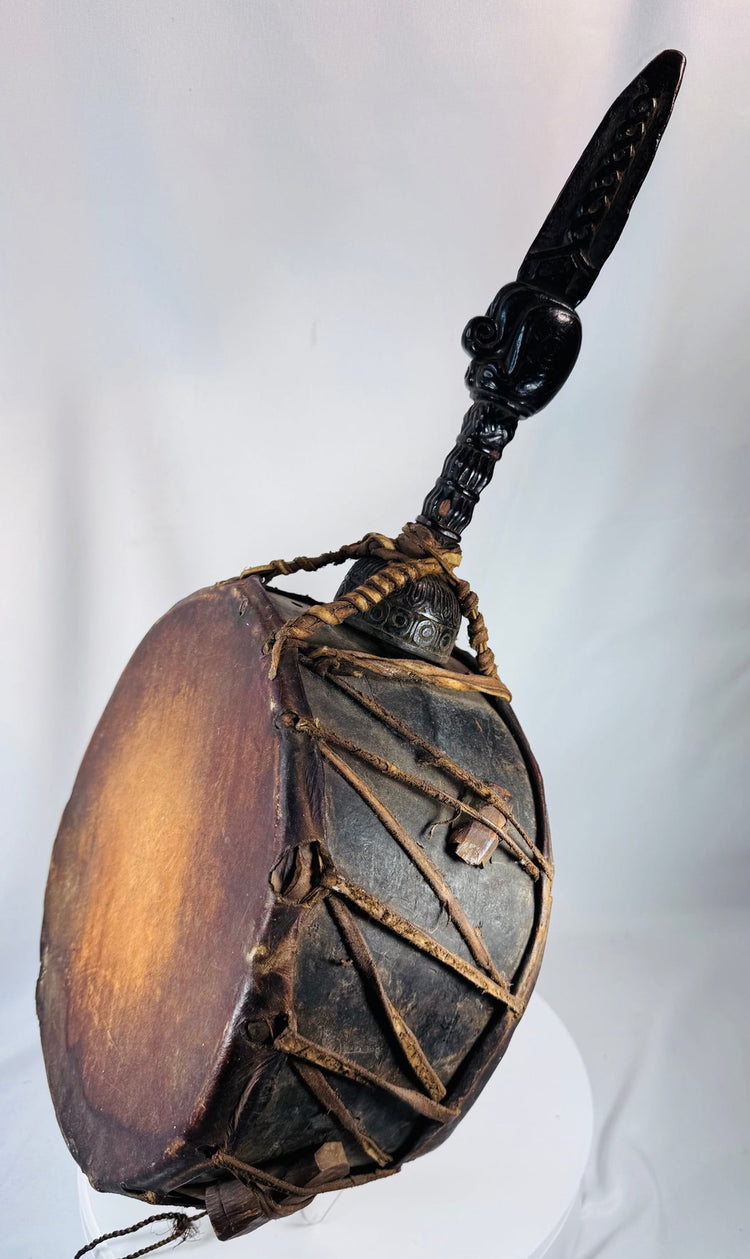
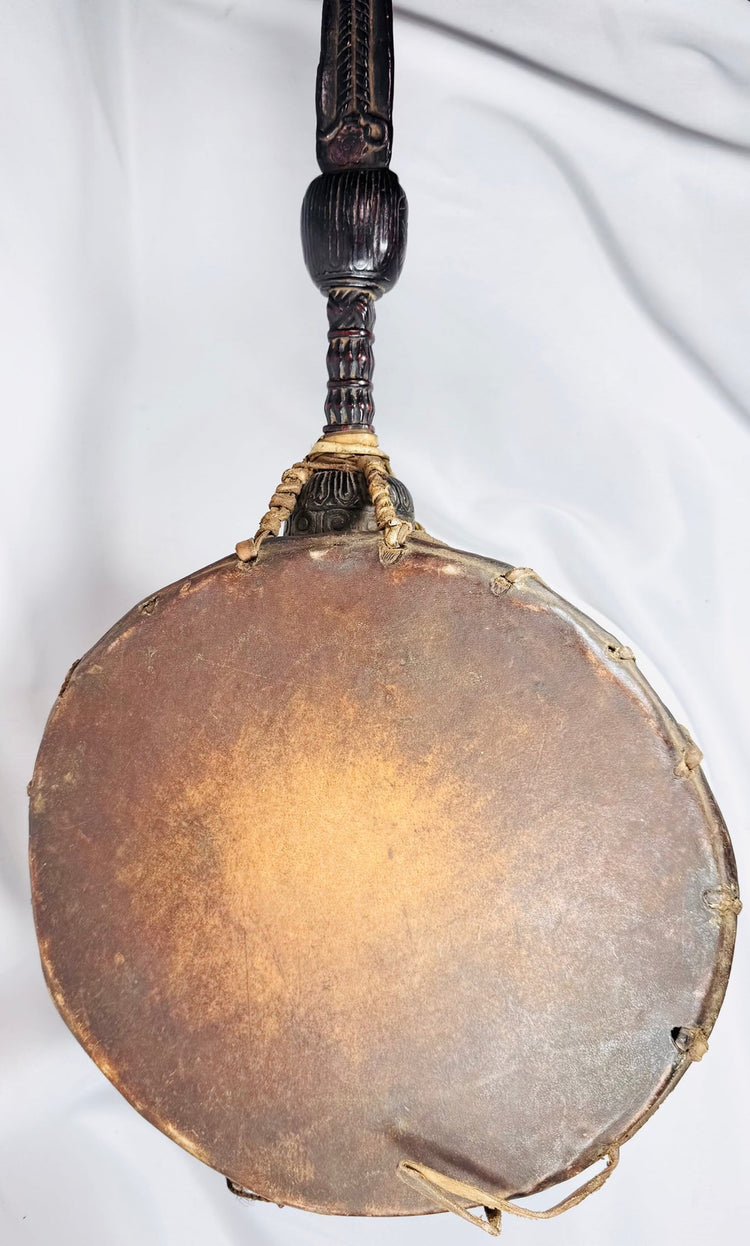
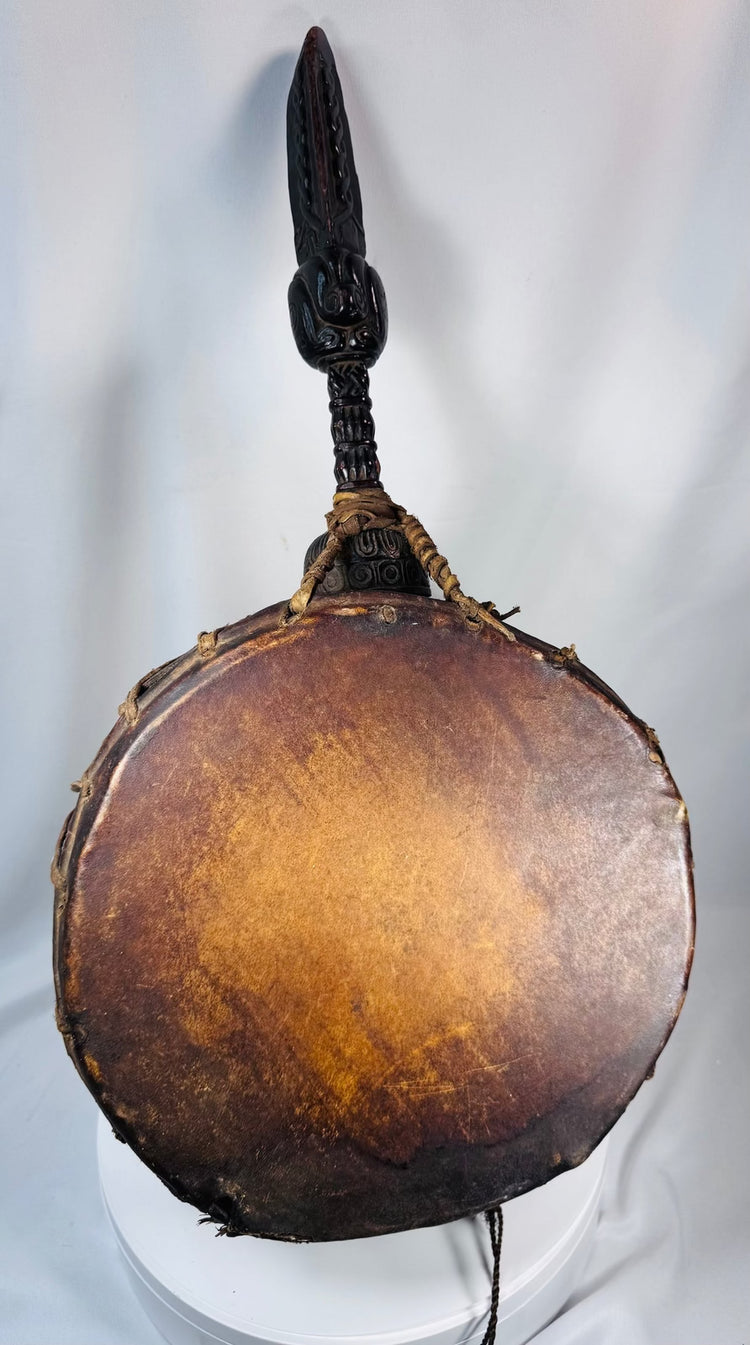
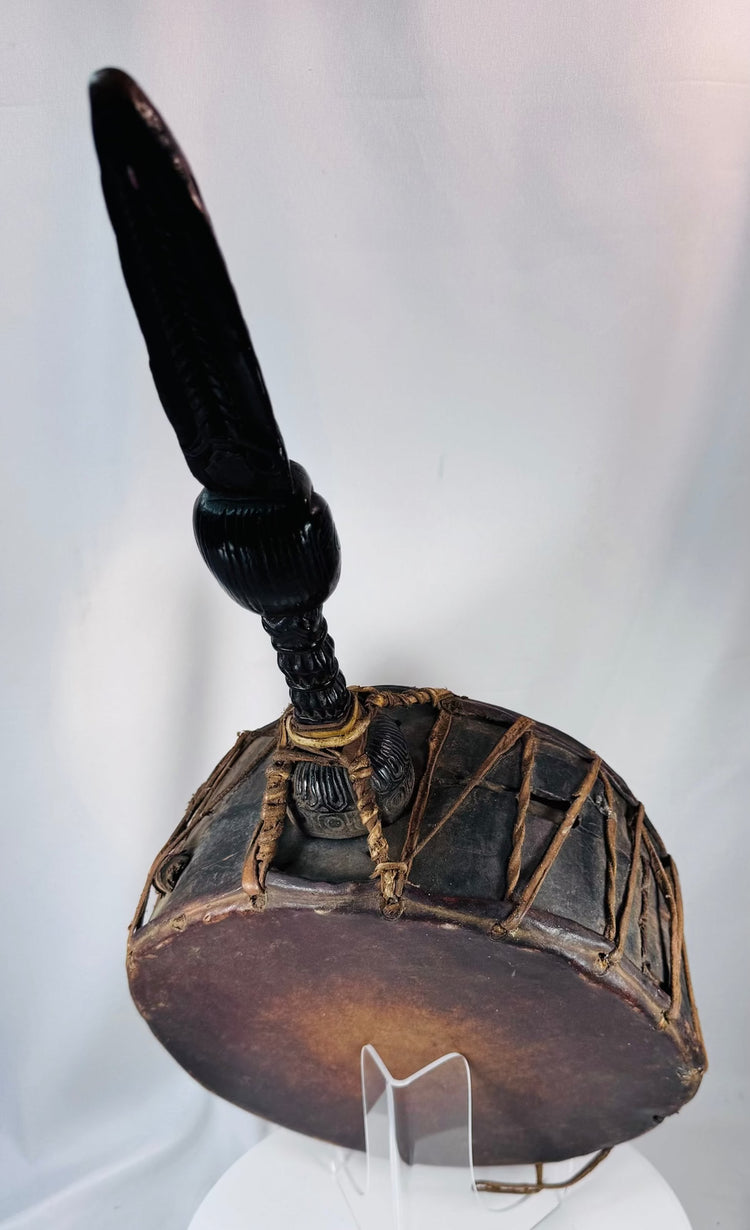
The drum is constructed from a substantial wooden frame fitted with stretched hide drumheads secured by extensive rawhide lacing. The form closely corresponds to documented examples of Nepalese Dhyāngro drums used by shamanic practitioners throughout the Himalayan region. The hide surfaces display natural tonal variation and age-related wear, while the wooden body retains a rich patina developed through decades of ceremonial use and handling.
One of the most distinctive features of the piece is its elaborately carved hardwood handle. Handles of this type frequently incorporate symbolic imagery associated with spiritual power, protection, and ritual authority. The carving terminates in a stylized anthropomorphic figure surmounted by a blade-shaped finial, while additional geometric ornamentation decorates the handle and mounting points. Such carved elements transform the instrument from a functional drum into an important ceremonial object reflecting the spiritual traditions of Himalayan shamanism.
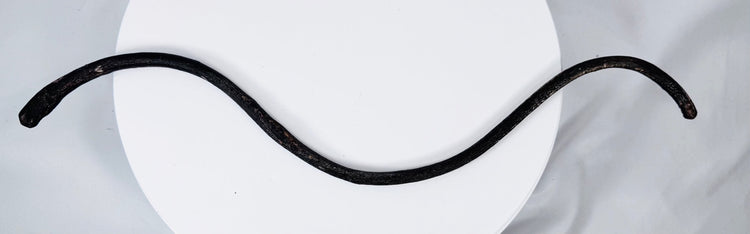
The drum retains its original curved wooden striker, an increasingly uncommon survival that enhances both its authenticity and ethnographic significance. During ritual performances, shamans traditionally beat the drum rhythmically while chanting and dancing, using its sound to facilitate communication with spirits, ancestors, and protective deities.
Large in scale and visually striking, this Dhyāngro represents an exceptional example of traditional Nepalese ritual material culture. Its impressive carved handle, original striker, and evidence of prolonged ceremonial use make it a highly desirable ethnographic artifact and display piece.
Features
- Traditional Nepalese Dhyāngro shamanic drum
- Hand-carved hardwood handle with symbolic ritual imagery
- Original stretched hide drumheads
- Extensive rawhide cord lacing and bindings
- Retains original curved wooden drum striker
- Rich aged patina throughout
- Evidence of prolonged ceremonial use
- Significant ethnographic and display appeal
Cultural Significance
The Dhyāngro is among the most important ritual instruments used within the shamanic traditions of Nepal. Associated with Jhankri shamans and various Himalayan ethnic communities, including Tamang, Gurung, Magar, Rai, and Limbu groups, the drum serves as both a musical instrument and a sacred ceremonial tool. Through rhythmic drumming, practitioners sought to enter altered states of consciousness and establish connections between the physical and spiritual worlds.
Beyond its ceremonial role, the Dhyāngro remains an enduring symbol of Nepal's rich spiritual heritage and traditional belief systems. Authentic examples with original strikers and elaborately carved handles are increasingly sought after by museums, collectors, and scholars due to their cultural significance and visual presence.
Condition
Displays age-related wear, surface abrasions, darkening, shrinkage, and irregularities throughout consistent with age and traditional ceremonial use. Leather bindings show expected wear and minor losses in areas. Drumheads retain strong overall presentation with visible tonal variation and use-related markings. Overall well preserved with an exceptional sculptural appearance.
Dimensions (Approximate)
Height: 24 in
Width: 11.5 in
Depth: 5.5 in
Age (Approximate)
100–140 years old
Provenance
From a private collection in Philadelphia, Pennsylvania, USA. The collector was a lifelong traveler throughout the Himalayan and Tibetan regions, assembling a carefully curated collection of ethnographic, religious, and cultural objects acquired during his extensive journeys.
Learn More
Discover the role of the Dhyāngro drum in Nepalese shamanic traditions through The Metropolitan Museum of Art
Browse our curated Functional Tools, Ancient Implements & Craft Collection
Description
Historical Context & Origin
Region: Nepal, Himalayan Region
Material: Carved hardwood, stretched hide leather, leather cordage
Period: Late 19th–Early 20th Century
Description
This impressive Himalayan ritual drum is a traditional Dhyāngro, a sacred ceremonial instrument used by Nepalese shamans known as Jhankri. Dhyāngro drums occupy a central role within the spiritual traditions of Nepal and have historically been employed during healing ceremonies, spirit invocations, divination rituals, protective rites, and trance-inducing performances.
The drum is constructed from a substantial wooden frame fitted with stretched hide drumheads secured by extensive rawhide lacing. The form closely corresponds to documented examples of Nepalese Dhyāngro drums used by shamanic practitioners throughout the Himalayan region. The hide surfaces display natural tonal variation and age-related wear, while the wooden body retains a rich patina developed through decades of ceremonial use and handling.
One of the most distinctive features of the piece is its elaborately carved hardwood handle. Handles of this type frequently incorporate symbolic imagery associated with spiritual power, protection, and ritual authority. The carving terminates in a stylized anthropomorphic figure surmounted by a blade-shaped finial, while additional geometric ornamentation decorates the handle and mounting points. Such carved elements transform the instrument from a functional drum into an important ceremonial object reflecting the spiritual traditions of Himalayan shamanism.
The drum retains its original curved wooden striker, an increasingly uncommon survival that enhances both its authenticity and ethnographic significance. During ritual performances, shamans traditionally beat the drum rhythmically while chanting and dancing, using its sound to facilitate communication with spirits, ancestors, and protective deities.
Large in scale and visually striking, this Dhyāngro represents an exceptional example of traditional Nepalese ritual material culture. Its impressive carved handle, original striker, and evidence of prolonged ceremonial use make it a highly desirable ethnographic artifact and display piece.
Features
- Traditional Nepalese Dhyāngro shamanic drum
- Hand-carved hardwood handle with symbolic ritual imagery
- Original stretched hide drumheads
- Extensive rawhide cord lacing and bindings
- Retains original curved wooden drum striker
- Rich aged patina throughout
- Evidence of prolonged ceremonial use
- Significant ethnographic and display appeal
Cultural Significance
The Dhyāngro is among the most important ritual instruments used within the shamanic traditions of Nepal. Associated with Jhankri shamans and various Himalayan ethnic communities, including Tamang, Gurung, Magar, Rai, and Limbu groups, the drum serves as both a musical instrument and a sacred ceremonial tool. Through rhythmic drumming, practitioners sought to enter altered states of consciousness and establish connections between the physical and spiritual worlds.
Beyond its ceremonial role, the Dhyāngro remains an enduring symbol of Nepal's rich spiritual heritage and traditional belief systems. Authentic examples with original strikers and elaborately carved handles are increasingly sought after by museums, collectors, and scholars due to their cultural significance and visual presence.
Condition
Displays age-related wear, surface abrasions, darkening, shrinkage, and irregularities throughout consistent with age and traditional ceremonial use. Leather bindings show expected wear and minor losses in areas. Drumheads retain strong overall presentation with visible tonal variation and use-related markings. Overall well preserved with an exceptional sculptural appearance.
Dimensions (Approximate)
Height: 24 in
Width: 11.5 in
Depth: 5.5 in
Age (Approximate)
100–140 years old
Provenance
From a private collection in Philadelphia, Pennsylvania, USA. The collector was a lifelong traveler throughout the Himalayan and Tibetan regions, assembling a carefully curated collection of ethnographic, religious, and cultural objects acquired during his extensive journeys.
Learn More
Discover the role of the Dhyāngro drum in Nepalese shamanic traditions through The Metropolitan Museum of Art
Browse our curated Functional Tools, Ancient Implements & Craft Collection
You May Also Like
