

Antique Tibetan Hardwood Storage Vessel with Brass Mounts | Himalayan Region | Late 19th – Early 20th Century
Couldn't load pickup availability


Antique Tibetan Hardwood Storage Vessel with Brass Mounts | Himalayan Region | Late 19th – Early 20th Century
Description
More
Less
Historical Context & Origin
Region: Tibet / Himalayan Region
Material: Hardwood with brass bindings
Period: Late 19th–Early 20th Century
Description
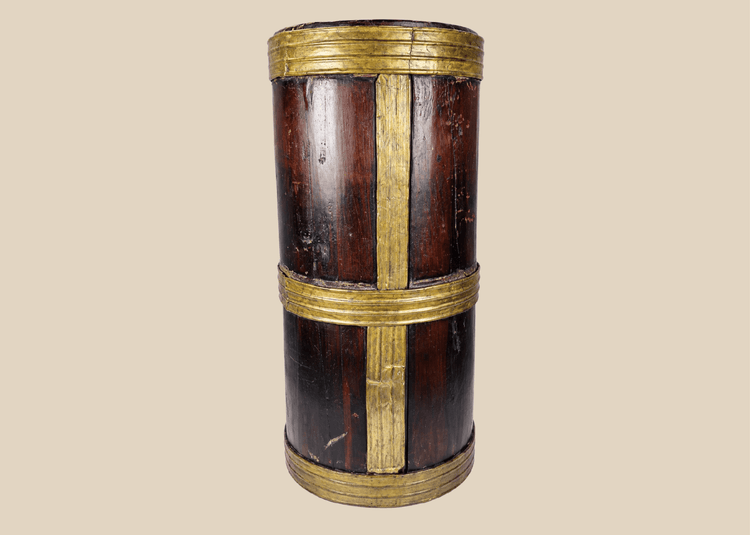
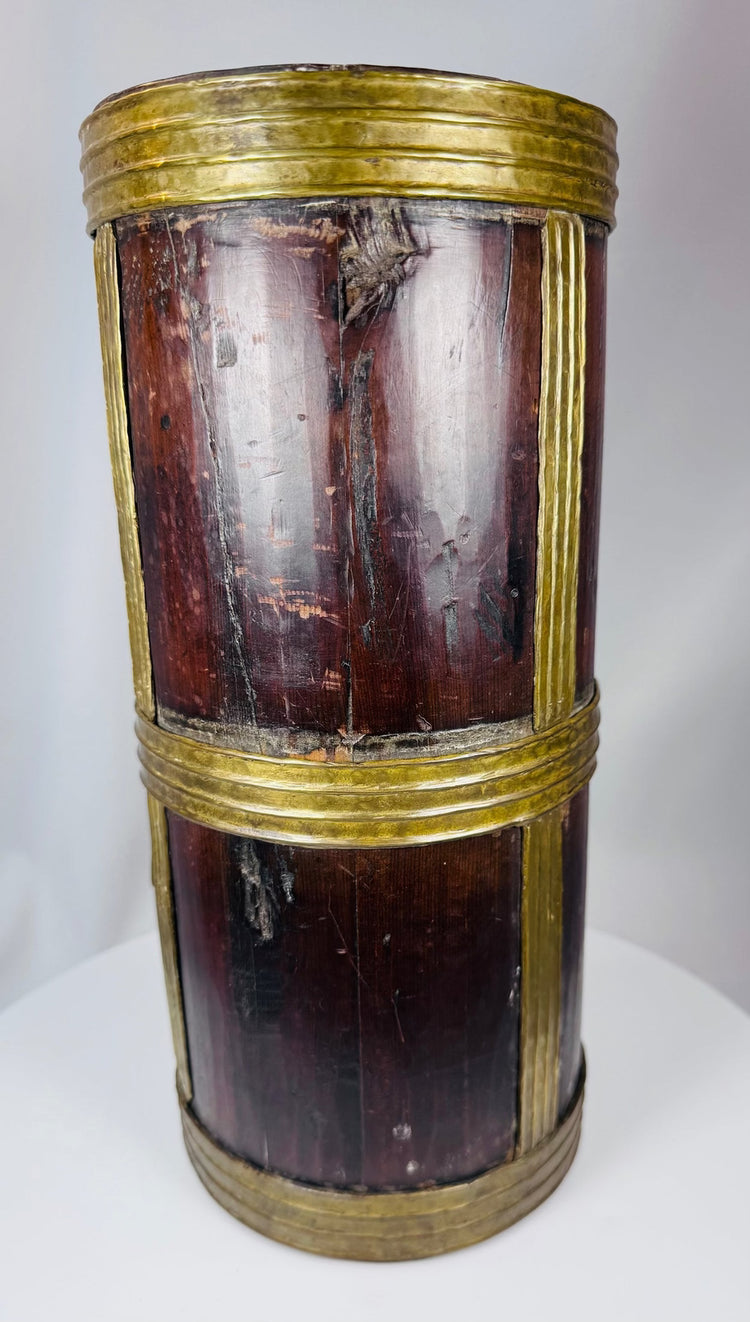
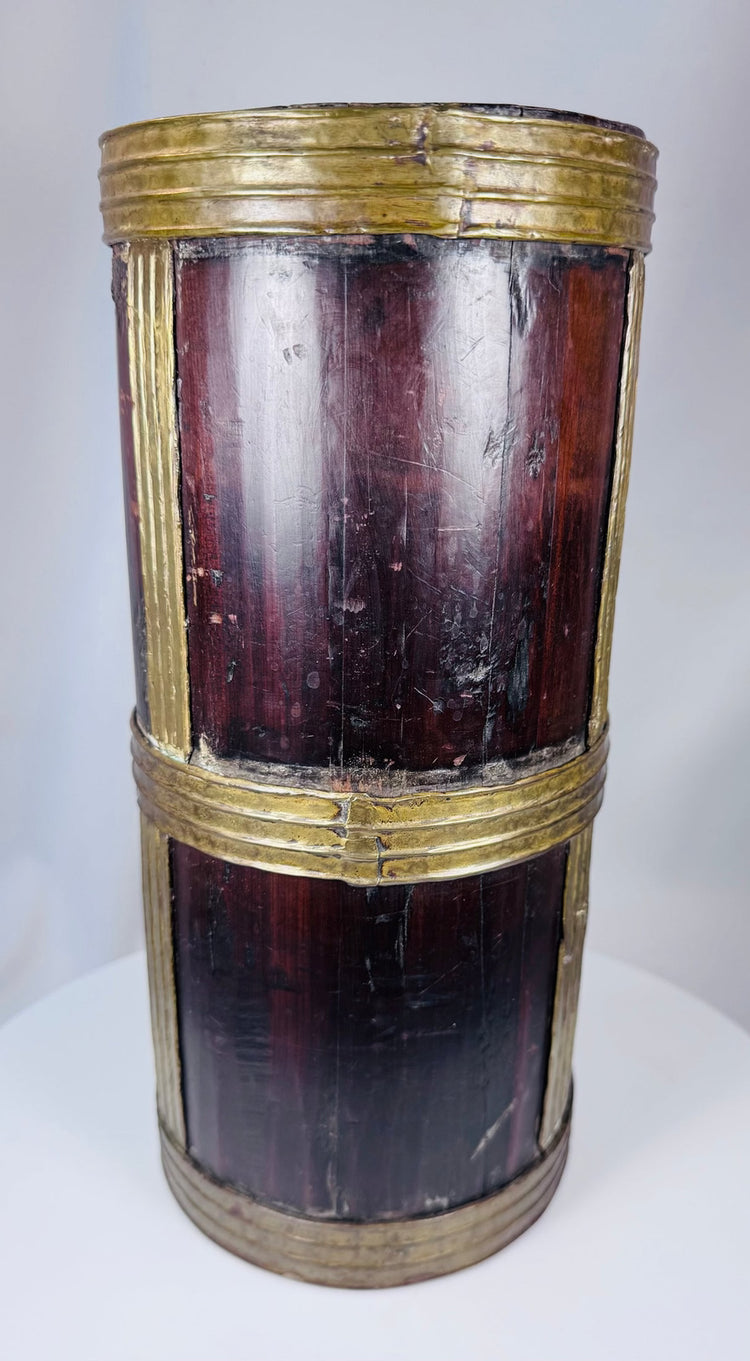
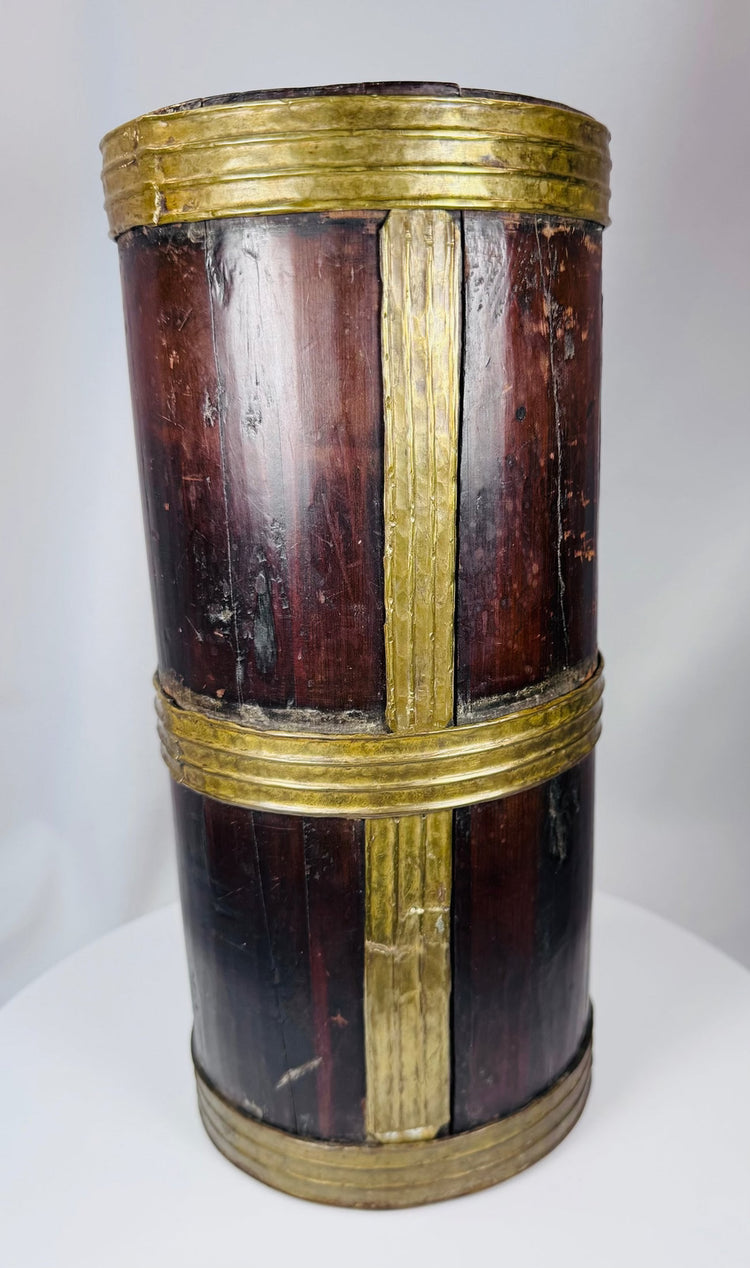
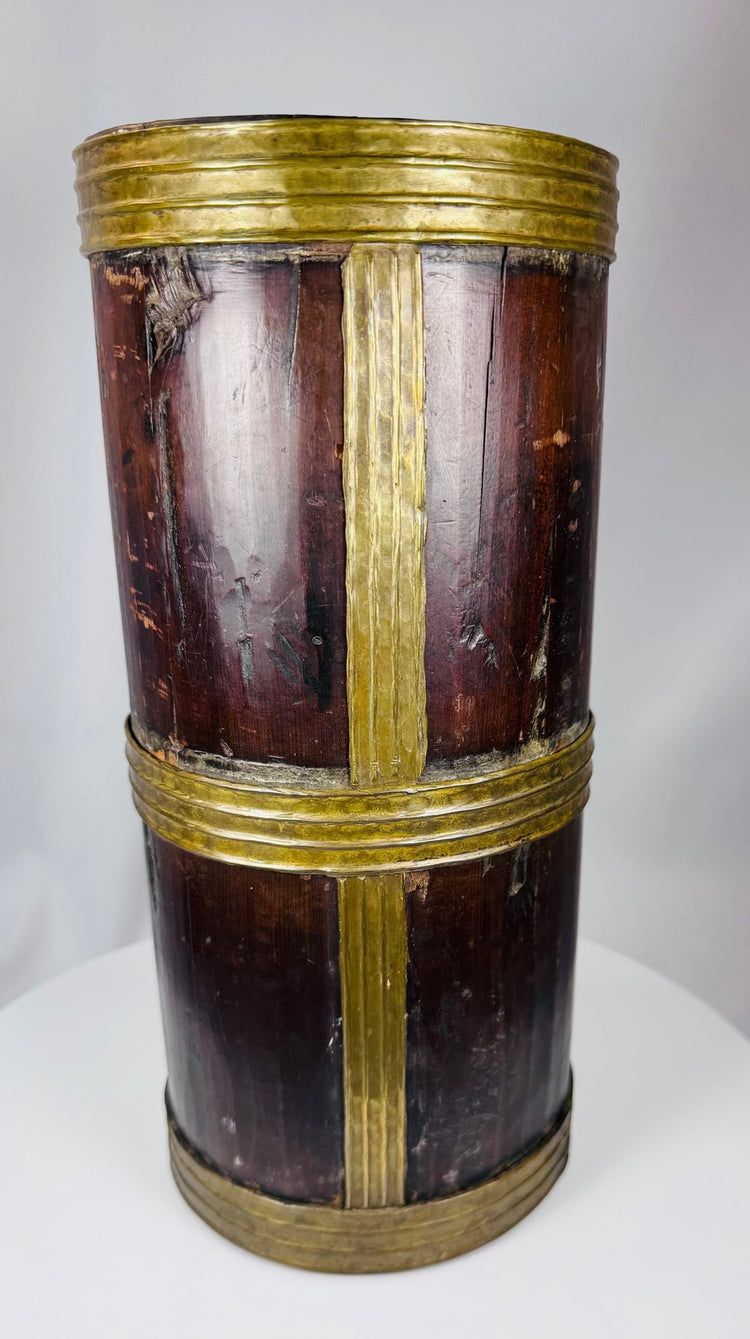
This striking cylindrical Tibetan storage vessel or grain container is constructed from dark hardwood staves reinforced with hand-worked brass bindings and vertical brass strengthening strips. Vessels of this form were traditionally used throughout Tibet and the Himalayan regions for the storage of grains, butter, tea, tsampa, dried foods, or ritual household goods.
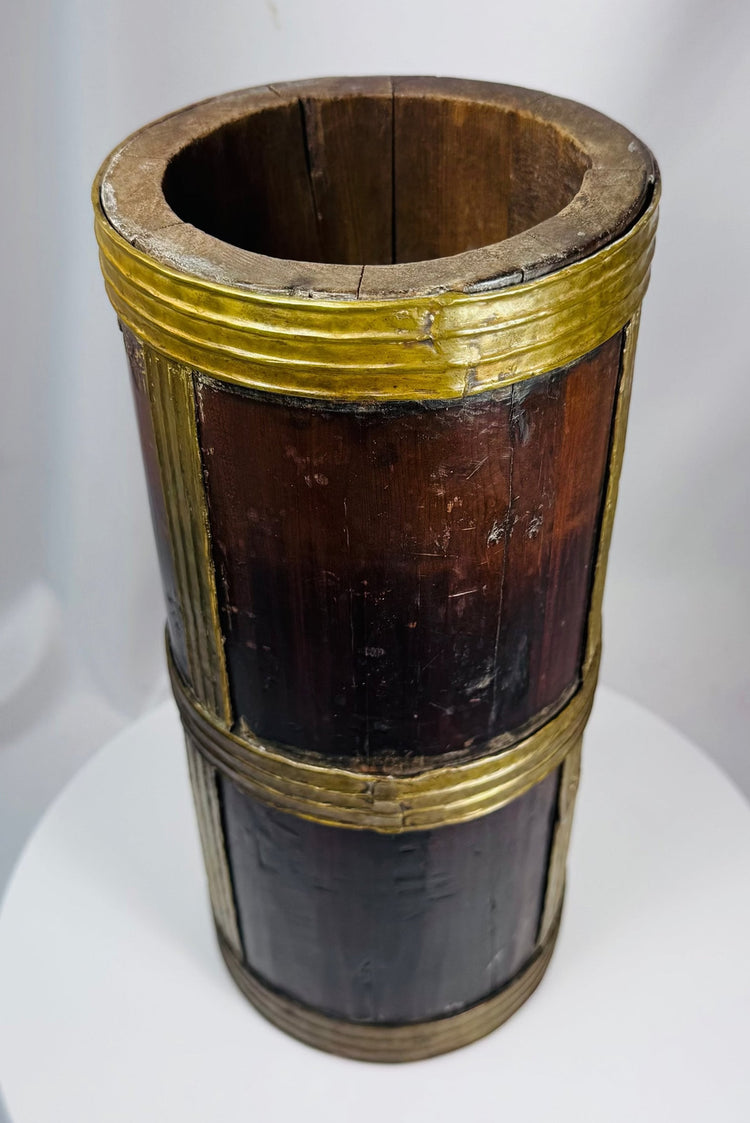
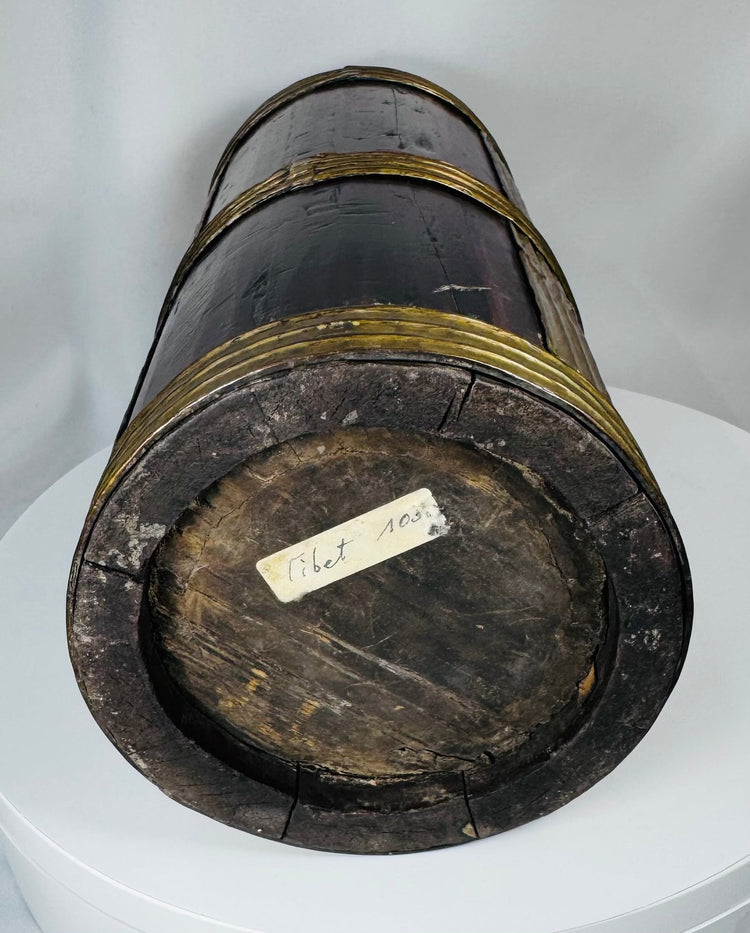
The container features a coopered construction composed of vertically joined wooden sections secured with broad brass bands around the upper, central, and lower sections. Additional vertical brass straps reinforce the body and provide both structural stability and decorative contrast against the richly aged dark wood surface.
The form reflects traditional Himalayan utilitarian craftsmanship, where durable hardwood vessels strengthened with metal fittings were essential for long-term domestic and monastic use. The deep reddish-brown patina, visible tool marks, shrinkage cracks, and hand-fitted brass elements all contribute to its authentic aged appearance.
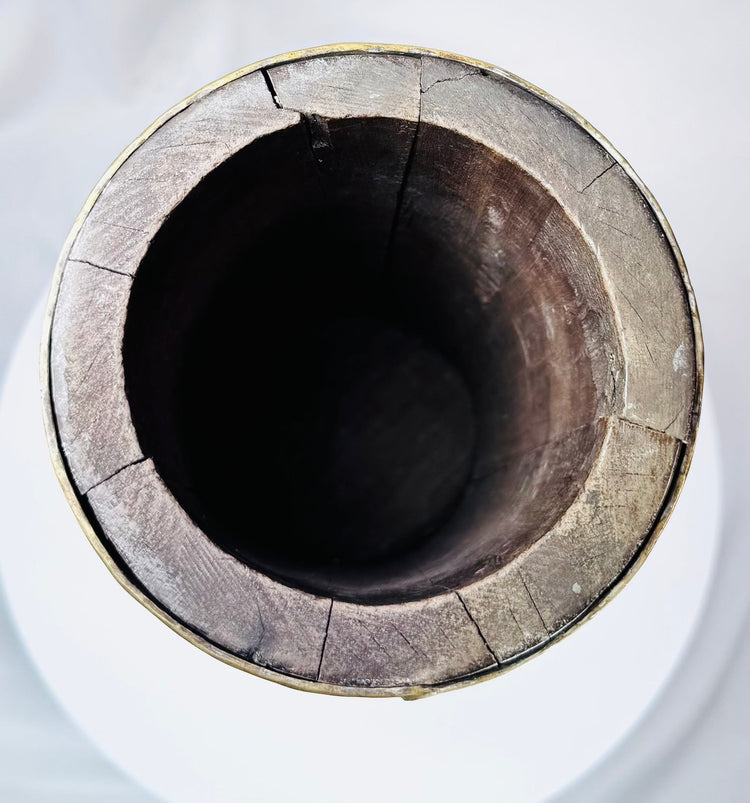
The interior has been hollowed by hand and retains substantial wear consistent with age and prolonged use. The underside also displays age-related cracking and shrinkage to the wooden base. The overall presentation possesses a strong sculptural quality while maintaining its distinctly functional Tibetan character.
Features
- Traditional Tibetan cylindrical storage vessel
- Handcrafted hardwood stave construction
- Reinforced with hand-worked brass bands and vertical brass strips
- Rich dark aged patina throughout
- Hollow interior with visible hand-tool marks
- Strong architectural and sculptural form
- Distinctive Himalayan utilitarian craftsmanship
- Excellent decorative display presence
Cultural Significance
Storage containers of this type played an important role in traditional Tibetan domestic and monastic life. Durable wooden vessels reinforced with metal fittings were commonly used for storing staple foods, ritual items, butter, tea, grains, and preserved goods in Himalayan environments where resilience and portability were essential.
Condition
Displays age-related wear, surface scratches, scuffs, abrasions, shrinkage cracks, and irregularities consistent with age and prolonged traditional use. The wooden rim and base exhibit multiple age cracks and separations. Brass bands display dents, surface wear, oxidation, and small distortions from age and handling. Overall structurally stable with strong authentic aged character and patina.
Dimensions (Approximate)
Height: 11.3 in
Diameter: 5.25 in
Age (Approximate)
100–140 years old
Provenance
From a private collection in Philadelphia, Pennsylvania, USA. The collector was a lifelong traveler throughout the Himalayan and Tibetan regions, assembling a carefully curated collection of ethnographic, religious, and cultural objects acquired during his extensive journeys.
Learn More
Investigate traditional Tibetan household objects and material culture through the collection of The Metropolitan Museum of Art
Review our curated Functional Tools, Ancient Implements & Craft Collection
Description
Historical Context & Origin
Region: Tibet / Himalayan Region
Material: Hardwood with brass bindings
Period: Late 19th–Early 20th Century
Description
This striking cylindrical Tibetan storage vessel or grain container is constructed from dark hardwood staves reinforced with hand-worked brass bindings and vertical brass strengthening strips. Vessels of this form were traditionally used throughout Tibet and the Himalayan regions for the storage of grains, butter, tea, tsampa, dried foods, or ritual household goods.
The container features a coopered construction composed of vertically joined wooden sections secured with broad brass bands around the upper, central, and lower sections. Additional vertical brass straps reinforce the body and provide both structural stability and decorative contrast against the richly aged dark wood surface.
The form reflects traditional Himalayan utilitarian craftsmanship, where durable hardwood vessels strengthened with metal fittings were essential for long-term domestic and monastic use. The deep reddish-brown patina, visible tool marks, shrinkage cracks, and hand-fitted brass elements all contribute to its authentic aged appearance.
The interior has been hollowed by hand and retains substantial wear consistent with age and prolonged use. The underside also displays age-related cracking and shrinkage to the wooden base. The overall presentation possesses a strong sculptural quality while maintaining its distinctly functional Tibetan character.
Features
- Traditional Tibetan cylindrical storage vessel
- Handcrafted hardwood stave construction
- Reinforced with hand-worked brass bands and vertical brass strips
- Rich dark aged patina throughout
- Hollow interior with visible hand-tool marks
- Strong architectural and sculptural form
- Distinctive Himalayan utilitarian craftsmanship
- Excellent decorative display presence
Cultural Significance
Storage containers of this type played an important role in traditional Tibetan domestic and monastic life. Durable wooden vessels reinforced with metal fittings were commonly used for storing staple foods, ritual items, butter, tea, grains, and preserved goods in Himalayan environments where resilience and portability were essential.
Condition
Displays age-related wear, surface scratches, scuffs, abrasions, shrinkage cracks, and irregularities consistent with age and prolonged traditional use. The wooden rim and base exhibit multiple age cracks and separations. Brass bands display dents, surface wear, oxidation, and small distortions from age and handling. Overall structurally stable with strong authentic aged character and patina.
Dimensions (Approximate)
Height: 11.3 in
Diameter: 5.25 in
Age (Approximate)
100–140 years old
Provenance
From a private collection in Philadelphia, Pennsylvania, USA. The collector was a lifelong traveler throughout the Himalayan and Tibetan regions, assembling a carefully curated collection of ethnographic, religious, and cultural objects acquired during his extensive journeys.
Learn More
Investigate traditional Tibetan household objects and material culture through the collection of The Metropolitan Museum of Art
Review our curated Functional Tools, Ancient Implements & Craft Collection
You May Also Like
