



Authentic 19th Century Mummified Head | Circus Sideshow Artifact
Couldn't load pickup availability


Authentic 19th Century Mummified Head | Circus Sideshow Artifact
Description
More
Less
Historical Context & Origin
Region: Likely Europe or North America (traveling sideshow circuit)
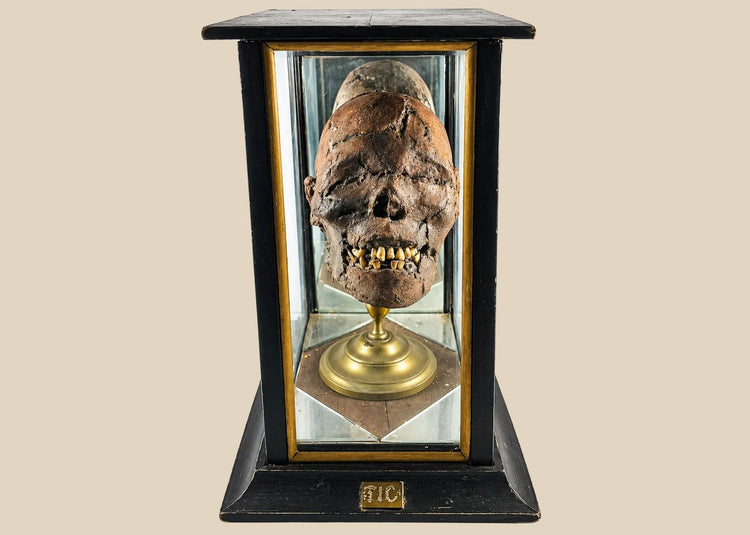
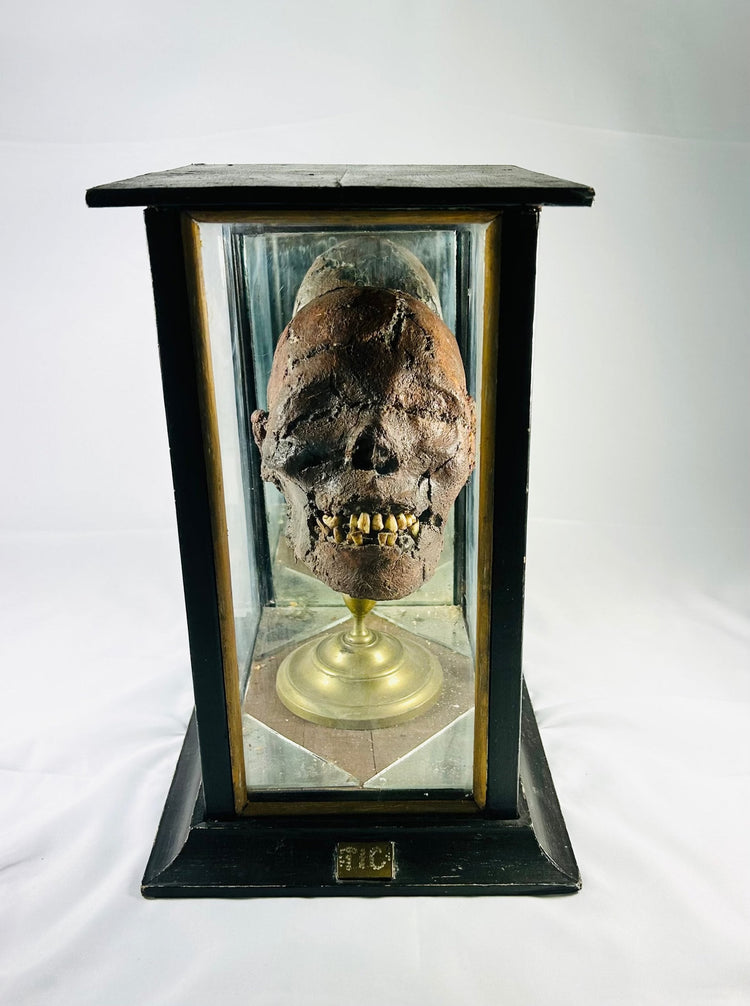
Material: Clay with genuine human teeth; mounted on brass stand within wood and glass display
Period: 19th Century (exhibited into the early 20th century)
Description
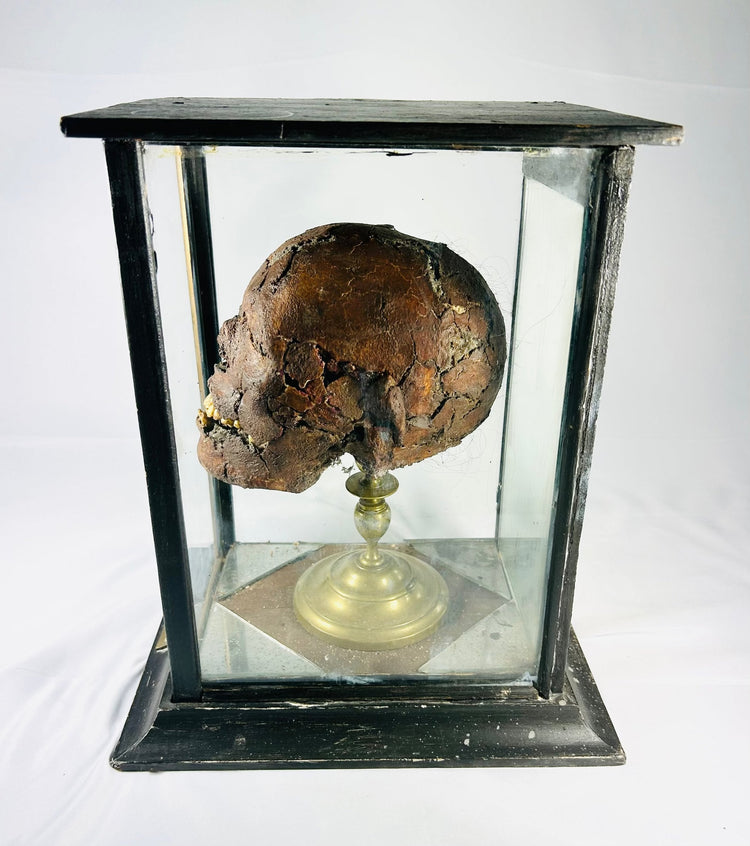
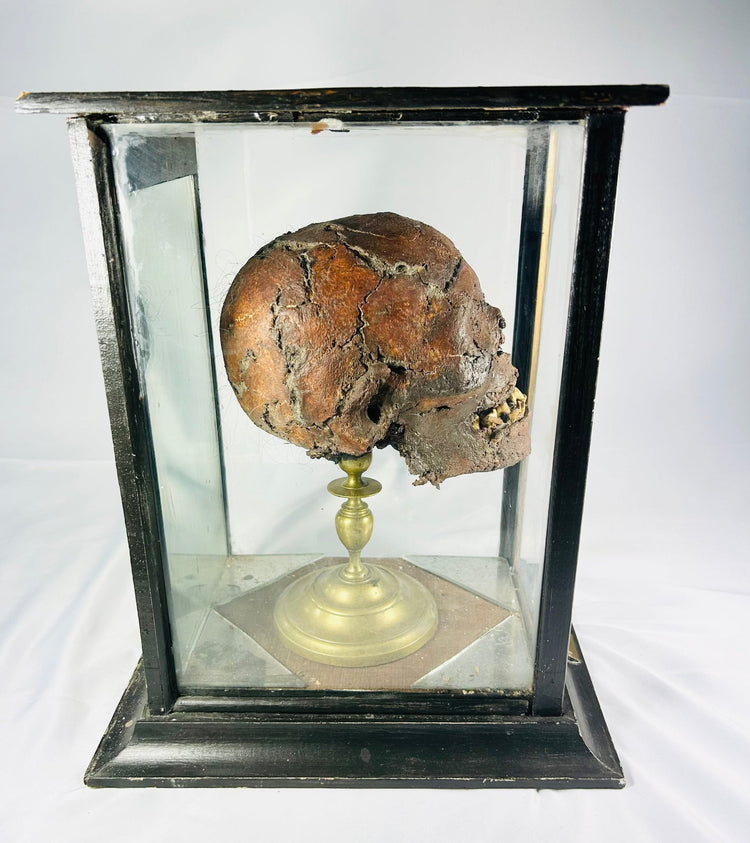
This rare and historically intriguing artifact represents a preserved mummified head created during the 19th century for exhibition in the world of traveling circuses and sideshows. Crafted from clay and incorporating genuine human teeth, the figure was mounted on a brass stand and housed within a custom wood and glass display case. Such objects were produced as macabre curiosities designed to captivate audiences fascinated by crime, punishment, and the bizarre.
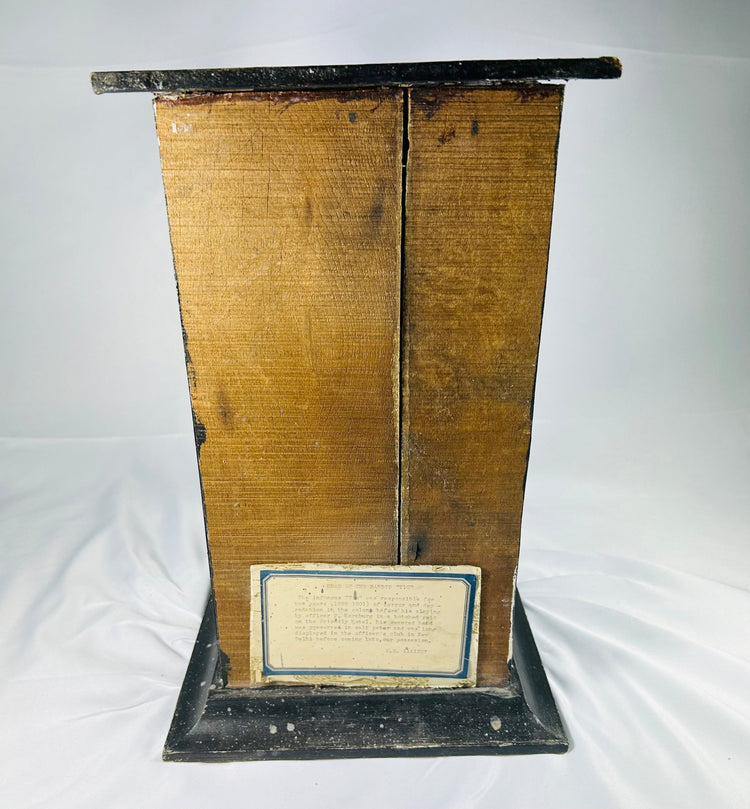
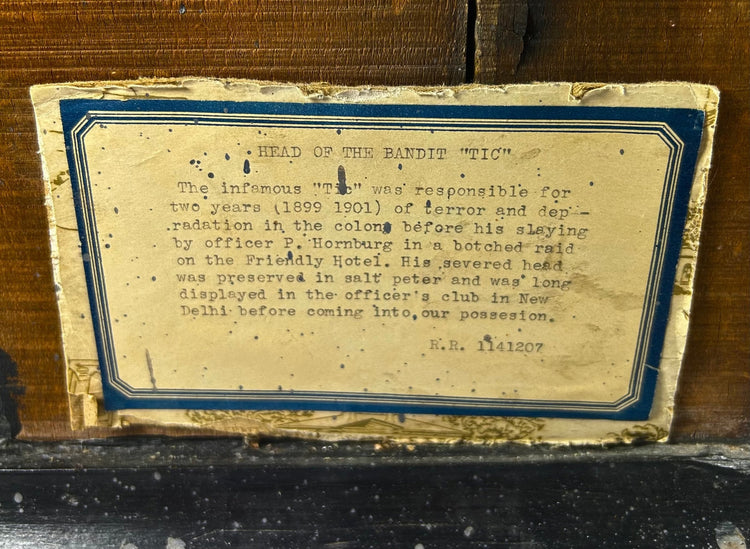
Known as “TIC,” the head is associated with the story of a notorious colonial bandit whose legend circulated widely in early sideshow lore. Following the bandit’s death in 1901, the head was reportedly preserved using saltpeter and exhibited as part of traveling carnival circuits throughout the early decades of the 20th century. Whether presented as historical relic or theatrical spectacle, objects of this nature became iconic components of sideshow exhibitions.
Today, the piece survives as a remarkable artifact of popular entertainment history, reflecting the intersection of folklore, criminology, and exhibition culture that defined the golden age of the circus. It stands as a compelling conversation piece and a rare survivor of antique sideshow display traditions.
Features
- Clay head incorporating genuine human teeth
- Mounted on brass display stand
- Housed within custom wood and glass display case
- Associated with traveling circus and sideshow exhibitions
- Striking macabre curiosity reflecting early exhibition culture
Cultural Significance
During the 19th and early 20th centuries, traveling circuses and sideshows played a major role in popular entertainment across Europe and North America. These exhibitions often featured unusual relics, criminal memorabilia, and sensational curiosities intended to provoke fascination and intrigue among audiences. Artifacts such as this preserved head reflect the era’s fascination with crime, folklore, and the macabre, offering insight into the cultural landscape of early public spectacle and exhibition.
Condition
Good antique condition. Clay head remains intact with visible age-related wear consistent with historical display. Teeth remain secure. Brass stand and wooden display case are stable and structurally sound.
Dimensions (Approximate)
Height: 14.5 in
Width: 9.5 in
Depth: 7 in
Age (Approximate)
120–150 years old
Provenance
Private Chicago, Illinois, USA collection, specializing in oddities, curiosities, and unusual historical objects. Previously sold through Potter & Potter Auctions Inc., Chicago, Illinois, USA, in the Circus, Sideshows & Oddities auction, 29 July 2023, Lot 578. By repute, formerly associated with the Phineas Taylor Barnum circus.
Learn More
Discover the rise and decline of circus spectacle through National Geographic’s History of the Circus
Explore the cultural history of sideshow curiosities in our article The Dark History of Mummified Heads and Sideshow Curiosities
Description
Historical Context & Origin
Region: Likely Europe or North America (traveling sideshow circuit)
Material: Clay with genuine human teeth; mounted on brass stand within wood and glass display
Period: 19th Century (exhibited into the early 20th century)
Description
This rare and historically intriguing artifact represents a preserved mummified head created during the 19th century for exhibition in the world of traveling circuses and sideshows. Crafted from clay and incorporating genuine human teeth, the figure was mounted on a brass stand and housed within a custom wood and glass display case. Such objects were produced as macabre curiosities designed to captivate audiences fascinated by crime, punishment, and the bizarre.
Known as “TIC,” the head is associated with the story of a notorious colonial bandit whose legend circulated widely in early sideshow lore. Following the bandit’s death in 1901, the head was reportedly preserved using saltpeter and exhibited as part of traveling carnival circuits throughout the early decades of the 20th century. Whether presented as historical relic or theatrical spectacle, objects of this nature became iconic components of sideshow exhibitions.
Today, the piece survives as a remarkable artifact of popular entertainment history, reflecting the intersection of folklore, criminology, and exhibition culture that defined the golden age of the circus. It stands as a compelling conversation piece and a rare survivor of antique sideshow display traditions.
Features
- Clay head incorporating genuine human teeth
- Mounted on brass display stand
- Housed within custom wood and glass display case
- Associated with traveling circus and sideshow exhibitions
- Striking macabre curiosity reflecting early exhibition culture
Cultural Significance
During the 19th and early 20th centuries, traveling circuses and sideshows played a major role in popular entertainment across Europe and North America. These exhibitions often featured unusual relics, criminal memorabilia, and sensational curiosities intended to provoke fascination and intrigue among audiences. Artifacts such as this preserved head reflect the era’s fascination with crime, folklore, and the macabre, offering insight into the cultural landscape of early public spectacle and exhibition.
Condition
Good antique condition. Clay head remains intact with visible age-related wear consistent with historical display. Teeth remain secure. Brass stand and wooden display case are stable and structurally sound.
Dimensions (Approximate)
Height: 14.5 in
Width: 9.5 in
Depth: 7 in
Age (Approximate)
120–150 years old
Provenance
Private Chicago, Illinois, USA collection, specializing in oddities, curiosities, and unusual historical objects. Previously sold through Potter & Potter Auctions Inc., Chicago, Illinois, USA, in the Circus, Sideshows & Oddities auction, 29 July 2023, Lot 578. By repute, formerly associated with the Phineas Taylor Barnum circus.
Learn More
Discover the rise and decline of circus spectacle through National Geographic’s History of the Circus
Explore the cultural history of sideshow curiosities in our article The Dark History of Mummified Heads and Sideshow Curiosities
You May Also Like
