

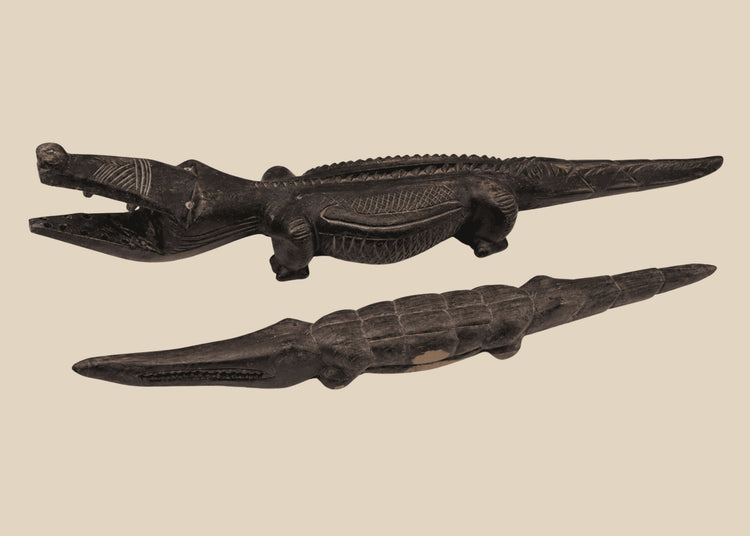
Bamana / Bozo Carved Wooden Crocodile Figures | Mali | Circa Mid - 20th Century
Couldn't load pickup availability


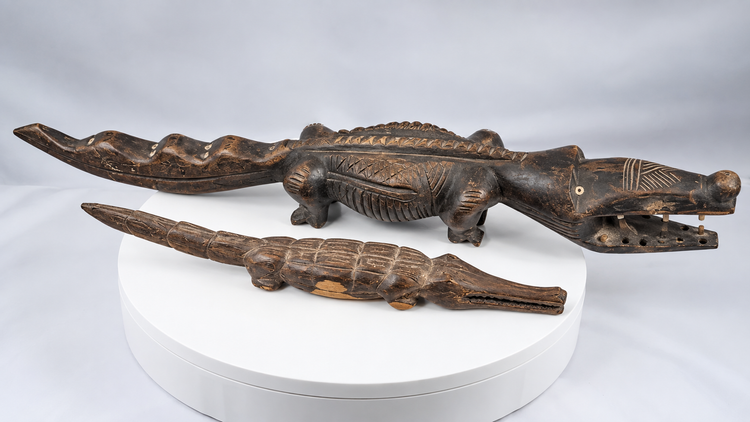
Bamana / Bozo Carved Wooden Crocodile Figures | Mali | Circa Mid - 20th Century
Description
More
Less
Historical Context & Origin
Region: Mali, West Africa, attributed to the Bamana / Bozo cultural sphere
Material: Hand-carved wood
Period: 20th Century, likely mid-20th century
Description
This distinctive pair of hand-carved wooden crocodile figures is attributed to the Bamana and closely related Bozo artistic traditions of Mali, West Africa. Crocodile imagery appears in Malian sculpture and performance traditions, with documented Bamana examples carved in elongated forms and Bozo/Bamana puppet traditions incorporating animal figures with movable components.
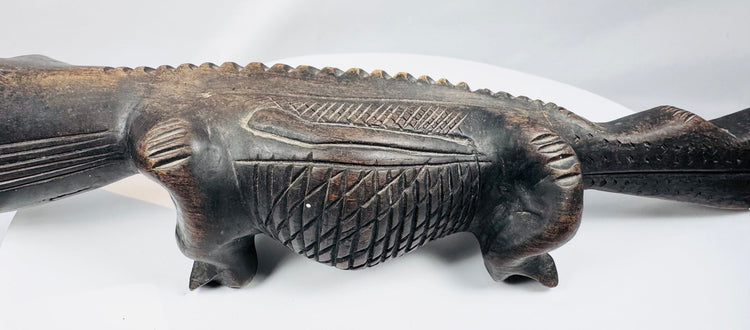
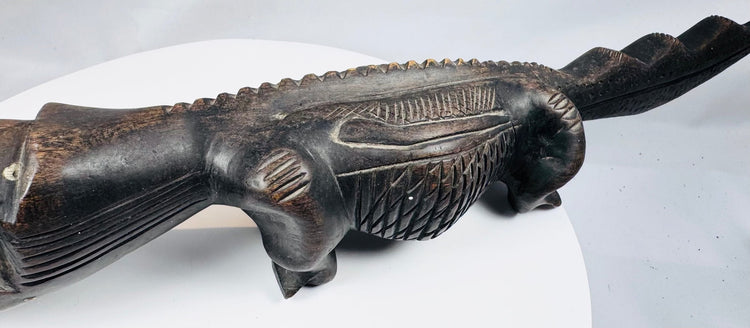
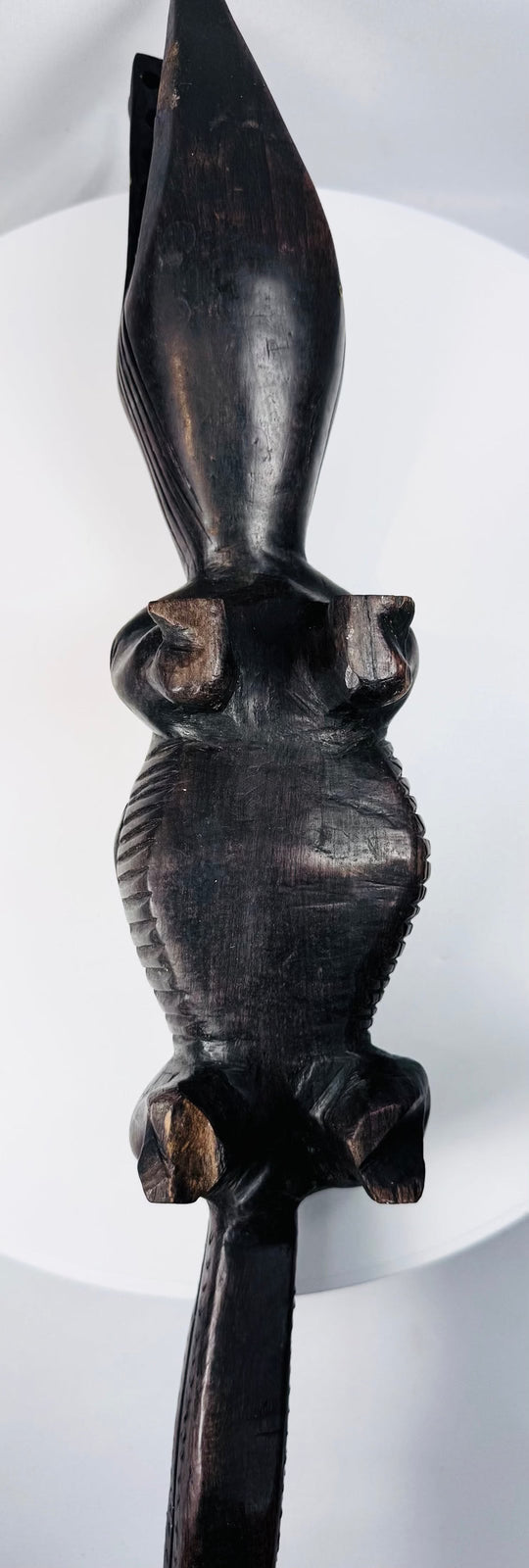
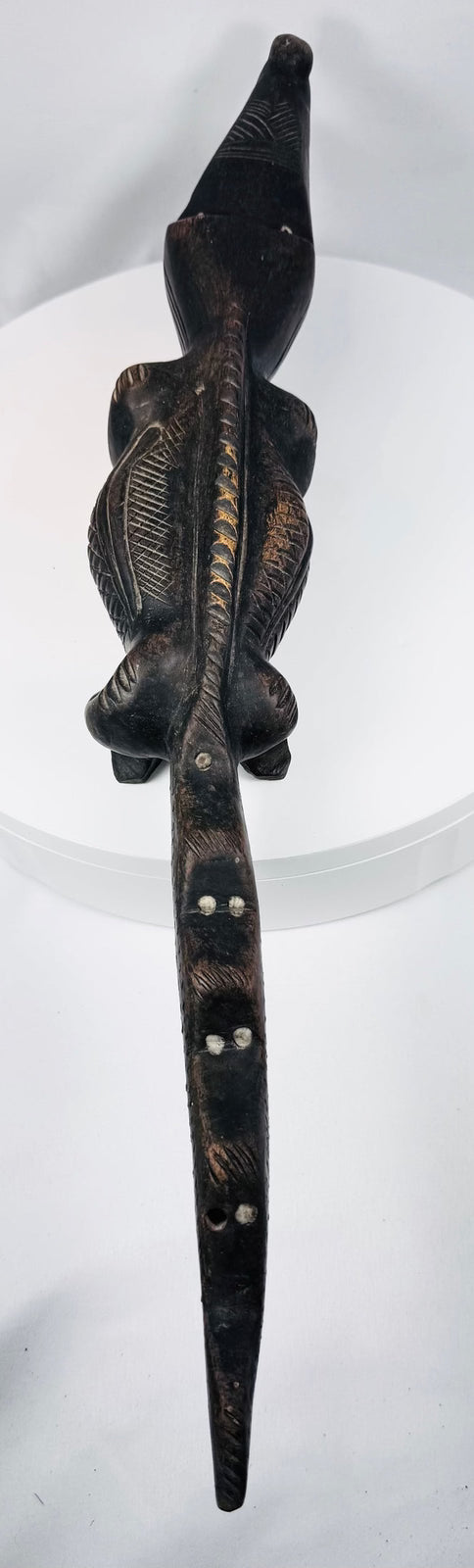
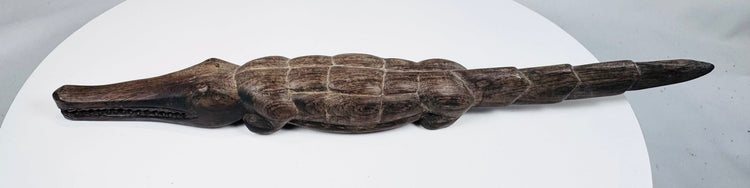
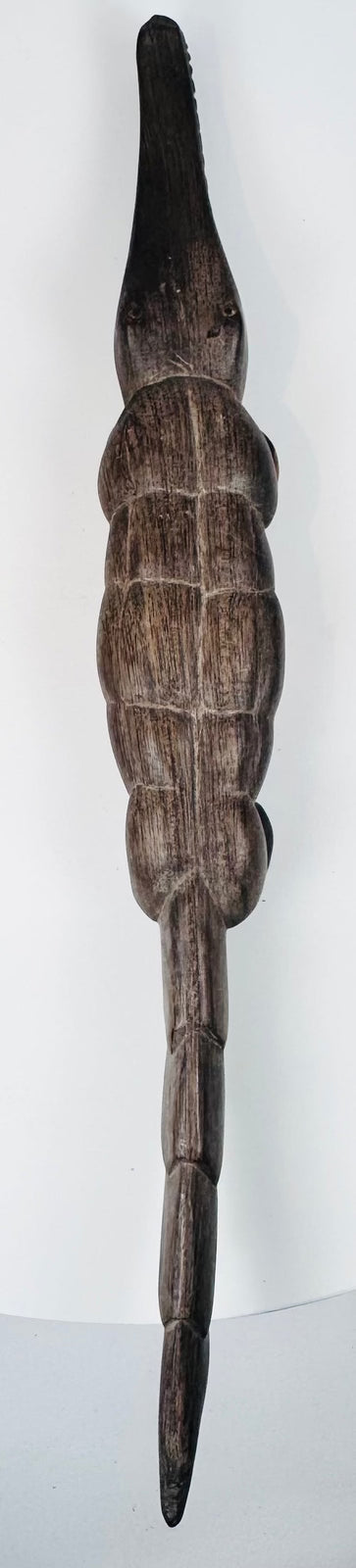
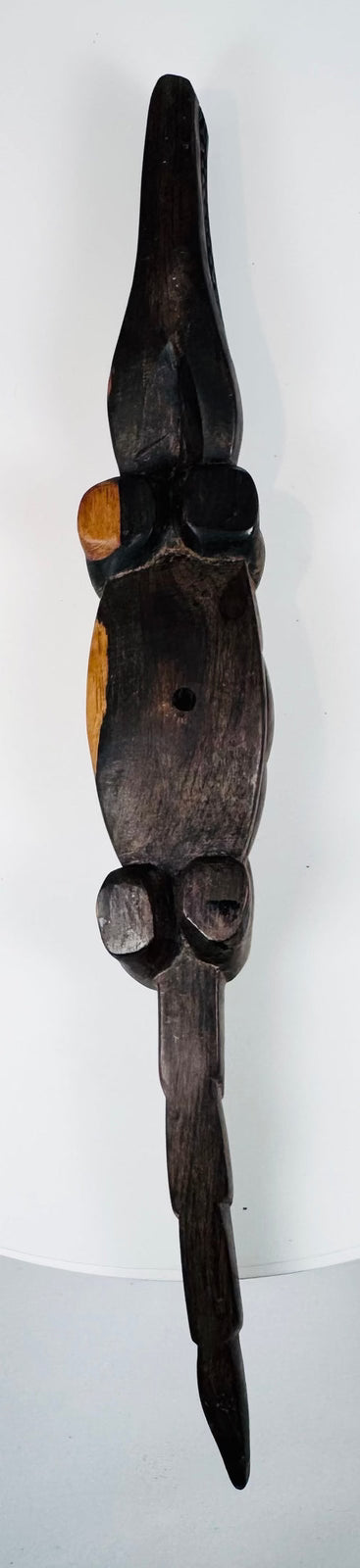
Both figures have been carved from solid wood and finished with darkened surfaces that have developed considerable wear and variation through age and handling. Their elongated bodies are divided into stylized anatomical sections, with pronounced legs, ridged backs and long tapering tails.
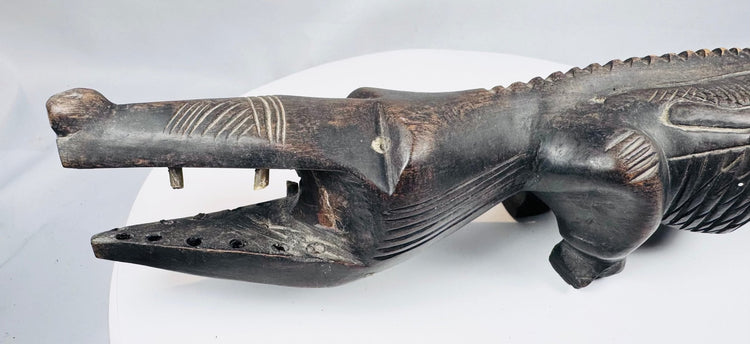
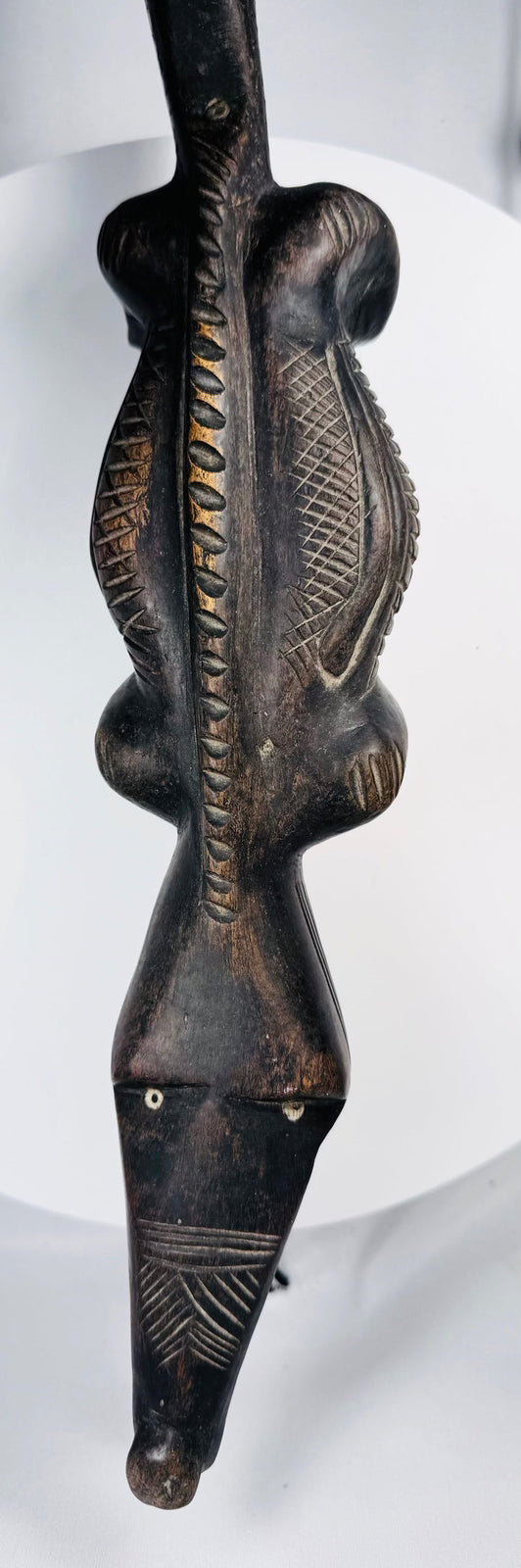
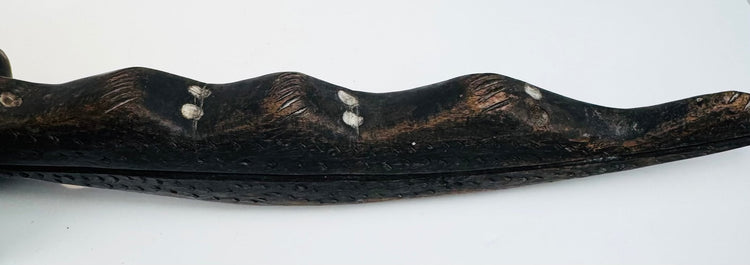
The larger example is particularly noteworthy for its open, articulated lower jaw. Small holes arranged along the jaw originally accommodated individual teeth or pegs, several of which remain in place. The head is decorated with deeply incised linear and geometric motifs, while the body incorporates crosshatched panels, repeated triangular cuts and a raised serrated ridge running along the spine. Small pale circular elements incorporated around the eyes and body provide additional decorative contrast.
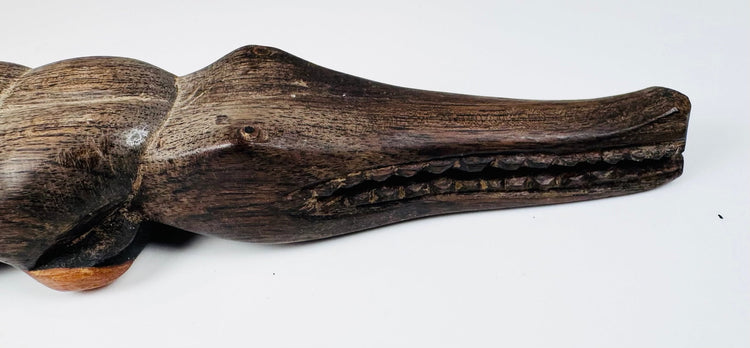
The smaller crocodile follows a somewhat more naturalistic form, with a long narrow snout, individually carved teeth, rounded body and segmented tail. Its more restrained decoration emphasizes the sculptural form of the animal and complements the larger, more elaborately ornamented example.
Features
- Larger example with articulated lower jaw
- Remnants of individually inserted teeth or pegs
- Deeply incised geometric and crosshatched decoration
- Raised dorsal ridges and segmented tails
- Dark naturally worn surface with areas of exposed lighter wood
- Individually carved construction displaying variations associated with hand workmanship
Cultural Significance
Animal imagery occupies an important place within the artistic traditions of Mali. Among communities of the Middle Niger region, carved representations of aquatic and terrestrial animals appear in sculpture, masquerade and puppet performance. The Sogo bò performance tradition in particular became known for large sculptural animal characters and mechanically animated figures, while crocodiles are documented among Malian carved forms.
Condition
Good overall condition consistent with age and traditional use or handling. Both figures display surface wear, abrasions, scratches, minor chips, areas of finish loss and natural variations to the wood.
The larger crocodile exhibits losses to numerous inserted teeth or pegs along the articulated jaw, with several surviving. Additional small losses and wear are visible around the extremities and carved decoration. Areas of lighter exposed wood are present where the darker surface has worn away.
The smaller example exhibits wear and minor losses around the mouth and teeth, together with surface abrasions and areas of lighter exposed wood. Please refer to the accompanying photographs for a complete visual assessment.
Dimensions (Approximate)
Smaller Figure: 12 in L
Larger Figure: 19.75 in L
Age (Approximate)
65–85 years old
Provenance
From an older private collection in Toronto, Ontario, Canada, assembled around African artifacts.
Learn More
Discover a related Bamana or Bozo carved work depicting crocodiles in the collection of the Metropolitan Museum of Art
Explore our Collection of Cultural & Ethnographic Artifacts
Description
Historical Context & Origin
Region: Mali, West Africa, attributed to the Bamana / Bozo cultural sphere
Material: Hand-carved wood
Period: 20th Century, likely mid-20th century
Description
This distinctive pair of hand-carved wooden crocodile figures is attributed to the Bamana and closely related Bozo artistic traditions of Mali, West Africa. Crocodile imagery appears in Malian sculpture and performance traditions, with documented Bamana examples carved in elongated forms and Bozo/Bamana puppet traditions incorporating animal figures with movable components.
Both figures have been carved from solid wood and finished with darkened surfaces that have developed considerable wear and variation through age and handling. Their elongated bodies are divided into stylized anatomical sections, with pronounced legs, ridged backs and long tapering tails.
The larger example is particularly noteworthy for its open, articulated lower jaw. Small holes arranged along the jaw originally accommodated individual teeth or pegs, several of which remain in place. The head is decorated with deeply incised linear and geometric motifs, while the body incorporates crosshatched panels, repeated triangular cuts and a raised serrated ridge running along the spine. Small pale circular elements incorporated around the eyes and body provide additional decorative contrast.
The smaller crocodile follows a somewhat more naturalistic form, with a long narrow snout, individually carved teeth, rounded body and segmented tail. Its more restrained decoration emphasizes the sculptural form of the animal and complements the larger, more elaborately ornamented example.
Features
- Larger example with articulated lower jaw
- Remnants of individually inserted teeth or pegs
- Deeply incised geometric and crosshatched decoration
- Raised dorsal ridges and segmented tails
- Dark naturally worn surface with areas of exposed lighter wood
- Individually carved construction displaying variations associated with hand workmanship
Cultural Significance
Animal imagery occupies an important place within the artistic traditions of Mali. Among communities of the Middle Niger region, carved representations of aquatic and terrestrial animals appear in sculpture, masquerade and puppet performance. The Sogo bò performance tradition in particular became known for large sculptural animal characters and mechanically animated figures, while crocodiles are documented among Malian carved forms.
Condition
Good overall condition consistent with age and traditional use or handling. Both figures display surface wear, abrasions, scratches, minor chips, areas of finish loss and natural variations to the wood.
The larger crocodile exhibits losses to numerous inserted teeth or pegs along the articulated jaw, with several surviving. Additional small losses and wear are visible around the extremities and carved decoration. Areas of lighter exposed wood are present where the darker surface has worn away.
The smaller example exhibits wear and minor losses around the mouth and teeth, together with surface abrasions and areas of lighter exposed wood. Please refer to the accompanying photographs for a complete visual assessment.
Dimensions (Approximate)
Smaller Figure: 12 in L
Larger Figure: 19.75 in L
Age (Approximate)
65–85 years old
Provenance
From an older private collection in Toronto, Ontario, Canada, assembled around African artifacts.
Learn More
Discover a related Bamana or Bozo carved work depicting crocodiles in the collection of the Metropolitan Museum of Art
Explore our Collection of Cultural & Ethnographic Artifacts
You May Also Like
