



Pre-Columbian Andean Blackware Canteen Vessel | Anthropomorphic Sunburst Figure | Peru | Circa 1000 – 1500 CE
Couldn't load pickup availability


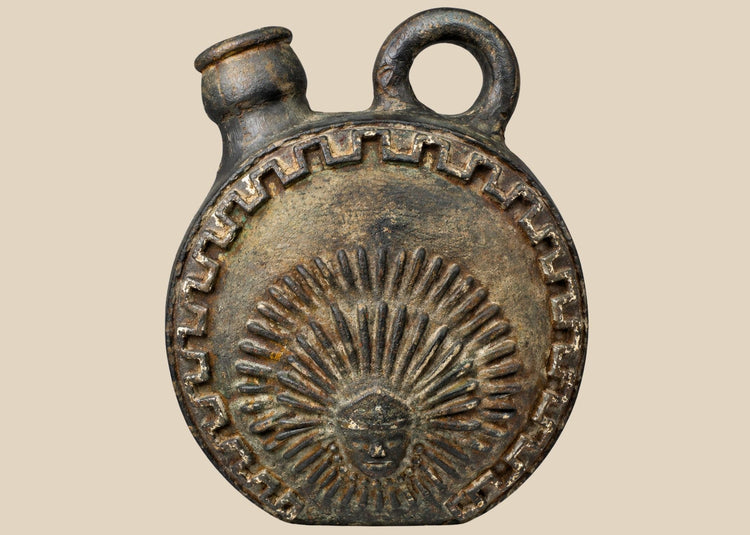
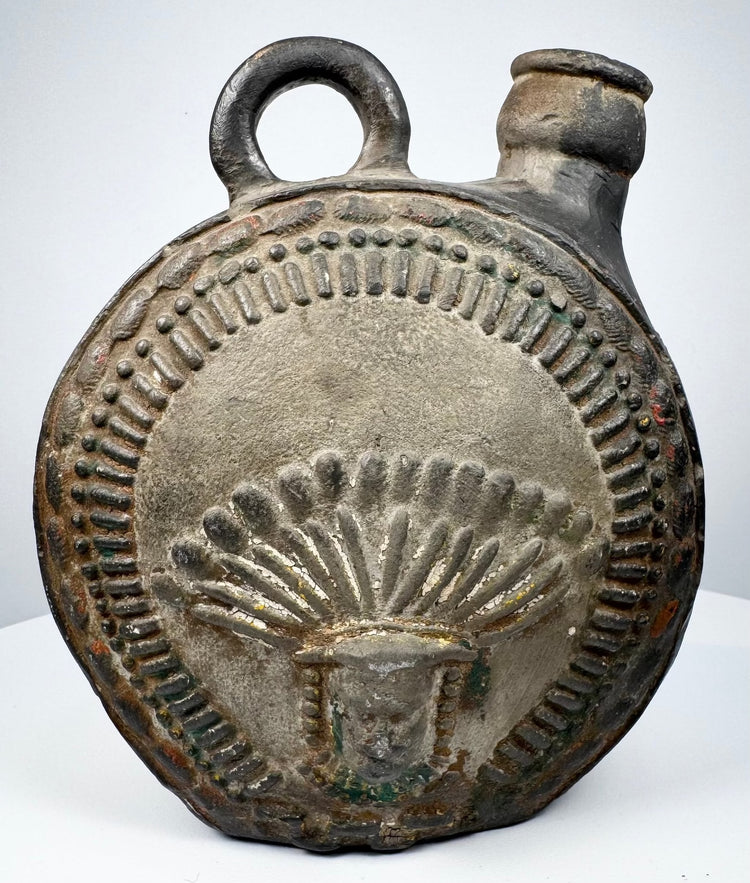
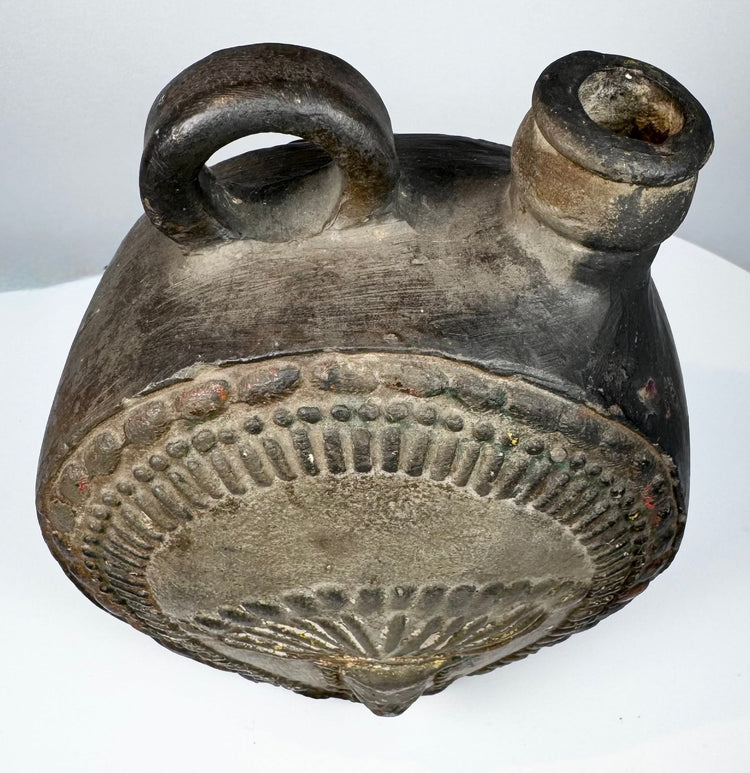
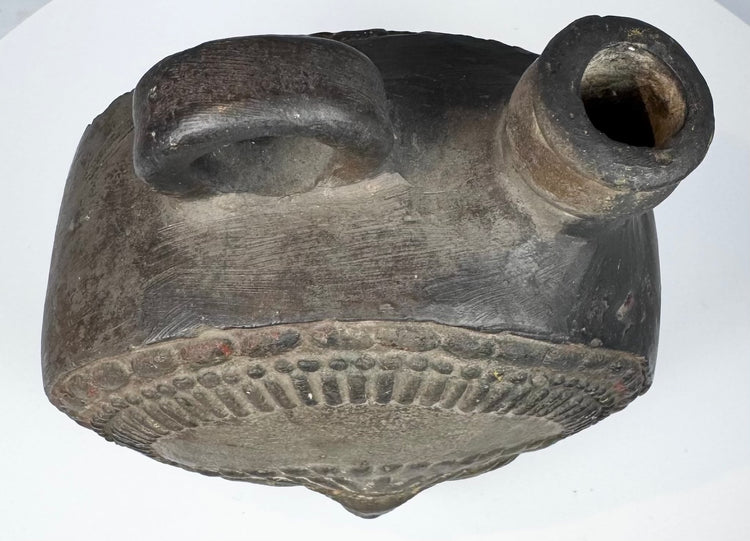
Pre-Columbian Andean Blackware Canteen Vessel | Anthropomorphic Sunburst Figure | Peru | Circa 1000 – 1500 CE
Description
More
Less
Historical Context & Origin
Region: Central Andes, likely present-day Peru
Material: Molded and hand-finished ceramic with dark-fired / blackware surface
Period: Pre-Columbian, likely Late Intermediate Period to Late Horizon, circa 1000–1500 CE
Description
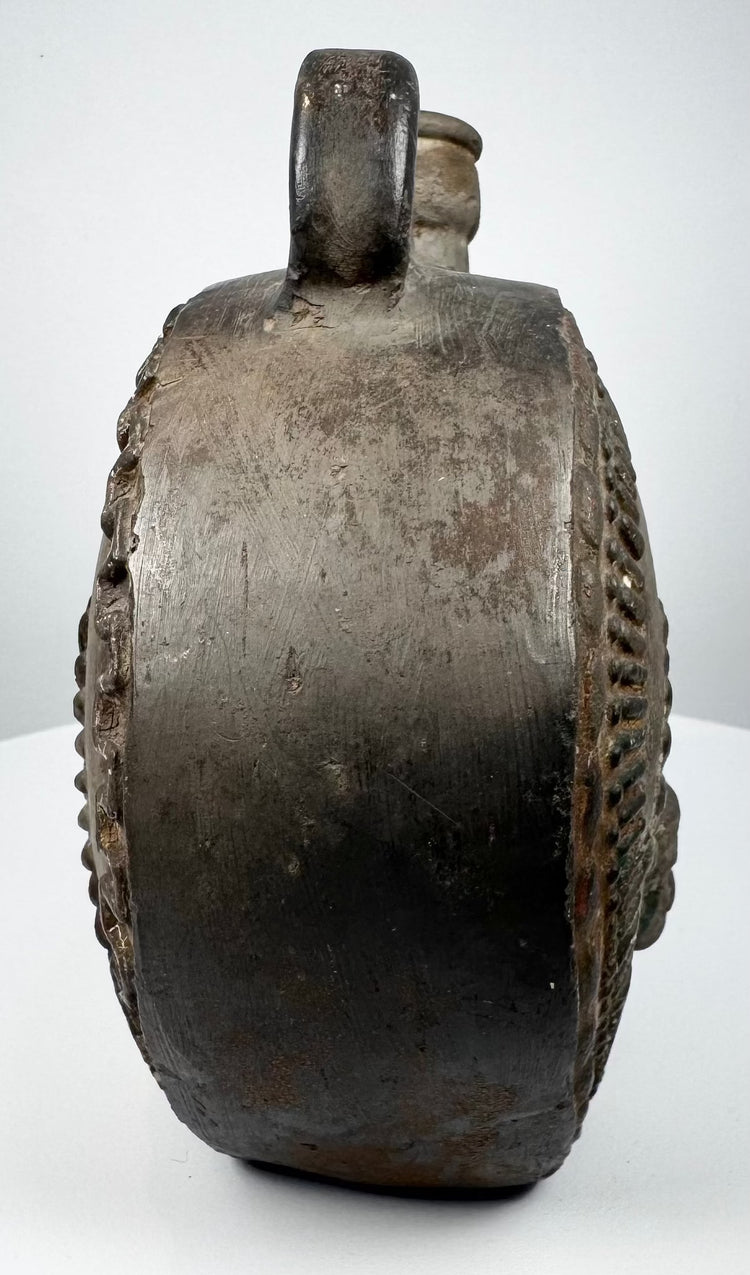
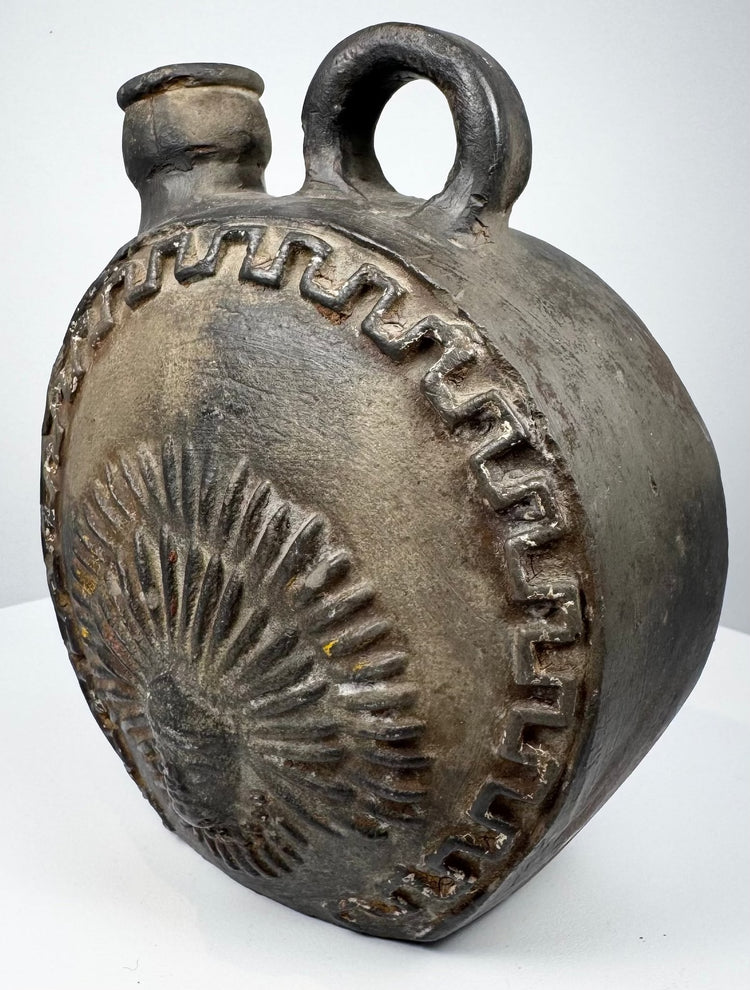
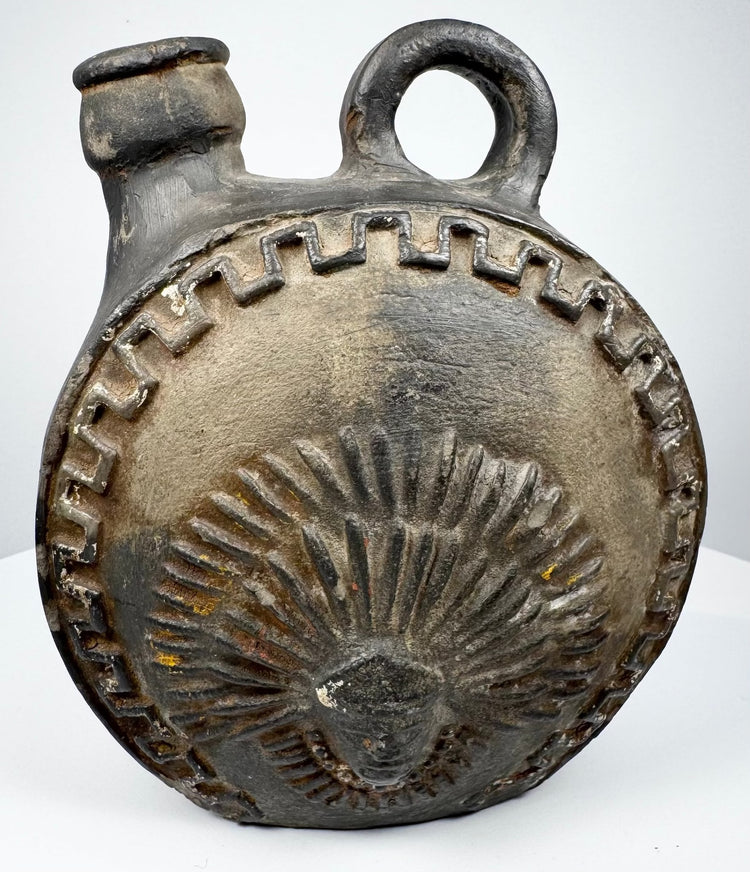
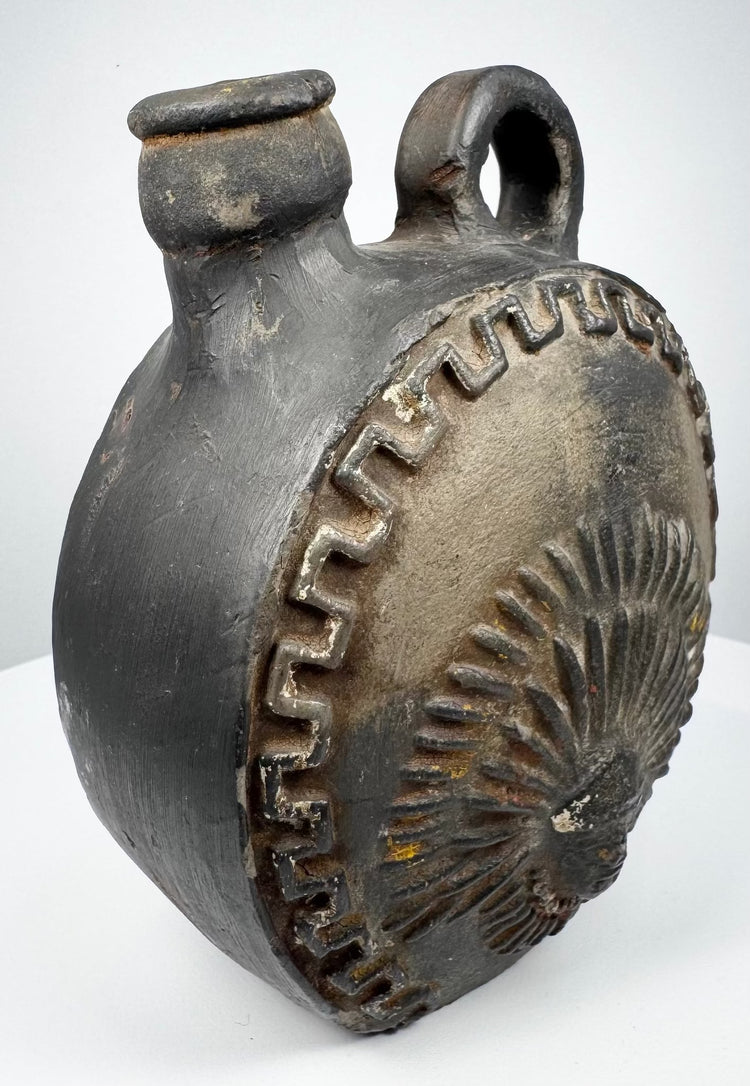
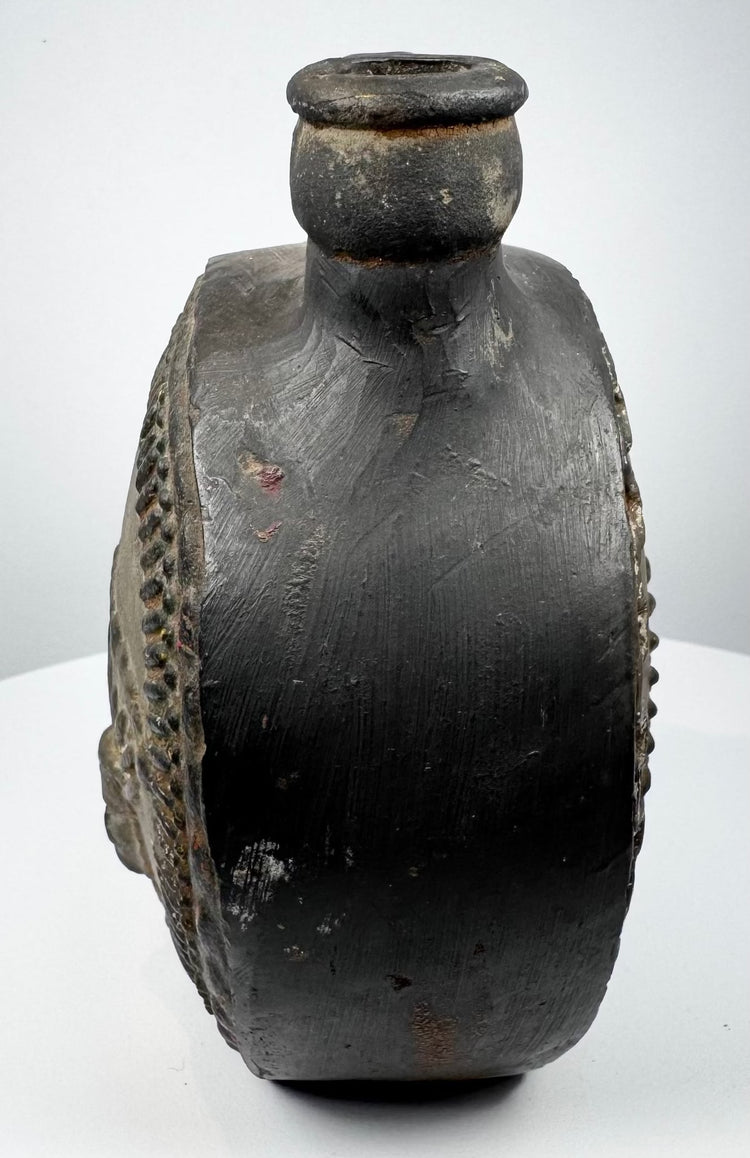
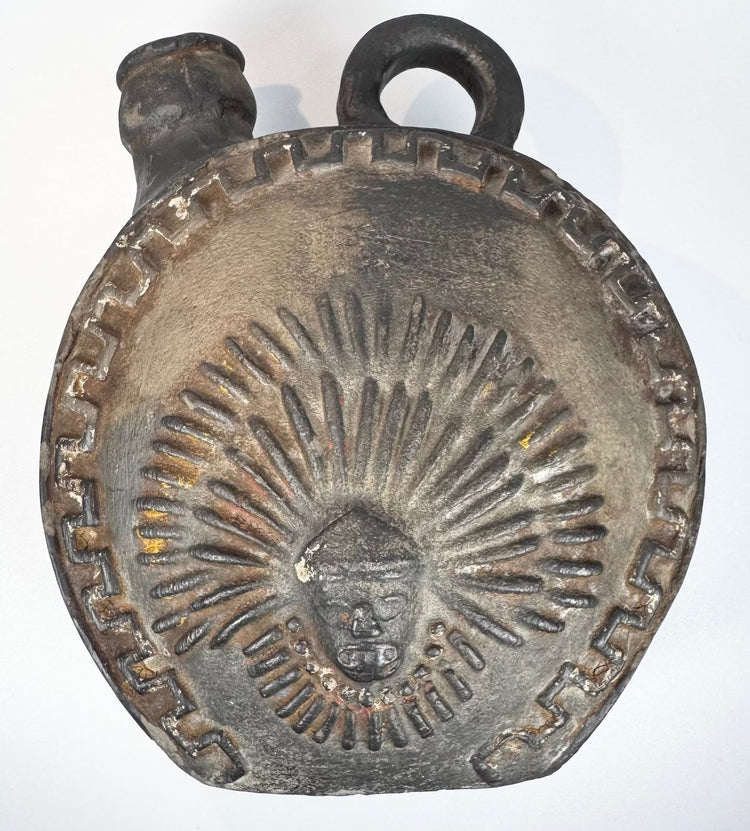
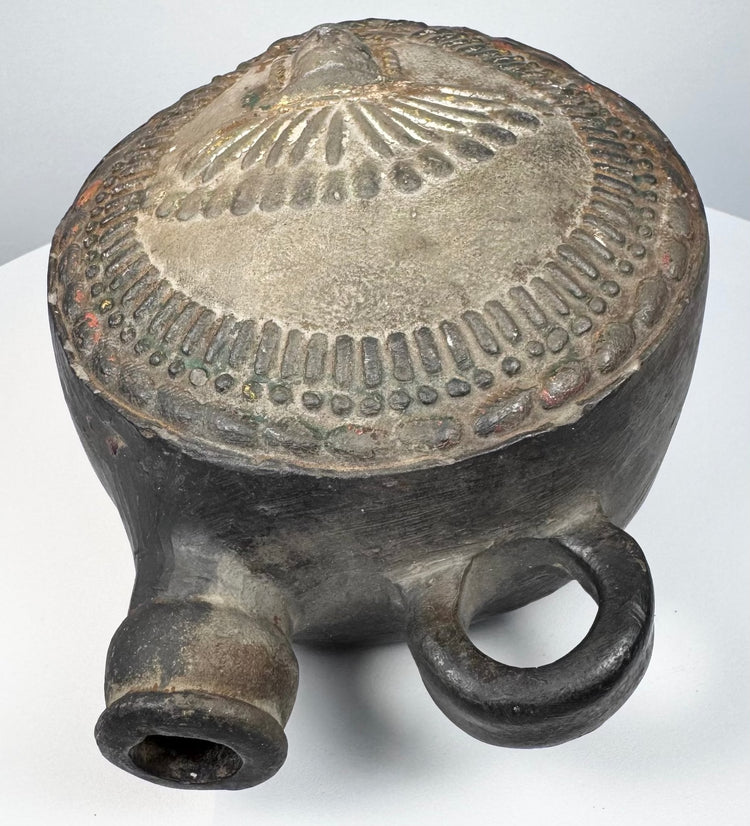
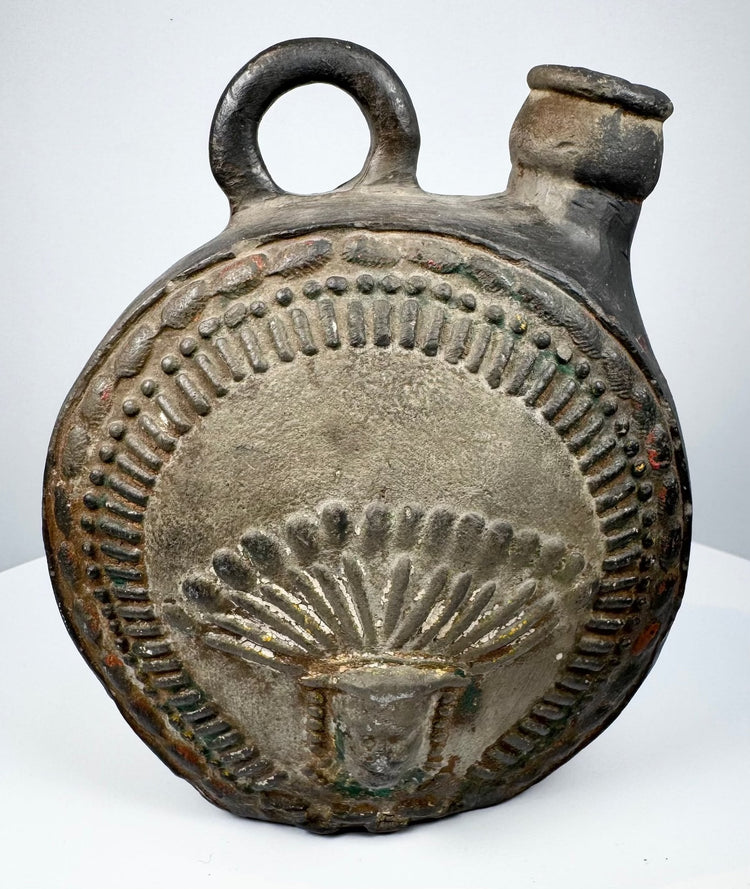
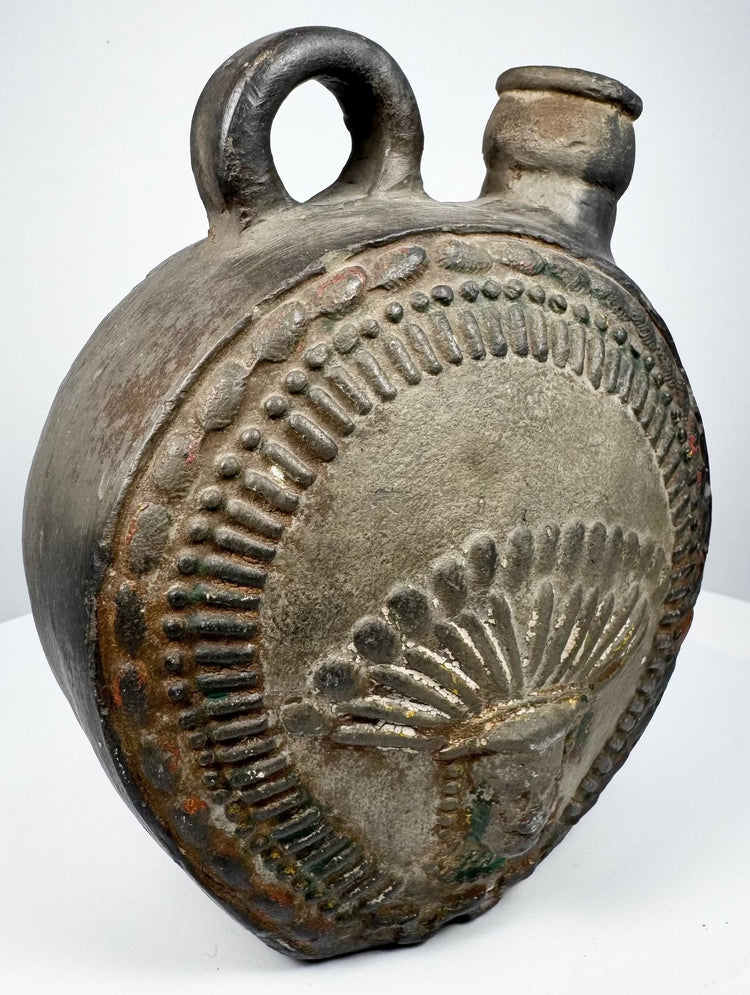
A distinctive Pre-Columbian ceramic vessel from the ancient Andean world, formed in a flattened circular canteen-like shape with a short pouring spout and substantial loop handle. The vessel is especially notable for its boldly modeled figural decoration, which occupies the principal face and gives the piece considerable sculptural presence.
At the center is a stylized human face surrounded by an expansive arrangement of radiating elements resembling a feathered headdress, solar rays, or ceremonial plumage. The figure is framed by a continuous stepped geometric border, creating a strong visual contrast between the central iconography and the rounded body of the vessel.
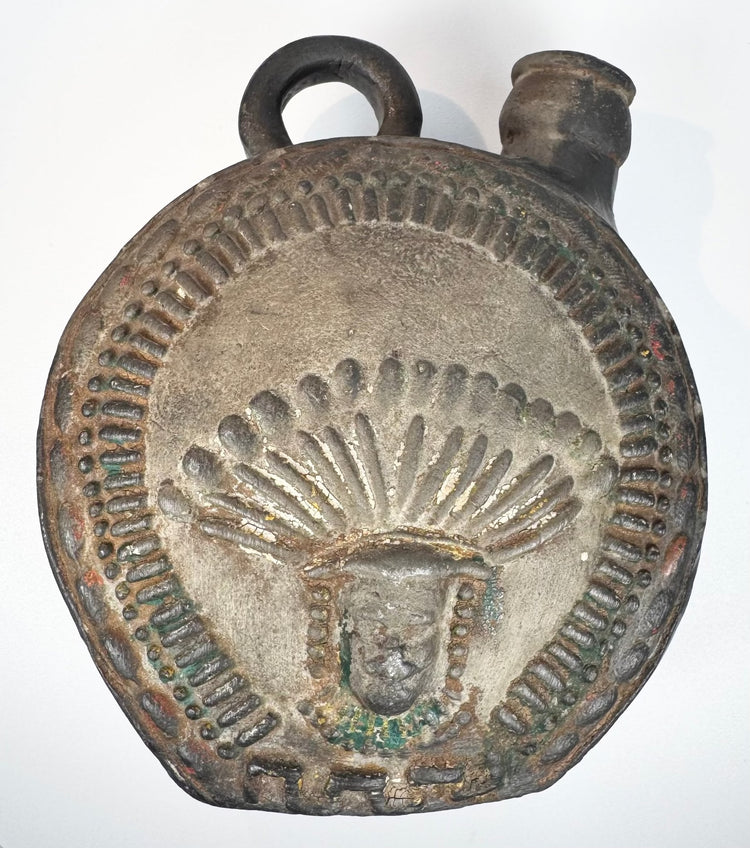
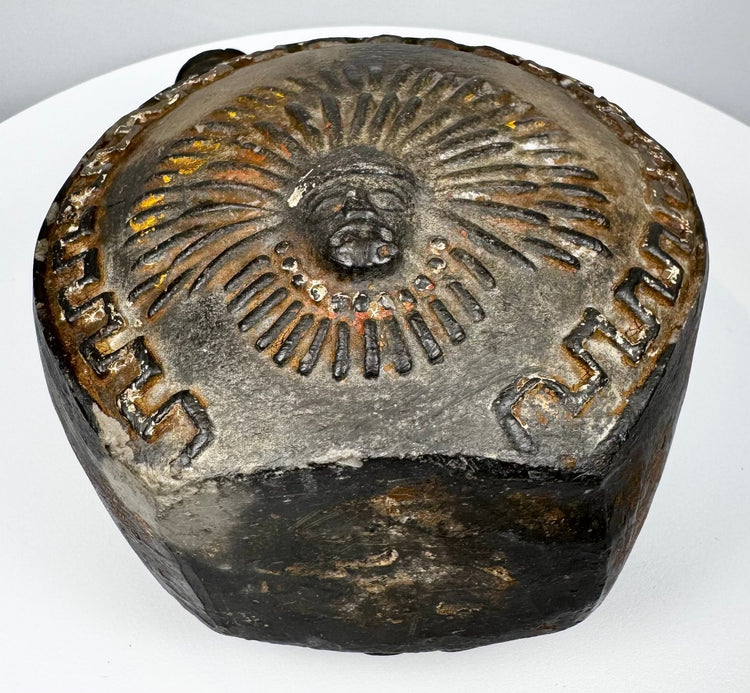
The reverse is decorated with a second, more abstract arrangement of radiating and geometric motifs, demonstrating that the vessel was conceived as a fully decorated object rather than simply a utilitarian container. The dark surface, sculptural relief and restrained palette are characteristic of several ceramic traditions of the ancient Peruvian coast and highlands during the centuries preceding the Spanish conquest.
Its unusual combination of a circular flask form, anthropomorphic imagery and bold relief decoration makes this an especially interesting example of Pre-Columbian ceramic artistry.
Features
- Flattened circular or canteen-form body
- Short tubular pouring spout
- Large integrated loop handle
- Central anthropomorphic face in raised relief
- Dramatic radiating feather-, ray-, or plume-like headdress
- Stepped geometric border surrounding the principal face
- Additional raised decoration on the reverse
- Dark-fired blackware or dark slipped surface
- Hand-finished construction with naturally irregular ancient character
Cultural Significance
Ceramic vessels were among the most important artistic and functional objects produced by the civilizations of the ancient Andes. Beyond their practical use for storing and serving liquids, elaborately decorated vessels could communicate social identity, religious beliefs, political authority and connections to supernatural or ancestral figures.
Anthropomorphic faces, elaborate headdresses and radiating motifs are recurring features within Pre-Columbian Andean visual culture. Such imagery could identify deities, ritual specialists, elite individuals or idealized supernatural beings, although the precise identity represented on individual vessels is often impossible to establish without archaeological context.
The stepped geometric border surrounding the figure also belongs to a much broader vocabulary of Andean design, where repeated geometric forms were incorporated into ceramics, textiles, metalwork and architectural decoration.
Condition
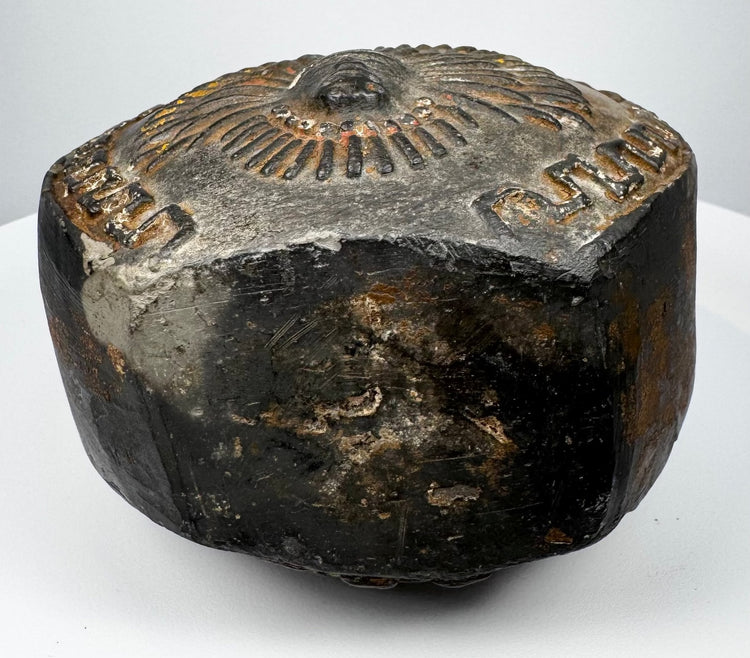
The vessel remains in good overall ancient condition, displaying extensive surface wear, abrasions, mineral deposits, discoloration and areas of patination consistent with considerable age. The dark surface finish varies naturally across the body, with areas of exposed underlying ceramic and scattered remnants of lighter and reddish coloration within the raised decoration.
Minor chips, surface losses, scratches and irregularities are present throughout. The spout, loop handle and principal decorative elements remain substantially intact and the relief decoration remains clearly legible.
Dimensions (Approximate)
Height: 5.75 in
Width: 5 in
Depth: 3 in
Age (Approximate)
500–1,000 years old
Provenance
From a private collection in Ottawa, Ontario. The owner was a lifelong collector of Pre-Columbian art and artifacts who traveled extensively throughout South America. Following their passing, the collection was liquidated by the family.
Learn More
Discover a Chimú ceramic flask from Peru in the collection of the Princeton University Art Museum
Explore our Collection of Ancient Pre-Columbian Artifacts and Relics
Description
Historical Context & Origin
Region: Central Andes, likely present-day Peru
Material: Molded and hand-finished ceramic with dark-fired / blackware surface
Period: Pre-Columbian, likely Late Intermediate Period to Late Horizon, circa 1000–1500 CE
Description
A distinctive Pre-Columbian ceramic vessel from the ancient Andean world, formed in a flattened circular canteen-like shape with a short pouring spout and substantial loop handle. The vessel is especially notable for its boldly modeled figural decoration, which occupies the principal face and gives the piece considerable sculptural presence.
At the center is a stylized human face surrounded by an expansive arrangement of radiating elements resembling a feathered headdress, solar rays, or ceremonial plumage. The figure is framed by a continuous stepped geometric border, creating a strong visual contrast between the central iconography and the rounded body of the vessel.
The reverse is decorated with a second, more abstract arrangement of radiating and geometric motifs, demonstrating that the vessel was conceived as a fully decorated object rather than simply a utilitarian container. The dark surface, sculptural relief and restrained palette are characteristic of several ceramic traditions of the ancient Peruvian coast and highlands during the centuries preceding the Spanish conquest.
Its unusual combination of a circular flask form, anthropomorphic imagery and bold relief decoration makes this an especially interesting example of Pre-Columbian ceramic artistry.
Features
- Flattened circular or canteen-form body
- Short tubular pouring spout
- Large integrated loop handle
- Central anthropomorphic face in raised relief
- Dramatic radiating feather-, ray-, or plume-like headdress
- Stepped geometric border surrounding the principal face
- Additional raised decoration on the reverse
- Dark-fired blackware or dark slipped surface
- Hand-finished construction with naturally irregular ancient character
Cultural Significance
Ceramic vessels were among the most important artistic and functional objects produced by the civilizations of the ancient Andes. Beyond their practical use for storing and serving liquids, elaborately decorated vessels could communicate social identity, religious beliefs, political authority and connections to supernatural or ancestral figures.
Anthropomorphic faces, elaborate headdresses and radiating motifs are recurring features within Pre-Columbian Andean visual culture. Such imagery could identify deities, ritual specialists, elite individuals or idealized supernatural beings, although the precise identity represented on individual vessels is often impossible to establish without archaeological context.
The stepped geometric border surrounding the figure also belongs to a much broader vocabulary of Andean design, where repeated geometric forms were incorporated into ceramics, textiles, metalwork and architectural decoration.
Condition
The vessel remains in good overall ancient condition, displaying extensive surface wear, abrasions, mineral deposits, discoloration and areas of patination consistent with considerable age. The dark surface finish varies naturally across the body, with areas of exposed underlying ceramic and scattered remnants of lighter and reddish coloration within the raised decoration.
Minor chips, surface losses, scratches and irregularities are present throughout. The spout, loop handle and principal decorative elements remain substantially intact and the relief decoration remains clearly legible.
Dimensions (Approximate)
Height: 5.75 in
Width: 5 in
Depth: 3 in
Age (Approximate)
500–1,000 years old
Provenance
From a private collection in Ottawa, Ontario. The owner was a lifelong collector of Pre-Columbian art and artifacts who traveled extensively throughout South America. Following their passing, the collection was liquidated by the family.
Learn More
Discover a Chimú ceramic flask from Peru in the collection of the Princeton University Art Museum
Explore our Collection of Ancient Pre-Columbian Artifacts and Relics
You May Also Like
