

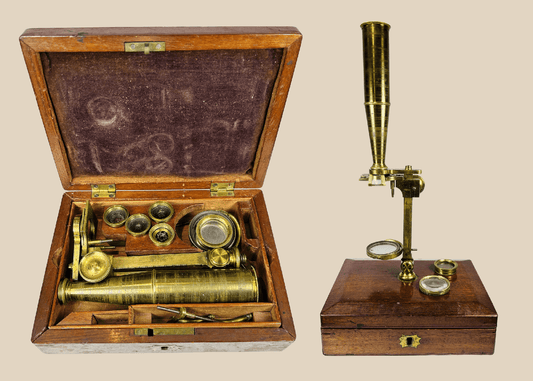

Vintage Buck & Hickman Mechanical Speed Indicator with Original Case | Early to mid - 20th century
Couldn't load pickup availability


Vintage Buck & Hickman Mechanical Speed Indicator with Original Case | Early to mid - 20th century
Description
More
Less
Historical Context & Origin
Region: England, United Kingdom
Material: Metal, glass, printed dial, mechanical components, fitted carrying case
Period: Early to mid-20th century
Description
This vintage Buck & Hickman Ltd. Speed Indicator, numbered 26395, is a precision mechanical instrument designed for measuring the rotational speed of machinery, shafts, motors, and other rotating equipment.
The large circular dial is clearly marked Buck & Hickman Ltd. and Speed Indicator No. 26395, with three graduated operating ranges extending from approximately 100 to 4,000 revolutions per minute. Comparable Buck & Hickman instruments are identified as mechanical tachometers with a 100–4000 RPM measuring range.
Before the widespread adoption of electronic and digital tachometers, instruments of this type allowed engineers, machinists, mechanics, and maintenance personnel to directly determine the rotational speed of operating machinery. Interchangeable contact adaptors allowed the instrument to be configured for different measurement ranges and applications.
The present example retains its fitted protective carrying case with dark textured exterior, hinged lid, blue fabric lining, and fitted interior compartments. Several original measuring adaptors or contact fittings are also retained within the case, considerably improving the completeness and presentation of the set.
Buck & Hickman was a longstanding British supplier of professional tools and industrial equipment, making instruments such as this particularly representative of Britain's engineering and manufacturing heritage.
Features
- Three graduated measurement ranges
- Large highly legible circular dial
- Glass-covered instrument face
- Retains multiple interchangeable contact adaptors
- Original-style fitted protective carrying case
- Precision mechanical engineering instrument
- British manufacture / supply
- Excellent display piece for an industrial, engineering, scientific, or transportation collection
Cultural Significance
Mechanical tachometers and speed indicators were essential workshop instruments during the development of increasingly mechanized industry in the early 20th century. They allowed engineers to measure machinery speeds without relying upon permanently installed instrumentation and were employed in workshops, factories, engine rooms, maintenance facilities, and other engineering environments.
This example represents an increasingly obsolete form of precision mechanical instrumentation from the era before electronic measuring devices became standard. Its survival together with its fitted case and associated adaptors provides a particularly complete illustration of historic engineering practice.
Condition
Good vintage condition with expected age-related wear throughout. The metal instrument housing displays surface scratches, rubbing, oxidation, and general evidence of use. The dial remains exceptionally clear and legible beneath the glass.
The fitted carrying case exhibits wear, scuffing, discoloration, and deterioration consistent with prolonged storage and use. The interior retains its blue lining and fitted compartments.
Dimensions (Approximate)
Height: 3.75 in
Width: 3.3 in
Depth: 3.5 in
Measurements refer to the carrying case.
Age (Approximate)
70–100 years old
Provenance
From a private collection in Newcastle, United Kingdom, specializing in militaria and historic military-related material.
Learn More
Read about a related 1950s mechanical tachometer in the collection of the Science Museum Group.
Find further examples in our Collection of Functional Tools, Ancient Implements and Craft.
Description
Historical Context & Origin
Region: England, United Kingdom
Material: Metal, glass, printed dial, mechanical components, fitted carrying case
Period: Early to mid-20th century
Description
This vintage Buck & Hickman Ltd. Speed Indicator, numbered 26395, is a precision mechanical instrument designed for measuring the rotational speed of machinery, shafts, motors, and other rotating equipment.
The large circular dial is clearly marked Buck & Hickman Ltd. and Speed Indicator No. 26395, with three graduated operating ranges extending from approximately 100 to 4,000 revolutions per minute. Comparable Buck & Hickman instruments are identified as mechanical tachometers with a 100–4000 RPM measuring range.
Before the widespread adoption of electronic and digital tachometers, instruments of this type allowed engineers, machinists, mechanics, and maintenance personnel to directly determine the rotational speed of operating machinery. Interchangeable contact adaptors allowed the instrument to be configured for different measurement ranges and applications.
The present example retains its fitted protective carrying case with dark textured exterior, hinged lid, blue fabric lining, and fitted interior compartments. Several original measuring adaptors or contact fittings are also retained within the case, considerably improving the completeness and presentation of the set.
Buck & Hickman was a longstanding British supplier of professional tools and industrial equipment, making instruments such as this particularly representative of Britain's engineering and manufacturing heritage.
Features
- Three graduated measurement ranges
- Large highly legible circular dial
- Glass-covered instrument face
- Retains multiple interchangeable contact adaptors
- Original-style fitted protective carrying case
- Precision mechanical engineering instrument
- British manufacture / supply
- Excellent display piece for an industrial, engineering, scientific, or transportation collection
Cultural Significance
Mechanical tachometers and speed indicators were essential workshop instruments during the development of increasingly mechanized industry in the early 20th century. They allowed engineers to measure machinery speeds without relying upon permanently installed instrumentation and were employed in workshops, factories, engine rooms, maintenance facilities, and other engineering environments.
This example represents an increasingly obsolete form of precision mechanical instrumentation from the era before electronic measuring devices became standard. Its survival together with its fitted case and associated adaptors provides a particularly complete illustration of historic engineering practice.
Condition
Good vintage condition with expected age-related wear throughout. The metal instrument housing displays surface scratches, rubbing, oxidation, and general evidence of use. The dial remains exceptionally clear and legible beneath the glass.
The fitted carrying case exhibits wear, scuffing, discoloration, and deterioration consistent with prolonged storage and use. The interior retains its blue lining and fitted compartments.
Dimensions (Approximate)
Height: 3.75 in
Width: 3.3 in
Depth: 3.5 in
Measurements refer to the carrying case.
Age (Approximate)
70–100 years old
Provenance
From a private collection in Newcastle, United Kingdom, specializing in militaria and historic military-related material.
Learn More
Read about a related 1950s mechanical tachometer in the collection of the Science Museum Group.
Find further examples in our Collection of Functional Tools, Ancient Implements and Craft.
You May Also Like
